
Updated
Fleet Maintenance: How to Build a Program, Schedule and Checklist for a Small Fleet
Fleet maintenance is the planned inspection, servicing and repair of a company's vehicles and trailers. Done well, it keeps them safe, legal and on the road instead of in the shop. For commercial motor vehicles, it is also federal law: 49 CFR 396.3 requires every motor carrier to "systematically inspect, repair, and maintain" each vehicle it controls and to keep records proving it.
The rules and numbers a small fleet needs first:
| Requirement | What it says | Source |
|---|---|---|
| Systematic maintenance | Inspect, repair and maintain every vehicle under your control, with records | 49 CFR 396.3 |
| Daily driver report | Driver prepares a written vehicle inspection report at the end of each day's work | 49 CFR 396.11 |
| Pre-trip review | Driver reviews the last report and confirms defects were repaired before driving | 49 CFR 396.13 |
| Annual inspection | Every commercial motor vehicle inspected at least once every 12 months | 49 CFR 396.17 |
| Record retention | Maintenance records kept 1 year, and 6 months after the vehicle leaves your control | 49 CFR 396.3(c) |
| Tire tread minimum | 4/32 inch on steer tires, 2/32 inch on all other tires | 49 CFR 393.75 |
| Payoff of preventive work | An estimated 12% to 18% saving over run-to-failure maintenance | US DOE and PNNL O&M Best Practices Guide |
The federal rules apply to commercial motor vehicles in interstate commerce, which generally means vehicles of 10,001 lb or more. A landscaping company running pickups across town is not bound by Part 396, but the same habits keep those trucks working and make insurance claims and resale easier.
What Is Fleet Maintenance?
Fleet maintenance is everything a company does to keep its vehicles in working order, organized as a repeatable system instead of a string of emergencies. It has four parts.
Preventive service. Oil and filter changes, brake and tire checks, fluid service and inspections done on a schedule before anything fails.
Repairs. Fixing what breaks or what an inspection finds, then confirming the fix before the vehicle goes back out.
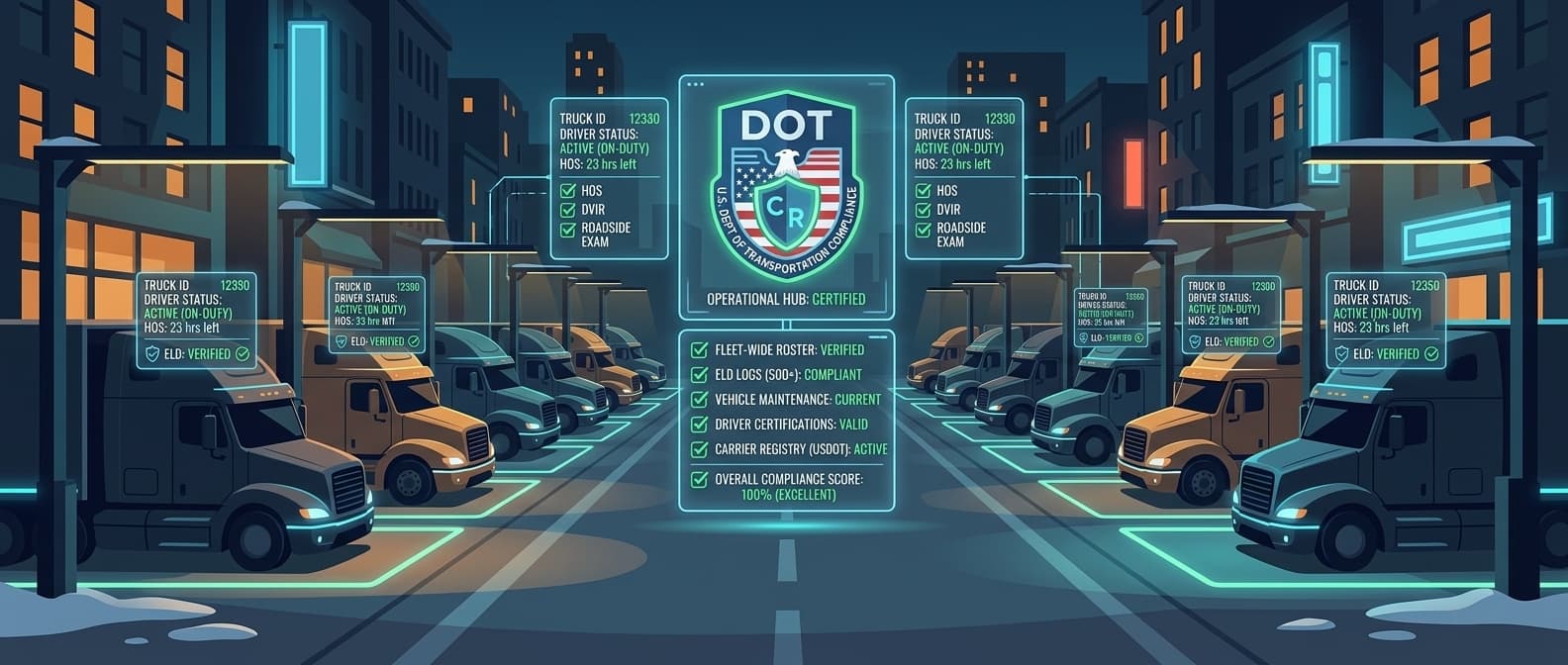
Driver inspections. A walk-around before and after each shift, written down. For commercial vehicles this is the DVIR; our DVIR and ELD compliance guide covers the form and the violations.
Records. A history for every vehicle showing what was done, when and by whom. Without records, a program cannot be audited, warranty claims get harder, and nobody can tell which vehicle is overdue.
Preventive vs Predictive vs Corrective Fleet Maintenance
| Type | When work happens | Good for | Weak spot |
|---|---|---|---|
| Corrective (reactive) | After a failure or a driver report | Cheap, low-risk parts such as wiper blades and bulbs | Breakdowns on the road, towing, missed jobs |
| Preventive | On a fixed interval of miles, engine hours or time | Oil, filters, brakes, tires, belts, annual inspections | Some parts get replaced while they still have life left |
| Predictive | When sensor or diagnostic data shows wear | Large fleets with telematics that read engine fault codes | Needs data infrastructure most small fleets do not have |
The DOE and Pacific Northwest National Laboratory estimate preventive maintenance saves 12% to 18% compared with running equipment until it breaks, and predictive maintenance saves a further 8% to 12% over preventive. For a fleet under 50 vehicles, preventive maintenance on a clean schedule is the realistic target. Predictive programs depend on engine data from a telematics unit plugged into each vehicle.
How to Build a Fleet Maintenance Program in 5 Steps
- List every unit. Give each vehicle and trailer a unit number and record make, model, year, VIN and tire size. That identification record is also what 49 CFR 396.3 asks for.
- Set the trigger for each unit. Take the manufacturer's service interval and decide whether that unit is tracked by miles, engine hours or calendar. Use whichever comes first. Mark severe-duty units, such as trucks that idle for hours or tow heavy loads, for shorter intervals.
- Write the inspection routine. Decide what drivers check daily, what the shop checks at each service, and who signs off a repair. Put it on one page.
- Pick where records live. A spreadsheet works for a handful of vehicles. Past about 20 units or a second mechanic, software that sends service reminders and stores work orders saves more time than it costs.
- Review monthly. Look at overdue services, repeat repairs on the same unit, and the cost per vehicle. A unit with three brake jobs in a year is either misused or due for replacement.
Fleet Maintenance Schedule: Miles, Engine Hours and Calendar
Most fleets group work into service levels, often called A, B and C service, so a technician knows the full job from one code.
| Service level | Typical trigger | Work included |
|---|---|---|
| Daily | Every day the vehicle is driven | Driver walk-around and written inspection report |
| A service | Manufacturer's oil interval (miles or engine hours) | Oil and filter, lube, fluid levels, tire pressure and tread, lights, brake check |
| B service | Every second or third A service | A service plus fuel and air filters, belts and hoses, brake measurement, battery test |
| C service | Manufacturer's major interval | B service plus transmission and differential fluids, coolant service, full brake inspection |
| Annual | At least every 12 months | Periodic inspection under 49 CFR 396.17 for commercial vehicles, with a written report kept on file |
Write the actual mileage and hour figures from each manufacturer's manual into your schedule. Interval guidance varies widely by engine, oil type and duty cycle, so a single fleet-wide number either wastes oil on light-duty units or under-serves the hardest-working ones.
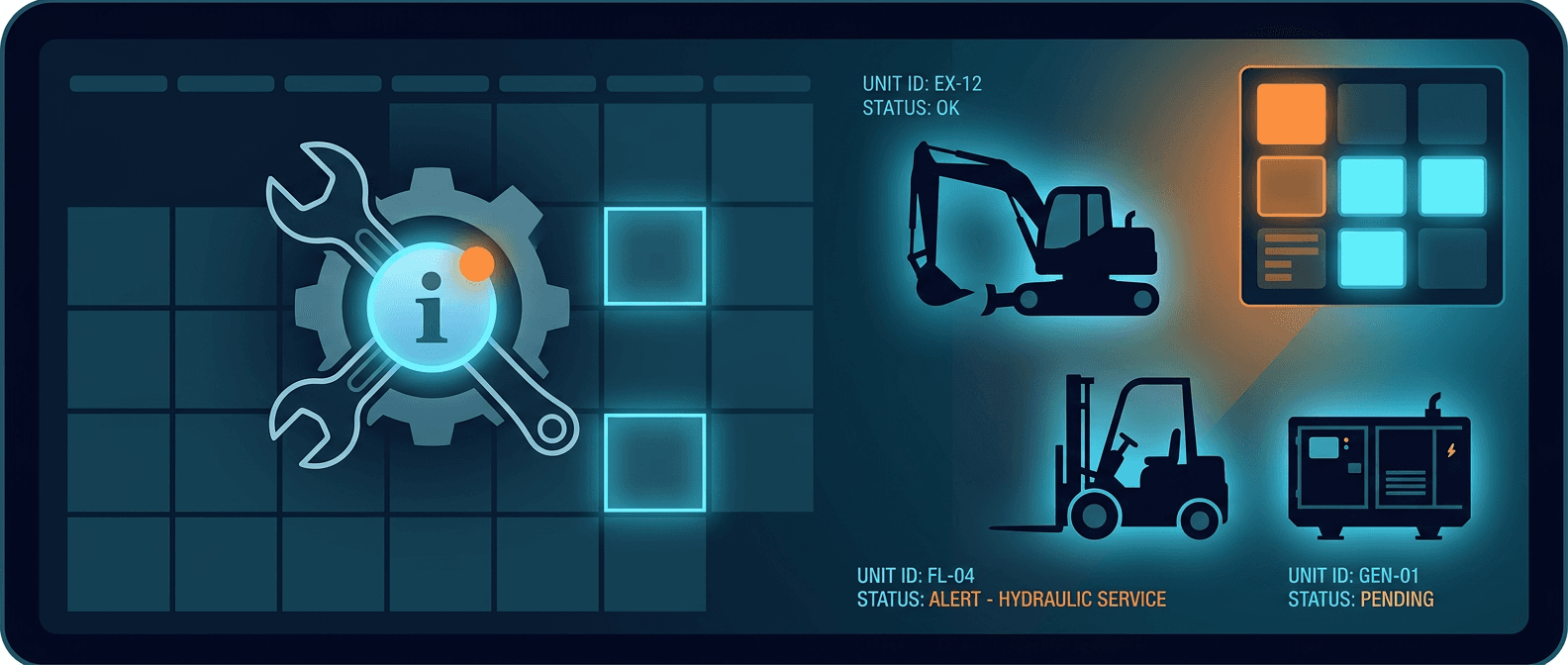
Trailers, generators, compressors and other towed or unpowered assets belong in the same schedule. They have no odometer, so they run on calendar or hour-meter triggers, and they are the units most often missed because nobody drives them back to the shop.
Fleet Maintenance Checklist (Daily to Annual)
Daily, by the driver:
- Tires for pressure, cuts and tread depth
- Lights, turn signals and reflectors
- Brakes, including the parking brake
- Mirrors, wipers and horn
- Leaks under the vehicle
- Coupling devices on anything towed
- Emergency equipment, such as the fire extinguisher and warning triangles
Weekly:
- Oil, coolant, washer and brake fluid levels
- Battery terminals for corrosion
- Interior and cargo area for loose equipment
Monthly:
- Tread depth measured with a gauge and recorded
- Wiper blades and air filter condition
- Review of open defects from driver reports
At each A, B or C service: the items in the schedule above, signed by the technician.
Annually: the periodic inspection for commercial vehicles, registration and insurance renewals, and a review of each unit's repair cost against its replacement cost.
Fleet Maintenance Records: What the FMCSA Requires
For each commercial motor vehicle you control for 30 consecutive days or more, 49 CFR 396.3(b) requires:
| Record | Contents |
|---|---|
| Identification | Company unit number, make, serial number, year, tire size, and the owner if it is not the carrier |
| Schedule | A means of showing the nature and due date of each inspection and maintenance operation |
| History | A record of each inspection, repair and maintenance job, with its date and nature |
| Buses only | Tests of push-out windows, emergency doors and their marking lights |
Keep maintenance records for 1 year where the vehicle is housed or maintained, and for 6 months after the vehicle leaves your control. Driver vehicle inspection reports must be kept for 3 months from the date they were written.
Fleet Maintenance Software: Options and Prices
Fleet maintenance software replaces the spreadsheet with service reminders, work orders, parts tracking and a mobile app for drivers and technicians. Published 2026 prices:
| Software | Free tier | Paid price | Built for |
|---|---|---|---|
| Spreadsheet | Yes | $0 | Under about 20 vehicles, one person scheduling |
| Fleetio | No | $4-10 per vehicle per month, 5-vehicle minimum | Vehicle fleets: inspections, service schedules, fuel |
| MaintainX | Yes (limited) | From $16 per user per month | Work orders across vehicles and facilities |
| Limble | Yes (limited) | From $20 per user per month | Mixed equipment with drag-and-drop scheduling |
| UpKeep | No | From $20 per user per month | Mobile-first field maintenance teams |
| Fiix | Yes (basic) | From $45 per user per month | Plants and larger maintenance teams |
Per-vehicle pricing suits fleets with few users and many vehicles. Per-user pricing suits a small maintenance team handling a large number of units. For details on each, see AirTags vs Fleetio, AirTags vs MaintainX and AirTags vs Limble, or the wider CMMS and equipment maintenance tracking guide. Fleets that want to start with no software cost can use the templates in our free fleet management software guide.
None of these products shows where a vehicle or trailer is right now. Fleetio connects to separate telematics subscriptions for that, which cost $20-45 per vehicle per month on top of the software.
Finding the Vehicle or Trailer That Is Due
A schedule says unit 14 is due for B service. It does not say unit 14 is at a job site 40 miles away, or that the trailer due for its annual inspection has been parked behind another customer's building for three weeks. For fleets with trailers, generators and equipment that move between sites, locating the unit is often the slowest step of a service job.
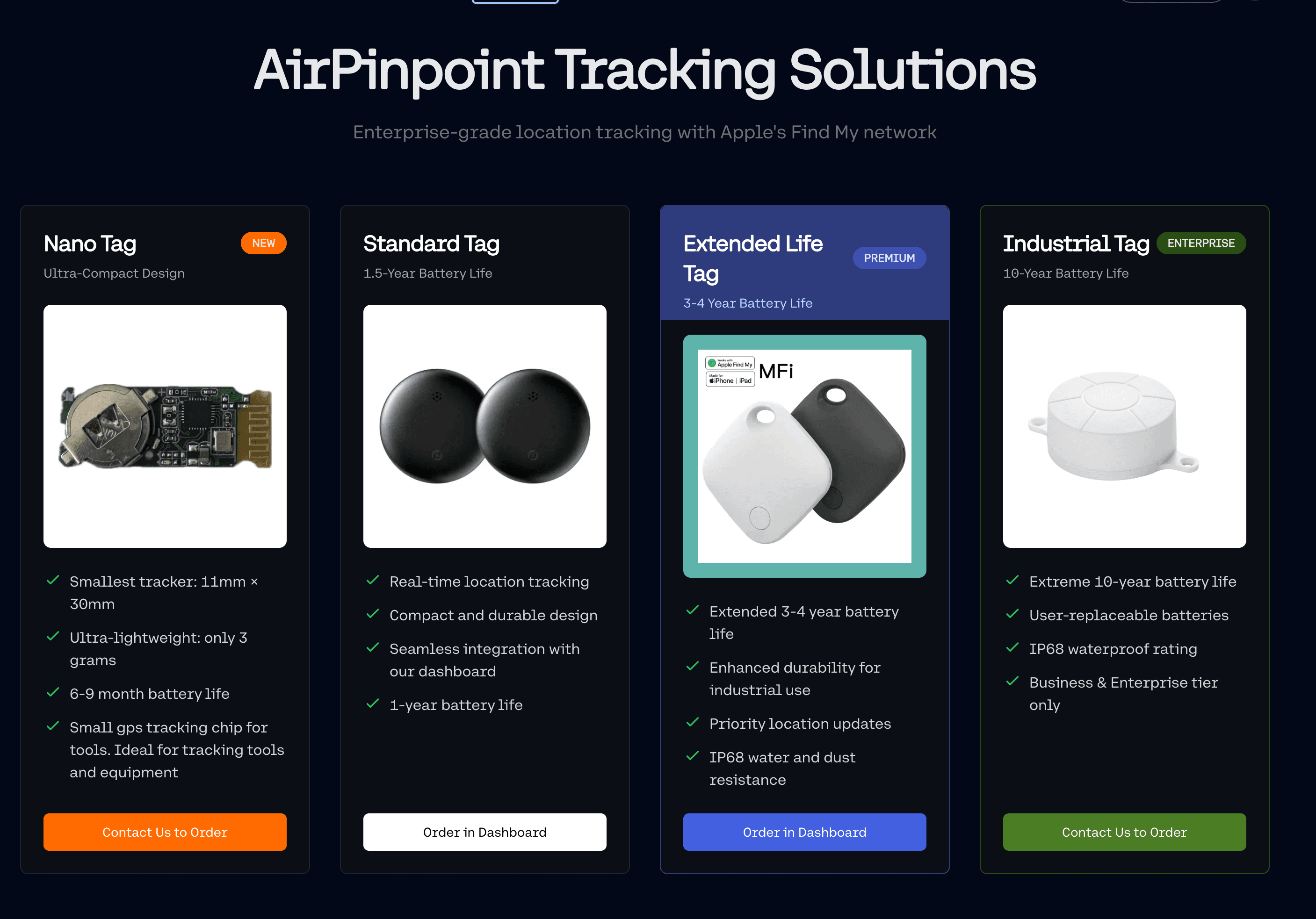
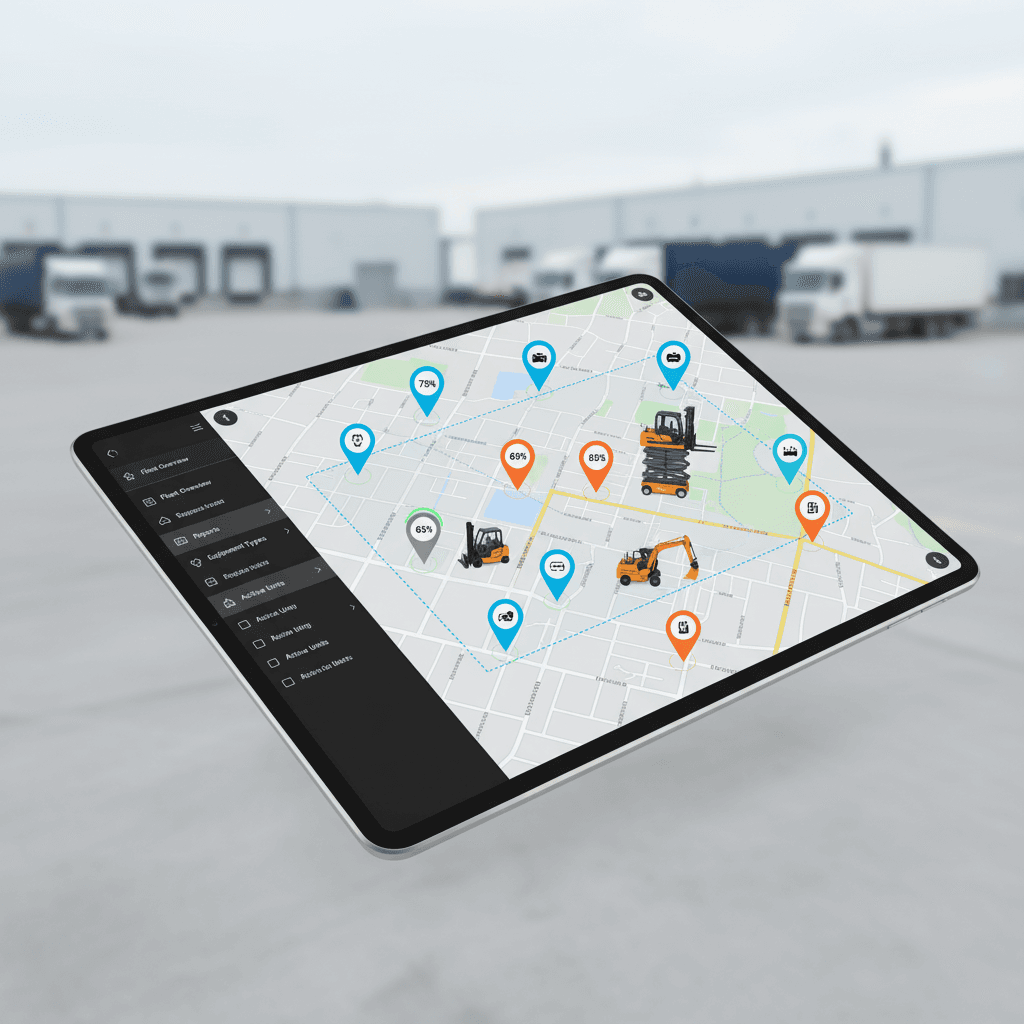
A location layer closes that gap. Airpinpoint tracks AirTags and Find My compatible tags on one map for $11.99 per device per month, with location history and geofence alerts. For maintenance it does three useful things:
| Use | How it works |
|---|---|
| Find the overdue unit | Look up the unit on the map before assigning the work order |
| Log shop arrivals | Draw a geofence around the shop; an outbound webhook fires when a tagged unit enters or leaves |
| Spot idle assets | Location history shows trailers and equipment that have not moved in weeks |
Be clear about the limits. Find My locations arrive when a nearby iPhone passes the tag, every few minutes in busy areas and less often on remote sites, so locations are periodic, and live second-by-second tracking needs a cellular GPS unit. Airpinpoint reads no engine hours or fault codes and does no work orders or PM scheduling, and it has no pre-built connector to any maintenance software. Most fleets simply keep the map open in a second tab next to their maintenance tool. For powered vehicles that need live tracking and engine data, a hardwired telematics unit is the better fit; for trailers and unpowered equipment, see the trailer GPS tracker guide.
Fleet Maintenance vs Fleet Management
Fleet maintenance is one job inside fleet management. Maintenance keeps each vehicle working. Fleet management also covers buying and selling vehicles, fuel, routing, driver safety, compliance and knowing where every unit is. If you are choosing a system for the whole operation, start with our guide to fleet management software alternatives; for location and utilization across the fleet, see fleet tracking and monitoring.
Published November 2026. Regulatory requirements from the Federal Motor Carrier Safety Regulations, 49 CFR Parts 393 and 396. Savings estimates from the US Department of Energy and Pacific Northwest National Laboratory, Operations and Maintenance Best Practices Guide. Software prices from each vendor's published pricing as summarized in our comparison pages.

 Our Solution
