Updated
DVIR and ELD Compliance: What Fleet Operators Actually Need to Know
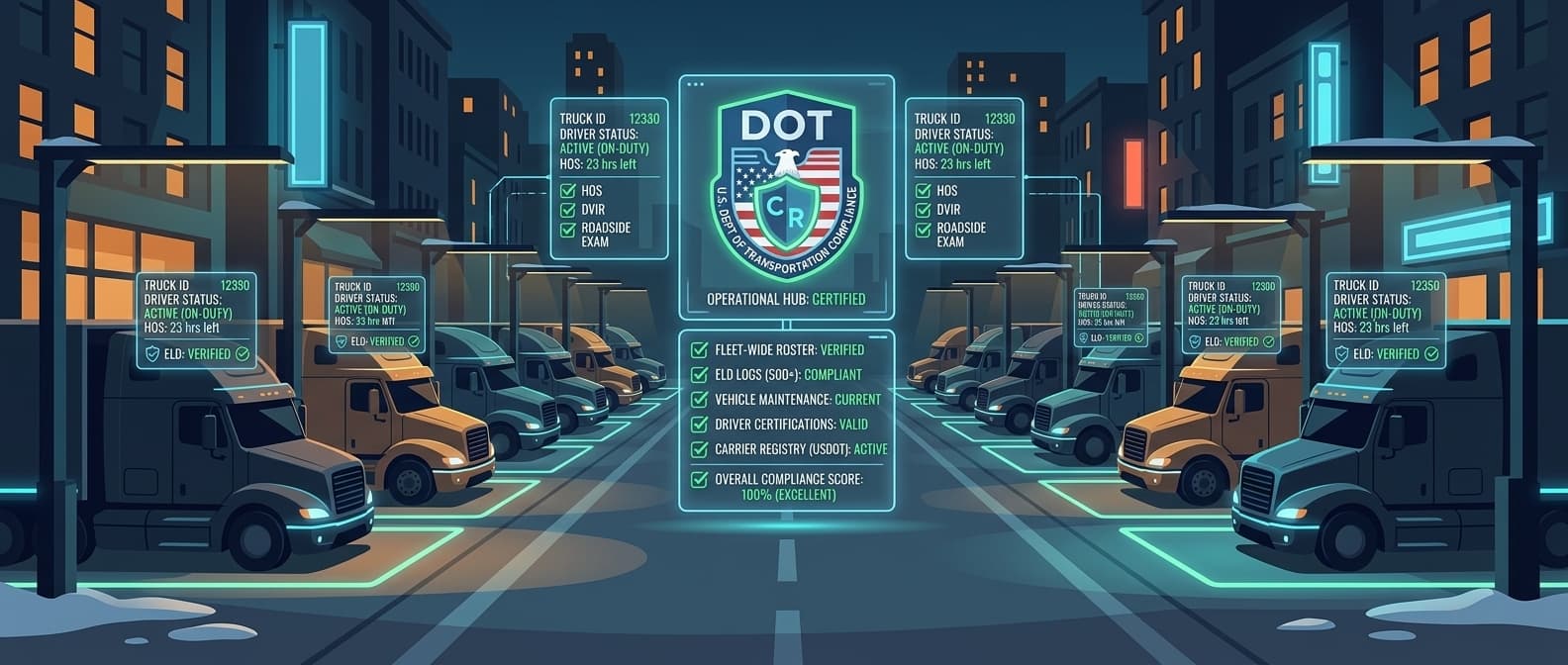
23% of commercial vehicles inspected during the 2024 CVSA International Roadcheck were placed out of service. The majority of those violations were items a pre-trip DVIR should have caught. Brake adjustment, tire tread depth, inoperative lamps. Basic stuff that gets missed when inspections are rushed or poorly documented.
This guide covers the two pillars of daily fleet compliance: DVIRs (the vehicle side) and ELD/HOS (the driver side). It includes what federal law requires, what changed in 2026, the most expensive violations, and how to build a compliance process that does not rely on hope.
What a DVIR Actually Requires
The Driver Vehicle Inspection Report is governed by 49 CFR 396.11 and 396.13. The regulation is short, but most carriers still get it wrong.
Post-trip requirements (49 CFR 396.11): At the end of each day's work, the driver must prepare a written report covering the condition of the vehicle. The report must address at minimum:
- Service brakes (including trailer brake connections)
- Parking brake
- Steering mechanism
- Lighting devices and reflectors
- Tires
- Horn
- Windshield wipers
- Rear vision mirrors
- Coupling devices
- Wheels and rims
- Emergency equipment (fire extinguisher, reflective triangles)
If the vehicle has no defects, the driver must still note "no defects" on the report. A blank form is not a completed DVIR.
Pre-trip requirements (49 CFR 396.13): Before driving, the driver must review the last DVIR for the vehicle. If defects were noted, the driver must sign the report to acknowledge that the defects have been repaired or that repair is unnecessary.
Carrier obligations: The motor carrier must repair any defects that would affect safe operation before allowing the vehicle to be dispatched. The carrier must also retain DVIRs for at least 90 days.
The 2026 DVIR Scoring Category
FMCSA added a standalone DVIR Quality compliance category to the Safety Measurement System in 2026. Previously, DVIR issues were buried inside the broader Vehicle Maintenance category. Now they have their own percentile.
The intervention threshold for DVIR Quality is 80%. Carriers above that percentile receive warning letters and face compliance reviews. The scoring considers:
- Whether DVIRs are being completed for each vehicle operated
- Whether defects are being reported accurately (not just "no defects" every day)
- Whether reported defects are being repaired before dispatch
- Quality and completeness of inspection documentation
A fleet that rubber-stamps "no defects" daily and then gets caught with brake violations during a roadside inspection will see its DVIR Quality score spike. The scoring system explicitly looks for the disconnect between what drivers report and what inspectors find.
ELD Mandate: Who Needs One, Who Does Not
The Electronic Logging Device mandate under 49 CFR 395.8 has been in full effect since December 2019. Every AOBRD grandfathering period has expired. If you are still running AOBRDs, you are out of compliance.
Who Must Use an ELD
Any driver of a commercial motor vehicle who is required to keep records of duty status (RODS). In practice, this means:
- Interstate drivers operating vehicles over 10,001 lbs GVWR
- Drivers transporting hazardous materials requiring placards
- Drivers transporting 9 or more passengers for compensation
- Drivers transporting 16 or more passengers (regardless of compensation)
Who Is Exempt
The exemptions are narrow:
- Short-haul exemption (49 CFR 395.1(e)): Drivers who operate within a 150 air-mile radius of their reporting location, return to that location within 14 hours, and use time cards instead of RODS. This exemption was expanded from 100 air-miles in 2020.
- Pre-2000 vehicles: Drivers of CMVs manufactured before model year 2000.
- Driveaway-towaway: Drivers operating under driveaway-towaway permits where the vehicle being delivered is the commodity.
- 8-day rule: Drivers who use RODS no more than 8 days in any 30-day period.
If your fleet runs local routes and qualifies for short-haul, you can skip the ELD. But you still need time records. The exemption does not remove the documentation requirement, only the electronic device requirement.
Hours of Service Rules (Quick Reference)
ELDs enforce hours of service regulations. Here is the current HOS framework for property-carrying vehicles:
| Rule | Limit | What It Means |
|---|---|---|
| 11-Hour Driving Limit | 11 hours | Maximum driving time after 10 consecutive hours off duty |
| 14-Hour Window | 14 hours | All driving must occur within 14 hours of coming on duty |
| 30-Minute Break | After 8 hours | Required break after 8 cumulative hours of driving |
| 60/70-Hour Limit | 60 hrs/7 days or 70 hrs/8 days | Maximum on-duty time over a rolling period |
| 34-Hour Restart | 34 consecutive hours off | Resets the 60/70-hour clock |
| Sleeper Berth | 7/3 or 8/2 split | Drivers can split required off-duty time |
The most common HOS violation: Form and manner of RODS, which means the log entries exist but contain errors, omissions, or inconsistencies. This is a documentation problem, not a driving problem. Proper ELD configuration eliminates most of these.
DOT Inspection Preparation
DOT inspections happen two ways: scheduled compliance reviews (an auditor visits your facility) and unannounced roadside inspections (a trooper pulls your truck over). You need to be ready for both.
The Six Levels of DOT Inspection
| Level | Name | What Gets Checked |
|---|---|---|
| I | North American Standard | Full vehicle and driver inspection (37-point) |
| II | Walk-Around | Driver interview + exterior vehicle inspection |
| III | Driver-Only | Credentials, HOS records, seat belt, drug/alcohol |
| IV | Special Inspections | One-time examinations for specific campaigns |
| V | Vehicle-Only | No driver present, vehicle inspection only |
| VI | Enhanced NAS | Level I plus radiological screening (hazmat) |
Level I is the most thorough and the one that catches the most violations. During a Level I inspection, the officer checks:
Driver items: CDL and endorsements, medical certificate, daily logs (ELD data), waiver or exemptions documentation, seat belt usage, alcohol/drug signs, vehicle inspection report.
Vehicle items: All brake components and adjustment, steering and suspension, frame and body, exhaust system, fuel system, lighting, windshield and mirrors, tires and wheels, coupling devices, cargo securement, hazmat placards (if applicable).
Top Violations and Their Costs
Based on CVSA Roadcheck data and FMCSA enforcement records:
| Violation | Frequency | Fine Range | OOS Rate |
|---|---|---|---|
| Inoperative required lamps | 14.2% of vehicle violations | $180-$500 | Low |
| Tire/wheel deficiencies | 11.8% | $500-$1,270 | High |
| Brake adjustment out of tolerance | 9.4% | $1,270-$7,500 | High |
| Oil/grease leaks | 7.1% | $180-$500 | Low |
| Brake component defects | 6.3% | $1,270-$7,500 | High |
| No/incomplete DVIR | ~5% of driver violations | $1,270 per occurrence | Medium |
| Form/manner of RODS (HOS) | ~12% of driver violations | $1,270-$16,000 | High |
| No valid medical certificate | ~4% | $1,270-$2,750 | High |
| Operating after OOS order | Rare but severe | Up to $32,208 | N/A |
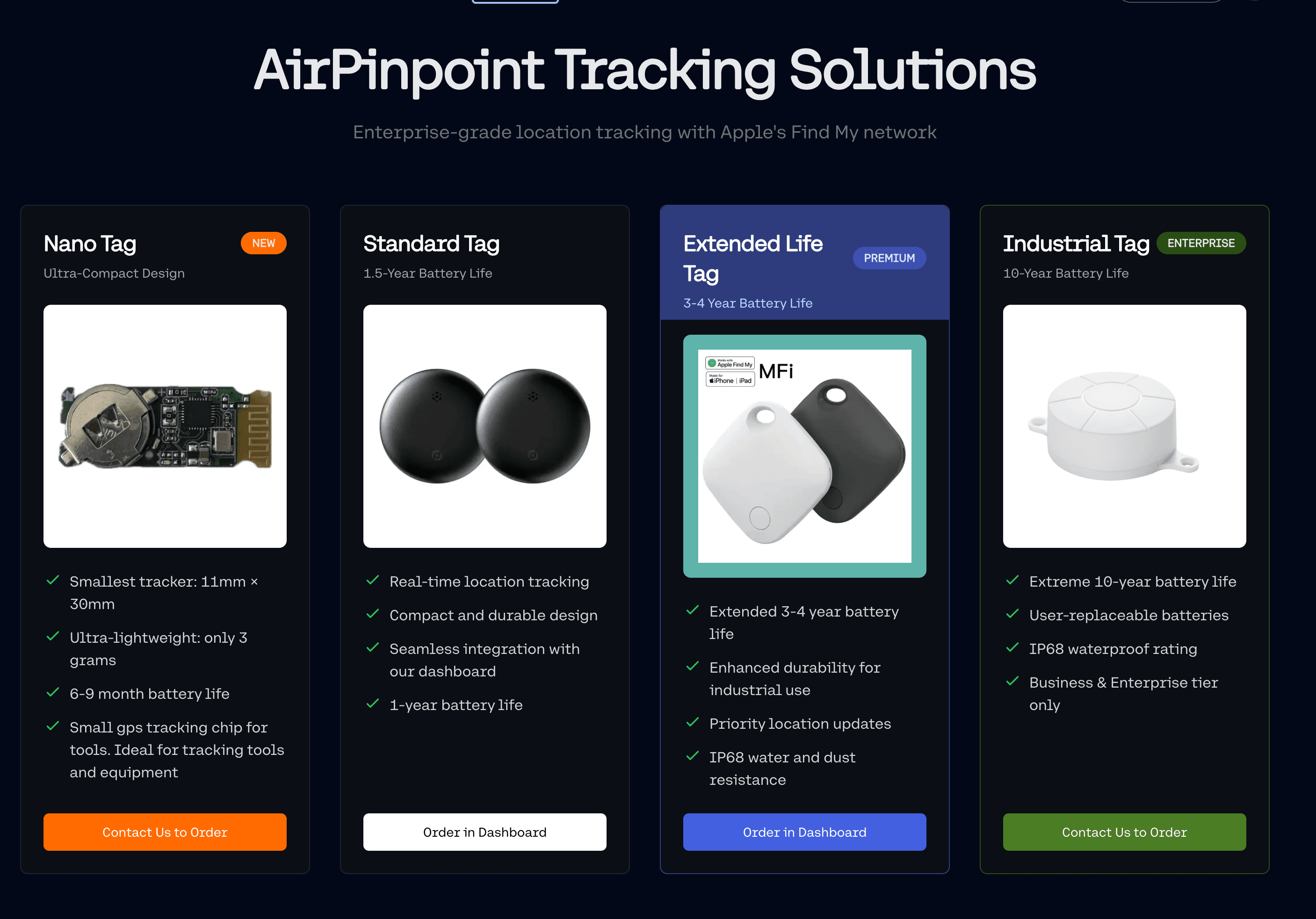
The economics are simple. A $29 AirTag with a pre-trip inspection app catches the top five vehicle violations before the truck leaves the yard. The combined annual cost of compliance software plus tracking is less than one brake-adjustment fine.
Fleet Compliance Checklist
Use this as a rolling audit. Every item should have a documented process, not just a verbal policy.
Daily
- Pre-trip inspection completed for each vehicle dispatched
- Previous DVIR reviewed and signed by driver before departure
- Any reported defects repaired or documented as not requiring repair
- ELD functioning and driver logged into correct vehicle
- Driver has CDL, medical certificate, and required endorsements
Weekly
- Review ELD data for unassigned driving time
- Check for HOS violations across all drivers
- Verify all DVIRs filed for the past 7 days (no gaps)
- Review defect reports and confirm repair documentation
- Check vehicle registrations approaching expiration
Monthly
- Pull FMCSA Safety Measurement System scores (updated monthly since 2026)
- Review all roadside inspection reports from the past 30 days
- Audit driver qualification files for expiring documents
- Run preventive maintenance report: overdue services by mileage or date
- Verify insurance certificates are current
Quarterly
- Full driver qualification file audit (CDL, medical cards, MVR, drug testing)
- Vehicle registration and permit renewal review
- IFTA/IRP filing preparation
- Review and update maintenance schedules based on actual usage patterns
- Mock DOT audit: pull random vehicles and verify complete documentation
How GPS and Location Tracking Supports Compliance
Location data is not a legal requirement. But it fills gaps that are hard to cover without it.
Audit Documentation
When an FMCSA auditor asks "where was Unit 47 on March 12th?", you have two options: call the driver and hope they remember, or pull up location history. The second option takes 30 seconds and produces timestamped, map-based evidence.
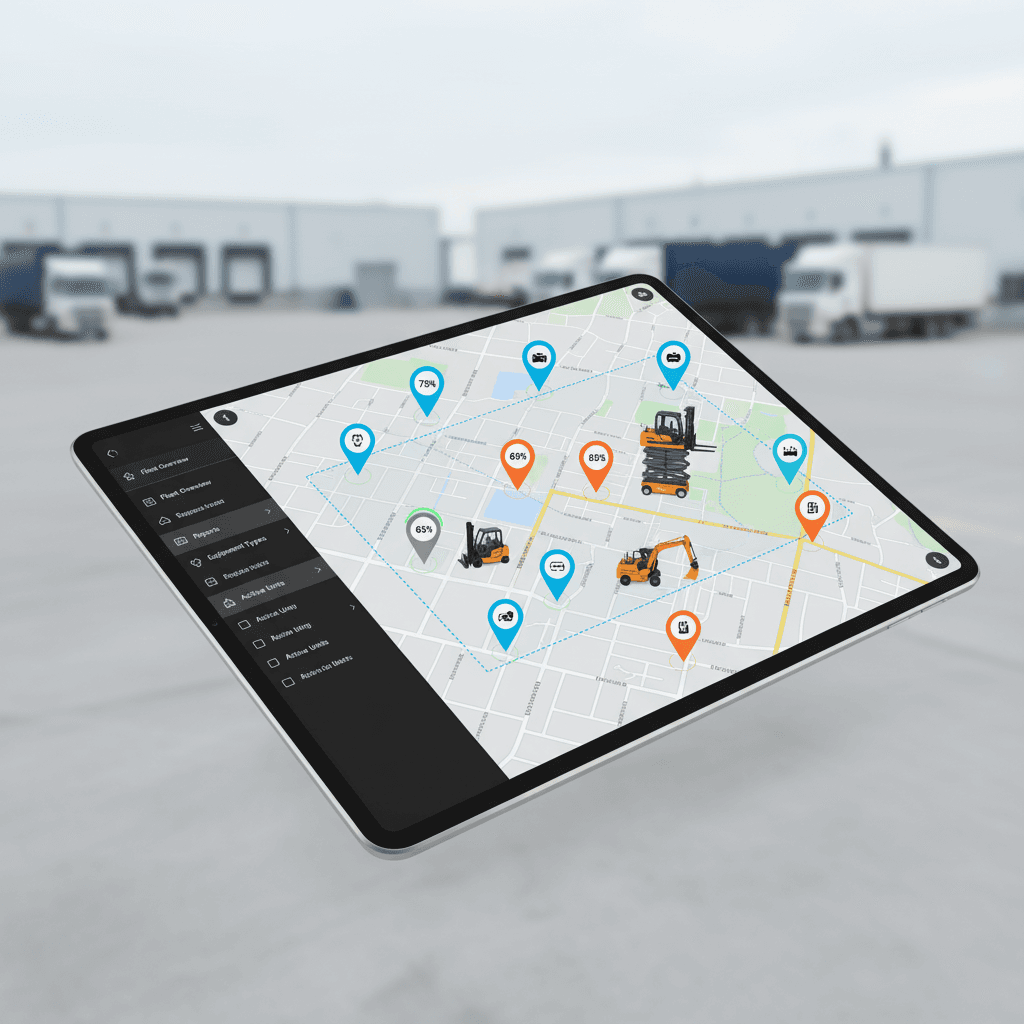
Airpinpoint stores complete location history for every tracked asset. During an audit, you can pull any vehicle's trail for any date in your retention window and export it as a PDF or CSV.
Maintenance Scheduling by Actual Usage
Calendar-based maintenance (every 90 days, every 6 months) treats a truck running 5,000 miles/month the same as one running 1,200. That means either the high-mileage truck is underserviced or the low-mileage truck is overserviced.
Location tracking reveals actual usage patterns. If a trailer sits in a yard for three weeks and then runs heavy for two weeks, its service schedule should reflect that, not an arbitrary calendar interval.
Geofence Compliance
Some operations require vehicles to stay within designated zones, enter only approved routes, or avoid restricted areas. Geofence alerts catch violations the same day, usually 15 to 40 minutes after the crossing, instead of at the next audit.
Common compliance geofence uses:
- Yard curfew: Alert when a vehicle leaves the yard outside business hours. Unauthorized movement means unlogged miles, which means HOS violations.
- Restricted zones: Environmental permits, weight-restricted roads, school zones with time restrictions.
- Customer sites: Proof of delivery and service verification for contract compliance.
- Recall response: When a safety recall hits, knowing exactly which vehicles are at which locations lets you prioritize service center proximity instead of calling every driver.
Supporting DVIR Accuracy
When a driver reports "no defects" every single day for 90 days, and then a roadside inspector finds three brake violations, the FMCSA sees a pattern: either the inspections are not happening or the defects are not being reported. Both are violations.
Location data corroborates DVIR timing. If a driver reports completing a pre-trip inspection at 6:00 AM at the depot, and the vehicle's location history confirms it was at the depot at that time, the DVIR has supporting evidence. If the vehicle was 50 miles away at 6:00 AM, you have a documentation problem to address internally before FMCSA finds it.
Common Violations That DVIRs Should Catch
Every item in this list is a standard DVIR checkpoint. If your drivers are completing thorough inspections, these should never show up at a roadside stop.
Brakes (25% of all vehicle OOS violations):
- Brake adjustment outside tolerance (> 2 inches of pushrod travel for most types)
- Cracked or broken brake drums
- Air line leaks or damage
- Missing or inoperative ABS malfunction lamp
Tires (15% of vehicle OOS violations):
- Tread depth below 2/32" on steer tires, 1/32" on other positions
- Cuts, bulges, or exposed cords
- Flat or severely underinflated
- Mismatched duals (> 1/2" diameter difference)
Lighting (most common violation overall):
- Inoperative headlamps, tail lamps, or clearance lamps
- Cracked or missing reflectors
- Non-functional turn signals
Coupling (trailer-specific):
- Fifth wheel not locked
- Kingpin damage or excessive wear
- Defective or missing safety chains/cables
- Glad hand seals missing or damaged
A 15-minute walk-around with a flashlight catches all of these. The problem is not the difficulty of the inspection. It is the discipline of doing it every day and documenting what you find.
Compliance Software Options for DVIR and ELD
Different tools cover different parts of the compliance stack. Here is how they map to DVIR and ELD requirements specifically.
| Tool | DVIR | ELD | HOS Dashboard | Location | Monthly Cost |
|---|---|---|---|---|---|
| Whip Around | Full digital DVIR with photos | No | No | No | $5-9/asset |
| Fleetio | DVIR + maintenance workflows | Integrates | Basic | Integrates | $4-7/vehicle |
| Samsara | DVIR + automated fault codes | Yes | Yes | Yes | $27-33/vehicle |
| Keep Truckin (Motive) | Basic inspection forms | Yes | Yes | Yes | $20-35/vehicle |
| Airpinpoint | No | No | No | Yes | $11.99/tag |
For fleets that need DVIR and location but not ELD (local operations under the short-haul exemption), pairing Whip Around with Airpinpoint gives you complete inspection documentation and full vehicle location history for $17-21/vehicle/month. That is roughly half the cost of a bundled telematics platform, without a 3-year contract.
For fleets that need ELD, the equation changes. Samsara or Motive bundle everything, which makes sense if you need the dash cams, driver coaching, and IFTA reporting that come with the package. If you only need ELD compliance, a standalone device from providers like Keep Truckin or Rand McNally covers the regulatory requirement at a lower cost.
Building a Compliance Workflow That Sticks
Software does not create compliance. Process does. Software makes the process auditable.
Step 1: Standardize the pre-trip walk-around. Print or digitize a consistent 15-point checklist covering all DVIR requirements. Every driver, every vehicle, every day. No exceptions for short trips or familiar vehicles. Whip Around or a simple tablet form works.
Step 2: Make defect reporting frictionless. If reporting a defect means the truck gets pulled from service and the driver loses their load, drivers will underreport. Build a culture where reporting defects early is valued, not punished. Stock common replacement parts (bulbs, reflectors, glad hand seals) so minor fixes happen same-day.
Step 3: Close the defect loop. Every reported defect must have a documented resolution: repaired, scheduled for repair, or determined to not affect safe operation. Open defects with no follow-up are what auditors flag.
Step 4: Add location tracking. Deploy Airpinpoint tags on every vehicle and trailer. This gives you audit-ready location history, geofence alerts for yard security and zone compliance, and mileage-based maintenance triggers. $29 per tag, $11.99/month, no long-term contract.
Step 5: Review weekly, not quarterly. Under the 2026 FMCSA scoring system, violations hit your percentile within 30 days. Quarterly compliance reviews mean you are always reacting to scores from two months ago. Weekly reviews of ELD exceptions, DVIR completion rates, and open defect tickets catch problems before they become violations.
Step 6: Prepare for the audit before it comes. Run a mock DOT audit every quarter. Pull 5 random vehicles. For each one, produce: last 30 days of DVIRs, maintenance records, driver qualification file, and location history. If you cannot produce all four in under 10 minutes per vehicle, your documentation process has a gap.
Penalties Reference
Quick reference for financial exposure:
| Violation Type | Per-Occurrence Fine | Maximum Fine |
|---|---|---|
| General DVIR violation | $1,270 | $16,000 (pattern) |
| Operating with known safety defect | $19,277 | Per violation |
| ELD violation (no device) | $1,270 | $16,000 (pattern) |
| HOS violation (driving over limit) | $1,270 | $16,000 (pattern) |
| False log entry | $1,270-$16,000 | Criminal penalties possible |
| Operating after OOS order | $32,208 | Per occurrence |
| No medical certificate | $1,270-$2,750 | Per driver |
A single compliance review that finds 10 DVIR violations across 5 vehicles costs $12,700 in fines alone. Add two days of vehicle downtime at $900/truck/day, and one audit costs $21,700.
The annual cost of Whip Around ($5/asset/month) plus Airpinpoint ($11.99/tag/month) for a 10-vehicle fleet is $2,039. One bad audit costs ten times that.
Next Steps
If you are building or upgrading a fleet compliance program, start here:
-
Assess your FMCSA scores. Check csa.fmcsa.dot.gov for your current percentiles across all compliance categories. Anything above 50% needs immediate attention.
-
Digitize DVIRs. If your drivers still use paper forms, that is your biggest single improvement. Digital DVIR tools start at $5/asset/month.
-
Add location tracking. Airpinpoint gives you vehicle location history, geofence alerts, and audit documentation at $11.99/tag/month. No 3-year contract, no hardware installation, no cellular subscription.
-
Build the weekly review habit. Pull ELD exceptions, DVIR completion rates, and open defect tickets every Monday. Under the new monthly scoring cycle, weekly reviews are the minimum cadence that keeps you ahead of FMCSA.
-
Read the full fleet compliance software comparison for detailed pricing and feature breakdowns across all major platforms.


 Our Solution