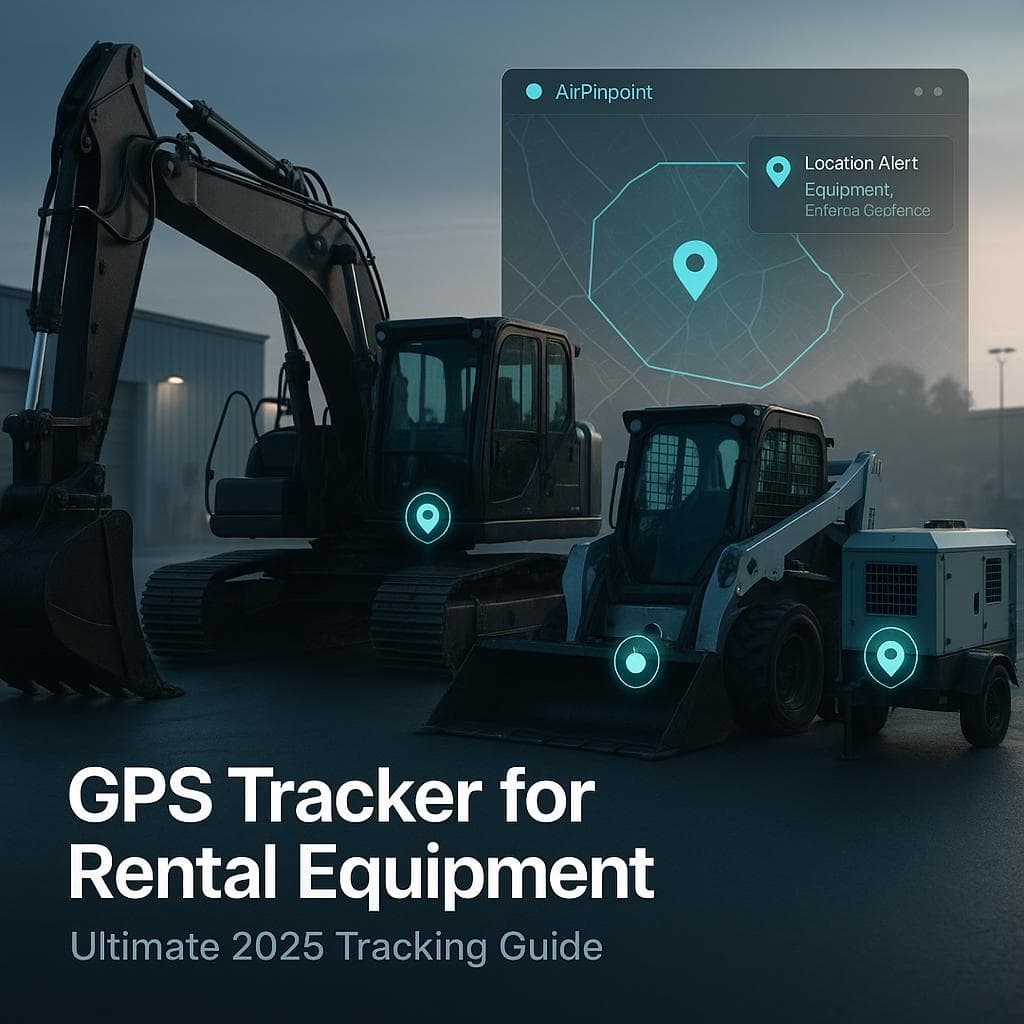
GPS Tracker for Rental Equipment: Complete 2025 Guide
Rental equipment spends most of its working life somewhere other than your yard. That is the whole business, and it is also why a machine can go missing for a week before anyone files a report. This guide covers what GPS and Find My tracking actually does for a rental fleet: what it helps you recover, what it costs per asset, and the things it cannot tell you.
The $1 Billion Problem: Equipment Theft in America
The National Equipment Register (NER) and the National Insurance Crime Bureau publish an annual equipment theft report built from National Crime Information Center data. Their figures are the ones worth quoting here, because they come from police reports rather than from a vendor:
| Metric | Industry data (NER/NICB) |
|---|---|
| Annual theft losses | Roughly $1 billion |
| Thefts reported per year | More than 10,000 construction and farm equipment thefts |
| Recovery rate | About 21-22% of stolen equipment is ever recovered |
Read the recovery rate again, because it is the number that matters: four out of five stolen machines never come back. For rental companies the loss lands twice, once on the asset and once on the rental revenue it would have earned while it was gone.
Why Traditional Insurance Isn't Enough
Many rental operators assume insurance covers equipment loss. Reality check:
- Deductibles: Often $1,000-5,000 per incident
- Coverage gaps: Many policies exclude certain theft scenarios
- Rate increases: a run of claims tends to show up in your premium at renewal
- Claim delays: payment takes weeks, sometimes months, which is a cash flow problem of its own
- Depreciation: You receive depreciated value, not replacement cost
A tracker does not stop the theft. What it changes is whether the incident becomes a claim at all: equipment recovered in the first 48 hours is equipment you never file on, and the deductible you did not pay is the clearest saving in the whole model.
Table of Contents
- Financial Impact of GPS Asset Tracking
- Selecting the Right GPS Tracking Device
- Implementation Timeline and Process
- Critical Features for Rental Equipment Tracking
- What Tracking Changes for a Rental Fleet
- Comparison: AirTags vs. Traditional GPS Trackers
- Future-Proofing Your Tracking System
Financial Impact of GPS Asset Tracking
GPS tracking technology delivers measurable financial benefits for rental equipment companies through multiple avenues:
The ROI Reality
Published averages for "GPS tracking cuts losses by X%" are marketing numbers, and we are not going to add one. Work it out on your own fleet instead. The inputs are all figures you already have:
| Input | Where to get it |
|---|---|
| Annual write-offs to loss and theft | Last year's books, at replacement cost rather than depreciated value |
| Deductible per incident | Your policy, commonly $1,000-5,000 |
| Hours per week spent locating equipment | Ask a dispatcher what a normal week looks like |
| Disputed invoices per quarter | Whatever you wrote off because you could not prove a return date |
| Cost of tracking | $29 per asset once, plus $11.99 per tag per month |
Three things change once every asset reports its own location:
-
Recovery instead of write-off: A stolen generator with a location trail is a police report with an address in it. That is a different conversation from a report that says the yard was full on Friday and empty on Monday. The saving is the asset plus the deductible you never paid.
-
Dispute resolution with documentation: Location and timestamp history resolves arguments about rental durations, where equipment sat, and whether it left the site it was rented for. That is what turns a disputed invoice into a settled one.
-
The audit stops being an event: Counting a yard by walking it is a half-day. Counting it from a map is a scroll. On a fleet spread over several yards this is usually the change operators notice first, well before any theft happens.
Selecting the Right GPS Tracking Device for Rental Equipment
When evaluating GPS tracking solutions for your rental fleet, consider these critical factors:
Battery Performance: The Hidden Cost
Traditional GPS trackers create a maintenance nightmare:
| Tracker Type | Battery Life | What servicing 100 units involves |
|---|---|---|
| Wired GPS | N/A (hard-wired) | An installer on every machine, once |
| Rechargeable GPS | 2-4 weeks | Hands on every unit, roughly monthly |
| Long-life GPS | 6-12 months | One service visit per unit per year |
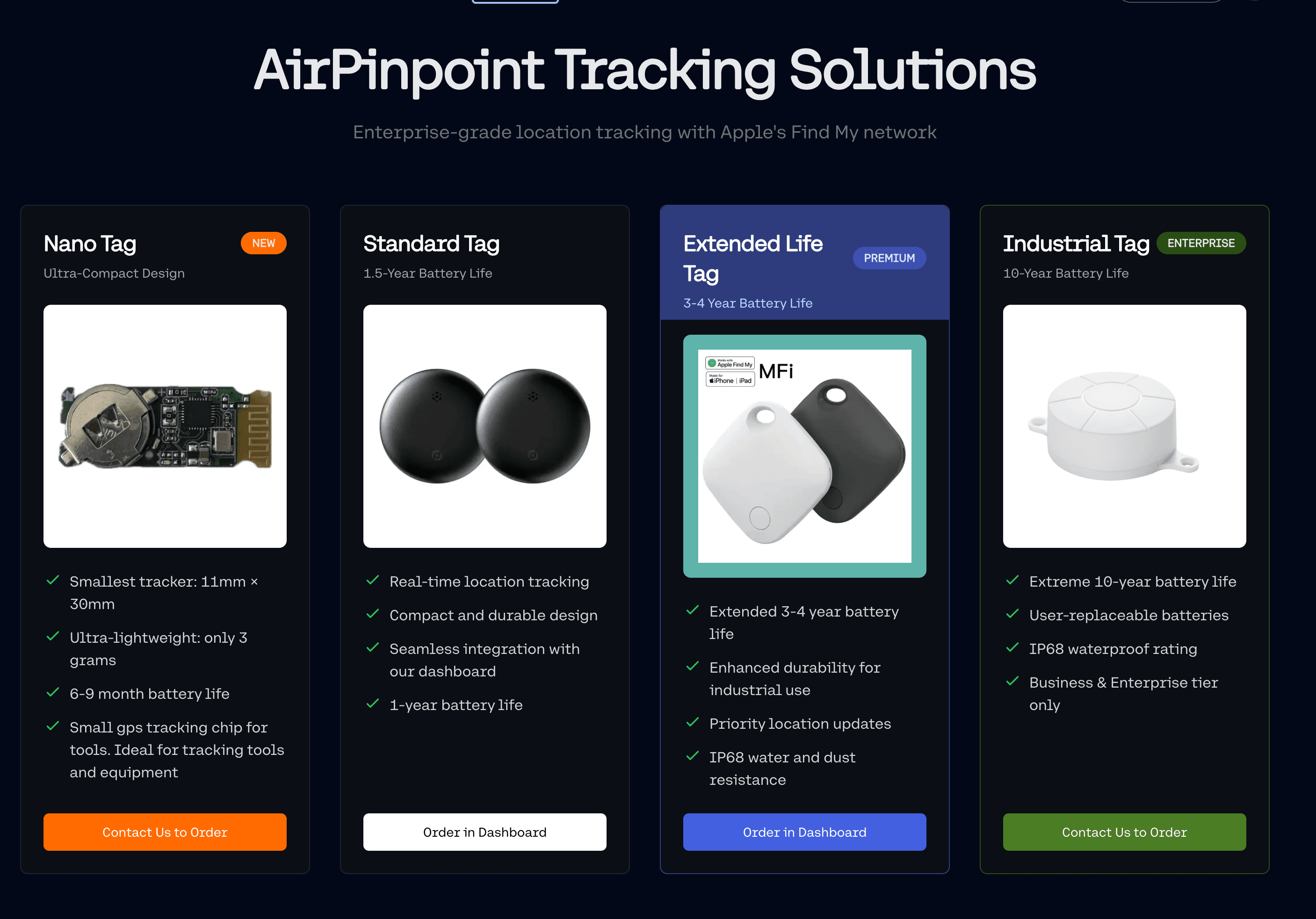
| AirTag-based (Airpinpoint) | ~12 months | One coin-cell swap per unit per year |
The cost that surprises rental operators is not the tracker, it is the labor of getting hands on every unit in the fleet to service it. A tracker you recharge every few weeks means chasing equipment that is out on rent.
Network Coverage
Cellular-based GPS trackers depend on consistent network coverage, creating blind spots in remote areas where equipment often operates. AirTags ride Apple's Find My network, which Apple describes as over a billion devices worldwide. Any passing iPhone relays a tag's position, so coverage follows people rather than towers. That helps in a parking garage or a dense yard, and it thins out on a remote site where nobody walks past for days.
Installation Complexity
Many traditional GPS tracking devices require complex hardwiring into equipment electrical systems. Our drop-in solutions install in minutes without specialized tools or technical expertise, enabling rapid deployment across diverse equipment types.
Durability Specifications
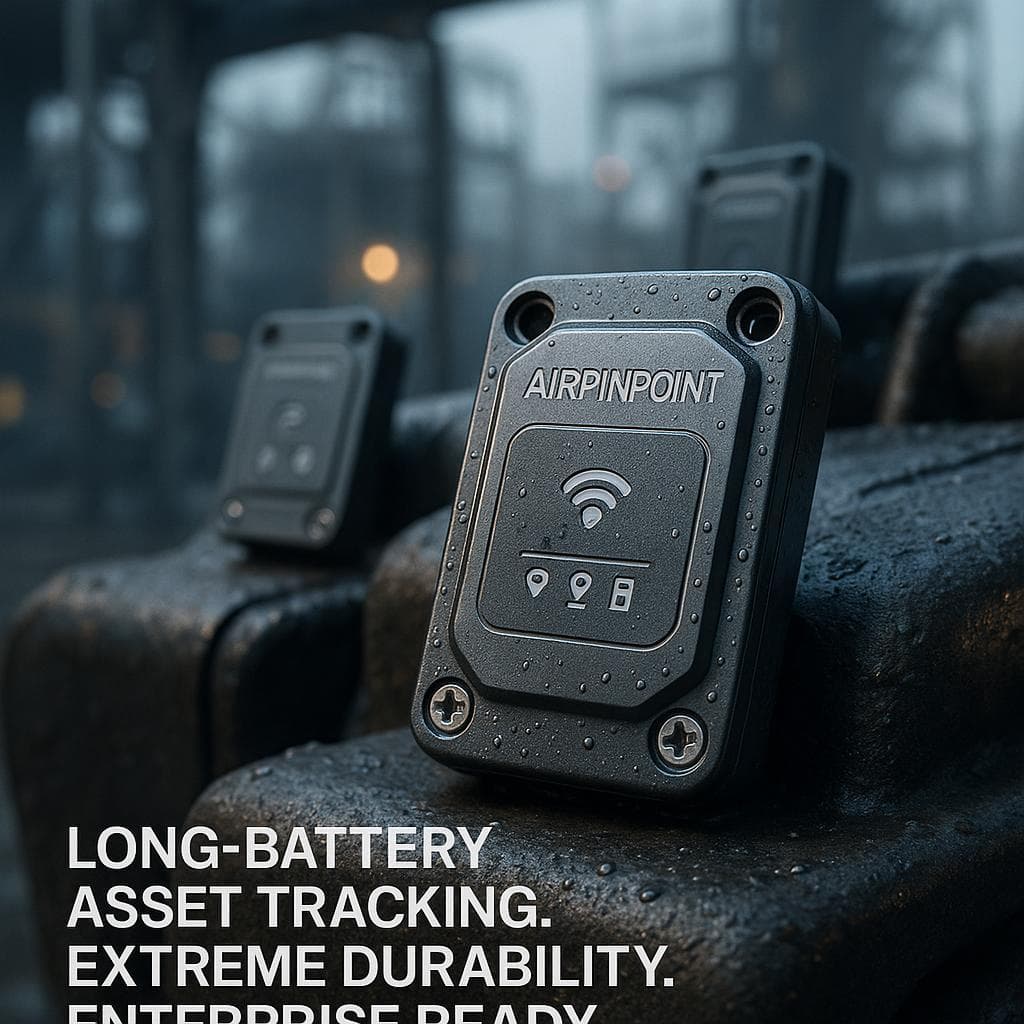
Rental equipment faces harsh conditions that destroy conventional trackers. Our industrial-grade solutions feature:
- IP67 water and dust resistance
- Operating temperature range: -4°F to 140°F (-20°C to 60°C)
- Shock-resistant mounting to withstand heavy equipment vibration
Cost Structure Comparison
Traditional GPS tracking systems typically involve:
- $250-450 per device initial cost
- $15-35 monthly cellular fees per unit
- 2-3 year contracts with early termination penalties
Ours has no cellular fee and no contract. An AirTag is $29, or $24.75 each in four-packs, and Airpinpoint Business is $11.99 per device per month. Cancel whenever you want.
Implementation Timeline and Process
Our streamlined onboarding process gets your rental equipment GPS tracking system operational in days, not months:
-
Fleet Assessment & Tag Selection (Day 1-2)
- Equipment categorization by value and risk profile
- Customized tag selection based on equipment type and environment
- Deployment strategy development with your team
-
Rapid Deployment (Day 3-5)
- Pre-configured tags arrive ready for immediate use
- Tags arrive already paired to your account, so you name each asset as you mount it
- Mounting hardware installation with tamper-evident features
-
System Integration (Day 5-7)
- REST API or webhook connection to your rental management software, built against our API
- Custom alert configuration based on business rules
- User permission setup and administrative controls
-
Team Training (Day 8)
- 30-minute virtual training session for all staff
- Comprehensive documentation and video tutorials
- Ongoing support by email
Critical Features for Rental Equipment GPS Tracking
Real-Time Location Monitoring
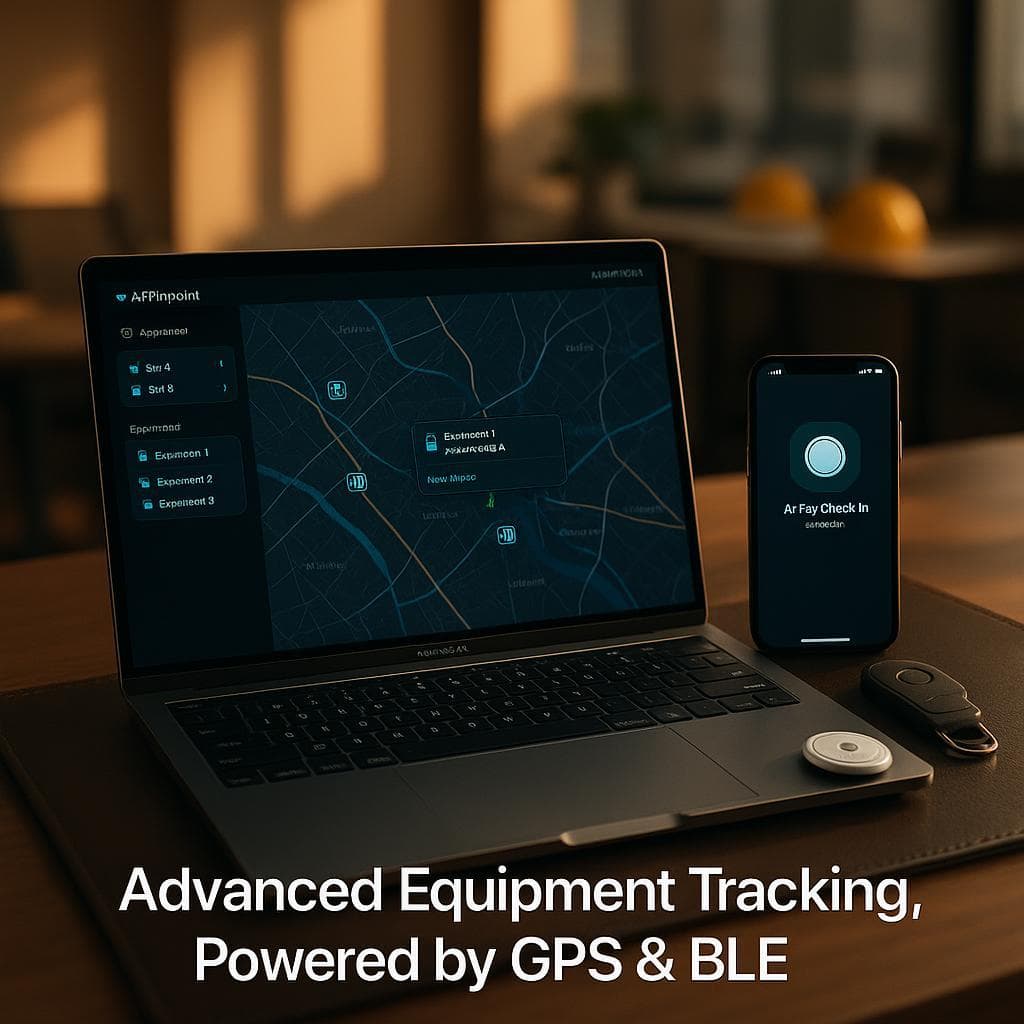
Track your entire fleet from a single dashboard with:
- Map visualization of all equipment locations
- Movement history with timestamps and routes
- Custom geofencing with a confirmed alert, typically 15 to 40 minutes after equipment leaves an authorized area
What a Tag Can and Cannot Tell You About Maintenance
A Find My tag reports position, not engine hours. It does not read a machine's ECU, so it cannot tell you a hydraulic pump is about to fail. Be clear about that before you build a service program on it.
What it does give you is the part most yards actually get wrong: knowing where a machine is when its service comes due, and seeing how long a unit has been sitting at one address. If a unit is due at 250 hours, the tag tells you which site to send the truck to. Pair it with your existing hour meter readings rather than expecting it to replace them.
Theft Prevention & Recovery
Protect your investment with advanced security features:
- Geofence alerts by email, Slack or WhatsApp when a unit leaves an authorized yard or site
- Webhooks on the same events, so your own system can react without polling
- Location history you can export as CSV or JSON and attach to a police report or insurance claim
- Tags that keep reporting after the theft, because they do not depend on the machine's power or a SIM card
One honest limit: recovery still runs through the police. We do not have law enforcement partnerships, and you should not go to the address yourself.
Client Management Integration
Improve customer experience while protecting your assets:
- Rental duration measured against where the machine actually was, which catches overtime you would otherwise eat
- Timestamped arrival and return records, so handover dates are not a matter of recollection
- Location patterns across the fleet, which show you which categories move constantly and which sit
What Tracking Changes for a Rental Fleet
The gains are specific and easy to reason about, which is why they do not need a case study to be believable:
- Recovery instead of a write-off. A tagged machine keeps reporting after it leaves the yard, so a theft becomes a location trail and a police report rather than an insurance claim.
- Utilization you can see. A machine sitting on a finished site is a machine you are not renting out. Location history makes that visible without a yard walk.
- Disputes settled with data. Return times and locations are timestamped, which ends the "I dropped it off Friday" conversation.
- No per-asset cellular bill. Tags ride the Find My network, so scaling to a few hundred assets does not add a SIM fee per unit.
Billing Dispute Resolution: A Hidden Benefit
GPS tracking provides irrefutable evidence for common rental disputes:
Common Disputes Resolved by GPS Data
- "I returned it on time": location history shows when the machine reached your yard, and when it did not
- "I never took it there": the trail shows every address the equipment sat at during the rental
- "It has been on my site the whole time": timestamps say otherwise if it was subcontracted out
What a tag cannot settle is condition. It reports position, so it will not tell you whether the dent was there at pickup. Photos at handover still do that job.
Equipment Utilization: The Overlooked Opportunity
Most rental operators focus on theft prevention, but utilization optimization often delivers greater ROI:
The Idle Machine Problem
Every yard has units that earn their keep and units that mostly sit, and most operators are working from a rough sense of which is which. A machine parked on a finished site for three weeks is not on anyone's list to collect, because nobody knows it is there. Location history turns that into something you can look at:
- Which units have not moved in a month, and are therefore candidates for repositioning or sale
- Which categories are out constantly, which is the case for buying more of them
- Where equipment piles up between branches
- Whether a unit came back to the yard or stopped somewhere on the way
What the Location Data Shows
| Signal | What it reveals | Action |
|---|---|---|
| Days parked at one address | Units that finished a job and were never collected | Send a truck |
| Idle time by location | Where equipment accumulates unused | Reposition to a busier branch |
| Time out versus time in the yard | Which categories actually turn over | Right-size inventory |
| Movement by season | Demand cycles you can plan around | Pre-position equipment |
A tag reports position, not engine hours, so this is about where machines are and how long they stay there. If you need true operating hours, keep reading them off the meter.
Better utilization visibility translates directly to revenue, since an idle machine you can see is one you can re-rent.
Geofencing: Your First Line of Defense
Geofencing creates virtual boundaries that trigger alerts when equipment moves:
How It Works
- Draw boundary: Define the approved operating area on a map
- Set hours: Specify when movement is expected vs. suspicious
- Configure alerts: Choose notification method (email or webhook)
- Fast response: Get alerted 15 to 40 minutes after a boundary breach on a populated site
Best Practices for Rental Equipment Geofencing
| Scenario | Recommended Geofence | Alert Type |
|---|---|---|
| Jobsite rental | Tight boundary around site | After-hours alerts only |
| Long-term rental | Customer's city/region | Exit alerts 24/7 |
| High-value equipment | Tight boundary + city boundary | All movement alerts |
| Branch storage | Yard perimeter | Any movement alerts |
After-Hours Detection
Equipment leaves yards when nobody is watching, which in practice means nights and weekends. A tag cannot tell you an engine started, but it can tell you a machine changed address at 2am, and on a closed yard that is the same signal. Worth configuring:
- Any movement outside your operating hours
- Movement from a yard on a day with no scheduled pickups
- A unit leaving a jobsite geofence before the rental ends
Comparison: AirTags vs. Traditional GPS Trackers for Rental Equipment
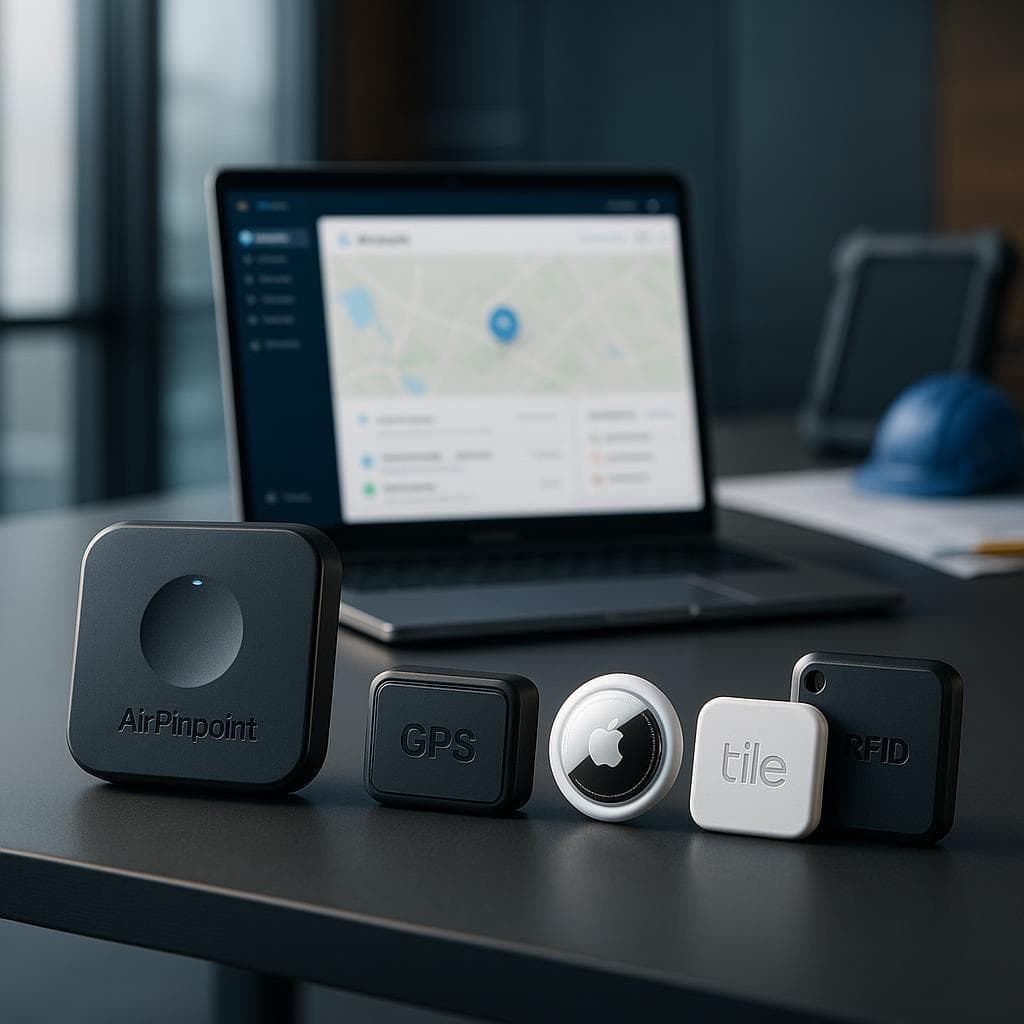
| Feature | AirTag-Based Solution | Traditional GPS Tracker |
|---|---|---|
| Battery Life | 12+ months | 2-3 months (typical) |
| Monthly Fees | From $11.99 per tag per month | $15-35 per device |
| Coverage | Apple FindMy network (global) | Cellular networks only |
| Size | Compact (1.26 inches) | Bulky (4-8 inches typical) |
| Water Resistance | IP67 standard | Varies widely |
| Installation | Drop-in, no tools required | Often requires hardwiring |
| Temperature Range | -4°F to 140°F | Typically narrower range |
| Real-Time Updates | When in range of any Apple device | Only with cellular connection |
| Recovery Network | over a billion devices worldwide | Limited to carrier coverage |
Future-Proofing Your GPS Tracking System
The rental equipment tracking landscape continues to evolve rapidly. Stay ahead with these emerging technologies incorporated into our solutions:
Build On the API, Not On a Roadmap
The durable part of this system is the data, not a feature list. Location history and geofence events are available through a REST API and outbound webhooks, so whatever you run your yard on today, the tracking data can feed it. If you change rental management software in three years, the tags do not care.
Coverage Improves Without You Doing Anything
The tags ride Apple's Find My network, which is every nearby iPhone, iPad and Mac with Find My enabled. That network grows as Apple sells devices. A yard that reports sparsely today reports better as the neighborhood fills in, and you do not have to swap hardware or renegotiate a cellular contract for that to happen.
Conclusion: Transform Your Rental Business with GPS Asset Tracking
The case for tracking a rental fleet is not a percentage from someone else's study. It is the arithmetic in the table above, run on your own write-offs and your own deductible. For most yards a single recovered machine settles it.
What Find My based tags bring to that arithmetic: about a year of battery on a coin cell, coverage anywhere iPhones go rather than anywhere a cell tower reaches, no SIM per asset, and a mount that goes on in a minute instead of an install appointment. The cost is $29 per asset once and $11.99 per tag per month, and the tradeoff is that you get position and history, not engine diagnostics.
If you want to try it, start with the twenty machines you would most hate to lose rather than the whole yard. That is under $600 in tags and about $240 a month, and it tells you inside one rental cycle whether the location data is worth having on the rest of the fleet.

 Our Solution