Government Asset Tracking: Fleet Management for Municipalities and Public Agencies
Government agencies manage some of the most diverse equipment fleets imaginable: from police cruisers to garbage trucks, snowplows to park maintenance vehicles, generators to traffic signals. Effective asset tracking is essential for taxpayer accountability, operational efficiency, and emergency response.
Modern telematics and GPS tracking solutions designed for public sector requirements transform how government manages its assets.
The Public Sector Challenge
Fleet Diversity
Unlike commercial operations with standardized fleets, government agencies manage an extraordinary variety of assets:
| Department | Vehicle Types | Equipment |
|---|---|---|
| Police | Patrol cars, motorcycles, SUVs | Radios, weapons, surveillance |
| Fire/EMS | Engines, ambulances, ladder trucks | Medical equipment, hoses |
| Public Works | Dump trucks, road graders, excavators | Generators, pumps, signs |
| Sanitation | Garbage trucks, recycling vehicles | Compactors, containers |
| Parks | Mowers, utility vehicles | Irrigation equipment, tools |
| Transit | Buses, vans | Fare systems, accessibility equipment |
Operational Challenges
Coordination during emergencies:
- Winter storms require real-time snowplow positioning
- Natural disasters need generator and equipment deployment
- Community events require traffic management assets
Budget constraints:
- Pressure to extend vehicle life cycles
- Fuel costs under constant scrutiny
- Limited capital for new purchases
Accountability requirements:
- Taxpayer demand for transparency
- Grant compliance documentation
- Audit readiness
Cost of Poor Tracking
| Issue | Impact |
|---|---|
| Equipment search time | 15-30 minutes per incident |
| Unplanned breakdowns | $5,000-20,000 per major failure |
| Fuel waste (idling, inefficient routes) | 10-20% of fuel budget |
| Premature vehicle replacement | $30,000-100,000+ per vehicle |
How Government Fleet Tracking Works
Telematics Technology
Modern fleet management combines multiple technologies:
GPS tracking:
- Real-time vehicle location
- Historical route data
- Geofencing and alerts
Vehicle diagnostics (OBD):
- Engine health monitoring
- Fuel consumption tracking
- Diagnostic trouble codes
Driver behavior:
- Speeding, harsh braking, idling
- Hours of service compliance
- Safety scoring
What Gets Tracked
Tier 1: Active Fleet Vehicles
- Police/fire/EMS vehicles
- Public works trucks
- Sanitation vehicles
- Transit buses
Tier 2: Heavy Equipment
- Snowplows and road graders
- Excavators and loaders
- Mowers and tractors
Tier 3: Powered Assets
- Generators
- Pumps
- Traffic signals and streetlights
- Emergency equipment
Tier 4: Infrastructure
- Public buildings
- Parks and facilities
- Traffic management equipment
Benefits for Government
Operational Efficiency
Fleet utilization:
- Identify underutilized vehicles
- Right-size fleet based on data
- Optimize vehicle assignments
Route optimization:
- More efficient patrol routes
- Optimized sanitation pickup
- Real-time dispatch for public works
Fuel management:
- Reduce idling through alerts
- Optimize routes for fuel efficiency
- Track fuel purchases for accountability
Documented results:
- 15-25% reduction in fuel costs
- 20-30% improvement in fleet utilization
- 40% reduction in unauthorized use
Maintenance Optimization
Predictive maintenance:
- Engine diagnostics predict failures
- Scheduled maintenance based on usage
- Reduced unplanned breakdowns
Cost savings:
- Extending vehicle life by 2 years saves $30,000-100,000 per vehicle
- Preventive maintenance costs 3-4x less than reactive repairs
- Reduced downtime keeps vehicles in service
Compliance documentation:
- Automated maintenance logs
- Service history for audits
- Warranty tracking
Emergency Response
Real-time coordination:
- Position snowplows during storms
- Deploy generators for power outages
- Coordinate evacuation routes
Resource visibility:
- Know which equipment is available
- Track response times
- Document emergency operations
Compliance and Accountability
Federal Requirements
Government agencies receiving federal funding must comply with 2 CFR 200:
- Equipment inventory documentation
- Usage tracking for grant-funded assets
- Maintenance records
- Disposition documentation
State and Local Requirements
Requirements vary but typically include:
- Annual vehicle/equipment inventory
- Fuel usage reporting
- Maintenance compliance
- Public records requests
Audit Preparation
Fleet tracking systems provide:
| Requirement | Manual Approach | Tracking System |
|---|---|---|
| Vehicle locations | Walk-through inventory | Real-time dashboard |
| Usage documentation | Paper logs | Automated logging |
| Maintenance records | Filing cabinets | Digital records |
| Audit reports | Days of compilation | One-click export |
Solution Providers
Government-Focused Vendors
| Vendor | Government Customers | Key Strengths |
|---|---|---|
| Geotab | 2,500+ public sector fleets | Comprehensive platform, Sourcewell contracts |
| Samsara | 1,000+ government fleets | Modern interface, easy deployment |
| Motive | State/municipal focus | ELD compliance, safety |
| Fleetio | Fleet maintenance | Work order management |
| Asset Infinity | Asset management | RFID, QR, barcode options |
Cooperative Purchasing
Government agencies can access discounted pricing through:
Sourcewell:
- Pre-negotiated contracts
- Competitive pricing
- Simplified procurement
NASPO ValuePoint:
- Multi-state contracts
- Volume discounts
- Streamlined purchasing
Implementation Partners
GovPilot:
- Local government focus
- Integrated municipal software
- Asset management included
RedBeam:
- Government asset tracking
- Compliance documentation
- Audit-ready reporting
Implementation Guide
Phase 1: Assessment (4-6 weeks)
-
Inventory all assets
- Vehicles by department
- Heavy equipment
- Powered assets
- Current tracking methods
-
Identify pain points
- Coordination challenges
- Maintenance issues
- Accountability gaps
- Compliance requirements
-
Define requirements
- Must-have features
- Integration needs
- Budget constraints
- Timeline
Phase 2: Procurement (4-8 weeks)
-
Explore cooperative contracts
- Sourcewell
- NASPO ValuePoint
- State-specific contracts
-
Evaluate vendors
- Demo 2-3 solutions
- Check government references
- Assess integration capabilities
-
Develop RFP if needed
- Detailed requirements
- Evaluation criteria
- Implementation timeline
Phase 3: Pilot (8-12 weeks)
-
Select pilot department
- 20-50 vehicles
- Engaged department head
- Mix of vehicle types
-
Deploy and configure
- Install hardware
- Set up geofences
- Configure alerts
- Train users
-
Measure results
- Fuel savings
- Maintenance improvements
- User satisfaction
Phase 4: Expansion
-
Roll out by department
- Start with highest-impact areas
- Learn from pilot experience
- Adjust processes as needed
-
Integrate systems
- Work order management
- Fuel card systems
- Finance/accounting
-
Establish governance
- Usage policies
- Data access rules
- Reporting requirements
ROI Analysis
Medium Municipality (300 vehicles)
Investment:
| Item | Cost |
|---|---|
| GPS hardware (300 × $100) | $30,000 |
| Installation | $10,000 |
| Software (Year 1) | $90,000 |
| Training | $5,000 |
| Total Year 1 | $135,000 |
Annual Savings:
| Category | Savings |
|---|---|
| Fuel reduction (15% of $500K budget) | $75,000 |
| Maintenance efficiency | $45,000 |
| Extended vehicle life (defer 5 replacements) | $100,000 |
| Reduced unauthorized use | $20,000 |
| Labor efficiency | $30,000 |
| Total Annual Savings | $270,000 |
Payback period: 6 months
AirTags for Government Use
Appropriate Applications
AirTags work for supplemental tracking of:
- Portable generators
- Trailers and attachments
- Non-motorized equipment
- Tool inventories
- Loaner equipment
Why Airpinpoint for Government
- Professional dashboard - Manage all non-vehicle assets from one screen
- Team access - Multiple departments can track their equipment
- Location history - Accountability for audits and asset management
- Geofence alerts - Know when equipment leaves designated areas
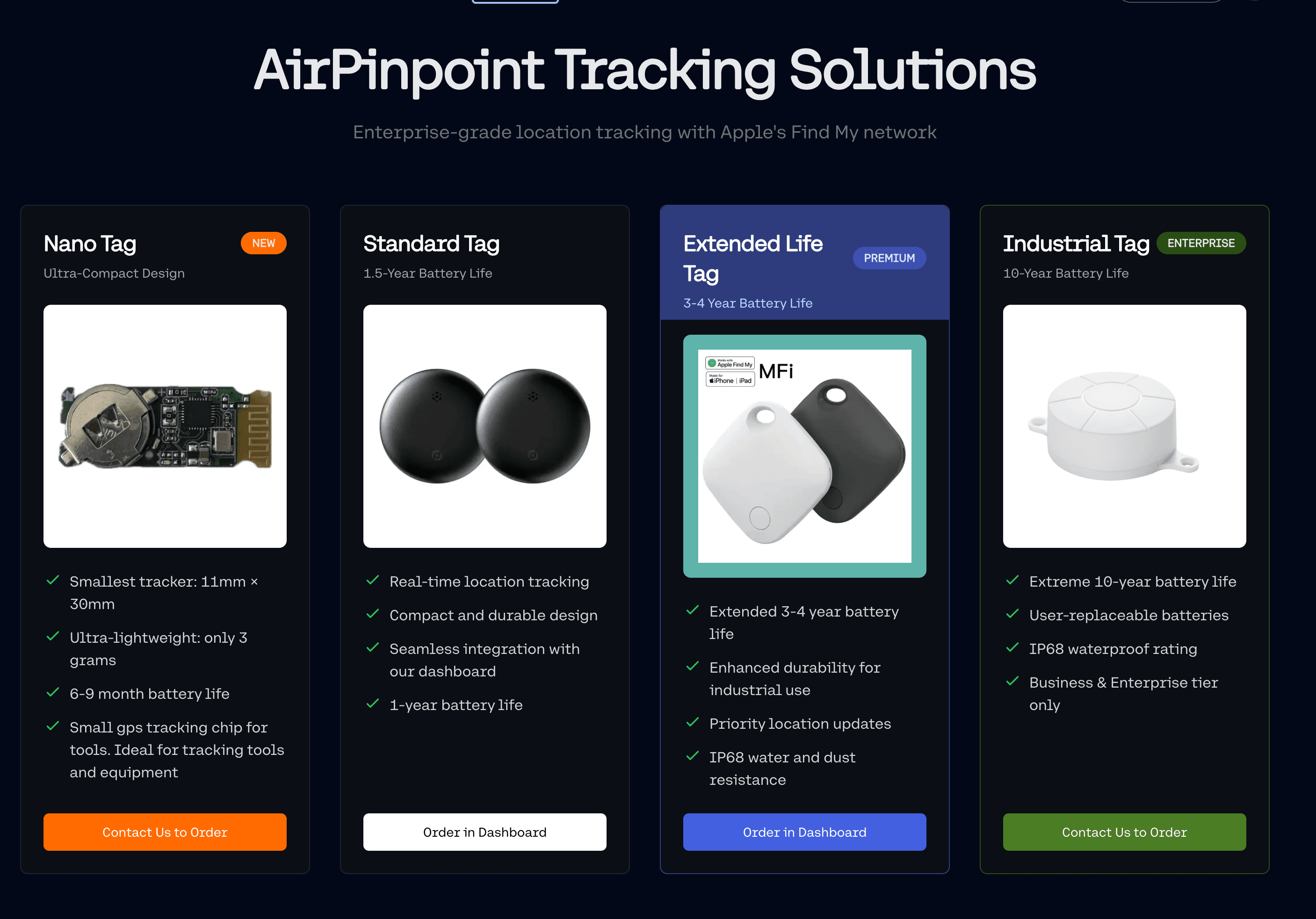
- Simple pricing - $29 AirTag hardware + subscriptions from $11.99/month per tag
- Easy procurement - Simple deployment without IT infrastructure
When to Use Enterprise Fleet Systems
- Real-time vehicle tracking and telematics
- Driver behavior monitoring
- Integration with fleet management systems
- Compliance documentation requirements
Recommended Approach
Use AirTags with Airpinpoint to supplement enterprise fleet tracking:
- Enterprise GPS for vehicles requiring real-time tracking
- Airpinpoint for generators, trailers, tools, and portable equipment
- Combined approach provides comprehensive coverage
The Bottom Line
Government asset tracking delivers measurable value:
- 6-month payback typical for comprehensive implementations
- 15-25% fuel savings from optimized routes and reduced idling
- 40% reduction in unauthorized vehicle use
- Real-time coordination for emergency response
Start with:
- Cooperative contract evaluation (Sourcewell, NASPO)
- Pilot with one department (50-100 vehicles)
- Focus on highest-impact areas (fuel, maintenance)
- AirTags for supplemental equipment tracking
Public sector fleet management is about accountability: to taxpayers, to employees, and to the communities served. Modern tracking systems deliver that accountability while generating substantial cost savings.
 Our Solution