HVAC Inventory Management: Truck Stock, Refrigerant and Tools
HVAC inventory management means knowing what parts, refrigerant and tools you own, which van or shelf each one is on, and when to reorder. For a service company the hard part is the vans: each one is a small warehouse that moves, gets restocked from memory, and loses tools on job sites. A working system has three layers. A truck stock list with min and max levels per van, a way to count usage (scans or job-based deductions in field service software), and location tracking for the expensive reusable tools that a count cannot find.
| Inventory type | Examples | How to track it | How often |
|---|---|---|---|
| Fast-moving parts | Capacitors, contactors, fuses, filter driers | Min/max per van, deducted per job or scanned | Every restock |
| Serialized equipment | Condensers, furnaces, air handlers | Serial number on the job record | Per install |
| Refrigerant | Cylinders by type and serial | Cylinder log with weights | Every return to shop |
| Reusable tools | Recovery machines, vacuum pumps, gauge sets | Assigned per tech, located with a Find My tag | Continuous |
| Consumables | Tape, brazing rod, sealant | Bulk reorder from the warehouse | Monthly |
What Is HVAC Inventory Management?
HVAC inventory management is the record of every part and tool an HVAC business owns, where each one sits, and how quickly it is used. It covers the warehouse or shop, every service van, and items in transit to a job. The goal is a first-time fix rate that does not depend on a technician driving back to the supply house, plus fewer parts and tools that disappear without anyone noticing.
Service companies usually manage three kinds of stock with different rules. Consumable parts are counted and reordered. Serialized equipment is tied to an install record and warranty. Tools are assigned to people and need to come back.
HVAC Truck Stock List
Start your truck stock list from job history rather than a generic template. Pull the parts used across all jobs in the last 90 days, rank them by how often they were needed, and stock the top items on every van at a quantity that covers the time between restocks.
| Category | Typical items | Min/max guidance |
|---|---|---|
| Electrical | Run and start capacitors in common ratings, contactors, relays, fuses, wire nuts | Min = parts used between restocks, max = min plus one job's worth |
| Controls | Universal thermostats, sensors, transformers | Carry one or two universal units, not every model |
| Motors and drives | Universal condenser fan motors, blower motors, belts | Low counts, high value, track by serial if possible |
| Refrigeration parts | Filter driers, Schrader cores and caps, service valves | Restock weekly |
| Copper and fittings | Couplings, elbows, flare nuts, line set fittings | Bulk bins, count monthly |
| Brazing and sealing | Brazing rod, flux, nitrogen, sealant, tape | Reorder when a bin is half empty |
| Refrigerant | Cylinders of the refrigerants your installed base uses | Log by cylinder, not by van |
A one-page list per van, kept in the same order as the van's shelving, makes restocking fast and makes counts honest. Review the list every quarter, because a new equipment brand or a seasonal shift changes which parts move.
Min/Max Reorder Rules by Van
A min/max rule tells a technician or warehouse lead exactly what to restock. When a part drops below its minimum, restock it to its maximum. Set minimums from usage between restocks and maximums from van space and cash tied up in stock.
- Measure usage per van. Different technicians run different job mixes, so an install van and a maintenance van need different levels.
- Restock on a fixed schedule. A weekly restock from the shop is easier to plan than ad hoc supply house runs.
- Reconcile monthly. Compare what the van should hold with a physical count. Large gaps point to parts used without being recorded on a job.
Refrigerant Cylinder Tracking
Refrigerant is regulated, expensive, and easy to lose track of between vans. Log each cylinder individually.
| Field | Why it matters |
|---|---|
| Refrigerant type | Different refrigerants are regulated and priced differently |
| Cylinder serial or label number | Ties every use to one cylinder |
| Full weight and current weight | Shows how much was used and catches unrecorded use |
| Assigned van or technician | Accountability between restocks |
| Jobs used on, with amounts | Supports job costing and leak repair records |
| Recovery and disposal dates | Supports EPA Section 608 recordkeeping |
Buying most refrigerants requires EPA Section 608 certification, and recordkeeping rules apply to recovery, reclamation and disposal. Check the current EPA requirements for the refrigerants you handle, since rules for HFCs have changed in recent years.
HVAC Inventory Software and Apps
HVAC inventory software falls into two groups, and most companies need one from the first group or the second, plus location tracking for tools.
| Type | Examples | How stock is counted | Shows where a tool is? |
|---|---|---|---|
| Field service platform with inventory | ServiceTitan, BuildOps | Parts deducted when added to a job or invoice | No |
| Standalone inventory app | Sortly, inFlow, Ply | Barcode or QR scans and manual counts | No, only the last scan |
| Spreadsheet | Excel or Google Sheets | Manual entry | No |
| Location tracking | Airpinpoint with Find My tags | Not a stock counter | Yes, on a live map |
If your technicians already close jobs in a field service platform, its inventory module is usually the right place to count parts, because usage is recorded as part of the job. A standalone app suits smaller shops without that software. A spreadsheet works for a few vans if one person owns it.
Tracking HVAC Tools Across Vans
Counting systems record that a recovery machine was assigned to a van. They cannot tell you that it was left in a customer's basement yesterday. High-value reusable tools need location tracking.
| Tool | Where to put the tag |
|---|---|
| Refrigerant recovery machine | Inside the carrying case or zip-tied under the handle |
| Vacuum pump | In the pump's bag or case |
| Digital manifold gauge set | In the hard case lid |
| Combustion analyzer | In the case |
| Cordless tool kits | Inside the tool box or bag |
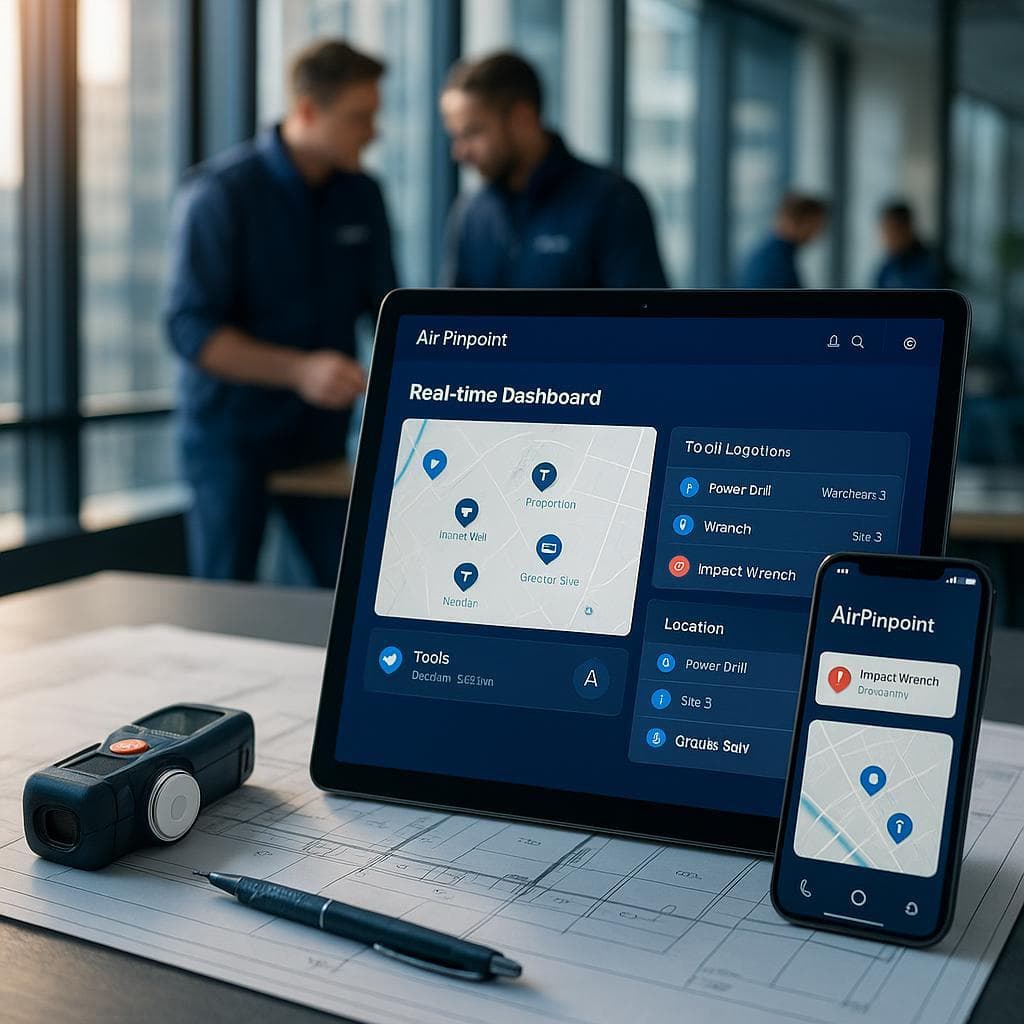
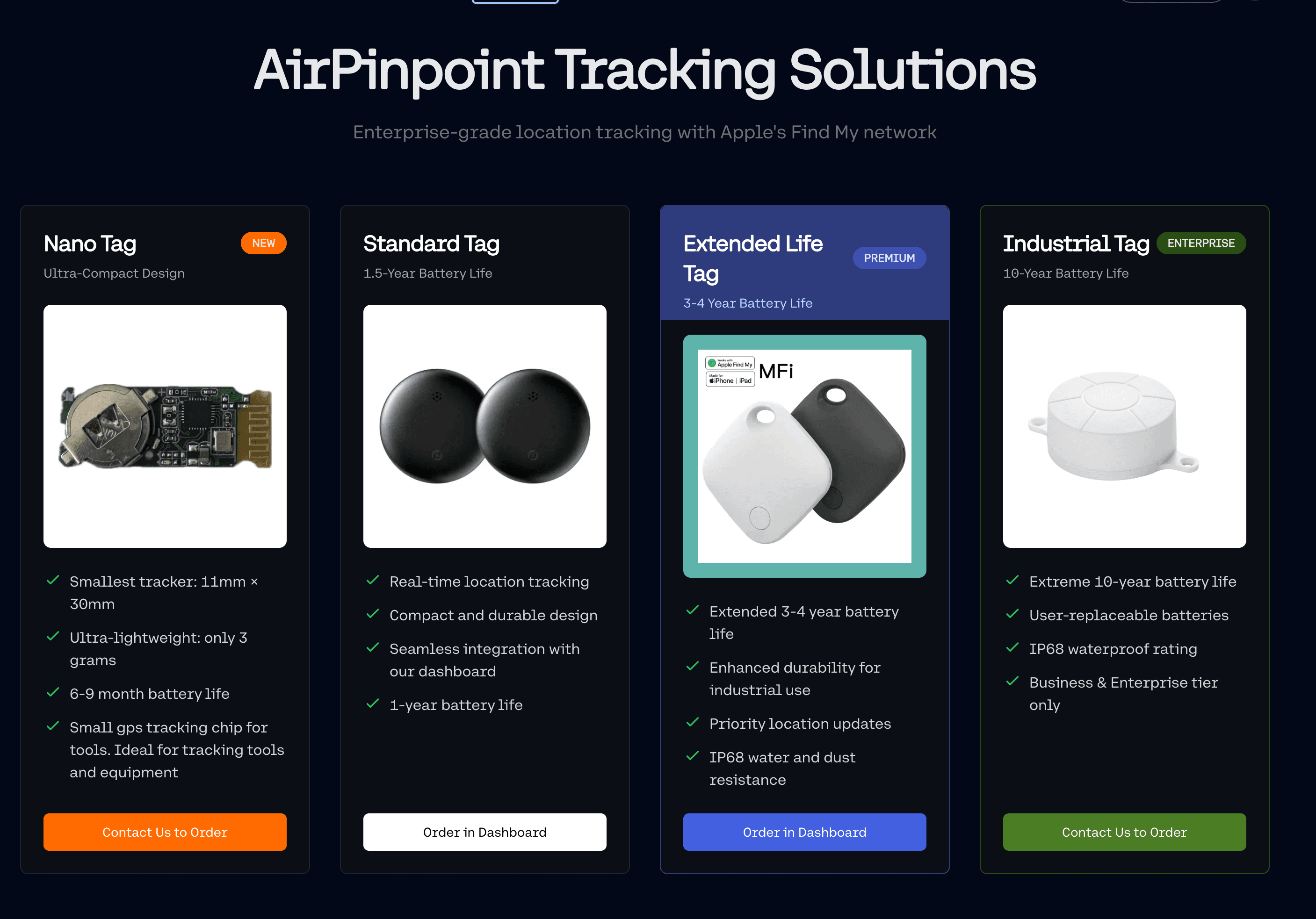
A Find My tag reports its position whenever an Apple device passes nearby, so a tool left at a job site or in a supply house parking lot shows up on the map. For HVAC companies that also want the vans on the same map, the same tag works in a service vehicle. See HVAC equipment tracking for van security and theft prevention.
Setting Up HVAC Inventory Management in Four Steps
- Build the truck stock list from 90 days of job history and set min and max levels per van.
- Choose where counts live. Use your field service platform's inventory module if you have one, otherwise a standalone app with QR labels on bins.
- Start the refrigerant log with every cylinder you own, weighed and labeled.
- Tag the tools a count cannot find, starting with recovery machines, vacuum pumps and gauge sets, and set a geofence around the shop.
Airpinpoint tracks HVAC tools and vans on one dashboard using Find My tags at $11.99 per tag per month, with geofence alerts when a tagged tool leaves a van or the shop, location history, and a REST API. It works alongside ServiceTitan, BuildOps or any inventory app you already use.
 Our Solution