Bike Tracker: GPS vs AirTag vs Find My Bike Alarms
A bike tracker is a small device hidden on a bicycle that reports its location if it is moved or stolen. There are two types. A cellular GPS bike tracker has its own SIM, reports from anywhere with a cell signal, and costs a monthly plan plus regular charging. A Bluetooth tag on Apple Find My, such as an AirTag ($29), has no monthly fee and lasts about a year, but only reports when an iPhone passes nearby.
This guide compares both types, shows where to mount them, and covers what changes when you run 10 or 500 bikes instead of one. For electric bikes specifically, see our e-bike tracking guide. For rental and tour operators, see bike rental fleet tracking.
How Bike Trackers Work: Cellular GPS vs Find My vs Bluetooth
Cellular GPS bike trackers find their own position with a GPS receiver and send it over the mobile network, so they work on any road with coverage. Find My tags have no GPS chip; nearby Apple devices hear their Bluetooth signal and report the location to Apple. Plain Bluetooth trackers outside a large network only work within phone range.
| Type | Examples | How it reports | Monthly fee | Power | Best for |
|---|---|---|---|---|---|
| Cellular GPS tracker | Bikefinder, Invoxia Bike Tracker, Airbolt GPS | Own GPS fix sent over LTE | Yes, a data plan | Rechargeable battery | Rural riding, expensive road and mountain bikes |
| Built-in e-bike GPS | PowUnity BikeTrax, brand-installed modules | Own GPS fix sent over LTE | Yes, a data plan | Draws from the e-bike battery | E-bikes, nothing extra to charge |
| Find My bike alarm | Knog Scout | Nearby Apple devices relay it | No | Rechargeable | City riders who want a motion alarm plus Find My |
| Find My tag | Apple AirTag, Find My tags from other makers | Nearby Apple devices relay it | No | CR2032 coin cell, about 1 year (AirTag) | Low-cost theft recovery in towns and cities |
| Fleet layer on Find My tags | AirTag plus Airpinpoint | Find My reports pulled into one dashboard | $11.99 per device | Coin cell | Shops, rental fleets, campus and delivery bikes |
Two things decide the choice. First, where the bike spends its time: Find My works well where people carry iPhones, and cellular GPS is the only type that reports from an empty trail head. Second, whether you will keep charging it: a cellular tracker on frequent updates needs charging on a schedule, while a coin-cell tag runs for months.
Bike Tracker Types Compared for Riders
Cellular GPS bike trackers
A cellular unit gives the closest thing to live tracking. You see the bike move on a map, and most units add a motion alert to your phone. The costs are the data plan and the charging routine. Read the plan page before buying, because the device price is rarely the full cost.
Find My bike alarms
Products like the Knog Scout pair a loud motion alarm with Apple Find My. The alarm deters a casual thief at the rack, and Find My gives a location afterward. It is rechargeable, so it needs an occasional charge.
AirTag on a bike
An AirTag is the cheapest way to add theft recovery: $29 once, no plan, and about a year per battery. Apple designed AirTags for items, so after some time away from your iPhone it can play a sound and alert a thief's iPhone that a tag is travelling with them. Hide it where a quick look will not find it.
Where to Mount an AirTag on a Bike
The best AirTag mount is one that a thief will not spot and that does not wrap the tag in thick metal. Popular options are a saddle-rail mount, a mount hidden under a bottle cage, a bar-end plug that holds the tag inside the handlebar, and reflector or bell mounts designed for AirTags.
- Under the saddle: quick to fit and easy to reach for battery changes. It is visible if someone looks closely.
- Under the bottle cage: sits flat against the frame and looks like part of the bike.
- Inside the handlebar: very hard to spot. The handlebar is metal, so expect some loss of signal range.
- Reflector or bell mount: hides the tag in a part thieves expect to see on a bike.
Honest Limits: Find My Is Periodic, Not Live GPS
Find My does not stream a live position. A location update arrives when an Apple device passes within Bluetooth range and reports the tag, so in a busy city you may see fresh positions often, and on a quiet road you may see nothing for hours. If a stolen bike is moved into a basement or a metal container, reports can stop until it comes back out. For bikes stored or ridden far from people, choose cellular GPS.
Tracking 10 to 500 Bikes: Shops, Rentals, Campus and Delivery Fleets
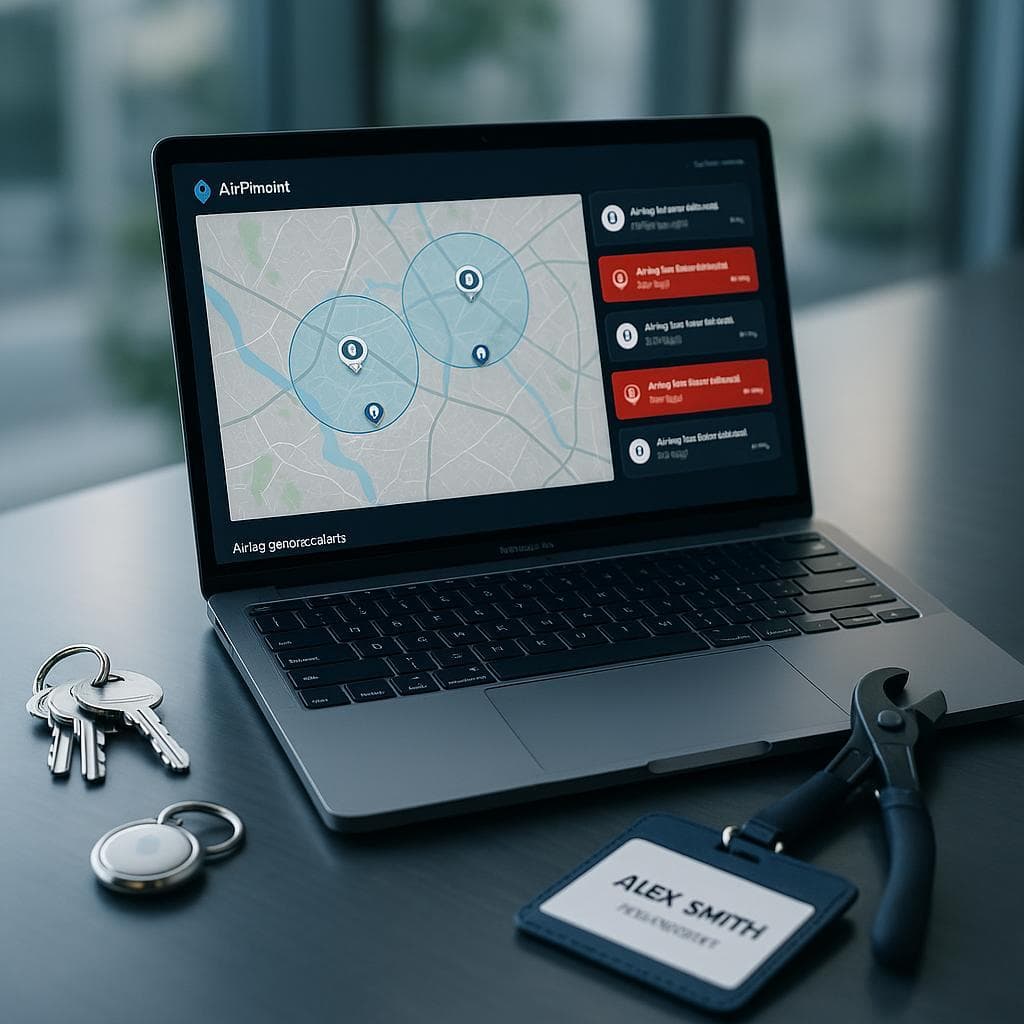
Apple's Find My app is built for one person and their own items, and an Apple Account can hold up to 32 AirTags. A fleet needs more than that. Airpinpoint reads Find My locations for every tag across multiple accounts and shows them on one map, at $11.99 per device per month with no contract.
| Fleet need | Find My app alone | AirTag plus Airpinpoint |
|---|---|---|
| Number of bikes | Up to 32 tags per Apple Account | Hundreds of tags across accounts in one dashboard |
| Team access | One owner per tag, limited sharing | Staff logins for the whole fleet |
| Geofences | None | Alerts when a bike leaves a service area or yard |
| Location history | Last known location | Movement history per bike |
| Integrations | None | API and webhooks for rental or booking software |
Rental shops use geofences to see when a bike leaves the area it was rented for. Campus programs use location history to collect bikes left across the grounds. Delivery operators use the dashboard to see which bikes are in the depot at the end of a shift. Our bike rental fleet tracking page covers rental workflows in more detail.
What to Do When a Bike Is Stolen
Act quickly, because a tracker is most useful in the first hours after a theft.
- Check the map. Open Find My or your tracker app and note the latest position and time.
- Report it to police. Give them the location, your serial number and photos of the bike. Do not try to recover it yourself from a private address.
- Mark it as lost. In Find My, turn on Lost Mode so you are notified when the tag is found.
- Register the bike. List it on a stolen-bike registry such as Bike Index so shops and buyers can check the serial.
- Watch resale sites. Stolen bikes often appear on local marketplace listings within days.
Choosing a Bike Tracker
- City commuter on a budget: an AirTag in a hidden mount.
- City rider who wants a deterrent: a Find My bike alarm such as the Knog Scout.
- Rural, trail or high-value bike: a cellular GPS bike tracker with a data plan.
- E-bike: a tracker that draws from the bike battery, or see our e-bike tracking guide.
- Shop, rental or campus fleet: AirTags plus Airpinpoint, which adds geofences and history in one dashboard.
For more on recovery, read how to prevent theft with AirTags and how geofence alerts with AirTags work. Our AirTag range guide explains how far a tag can be from a phone and still report.
 Our Solution