Bike Rental Fleet Tracking: Tour Companies, Hotels, and City Rental Operations
Rental bikes leave your premises every single day. That's the business model, and it's also the core problem: your most valuable assets are constantly in someone else's hands, scattered across a city or strung out along a 60-mile touring route.
Locks help. Deposits help. But neither tells you where your bikes actually are right now.
This guide covers how bicycle rental operators, from European cycling tour companies to hotel amenity fleets, use AirTag tracking with Airpinpoint to manage inventory, prevent theft, and stop losing bikes to guests who simply forget to return them.
Who Needs Rental Bike Tracking
Cycling Tour Companies
Tour operators managing 20-100+ bikes face a logistics challenge that's distinct from bike shops or city rental programs. Bikes move with guests across multi-day routes. They park overnight at hotels the operator doesn't control. They scatter along a route as riders of different fitness levels spread out over 30-50 miles.
A European cycling tour company running 32 bikes needs to know, at any given moment: Are all bikes at the hotel? Did the straggler make it past the last checkpoint? Is the bike that was "left at the cafe" actually still there, or has it walked off?
The cycling tourism market hit $147 billion globally in 2025 and is growing at nearly 10% annually. That growth means more operators, bigger fleets, and more bikes in circulation on unfamiliar roads.
Hotel and Resort Bike Amenities
Hotels offering complimentary or rental bikes to guests face a quieter version of the same problem. A resort with 15 beach cruisers doesn't need real-time telemetry. But it does need to know that all 15 came back by checkout, and that the two "missing" bikes are actually locked at the beach bar three blocks away, not stolen.
Hotels with bike programs report that 5-10% of bikes go missing per season, a mix of theft, guest forgetfulness, and bikes that end up at other properties. At $300-800 per quality rental bike, a 20-bike fleet represents $6,000-16,000 in assets that leave the building daily.
Platforms like Joyride now power hotel bike rental programs at vacation properties, and operators with 20-vehicle fleets can generate up to $8,500 per month. Protecting revenue-generating assets at that scale demands more than a paper checkout sheet.
City Rental Operations
Independent bike rental shops in tourist cities, beach towns, and college towns manage constant bike turnover. A shop renting 30-50 bikes daily can't physically verify every return. Bikes get left at restaurants, parked at trailheads, or "borrowed" by someone who walks past an unlocked bike.
The operating challenge: your staff is busy with the next rental, not tracking down the bike that should have been back two hours ago.
The Rental Bike Theft Problem
Scale of Losses
More than 2.4 million bicycles are stolen annually in the US, according to a 2024 study by Bike Index, UC Davis, and UC Santa Barbara. That's $1.4 billion in losses. Rental bikes are disproportionately targeted because they're often better maintained, newer, and left in tourist areas where thieves know the rider won't be local enough to track them down.
Bike Index's 2025 annual report showed a 15% increase in reported thefts year-over-year. And since only about 40% of bike thefts are reported to police, the real numbers are significantly higher.
For rental operators specifically:
- Guest non-return is the most common "loss" category. Not always theft, but functionally identical. The guest checks out, flies home, and your $600 bike is locked to a rack at their Airbnb.
- Opportunistic theft from hotel bike racks and rental return areas. A thief sees 10 identical bikes lined up, assumes one won't be missed immediately.
- Professional theft targeting high-value touring bikes. Carbon road bikes and premium hybrids used by tour operators can run $1,500-3,000 each.
Why Locks Alone Don't Work for Rentals
Every rental bike has a lock. But rental locks see hard use, guest compliance is inconsistent, and a determined thief with a battery-powered angle grinder defeats any cable lock in under 30 seconds. U-locks fare better but get lost, forgotten, or used incorrectly by guests unfamiliar with the locking technique.
The fundamental issue: locks are a guest-dependent security layer. Tracking is an operator-controlled security layer. You need both.
How AirTag Tracking Works for Bike Fleets
The Hardware
An Apple AirTag weighs 11 grams, costs $29, and runs for a full year on a single CR2032 battery. It communicates through Apple's Find My network, which uses over a billion active Apple devices worldwide to relay location data.
For rental bike fleets, the key advantages over GPS trackers:
| Feature | AirTag + Airpinpoint | Dedicated GPS Tracker |
|---|---|---|
| Hardware cost | $29/bike | $80-200/bike |
| Monthly cost | $11.99/bike | $15-25/bike |
| Battery life | 1 year (CR2032) | 1-4 weeks (rechargeable) |
| Charging required | No | Yes, regularly |
| Weight | 11g | 50-150g |
| Waterproof | IP67 | Varies |
| Fleet dashboard | Yes (Airpinpoint) | Varies by provider |
| Geofence alerts | Yes | Yes |
| Real-time GPS | No (Bluetooth relay) | Yes |
The charging issue is critical for rental fleets. A GPS tracker that needs charging every two weeks means someone on your staff has to pull trackers from 30 bikes, charge them, and reinstall them. On a multi-day cycling tour, GPS trackers can die mid-trip. AirTags just work for 12 months, then you swap a $3 battery.
There is a deeper issue with GPS battery claims worth knowing. The advertised battery life on GPS trackers (some list months) is calculated at roughly one update per day. At the rate an AirTag actually updates, every 1-5 minutes when iPhones are nearby, the same cellular GPS battery holds 2-3 days. That is not a criticism, it is physics: each cellular update requires the GPS radio to lock onto satellites (up to 30 seconds of continuous draw) and then push a cellular transmission. An AirTag does neither. It broadcasts a tiny Bluetooth signal and lets nearby iPhones do the expensive work on their own batteries. The practical result for a bike fleet: GPS trackers offer real-time position at the cost of constant recharging, while AirTags offer 1-5 minute updates for 12 months with no charging at all.
AirTag Placement on Bicycles
Concealment matters for rental bikes since guests shouldn't easily find and remove them, and thieves shouldn't know to look.
Best hiding spots:
-
Inside the seat tube: Remove the seatpost, drop the AirTag inside (in a small bag to prevent rattling), reinstall. On bikes with fixed seatpost heights, this is the most secure location.
-
Inside the steerer tube/headset area: Accessible only with tools. Good for bikes where guests adjust seat height.
-
Under-saddle mount: Weatherproof mounts like the Elevation Lab TagVault Bike attach under the saddle rails. Discreet but more visible than internal mounts.
-
Inside handlebar end caps: Some aftermarket bar-end plugs are designed specifically to hold AirTags.
-
Frame-mounted under downtube: A small 3D-printed or welded bracket on the underside of the downtube, covered with a protective cap. Invisible unless you flip the bike upside down.
For rental fleets, internal placement (seat tube or steerer tube) is preferred because guests interact with external components. You don't want someone adjusting their saddle and discovering the tracker.
The Airpinpoint Dashboard
The consumer Find My app works for tracking your personal bike. It doesn't work for managing a fleet of 30.
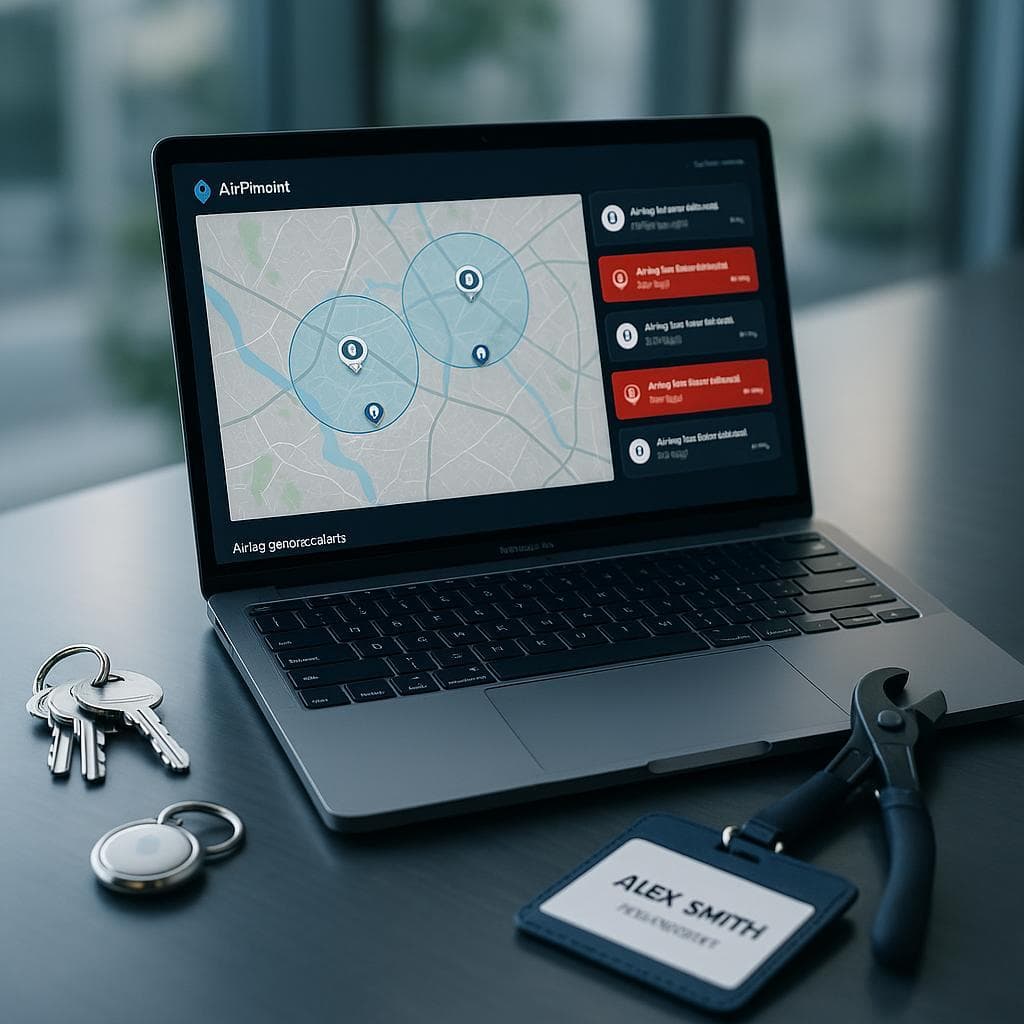
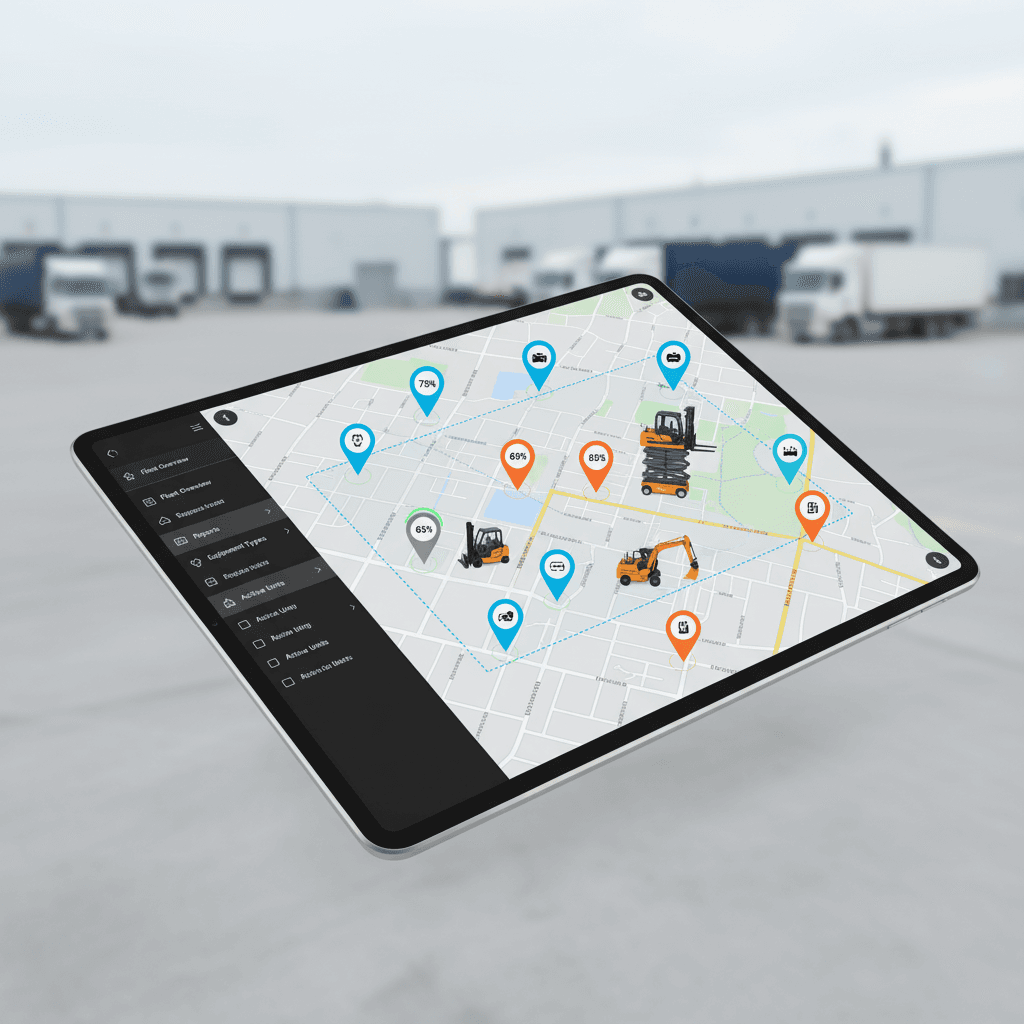
Airpinpoint gives rental operators:
- Single-map view of every bike in the fleet, color-coded by status
- Custom naming per bike: "BIKE 031 - Steve Silvester" or "Pace3 Lilac"
- Geofence alerts when a bike leaves a defined zone (hotel perimeter, city limits, tour route corridor)
- Location history for each bike, useful for theft investigation and guest dispute resolution
- Team access so front desk staff, tour guides, and managers all see the same fleet status
Real Airpinpoint customers already use these patterns. One cycling tour operator labels each bike with the rider name and bike number, updating assignments as tours rotate. Another hotel operation tracks bikes by color ("Pace1 Red" through "Pace8 Sky Blue") for quick visual matching between the physical bike and the dashboard.
Use Cases by Operation Type
European Cycling Tour Operations
European cycling tourism is the largest segment of the global market, accounting for nearly 40% of the $147 billion industry. Routes like the Camino de Santiago, Rhine Cycle Route, Danube Bike Trail, and EuroVelo network attract millions of cyclists annually.
Tour operators on these routes face specific challenges:
Multi-day logistics: Bikes travel with guests for 5-14 days across multiple countries. The support vehicle carries spares and meets riders at checkpoints. If a bike gets left behind or stolen at a hotel overnight, the operator needs to know before the group departs the next morning.
Checkpoint verification: On a 60-mile day, riders spread out. The sweep vehicle driver can check Airpinpoint to see if all riders have passed a checkpoint, or if someone is stopped at a roadside cafe 10 miles back.
End-of-tour inventory: At tour's end, all bikes need to be accounted for, cleaned, and prepped for the next group. Airpinpoint's fleet view gives an instant inventory count without physically inspecting the storage area.
iPhone coverage on European routes: Popular cycling routes through France, Germany, the Netherlands, Spain, and Italy have strong iPhone penetration. Tourist corridors see especially heavy iPhone traffic. Rural stretches between towns may have gaps, but bikes parked overnight at hotels and restaurants will reliably update.
Hotel and Resort Programs
Hotels offering bikes as a guest amenity need lightweight tracking that doesn't require dedicated staff.
Check-out/check-in workflow: Guest requests a bike. Front desk assigns it in Airpinpoint (rename to guest name + room number). Geofence alert set on hotel boundary. At checkout, verify the bike is back on property. If not, you know exactly where it is.
After-hours security: Set tighter geofence boundaries during overnight hours. If a bike moves after the rental desk closes, the alert goes to security staff.
Multi-property management: Hotel groups with bike programs at 3-5 properties can manage all fleets from one Airpinpoint account. See which property has surplus bikes and which needs more.
City Rental Shop Operations
Daily rental management: Morning fleet check takes 30 seconds on the dashboard instead of walking the lot counting bikes. End-of-day reconciliation is automated. Any bike not back within the geofence by closing time triggers a follow-up with the renter.
Overdue rental alerts: Set time-based geofence rules. A half-day rental that's still out after 6 hours? Dashboard flags it. Call the guest before the bike disappears for good.
Theft response: When a renter reports a bike stolen (or a bike is actually stolen), you have location data to share with police. Recovery rates jump dramatically when you can tell officers "the bike is currently at this intersection."
Seasonal Fleet Management
Most rental bike operations are seasonal. Even year-round operations see dramatic volume swings.
End-of-Season Protocol
- Full inventory audit: Pull up Airpinpoint dashboard. Every bike should show at your storage location. Any bike showing elsewhere needs recovery.
- Battery check: AirTag batteries last a year. If you installed mid-season, replace all batteries at season end to guarantee full coverage for next season.
- Winter storage geofence: Set a tight geofence around your storage facility. Any movement during off-season triggers an alert. This catches both theft and accidental displacement (maintenance crew moving bikes, building access).
Pre-Season Preparation
- Verify all AirTags are active: Quick dashboard check shows which bikes have recent location updates and which might have dead batteries.
- Rename assets: Clear last season's rider assignments. Reset to bike numbers or colors.
- Update geofences: Adjust boundaries for any new rental zones, hotel partnerships, or tour routes.
Off-Season Cost Management
Airpinpoint subscriptions can be paused during months when bikes are in secured storage and tracking isn't needed. This reduces annual costs for operations that only run 6-8 months.
Cost Analysis: 30-Bike Tour Fleet
Here's what tracking costs look like for a mid-sized cycling tour operation.
AirTag + Airpinpoint
| Item | Cost |
|---|---|
| 30 AirTags | $870 (one-time) |
| Airpinpoint Business (30 bikes) | $4,317/year ($11.99/bike/mo) |
| Battery replacement (annual) | $90 ($3/battery) |
| Year 1 total | $5,277 |
| Year 2+ total | $4,407/year |
GPS Tracker Alternative (Digital Matter Oyster)
| Item | Cost |
|---|---|
| 30 GPS trackers | $3,000-6,000 (one-time) |
| Cellular subscription (30 units) | $5,400-9,000/year |
| Year 1 total | $8,400-15,000 |
| Year 2+ total | $5,400-9,000/year |
Cost of Not Tracking
Losing 2-3 bikes per season to theft or non-return, at $500-2,000 per bike, costs $1,000-6,000 annually. That's before factoring in the operational disruption of a missing bike mid-tour, the insurance claim process, and the replacement lead time.
For a 30-bike fleet, Airpinpoint pays for itself if it prevents the loss of just 2-3 bikes per year.
Limitations to Know
AirTags are not GPS trackers. Being honest about what they can and can't do helps you decide if they're the right fit.
Where AirTags work well:
- Cities and tourist areas with high iPhone density
- European cycling corridors with heavy tourist traffic
- Hotel and resort areas
- Any location where iPhones are passing regularly
Where AirTags have limitations:
- Remote backcountry cycling routes with no cell service or passing traffic
- Developing countries with low iPhone penetration
- Real-time speed tracking (AirTags don't provide continuous GPS coordinates)
- Situations requiring sub-minute location updates
Practical mitigation: For tours that include remote segments, the support vehicle can carry a dedicated GPS unit as backup. AirTags handle the 90% of the route that passes through towns, hotels, and tourist corridors. The GPS covers the remote 10%.
Getting Started
Setting up AirTag tracking for a rental bike fleet takes about an hour for 30 bikes.
- Buy AirTags: $24.99 each, or $93.99 for a 4-pack. For 30 bikes: 8 four-packs ($752).
- Install AirTags: Drop each AirTag into the seat tube or steerer tube of each bike. Use a small fabric pouch to prevent rattling.
- Connect to Airpinpoint: Add each AirTag to your Airpinpoint account. Name them by bike number, color, or any system your team uses.
- Set geofences: Draw boundaries around your rental shop, hotel property, storage facility, or tour route endpoints.
- Add team members: Give front desk staff, tour guides, or shop employees dashboard access.
- Test: Take a bike outside the geofence. Verify the alert fires. Check that all bikes show current positions on the dashboard.
Your fleet is now tracked. Every bike, every day, from one screen.
Already tracking e-bikes? See our e-bike tracking guide for battery-powered fleet specifics. For geofence setup details, visit our geofence alerts guide.
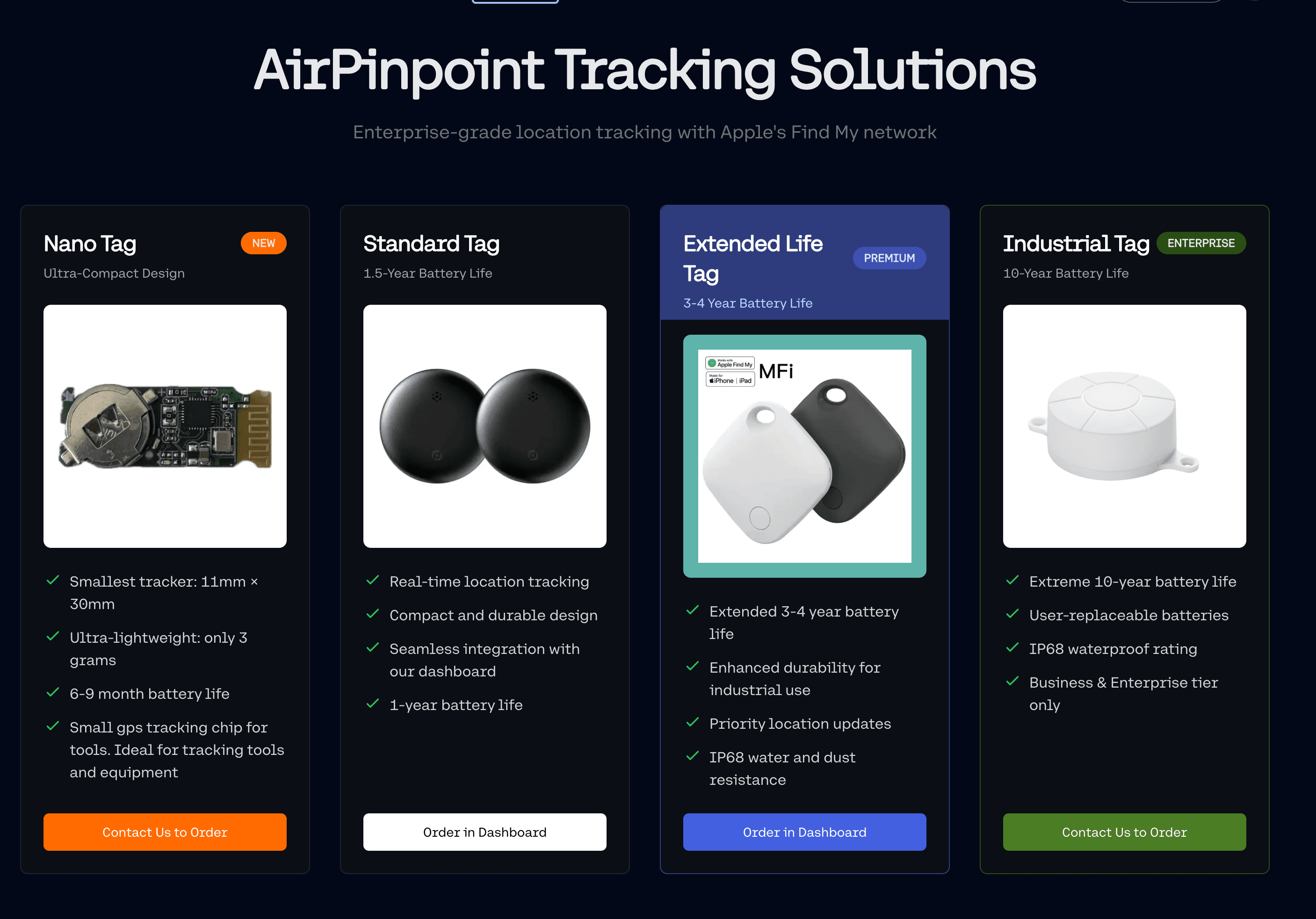
 Our Solution