Updated
Are AirTags Waterproof?
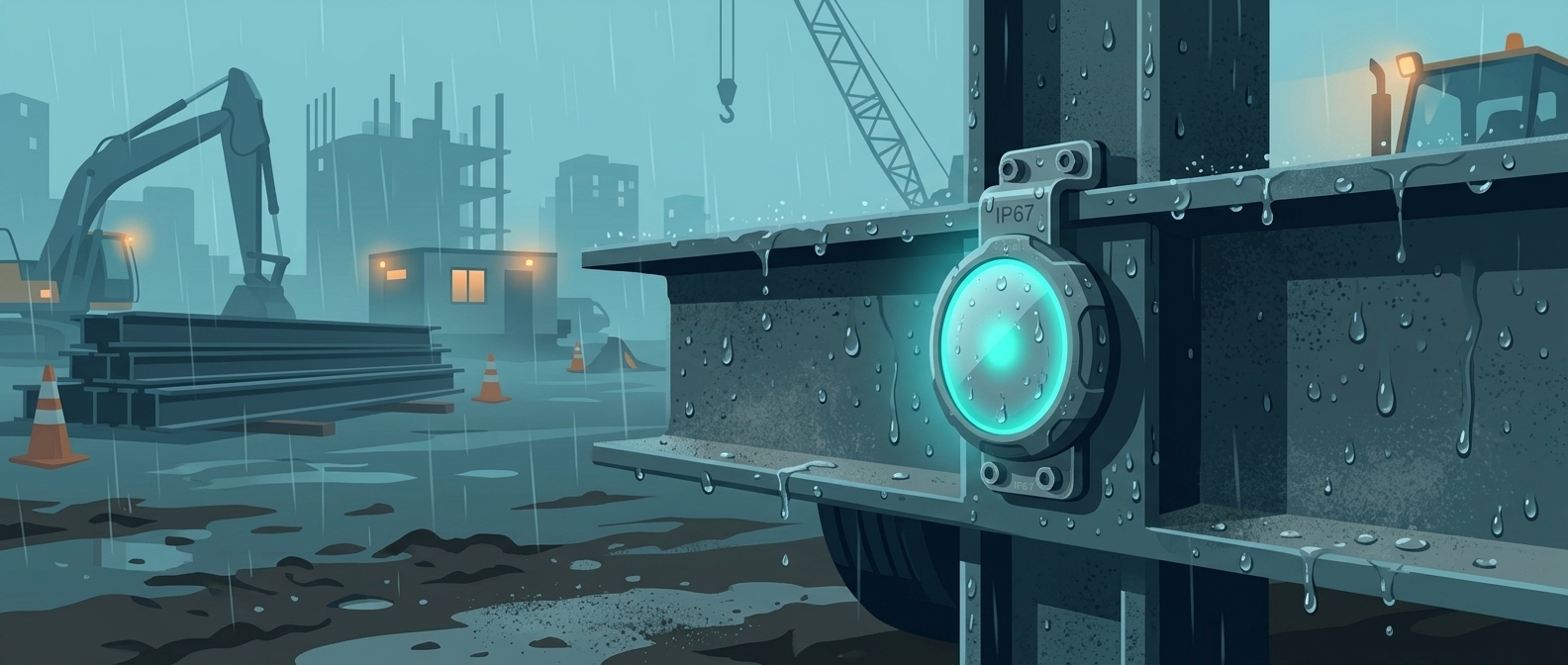
No. AirTags are water resistant, not waterproof. Apple rates both the original AirTag and AirTag 2 IP67 under IEC standard 60529, which means they passed a lab test of up to 1 meter of water for up to 30 minutes. Rain, snow, spills, and a quick drop in a puddle are fine. Swimming, pools, saltwater, and pressure washers are outside the rating, and Apple says the protection decreases with normal wear.
| Spec | AirTag and AirTag 2 |
|---|---|
| Water and dust rating | IP67 (IEC 60529) |
| Tested submersion | Up to 1 meter for up to 30 minutes, lab conditions |
| Hoses and pressure washers | Not tested: IP67 includes no water-jet test |
| Location while underwater | None: Bluetooth does not carry through water |
| Operating temperature | -20 to 60 C (-4 to 140 F) |
| Over time | Resistance decreases with normal wear (Apple) |
Can AirTags Get Wet? What Survives and What Doesn't
Yes, AirTags can get wet. Short, shallow contact with fresh water is inside the IP67 rating. Long soaks, depth, water pressure, salt, chlorine, and heat are not.
| Situation | Inside IP67? | What to expect |
|---|---|---|
| Rain, snow, drizzle | Yes | Keeps working. Wipe it dry. |
| Spilled drink or a splash at the sink | Yes | Wipe it off before a sticky drink dries on it. |
| Dropped in a puddle, sink, or toilet and pulled out within minutes | Yes | Dry it. Open the battery cover if it sat underwater. |
| Washing machine | No: longer than 30 minutes, plus detergent, heat, and spin | One survived in Intego's test (below). Dry it out and do not count on it twice. |
| Shower, bath, or hot tub | No: hot, soapy water is not what it was tested in | Dry it right away. Do not make it routine. |
| Swimming pool | No: chlorine, repeated dunks, often deeper than 1 m | Use a sealed case. It cannot report location underwater anyway. |
| Ocean or saltwater | No | Rinse it in fresh water, then dry it. Salt left on the tag corrodes. |
| Hose jet or pressure washer | No: IP67 has no water-jet test | Keep it out of the spray or in a sealed mount. |
| Diving, or sinking past 1 m | No | Outside the rating, and silent on Find My while submerged. |
On washing machines: in a 2021 test by Intego, an AirTag came through a 40 C wash cycle, a 1,400 rpm spin, and a dryer and still worked. That is one tag, one time. A wash keeps the tag underwater longer than Apple's 30-minute test, so every cycle is a bet on the seal.
What Does the IP67 Water Resistance Rating Mean?
IP67 is an ingress protection code from IEC standard 60529. The 6 means the AirTag is dust-tight. The 7 means it passed a temporary immersion test: up to 1 meter of water for 30 minutes.
The second digit is not a scale where a higher number beats a lower one. Immersion (7 and 8) and water jets (5 and 6) are separate tests, and a 7 does not count as passing the jet tests. Products built for both carry a dual rating such as IP66/IP67. AirTag carries only IP67, which is why a hose is a bigger risk than a puddle.
| Rating | Tested against | Real-world equivalent |
|---|---|---|
| IPX5 | 6.3 mm water jet at 12.5 liters a minute | A garden hose |
| IPX6 | 12.5 mm water jet at 100 liters a minute | A strong hose or deck spray |
| IPX7 | Immersion to 1 m for 30 minutes | AirTag and AirTag 2 (as IP67) |
| IPX8 | Deeper or longer immersion than IPX7, on terms the manufacturer sets | Sealed AirTag cases sold as IP68 |
| IPX9 / IP69K | Hot water, around 80 C, at high pressure | Pressure washers and washdowns |
Apple's footnote adds that the rating comes from controlled lab conditions and that splash, water, and dust resistance can decrease with normal wear. AirTag 2 carries the identical IP67 rating.
Do AirTags Work Underwater?
No. A submerged AirTag may keep running, but it cannot report where it is. Find My locations come from nearby Apple devices that hear the tag's Bluetooth signal, and that signal barely travels through water.
Bluetooth uses 2.4 GHz radio, which water absorbs. Underwater its range drops to a few inches, according to waterproof audio maker H2O Audio. No iPhone on the shore or the boat can hear a tag below the surface, so no new location reports are uploaded. Find My keeps showing the last place a device heard the tag, with that time, until it comes back up.
In practice:
- A dog that swims. The tag goes quiet while the dog is in the water and reports again once it is on land near a phone. Daily swims are outside IP67, so use a sealed collar holder.
- A bag at a pool or water park. Splashes are fine. A tag that goes into the water with you needs a sealed case, and it only updates between swims.
- A kayak, paddleboard, or boat. Mount the tag above the waterline in a sealed case. A tag below the waterline is silent.
What to Do If Your AirTag Got Wet
Most wet AirTags need only a wipe. If the tag sat underwater, went through the wash, or touched salt or pool water, dry the inside too:
- Wipe the outside dry with a soft, lint-free cloth.
- Rinse off salt or chlorine first. If it was in the ocean or a pool, give it a brief rinse under fresh tap water so residue does not dry on the tag.
- Open it. Press down on the stainless steel battery cover and rotate it counterclockwise until it stops. Lift off the cover and the CR2032 battery.
- Air-dry every piece at room temperature, overnight if it was submerged. Skip the hair dryer, oven, and microwave: the tag is rated to 60 C.
- Check the battery and contacts. Replace the CR2032 if you see white or green residue, or if the tag was in saltwater.
- Reassemble and listen. Press the battery down for about 2 seconds until the AirTag plays a sound. Apple says that sound means the battery is connected. Then use Play Sound in Find My to confirm it works.
If a fresh battery gets no sound, the tag is likely done. Apple's accessory warranty covers defects in materials and workmanship, not accidental damage, so plan on buying a replacement.
How to Tell if a Wet AirTag Still Works, Remotely
A damaged AirTag does not report that it is damaged. Each Find My location report carries an encrypted position, an accuracy value, a timestamp, and a status byte whose top two bits give a coarse battery level: full, medium, low, or critically low. There is no water or damage field. The only remote sign of a drowned tag is silence.
So watch the last-seen time. Reports can land hours late when the phone that heard the tag was offline, so one quiet hour means nothing. A tag that sits where phones pass every day and has not updated for a day after a soaking is suspect. A tag on a remote trailer may just be out of range.
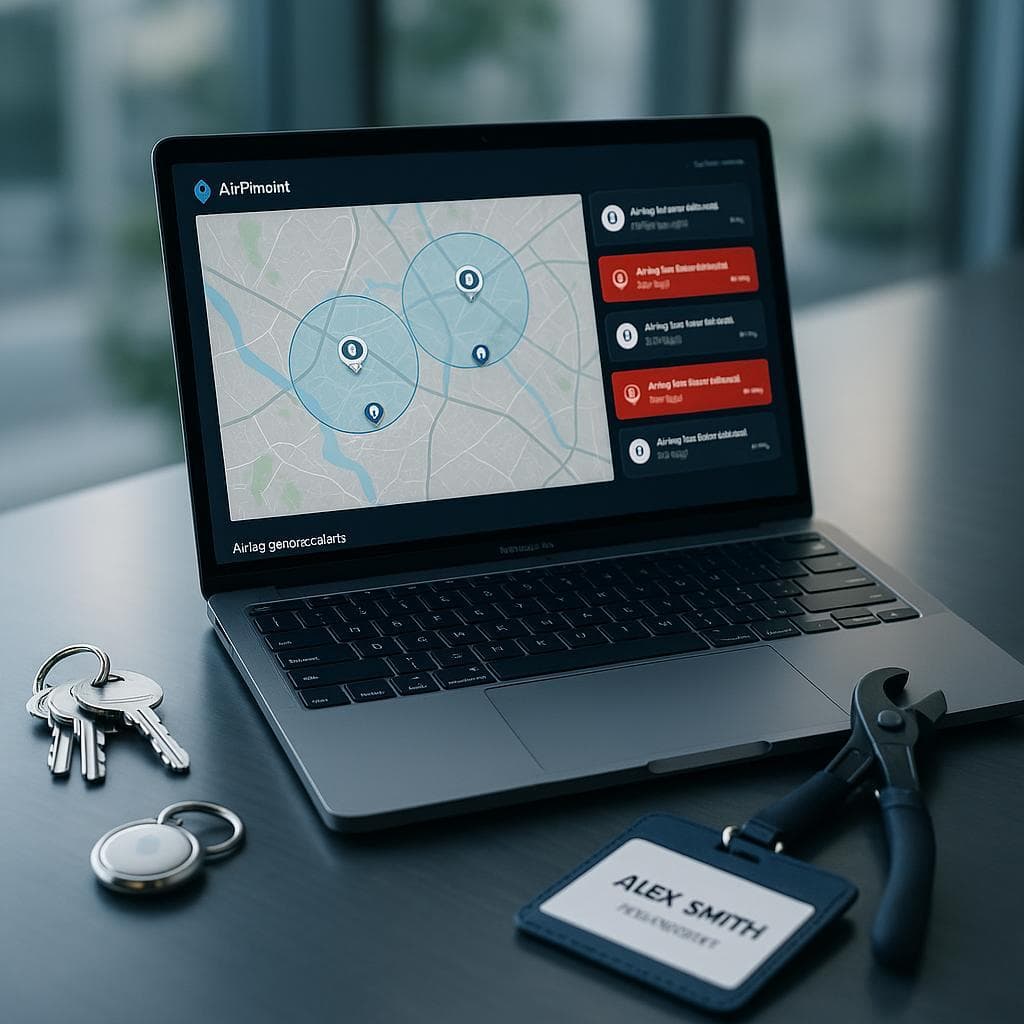
For fleets, Airpinpoint shows a last-seen time for every tag on one map, refreshes locations every 30 minutes by default and on demand, and its optional weekly digest email flags any tag with no location updates in the past 7 days, so a tag killed by a pressure washer shows up without anyone checking each asset.
Can You Leave an AirTag Outside? Outdoor Limits
Yes. Rain, snow, and humidity are inside IP67, so an AirTag can live outdoors on keys, a bike, a trailer, or a piece of equipment. The limits are age, spray, where you mount it, and temperature.
- Age. Apple says water resistance decreases with normal wear. A tag that has spent two winters on a trailer should not be trusted near a hose the way a new one would be.
- Spray. Trailers, bins, and equipment that get hosed or pressure-washed need a sealed mount or a spot out of the spray, because IP67 includes no jet test.
- Metal and water. Both block Bluetooth. A tag inside a sealed steel box or pressed against a wet surface reports less often, whatever its rating. The AirTag range guide covers how much each material costs you.
AirTag Temperature Range: The Other Outdoor Limit
Apple rates AirTag and AirTag 2 for operating ambient temperatures of -20 to 60 C (-4 to 140 F).
Heat is the real risk. A dark dashboard or a sealed metal box in summer sun can go past 60 C, so keep tags out of direct sun in vehicles. Cold is milder: a CR2032 coin cell puts out less power when it is cold and recovers as it warms. Intego left an AirTag in a -22 C freezer and it kept working.
Waterproof AirTag Cases and Holders
A sealed case is how you make an AirTag waterproof. It is worth it for pools, boats, dog collars, and anything that gets hosed down or stays outside for years.
What to look for:
- A sealed closure. Screw-down or gasketed, not an open silicone sleeve that only wraps the edges.
- A stated rating above IP67. IP68 for submersion. IPX6, or IPX9 / IP69K, if it will be sprayed or pressure-washed.
- A way to mount it where water drains away: screws or rivets on a trailer, a collar loop for a dog.
A case keeps water out. It does not let Bluetooth through water, so a cased tag below the surface stays silent until it comes back up.


 Our Solution