Trailer Tracking Device: Best Options by Use Case
Trailer tracking sounds simple until you deal with metal walls, long dwell times, and power constraints. Here is a practical breakdown of device types and what actually works.
Device Types
| Scenario | Best Fit | Why |
|---|---|---|
| Powered trailer | Hardwired GPS | Consistent power and high update rate |
| Long-dwell yard trailers | Battery GPS | Long battery life with periodic updates |
| Outdoor storage | Solar GPS | Extends life without monthly battery swaps |
| Mixed fleet coverage | AirTag + Airpinpoint | Low-cost scale at $11.99/device/mo |
Not every trailer needs a $30/month tracker. The right device depends on power access, theft risk, and how often the trailer moves.
Gotchas That Change the Decision
- Update frequency cuts battery life: More pings = shorter life.
- Sunlight matters for solar units: Shaded yards or indoor storage reduce charging.
- GPS needs sky view: Metal trailers and indoor bays block signals.
The Hybrid Strategy That Works
Most fleets track high-value trailers with GPS and cover everything else with AirTags. It reduces monthly spend while still giving you recovery visibility.
Why Airpinpoint Is Different
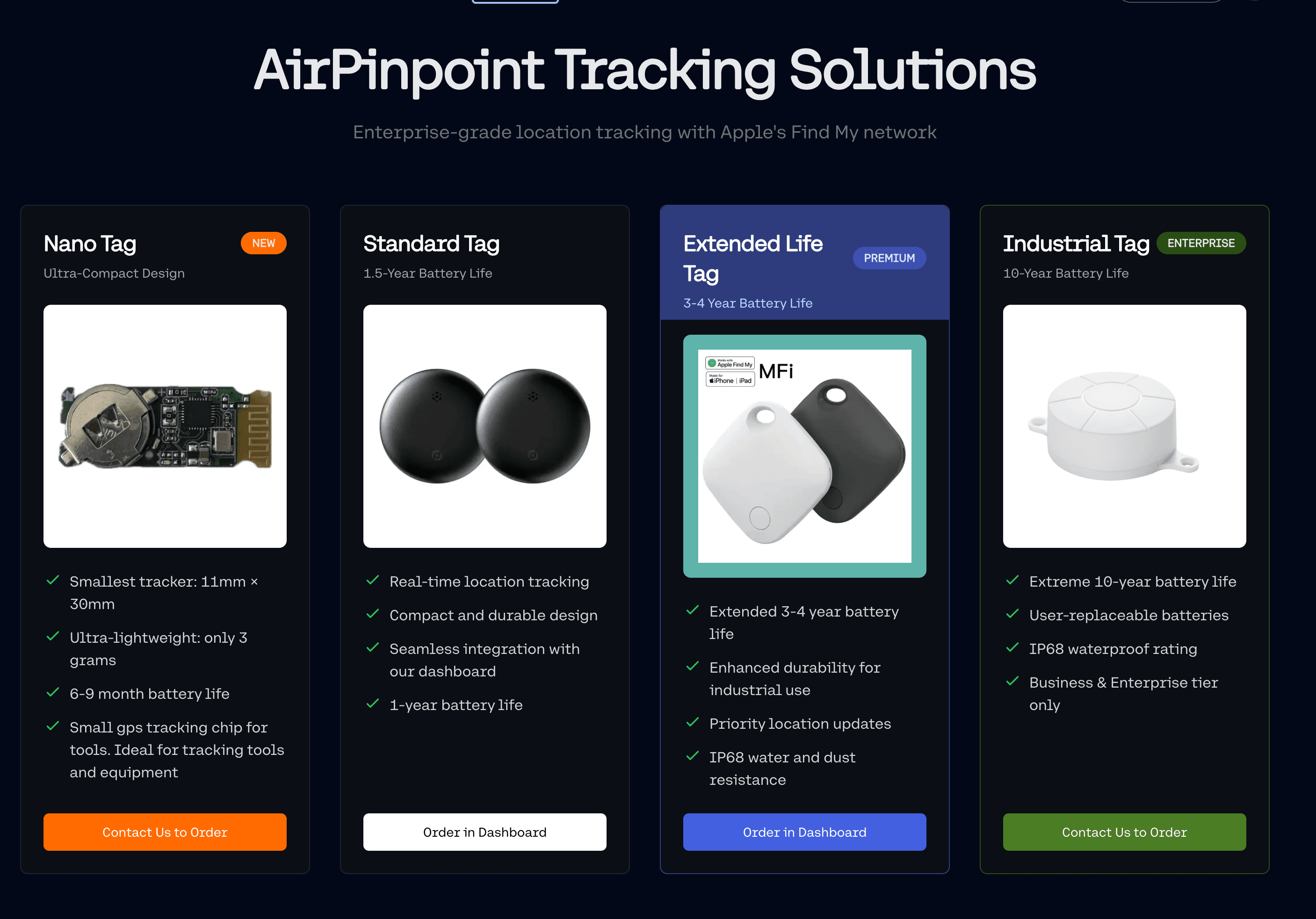
Airpinpoint is built for non-powered assets and mixed fleets. We combine the Apple Find My network with asset workflows so you get wide coverage, long battery life, and recovery visibility with a predictable per-tag subscription that starts at $11.99 per month.
Our 12-Month Minimum (Because We Know It Works)
We require a 12-month minimum. The product is purpose-built, the rollout is fast, and the outcomes are clear. If you want short-term trials, most teams start with a small pilot scope inside the 12-month plan.
 Our Solution