
Updated
Dumpster Rental Software: Roll-Off Platforms Compared
Dumpster rental software is the system a roll-off company uses to take orders, dispatch drivers, and bill for every container it puts on a customer's driveway or job site. It knows which 20-yard can went to which address, when it is due for a swap, and what the customer owes for extra days and tonnage. This guide compares the main platforms, explains how they price, and covers the one thing they do not tell you: where each container physically is right now.
What Dumpster Rental Software Does
| Job | What the software handles |
|---|---|
| Orders | Online booking on your website, phone orders, and quotes by container size |
| Dispatch | Drop-off, swap, dump-and-return, and pickup jobs assigned to drivers |
| Driver app | Job list, directions, photos at drop, and signatures on a phone |
| Inventory | Which containers are in the yard, which are out, and which are due back |
| Billing | Rental days, tonnage from scale tickets, overage fees, and card payments |
| Accounting | Sync with QuickBooks or another accounting system |
The difference between platforms is mostly scale. A one-truck operator needs booking, a calendar, and invoicing. A hauler with ten trucks and several hundred cans needs routing, a driver app, scale ticket handling, and reporting by container and customer.
Dumpster Rental Software Compared
| Platform | Built for | Pricing model |
|---|---|---|
| Bin Boss | Small and new dumpster rental companies | Flat 99 USD per month, no contract, no per-user fees (published on its pricing page) |
| Docket | Roll-off haulers from a few trucks up | Quote based on trucks and onboarding |
| TrashLab | Roll-off haulers that want routing and automation | Quote, demo first |
| Dumpster Rental Systems | Roll-off and dumpster rental operators | Quote, demo first |
| CurbWaste | Haulers running roll-off alongside commercial or residential routes | Quote, demo first |
General rental platforms such as Point of Rental and Booqable can book dumpsters, but they are built around items that come back to a counter. Roll-off work needs swap jobs, scale tickets, and per-ton billing, which the dedicated platforms above handle out of the box. For general equipment rental platforms, see the equipment rental software comparison.
How Much Does Dumpster Rental Software Cost?
Pricing falls into two models. Flat-priced tools publish one monthly number: Bin Boss lists 99 USD per month with unlimited admins and office users. Most dispatch-heavy platforms quote instead, and the quote usually depends on the number of trucks, the number of office users, and add-ons such as routing or a customer portal.
Three questions get a usable comparison from a sales call:
- What is the monthly price at my current truck count, and at double it?
- Is onboarding, data import, or website integration billed separately?
- Are payment processing fees charged on top of the subscription?
Software is only part of the cost of running containers. A single missing 20-yard roll-off can cost thousands of dollars to replace, so the cheapest protection for the fleet is knowing where every can is.
The Gap: Dispatch Software Knows the Booking, Not Where the Can Is
Dumpster rental software stores the address a container was dropped at. If the customer drags it to the back of the lot, a contractor moves it to the next job, or someone hauls it off for scrap, the software still shows the original address until a driver arrives and finds an empty driveway.
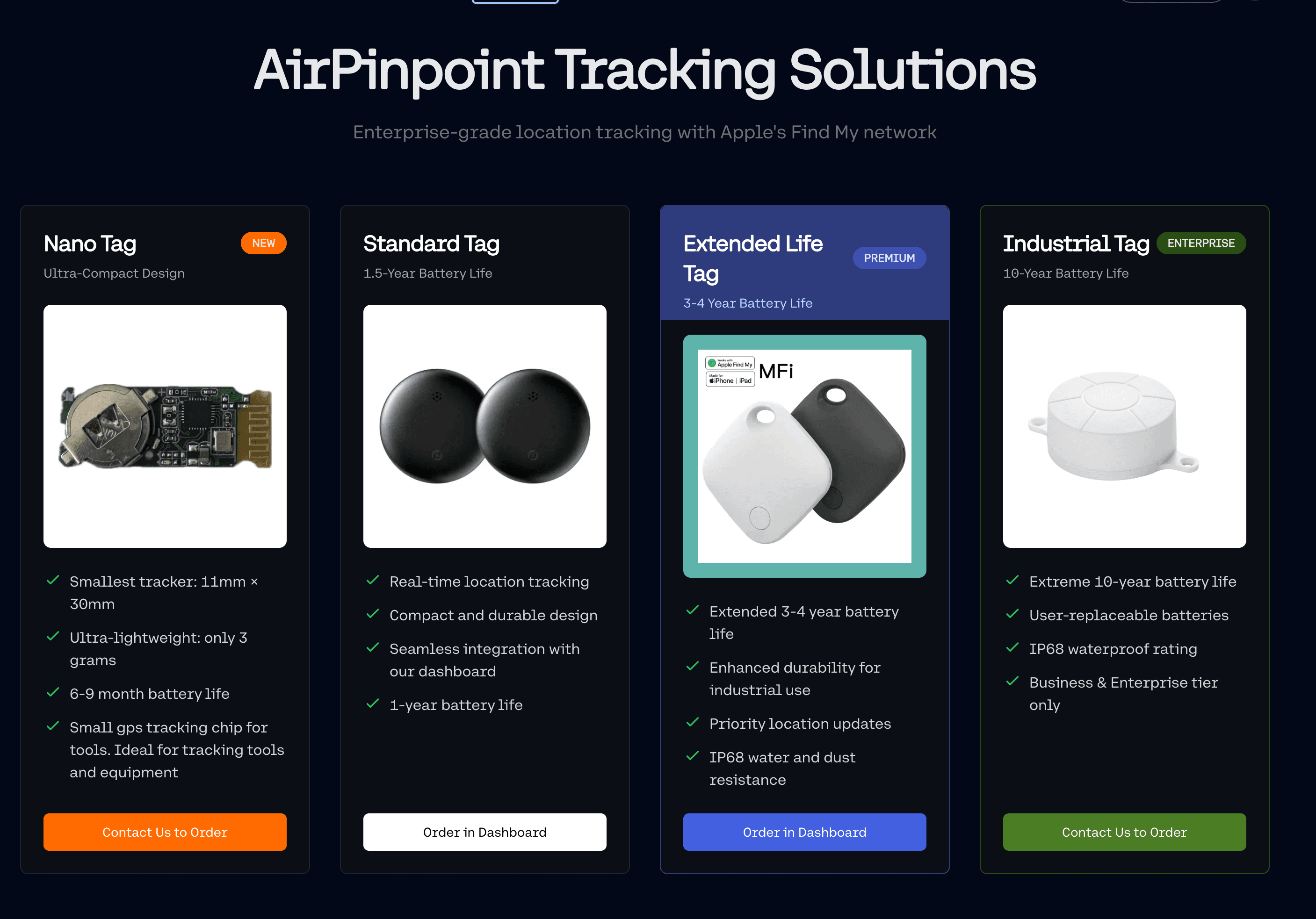
A tracker on each container closes that gap. An AirTag costs 29 USD, fits in a weatherproof case bolted inside the container lip or frame, and reports its location through Apple's Find My network wherever iPhones pass by, with no monthly fee from Apple. Find My caps one Apple ID at a limited number of items, so a hauler with hundreds of cans needs a fleet dashboard. Airpinpoint puts every tagged container on one map, keeps location history for each one, and sends geofence alerts by email or webhook.
| Check | How tag location answers it |
|---|---|
| Is the can still at the drop address? | Compare the tag position with the booked address |
| Did a container leave the yard without a job? | Geofence alert when the tag leaves the yard after hours |
| Which containers are past their rental period? | Days since the tag left the yard, set against the due date |
| Where did a missing can end up? | Location history shows its last positions for recovery |
Record each tag name against the container number in your rental software, so a container flagged overdue in dispatch maps straight to a point on the Airpinpoint map. The Airpinpoint API can also push locations into other systems if your platform accepts outside data.
Where Find My Tracking Works and Where It Is Slow
Find My tags depend on nearby Apple devices. On residential driveways, city construction sites, and busy commercial lots, a container updates often because people walk past all day. At rural farm drops, landfills, or industrial yards with few people around, updates can be hours apart. Haulers with many rural drops often use AirTags on most of the fleet and a cellular GPS tracker on the cans that sit far from foot traffic. The dumpster GPS tracking guide compares both tracker types for roll-off containers.
How to Choose Dumpster Rental Software
- Count your trucks, containers, and office users, since those set the price tier.
- Decide whether you need routing and a driver app now or within the year.
- Shortlist two or three platforms from the table and book demos.
- Run a real week of orders through a trial, including a swap and an overage invoice.
- Tag your containers before the next busy season so the software's booking data and the real container location match.

 Our Solution
