AirTag Battery: What It Is (CR2032, 3V), How Long It Lasts, and Which Brand Wins
The AirTag battery is a CR2032: a 3V lithium coin cell you can buy anywhere and replace yourself in about 10 seconds. Both the original AirTag and AirTag 2 use the exact same cell. It is not rechargeable. Apple rates it for "more than a year."
What Battery Does an AirTag Use?
Every AirTag takes one CR2032 lithium coin cell, with this spec.
| Spec | AirTag battery (CR2032) |
|---|---|
| Type | CR2032 coin cell (20mm wide, 3.2mm thick) |
| Voltage | 3.0V nominal |
| Chemistry | Lithium / manganese dioxide (Li/MnO2), non-rechargeable |
| Capacity | ~220 to 235 mAh |
| Rated life | Apple: more than 1 year; 10 to 24 months in practice |
| Replacement cost | Roughly $0.15 to $2 per cell, no tools required |
That is the answer for replacing a single tag. If you manage a fleet, the brand matters more than the label: in the Cave Pearl Project's accelerated test of 10 CR2032 brands, the best cell ran 2.3x longer than the worst (1,500 hours vs 642 hours), and the worst was the cheapest cell on Amazon at 14 cents.
The short version: any name-brand CR2032 works. Panasonic lasts longest, Maxell is the best value, avoid Hua Dao, and if a new Duracell will not power on at all, the bitter-coating fix takes 30 seconds (see below).
How Long Does an AirTag Battery Last?
An AirTag battery lasts about a year. Apple rates both the original AirTag and AirTag 2 for more than a year on one CR2032, and for the original model that rating assumes four Play Sound events and one Precision Finding session every day. A tag that sits still and is rarely pinged often runs 18 to 24 months. Heavy use or freezing temperatures cut that to 4 to 10 months.
AirTags have no charging port, so the only maintenance is a new coin cell. To check the battery, open Find My, tap Items, and select the AirTag: a low-battery indicator appears under its name, and your iPhone sends a notification when the cell needs replacing. The biggest drains are Play Sound, Precision Finding, cold weather, and anti-stalking sounds on a tag that moves without its owner.
| Usage Pattern | Typical Battery Life |
|---|---|
| Light use (stationary items, checked occasionally) | 18-24 months |
| Moderate use (daily commute items, regular movement) | 10-14 months |
| Heavy use (frequently moved, Precision Finding used often) | 6-10 months |
| Extreme conditions (cold storage, high humidity) | 4-8 months |
For fleets, Airpinpoint shows an estimated battery level for every tag, counted down from its rated battery life since the last replacement, so you can batch replacements across hundreds of AirTags before any tag goes dark.
Why a Stationary Tag Outlasts Apple's Rating
Only one part of an AirTag runs all the time: the Bluetooth beacon. Adam Catley's AirTag teardown measured a 2.3μA sleep current, plus a Bluetooth advertisement every 2 seconds while the tag is away from its owner, each a burst of 6 to 7mA lasting about 4ms. Averaged out, that is roughly 14 to 16μA.
A 225mAh cell at 14 to 16μA works out to about 1.6 to 1.8 years on paper, before cold, self-discharge, and voltage sag take their share. Apple's "more than a year" also pays for daily sounds and Precision Finding, so a tag on a pallet that nobody rings runs well past it.
Factors That Drain Batteries Faster
- Playing sounds: the speaker draws around 8mA while it plays, over 3,000 times the tag's sleep current (Catley). AirTag 2's speaker is 50% louder than the original's, so expect slightly higher drain per sound event on the newer model.
- Anti-stalking alert sounds: Apple says an AirTag separated from its owner for a period of time plays a sound when it is moved. A business tag on equipment that travels without its owner's iPhone can trigger these sounds on its own, with nobody pressing Play Sound.
- Frequent Precision Finding: each session powers the Ultra Wideband radio on top of Bluetooth.
- Cold temperatures: a lithium coin cell's voltage drops in the cold. In the Cave Pearl Project's refrigerated tests, low-drain loggers ran about 20% shorter than at room temperature.
- Cheap or old cells: Apple lists "replacement battery manufacturer" as a battery-life factor, and the cheapest cell in the brand test below ran less than half as long as the best.
What Happens When an AirTag Battery Dies?
The tag stops broadcasting, so no new location reports reach Find My, and the dead period is simply missing from its history. Apple's servers keep only recent reports: our Find My fetch pipeline gets roughly the last 7 days back on each request. Airpinpoint stores the reports it fetches in its own location history, so the last fix before the battery died stays on the dashboard.
Do AirTags Die or Need to Be Charged?
AirTags never need charging, and a dead battery does not mean a dead tag. AirTag has no charging port and no rechargeable cell. When the CR2032 runs flat, the tag stops broadcasting and no new locations reach Find My, but it stays on your Apple Account, and a fresh CR2032 brings it back without pairing again. Just don't remove and reinsert the battery five times in a row, which is Apple's reset sequence.
Rechargeable LIR2032 cells fit the same slot but run at 3.6V nominal versus 3.0V, and Apple specifies a CR2032 lithium 3V coin battery, so skip them. Swapping in a new CR2032 takes about 10 seconds.
Common AirTag Battery Questions
Can I use any CR2032 in an AirTag?
Yes. The AirTag is designed around the standard CR2032, so any genuine CR2032 from a reputable brand works. The one real-world catch is the child-safety bitter coating that some brands (notably Duracell) apply, which can block electrical contact. Stick to Energizer, Panasonic, Maxell, or Murata, or buy a coated cell whose package says "Compatible with Apple AirTag," and you avoid that headache.
Can I use a CR2025 or CR2016 instead?
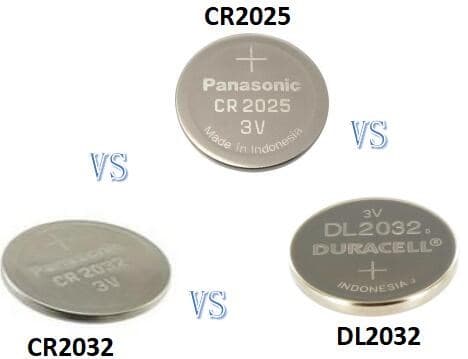
No, not reliably. A CR2025 (2.5mm thick) and a CR2016 (1.6mm thick) have the same 20mm diameter but less material, so they sit too loose in the AirTag's contacts and hold less charge. The "32" in CR2032 means 3.2mm thick, which is what the AirTag's spring contact is built for. Use a CR2032.
How can I tell if my AirTag battery is low?
Open the Find My app, tap the Items tab, and select the AirTag. If the charge is low, "Low Battery" appears under its name. Apple also pushes a notification to your iPhone when the battery is running low. There is no exact percentage. For fleets, Airpinpoint's dashboard shows an estimated battery level for every tag so you can batch replacements before any go dark.
Where do I buy AirTag batteries and how much?
Any CR2032 from Amazon, a grocery store, a pharmacy, or a hardware store fits. A single cell runs roughly $0.15 to $2 depending on brand and pack size, and multi-packs drop the per-cell price well under $0.50. You do not need an "AirTag" branded battery: any standard CR2032 is the same size and voltage. The label only matters on bitterant-coated cells (see below).
Do AirTags get flagged by TSA?
No. AirTags and their CR2032 batteries are allowed in both carry-on and checked bags. The FAA permits the small lithium coin cell, and an AirTag in luggage is a common, accepted use. The only nuance is that some airlines have at times asked passengers to be able to power down devices; an AirTag has no off switch, but it has not been a practical issue at security.
CR2032 Battery Comparison
AirTag 2 Battery Life: What Changed?
Nothing in the rating. Apple released AirTag 2 on January 26, 2026, still quotes "more than a year" of battery life, and still uses a user-replaceable CR2032. All the battery recommendations in this guide apply equally to both models.
The hardware around the battery did change:
- Louder speaker (50% louder): Apple says you can hear AirTag 2 from up to twice as far away. Sound playback is one of the most power-hungry things an AirTag does, so if you frequently use Play Sound to locate assets, expect faster drain than on the original AirTag.
- Second-generation UWB chip: Precision Finding works from up to 50% farther away. The Ultra Wideband radio only runs during a Precision Finding session, so a tag nobody is actively searching for does not pay for it.
- Upgraded Bluetooth chip: Apple says it extends the range at which items can be located. Apple has not published its power draw.
- Slightly heavier (11.8g vs 11g): the CR2032 cell is identical, so the extra 0.8g is not a bigger battery.
- Different test basis: the original AirTag's rating assumes four Play Sound events and one Precision Finding session per day. AirTag 2's footnote only says "everyday average usage of playing sound and Precision Finding," from December 2025 testing, without giving counts.
The original AirTag has been discontinued, so AirTag 2 is the only model available for new purchases. For existing AirTag 1 deployments, nothing changes.
Bottom line: Same battery, same rated lifespan, same best practices. The louder speaker is the only realistic battery concern, and only if you use it frequently.
Understanding CR2032 Battery Behavior in AirTags
AirTags put a load pattern on the coin cell that is hard to test and easy to underestimate:
- Sleep current: about 2.3μA at idle, per Adam Catley's teardown of the original AirTag
- Pulse loads: away from its owner, the tag sends a Bluetooth advertisement every 2 seconds, a 6 to 7mA burst lasting about 4ms. Playing a sound draws around 8mA for as long as the sound lasts.
- Environmental variables: temperature changes both the cell's voltage and how much of its capacity the tag can use
This combination of microamp sleep and milliamp pulses is the same pattern low-power data loggers run, which is why logger battery tests like the Cave Pearl Project's are the closest public proxy for AirTag battery performance.
The Bitter Coating Problem: Why Some Batteries Won't Work
One of the most frustrating issues AirTag users encounter is that some CR2032 batteries simply won't work, even brand new ones from trusted brands like Duracell.
The Child Safety Coating Issue
Duracell and other manufacturers now add a bitter coating to CR2032 cells so a child who puts one in their mouth spits it out. The stakes are real: Apple's own warning says a swallowed coin battery can cause internal chemical burns in as little as 2 hours.
While this coating saves lives, it creates a problem for AirTags:
- The bitter coating can act as an insulator that prevents proper electrical contact with the AirTag's battery terminals
- Apple's battery page warns: "Some CR2032 batteries with bitterant coatings might not work with AirTag or other battery-powered products"
- Apple still recommends a coated cell: the same page suggests a bitterant-coated CR2032 such as the Duracell 2032 with Bitter Coating, in packaging that states "Compatible with Apple AirTag." If you buy coated cells, buy that label.
How to Fix a Non-Working Battery
If you've purchased batteries that won't work in your AirTag, don't throw them away. Here are workarounds:
-
Rubbing alcohol method: Gently rub the battery surfaces with isopropyl alcohol on a cloth or wipe for 30 seconds. This dissolves the bitter coating without damaging the battery. Let it dry for 10 seconds before inserting.
-
Fine sandpaper method: Lightly rub both sides of the battery with fine-grit sandpaper (400+ grit) to remove the coating.
-
Press it down firmly: Seat the battery positive side up and press down on it for about 2 seconds. Apple's own instructions use this press to confirm the connection: you hear a sound when the battery is connected.
Do not repeat the remove, insert, and press cycle five times in a row. That is Apple's reset sequence: the fifth sound is different, and the AirTag is then ready to pair as a new tag. On a business tag, that means adding it to its account again.
Batteries That Work Without Issues
To avoid the contact problem, choose uncoated cells, or a coated cell whose packaging says "Compatible with Apple AirTag":
- Energizer CR2032 (most models don't have bitter coating)
- Panasonic CR2032
- Maxell CR2032
- Murata (formerly Sony) CR2032
- Amazon Basics CR2032
Comprehensive CR2032 Battery Brand Comparison
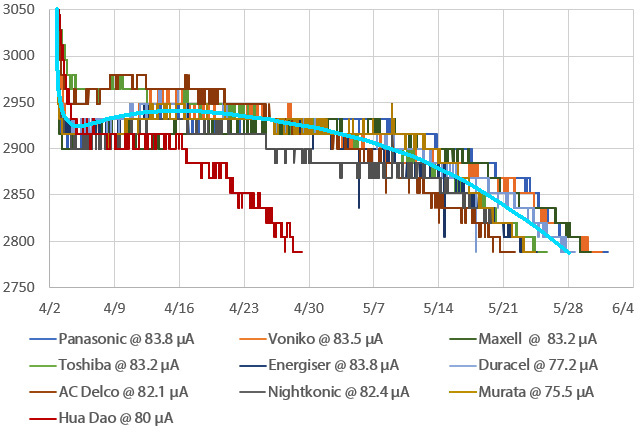
The most useful public CR2032 brand test for AirTag-style loads comes from the Cave Pearl Project, whose data loggers sleep at microamps and pulse to milliamps, like an AirTag. Here is how 10 brands compared:
| Brand | Runtime (Hours) | Relative Months* | Cost per Cell | Value Rating (Hours/$) |
|---|---|---|---|---|
| Panasonic | 1500 | 12.5 | $1.04 | 1442 |
| Voniko | 1448 | 12.1 | $0.83 | 1745 |
| Maxell | 1444 | 12.0 | $0.58 | 2490 |
| Toshiba | 1325 | 11.0 | $0.64 | 2070 |
| Energizer | 1307 | 10.9 | $1.28 | 1021 |
| Duracell | 1298 | 10.8 | $1.81 | 717 |
| AC Delco | 1223 | 10.2 | $0.79 | 1548 |
| Nightkonic | 1186 | 9.9 | $0.24 | 4942 |
| Murata | 1175 | 9.8 | $0.45 | 2611 |
| Hua Dao | 642 | 5.4 | $0.14 | 4586 |
*Runtime hours divided by 120, so the top cell lands near Apple's roughly 12-month rating. A relative scale for comparing brands, not a measured AirTag runtime.
Test Methodology: Each logger drew about 80μA between readings, with a pulse of about 6mA during a once-a-minute EEPROM save, and runtimes were normalized to exactly 80μA. That steady load is about five times an AirTag's beacon average, so the hours rank the brands rather than predict AirTag months. Prices are from the tester's post and vary by vendor and quantity.
Upcoming: Higher-Capacity CR2032 Batteries
The CR2032 market is evolving. Two developments worth tracking in 2026:
- Maxell 300mAh+ prototypes: Maxell is developing CR2032 cells with 30% more capacity than the standard 220-235mAh rating. These are expected to ship later in 2026 and could push AirTag battery life well past 14 months for moderate-use deployments.
- POWEROWL high-capacity cells: Already available, these claim 10% more energy and 20% higher capacity than standard CR2032 batteries. They're mercury-free and compliant with the EU 2024 battery directive. Worth testing if you want to squeeze extra weeks out of each battery cycle.
- EVE Energy LIR2032 (rechargeable): A rechargeable lithium CR2032 rated for 500 charge cycles. The tradeoff is higher voltage (3.6V nominal vs 3.0V), which is outside Apple's CR2032 spec. We have not tested these in AirTags.
We'll update this table as we complete testing on these newer cells.
The Science of CR2032 Battery Performance
The Cave Pearl Project's research revealed several insights about CR2032 batteries that directly apply to AirTag deployments:
Internal Resistance is Crucial
CR2032 batteries have internal resistance that increases as they discharge. Every radio or speaker pulse pulls the voltage down by the pulse current times that resistance, so a half-used cell sags further on each pulse than a fresh one. A device shuts down when a sag crosses its cutoff, even though the cell still has capacity remaining.
The cutoff decides how much of the cell you get. The Cave Pearl loggers halted below 2.775V, which limited them to the part of the discharge where internal resistance stayed under 30 ohms. The AirTag is more forgiving: Catley's teardown found it powers up from about 2V, which lines up with the CR2032's 2.0V cutoff, so an AirTag can use more of the same cell.
Internal Resistance vs. Remaining Capacity (CR2032)
│
│                               ╱
│                            ╱
│                         ╱
│                       ╱
│                     ╱
│                   ╱
│                 ╱
│             ╱╱
│         ╱╱
│     ╱╱╱
│  ╱╱
└─────────────────────────────
  100%               0%
      Remaining Capacity
Temperature Effects on Battery Life
Temperature changes how much of a CR2032's capacity an AirTag can use, which matters for AirTags used in logistics, outdoor assets, or cold chain tracking. The AirTag's own rating is narrower than the cell's:
| Condition | What the data shows | Source |
|---|---|---|
| AirTag operating range | -20°C to 60°C (-4°F to 140°F) | Apple tech specs, both generations |
| Panasonic CR2032 rating | -30°C to 85°C, 225mAh nominal | Panasonic datasheet |
| Refrigerated logger test (about 5°C) | Voltage plateau 80 to 100mV lower; low-drain lifespan about 20% shorter | Cave Pearl Project |
Cold Weather: The Hidden Battery Killer
If you're tracking assets in cold environments (outdoor storage, refrigerated trucks, winter operations), plan for shorter battery life:
- The lower voltage typically recovers when the battery returns to normal temperatures; the capacity the tag used in the meantime does not
- Below -20°C (-4°F) you are outside Apple's rating for the AirTag itself, whatever the cell can handle
Pro tip for extreme cold: BR2032 cells (lithium carbon monofluoride) carry a wider cold rating. Panasonic rates its BR2032 down to -40°C versus -30°C for its CR2032, at 200mAh instead of 225mAh. Both are 3V. The AirTag itself is still only rated to -20°C.
AirTag Precision Finding and Battery Drain
Precision Finding is the only AirTag feature that uses the Ultra Wideband radio, and it runs only while someone is actively searching for the tag. A tag located through the Find My network never pays for it. For range and accuracy numbers, see the AirTag range and accuracy guide.
Ultra Wideband Precision Finding (iPhone 11+)
- Precision Finding needs an iPhone with an Ultra Wideband chip (most iPhone 11 and later models) and shows the distance and direction to the tag
- AirTag 2's second-generation UWB chip works from up to 50% farther away; Apple says the expanded range needs iPhone Air or iPhone 15 or later, excluding iPhone 16e and iPhone 17e
- Apple's original battery rating budgets one Precision Finding session per day, so searching for the same tag several times a day uses more than the rating assumes
How to Check Your AirTag Battery Level
Open Find My, tap Items, and tap the AirTag. If the charge is low, "Low Battery" appears under its name, and your iPhone also gets a notification. There is no percentage.
- Open the Find My app on your iPhone
- Tap the Items tab
- Select your AirTag
- If the charge is low, Low Battery appears below the AirTag name
The missing percentage starts in the protocol. Every Find My location report carries a 2-bit battery field with four states: full, medium, low, and critically low. Our Find My pipeline reads that field from each decrypted report. The network never carries a percentage.
For businesses tracking dozens or hundreds of AirTags, Airpinpoint's inventory shows an estimated battery level for every tag, and the AirTag API exposes the same estimate so you can schedule replacements before tags go offline.
How to Change an AirTag Battery (Step by Step)
Replacing an AirTag battery takes about 10 seconds once you know the trick. The procedure is identical for AirTag 1 and AirTag 2:
- Flip the AirTag so the polished stainless steel side faces up
- Press down firmly with two thumbs on the steel back and rotate counterclockwise until it stops (about a quarter turn)
- Lift off the cover and pop out the old battery
- Insert a new CR2032 battery with the positive (+) side facing up. You'll hear a chime confirming contact
- Align the cover's three tabs with the slots, press down, and rotate clockwise until it stops
A CR2032 costs roughly $0.15 to $2 depending on brand, making annual battery cost per AirTag negligible.
AirTag Cover Won't Open?
The most common complaint when changing an AirTag battery for the first time. Three things fix it:
- Press harder than feels reasonable. The cover only rotates while under firm downward pressure. Light pressure just spins your thumbs over the steel.
- Dry hands, clean steel. Any oil on the polished back kills your grip. Wipe it down first, or press with a rubber glove or silicone pad for extra traction.
- Rotate counterclockwise only. Clockwise tightens it further.
No Chime After Replacing the Battery?
If the AirTag doesn't beep when you insert the new battery, work through these in order:
- Check polarity: the + marking faces up, toward you
- Suspect the bitter coating: brand-new Duracells with bitter coating are a common cause of a "dead" new battery (see the bitter coating section for the 30-second alcohol fix)
- Press the battery down for about 2 seconds: that is how Apple confirms the connection. Do not cycle it five times, which resets the AirTag
- Try a known-good brand: Panasonic and Maxell cells make proper contact out of the package
After a successful swap, the AirTag reconnects to Find My automatically. There's no re-pairing, and your item name, location history, and sharing settings all survive the battery change.
The Best CR2032 Batteries for Different AirTag Uses
Based on the Cave Pearl runtimes above, here are our recommendations for different AirTag deployment scenarios:
Best Overall Performance: Panasonic CR2032
- Longest runtime (1500 hours in accelerated testing)
- Panasonic's datasheet rates it from -30°C to 85°C
- Moderate price point ($1.04/cell)
Best Value For Large Deployments: Maxell CR2032
- Within 4% of the best runtime (1444 hours) at 56% of Panasonic's price
- Excellent price-to-performance ratio (2490 hours/$)
- Ideal for businesses tracking hundreds of assets with Airpinpoint
Best Budget Option: Nightkonic CR2032
- Surprisingly strong performance (1186 hours)
- Exceptional value (4942 hours/$)
- Acceptable for non-critical tracking applications
Best Premium Option: Duracell CR2032
- Reliable performance (1298 hours)
- Widely available for replacement
- The coated version in "Compatible with Apple AirTag" packaging is the cell Apple's battery page names
Not Recommended: Hua Dao CR2032
- Significantly shorter lifespan (642 hours, under half of the best cell)
- The tester suspects a lower-grade steel shell that raises cell resistance
- False economy despite low price
How a $1 Coin Cell Beats a "3-Year" GPS Tracker Battery
GPS trackers advertising 3-5 year battery life get there by updating once per day. That assumption lives in the spec sheet footnotes, not on the box. At the rate an AirTag actually updates in a city (every 1-5 minutes), those same GPS batteries would be dead in days.
The right number to compare is updates per battery, not months of life:
| Tracker | Advertised life | Fine-print update rate | Total updates per battery |
|---|---|---|---|
| AirTag 2 | 12+ months | Every 1-5 min in populated areas | 100,000+ |
| Samsara AG46 (battery) | ~3 years | ~1 check-in/day | ~1,100 |
| Trak-4 | Up to 18 months | ~1/day | ~550 |
| LandAirSea SYNC | Up to 2 months | Hourly | ~1,400 |
| Tracki (battery-save) | 30-75 days | 1-3/day | ~75-90 |
A Samsara battery holds roughly 1,100 updates. An AirTag in a city delivers that many in under three days, then keeps going for over a year on a $1 coin cell.
The gap is physics. Each GPS tracker update requires the GPS radio to stay on for up to 30 seconds to acquire a satellite fix, then a cellular modem to transmit. LTE bursts pull hundreds of milliamps. An AirTag broadcasts a tiny Bluetooth packet at microamp-level average current, and nearby iPhones do the GPS fix and cellular upload using their own batteries, batteries that someone else recharges every night. The architecture is the difference, not battery chemistry.
This is why 12+ months at full update rate and 12+ months at once-a-day are not the same claim. The AirTag's 12 months is at full rate. Every GPS tracker's multi-year figure is at once-a-day. For a full tracker-by-tracker breakdown, see the GPS tracker battery fine print guide.
How Airpinpoint Helps Manage Battery Life
Airpinpoint turns AirTag battery management into a schedule instead of a string of surprises:
- Battery estimate on every tag: the inventory list and map panel show each tag's estimated battery level, counted down from its rated battery life since activation or the last replacement
- Reset on swap: after you replace a cell, reset the tag's battery clock in the dashboard and the countdown starts over. The AirTag API exposes the same estimate and reset for your own maintenance tooling
- One view for the whole fleet: Find My caps an Apple ID at 32 items. Airpinpoint shows hundreds of tags, and their battery estimates, in one login, so you can plan replacements in batches instead of waiting for low-battery notifications on whichever iPhone owns each tag
AirTag Battery: The Short Answer
The AirTag battery is a CR2032 3V lithium coin cell, identical in AirTag 1 and AirTag 2, and it runs 10 to 14 months in moderate use. Three rules cover most decisions:
- One tag, replaced once a year: grab any Energizer, Panasonic, or Maxell CR2032 off a store shelf. If you buy a bitterant-coated cell, pick a package that says "Compatible with Apple AirTag," as Apple recommends.
- A fleet on Airpinpoint: standardize on Maxell, which ran within 4% of the best cell at 56% of its price, and watch every tag's battery estimate from one dashboard so you batch replacements before any tag goes dark.
- Cold storage or outdoor assets below freezing: plan for 4 to 8 months, and remember AirTag is only rated down to -20°C (-4°F).
FAQ
How long do AirTags last?
The battery lasts about a year: Apple rates both AirTag models for more than a year on one CR2032. Apple publishes no lifespan for the tag itself, and because the battery is user-replaceable, the same AirTag keeps working through many cells. What wears is the seal: Apple says IP67 resistance can decrease with normal wear.
Does AirTag 2 have longer battery life than the original AirTag?
No. Apple quotes the same "more than a year" for AirTag 2, and it uses the same CR2032. Its speaker is 50% louder and Precision Finding reaches 50% farther, so a tag you ring or search for often may drain faster. For a tag nobody rings or searches for, Apple has published nothing that suggests a difference.
How long does an AirTag battery last in cold weather?
Expect less than a year. Apple rates AirTag for -20°C to 60°C (-4°F to 140°F), and cold lowers a lithium coin cell's voltage. In the Cave Pearl Project's refrigerated tests, low-drain loggers ran about 20% shorter than at room temperature. For freezers and winter yards, plan on 4 to 8 months.
How do I make an AirTag battery last longer?
Use a name-brand CR2032 such as Panasonic or Maxell, save Play Sound and Precision Finding for when you need them, and keep tags out of freezing temperatures where you can. Tags that travel apart from their owner's iPhone also play Apple's anti-stalking sound when moved, and every sound costs battery.
Related Guides
- AirTag Range and Accuracy: How far an AirTag can be tracked and how precise Precision Finding is
- AirTag 1 vs AirTag 2: Every hardware difference between the two generations
- Best GPS Tracker for Equipment in 2026: Compare AirTags to GPS trackers for fleet and equipment tracking
- AirTag Geofence Alerts: Set Up Location Boundaries: Get notified when tagged assets leave a defined area
- Construction Tool Tracking Software: Track tools across job sites with Airpinpoint
Tracking equipment for a business?
Most people reading this are tracking personal items, which AirTags handle fine on their own. If you manage gear for a company, Airpinpoint runs 6,700+ AirTags across construction equipment, trailers, medical devices, and AV gear from one dashboard.
