
Fixed Asset Tracking Software: Bridge the Gap Between Your Books and Your Buildings
Your finance team knows you own 500 laptops worth $200K on the books. Ask them which building each laptop is in, and they will check with IT. Ask IT, and they will check the spreadsheet. The spreadsheet says "Building A, Floor 3." The laptop is actually in a closet in Building C.
This is the fixed asset visibility gap: your financial records say one thing, physical reality says another. Fixed asset tracking software was supposed to solve this. Most of it only solved half the problem.
What Fixed Asset Tracking Software Actually Does
Fixed asset tracking software manages the financial lifecycle of long-lived business assets. Fixed assets are things a company owns but does not sell or consume quickly: equipment, furniture, vehicles, computers, machinery, tools.
The core functions:
- Depreciation calculation across methods (straight-line, declining balance, MACRS)
- Tax reporting for IRS compliance (Section 179, bonus depreciation)
- Book value tracking from acquisition to disposal
- Insurance documentation with purchase records and valuation
- Audit trails for Sarbanes-Oxley, GAAP, and IFRS compliance
These are real, important functions. Companies running Sage Fixed Assets, Asset Panda, or SAP for depreciation tracking should keep doing so.
The problem is what these tools do not do.
The Location Gap
Traditional fixed asset software tracks what you own and what it is worth. It does not track where it is.
| Capability | Traditional Software (Sage, Asset Panda) | Airpinpoint |
|---|---|---|
| Purchase price / book value | Yes | No |
| Depreciation schedules | Yes | No |
| Tax reporting (Section 179, MACRS) | Yes | No |
| Real-time physical location | No | Yes |
| Multi-site asset map | No | Yes |
| Movement alerts (geofencing) | No | Yes |
| Audit verification by location | Manual walkthroughs | Open the dashboard |
| Works without power or WiFi | N/A | Yes (Bluetooth beacons) |
These are complementary tools. One tracks the financial life. The other tracks the physical life. Companies that run both have a complete picture.
Why Companies Lose Track of Fixed Assets
The financial records say you own the asset. But nobody can find it. This happens more than most organizations admit:
Employee turnover. Someone leaves, their laptop goes into a drawer, and the asset stays "assigned" in the system for months.
Inter-site transfers. Equipment moves from the main office to a satellite location. Someone updates the spreadsheet. Someone else does not.
Construction and renovation. Furniture and equipment gets relocated during office buildouts. The move is temporary until it becomes permanent, and no one updates the record.
Seasonal equipment. Generators, heaters, fans, and event equipment cycle between storage and active use. Each cycle is an opportunity for the record to drift from reality.
Simple human error. A barcode scan is skipped. A check-in is forgotten. A return is logged to the wrong location. Over hundreds of assets and dozens of employees, small errors compound.
The result: 30% of companies report significant discrepancies between their asset register and physical inventory during annual audits. Those discrepancies trigger write-downs, insurance gaps, and compliance findings.
Traditional Fixed Asset Software Compared
| Software | Starting Price | Best For | Location Tracking |
|---|---|---|---|
| Sage Fixed Assets | $3,000-5,000/yr | Mid-market depreciation and tax | None |
| Asset Panda | $1,500+/yr | Flexible asset database | Manual check-in only |
| EZOfficeInventory | $40-150/mo | Equipment checkout tracking | Manual check-in only |
| UpKeep | $45/user/mo | Maintenance management | None |
| IBM Maximo | $10,000+/yr | Enterprise asset management | RFID integration (extra cost) |
| SAP Asset Management | Enterprise pricing | Large enterprise ERP | Requires SAP IoT add-ons |
| Limble CMMS | $28/user/mo | Maintenance scheduling | None |
Every platform in this table tracks the financial and operational side well. None of them can tell you, without manual intervention, that the $15,000 oscilloscope assigned to Lab B is actually sitting in the break room on Floor 2.
How Airpinpoint Adds Physical Tracking
Airpinpoint is not a replacement for your fixed asset register. It is the layer that tells you where everything physically is.
How it works:
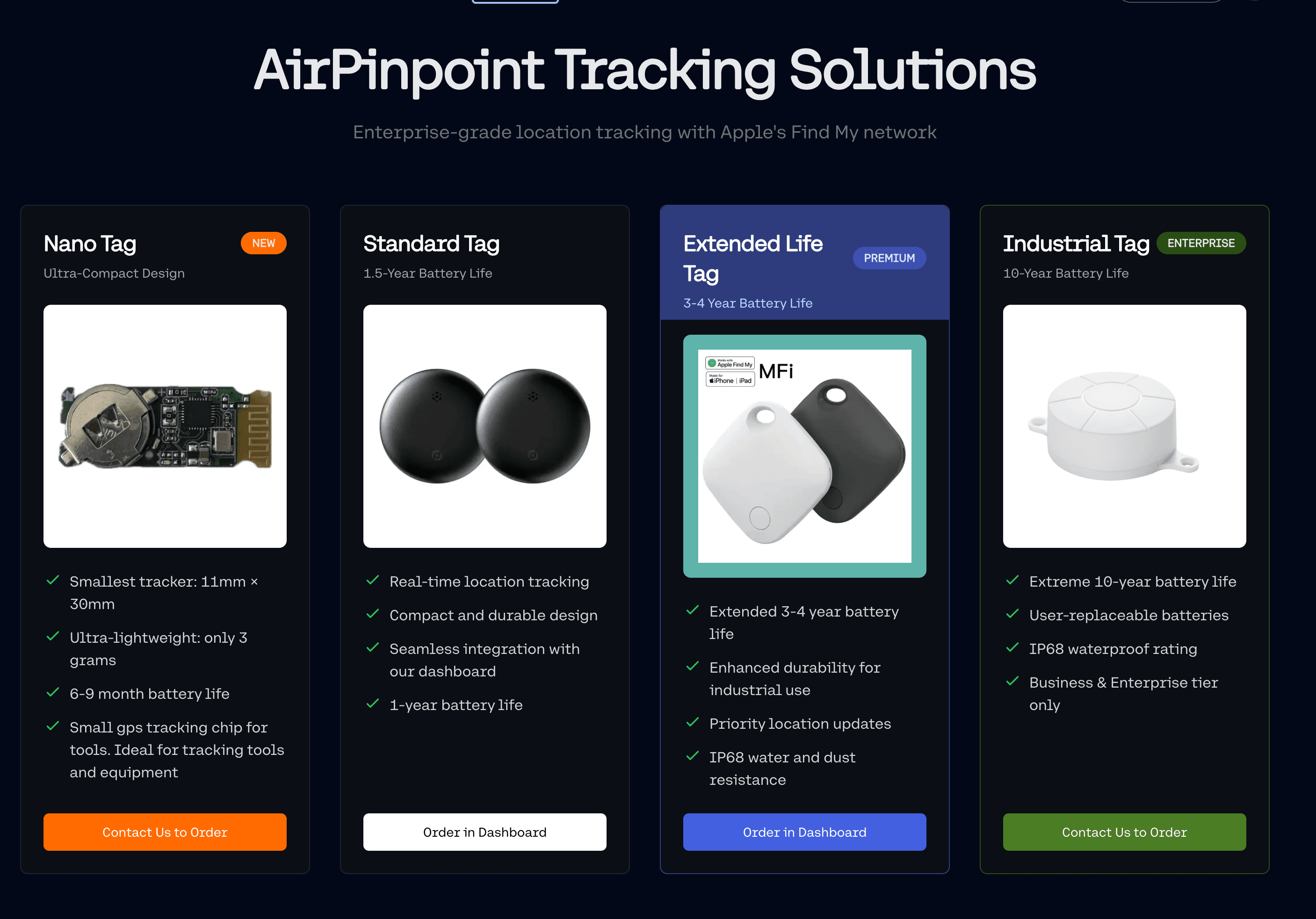
- Attach an AirTag or custom NRF52810 beacon to each fixed asset
- The beacon broadcasts a Bluetooth signal picked up by nearby Apple devices (over a billion globally)
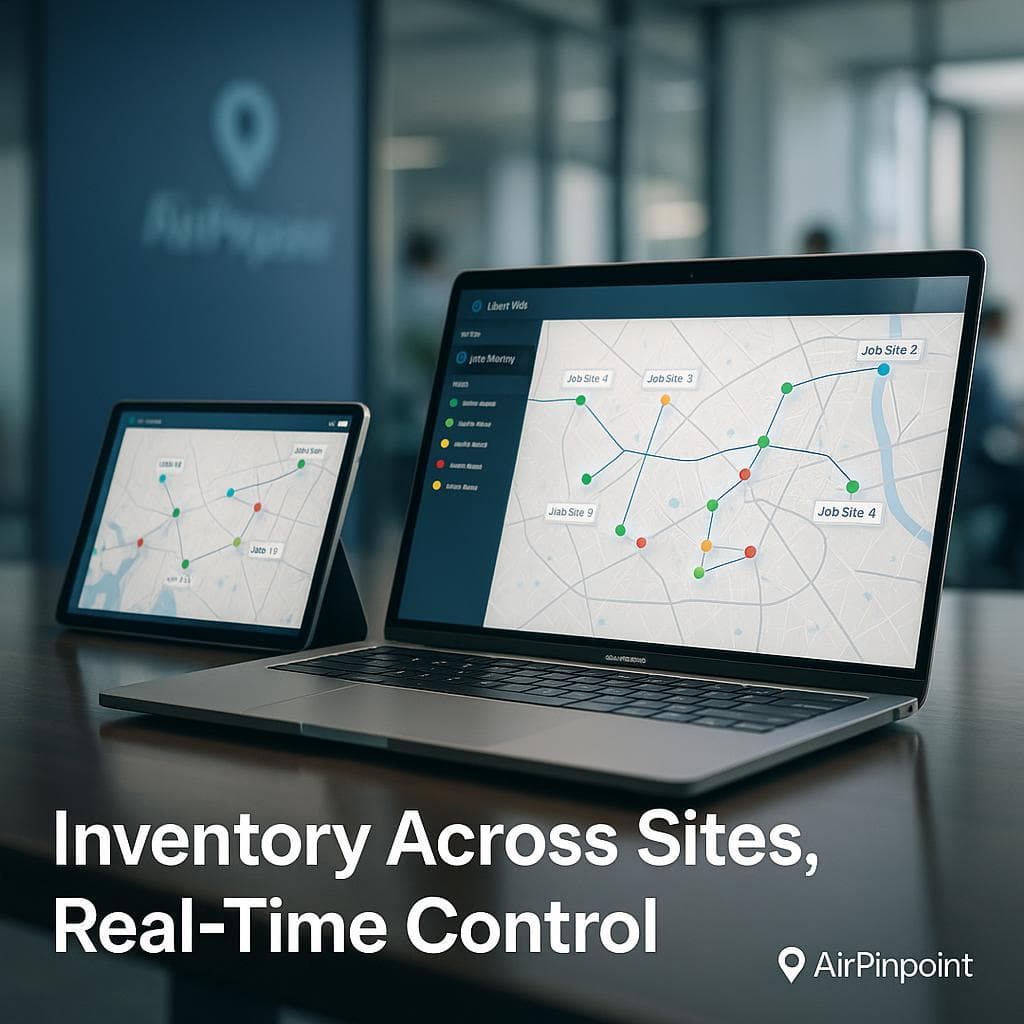
- Airpinpoint's dashboard shows every tagged asset on a map, updated continuously
- Set geofence alerts for buildings, floors, or zones
- Pull location data via API or Zapier into your existing asset management system
What this means in practice:
- Your finance team runs depreciation in Sage
- Your operations team sees physical locations in Airpinpoint
- During audits, you cross-reference the two in hours instead of weeks
- When an asset moves unexpectedly, you get an alert instead of finding out six months later
Use Cases by Asset Type
IT Equipment
Laptops, monitors, servers, projectors, networking gear. IT departments with 200+ devices across multiple floors or buildings spend days during quarterly audits just locating equipment. With Airpinpoint, every tagged device appears on the dashboard map.
Office Furniture
Standing desks, ergonomic chairs, conference room screens. Furniture moves constantly during office reconfigurations. Most companies stop tracking furniture location after the first move. Airpinpoint makes it passive.
Machinery and Manufacturing Equipment
CNC machines, compressors, welders, test equipment. These assets cost $10K-500K+ each. Knowing whether the portable welder is at Site A or Site B without making phone calls saves time and prevents duplicate purchases.
Vehicles and Trailers
Company trucks, service vans, trailers, forklifts. Unlike GPS trackers that cost $25-45/device/month and require wired installation or OBD ports, AirTag beacons are $29 one-time hardware with no wiring. Airpinpoint adds the business dashboard at $11.99/device/month.
Construction Equipment
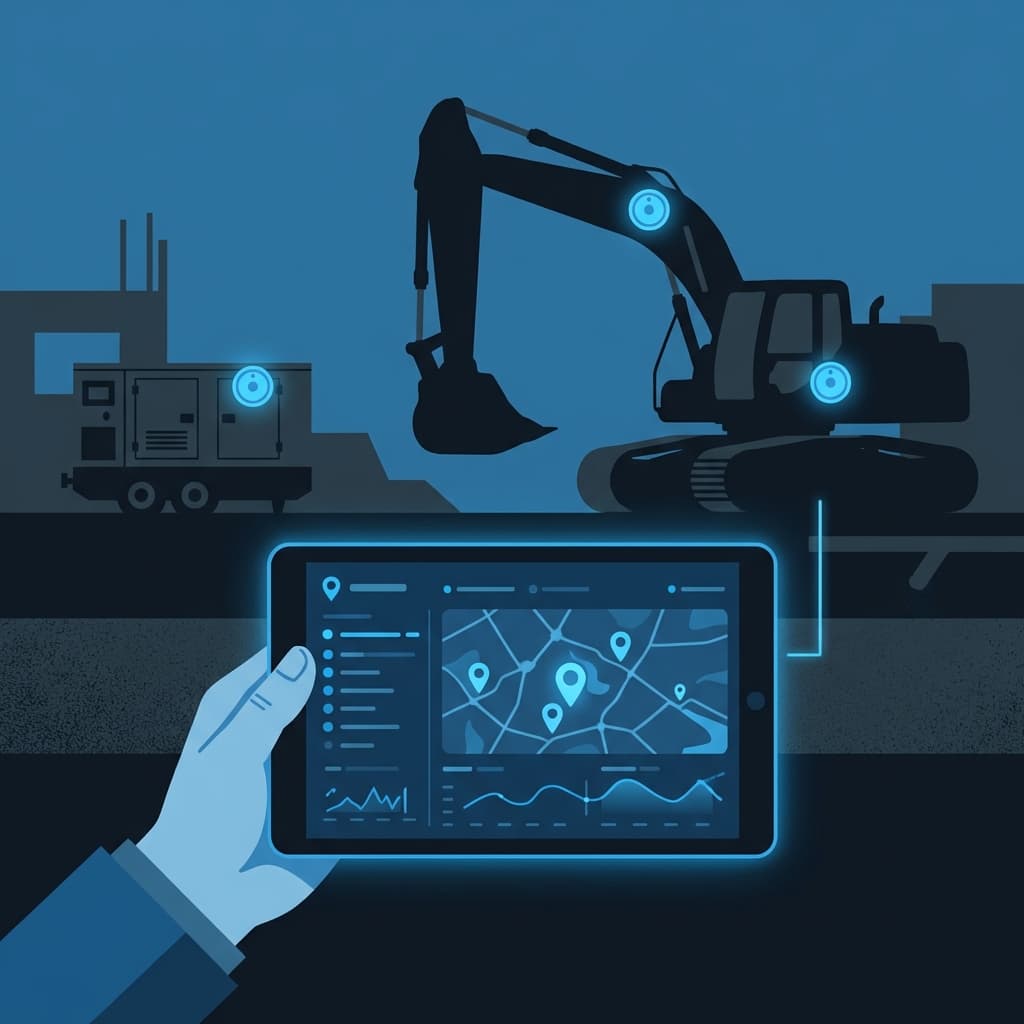
Generators, compressors, scaffolding, temporary fencing. These assets move between job sites constantly and are high-theft targets. Geofence alerts notify you in tens of minutes when a tagged generator leaves the site boundary.
Medical and Lab Equipment
Infusion pumps, wheelchairs, centrifuges, calibration instruments. Healthcare and research facilities lose significant staff time searching for shared equipment. Airpinpoint's indoor tracking via the Apple Find My network works inside hospitals and labs without installing dedicated infrastructure.
Cost Analysis: Airpinpoint vs. Alternatives
For a company tracking 100 fixed assets across 3 sites over 3 years:
| Approach | Year 1 | Year 2 | Year 3 | 3-Year Total |
|---|---|---|---|---|
| Spreadsheet + annual audit | $8,000 labor | $8,000 labor | $8,000 labor | $24,000 |
| Asset Panda (software-only) | $1,500 | $1,500 | $1,500 | $4,500 + audit labor |
| Enterprise RFID system | $50,000-80,000 setup | $5,000-10,000 maintenance | $5,000-10,000 maintenance | $60,000-100,000 |
| GPS trackers (100 devices) | $30,000-54,000 | $30,000-54,000 | $30,000-54,000 | $90,000-162,000 |
| Airpinpoint (100 devices) | $17,268 | $14,388 | $14,388 | $46,044 |
Airpinpoint Year 1 includes $2,900 one-time beacon hardware (100 x $29) plus $14,388 platform ($11.99/device/month x 100 x 12).
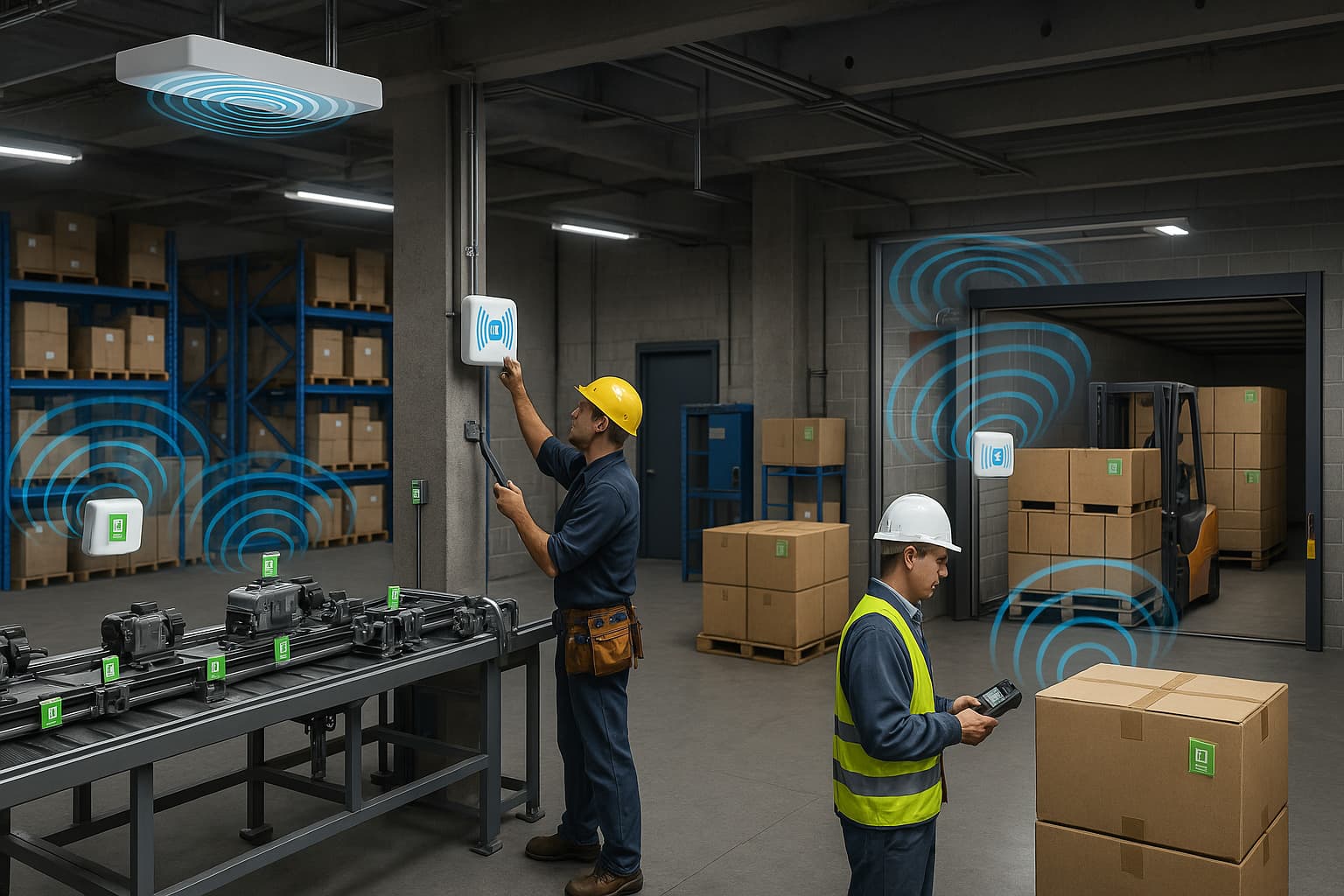
Airpinpoint costs a fraction of RFID or GPS while covering assets that move between sites, sit outdoors, or travel to job sites. RFID requires fixed readers at every doorway. GPS requires power and cellular. Airpinpoint beacons run on a coin cell battery for 1+ year and use the Apple device network that already exists in your buildings.
The Audit Advantage
The average mid-size company spends 40-80 hours per year on fixed asset physical verification. That is a team walking floor to floor, checking serial numbers against a spreadsheet, and flagging discrepancies.
With Airpinpoint:
- Export your fixed asset register from Sage/Asset Panda/SAP
- Open the Airpinpoint dashboard
- Cross-reference: every tagged asset shows its current location on the map
- Flag assets that are not where the register says they should be
- Investigate only the discrepancies, not every single asset
Companies using this approach report cutting physical verification from weeks to 1-2 days.
Getting Started
Airpinpoint works with whatever fixed asset software you already run. There is nothing to migrate and nothing to replace.
- Identify high-value or high-loss assets to tag first (IT equipment, portable machinery, anything that moves between sites)
- Attach AirTag beacons to each asset (takes seconds per device)
- Set up geofences around buildings, floors, or storage areas
- Connect via API or Zapier to sync location data with your existing asset register
Most teams start with 25-50 high-priority assets and expand from there within the 12-month plan.


 Our Solution