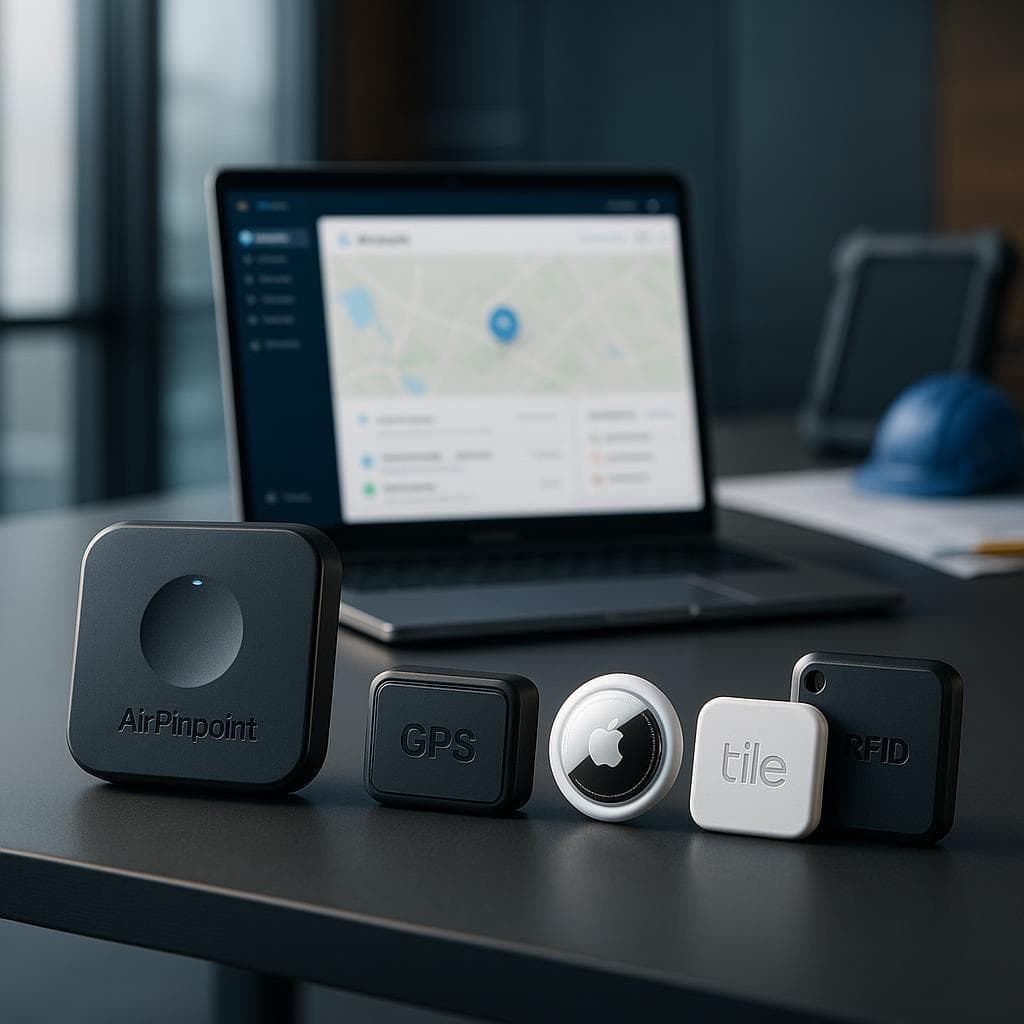
Smallest GPS Trackers and Mini Locators: Real Sizes, Real Tradeoffs
Small equipment (pumps, generators, compactors, pressure washers, tool cases) needs tracking that disappears into the asset. But "mini" marketing hides a physics problem: a GPS receiver, a cellular modem, and a useful battery have a minimum size. This page gives you actual measurements, then shows where each device fits.
Mini Tracker Size Comparison (Measured, Not Marketed)
| Device | Dimensions | Weight | Battery | Monthly fee |
|---|---|---|---|---|
| Apple AirTag | 31.9mm ⌀ x 8mm (coin) | 11g | 12+ months (CR2032, $1) | $0 personal / $11.99 w/ Airpinpoint dashboard |
| Samsung SmartTag 2 | 52 x 28.8 x 8mm | 13g | ~16 months (CR2032) | $0 (Galaxy network) |
| Tracki Mini | 47 x 38 x 17mm | 35g | 2-3 days (real-time mode) | $20-40 |
| LandAirSea 54 | 58mm ⌀ x 22mm (puck) | 79g | 1-2 weeks typical | $20-30 |
| Spytec GL300 | 86 x 38 x 22mm | 114g | 1-2 weeks | $25-45 |
| Digital Matter Oyster3 | 108 x 62 x 26mm | 150g | 5-7 years (3x AA, infrequent pings) | $5-15 |
Two things jump out of that table:
- The smallest "GPS" tracker isn't a GPS tracker. The AirTag is a third the weight of the smallest true GPS unit because it carries no GPS chip and no cellular modem: passing iPhones do the positioning. That's also why its battery lasts a year instead of a weekend.
- Among real GPS units, size and battery trade directly. The Tracki Mini wins on size and dies in 2-3 days of real-time tracking. The Oyster3 runs 5+ years but is the size of a sandwich. There is no small, long-lived, real-time GPS tracker; pick two.
The Decision Rule
- Asset moves daily, you dispatch against its location → real GPS, accept the size and charging schedule (or hardwire it).
- Asset mostly sits, you need recovery and "did it leave the yard" → AirTag or Find My tag. Smallest, cheapest, zero maintenance.
- Asset lives in one building → BLE beacons + a gateway, or just the Find My tag if staff carry iPhones.
- Hundreds of small assets → per-device cellular fees kill GPS economics. $20/month x 200 assets is $48,000/year; the same fleet on Find My tags with Airpinpoint runs $28,800, and nobody spends Fridays charging trackers.
Gotchas to Design Around
- Bluetooth range varies by environment and obstacles: figure ~30 ft through walls, 100+ ft open air.
- Mini GPS battery claims assume slow ping rates. "2 weeks of battery" at one ping per hour becomes 2-3 days in live-tracking mode. Read the fine print on the update interval.
- GPS is unreliable indoors or inside metal structures; Find My tags keep working wherever people walk by.
- Concealment beats size. A slightly larger tracker hidden inside a housing beats a tiny one zip-tied somewhere visible. Thieves check the obvious mounting spots first.
Practical Deployment Tips
- Tag every small asset with AirTags for recovery: at $29 each, tag things you'd never justify a GPS unit for.
- Reserve GPS for the 10-20% that travel widely or get dispatched in real time.
- Use geofence alerts instead of high-frequency pings: "it left the yard at 2am" is the alert that matters, and it doesn't require live tracking.
- Hide tags where removal requires tools: inside housings, under shrouds, bolted waterproof cases in frame cavities.
Why Airpinpoint Is Different
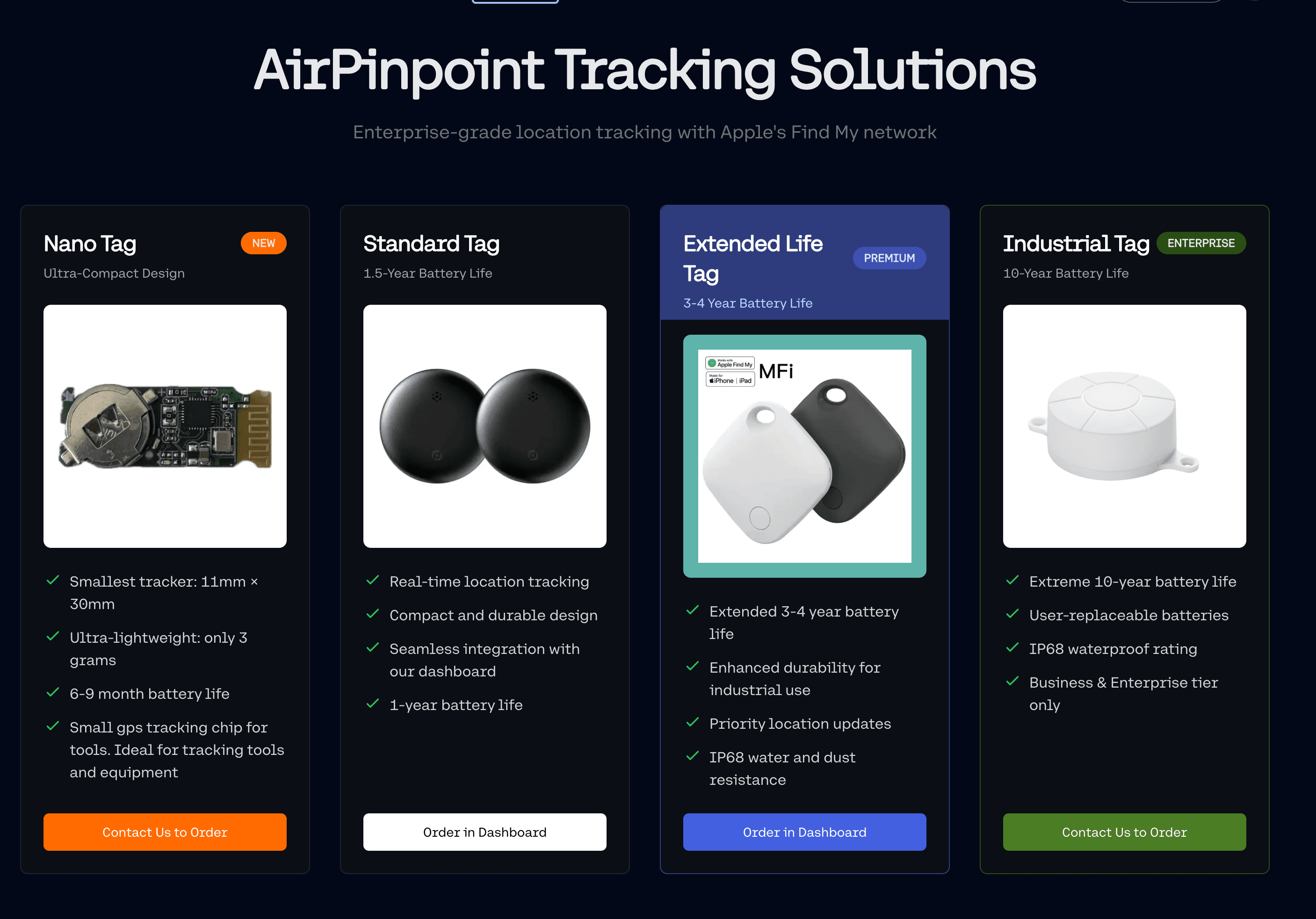
Airpinpoint is built for non-powered assets and mixed fleets. We combine the Apple Find My network with asset workflows (one shared map, geofences, location history, team access), so you get wide coverage, long battery life, and recovery visibility at a fraction of the cost of cellular GPS tracking.
Our 12-Month Minimum (Because We Know It Works)
We require a 12-month minimum. The product is purpose-built, the rollout is fast, and the outcomes are clear. If you want short-term trials, most teams start with a small pilot scope inside the 12-month plan.
 Our Solution