Best Sortly Alternatives for 2026
People leave Sortly for two reasons, and only one of them is on the feature list.
The Core Problem with Sortly: Year-Two Pricing
Sortly's advertised prices apply to your first year only. The footnote on Sortly's own pricing page reads: "50% discount applies only to first year of new customer subscriptions. After the first year, a 20% discount applies to all yearly plans." So the $24/mo Advanced plan renews at $39.20/mo, a 63% increase that is published policy, not an edge case.
Customer reports run worse than the footnote. Sortly scores 2.0 on Trustpilot, where reviewers describe renewals jumping from $340 to $1,438 and increases of up to 900% over two years. On September 18, 2024, Sortly discontinued all legacy plans and moved every customer to the new tier matching their usage at renewal.
The second reason is the one we cover in detail further down: Sortly has no GPS, no BLE, and no real-time location tracking of any kind. Its "location" field is whatever someone typed in last.
What Sortly Actually Costs: Published vs Renewal
All figures from Sortly's pricing page, June 2026. The renewal column applies Sortly's stated post-year-one discount (20% off regular price).
| Plan | Advertised (year 1) | Regular price | Renewal (year 2+) | Item limit | User seats |
|---|---|---|---|---|---|
| Free | $0 | $0 | $0 | 100 items | 1 |
| Advanced | $24/mo | $49/mo | $39.20/mo ($470/yr) | 500 items | 2 |
| Ultra | $74/mo | $149/mo | $119.20/mo ($1,430/yr) | 2,000 items | 5 |
| Premium | $149/mo | $299/mo | $239.20/mo ($2,870/yr) | 5,000 items | 8 |
| Enterprise | Quote only | Quote only | Quote only | 10,000+ items | 12+ |
Two structural catches beyond the price column:
- Item limits gate every tier. Cross 500 unique items and Advanced is no longer available to you at renewal. Sortly's 2024 plan migration renewed customers "at the tier that best matches their current usage," which is how inventories that grew over several years produced renewal bills 2x or more the prior year.
- API and webhooks are Enterprise-only. No published price, sized at 10,000+ items and 12+ seats.
What Customers Report Paying
These are renewal figures reported in public reviews, not marketing numbers.
| Reported pricing event | Source |
|---|---|
| $340 first year, then a $1,438 renewal notice (4.2x) | Trustpilot reviews of sortly.com |
| $1,500/yr, raised to $2,750, then to $5,360 the following year (a reported 93% single-year increase) | Capterra Sortly reviews |
| Nonprofit's annual bill increased by nearly $4,000, double the prior year | Trustpilot reviews |
| Cumulative increases up to 900% within two years for long-term customers | Trustpilot reviews |
| "Just crested $299 per month" after setup (Feb 2025 review) | Capterra Sortly reviews |
| 40% retention discount offered only after starting cancellation | Trustpilot reviews |
The recurring theme in these reviews: the increases land after a business has photographed and cataloged its full inventory, when switching costs are highest.
The Other Gap: No Location Tracking
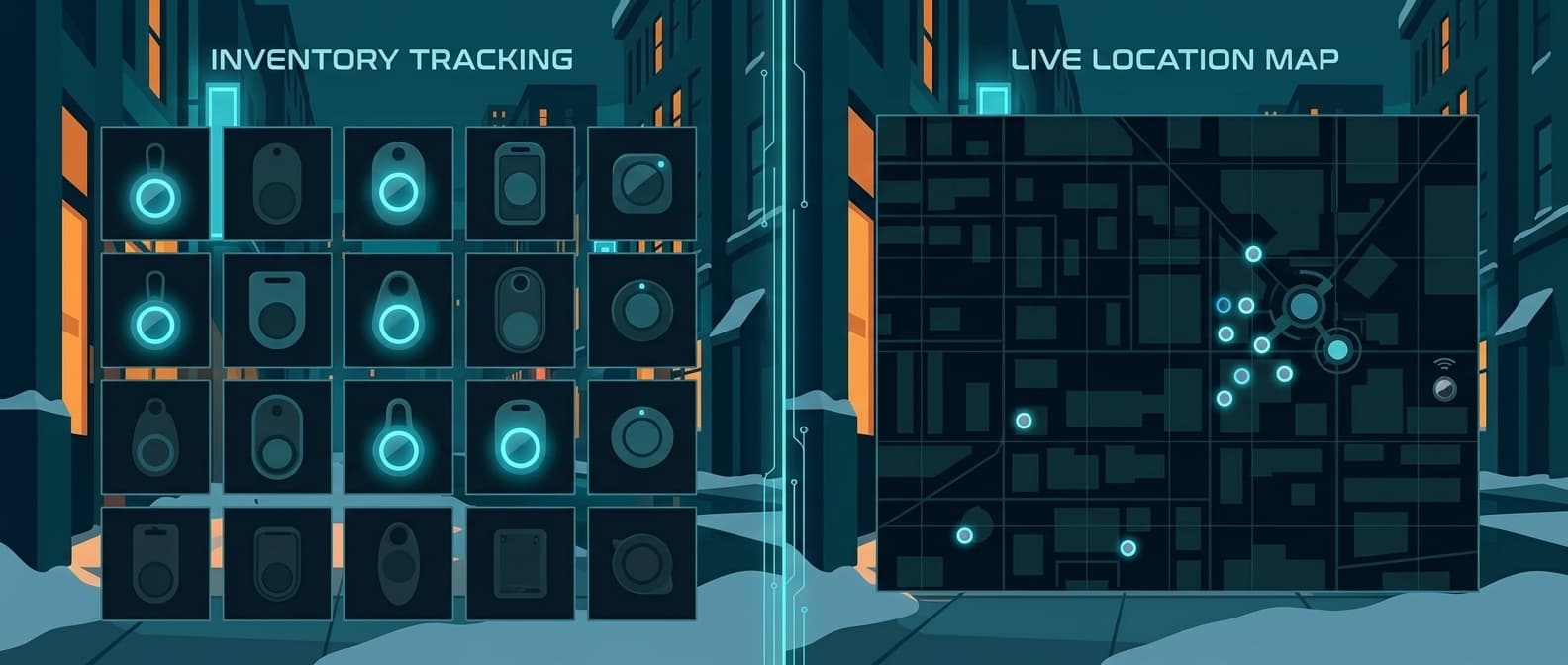
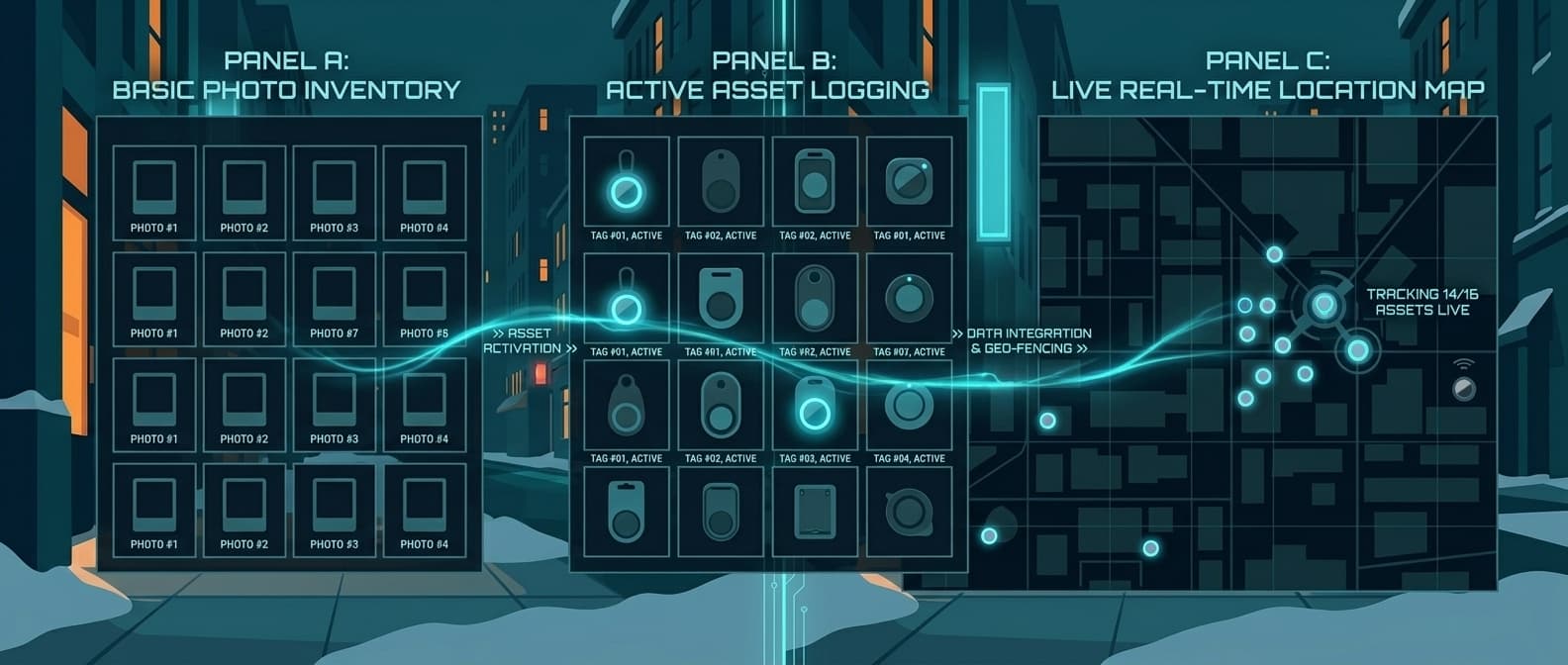
Sortly is a visual inventory app. You photograph items, tag them with QR codes, organize them in folders. For warehouse shelves and storage rooms, it works. The problem starts when your assets leave the building.
When a $30,000 generator moves from one job site to another and nobody scans it, Sortly still shows it at the old location. There is no GPS, no BLE beacon support, no movement detection, and no geofence alerting at any tier, including Enterprise.
If you're searching for a Sortly alternative, you probably hit one of these walls:
- Renewal pricing. The advertised price was a year-one teaser, or the 2024 plan migration repriced you.
- No location tracking. You need to know where assets are right now, not where they were last scanned.
- Item-limit tier walls. Growing past 500 or 2,000 items forces the next tier whether you need its features or not.
- No API below Enterprise. Integration requires the quote-only top tier.
Different alternatives solve different subsets of these problems. Here are five worth evaluating, with pricing verified against each vendor's published rates in June 2026.
Quick Comparison
| Platform | Best For | Location Tracking | Verified Starting Price | First-Year Teaser Pricing? |
|---|---|---|---|---|
| Airpinpoint | Real-time tracking via Apple Find My | Automatic | $11.99/device/mo | No, flat rate |
| Snipe-IT | IT asset management (free) | None | Free self-hosted; cloud from $39.99/mo | No |
| Asset Panda | Enterprise workflows | Manual (GPS stamp on scan) | $3,000/yr (5 users, 1,000 assets) | No |
| EZOfficeInventory | Maintenance scheduling | Manual (QR scan) | $48/mo (5,000 stock units, unlimited users) | No |
| itemit | QR + RFID field scanning | Manual (QR/RFID scan) | £33.25/mo (1,000 assets, 1-3 users) | No |
1. Airpinpoint: Real-Time Location Without Manual Scanning
Best for: Businesses that need to know where assets are right now, automatically.
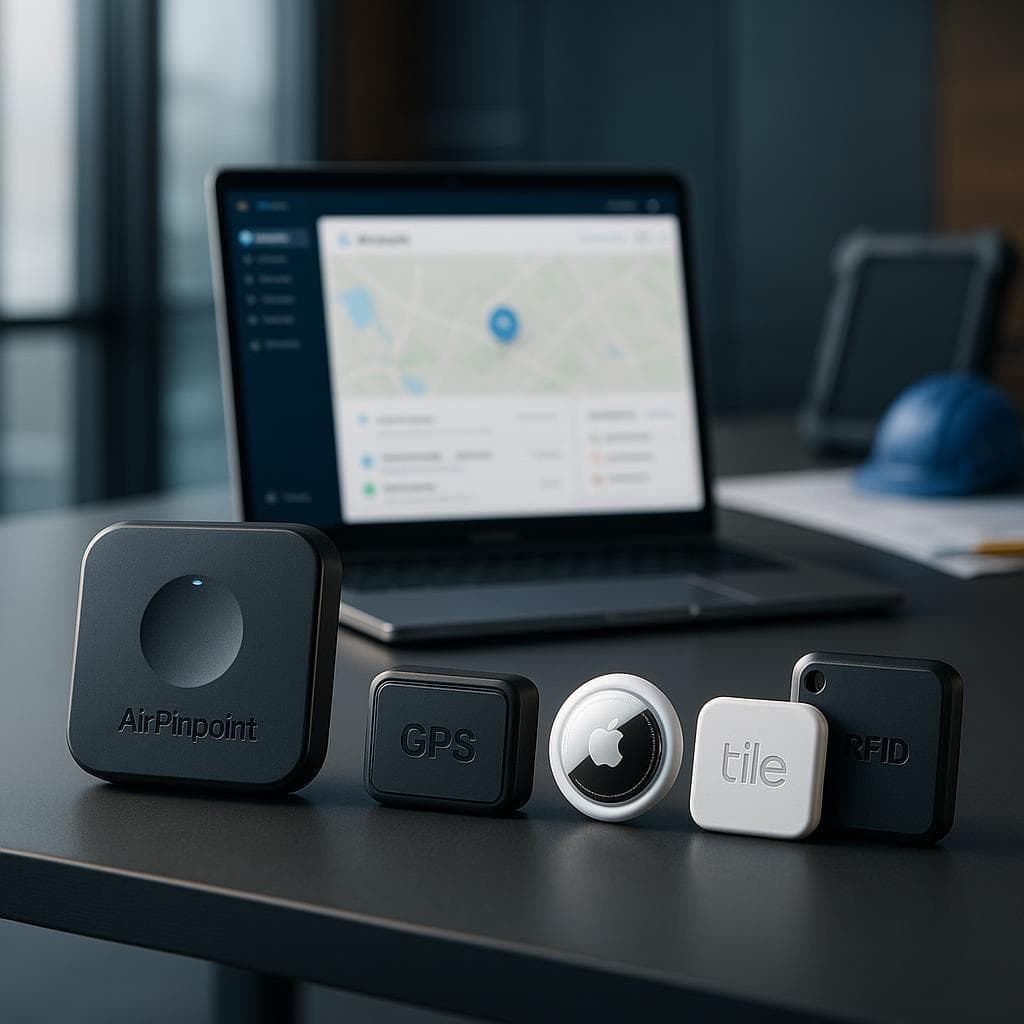
Airpinpoint is not an inventory app. It's a location tracking platform. The distinction matters because it solves the exact problem that drives most people away from Sortly: you need real-time position data, not a photo catalog.
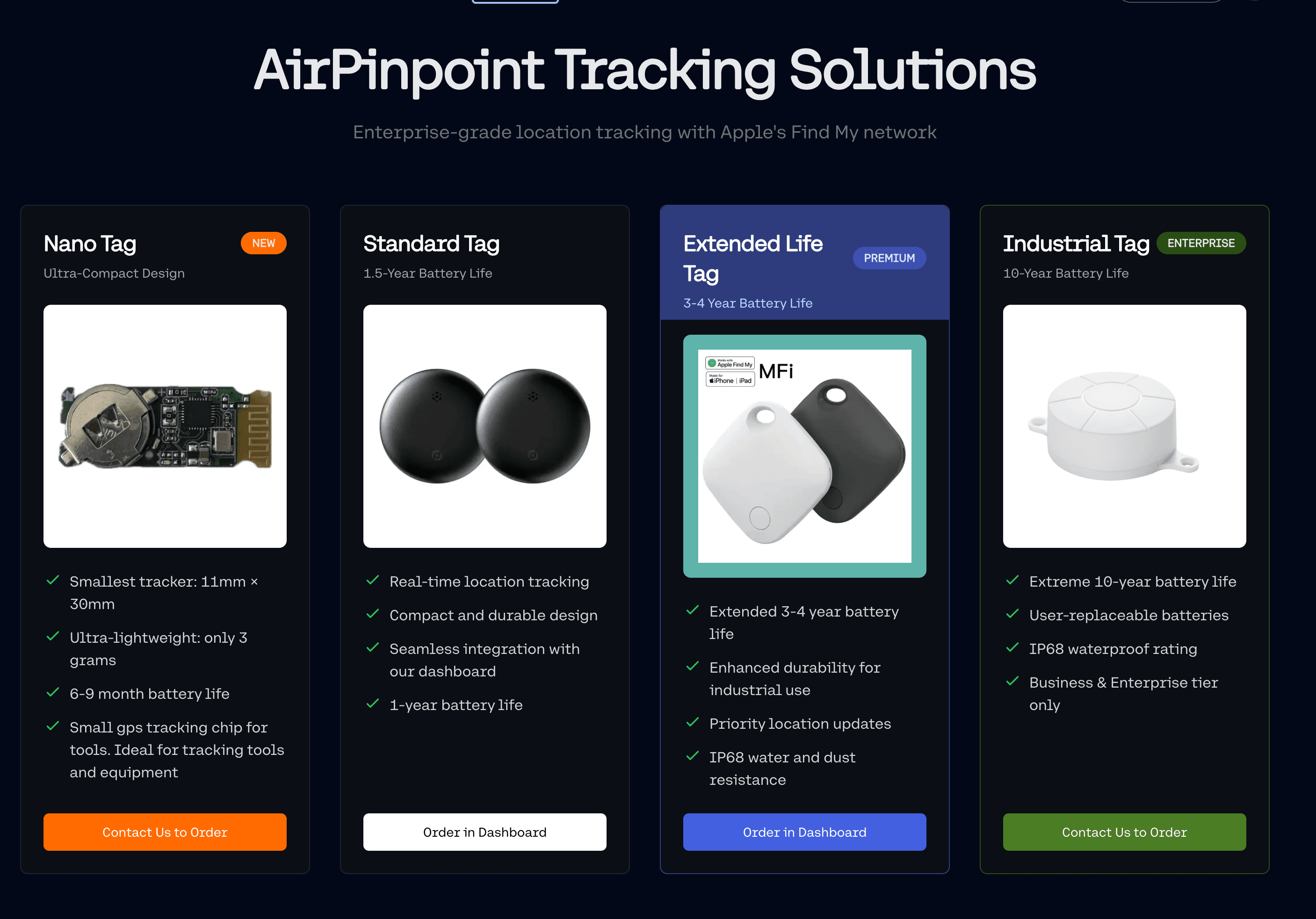
You attach an Apple Find My compatible beacon to an asset. That beacon broadcasts via Bluetooth Low Energy, picked up by any of the over a billion Apple devices worldwide. Location data flows to your Airpinpoint dashboard automatically. No scanning. No human in the loop.
What You Get
- Live fleet dashboard. Every tracked asset on one map, updated automatically.
- Polygon geofencing. Draw boundaries around job sites, warehouses, or client locations. Get alerts on entry and exit.
- Location history. Full timeline of where each asset has been, exportable for insurance claims, utilization analysis, or client billing.
- Movement and after-hours alerts. Know in tens of minutes when something moves that shouldn't.
- Team access. Multiple users with permissions, no per-seat upcharges.
- API and webhooks on every plan. Sortly reserves these for its quote-only Enterprise tier.
What You Don't Get
No photo cataloging. No custom fields for condition tracking or serial numbers. No QR code printing. No low-stock alerts. Airpinpoint tracks where things are, not what they look like or how many you have.
Pricing
| Component | Cost |
|---|---|
| Hardware (AirTag or custom beacon) | $29 one-time ($24.75 each in 4-packs) |
| Business plan | $11.99/device/mo |
| Enterprise plan | $14.99/device/mo |
| Contract | None. Cancel anytime. |
| Year-two price change | None. The rate you sign up at is the rate you renew at. |
| Custom NRF52810 beacon battery | 7 years |
Read the full comparison: AirTags vs Sortly: Visual Inventory vs Real-Time Tracking
2. Snipe-IT: Free, Open Source, IT-Focused
Best for: IT departments that want full control over their asset database without paying per-seat fees.
Snipe-IT is the open-source answer to commercial ITAM tools. It's free to self-host under the AGPL license, with a paid cloud-hosted option if you don't want to run your own server.
The sweet spot is IT asset management: laptops, monitors, servers, peripherals, software licenses. It handles check-in/check-out, depreciation calculations, warranty tracking, and audit logging. For IT teams drowning in spreadsheets, it's a big upgrade at zero license cost.
What You Get
- Full IT lifecycle management. Procurement, deployment, maintenance, depreciation, disposal.
- Check-in/check-out. Assign assets to users with an audit trail.
- License management. Track software seats, expirations, and compliance.
- Custom fields and categories. Model it to your organization.
- Audit log. Every change tracked with user and timestamp.
- REST API. Free on every deployment, including self-hosted. Sortly charges Enterprise rates for API access.
- Self-hosted. Your data stays on your infrastructure, and no vendor can reprice you at renewal.
What You Don't Get
No location tracking whatsoever. No GPS, no BLE, no map view. If a laptop walks out the door, Snipe-IT shows whoever it was last assigned to. It won't tell you where it is now. Also no photo-first interface like Sortly, and no visual inventory features.
Pricing
| Option | Cost |
|---|---|
| Self-hosted | Free (AGPL license) |
| Cloud Basic | $39.99/mo |
| Cloud Small Business | $99.99/mo |
| Dedicated hosting | From $249.99/mo |
Verified against snipeitapp.com/hosting, June 2026. The free tier is the real product. The paid cloud version just removes the hosting burden.
Read the full comparison: AirTags vs Snipe-IT
3. Asset Panda: Enterprise Customization
Best for: Large organizations that need custom workflows, approval chains, and compliance audit trails.
Asset Panda is the enterprise option. Where Sortly keeps things simple with folders and photos, Asset Panda lets you build custom fields, multi-step approval workflows, automated alerts, and role-based permissions that map to your org chart.
It's built for companies where asset management has regulatory implications: healthcare equipment subject to FDA tracking, government property under FAR compliance, or financial assets requiring depreciation schedules.
What You Get
- Fully customizable fields and workflows. Build any data model and approval process.
- Mobile app with barcode/QR scanning. Field teams scan assets and update records.
- GPS check-in. Optional: stamp the GPS coordinates when someone scans an asset.
- Depreciation tracking. Multiple methods (straight-line, declining balance) for accounting.
- Compliance audit trails. Every action logged, exportable for auditors.
- Integrations. Connects to Jira, Zendesk, ServiceNow, and other enterprise tools.
What You Don't Get
No automatic location tracking. Asset Panda's GPS feature captures coordinates at the moment someone scans an asset. Between scans, you have no visibility. No geofencing, no movement alerts, no continuous tracking. The customization also cuts both ways: setup takes weeks, not minutes, and you need someone to maintain the configuration.
Pricing
Asset Panda now publishes starting prices, all billed annually:
| Tier | Cost | Includes |
|---|---|---|
| Starter | $3,000/yr | 5 users, 1,000 assets |
| Business+ | $7,500/yr | 10-user minimum, up to 5,000 assets |
| Enterprise | Custom quote | Unlimited users and assets |
| Collaborator seats | $120/yr per seat | Read/limited access |
Verified against assetpanda.com/pricing, June 2026. The $3,000 floor makes it the most expensive entry point on this list. The value is in customization depth, not sticker price.
Read the full comparison: AirTags vs Asset Panda
4. EZOfficeInventory: Maintenance Scheduling Built In
Best for: Businesses that need to tie maintenance schedules and service records to their asset database.
EZOfficeInventory (now part of the EZO suite) fills a niche that Sortly ignores: preventive maintenance. You track assets, but you also schedule oil changes, calibration checks, safety inspections, and service intervals. When equipment is due for maintenance, the system alerts you before something breaks.
It also has solid check-in/check-out workflows for equipment rooms and tool cribs, and integrates with Zendesk for helpdesk-driven asset requests.
What You Get
- Maintenance scheduling. Recurring service tasks tied to calendar intervals or usage thresholds.
- Service history. Full log of every maintenance action per asset.
- Check-in/check-out. Reservation system with availability calendar.
- QR/barcode scanning. Mobile app for field updates.
- Unlimited users on every plan. Sortly caps Advanced at 2 seats and Ultra at 5.
- Zendesk and Jira integration. Helpdesk-driven asset workflows.
What You Don't Get
No real-time location tracking. Like Sortly, location data depends on someone scanning a code. No geofencing or movement alerts. The interface is functional but not as visually clean as Sortly's photo-first approach.
Pricing
| Plan | Cost | Capacity |
|---|---|---|
| Essentials | $48/mo | 5,000 stock units, unlimited users |
| Advanced | $58/mo | 15,000 stock units, unlimited users |
| Premium | $65/mo | 30,000 stock units, unlimited users |
| Enterprise | Custom | Unlimited |
Verified against ezo.io/ezofficeinventory/pricing, June 2026. Compare the capacity math: Sortly Ultra at $119.20/mo (renewal price) covers 2,000 items and 5 users. EZOfficeInventory Essentials at $48/mo covers 5,000 stock units with unlimited users, plus maintenance scheduling Sortly doesn't offer at any price.
5. itemit: QR and RFID Scanning for Field Teams
Best for: Organizations that want to upgrade from QR-only scanning to RFID without building enterprise infrastructure.
itemit bridges the gap between basic QR scanning (like Sortly) and full RFID infrastructure (like warehouse management systems). You can start with QR code labels and add RFID tags later, on the same platform.
The mobile app is the core product. Field teams scan assets on-site, update conditions, log maintenance, and hand off custody.
What You Get
- QR + RFID scanning. Both from the same mobile app. Bulk-scan RFID tags in seconds.
- Asset register. Central database with custom fields, photos, and documents.
- Check-in/check-out. Custody tracking with audit trails.
- Maintenance and inspection logging. Record service actions in the field.
- Location tagging. Manual location stamps on scan, with map view.
- Reporting and export. CSV export, custom reports, usage analytics.
What You Don't Get
No automatic location tracking. itemit's "location" feature works the same as Sortly's: it records where the last scan happened. RFID scanning requires proximity of a few meters, not the passive crowd-sourced tracking that Airpinpoint provides. API access is a paid add-on (£699/yr) below the Industrial tier.
Pricing
| Plan | Cost | Capacity |
|---|---|---|
| Starter | £33.25/mo (£399/yr) | 1,000 assets, 1-3 users |
| Pro | £133.25/mo (£1,599/yr) | 1,000 assets, unlimited users |
| Industrial | From £249.92/mo (£2,999/yr) | 2,000 assets, unlimited users, API included |
| Enterprise | Custom | 10,000+ assets |
Verified against itemit.com/pricing, June 2026 (prices exclude VAT). The Starter tier's 1,000-asset cap at £399/yr undercuts Sortly Ultra's 2,000-item renewal price of $1,430/yr for many mid-size registers, and RFID support is the differentiator if you audit hundreds of assets by walking through with a handheld reader.
Where Sortly Genuinely Wins
The pricing pattern is real, but so are the things Sortly does well:
- Photo-first cataloging. Nothing on this list matches Sortly's visual inventory interface. If your team thinks in pictures, Sortly's UX is the best available.
- Setup speed. Working inventory in an afternoon. Asset Panda takes weeks, Snipe-IT requires a server.
- Review scores for the product itself. 4.5/5 across 953 Capterra reviews. The product complaints are about pricing and sync speed, rarely about the core cataloging experience.
- A usable free tier. 100 items and 1 user, free forever. None of the paid competitors here offer that.
- Year one is cheap. At $24/mo for 500 items, the first-year Advanced price beats everything except Snipe-IT self-hosted.
If your inventory is stationary, under 500 items, and you budget for the renewal price rather than the advertised one, Sortly remains a defensible choice.
What Reviewers Say About Sortly
Recurring patterns from Capterra (4.5/5, 953 reviews) and Trustpilot (2.0/5):
- Renewal repricing. The dominant negative theme. A May 2025 Capterra reviewer described the shift from half-off introductory rates to a "$400 cost the next year" as potentially deceptive. Sortly's own response in that thread confirms the structure: 50% off year one, 20% off after.
- Sync lag at scale. Multiple reviewers report slow syncing with large datasets and across devices: "Sortly loads way too slow, refreshing after every movement gets a little frustrating" (plant superintendent, 500+ employee company). Large batch updates "hold up longer than expected" during annual audits (July 2025).
- Seat and item limits. Even 5-star reviewers ask for "more available users in the Ultra package" (Jan 2025). The 2/5/8 seat caps push teams into higher tiers for headcount, not features.
- Cancellation-gated discounts. Trustpilot reviewers report 40% discounts materializing only after they start the cancellation flow, which colors how customers read the list price.
Cost Comparison at Renewal Prices
What each platform costs per year once introductory pricing expires, using each vendor's published June 2026 rates:
| Platform | Annual cost (year 2+) | What you get |
|---|---|---|
| Sortly Advanced | $470 | 500 items, 2 users, photo inventory |
| Sortly Ultra | $1,430 | 2,000 items, 5 users |
| Snipe-IT self-hosted | $0 + hosting | IT asset management, API, unlimited everything |
| EZOfficeInventory Essentials | $576 | 5,000 stock units, unlimited users, maintenance scheduling |
| itemit Starter | £399 | 1,000 assets, QR + RFID path |
| Asset Panda Starter | $3,000 | 1,000 assets, 5 users, custom workflows |
| Airpinpoint Business (25 devices) | $3,597 + $619 hardware | Real-time location, geofencing, alerts, API |
Airpinpoint costs more per asset because it does something different: it tracks location continuously instead of cataloging what someone last scanned. Price it against the assets that actually move, not your whole register. Most customers tag the 10-50 high-value mobile assets (generators, trailers, tool kits) and keep a cheap catalog tool for the shelves.
When to Pick Each Alternative
Pick Airpinpoint if your assets move. Construction equipment between job sites, trailers between depots, tools between crews. Any scenario where "where is it right now?" is the question you can't answer with Sortly. It is also the only option here with flat pricing: $11.99/device/mo at signup is $11.99/device/mo at every renewal.
Pick Snipe-IT if you're an IT department tracking laptops, monitors, and software licenses. Free, open source, API included, and immune to vendor repricing because you host it. You need someone technical to set it up.
Pick Asset Panda if you're a large organization with compliance requirements, custom approval workflows, and a $3,000+ annual budget. Healthcare, government, and regulated industries where audit trails are mandatory. Plan for a multi-week implementation.
Pick EZOfficeInventory if maintenance scheduling is the missing piece, or if Sortly's seat caps are what's forcing your tier upgrades. Unlimited users at $48/mo solves the seat problem outright.
Pick itemit if RFID scanning matters. Warehouses, hospitals, or large facilities where you audit hundreds of assets with a handheld reader. The QR-to-RFID upgrade path is smooth.
Keep Sortly if your inventory stays put, fits under your tier's item cap with room to grow, and the renewal price (not the advertised price) fits your budget. The product is good. The pricing model is the thing to walk in eyes-open about.
Our Recommendation
Budget against renewal prices, not advertised ones. Sortly's footnote makes year-two pricing knowable in advance ($470/yr Advanced, $1,430/yr Ultra), and the Trustpilot record shows what happens when growth pushes you across an item-limit boundary.
For inventory that sits on shelves, EZOfficeInventory and Snipe-IT now deliver more capacity per dollar than Sortly at renewal rates. For assets that move, no inventory app on this list solves the problem, because they all share the same limitation: they know what you told them, not what's actually happening. Sortly knows the location someone typed in. Asset Panda knows where the last scan happened. None of them know that the generator got loaded onto a truck at 4 AM and driven to a different state.
For that, you need tracking hardware. Airpinpoint is the only option here that reports location automatically, with no scan, no human in the loop, and no year-two price jump.
 Our Solution