AirTags vs eMaint: When Your Maintenance Platform Needs a Location Layer
eMaint knows your compressor's service history to the hour. It does not know the compressor left the facility last Tuesday.
That gap costs money. A technician dispatched to perform a PM on an asset that isn't where the CMMS says it is wastes the trip, delays the schedule, and creates a discrepancy that nobody catches until the asset comes back with overdue maintenance.
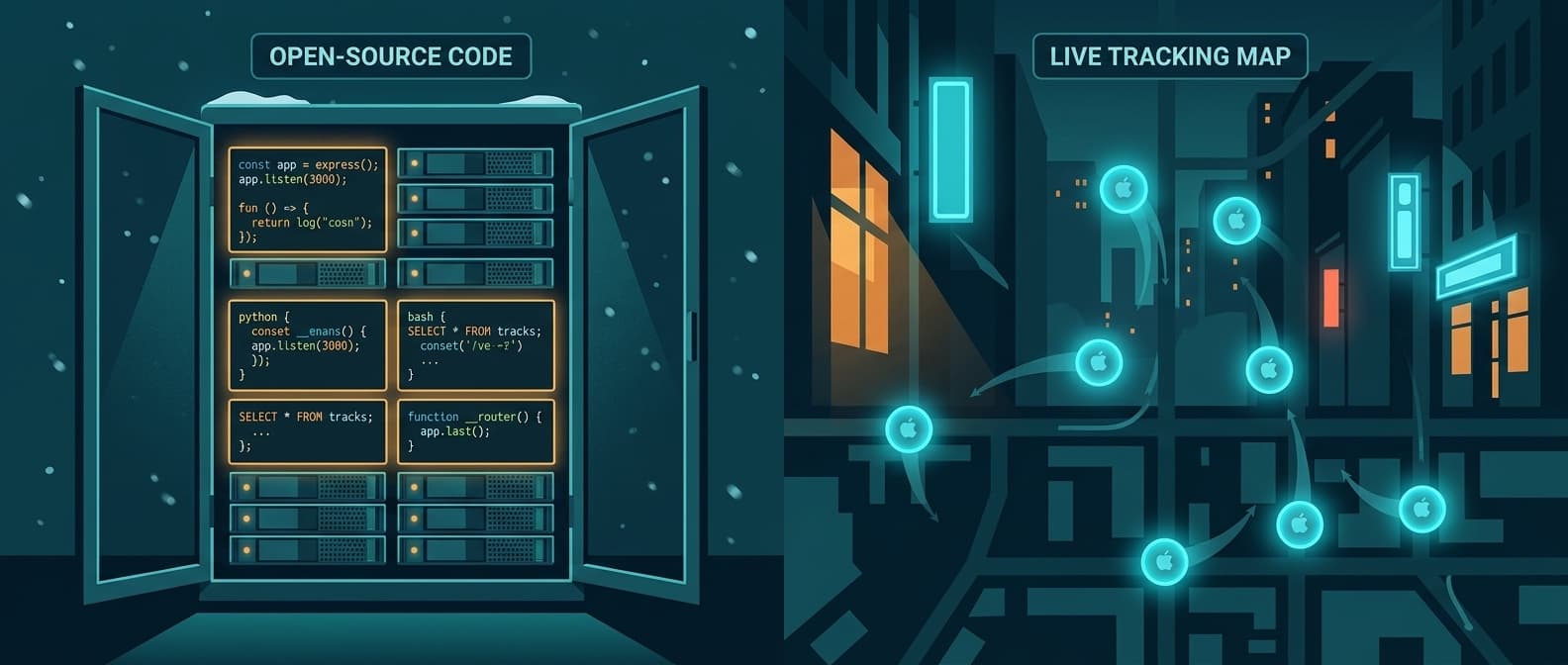
Airpinpoint closes the gap. Attach a beacon, and the asset's position updates automatically through Apple's Find My network. Every asset on a live map. No manual location updates. No "last seen: Building 4, sometime in March."
What Each Tool Actually Does
These solve different halves of the same problem. The noun they share is "asset." Everything else is different.
eMaint, owned by Fluke Corporation, is a CMMS and EAM platform. It answers: when is the next PM due, who owns this work order, what parts are in inventory, what did the last inspection find, how much has this asset cost to maintain. It manages asset hierarchies, multi-site configurations, condition monitoring (via Fluke sensors), and maintenance workflows across large organizations. 4.5/5 on G2 with 270+ reviews.
Airpinpoint is a location tracking platform. It answers: where is this asset right now, where has it been, did it leave the geofence, did it move at 2 AM on a Saturday. It's a live map backed by Apple's Find My network, with geofence alerts, location history, and a REST API.
Head-to-Head Comparison
| Feature | eMaint | Airpinpoint |
|---|---|---|
| Primary function | CMMS/EAM: maintenance and PM management | Real-time physical location tracking |
| Price | $69-$85/user/month (3-user minimum) | $11.99/device/month |
| Asset location | Static field, manually updated | Automatic via Apple Find My network |
| Live map | Site diagrams with static positions | Live map with real-time updates |
| Geofence alerts | No | Yes, polygon-based with schedules |
| Work order management | Yes, full workflow engine | No |
| Preventive maintenance | Yes, condition-based and calendar-based | No |
| Asset hierarchy | Yes, multi-level with parent/child | Tags and groups |
| Parts inventory | Yes, with purchasing and requisitions | No |
| Multi-site management | Yes, global configurations | Yes, one map across all sites |
| Fluke sensor integration | Yes, vibration and condition monitoring | No |
| API | Enterprise plan only | Yes, all plans |
| Mobile app | Yes (offline mode on Professional+) | Web app, any browser |
| Hardware required | None (software only) | BLE beacons ($12-25 each) |
| Setup complexity | High: implementation $5,000-$20,000 | Low: sign up and attach beacons |
| Minimum contract | 3 users, annual | Per device, monthly |
Where eMaint Excels
eMaint is genuinely strong enterprise CMMS software. A 4.5/5 on G2 reflects real capability, not marketing.
Maintenance Workflow Automation
eMaint handles the full maintenance lifecycle: schedule PMs by calendar or meter readings, trigger work orders automatically when condition monitoring data crosses thresholds, route requests through approval workflows, and track parts consumption against inventory. For organizations running large maintenance programs, this depth matters.
Asset Hierarchy and History
Every asset in eMaint has a full service history: what was done, by whom, what parts were used, what it cost. The asset hierarchy organizes equipment by location, system, and parent-child relationships. When an auditor or insurance adjuster wants documentation, eMaint can produce it.
Fluke Integration
Because Fluke owns eMaint, the integration with Fluke's condition monitoring hardware is native. Vibration sensors, thermal cameras, and other Fluke instruments can feed data directly into eMaint, triggering work orders based on real equipment health signals rather than arbitrary time intervals.
Multi-Site Enterprise Management
eMaint's Enterprise tier supports global multi-site configurations: separate workspaces per location, per-site permissions, consolidated reporting across the organization, and support for multiple currencies and languages. For a maintenance team managing 20 facilities, this kind of structure is essential.
Where eMaint Falls Short
The limitations appear when "asset management" means "I need to physically find this thing."
No Automatic Location Updates
eMaint's asset location is a field someone types into. If an asset moves, eMaint doesn't know until someone updates it. The software has interactive maps showing color-coded asset positions on site diagrams, but those positions are manually maintained. In fast-moving environments, field crews, construction sites, and shared equipment pools, manual updates fall behind reality within days.
Users describe this gap consistently. The asset is in eMaint's hierarchy. The asset's current physical address is not.
Cost and Setup Complexity
eMaint starts at $69/user/month with a 3-user minimum ($207/month floor), billed annually. Professional tier is $85/user/month. Implementation typically costs $5,000-$20,000 depending on configuration. A 10-user Professional deployment runs $10,200/year before implementation costs.
Reviewers across G2 and Capterra flag the learning curve: "With all the options it is difficult to follow through the setup." Custom reporting requires vendor support or technical training. Admins handling configuration and migrations face a steeper ramp than everyday users.
Reporting Complexity
Custom report building is a recurring complaint. Multiple reviewers note that advanced reports require support help to build. The flexibility is there, but accessing it takes effort and expertise that smaller maintenance teams may not have in-house.
No Movement Detection
eMaint cannot alert you when an asset leaves a job site. It cannot detect after-hours movement. It cannot tell you an asset has been sitting unused for 30 days or was moved between two facilities without a work order. These questions require a location layer that eMaint was not built to provide.
Where Airpinpoint Fills the Gap
Automatic Location, No Manual Updates
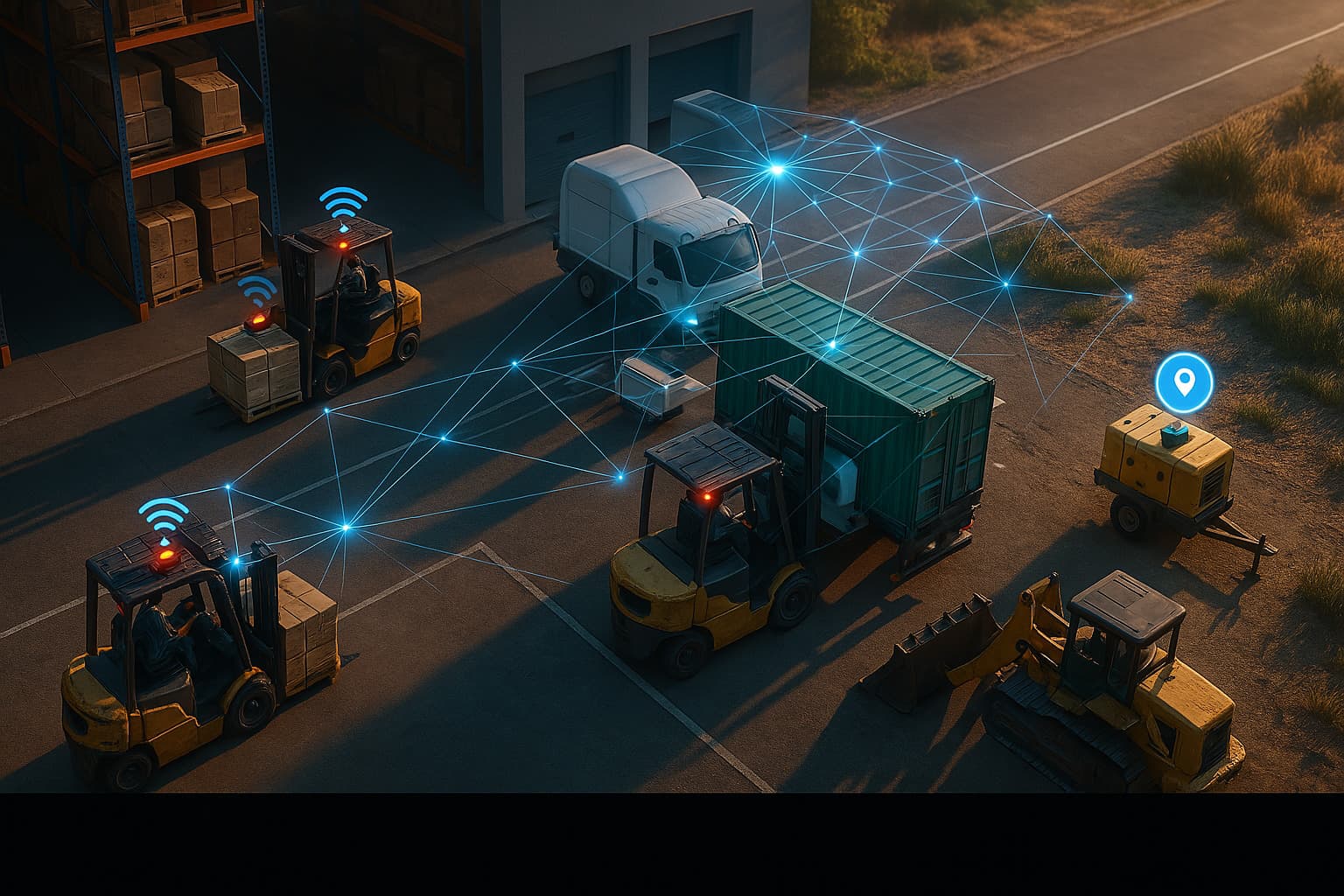
Airpinpoint beacons broadcast on Apple's Find My network. Any of the billion-plus active Apple devices in range relays the beacon's position. Location updates happen without scanning, without login, without a technician remembering to update a field. The dashboard shows every asset on a live map with last-seen timestamps.
Geofence Alerts
Draw a polygon around a facility, yard, or job site. If a tracked asset exits that boundary, you get an alert. Set schedules to limit alerts to business hours or flag anything that moves after 6 PM. This is the theft-prevention and accountability layer a maintenance platform can't provide.
Location History
Every position update is stored. Pull any asset and see where it's been over the past week or month. This answers questions eMaint can't: which site was this equipment at in February, how long did it spend at each location, was it on-site during the incident in question. The history also feeds utilization analysis and supports insurance documentation.
Hardware That Lasts
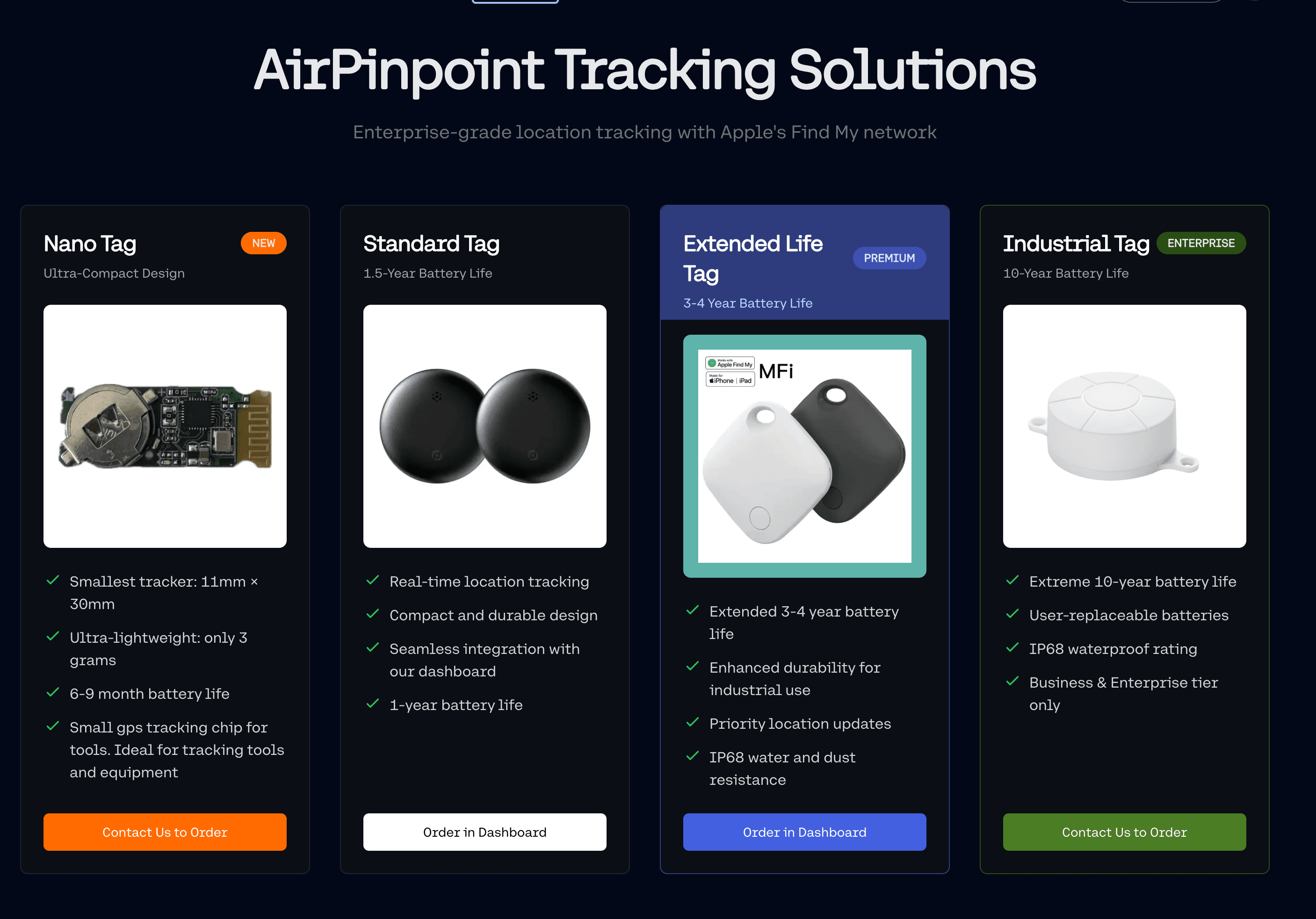
Airpinpoint's custom NRF52810 beacons run on a single CR2032 cell for up to 7 years. Attach one and it works without attention. No barcode stickers that peel, no QR codes that fade, no scanner dependency.
The Real Decision: Maintenance vs. Location
This isn't a replacement decision. eMaint and Airpinpoint answer different questions.
You need eMaint (or a CMMS like it) when:
- Scheduling and tracking preventive maintenance across multiple assets
- Managing work orders, parts inventory, and technician assignments
- Tracking asset maintenance history for compliance or insurance
- Integrating condition monitoring data from sensors
- Operating enterprise maintenance programs across multiple facilities
You need Airpinpoint when:
- Assets move between sites and you need to know where they are now
- Theft, unauthorized movement, or after-hours activity is a risk
- Multiple crews share equipment across job sites
- Dispatching technicians to assets whose actual location is uncertain
- Location data matters for utilization reporting or insurance claims
You need both when:
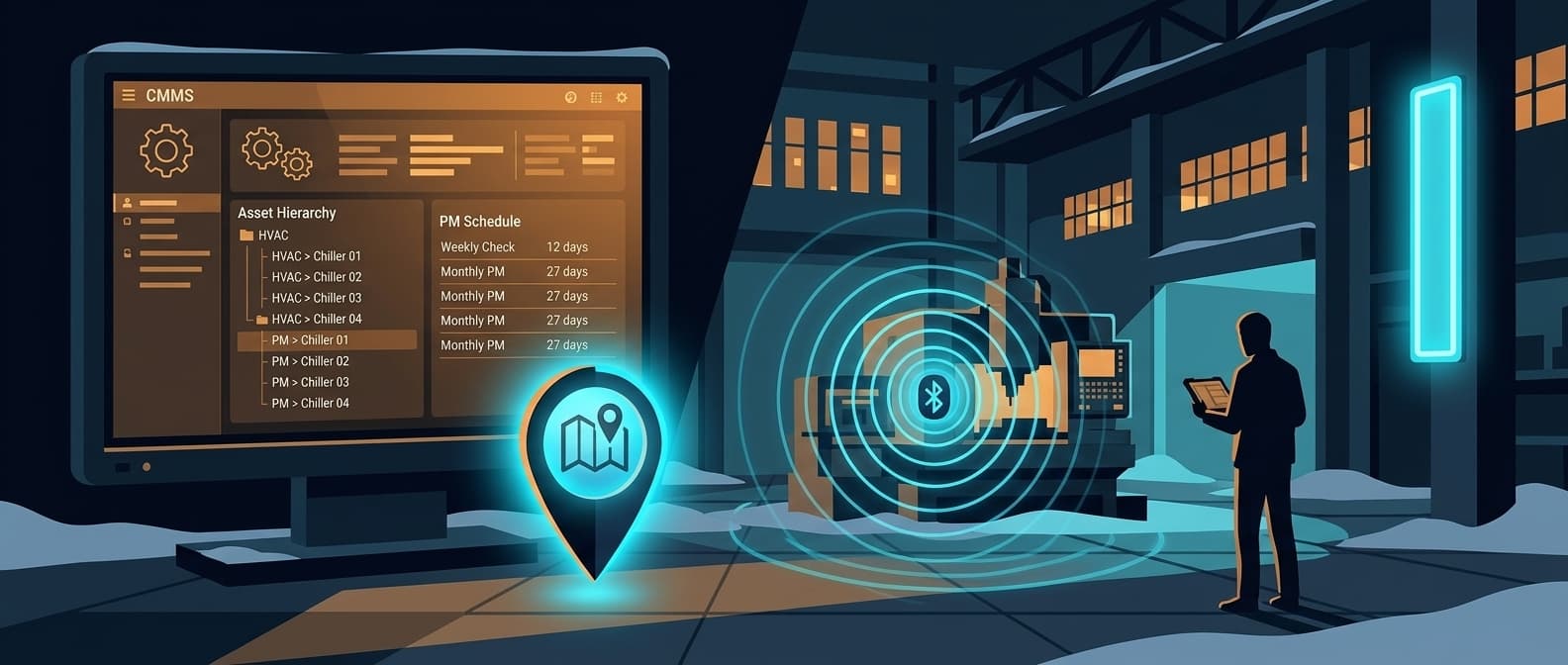
- eMaint manages the maintenance lifecycle, Airpinpoint manages physical location
- You want to know the asset's service status AND where it physically sits
- You're dispatching field technicians and need to confirm the asset is on-site before they drive there
- You need location history alongside maintenance history for full asset documentation
Cost Comparison
eMaint (10 users)
- Team plan: $69/user/month = $690/month, $8,280/year
- Professional plan: $85/user/month = $850/month, $10,200/year
- Implementation: $5,000-$20,000 one-time (sold separately)
Airpinpoint (50 assets)
- Hardware: 50 beacons at $12-25 each = $600-$1,250 (one-time)
- Subscription: $11.99/device/month = $599.50/month
- Annual cost: $7,194 + hardware
Both Together
- eMaint (10 users, Professional): $10,200/year
- Airpinpoint (50 assets): $7,194/year + hardware
- Total: ~$17,400/year for full maintenance management plus real-time location tracking
For a maintenance team that has already invested in eMaint, adding Airpinpoint for location tracking adds roughly 40 cents per asset per day. For a company whose technicians regularly drive to sites only to find the asset has been moved, the math resolves in the first wasted trip.
Migration Path
If you're running eMaint today and want to add location tracking, nothing changes in your eMaint setup.
- Keep eMaint for work orders, PM scheduling, parts, and asset history
- Sign up for Airpinpoint at airpinpoint.com
- Order beacons for the assets whose physical location matters most
- Attach beacons to equipment that moves between sites or is at theft risk
- Use Airpinpoint's REST API to sync location data into eMaint's custom fields if you want location visible inside your CMMS
Start with your 10 highest-mobility or highest-value assets. You'll have live location data within an hour of attaching the beacons. No eMaint changes, no migration, no integration required to get started.
The Bottom Line
eMaint is strong enterprise CMMS software. If you're running a serious maintenance program across multiple facilities, the work order engine, PM automation, and Fluke sensor integration are hard to match at the price.
But eMaint tracks maintenance events, not asset movement. When the compressor is serviced but relocated without a work order, eMaint's records are accurate and completely wrong about where the asset is. When a technician drives 45 minutes to inspect equipment that left the site three days ago, eMaint had no way to know.
Airpinpoint doesn't manage maintenance. It knows where the asset is, where it's been, and whether it should be there. For organizations that need both answers, the tools run side by side without conflict.
One platform keeps your maintenance records. The other keeps your assets on the map.
 Our Solution