AirTags vs Cryotos: When Your Maintenance System Needs a Location Layer
Cryotos knows when your equipment is due for maintenance. It doesn't know where the equipment is.
That gap costs time. A PM is scheduled for next Tuesday. Your technician shows up and the asset isn't there. It was moved to another site, but nobody updated the system because that's not how Cryotos works. It updates when someone scans a QR code. If nobody scanned it at the new site, the system still shows the old location.
Companies running Cryotos across multiple sites hit this problem constantly. The maintenance record is accurate. The physical location is stale.
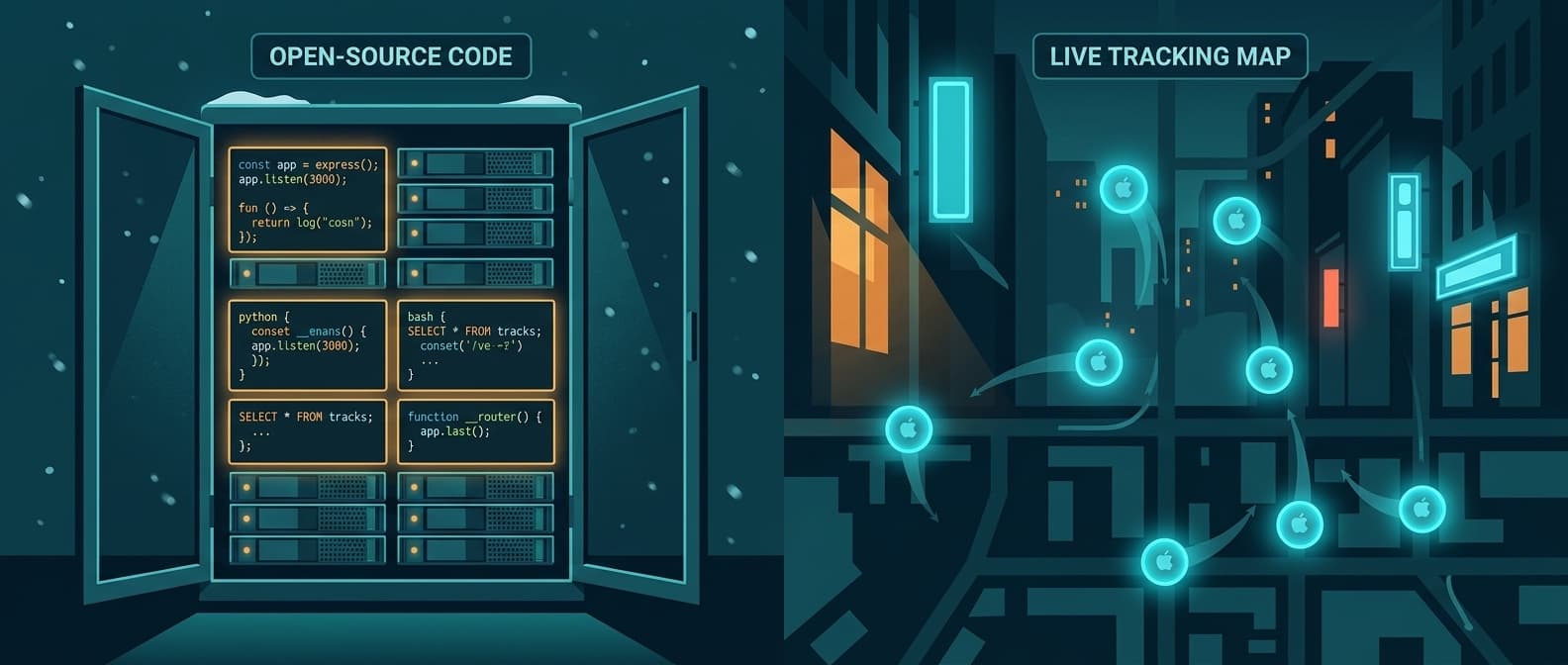
Airpinpoint solves the location half. Attach a beacon to an asset, and its position updates automatically through Apple's Find My network, no scan required. Your maintenance team can see exactly where equipment is before dispatching a technician.
What Each Tool Actually Does
These aren't competitors. They solve different problems that happen to involve the same noun: "assets."
Cryotos is a CMMS (Computerized Maintenance Management System). It answers: what work orders are open, when is PM due, who did the last inspection, what parts were consumed, what's the failure history. It tracks maintenance workflows and compliance schedules. 4.7/5 on G2, with particular depth in manufacturing, healthcare, and facility management.
Airpinpoint is a location tracking platform. It answers: where is this asset right now, where has it been, did it leave the geofence, did it move after hours. It's a live map with alerts, history, and reporting built on Apple's Find My network.
Head-to-Head Comparison
| Feature | Cryotos | Airpinpoint |
|---|---|---|
| Primary function | CMMS: work orders, PM scheduling, maintenance history | Real-time location tracking |
| Price | $29-$69/user/mo | $11.99/device/mo |
| Location tracking | QR scan-triggered geo-tag (manual) | Automatic via Apple Find My network |
| Live map | No continuous live map | Yes, with location history |
| Geofence alerts | No | Yes, polygon-based with custom schedules |
| Work order management | Yes, full workflow | No |
| Preventive maintenance | Yes, schedule-based with alerts | No |
| QR/barcode scanning | Yes, core feature | No (uses BLE beacons instead) |
| AI-powered features | Yes, AI work order generation | No |
| Offline support | Yes, mobile offline mode | Dashboard works online |
| API | REST API | REST API |
| Setup | SaaS, per-user pricing | Sign up, attach beacons |
| Hardware required | None (software only) | BLE beacons ($12-25 each) |
| G2 rating | 4.7/5 | N/A (newer platform) |
| Location updates | Only when QR code is scanned | Automatic, continuous |
| After-hours alerts | No | Yes, geofence schedules |
Where Cryotos Excels
Cryotos is a strong CMMS. Its 4.7/5 on G2 reflects genuine depth in maintenance management.
Work Order Management
Cryotos handles the full work order lifecycle: creation, assignment, priority routing, parts consumption, and closure. Technicians get mobile notifications. Managers see status in real time. The AI-assisted work order generation cuts the time to create and assign jobs. For operations with high work order volume, this workflow alone justifies the subscription.
Preventive Maintenance
PM scheduling in Cryotos is calendar-based and usage-based. You set the interval, Cryotos creates the work orders automatically and routes them to the right technician. Maintenance history builds up over time, enabling failure pattern analysis. This is the core reason maintenance teams choose a CMMS: to stop reacting and start preventing.
QR-Triggered Inspections
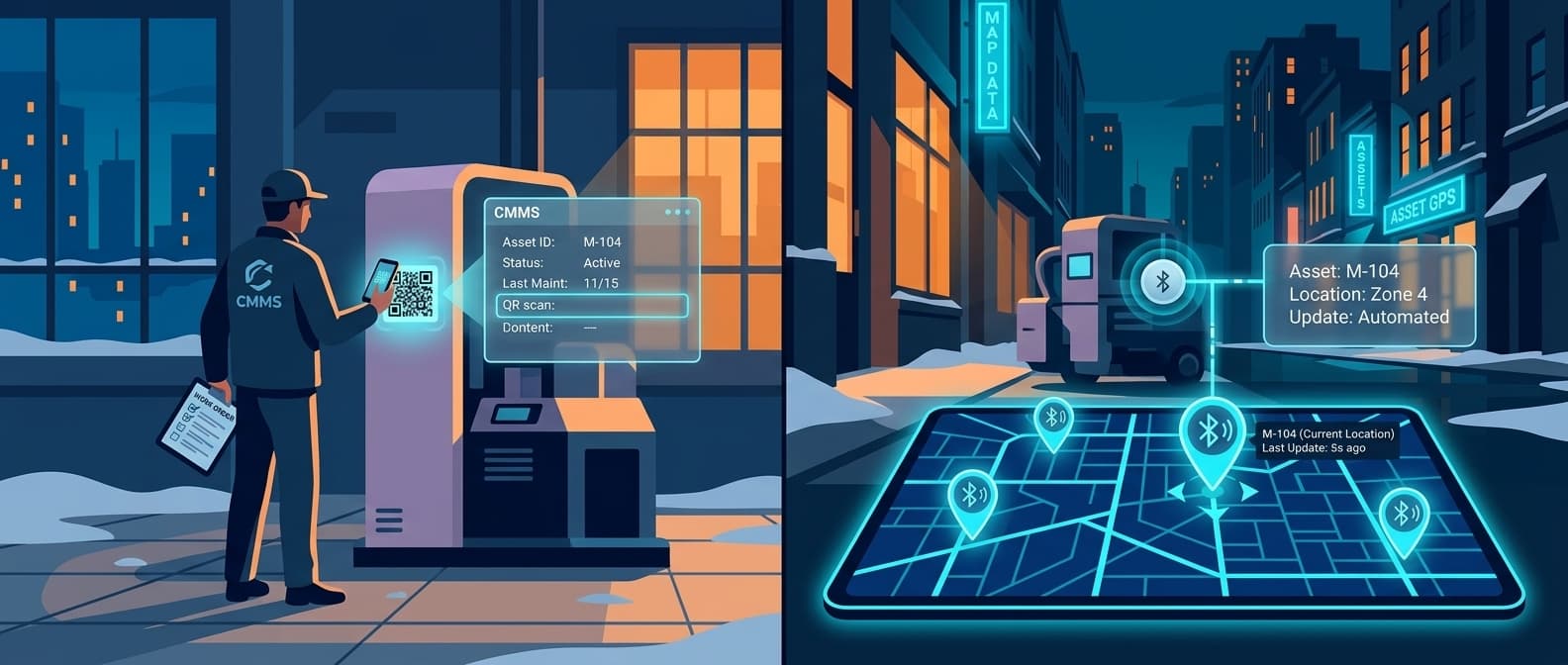
Cryotos's QR code integration is clean. Scan an asset's QR code, and the work order opens automatically with the asset pre-populated. Location at time of scan is geo-tagged. For facilities with fixed equipment and consistent technician presence, this workflow is fast and reliable.
Compliance and HSE
The Professional tier includes safety and compliance features: hazard tracking, permit-to-work workflows, and audit trails. For regulated industries like manufacturing, healthcare, and oil and gas, these aren't optional. Cryotos covers them.
Where Cryotos Falls Short
The limitation is structural: Cryotos only knows where an asset is when someone actively scans it.
Location Is Point-in-Time, Not Continuous
When a technician scans a QR code in Cryotos, the system records that location. But the asset can move immediately afterward, and Cryotos won't know. The next location update comes from the next scan, which might be days or weeks away. For mobile assets, equipment fleets, or assets that travel between sites, this creates a persistent gap between what the system shows and where the asset actually is.
No Automatic Location Updates
There is no background location tracking in Cryotos. No beacons. No GPS that reports home. No passive position data. The system is entirely dependent on human-initiated scans for any location awareness. In fast-moving environments, this means location data is almost always stale.
No Geofence Alerts
Cryotos cannot alert you when an asset leaves a designated area. No geofencing, no after-hours movement detection, no boundary violations. If a generator is taken off a job site over the weekend, Cryotos has no mechanism to flag it. You'd find out when someone scanned it at the new location or when the next PM came due.
Cross-Site Visibility Gaps
For multi-site operations, Cryotos location data is only as current as the last scan at each site. If equipment regularly moves between Site A and Site B, and technicians aren't diligently scanning on every move, the system's site assignment can be wrong for weeks. This creates dispatch problems: sending a technician to Site A for equipment that's been at Site B for three weeks.
Where Airpinpoint Fills the Gap
Automatic Location Updates
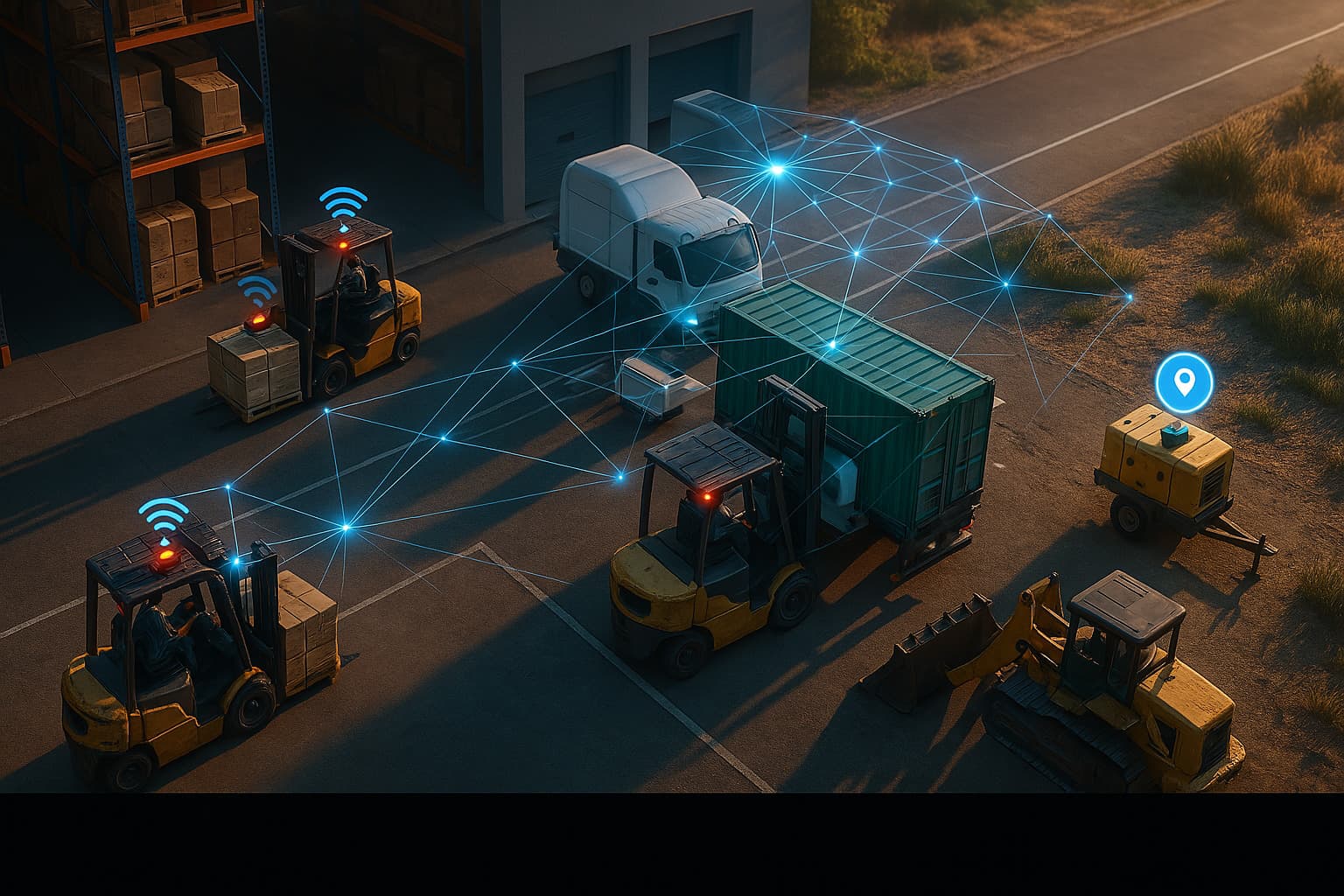
Airpinpoint beacons broadcast on Apple's Find My network. Any nearby iPhone, iPad, or Mac relays the beacon's position back automatically. With over a billion Apple devices active worldwide, there's nearly always a relay device nearby. Location updates every hour in the background, with on-demand refresh whenever you open the map. No scan. No technician action. No QR code.
Live Map Across All Sites
Every tracked asset appears on a single map. Zoom to any site and see which equipment is there right now. For multi-site operations, this eliminates the scan-dependency problem entirely. The dispatch question "where is Compressor Unit 4?" has an answer that's accurate within the last hour, not the last scan.
Geofence Alerts
Draw a polygon around any job site, warehouse, or storage yard. When a tracked asset enters or exits that boundary, you get an alert. Set schedules to only trigger on after-hours movement. This is the theft-prevention and accountability layer that a maintenance system can't provide. If something moves at 2 AM on a Sunday, Airpinpoint tells you.
Location History
Every position update is stored. Pull up any asset and trace where it's been over the past week or month. This serves insurance claims, utilization analysis, and dispute resolution. Cryotos's maintenance log shows who performed work and when. Airpinpoint's location history shows where the asset physically traveled. Both records together paint a complete picture.
Zero-Maintenance Hardware
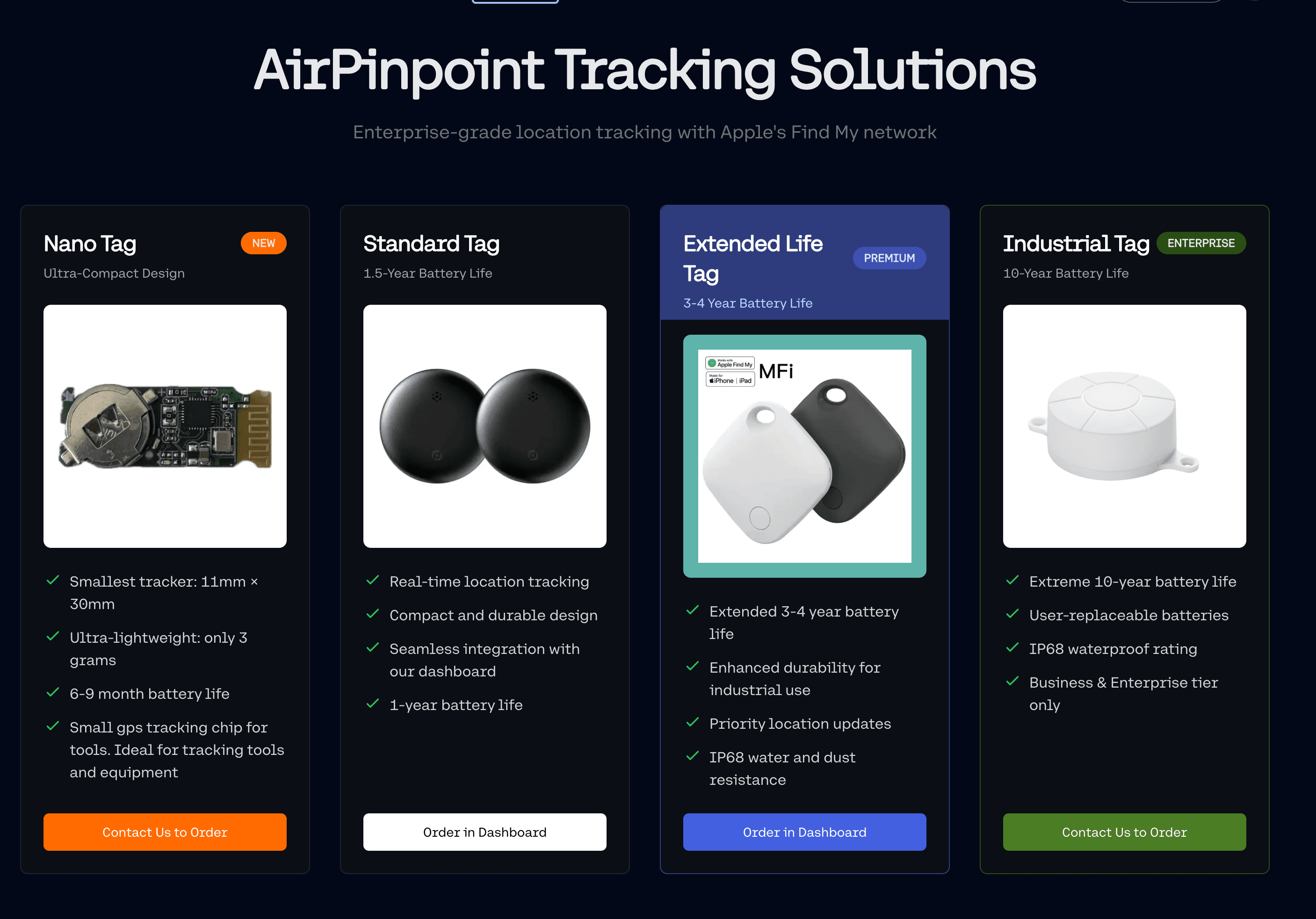
Airpinpoint's custom NRF52810 beacons run for 7 years on a single battery. Attach one and forget about it. No QR codes that fade or get covered in grease. No barcodes that get scratched off. No action required from your team for location to stay current.
The Real Decision: CMMS vs. Location
This is not an either/or choice for most organizations. It's a question of what problem you're solving.
You need Cryotos (or a CMMS like it) when:
- Scheduling preventive maintenance and tracking PM compliance
- Managing work orders across a maintenance team
- Building maintenance history for failure analysis
- Tracking parts consumption and spare parts inventory
- Meeting compliance requirements in regulated industries
You need Airpinpoint when:
- Assets move between sites and you need to know where they are now
- Theft or unauthorized movement is a risk
- Multiple crews share equipment across job sites
- You need location data for insurance claims or utilization reports
- QR scan-dependent location data is too stale for your operations
You need both when:
- You want maintenance management AND physical location tracking
- Your Cryotos records are accurate about maintenance state but useless for finding equipment before dispatching
- You need both audit trails for compliance and real-time location for operations
Cost Comparison
Cryotos (20-person maintenance team)
- Basic: $29/user/mo = $580/mo
- Starter: $39/user/mo = $780/mo
- Professional: $69/user/mo = $1,380/mo
Cryotos is per-user pricing. The cost scales with your maintenance team size, not your asset count.
Airpinpoint (100 assets)
- Hardware: 100 beacons at $12-25 each = $1,200-2,500 (one-time)
- Subscription: $11.99/device/mo = $1,199/mo
- Annual subscription: $14,388
Airpinpoint is per-device pricing. The cost scales with your asset count, not your team size.
Both Together
- Cryotos Starter (20 users): $780/mo
- Airpinpoint (100 devices): $1,199/mo
- Total: ~$1,979/mo for full maintenance management plus real-time location
For operations where a single missing generator costs $500 in dispatch time and delays a job, the $11.99/device/month for location tracking resolves quickly.
Migration Path
If you're running Cryotos today and want to add location tracking, you don't need to change anything about your maintenance workflow.
- Keep Cryotos for work orders, PM scheduling, and maintenance history
- Sign up for Airpinpoint at airpinpoint.com
- Order beacons for the assets you want to track physically
- Attach beacons to high-value or high-mobility equipment first
- Use Airpinpoint's REST API to sync current location data back into Cryotos asset records if you want a unified view
Start with 10-20 beacons on your most mobile assets. Your Cryotos setup stays exactly as-is.
The Bottom Line
Cryotos is a well-built CMMS. The 4.7/5 G2 rating reflects real depth in work order management, preventive maintenance, and maintenance compliance. For teams managing high work order volume, it earns its cost.
But a CMMS is not a location tracker. Cryotos knows your equipment's maintenance history, current work order status, and next PM date. It does not know the equipment is 40 miles from where it should be. It cannot tell you because nobody scanned a QR code at the new location.
Airpinpoint knows where the equipment is right now, where it was last Tuesday, and whether it left the job site after hours. It cannot schedule a PM or route a work order.
One tool manages your maintenance workflows. The other finds your assets. The companies that get the most out of Cryotos are often the ones who stop treating location as a manual data-entry problem and add an automatic location layer underneath.
 Our Solution