Moving Equipment Tracking: Protect Your Dollies, Hand Trucks & Specialty Gear
Moving companies operate with significant equipment investments spread across multiple trucks and job sites. Dollies, hand trucks, piano boards, and furniture pads constantly move between locations, and constantly go missing.
Effective equipment tracking prevents losses and ensures crews have the tools they need when they arrive at jobs.
The Moving Equipment Challenge
Equipment Loss Patterns
Moving equipment disappears through multiple channels:
| Loss Type | Frequency | Impact |
|---|---|---|
| Left at customer sites | Weekly | Time to retrieve, customer relations |
| Inter-truck transfers | Daily | Equipment on wrong truck for next job |
| Theft from job sites | Monthly | Replacement cost |
| Theft from trucks | Occasional | Significant loss |
| Unreported damage/disposal | Ongoing | Inventory inaccuracy |
Work out your own cumulative impact. Pull last year's purchase orders for dollies, pads, straps, and boards. Subtract what you bought for new trucks or genuine fleet growth. What remains is replacement spend, and replacement spend on equipment with a ten-year service life is the loss rate, stated in dollars. Most operators have never separated those two lines and are surprised by the answer.
Equipment Values
| Equipment Type | Price Range | Quantity Needed |
|---|---|---|
| Standard hand truck | $50-150 | 2-3 per truck |
| Furniture dolly (4-wheel) | $30-100 | 4-6 per truck |
| Appliance dolly | $150-400 | 1-2 per truck |
| Piano board | $200-500 | 1-2 company-wide |
| Piano dolly (Jansen professional) | $500-2,000 | 1 company-wide |
| Furniture pads | $15-50 each | 24-48 per truck |
| Moving straps | $20-50/set | 2-4 sets per truck |
| Forearm forklifts | $30-60 | 2-4 pairs per truck |
Total equipment value per truck: $1,500-5,000 Typical fleet: 5-20 trucks = $7,500-100,000 in equipment
Quality Matters
Not all equipment performs equally:
Hand trucks and dollies:
- Harbor Freight budget options ($20-40) fail under heavy use
- Professional-grade equipment lasts years with proper tracking
- Replacement cycle accelerates when cheap equipment is used
Piano moving equipment:
- Jansen piano dollies and boards are industry standard
- Designed for universities, churches, performance halls, and professional movers
- Significant investment worth protecting
Tracking Approaches
Truck-Level GPS Tracking
Foundation of moving fleet management:
- Know where every truck is in real-time
- Equipment last known location = last truck location
- Geofencing for job site arrival/departure
Platform options:
| Provider | Cost | Best For |
|---|---|---|
| Samsara | $25-40/truck/month | Larger fleets, comprehensive |
| Verizon Connect | $20-35/truck/month | Mid-size operations |
| Spytec GPS | $10-25/truck/month | Smaller fleets, budget |
| GPS Trackit | $15-30/truck/month | Growing companies |
Benefits:
- Know which truck had equipment last
- Route history for investigating losses
- Arrival verification for customer communication
- Driver accountability
Equipment Manifests
Low-tech but effective:
- Load-out checklist - Document what goes on each truck
- Job completion sign-off - Verify all equipment returned
- End-of-day inventory - Confirm truck contents
- Inter-truck transfer log - Document equipment moves
Digital tools:
- Google Sheets shared across team
- Moving software with equipment modules
- Simple barcode scanning apps
- Photo documentation of loaded trucks
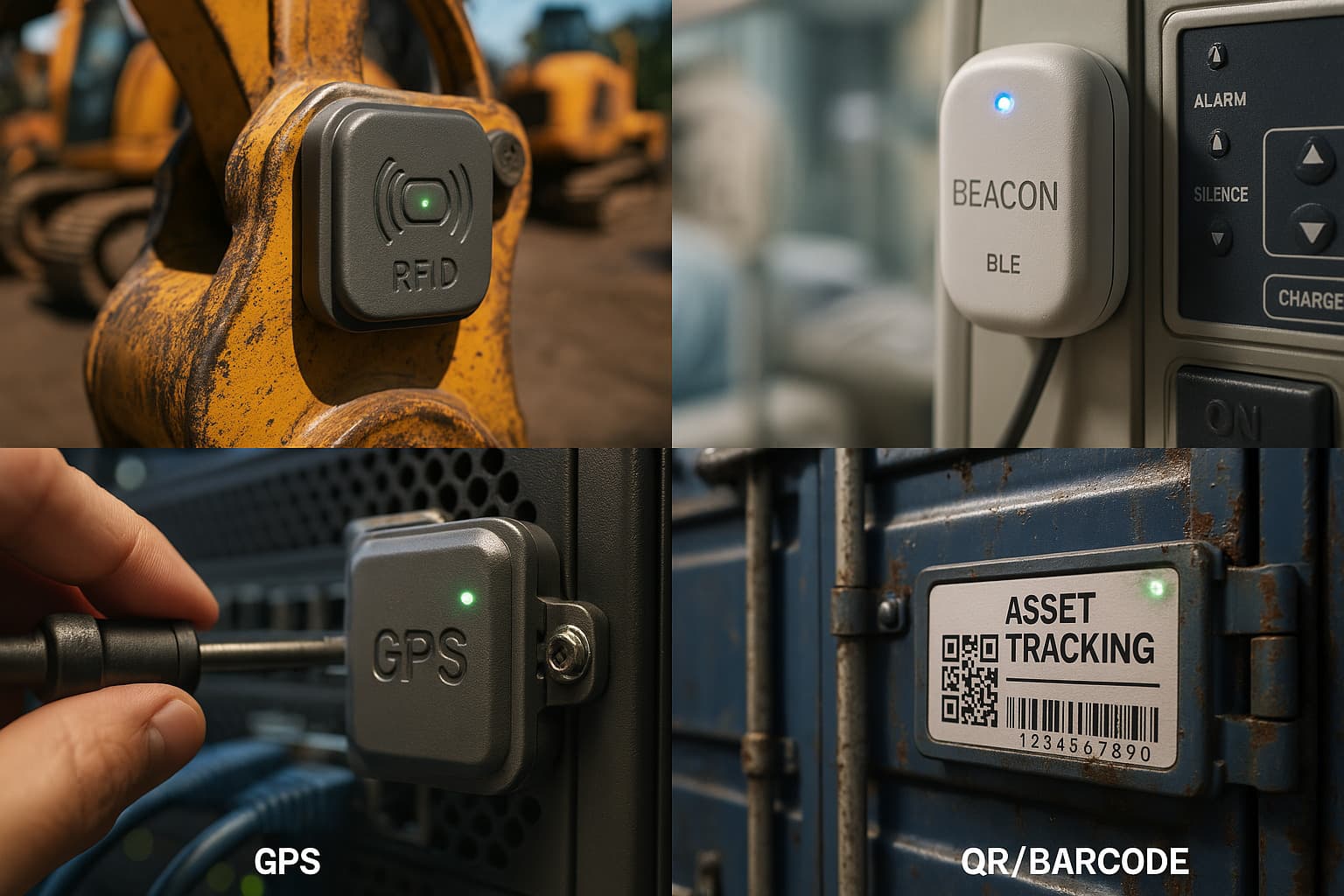
Barcode/QR Tracking
Mid-tier solution:
| Approach | Cost | Effort |
|---|---|---|
| QR code labels | $0.10-0.50 each | Medium |
| Barcode system | $1-3 each | Medium |
| Smartphone scanning | Free apps available | Low |
| Dedicated scanners | $200-500 | Higher accuracy |
Process:
- Label all tracked equipment
- Scan items loaded on truck
- Scan items at job site
- Verify return scan
- Report discrepancies
Individual Item GPS (AirTags)
Best for high-value items:
| Item to Track | Tracking Value |
|---|---|
| Piano boards | High - expensive, rarely used, easily forgotten |
| Specialty dollies | High - significant cost, borrowed between crews |
| Appliance dollies | Medium - moderate cost, frequently moved |
| Standard hand trucks | Low - inexpensive, tracking cost not justified |
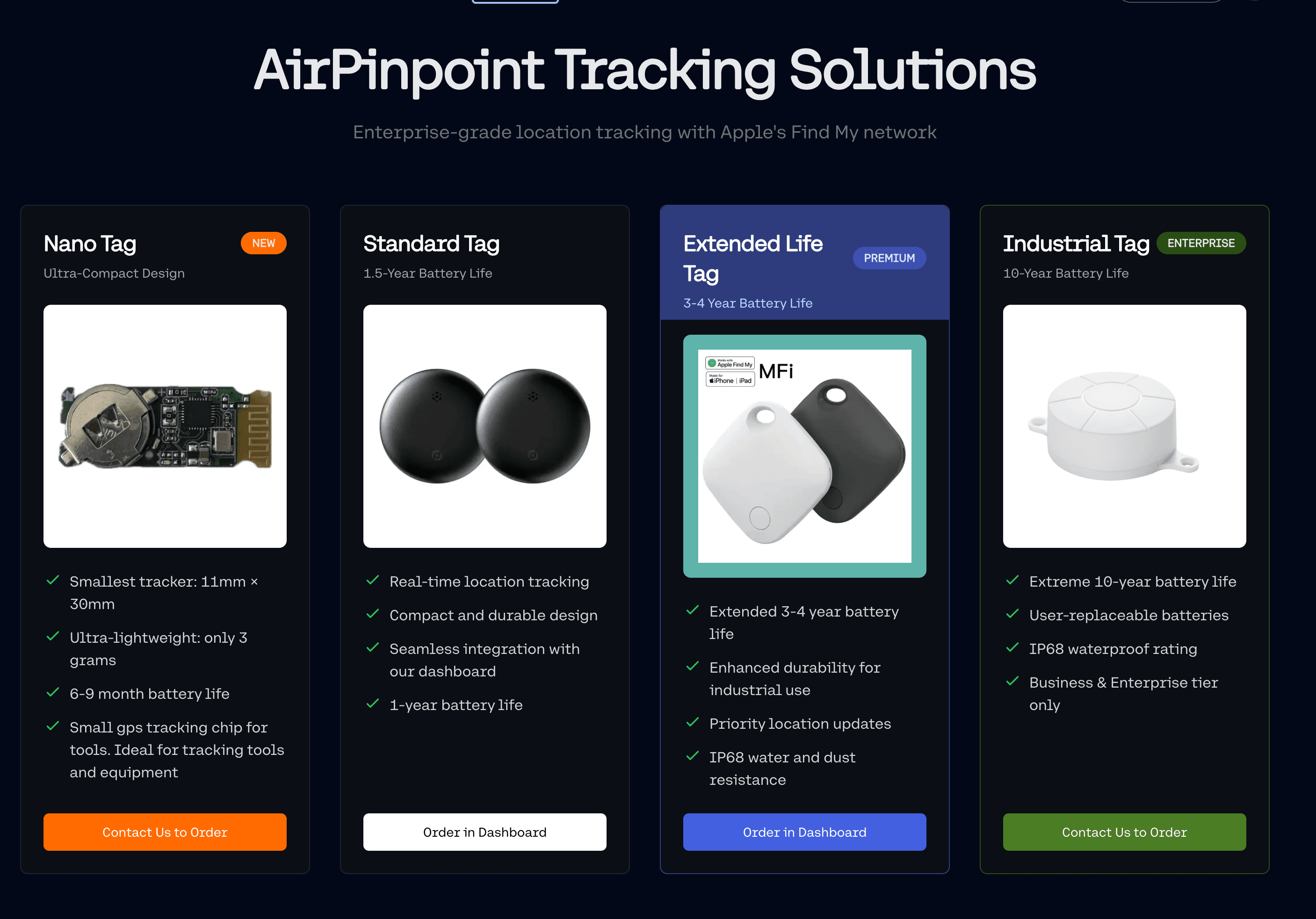
AirTags with Airpinpoint advantages for movers:
- $29 hardware + subscriptions from $11.99/month for professional dashboard
- Business dashboard shows all equipment on one map
- Geofence alerts when equipment leaves job sites
- Location history to track down missing items
- Team access for dispatchers, drivers, and managers
- Works across urban/suburban job sites via Apple's Find My network
Implementation:
- Attach AirTags in weatherproof cases
- Mount inside dolly frames or equipment handles
- Set up Airpinpoint dashboard with your team
- Configure geofence alerts for job sites
Best Practices by Company Size
Small Operations (1-5 Trucks)
Recommended approach:
- Truck GPS - Basic tracking on each vehicle
- Paper manifests - Simple load/unload checklists
- AirTags - On piano boards, specialty dollies
- Photo documentation - End-of-day truck photos
Investment: $200-500 + $30-50/month What this layer actually catches: the dolly left at a customer site, because the manifest is checked before the truck pulls away. It will not catch theft from a locked truck overnight.
Mid-Size Operations (5-15 Trucks)
Recommended approach:
- Fleet GPS platform - Samsara, Verizon Connect
- Digital manifests - Shared spreadsheets or moving software
- QR code tracking - On all equipment over $100
- AirTags - On all specialty equipment
Investment: $2,000-5,000 setup + $300-600/month What this layer adds: accountability per truck. Once equipment is scanned to a specific truck, a shortfall has a name attached to it, which changes crew behavior faster than any alert does.
Larger Operations (15+ Trucks)
Recommended approach:
- Enterprise fleet platform - Full telematics
- Moving software with equipment module - Integrated tracking
- Barcode scanning - All equipment with dedicated scanners
- AirTags - Supplemental for high-value items
- Warehouse inventory system - Check-in/check-out tracking
Investment: $10,000+ setup + $1,000-2,500/month What this layer adds: the warehouse side. Check-in and check-out against a known inventory is the only way to tell a missing item from a miscounted one, and at this scale the miscounts cost more than the thefts.
Implementing AirTag Tracking
Setup Process
-
Identify high-value items
- Piano boards and dollies
- Specialty appliance dollies
- Expensive hand trucks
- Any equipment over $150
-
Purchase and configure
- Buy AirTags in 4-packs ($99 = $25 each)
- Create company Apple ID (or use existing)
- Register all tags to single account
- Name tags clearly ("Piano Board 1", "Appliance Dolly - Truck 3")
-
Mount securely
- Use weatherproof AirTag holders ($5-15)
- Mount inside frame tubes where possible
- Secure with industrial adhesive or cable ties
- Hidden placement preferred
-
Establish processes
- Weekly location check for all tagged items
- Search immediately when item reported missing
- Document recovery successes
Limitations to Consider
AirTag constraints:
- Updates depend on nearby iPhones
- Rural areas have poor coverage
- No real-time continuous tracking
- Anti-stalking alerts can expose tags to thieves
Mitigation strategies:
- Use for supplemental tracking, not primary system
- Combine with manifest system for daily tracking
- Accept some tracking gaps in rural jobs
Loss Prevention Best Practices
Crew Accountability
| Practice | Implementation |
|---|---|
| Named assignments | Each crew member responsible for specific equipment |
| Load-out verification | Second person confirms manifest before departure |
| Job site check | Before leaving, walk-through for left items |
| End-of-day count | Crew counts equipment against manifest |
Site Security
- Never leave equipment unattended at job sites
- Lock trucks during load/unload breaks
- Secure equipment in trucks overnight
- Be aware of opportunistic theft patterns
Inventory Management
| Frequency | Activity |
|---|---|
| Daily | Truck manifest reconciliation |
| Weekly | Full fleet equipment count |
| Monthly | Detailed inventory with condition assessment |
| Quarterly | Equipment valuation and replacement planning |
ROI Analysis
Mid-Size Moving Company (10 Trucks)
Step 1: find your current loss, from your own books.
| Loss Category | Where the number comes from |
|---|---|
| Replacement equipment | Last year's POs for dollies, pads, straps and boards, minus what went to new trucks |
| Rush purchases | The same POs, filtered to same-day or next-day shipping. You paid a premium because something was missing that morning |
| Lost productivity | Crew hours logged waiting or driving back for equipment, at loaded hourly cost |
| Customer impact | Jobs rescheduled or discounted because a crew arrived without the right gear |
| Your annual loss | Add the four. This is the number tracking has to beat |
Step 2: cost the system, at real prices.
| Investment | Cost |
|---|---|
| Truck GPS (10 trucks at roughly $25/month) | $3,000/year |
| AirTags (20 × $29) | $580 one time |
| Airpinpoint (20 tags at $11.99/month) | $2,878/year |
| QR code system setup | $500 |
| Time for tracking processes | Your estimate, and do not set it to zero |
Step 3: be honest about what each part recovers.
The largest category in step 1 is usually equipment left at customer sites, and the thing that fixes that is the load-out manifest, not the tag. A manifest costs nothing and catches the loss the same afternoon. Tags earn their keep on the smaller, higher-value tail: the piano board that went out on a job three weeks ago and nobody can remember which truck had it, and equipment stolen from a truck overnight, where a location trail gives the police report an address.
If you run the three steps and the manifest alone closes most of the gap, do that first and tag only the specialty gear. That is a smaller sale for us and the right answer for you.
Plus benefits that will not show up in the table:
- Crews arrive with complete equipment
- Customer satisfaction improves
- Less stress for dispatchers
- Data for equipment purchasing decisions
The Bottom Line
Moving equipment tracking doesn't require complex technology:
- Truck GPS provides foundation for vehicle location tracking
- Manifests create accountability for load/unload processes
- AirTags with Airpinpoint protect high-value items with professional dashboard
- Combination approach delivers best results
Why Airpinpoint for moving companies:
- See all your piano boards, specialty dollies, and equipment on one dashboard
- Geofence alerts by email, Slack, or WhatsApp when equipment leaves a job site. A confirmed alert typically lands 15 to 40 minutes after the asset leaves, because the system waits for consecutive readings rather than firing on one stray ping
- Location history for every tagged item, exportable to CSV or JSON
- Team and organization access for dispatchers, drivers, and managers
And the limits, so you buy this for the right reason:
- A tag reports when an Apple device passes near it. Trucks in populated areas update constantly. A warehouse yard on a rural road at 2am may not report for hours
- Accuracy is about 10 to 30 meters, which tells you the address, not which bay of the warehouse
- Apple caps each Apple Account at 32 AirTags, so plan account structure before tagging a large fleet
Start with:
- Load-out checklists for every truck, every day
- AirTags + Airpinpoint on piano boards and specialty dollies
- Weekly inventory verification
- Truck GPS if not already in place
The moving companies that track their equipment effectively spend more time moving customers and less time replacing lost dollies.
 Our Solution