
Updated
Company Vehicle Tracking: Complete Legal & Implementation Guide
GPS tracking for company vehicles has become standard business practice, but implementation requires navigating employee privacy laws, choosing the right technology, and establishing clear policies. This guide covers everything you need to deploy vehicle tracking legally and effectively.
The Business Case for Company Vehicle Tracking
Documented ROI
| Benefit | Typical Impact | Annual Value (20 vehicles) |
|---|---|---|
| Fuel savings | 15-30% reduction | $12,000-$25,000 |
| Unauthorized use elimination | 10-20% reduction | $5,000-$15,000 |
| Insurance discounts | 15-35% premium reduction | $3,000-$8,000 |
| Productivity improvement | 15-25% increase | $20,000-$50,000 |
| Maintenance optimization | 20-30% cost reduction | $4,000-$10,000 |
Payback timeline:
- 22% of businesses achieve ROI in under 3 months
- 45% achieve ROI in under 11 months
- Most see full payback within 6-12 months
What Tracking Provides
Location and movement:
- Real-time vehicle positions
- Route history and playback
- Geofence entry/exit alerts
- Mileage tracking
Driver behavior:
- Speed monitoring
- Hard braking/acceleration
- Idle time tracking
- After-hours usage
Vehicle health:
- Engine diagnostics (OBD integration)
- Maintenance reminders
- Fuel consumption
- Battery status
Legal Requirements: State-by-State Guide
Federal Law
There is no federal law explicitly banning GPS tracking of company vehicles. However, the Electronic Communications Privacy Act (ECPA) and Fourth Amendment implications suggest:
- Company-owned vehicles: Generally permissible to track
- Employee-owned vehicles: Requires consent
- During work hours: Generally permissible with disclosure
- Off-duty tracking: Significant privacy concerns
State-Specific Requirements
States Requiring Employee Notification
| State | Requirement | Key Statute |
|---|---|---|
| California | Written consent required; must allow disabling off-hours | Penal Code 637.7, AB 984 |
| Minnesota | Explicit permission required | Statute 626A.35 |
| Louisiana | Consent required for all tracking | LA Rev Stat 14:323 |
| Connecticut | Written notice to employees | General Statutes §31-48d |
| Delaware | Notice required before monitoring | 19 Del. C. §705 |
States with Permissive Laws
| State | Requirement | Notes |
|---|---|---|
| Texas | No consent needed for company vehicles | Court rulings support employer rights |
| Florida | Company vehicles: no consent; Personal vehicles: consent required | Common law framework |
| Illinois | Notification required, consent not required | 720 ILCS 5/21 |
| Missouri | No explicit consent required for company vehicles | Court precedent |
California Special Requirements (AB 984)
California has the strictest requirements:
- Written notification of GPS tracking required
- Explicit consent must be obtained
- Right to disable monitoring outside work hours
- No retaliation for disabling off-hours monitoring
- Clear disclosure of what data is collected
Best Practices for All States
Regardless of state requirements, protect your business by:
- Always disclose tracking to employees in writing
- Obtain signed acknowledgment for personnel files
- Limit tracking to work hours and business purposes
- Create a written policy explaining tracking use
- Train managers on appropriate data access
Employee GPS Tracking Policy Template
Use this template as a starting point. Customize for your state and business:
[COMPANY NAME] Vehicle GPS Tracking Policy
Effective Date: [DATE]
Purpose: [Company Name] uses GPS tracking technology on company-owned vehicles to improve operational efficiency, ensure employee safety, optimize routes, and protect company assets.
Scope: This policy applies to all employees who operate company-owned or company-leased vehicles equipped with GPS tracking devices.
What Is Tracked:
- Vehicle location (real-time and historical)
- Mileage and routes traveled
- Vehicle speed and driving behavior
- Engine idle time
- Vehicle diagnostics and maintenance indicators
When Tracking Occurs: GPS tracking is active at all times the vehicle is in operation. However, tracking data is only reviewed for business purposes during scheduled work hours unless investigating potential policy violations, accidents, or theft.
Data Access and Use:
- Only authorized management personnel may access GPS data
- Data is used for: route optimization, customer service, safety monitoring, maintenance scheduling, and policy compliance
- Data will not be used for: harassment, discrimination, or purposes unrelated to legitimate business needs
Employee Acknowledgment: I understand that company vehicles are equipped with GPS tracking devices. I have read this policy and understand that my vehicle movements during work hours may be monitored.
Off-Hours Use (California/applicable states): If this vehicle is used for personal purposes outside work hours, you have the right to [disable tracking/request tracking suspension] during off-duty time. Contact [HR/Fleet Manager] to exercise this right.
Policy Violations: Tampering with, disabling, or obstructing GPS tracking devices during work hours is prohibited and may result in disciplinary action up to and including termination.
Questions: Direct questions about this policy to [HR Contact] at [email/phone].
Employee Signature: _________________________ Date: _________
Printed Name: _________________________
Choosing the Right Tracking Technology
OBD-II Plug-In Trackers
How they work: Plug directly into the vehicle's diagnostic port (standard on vehicles since 1996).
Pros:
- Easy installation (seconds, no tools)
- Access to vehicle diagnostics
- Can be moved between vehicles
- Lower upfront cost
Cons:
- Visible and easily removed
- May be accidentally dislodged
- Port location varies by vehicle
Best for:
- Trust-based environments
- Leased vehicles
- Quick deployment
- Light-duty vehicles
Cost: $50-$150 device + $15-$35/month service
Hardwired Trackers
How they work: Professionally installed, connected directly to vehicle electrical system.
Pros:
- Hidden from view
- Tamper-resistant
- More reliable connection
- Can integrate with vehicle systems (door sensors, PTO, etc.)
Cons:
- Professional installation required ($50-$150)
- Harder to move between vehicles
- Higher upfront cost
Best for:
- Security-sensitive operations
- High-value vehicles
- Long-term fleet vehicles
- Heavy-duty trucks
Cost: $100-$300 device + $50-$150 install + $20-$45/month service
Comparison: Device Types
| Feature | OBD Plug-In | Hardwired | AirTag |
|---|---|---|---|
| Installation | Seconds | Professional | Seconds |
| Visibility | Visible | Hidden | Depends on placement |
| Tamper resistance | Low | High | Low |
| Real-time tracking | Yes | Yes | No (crowd-sourced) |
| Vehicle diagnostics | Yes | Optional | No |
| Monthly cost | $15-$35 | $20-$45 | $0 |
| Best use case | Trusted employees | Security-critical | Backup/theft recovery |
Top Company Vehicle Tracking Solutions
Enterprise Solutions
| Provider | Monthly Cost | Strengths | Contract |
|---|---|---|---|
| Verizon Connect | $25-$45/vehicle | Comprehensive features, ELD support | 3-year |
| Samsara | $30-$50/vehicle | AI dash cams, modern interface | 3-year |
| Geotab | $25-$40/vehicle | Open platform, extensive integrations | 3-year |
Small Business Options
| Provider | Monthly Cost | Strengths | Contract |
|---|---|---|---|
| One Step GPS | $14/vehicle | No contracts, simple pricing | None |
| Linxup | $20-$30/vehicle | Easy setup, good support | Month-to-month |
| Matrack | $15-$25/vehicle | Flexible, small fleet friendly | None |
No Monthly Fee Options
| Provider | One-Time Cost | Notes |
|---|---|---|
| Vyncs Fleet | $120/year | Annual data plan, no monthly fee |
| GPS & Track | $265 one-time | Includes 1 year of service |
| AirTags | $29 one-time | Basic location only, not real-time |
Implementation Guide
Phase 1: Legal Preparation (Week 1)
Steps:
- Research your state's GPS tracking laws
- Consult with HR/legal if needed
- Draft employee tracking policy
- Create consent/acknowledgment forms
- Plan employee communication
Phase 2: Technology Selection (Weeks 1-2)
Evaluation criteria:
- Feature requirements (real-time, diagnostics, etc.)
- Budget (hardware + monthly + installation)
- Contract terms (avoid long commitments initially)
- Integration needs (dispatch, payroll, etc.)
- Support quality
Recommendation: Start with a pilot on 3-5 vehicles before full deployment.
Phase 3: Employee Communication (Week 2)
Communication plan:
- Announce policy at team meeting
- Explain benefits (safety, efficiency, fairness)
- Address concerns directly and honestly
- Distribute policy for review
- Collect signatures before installation
Key messages:
- Focus on business purposes, not surveillance
- Emphasize safety and asset protection
- Be transparent about what's tracked
- Explain how data will (and won't) be used
Phase 4: Installation (Weeks 2-3)
For OBD devices:
- Locate OBD port in each vehicle
- Plug in device
- Verify connection in app/dashboard
- Label device if needed
For hardwired devices:
- Schedule professional installation
- Minimize vehicle downtime
- Test each installation
- Document device locations
Phase 5: Launch and Training (Week 3)
Manager training:
- Dashboard navigation
- Report generation
- Alert configuration
- Data interpretation
- Privacy boundaries
Driver communication:
- Device awareness
- Policy reminders
- Contact for questions
Phase 6: Optimization (Ongoing)
Weekly:
- Review alerts and exceptions
- Address any driver concerns
- Monitor key metrics
Monthly:
- Analyze fuel consumption trends
- Review driving behavior scores
- Calculate ROI metrics
Quarterly:
- Assess technology effectiveness
- Review policy compliance
- Update policy if needed
Common Concerns and Solutions
Employee Pushback
Concern: "You don't trust us."
Response: Explain business reasons: route optimization, customer service, safety, insurance. Emphasize it's not about distrust but operational improvement that benefits everyone.
Privacy Concerns
Concern: "I don't want to be watched all day."
Response: Be clear about what's tracked, when, and why. Limit data review to business purposes. For off-hours personal use of vehicles, discuss options (if available in your state).
Union Considerations
Concern: Union contracts may address monitoring.
Response: Review collective bargaining agreements. Involve union representatives early. Many unions accept tracking when implemented transparently with clear policies.
Data Security
Concern: "Who can see where I am?"
Response: Limit data access to authorized personnel only. Explain data security measures. Have clear consequences for misuse of tracking data.
Hybrid Approach: Lower Monthly Costs
For cost-conscious businesses, consider a hybrid approach:
Primary tracking: Basic GPS units or OBD trackers ($15-$25/month per vehicle)
Backup tracking: AirTags hidden in vehicles
- One-time cost: $29 each
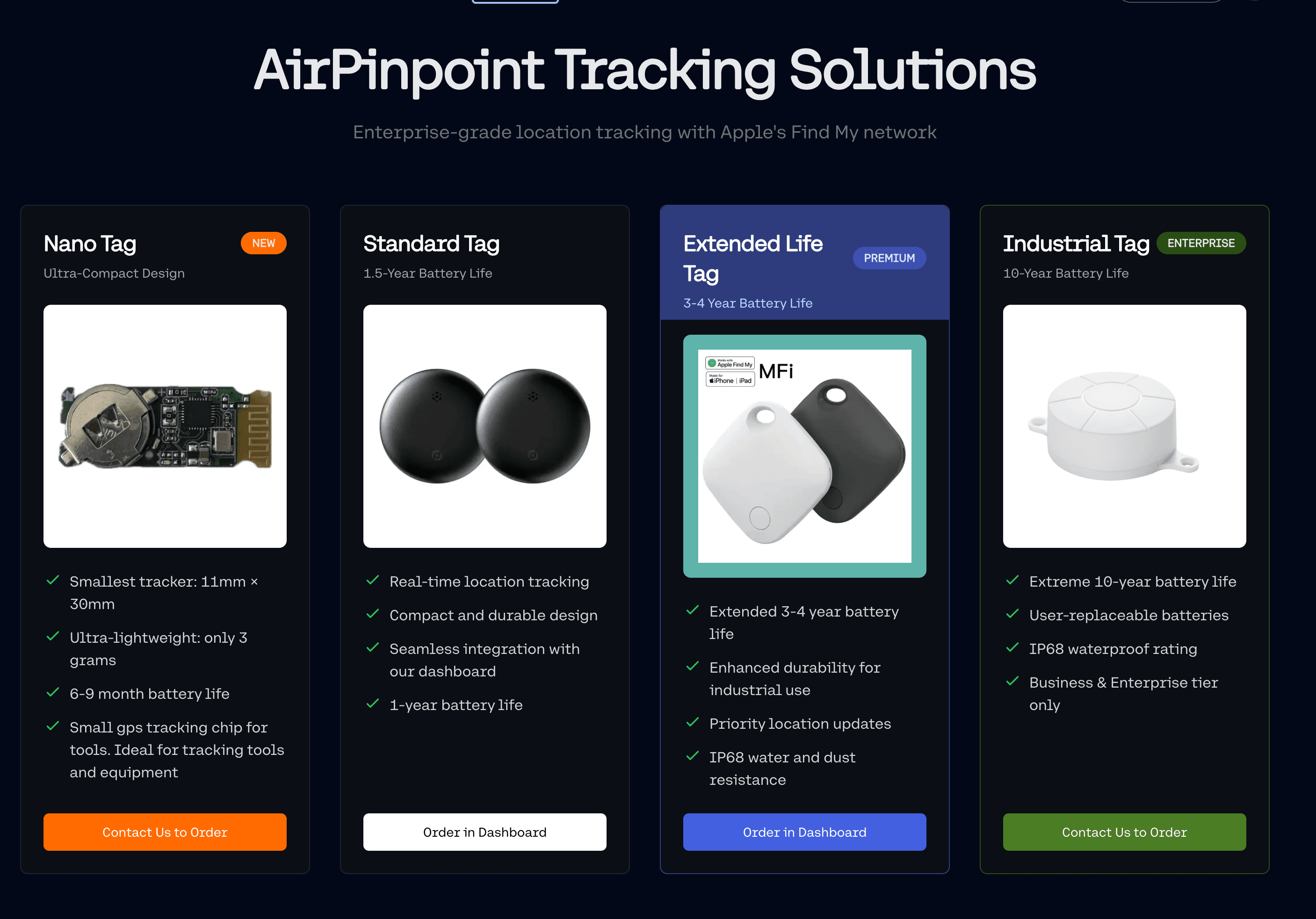
- No Apple subscription for AirTags; Airpinpoint adds a monthly subscription for business features
- Provides theft recovery capability
- Works even if primary tracker is disabled
Benefits:
- Layered security
- Lower overall cost
- Theft recovery backup
- No single point of failure
The Bottom Line
Company vehicle tracking is legal, beneficial, and increasingly expected in professional fleet operations. The keys to successful implementation:
Legal compliance:
- Know your state's requirements
- Always disclose tracking to employees
- Get written acknowledgment
- Limit tracking to business purposes
Technology selection:
- Match features to actual needs
- Start with a pilot before full deployment
- Consider total cost of ownership
- Plan for scalability
Change management:
- Communicate transparently
- Focus on benefits, not surveillance
- Address concerns directly
- Train managers on appropriate use
Expected results:
- 15-25% operational cost reduction
- ROI within 6-12 months
- Improved driver behavior
- Better customer service
- Reduced liability exposure
The question isn't whether to track company vehicles. It's how to do it in a way that's legal, fair, and effective for your business.



 Our Solution