Updated
Inventory Audit Guide: How to Count What You Can't Find
The average warehouse inventory record is 63% accurate. That means the audit you ran last quarter missed more than a third of your assets.
Inventory distortion, the combination of stockouts, overstocks, and record errors, costs businesses $1.77 trillion globally per year. Not billion. Trillion. And most of that loss traces back to one root cause: companies don't know where their stuff actually is.
This guide covers every type of inventory audit, the procedures that actually work, and how real-time location tracking eliminates the most expensive part of any count: searching for things.
Why Inventory Audits Fail
Most audits fail before the counting starts. The team arrives, opens the spreadsheet, walks to Aisle 7, and the pallet isn't there. Someone moved it last Tuesday. Nobody updated the system.
This is the normal state of things in most warehouses, job sites, and equipment yards.
| Problem | Impact | Frequency |
|---|---|---|
| Items moved from recorded location | 30-45% of audit time spent searching | Every audit |
| Records not updated after transfers | 15-25% of items in wrong location | Ongoing |
| Ghost inventory (recorded but missing) | 3-8% of total inventory value | Discovered at audit |
| Duplicate records | Inflated asset counts by 5-12% | Compounds over time |
| Damaged/retired items not removed | Overstated balance sheet | Quarterly |
46% of small and mid-sized businesses either don't audit inventory at all or use purely manual methods. The ones that do audit manually report accuracy rates between 65% and 85%.
The gap between 85% accuracy and 97% accuracy isn't a rounding error. On a $2M inventory, that's $240,000 in assets you can't account for.
Types of Inventory Audits
Not every audit requires shutting down operations for two days. The right approach depends on your inventory size, value distribution, and compliance requirements.
| Audit Type | Frequency | Scope | Disruption | Best For |
|---|---|---|---|---|
| Full Physical Count | Annual | Every item | High (1-3 days shutdown) | Year-end compliance, GAAP/IFRS |
| Cycle Counting | Daily/weekly | Small subset | None | Ongoing accuracy maintenance |
| ABC Analysis Count | Quarterly | Prioritized by value | Low to moderate | High-value inventory focus |
| Spot Check | Random | Targeted items | None | Fraud detection, variance investigation |
| Cutoff Analysis | Period-end | Recent transactions | None | Ensuring correct period recording |
| Freight Claim Audit | As needed | Shipped/received goods | None | Shipping discrepancy resolution |
Full Physical Count
The traditional approach. Stop operations, count everything, reconcile.
GAAP requires companies to verify inventory values annually. A full physical count satisfies this requirement, and auditors must observe at least a portion of the count to confirm the balance sheet. Most companies schedule this during their slowest period.
The problem: a full count of a 50,000-SKU warehouse takes 2-3 days with a 10-person team. That's 160-240 labor hours per count, plus $10,000-$50,000 in lost productivity from the shutdown.
Cycle Counting
Count a small subset of items every day or week on a rotating schedule. Over the course of a year, every item gets counted at least once.
GAAP allows cycle counting as a substitute for full physical counts, as long as all inventory is eventually verified and records stay accurate. This is the method most modern warehouses prefer.
Cycle counting catches errors within days instead of months. A misplaced pallet discovered on Tuesday costs far less than one discovered at the annual count in December.
ABC Analysis
Classify inventory into three tiers by value:
| Class | % of Items | % of Total Value | Count Frequency |
|---|---|---|---|
| A | 10-20% | 70-80% | Monthly or quarterly |
| B | 20-30% | 15-20% | Quarterly or semi-annually |
| C | 50-70% | 5-10% | Annually |
A $50,000 generator gets counted every month. A box of cable ties gets counted once a year. This allocation of effort matches the financial risk.
The Real Cost of a Manual Audit
Manual audits are expensive in ways that don't show up on the invoice.
| Cost Category | Small Warehouse (5,000 items) | Medium Warehouse (25,000 items) | Large Warehouse (100,000+ items) |
|---|---|---|---|
| Labor (counting team) | $2,000-$3,000 | $5,000-$10,000 | $15,000-$30,000 |
| Operations shutdown | $5,000-$10,000 | $15,000-$40,000 | $50,000-$200,000 |
| Recount/reconciliation | $500-$1,000 | $2,000-$5,000 | $5,000-$15,000 |
| Third-party audit fees | $1,500-$3,000 | $5,000-$12,000 | $15,000-$40,000 |
| Total per count | $9,000-$17,000 | $27,000-$67,000 | $85,000-$285,000 |
And this is just the direct cost. The indirect cost of inventory inaccuracy, stockouts, emergency purchases, customer order failures, is typically 3-5x the audit cost itself.
U.S. retailers alone lose $82 billion annually to out-of-stock items. 60% of retail SKUs have inaccurate records. These aren't small-business problems. They're systemic.
Inventory Audit Procedures: Step by Step
This is a procedure you can actually follow. Adapt it to your inventory size and type.
Phase 1: Preparation (1-2 Weeks Before)
- Freeze the count date. No shipments in or out during the physical count window. For cycle counts, freeze the specific zones being counted.
- Clean up the database. Remove known duplicates, retired assets, and items pending disposal. Every ghost record wastes counting time.
- Print count sheets or load mobile devices. Each counter needs a list of items assigned to their zone, with expected locations.
- Organize the warehouse. Items should be in their designated locations. If something moved, update the record before the count, not after.
- Brief the counting team. Everyone counts the same way: left to right, top to bottom, one shelf at a time. No skipping.
Phase 2: The Count
- Assign zones. Each counter owns a physical area. No overlapping territories.
- Count independently. Two people count each zone separately. Compare results. If counts disagree, a third person recounts.
- Tag counted items. Use colored stickers or flags so nothing gets counted twice and nothing gets missed.
- Record condition. Note damaged, obsolete, or questionable items during the count. This saves a separate pass later.
- Don't "correct" counts to match records. The whole point is finding discrepancies. If you counted 47 but the system says 50, write 47.
Phase 3: Reconciliation
- Compare counts to records. Flag every variance above your threshold (typically 1-2% by value or any unit count discrepancy on A-class items).
- Investigate variances. Categories: theft/shrinkage, data entry error, receiving error, items in transit, items in wrong location.
- Adjust records. Update the system to match physical reality. Document the reason for each adjustment.
- Calculate shrinkage. Total value of negative adjustments divided by total inventory value. Track this metric over time.
- Report findings. Summarize accuracy rate, shrinkage, root causes, and recommended corrective actions.
Phase 4: Follow-Up
- Fix root causes. If 40% of variances came from items in the wrong location, the problem isn't counting. It's your put-away process.
- Update cycle count priorities. Items with large variances get counted more frequently going forward.
- Train staff. If receiving errors are a top cause, retrain the receiving team. Don't just adjust the numbers and move on.
Inventory Audit Checklist
Use this as a pre-audit checklist. Print it or copy it into your project management tool.
Pre-Audit (1-2 weeks before):
- Set count date and notify all departments
- Freeze receiving/shipping during count window
- Clean database: remove duplicates, retired items, pending disposals
- Assign counting zones and team members
- Prepare count sheets or configure mobile scanning devices
- Order colored tags/stickers for marking counted items
- Arrange the counting area (organize misplaced items)
- Schedule the reconciliation team for the day after
During Count:
- Verify no inbound/outbound movement during count
- Two independent counters per zone
- Tag each item/shelf after counting
- Note condition issues (damage, obsolescence)
- Photograph any discrepancies for documentation
- Recount zones where counters disagree by more than 2%
Post-Audit:
- Compare all counts to system records
- Investigate every variance above threshold
- Categorize root causes (theft, data entry, misplacement, transit)
- Adjust system records with documented reasons
- Calculate overall accuracy rate and shrinkage percentage
- Generate audit report with findings and recommendations
- Update cycle count frequencies based on variance patterns
- Schedule follow-up training for top error sources
Inventory Audit Software Comparison
Software won't fix a bad process, but the right tool makes a good process faster. Here's how the main options compare for audit support.
| Software | Starting Price | Best For | Barcode Scanning | Location Tracking | Audit Trail |
|---|---|---|---|---|---|
| Snipe-IT | Free (self-hosted) | IT assets, budget-conscious teams | Yes | Manual | Yes |
| Sortly | $24/mo | Small teams, visual inventory | Yes (mobile) | Manual | Basic |
| Asset Panda | $50/user/mo | Mid-size, configurable workflows | Yes | Manual | Yes |
| EZOfficeInventory | $35/mo | Equipment checkout/reservation | Yes | Manual | Yes |
| Fishbowl | $329/mo | Manufacturing, QuickBooks integration | Yes | Manual | Yes |
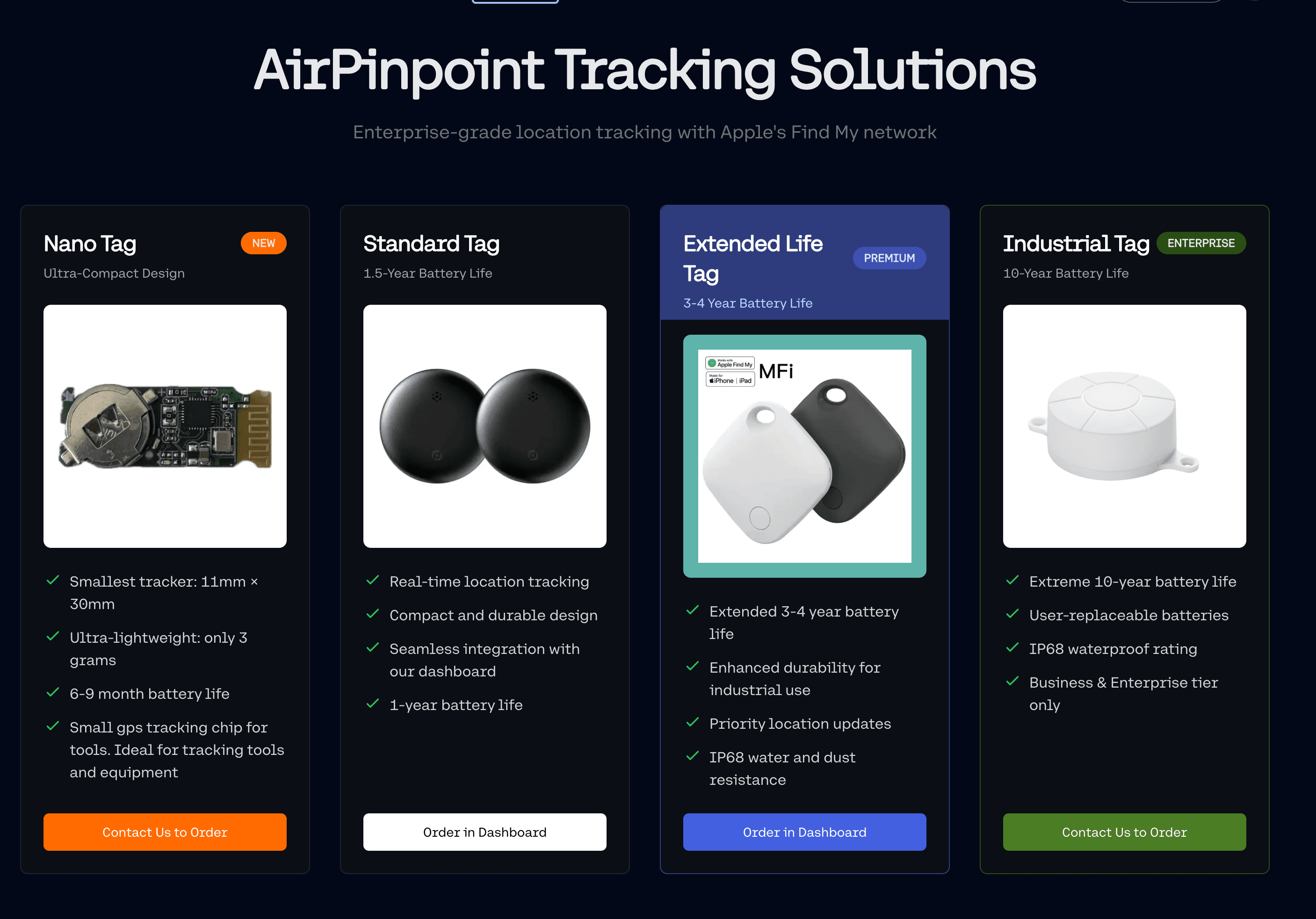
| Airpinpoint | $11.99/tag/mo | Mobile assets, multi-site tracking | N/A (auto-location) | Real-time (Apple Find My) | Yes |
The key distinction: traditional inventory software tells you what you should have. Location tracking tells you where it actually is. Most companies need both.
Where Each Tool Fits
Snipe-IT is free, open-source, and handles IT asset management well. If your inventory is primarily laptops, monitors, and office equipment that stays in one building, this is a strong starting point. Limited if assets move between sites.
Sortly is the simplest option for small teams under 1,000 items. Heavy on photos and visual organization. Good for small inventory, less suited for complex audits.
Asset Panda is the most configurable of the mid-range options. Custom fields, workflows, and depreciation tracking. Pricing scales with users and asset count, which gets expensive past 5,000 assets.
EZOfficeInventory excels at check-in/check-out workflows. If your audit problems stem from equipment that's checked out and never returned, this addresses the root cause.
Airpinpoint fills a different gap: assets that physically move between locations. Construction equipment across job sites, medical devices across hospital floors, IT assets across offices. You don't scan items during an audit because you already know where they are. The real-time dashboard shows every tracked asset's current and historical position.
How Location Tracking Changes the Audit
The most expensive part of any inventory audit isn't the counting. It's the searching.
In a typical manual audit of mobile assets (equipment, tools, vehicles), 30-45% of total audit time is spent locating items that aren't where records say they should be. A forklift that was moved to Building C. A generator that went to a different job site. A laptop that's in someone's desk drawer instead of the IT closet.
Real-time location tracking eliminates this step entirely.
Before: Traditional Audit Flow
- Print list of assets and expected locations (30 min)
- Walk to Location A, discover 3 of 10 items are missing (20 min)
- Search neighboring areas for missing items (45 min)
- Find 2 of 3, mark 1 as unlocated (ongoing)
- Repeat for Locations B through Z
- Spend day 2 tracking down unlocated items
- Reconcile, adjust records, file report
Time for 500 mobile assets: 3-5 days, 2-4 people.
After: Location-Aware Audit Flow
- Open Airpinpoint dashboard, export current locations (5 min)
- Compare dashboard positions to expected locations (30 min)
- Flag items not in expected locations, note actual positions (15 min)
- Walk to each flagged item to verify and update records (2-4 hours)
- Reconcile, adjust records, file report
Time for 500 mobile assets: 1 day, 1-2 people.
The audit doesn't start with "where is everything?" It starts with "everything is here, here, and here. Let's verify."
What Gets Tracked vs. What Gets Scanned
Location tracking doesn't replace barcode scanning for commodity inventory (boxes on shelves, parts in bins). Use the right tool for each category:
| Inventory Type | Best Audit Method | Examples |
|---|---|---|
| Fixed location, high volume | Barcode/RFID scanning | Warehouse stock, retail shelves, parts bins |
| Mobile, high value | Real-time location tracking (Airpinpoint) | Equipment, vehicles, tools, medical devices |
| Fixed location, high value | Barcode + periodic location check | Server racks, lab instruments, fixtures |
| Mobile, low value | Barcode at checkout points | Hand tools, accessories, consumables |
Industry-Specific Audit Considerations
Construction
Equipment moves between job sites constantly. A single general contractor might have assets spread across 5-15 active sites at any time.
The challenge: your excavator isn't missing. It's at the Henderson project. But the system says it's at the Morrison project because nobody updated the transfer. Multiply this by 200 assets and you have a two-week audit.
Construction inventory shrinkage runs 3-5%, driven by theft (tools left on open sites), damage (unreported), and transfer errors. Tracking equipment with Airpinpoint across job sites cuts the "where is it?" phase from days to minutes.
Healthcare
Medical equipment utilization rates average 40-50% in hospitals. Not because they don't need the equipment, but because they can't find it. Nurses spend an estimated 6,000 hours per year per hospital searching for mobile equipment.
Healthcare asset tracking focuses on infusion pumps, wheelchairs, portable monitors, and other devices that move between floors and departments. Audit accuracy in healthcare settings without location tracking is typically 70-80%.
Warehouses
Warehouse audits are the most procedurally mature, but accuracy still lags. 58% of retailers operate below 80% inventory accuracy.
The main culprits: receiving errors (items scanned to wrong bin), pick errors (wrong item pulled), and phantom inventory (system shows stock that was damaged or lost). Cycle counting with barcode scanners is the standard approach. Adding location tracking for high-value inventory and mobile equipment (forklifts, pallet jacks) fills the gap that scanners miss.
IT Assets
IT asset audits have a unique problem: assets leave the building. Laptops go home with employees. Phones get replaced and the old one sits in a drawer. Servers get decommissioned but never removed from the asset register.
IT asset return management and automated tracking help, but the core audit process is the same: reconcile physical inventory against records, investigate every discrepancy, and adjust.
Barcode vs. RFID vs. BLE: Audit Technology Compared
| Technology | Read Range | Read Speed | Cost Per Tag | Reader Cost | Best For |
|---|---|---|---|---|---|
| Barcode | Line-of-sight, under 1m | 1 item/scan | $0.01-$0.10 | $300-$500 | Warehouse stock, retail |
| QR Code | Line-of-sight, under 1m | 1 item/scan | $0.01-$0.10 | Phone camera (free) | Low-cost asset labels |
| Passive RFID | 1-12m | 100+ items/sec | $0.05-$0.50 | $1,000-$5,000 | High-volume warehouse |
| Active RFID | 30-100m | Continuous | $15-$50 | $1,000-$3,000 | Real-time indoor tracking |
| BLE (AirTag/beacon) | 10-30m (crowdsourced globally) | Continuous | $29 (AirTag) | None (Apple network) | Mobile assets, multi-site |
Barcodes are cheap and proven. Every warehouse has them. The limitation: someone has to walk to each item and scan it individually. A 10,000-item audit with barcodes takes 2-3 days.
RFID is faster. Walk down an aisle with a reader and scan 100 tags in seconds. But the infrastructure cost ($5,000-$50,000 for readers and antennas) only makes sense for high-volume operations with fixed scanning points.
BLE tracking via Apple's Find My network (what Airpinpoint uses) works differently. Tags report their position continuously through the billion+ Apple devices in the network. No scanning infrastructure needed. The tradeoff: you get location data every few minutes rather than item-level bin positions. For mobile assets that move between sites, this is more useful than knowing which shelf something is on.
For a deeper comparison of these technologies, see our BLE vs RFID and RFID vs GPS breakdowns.
Shrinkage Benchmarks by Industry
Track your shrinkage rate against these benchmarks. If you're significantly above average, your audit process has gaps.
| Industry | Average Shrinkage Rate | Primary Causes | Acceptable Target |
|---|---|---|---|
| Retail | 1.4-1.6% | External theft (37%), internal theft (29%), admin error (21%) | Under 1.0% |
| Construction | 3-5% | Tool theft, transfer errors, damage | Under 2.0% |
| Healthcare | 5-15% | Misplacement, hoarding, interdepartmental transfers | Under 3.0% |
| Manufacturing | 1-3% | Scrap/waste errors, receiving discrepancies | Under 1.5% |
| Warehousing | 0.5-2% | Pick errors, receiving errors, damage | Under 0.5% |
| IT Assets | 3-8% | Employee retention, improper disposal, lost in transit | Under 2.0% |
Retail shrinkage alone costs U.S. retailers nearly $100 billion per year. Construction and healthcare numbers are harder to pin down because many organizations don't track shrinkage systematically, which is itself part of the problem.
Building an Ongoing Audit Program
A single annual count is the minimum for compliance. It's not enough to maintain accuracy.
Recommended Audit Cadence
| Company Size | Full Physical Count | Cycle Counting | Spot Checks |
|---|---|---|---|
| Small (under 1,000 assets) | Annually | Weekly (20-50 items) | Monthly |
| Medium (1,000-10,000) | Annually | Daily (50-100 items) | Weekly |
| Large (10,000+) | Annually | Daily (100-500 items) | Weekly |
| Multi-site | Annually per site | Daily per site | Random cross-site monthly |
The 95% Accuracy Target
Most operations should aim for 95% inventory accuracy as a floor, with 97%+ as the goal. Getting from 85% to 95% requires fixing processes. Getting from 95% to 99% requires technology.
The progression typically looks like this:
- 65-80% accuracy: You have a data problem. Records aren't being updated. Start with basic discipline: every movement gets recorded.
- 80-90% accuracy: You have a process problem. Items move but updates lag behind. Cycle counting catches errors, but the gap between event and recording is too long.
- 90-95% accuracy: You have a visibility problem. Your processes work when people follow them. Location tracking closes the gap by recording movements automatically.
- 95-99% accuracy: You have an optimization problem. Fine-tune cycle count frequencies, investigate every variance, and use predictive analytics to flag likely errors before they compound.
Airpinpoint fits into stages 3 and 4. If your accuracy is below 80%, fix your data entry and transfer processes first. If you're at 85-90% and can't break through, the bottleneck is probably items that move without anyone updating the system. That's where automated location tracking makes the difference.
Getting Started
If you're running manual audits and losing assets between counts, start here:
- Calculate your current accuracy. Run a spot check of 100 random items. How many are where the system says they should be? That's your baseline.
- Identify what moves. Separate your inventory into fixed-location and mobile categories. The audit approach differs for each.
- Start cycle counting. Pick your A-class items (top 20% by value) and count them monthly. This single change improves accuracy faster than anything else.
- Add location tracking for mobile assets. Tag equipment, vehicles, and high-value tools with AirTags. Airpinpoint gives you a dashboard showing where everything is, updated continuously via Apple's Find My network.
- Measure and iterate. Track accuracy rate and shrinkage percentage monthly. If a category keeps showing variances, dig into the root cause before the next count.
The goal isn't a perfect audit. It's knowing where your assets are every day so that the audit becomes a verification step, not a search party.





 Our Solution