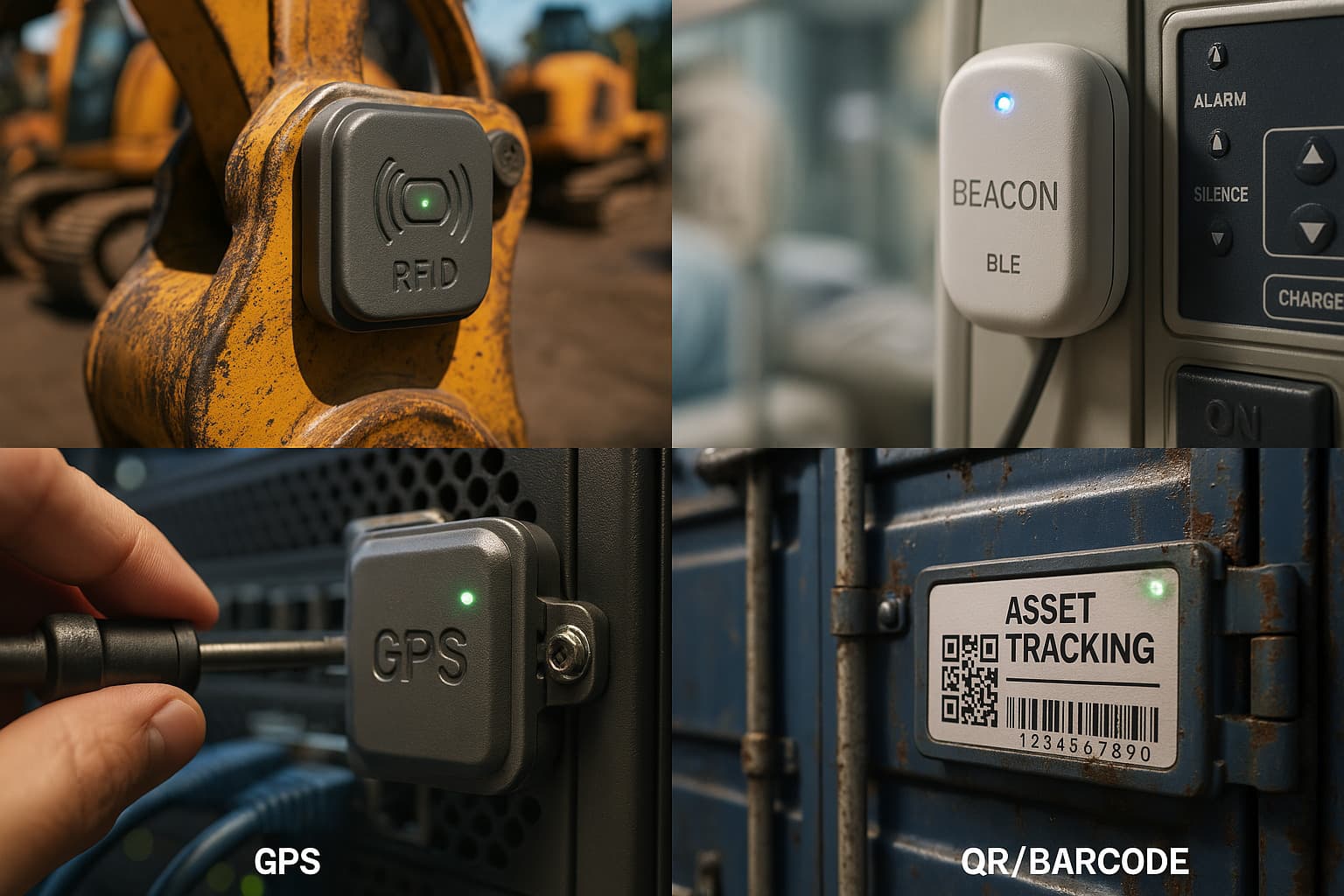
BLE vs RFID: Choosing the Right Asset Tracking Technology in 2026
The choice between Bluetooth Low Energy (BLE) and Radio Frequency Identification (RFID) is one of the most critical decisions in any asset tracking deployment. Both technologies have evolved significantly, and the right choice depends on your specific use case, environment, and budget constraints.
The Fundamental Difference
RFID is primarily a passive technology: tags don't have batteries and only respond when energized by a reader's radio waves. Think of it like a barcode that works through walls.
BLE is an active technology: tags contain batteries and continuously broadcast their presence. Think of it like a tiny radio station announcing its location.
This fundamental difference drives almost every other comparison point.
Detailed Technology Comparison
| Factor | BLE (Bluetooth Low Energy) | RFID (Radio Frequency ID) |
|---|---|---|
| Tag Cost | $5-30 per tag | $0.05-5 per passive tag |
| Reader/Infrastructure Cost | $0 (uses smartphones) | $1,000-5,000 per reader |
| Range | Up to 100 meters outdoors | 1-10 meters (passive) |
| Battery Life | 1-5 years typical | No battery (passive) |
| Real-Time Tracking | Yes, continuous updates | Only at scan points |
| Smartphone Compatible | Yes, native support | Requires specialized hardware |
| Data Capacity | Megabytes possible | Kilobytes maximum |
| Indoor Accuracy | 2-10 meters | Room-level with multiple readers |
| Bulk Scanning | Sequential | Hundreds per second |
Infrastructure Needs
BLE: Zero Infrastructure Required
BLE's greatest advantage is leveraging existing infrastructure:
- Every modern smartphone can read BLE tags (over a billion Apple devices alone via Find My)
- No fixed readers needed for basic tracking
- Deployment in minutes: Attach tag, register in software, done
- Scales infinitely: Adding more assets requires only more tags
RFID: Significant Upfront Investment
RFID requires purpose-built infrastructure:
- Fixed readers: $1,000-5,000 each, positioned at chokepoints
- Antennas: $200-500 each, typically 2-4 per reader
- Cabling: Power and network for each reader location
- Integration: Software to process reader data streams
- Professional installation: $5,000-50,000 depending on facility size
The math: A basic RFID deployment for a single warehouse door costs $3,000-8,000. A BLE deployment covering the same facility might cost $500-2,000 in tags alone.
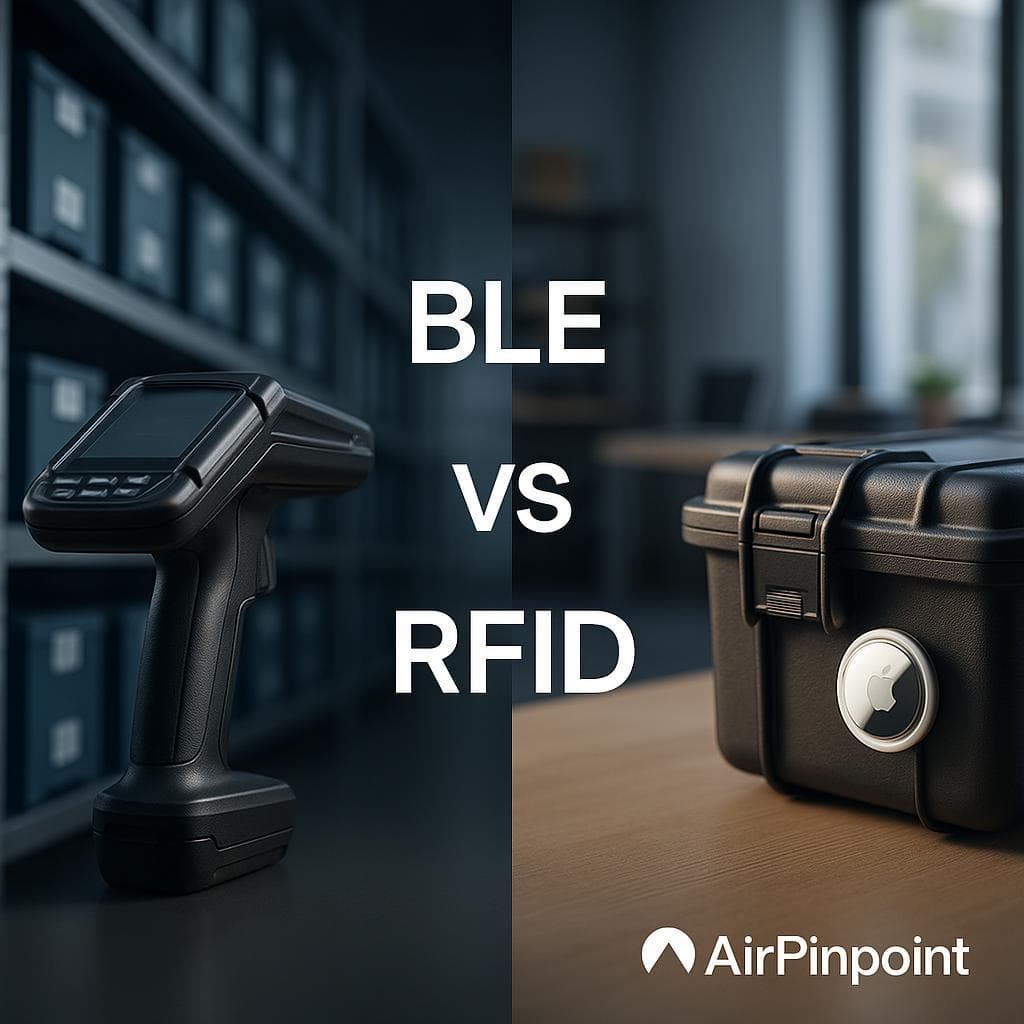
Visual: RFID Scanner Gun vs BLE Broadcast
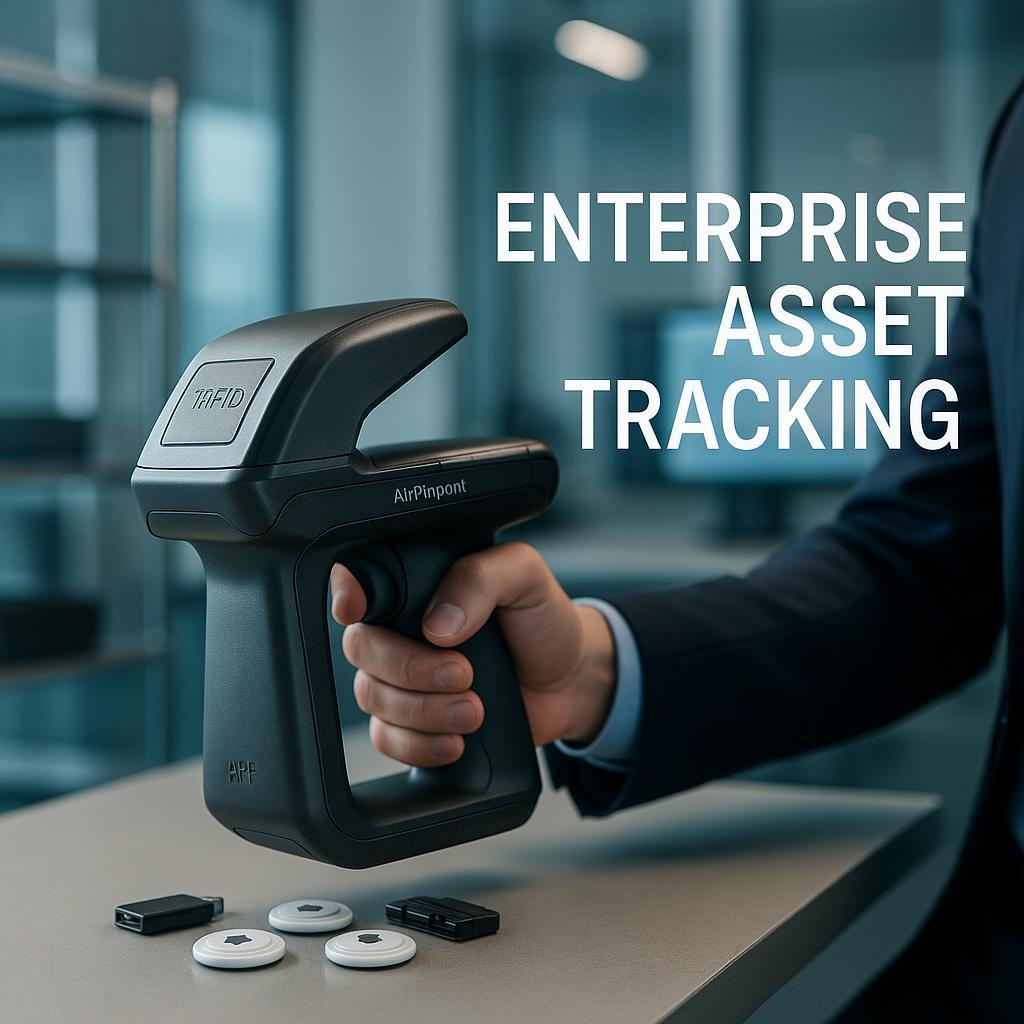
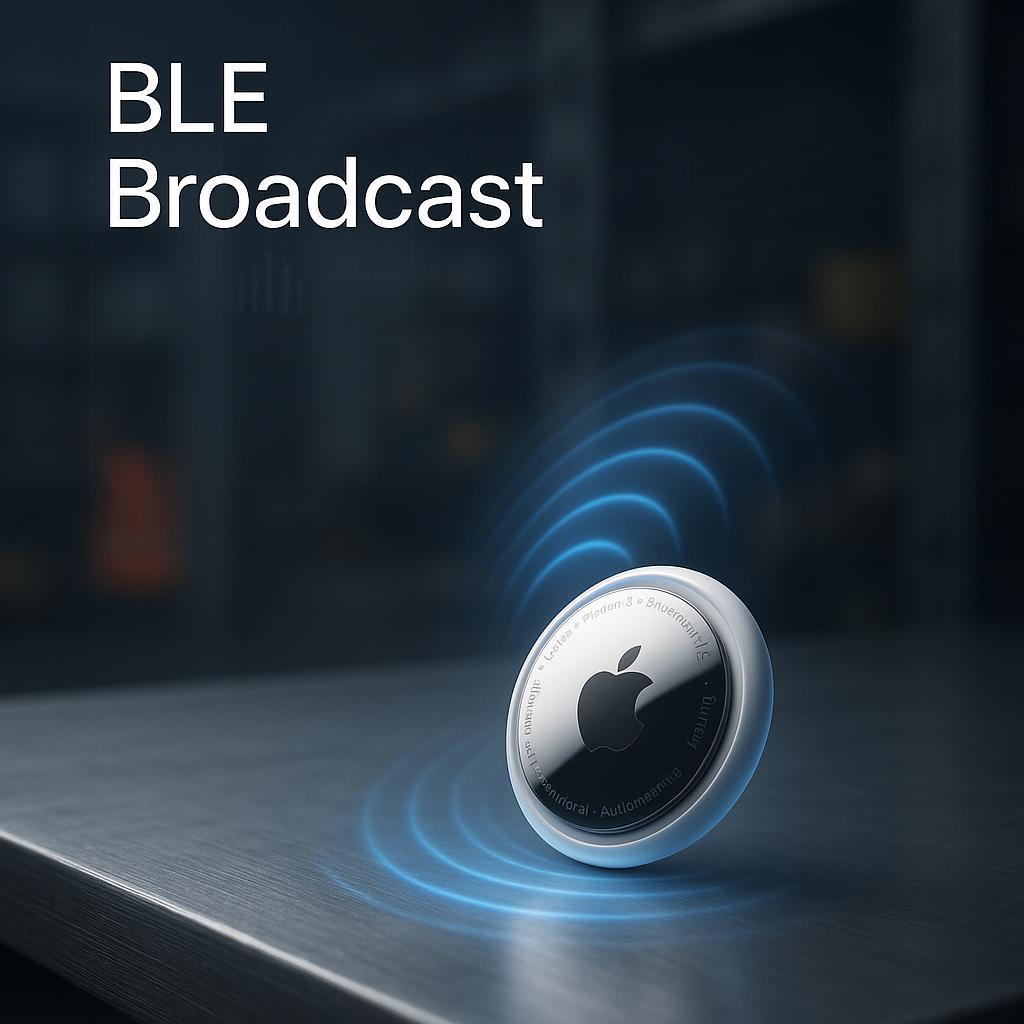
Battery Life, Setup Time, and Cost Deep Dive
Battery Life Reality
BLE Tags:
- Most BLE beacons last 1-5 years on a single coin cell battery
- Apple AirTags specifically: 12+ months with standard CR2032
- Battery status often visible in management software
- Replacement cost: $1-3 per battery
RFID Tags:
- Passive RFID (most common): No battery, theoretically unlimited life
- Active RFID: 3-5 years, but these are essentially BLE competitors
- Passive tags can be damaged by extreme conditions but don't "die" from battery depletion
GPS (for context as a third option):
GPS battery life figures need context that most spec sheets skip. A vendor advertising "3-year battery" is almost always assuming one location update per day. At that rate, the device accumulates roughly 1,100 total location reports before the battery dies. An AirTag in a city delivers that many updates in under three days, then keeps going for another 362 days.
The reason is physics: every GPS update requires the GPS radio to stay on for up to 30 seconds to acquire a satellite fix, then the cellular modem to power up and transmit. Both steps pull hundreds of milliamps per update. BLE draws microamps. AirTags push the power-hungry work onto nearby iPhones, which recharge nightly. That architecture is why BLE can deliver 100,000+ location updates per battery while GPS devices with similar-sized cells deliver roughly 1,000 before the battery is exhausted.
If a GPS tracker is on your shortlist alongside BLE, compare updates per battery, not advertised battery life. The spec-sheet number is not a useful comparison unless the update rate is identical.
Setup Time Comparison
| Task | BLE | RFID |
|---|---|---|
| Install first reader | N/A | 4-8 hours |
| Configure software | 30 minutes | 2-4 hours |
| Tag first asset | 30 seconds | 30 seconds |
| Tag 100 assets | 30-60 minutes | 30-60 minutes |
| Achieve full coverage | Immediate | Days to weeks |
Total Cost of Ownership (5-Year, 500 Assets)
| Cost Component | BLE Solution | RFID Solution |
|---|---|---|
| Tags | $5,000-15,000 | $500-2,500 |
| Infrastructure | $0-2,000 | $15,000-50,000 |
| Installation | $500-1,000 | $5,000-20,000 |
| Software | $3,000-10,000/yr | $5,000-15,000/yr |
| Battery Replacement | $500-1,500 | $0 |
| 5-Year Total | $21,000-44,000 | $45,500-147,500 |
Environmental Considerations
Where RFID Struggles
RFID signals face significant challenges:
- Metal surfaces: Reflect and block signals, a major issue in warehouses with metal shelving
- Liquids: Absorb radio waves, causing read failures
- Dense tag environments: "Tag collision" when too many tags respond simultaneously
- Temperature extremes: Some tags fail below -20°C or above 60°C
Where BLE Excels
BLE's smartphone-based detection offers advantages:
- Works indoors and outdoors without infrastructure changes
- Penetrates most building materials (except dense metal/concrete)
- No line-of-sight required for detection
- Temperature tolerant: -20°C to 60°C for most beacons
Where RFID Excels
Despite limitations, RFID has clear use cases:
- High-speed bulk scanning: Inventory counts of hundreds of items per second
- Chokepoint tracking: Definitive entry/exit recording at controlled points
- Low per-unit cost: Tracking low-value items where BLE tags are too expensive
- Permanent tagging: No battery maintenance for long-term asset identification
Real-World Use Case Recommendations
Choose BLE When:
- You need real-time location visibility across large areas
- Assets move through uncontrolled environments (field service, deliveries, rentals)
- Budget is limited for infrastructure investment
- You want smartphone-based tracking without specialized hardware
- Quick deployment is a priority
Choose RFID When:
- Assets pass through controlled chokepoints (warehouse doors, retail exits)
- You need to track thousands of low-value items economically
- Bulk inventory counts are a primary use case
- Assets stay within a fixed, infrastructure-ready facility
- Long-term permanent identification matters more than real-time location
Consider Hybrid When:
- You need RFID at chokepoints for definitive counting
- Plus BLE throughout the facility for locate-on-demand
- Many large warehouses now use both technologies together
2026 Technology Trends
BLE Advancements
- Direction finding (AoA/AoD): New BLE 5.1+ tags can determine direction, enabling centimeter-level indoor positioning
- Mesh networking: Tags can relay signals through each other, extending range
- Lower power consumption: Next-gen chips promise 10+ year battery life
- AI integration: Predictive analytics on movement patterns
RFID Advancements
- RAIN RFID: UHF standard improvements for better range and reliability
- Sensor-enabled tags: Temperature, humidity, tampering detection built into passive tags
- Cloud-native platforms: Easier software integration for RFID data
Airpinpoint: BLE Without the Tech Headaches
Airpinpoint offers BLE tracking solutions that eliminate the technical complexities often associated with traditional tracking systems. With easy setup and reliable performance, Airpinpoint provides a hassle-free experience for asset management.
Our solution leverages Apple's Find My network (over a billion devices) for detection, meaning:
- No readers to install or maintain
- Global coverage wherever iPhones exist
- Simple CR2032 battery replacement (once per year or less)
- 5-minute setup per asset
Conclusion
Choosing between BLE and RFID depends on your specific needs and environment. BLE offers a flexible and cost-effective solution with minimal infrastructure requirements, making it ideal for dynamic settings. RFID, on the other hand, excels in controlled environments requiring precise, high-speed identification at defined points.
For most businesses tracking mobile assets, equipment, or inventory across multiple locations, BLE provides the best balance of cost, capability, and ease of deployment. RFID remains the right choice for high-volume retail, library systems, and manufacturing with fixed chokepoints.
Explore our BLE and RFID solutions today and find the best fit for your assets.
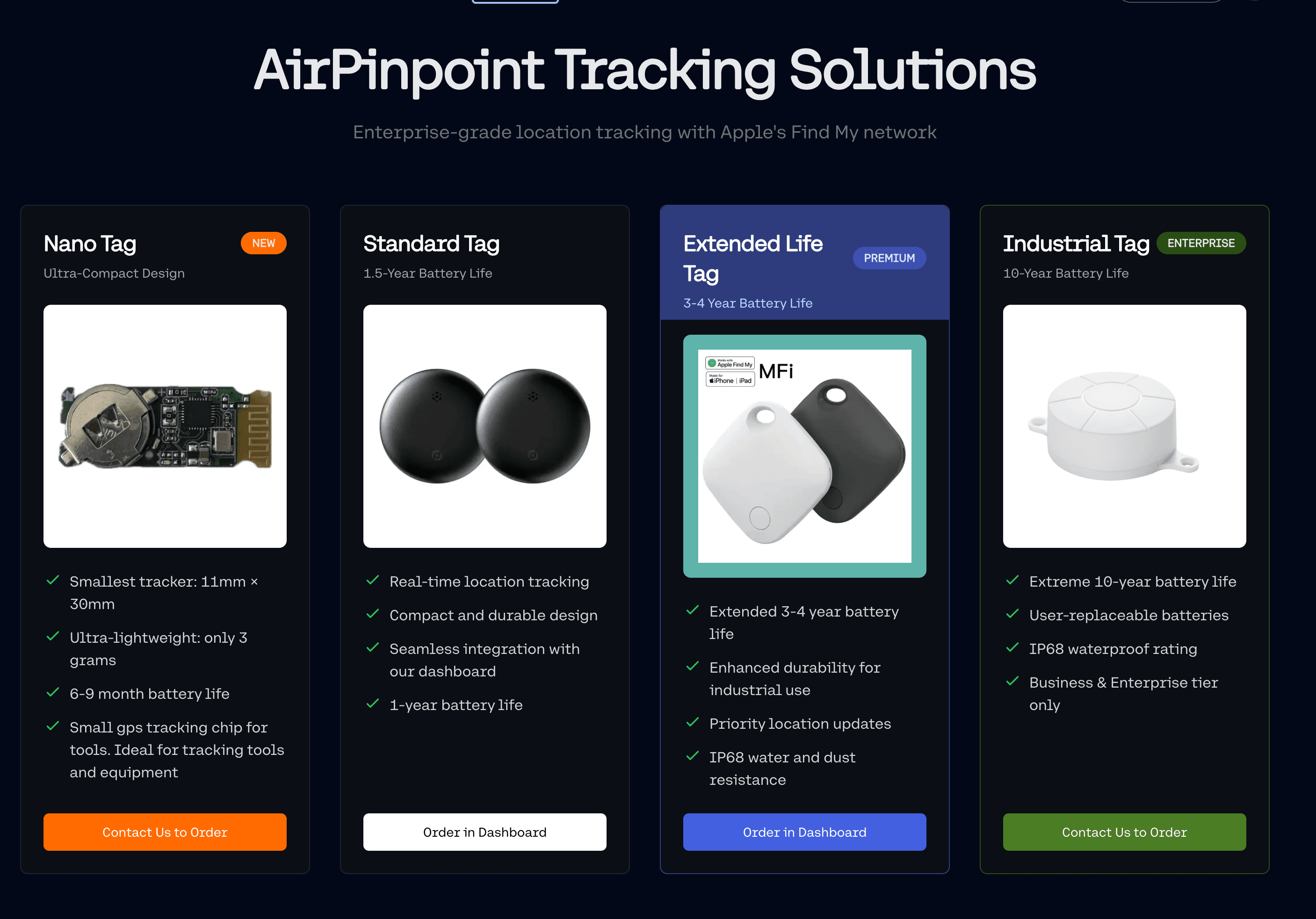
 Our Solution