
Updated
Employee GPS Tracking Laws: The State-by-State Guide Fleet Managers Actually Need
You own the trucks. You pay the insurance. You need to know where 47 vehicles are at 2 PM on a Tuesday. And in most states, that is completely legal.
But not all states. And not under all conditions. And one misstep can turn a routine fleet management practice into a six-figure lawsuit.
This is not a vague overview about "balancing privacy and productivity." This is the specific legal framework, state by state, that determines whether your GPS tracking program is a legitimate business practice or a liability.
The Federal Baseline: What Exists and What Doesn't
There is no federal law that explicitly addresses employer GPS tracking of company vehicles. None. The two federal statutes that get cited in employee tracking cases were written decades before GPS tracking was a business tool.
Electronic Communications Privacy Act (ECPA), 1986. Prohibits unauthorized interception of electronic communications. GPS location data is not an "electronic communication" under most court interpretations, so ECPA rarely applies to vehicle tracking. It does apply to monitoring employee phone calls, emails, and text messages.
Fourth Amendment. Protects against unreasonable government searches. In United States v. Jones (2012), the Supreme Court ruled that police installing a GPS tracker on a suspect's car constituted a search requiring a warrant. But this only applies to government actors. Private employers are not bound by the Fourth Amendment.
What this means in practice: Federal law gives employers wide latitude to track company-owned vehicles and equipment. The restrictions come from state law, and they vary dramatically.
State-by-State GPS Tracking Laws
The following table covers the 20 states that matter most for fleet operations, either because of explicit statutes, significant case law, or large commercial vehicle populations.
| State | Consent Required? | Notice Required? | Personal Vehicle Tracking | Off-Hours Restriction | Key Statute / Precedent |
|---|---|---|---|---|---|
| California | Yes (written) | Yes | Prohibited without consent | Must allow disabling off-hours | Penal Code 637.7, AB 984 |
| Connecticut | No | Yes (written) | Prohibited without consent | No explicit restriction | General Statutes 31-48d |
| Delaware | No | Yes | Prohibited without consent | No explicit restriction | 19 Del. C. 705 |
| Florida | No (company vehicles) | Recommended | Prohibited without consent | No explicit restriction | FL Stat 934.425 |
| Georgia | No (company vehicles) | Recommended | Prohibited without consent | No explicit restriction | O.C.G.A. 16-11-62(2) |
| Illinois | No | Yes (notification) | Prohibited without consent | No explicit restriction | 720 ILCS 5/21-2.5 |
| Louisiana | Yes | Yes | Prohibited | No explicit restriction | LA Rev Stat 14:323 |
| Maryland | No (company vehicles) | Recommended | Prohibited without consent | No explicit restriction | Court precedent |
| Massachusetts | No (company vehicles) | Recommended | Prohibited without consent | Courts favor employee privacy | Court precedent |
| Michigan | No (company vehicles) | Recommended | Prohibited without consent | No explicit restriction | Court precedent |
| Minnesota | Yes (written) | Yes | Prohibited | No explicit restriction | Statute 626A.35 |
| New Jersey | No (company vehicles) | Recommended | Prohibited without consent | No explicit restriction | Court precedent |
| New York | No | Yes (since 2022) | Prohibited without consent | No explicit restriction | Labor Law 201-cc |
| North Carolina | No (company vehicles) | Recommended | Prohibited without consent | No explicit restriction | N.C.G.S. 14-196.3 |
| Ohio | No (company vehicles) | Recommended | Prohibited without consent | No explicit restriction | Court precedent |
| Pennsylvania | No (company vehicles) | Recommended | Prohibited without consent | No explicit restriction | 18 Pa. C.S. 7507.2 |
| Texas | No (company vehicles) | Recommended | Prohibited without consent | No explicit restriction | TX Penal Code 16.06 |
| Virginia | No (company vehicles) | Recommended | Prohibited without consent | No explicit restriction | Va. Code 18.2-60.5 |
| Washington | No (company vehicles) | Recommended | Prohibited without consent | No explicit restriction | RCW 9A.46.120 |
| Wisconsin | No (company vehicles) | Recommended | Prohibited without consent | No explicit restriction | Court precedent |
Three patterns emerge:
-
Every state prohibits tracking an employee's personal vehicle without consent. No exceptions. If the employee owns the car, you need permission.
-
Company-owned vehicles are a different legal category. Most states treat the employer's property interest in the vehicle as sufficient justification for tracking.
-
The trend is toward more disclosure, not less. New York added its notice requirement in 2022. California tightened its rules with AB 984. Expect more states to follow.
The Five States That Require the Most Caution
California
California is the strictest state for employee GPS tracking. Penal Code 637.7 makes it a misdemeanor to use an electronic tracking device to determine location or movement without consent. AB 984 (effective 2024) adds specific requirements for employers:
- Written notice before tracking begins
- Description of what data is collected and how it's used
- Employee right to disable tracking outside work hours
- No retaliation for exercising that right
Violation: misdemeanor, up to $1,000 fine, up to one year in county jail. Civil liability on top of that.
New York
Labor Law 201-cc, effective January 2022, requires employers to provide written notice upon hiring (or within 14 days of implementation) if they monitor phone calls, emails, or internet usage. While the statute's language targets "electronic monitoring," New York courts have interpreted GPS tracking of company vehicles as falling within its scope.
Violation: $500 per employee for the first offense, $1,000 for second, $3,000 for third and subsequent.
Connecticut
General Statutes 31-48d requires written notice to employees before any electronic monitoring, including GPS tracking. The notice must be provided at hire or before monitoring begins.
Minnesota
Statute 626A.35 requires consent before tracking. Unlike most states, Minnesota does not carve out a clear exemption for company-owned vehicles, making written consent the safest approach for any fleet operating there.
Illinois
720 ILCS 5/21-2.5 prohibits placing a tracking device on a person's vehicle without consent. The statute does not explicitly address employer-owned vehicles, but the Illinois Biometric Information Privacy Act (BIPA) has made the state's courts aggressive on employee privacy issues. Illinois fleet managers should provide written notification.
The Critical Distinction: Company Vehicle vs. Personal Vehicle
This is the single most important factor in employee GPS tracking legality. Courts draw a bright line.
Company-owned vehicle: The employer has a property interest. Tracking is generally permissible because you're monitoring the location of an asset you own. The employee's privacy expectation in someone else's vehicle is lower.
Employee's personal vehicle: The employer has no property interest. Tracking requires explicit consent in every state. Installing a device on an employee's personal car without consent is a crime in most jurisdictions, regardless of whether you're the employer.
Company vehicle used for personal errands: This is the gray area. The vehicle is yours, but the employee may have a reasonable expectation of privacy during off-duty use. California addresses this directly (right to disable off-hours). Other states leave it to court interpretation, which is why limiting data review to work hours is the standard recommendation.
Mileage reimbursement vehicles: Some companies reimburse employees for using personal vehicles. This does NOT give the employer a right to track those vehicles. The car belongs to the employee. Period.
Company Phone Tracking: Different Rules
GPS tracking via a company-issued phone follows similar principles to vehicle tracking, but with additional considerations.
A phone is more personal than a truck. Employees carry phones into bathrooms, doctors' offices, and their homes. Courts view phone tracking as more invasive than vehicle tracking, even when the phone is company-owned.
Federal law: The Stored Communications Act (part of ECPA) may apply to location data stored by phone carriers or apps. Employers should track via MDM (Mobile Device Management) software, not by accessing carrier data.
Best practice for company phones:
- Written disclosure that the phone is monitored
- MDM software with clear tracking boundaries (work hours only, or geofence-triggered)
- Ability for employee to "clock out" of tracking during off-hours
- No access to personal content (texts, photos, browsing history)
Personal phones with work apps (BYOD): Tracking an employee's personal phone, even through a work app, creates significant legal risk. The best BYOD policies explicitly disclaim any location tracking.
Four Real Lawsuits and What They Cost
1. Cunningham v. New York Department of Education (2013, settled $810,000)
The NYC Department of Education placed GPS trackers on employees' personal vehicles to investigate suspected time theft. Employees discovered the devices and sued, alleging violations of the Fourth Amendment and state privacy laws. The city settled for $810,000 across multiple plaintiffs.
The lesson: Government employers have Fourth Amendment obligations that private employers don't, but the case illustrates the cost of tracking personal vehicles without consent.
2. Myrna Arias v. Intermex Wire Transfer (2015, filed in Kern County, CA)
Arias alleged her employer required her to install an app called Xora on her phone that tracked her location 24/7, including off-duty hours. She claimed her manager bragged about tracking her movements outside work. After she uninstalled the app, she was fired. She sued for $500,000 in damages for invasion of privacy and wrongful termination.
The lesson: Tracking an employee around the clock, especially via their phone, creates wrongful termination exposure if they push back and get fired for it.
3. Elgin v. St. Louis Coca-Cola Bottling (2005, dismissed)
Coca-Cola installed GPS trackers on company-owned delivery trucks. An employee sued, claiming invasion of privacy. The court dismissed the claim, finding that the employee had no reasonable expectation of privacy in a company-owned vehicle used for business purposes during work hours.
The lesson: Tracking company vehicles during work hours, with a legitimate business purpose, is defensible.
4. US v. Jones (2012, Supreme Court)
While this case involved law enforcement (not employment), the Supreme Court's ruling that GPS tracking constitutes a "search" under the Fourth Amendment shifted the legal landscape. Lower courts have since applied its reasoning in employment contexts, generally finding that employees have a diminished, but not zero, expectation of privacy in employer-owned vehicles.
The lesson: Even on company property, indefinite, warrantless tracking without any notice is legally risky. Disclosure and consent remove the risk.
The Legal Compliance Playbook
Six steps that employment attorneys consistently recommend. None of them are expensive. Most of them are free.
Step 1: Written GPS Tracking Policy
Create a policy that covers:
- What is tracked. Vehicle location, speed, idle time, mileage. Be specific.
- When tracking occurs. Work hours only, or 24/7 with off-hours data quarantined.
- Who accesses the data. Fleet manager, direct supervisor, HR for investigations. Not everyone.
- How data is used. Route optimization, safety, theft prevention, maintenance scheduling. List the legitimate business purposes.
- How data is stored and retained. 90 days, one year, whatever your policy is. Have one.
- Consequences for tampering. Disabling or interfering with tracking devices during work hours is a policy violation.
Step 2: Written Notice Before Tracking Begins
Not after. Before. Hand the employee a document that says "the company vehicle you drive is equipped with GPS tracking." Have them sign it. Keep a copy in their personnel file.
In states that require notice (CA, CT, DE, IL, MN, NY), this is legally mandatory. In every other state, it eliminates the most common legal claim: "I didn't know I was being tracked."
Step 3: Signed Acknowledgment
The notice and the acknowledgment are two separate documents. The notice tells them. The acknowledgment proves they received it. Employment attorneys recommend both.
Step 4: Limit Tracking Scope
Track company-owned assets during business operations. Do not:
- Track personal vehicles (ever, without explicit written consent)
- Review off-hours data unless investigating a specific incident
- Share tracking data with anyone who doesn't have a business need
- Use tracking data to harass, retaliate, or micromanage
Step 5: State-Specific Compliance
If you operate in multiple states, your policy must meet the requirements of the strictest state. A fleet that covers California, Texas, and New York needs to comply with California's consent requirement, New York's notice requirement, and the off-hours provisions of both.
The practical solution: build your policy to California standards and apply it everywhere. Over-compliance is free. Under-compliance is expensive.
Step 6: Annual Policy Review
Laws change. New York added its GPS tracking notice requirement in 2022. California tightened its rules in 2024. Review your policy annually with legal counsel.
Why Asset Tracking Is the Simplest Compliant Approach
Most employee GPS tracking lawsuits share a common thread: the employer was perceived as monitoring the person, not the property. Courts treat these differently.
When you install a cellular GPS tracker wired into a vehicle's OBD port, that device follows the vehicle (and by extension, the driver) everywhere, including their home, the grocery store, and anywhere else they go off the clock. This is what creates legal exposure.
Asset tracking with AirTags or Find My compatible devices is a different model. You're placing a Bluetooth tag on a piece of equipment you own: a trailer, a toolbox, a generator, a vehicle. The tag tracks the asset. It doesn't monitor phone calls, driving behavior, speed, or routes in real-time.
The practical differences:
| Factor | Cellular GPS Tracker | AirTag / Find My Asset Tracking |
|---|---|---|
| What it tracks | Vehicle + driver behavior (speed, braking, idle) | Asset location only |
| Real-time surveillance | Yes, continuous | No, periodic location updates |
| Off-hours exposure | High (always transmitting) | Low (tracking the asset, not the person) |
| Employee perception | "My employer is watching me" | "The company is tracking its equipment" |
| Legal framing | Employee monitoring | Asset protection |
| Cost per unit | $20-50/month + hardware | $3-12/month, no wiring |
This distinction matters in court. "We track our trailers" is a very different legal position than "we monitor our employees' locations."
You still need written notice. You still need signed acknowledgment. But the legal surface area is smaller when your tracking program is structured around asset protection rather than employee surveillance.
Nine Mistakes That Get Companies Sued
-
Tracking personal vehicles without consent. The single most common violation. Never put a tracker on a car you don't own without written permission.
-
No written policy. Without a policy, every tracking decision becomes ad hoc, and ad hoc decisions are hard to defend in court.
-
No signed acknowledgment. "We told them verbally" is not a defense. Paper trail or it didn't happen.
-
Tracking off-duty hours and acting on the data. Even if tracking is continuous, reviewing and acting on off-duty location data creates privacy claims. A manager who calls an employee to ask "why were you at [location] on Saturday" is creating evidence for a lawsuit.
-
Selective tracking. If you track some employees but not others doing the same job, you open yourself to discrimination claims. Track everyone in a role or no one in that role.
-
Using tracking data for retaliation. Employee files a complaint, then suddenly their GPS data gets scrutinized. That sequence of events is evidence of retaliation regardless of what the data shows.
-
No data access controls. Everyone in management can see everyone's location history? That is a data governance failure and a liability. Limit access to people with a legitimate business need.
-
Ignoring state-specific requirements. A policy that is legal in Texas may be illegal in California. Multi-state fleets need multi-state compliance.
-
Failing to update the policy. GPS tracking laws are changing. A policy written in 2020 may not comply with laws enacted in 2022, 2024, or 2026. Annual review with employment counsel is not optional for companies that take compliance seriously.
Getting Started
If you operate a fleet and need to know where your assets are, the legal path forward is straightforward. Written policy, written notice, signed acknowledgment, and tracking scoped to company-owned property during business hours. This framework is defensible in every state.
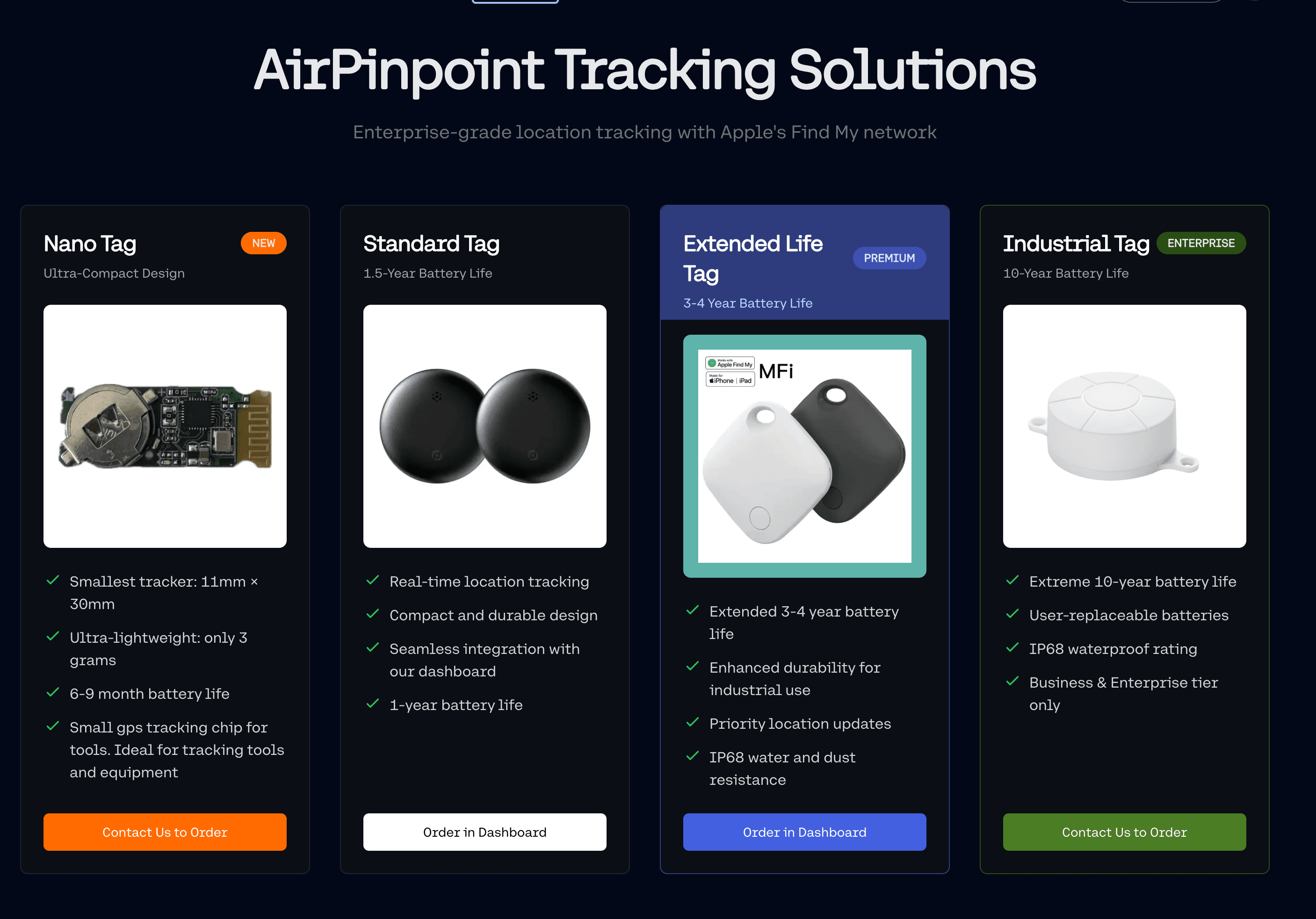
For companies that want to track equipment location without the legal complexity of full employee surveillance systems, Airpinpoint provides asset-level tracking using Apple's Find My network. You track the tag on the asset, not the person driving it. Setup takes minutes per device, there is no wiring or OBD installation, and the framing is asset protection from day one.
The companies that get sued are not the ones that track vehicles. They are the ones that track vehicles without telling anyone, without a policy, on cars they don't own, and then fire someone who complains about it. Do the paperwork. It costs less than a lawyer.




 Our Solution