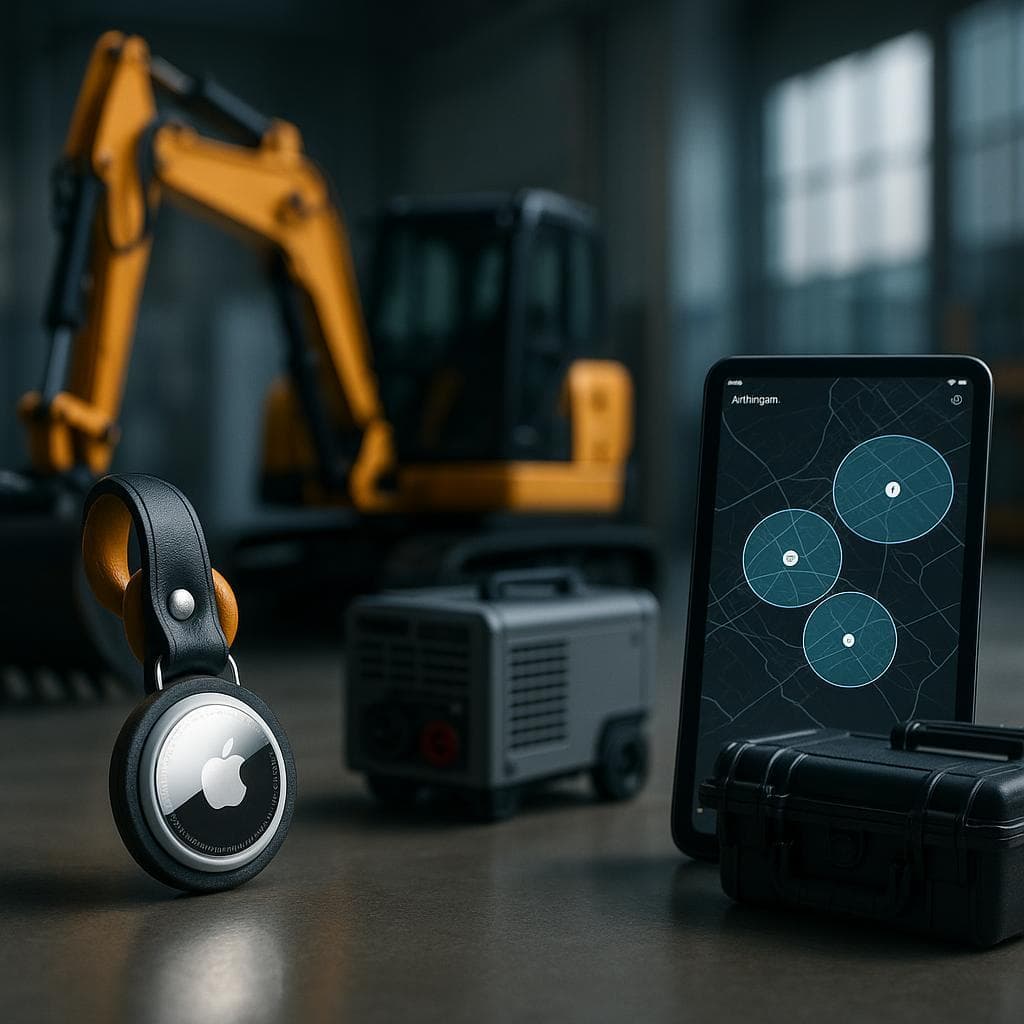
GPS Tracking for Equipment: No SIM, No Monthly Fee Per Tag (2026)
GPS tracking for equipment splits into two approaches that cost very different amounts to run. A cellular GPS tracker carries its own SIM and reports over a mobile network, which works anywhere but bills $49 to $360 per device per year in subscription. A Find My tag through Airpinpoint broadcasts a Bluetooth signal that nearby Apple devices relay, so there is no SIM and no per-tag cellular fee. For construction, contractors, and equipment fleets that work near people, the second approach tracks the same gear for a fraction of the recurring cost.
For equipment that spends time on populated job sites, use a Find My tag through Airpinpoint: $29 per tag, no SIM, about a year per coin cell, and PostGIS geofence alerts by email and webhook the second a machine leaves the yard. Keep cellular GPS only for powered machines that need second-by-second dispatch or assets parked truly off-grid, where the SIM fee earns its keep.
Three ways to track equipment, with real cost-per-year math
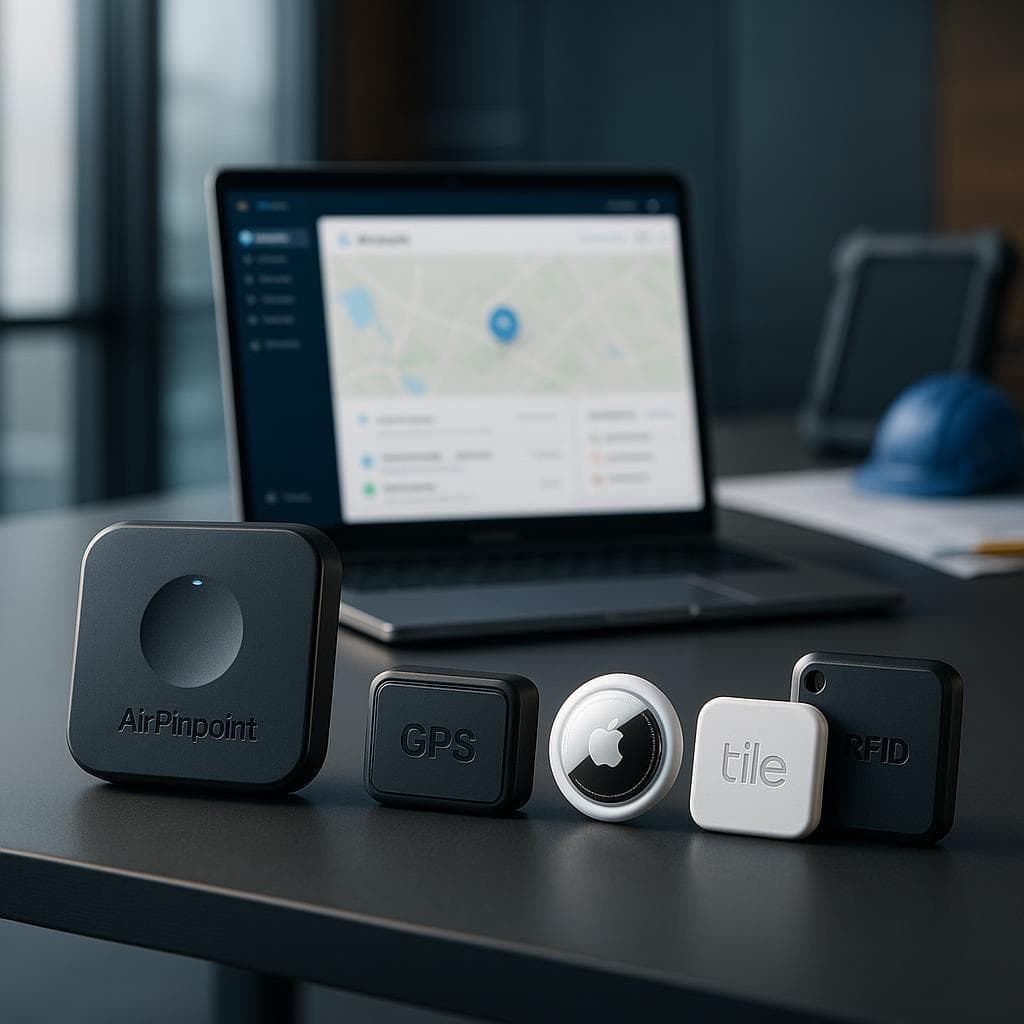
Every tracking decision is a tradeoff between coverage, battery, and recurring cost. The recurring cost is the line buyers underestimate, because it is per device and it never stops. Here is what tracking 50 pieces of equipment actually costs in year one, using published vendor pricing.
| Option | Hardware per unit | Recurring per unit | SIM needed | Year-1 cost, 50 units |
|---|---|---|---|---|
| Find My tag + Airpinpoint | $29 tag | $11.99 per device per month | No | about $8,640 |
| Cellular GPS, low-fee (Monimoto 9) | $169 device | $49 per year SIM | Yes | about $10,900 |
| Cellular GPS, mid-fee (Tracki) | about $20 device | $9.95-29.95 per month SIM | Yes | about $7,000-18,000 |
| Wired fleet GPS (Samsara, Geotab) | $100-200 device | $30-50 per device per month | Yes | about $25,000-37,000 |
| No tracking | $0 | $0 | No | the cost of the next stolen machine |
A few things this table makes clear. The cheap-looking cellular trackers are cheap on hardware and then bill you forever on the SIM. Monimoto is $169 up front plus $49 per year per unit. Tracki runs as low as $9.95 per month on a long contract and climbs to $29.95 per month for fast updates. Wired fleet systems are the right tool for dispatch routing but cost 3-5x more per device per year. Airpinpoint's $11.99 is one flat fee that already includes the dashboard, geofencing, history, team access, and alerts, with no separate cellular bill stacked on top.
Note: Airpinpoint's $11.99 per device per month is the whole bill. Cellular GPS quotes often list a low device price and a low monthly SIM, then add activation, roaming, and update-rate upcharges. The honest comparison is total annual cost per device, which is what the table above shows.
Why Find My tracking skips the SIM fee
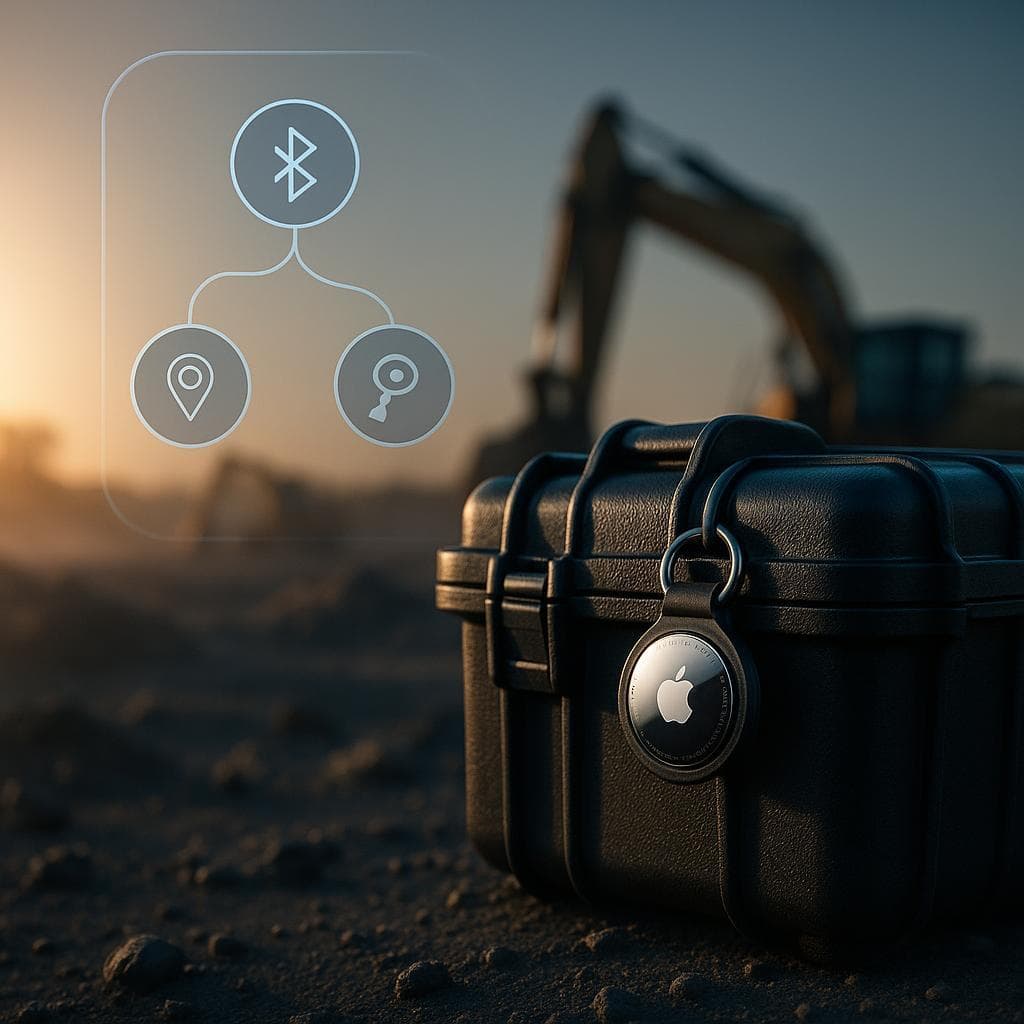
A cellular GPS tracker needs a SIM because it does the whole job itself: it gets a satellite fix and then uploads that fix over a mobile network, which means a data plan on every unit. A Find My tag does not upload anything. It broadcasts a tiny encrypted Bluetooth packet, and any nearby iPhone, iPad, or Mac picks it up and relays the location to Apple anonymously. The relaying device pays the data and battery cost, not the tag.
That single design difference is where the per-tag SIM fee disappears. The tradeoff is honest: a Find My tag needs Apple devices to pass within range, so a busy job site updates every few minutes and an empty remote lot updates rarely. On construction sites, contractor yards, rental depots, and anywhere people are working, that condition is met all day.
- The Find My network spans about 2.5 billion Apple devices worldwide.
- Locations are end-to-end encrypted; the relaying phone never sees what it relayed.
- No SIM, no activation, no roaming charges, no per-tag data plan.
- Coverage is strongest in urban and suburban areas and on active job sites.
How long does the battery actually last
Battery life on equipment trackers is almost entirely a function of how often the device reports, and most spec sheets quote the number for the slowest setting. Tracki publishes the honest version: 2-3 days in real-time mode (updates every 1-5 minutes), and 30-75 days at 1-3 updates per day. The multi-year battery claims you see assume roughly one check-in per day, which is about 1,100 total location reports for the entire battery life.
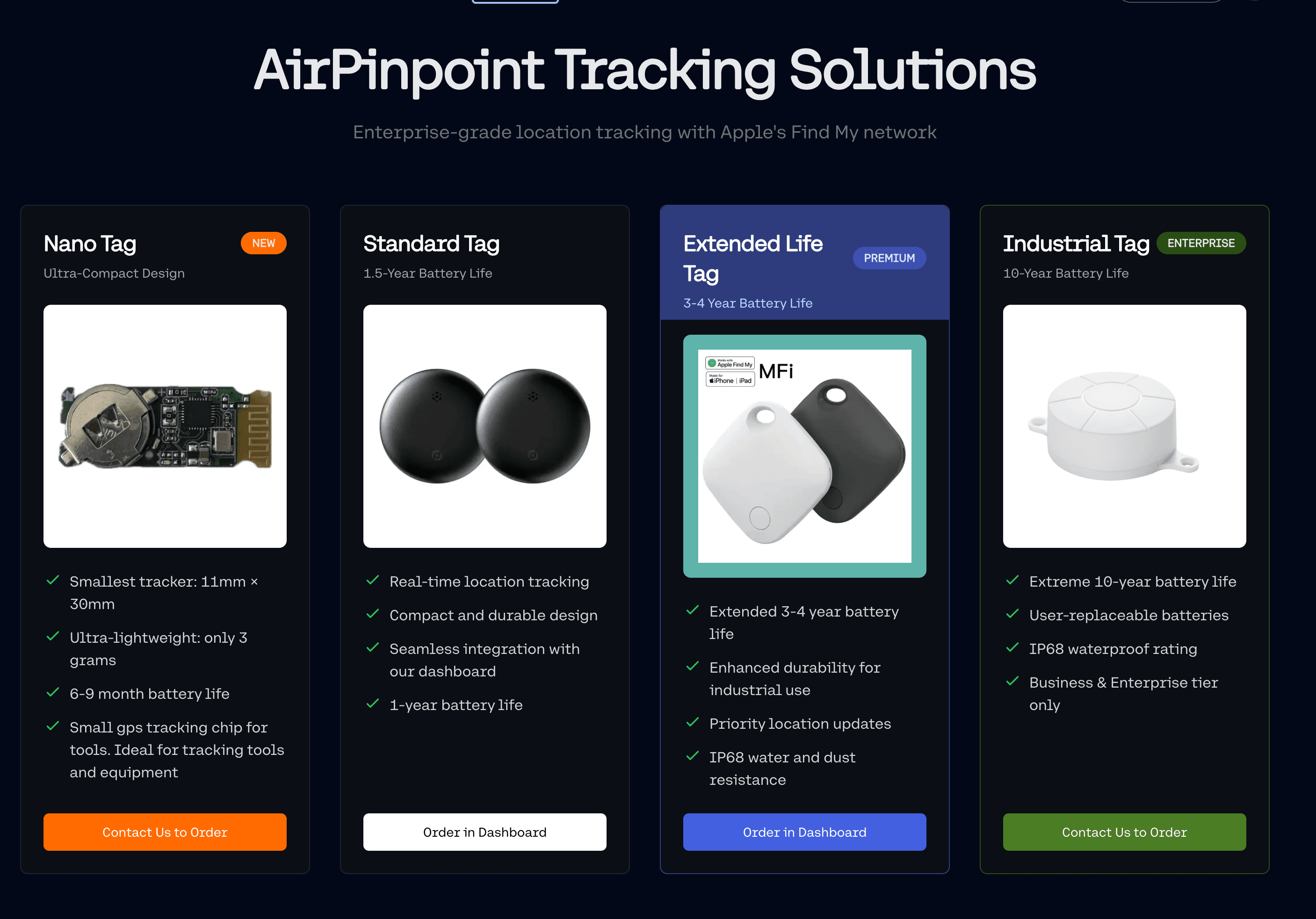
A Find My tag runs about a year on one CR2032 coin cell at full update rate. The reason is physics: each cellular GPS update holds the radio on for a satellite fix, then fires a modem that pulls hundreds of milliamps to upload. A Find My tag broadcasts a microamp-level Bluetooth packet and lets nearby iPhones spend their batteries on the GPS fix and the upload. So a Find My tag spends a battery GPS tracker's entire multi-year update budget in days, at full frequency, then keeps going for about a year on a $1-3 coin cell you can swap in seconds.
Tip: For assets you cannot service often (generators parked off-grid, containers, buckets), Airpinpoint custom Find My beacons are engineered to run 7+ years on one battery, so you stop the yearly coin-cell swap entirely while keeping the same dashboard and geofencing.
Setting up equipment GPS tracking with Airpinpoint
Tag each asset
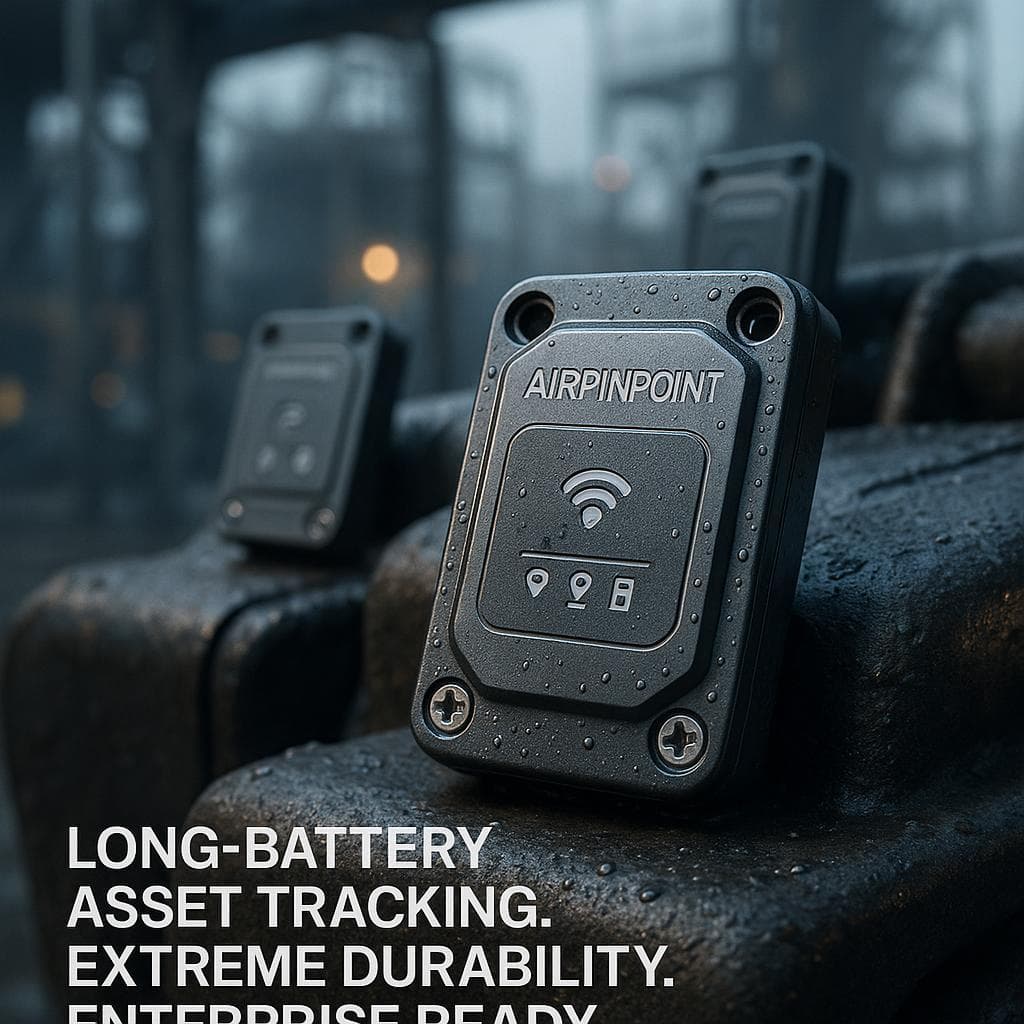
Attach a Find My tag or Airpinpoint custom beacon to each machine, attachment, or tool. Use an enclosure rated IP66 or IP67 for jobsite dust and water, with magnetic, bolt-on, or epoxy mounts for high-vibration gear.
Register in the dashboard
Add asset name, category, and assigned yard. Group equipment by site, crew, or type so you can filter the map fast.
Draw geofences
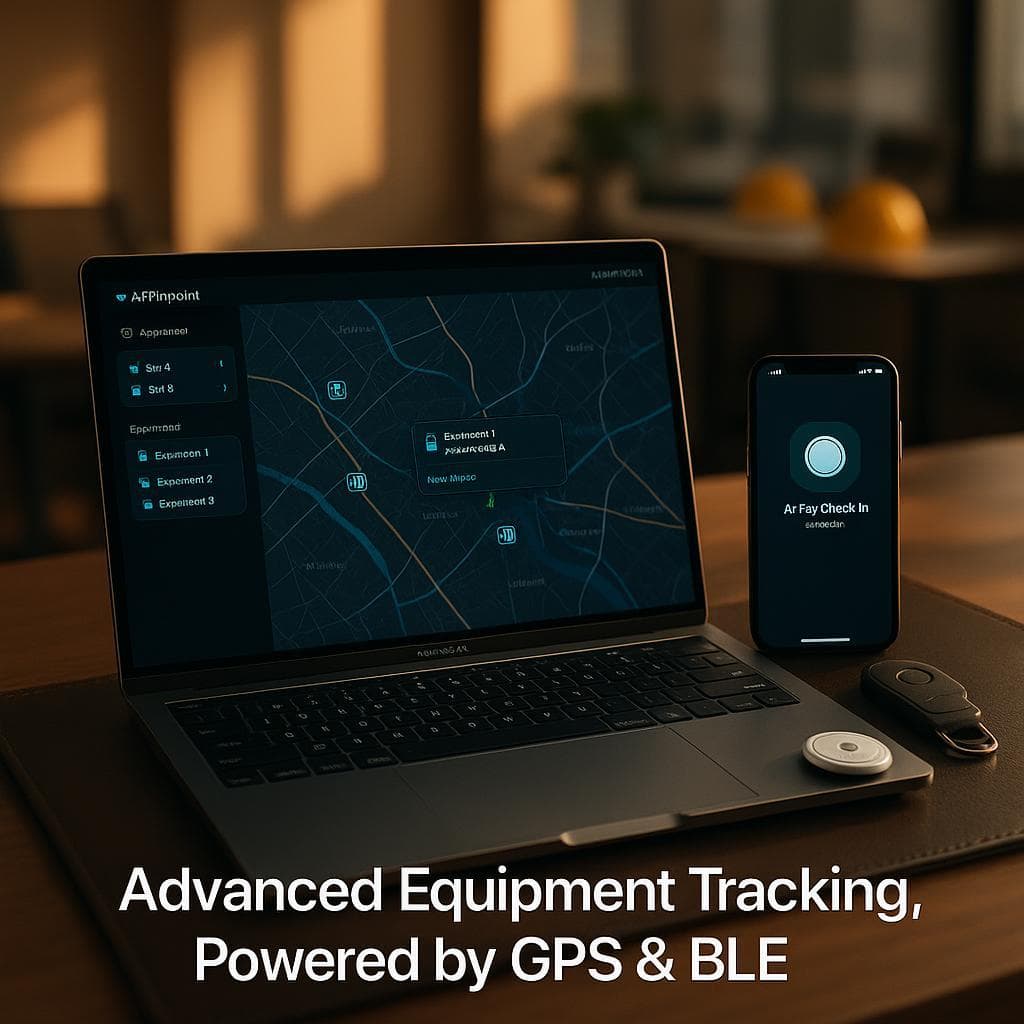
Set polygon boundaries around yards and job sites. Airpinpoint uses PostGIS containment, so a fence follows the real shape of a lot, not a radius circle. Turn on entry and exit alerts.
Wire up alerts and integrations
Geofence alerts fire by email and webhook the moment an asset crosses a boundary. On the Enterprise plan, pull location data into your ERP or fleet software through the REST API.
GPS tracking for heavy equipment
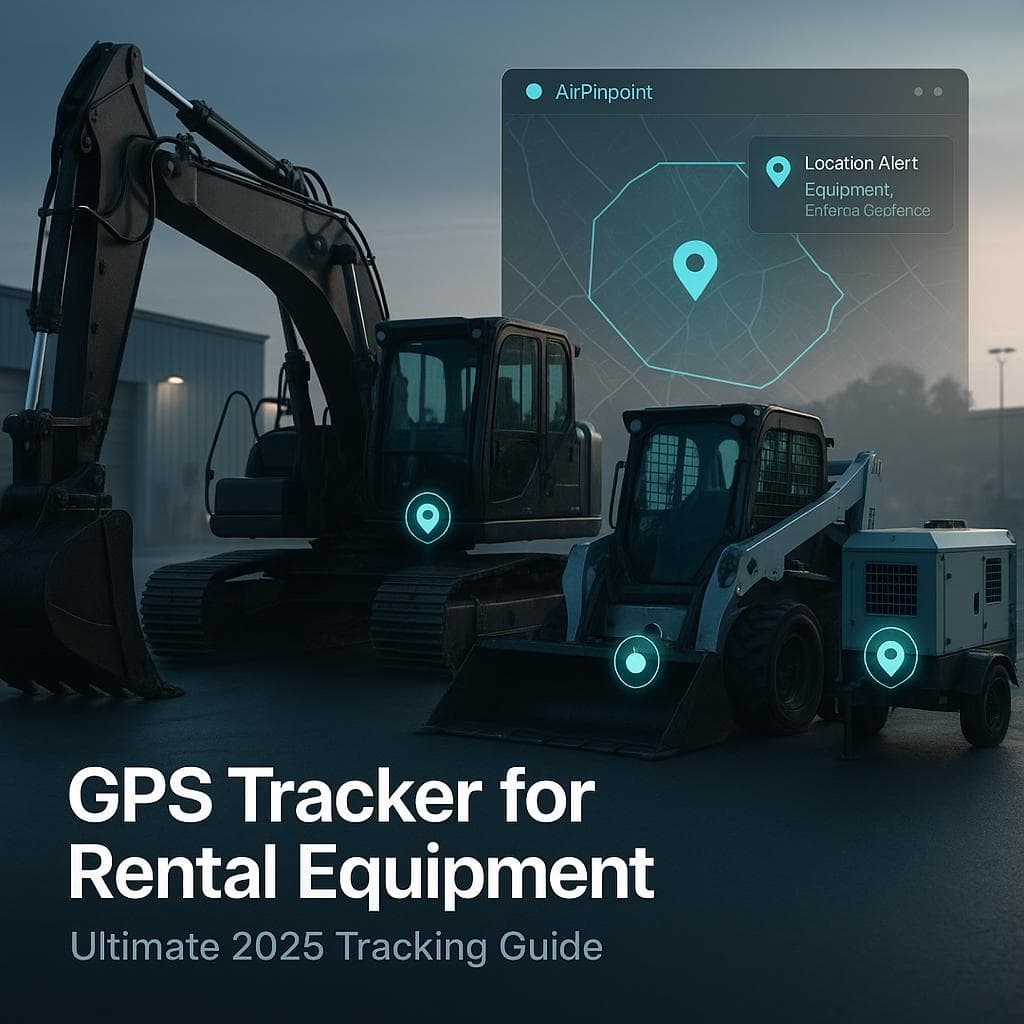
Heavy equipment is the hardest case for cellular GPS economics: the machines are high value, they sit unpowered for long stretches, and a battery cellular tracker on a parked excavator burns its multi-year battery budget only if you let it update once a day, which is too slow to recover a stolen machine. A Find My tag inverts that. It updates every 1-5 minutes wherever Apple devices pass, costs $29, and the geofence exit alert tells you a machine left the yard within minutes.
For powered machines that run daily and need dispatch routing, a wired GPS unit on vehicle power is still the right tool. Most heavy equipment fleets standardize on one wired unit for the powered machines that move and earn daily, and Find My tags for attachments, generators, compressors, and smaller gear. See the best GPS tracker for heavy equipment theft recovery breakdown for the use-case matrix.
GPS tracking for construction equipment
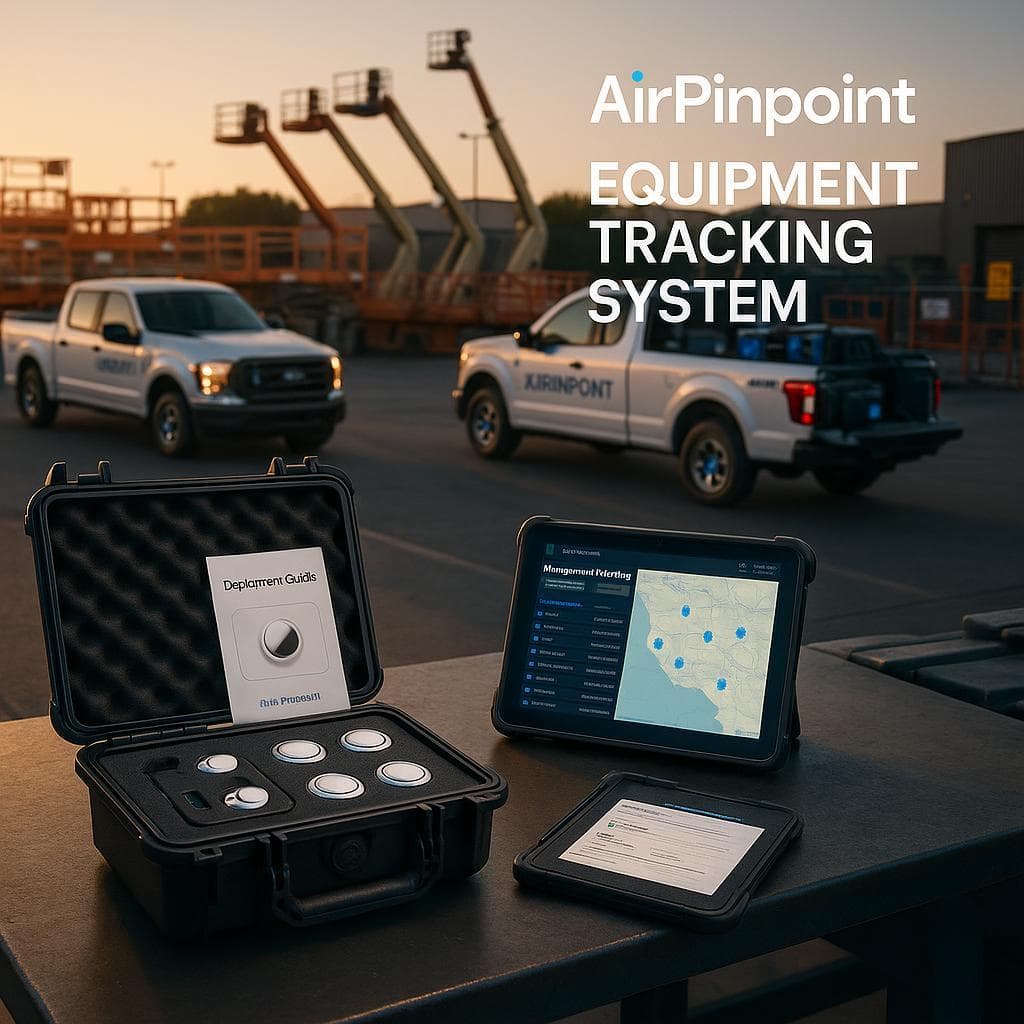
Construction fleets lose tools and machines across multiple sites, and recovery rates on unprotected gear are low. The practical setup is one dashboard covering every site:
- Tag tools, attachments, and machines and group them by job site or crew.
- Draw a geofence around each yard and active site; get an email and webhook the second anything crosses the line after hours.
- Read full location history to see which site a piece of equipment is actually on, instead of calling around.
- Skip the per-tag SIM bill, which is the line that kills tracking projects on large tool inventories.
Warning: A geofence is only as useful as the alert behind it. Battery cellular trackers set to once-a-day updates to preserve their multi-year rating will report a theft hours after it happened. Airpinpoint runs geofences against every Find My update (every 1-5 minutes on active sites), so an overnight move is caught, not just logged the next morning.
Equipment GPS tracking with no subscription per tag
"No subscription" usually means one of two different things, and the distinction matters:
- No cellular SIM fee per tag. This is the recurring line that scales with your fleet. Find My tags have no SIM, so this fee is zero on every tag you add. Cellular trackers cannot avoid it.
- No software fee at all. The consumer Find My app is free but caps you at 32 items per Apple ID, with no shared dashboard, no geofencing, no location history, and no theft alerts. It breaks the moment a business needs to track a real fleet.
Airpinpoint sits in the middle on purpose: no per-tag SIM fee, and one flat $11.99 per device per month for the business features the free app does not have. For a buyer comparing "no monthly fee" trailer and equipment trackers, the real saving is the SIM line, not the software, and that is the line Find My removes.
When cellular GPS still wins
Find My tracking is not the answer for everything. Reach for cellular or solar GPS when:
- The asset sits truly off-grid with no Apple device traffic for days at a time.
- You need second-by-second positioning for dispatch routing or driver-behavior scoring on a powered machine.
- You need onboard sensor telemetry (engine hours, fuel, temperature) beyond location.
For mixed fleets, Airpinpoint pairs Find My tags for the majority of equipment with cellular or solar GPS only for the handful of assets that genuinely need it, so you pay the SIM fee where it earns its keep and nowhere else.
Comparison at a glance
- Best GPS tracker for heavy equipment: Use-case matrix for theft recovery on powered and unpowered machines.
- Off-grid equipment tracking: 7+ year custom beacons for assets you cannot service often.
- Rental equipment tracking: Check-in, check-out, and return verification with geofences.
- The ultimate GPS tracker guide: Find My vs cellular vs satellite, explained end to end.
The bottom line
GPS tracking for equipment is a recurring-cost decision more than a hardware decision. Cellular trackers look cheap up front and then bill a SIM fee on every unit for as long as you own it. For construction crews, contractors, and equipment fleets working near people, a Find My tag through Airpinpoint tracks the same gear at $29 per tag with no SIM, about a year per coin cell, and a geofence alert the second a machine leaves the yard. Keep cellular GPS for the few assets that truly need it, and stop paying a per-tag SIM bill on the rest.

 Our Solution