Updated
Best GPS Tracker for Heavy Equipment (2026): 9 Trackers Ranked by Price and Recovery
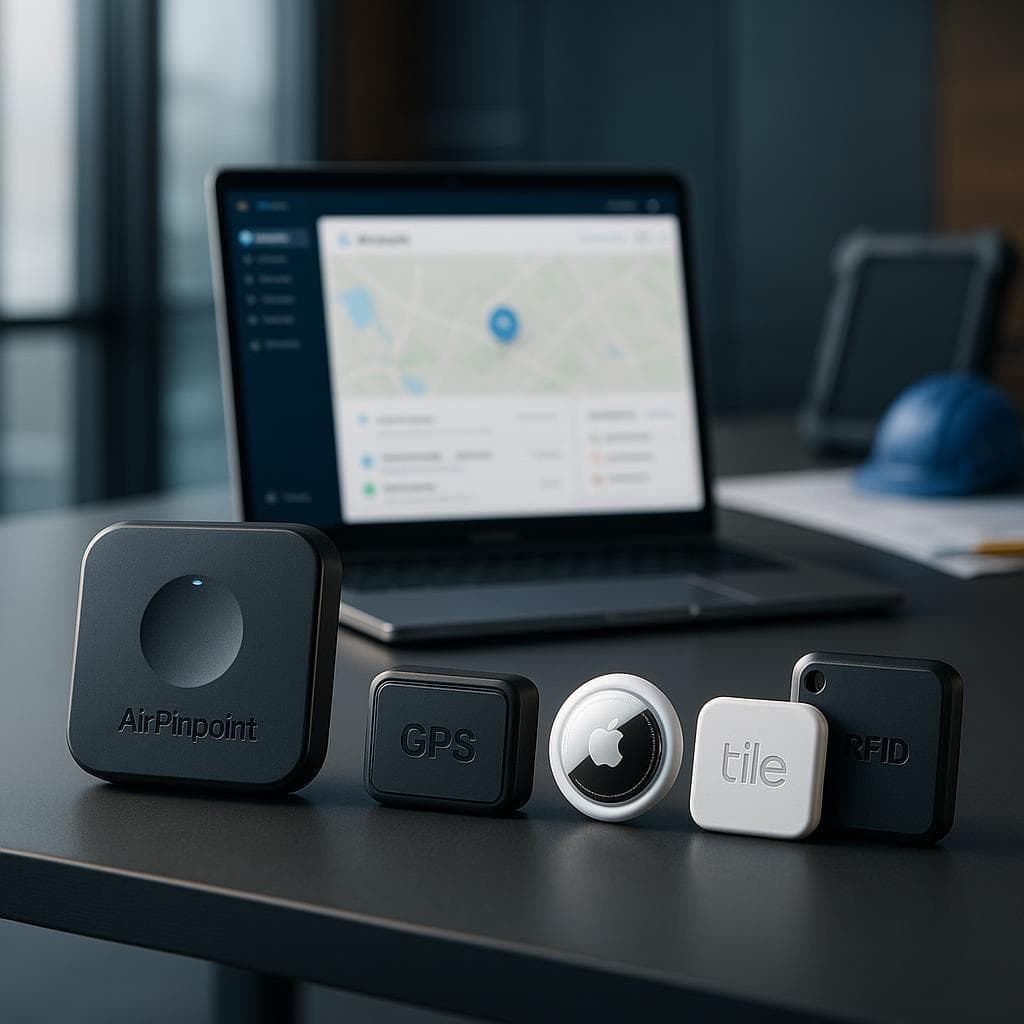
The best GPS tracker for heavy equipment in 2026 depends on the machine. For theft recovery on attachments, generators, and gear near populated job sites, Apple AirTag plus Airpinpoint is the best value at $29 per tag and $11.99 per device per month with no SIM. For a machine parked alone in a remote pit, a solar cellular GPS like the Digital Matter Oyster3 wins. For powered machines that need second-by-second dispatch, wired GPS from Samsara or Geotab is the right tool. The full 2026 price matrix is below.
Updated July 2026. Every price and spec here was pulled from the vendor's own page. Where a vendor does not publish a number, this guide says "by quote" rather than guessing.
The 2026 heavy equipment GPS tracker price matrix
Hardware for heavy equipment trackers runs from $29 to about $130 per unit, and monthly cost runs from $0 to $50 per device. Apple AirTags are the cheapest hardware at $29 one-time with no SIM; enterprise wired GPS like the Geotab GO9 is the most expensive to run at $29-40 per device per month. The gap comes down to one thing: whether each unit carries its own cellular data plan, or rides Apple's Find My network for free.
| Tracker | Hardware | Monthly | Battery / power | Network | Best for |
|---|---|---|---|---|---|
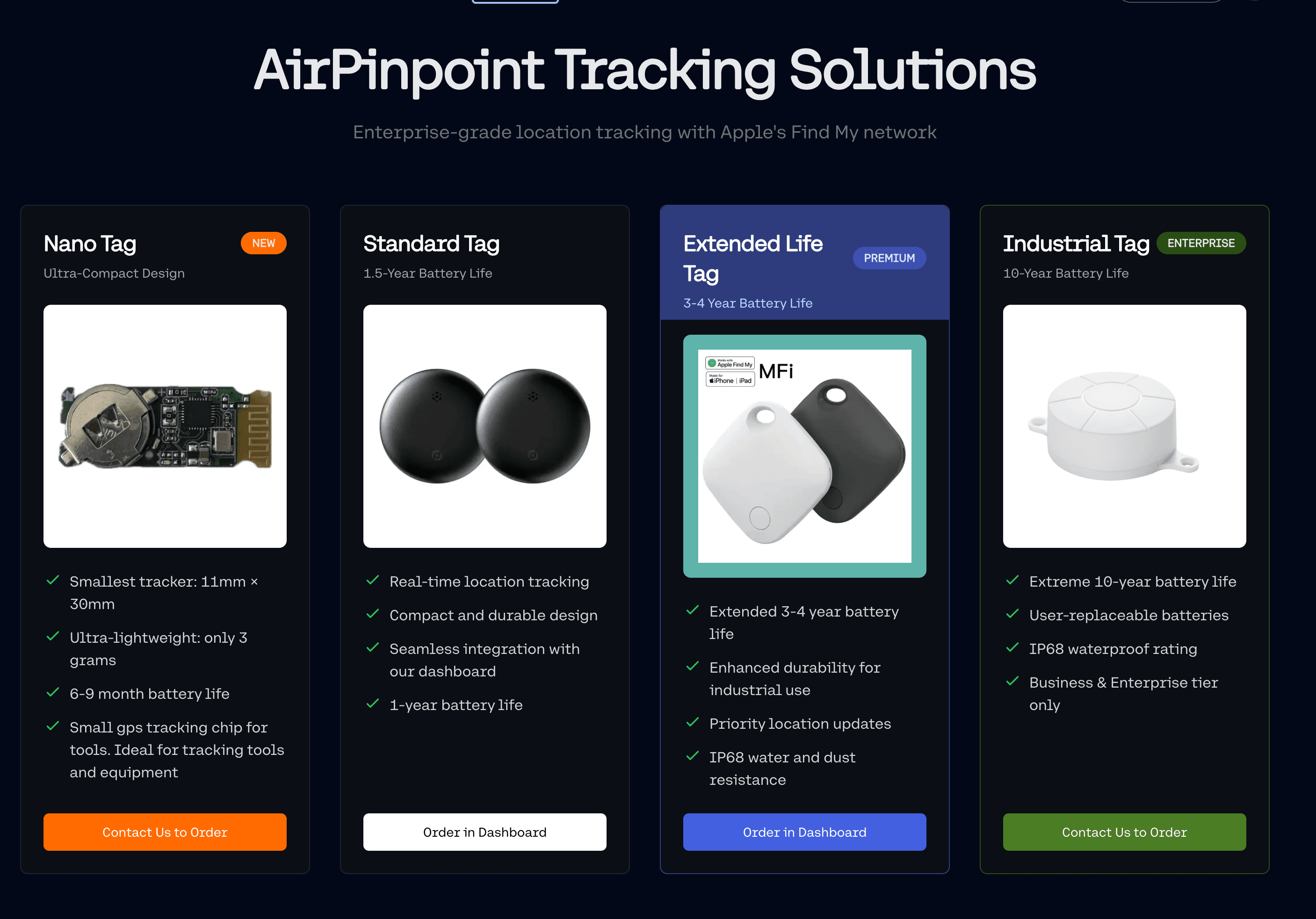
| Apple AirTag + Airpinpoint | $29/tag | $11.99/device | ~1 yr on CR2032 | Find My (no SIM) | Theft recovery near people, mixed fleets |
| Airpinpoint 7-year Find My beacon | Custom | $11.99/device | 7+ years | Find My (no SIM) | Unpowered assets you cannot service often |
| Samsara AT11 asset tracker | $29.99 | By quote | Multi-year (battery) | Cellular | Enterprise fleets already on Samsara |
| Geotab GO9 | ~$99-129 | ~$29-40/device | Vehicle power | Cellular | Powered machines, dispatch, engine data |
| Tenna | By quote | By quote | GPS + BLE mix | Cellular + BLE | Contractors wanting one construction platform |
| CalAmp LMU | By quote | By quote | Vehicle power / battery | Cellular | OEM and reseller telematics programs |
| Digital Matter Oyster3 | By quote | Data plan | 6 yrs at movement (3xAA) | LTE-M / NB-IoT | Remote off-grid pits, no phones nearby |
| LandAirSea 54 | $29.95 | $19.95-49.95 | Weeks to months | 4G cellular | One or two machines, live tracking |
| Spytec Atlas | Included | $17.95-22.95 | Weeks to months | 4G cellular | Small deployments without a contract |
Two vendors changed hands recently: John Deere acquired Tenna in February 2026, and Tenna still ships as its own brand inside the Deere ecosystem. Samsara, Tenna, CalAmp, Trackunit, and Digital Matter all price by custom quote, so the per-device monthly line for those is a sales conversation, not a published rate.
What is the single best pick for heavy equipment theft recovery?
Apple AirTag plus Airpinpoint is the best pick for theft recovery on equipment near populated areas, at $29 per tag and $11.99 per device per month. Recovery has two parts, and this covers both: a geofence exit alert tells you a machine crossed the yard line within 15 to 40 minutes, and the Find My network of over a billion Apple devices keeps reporting location every 1-5 minutes as the asset moves across counties. No SIM, no per-device data fee, no 32-item Apple ID cap.
Airpinpoint is the software layer that turns consumer AirTags into a fleet tool. It runs PostGIS polygon geofences, not radius circles, so a yard boundary follows the actual fence line. Entry and exit alerts go out by email and webhook the second a machine crosses, and every tag reports to one shared dashboard with full location history. For the theft surface specifically, see the anti-theft tracking device guide.
The honest weakness: Find My pings are periodic, not real-time, and they depend on Apple devices passing near the tag. For a machine parked alone in a remote pit with no foot traffic, updates slow down or stop, and a solar cellular GPS recovers better.
When does cellular or solar GPS beat AirTags?
Cellular or solar GPS beats AirTags in two cases: a machine parked alone off-grid where no Apple devices pass, and a powered machine that needs second-by-second dispatch. The Digital Matter Oyster3 runs 6 years at movement-based updates on 3xAA cells over LTE-M/NB-IoT, IP68 rated, so it keeps reporting from a remote pit where Find My goes silent. Wired GPS from Samsara or Geotab is genuinely real-time on vehicle power, which matters for dispatch routing and engine hours.
The tradeoff is cost and battery physics. Every cellular tracker carries its own data plan, so a fleet of 80 machines pays 80 SIM fees. Battery-powered cellular units reach their multi-year figures by updating roughly once a day; a GPS radio needs up to 30 seconds on to acquire a fix, then a cellular modem to transmit, and LTE bursts pull hundreds of milliamps. An AirTag broadcasts a microamp-level Bluetooth packet and lets nearby iPhones do the fix and upload on their own batteries. That architecture, not battery chemistry, is why an AirTag reports 100x more often per battery than a "3-year" battery GPS unit at its published rate.
AirTag vs cellular GPS: which is better for heavy equipment?
AirTags through Airpinpoint are better for cost and update frequency on equipment near people; cellular GPS is better for remote off-grid machines and real-time dispatch. AirTags cost $29 with no SIM and update every 1-5 minutes near foot traffic. Cellular GPS carries a per-device data plan but reports from anywhere with signal, including empty remote sites.
| DIY AirTag (Find My app) | AirTag + Airpinpoint | Cellular GPS (Samsara, Geotab) | |
|---|---|---|---|
| Hardware cost | $29/tag | $29/tag | $30-130/unit |
| Monthly cost | $0 | $11.99/device | $20-50/device |
| SIM / data plan | None | None | Required, per device |
| Device limit | 32 per Apple ID | Unlimited | Unlimited |
| Update rate | Near real-time near people | Every 1-5 min near people | Seconds (wired) to 1/day (battery) |
| Location history | Last location only | Full history, exportable | Full history |
| Geofence / theft alerts | None | Polygon, email + webhook | Yes |
| API / webhooks | None | Yes (Enterprise plan) | Yes |
| Works off-grid, no phones | No | Limited | Yes (cellular coverage) |
| Best for | Personal items | Theft recovery, mixed fleets | Remote sites, live dispatch |
Gotchas that decide the right tracker
- Foot traffic, not just coverage. AirTags need Apple devices nearby to relay. On a busy yard or urban job site they update every few minutes; in an empty rural pit they go quiet. Match the tracker to where the machine actually sits.
- The per-device SIM stacks up. A $20/month cellular plan is fine for one tracker and brutal across 80. Count the fleet before comparing a one-time $29 AirTag to a subscription tracker.
- Battery fine print. Trackers advertising 3-6 year batteries hit that number at about one update per day. At AirTag update rates those same batteries die in days. The multi-year figure and the real-time figure are not the same claim.
- Ruggedization. IP67 (AirTag) handles rain, mud, and brief submersion. For washdown environments, look for IP68/IP69K, which the Geotab GO9 and Digital Matter Oyster3 carry.
The practical stack most fleets land on
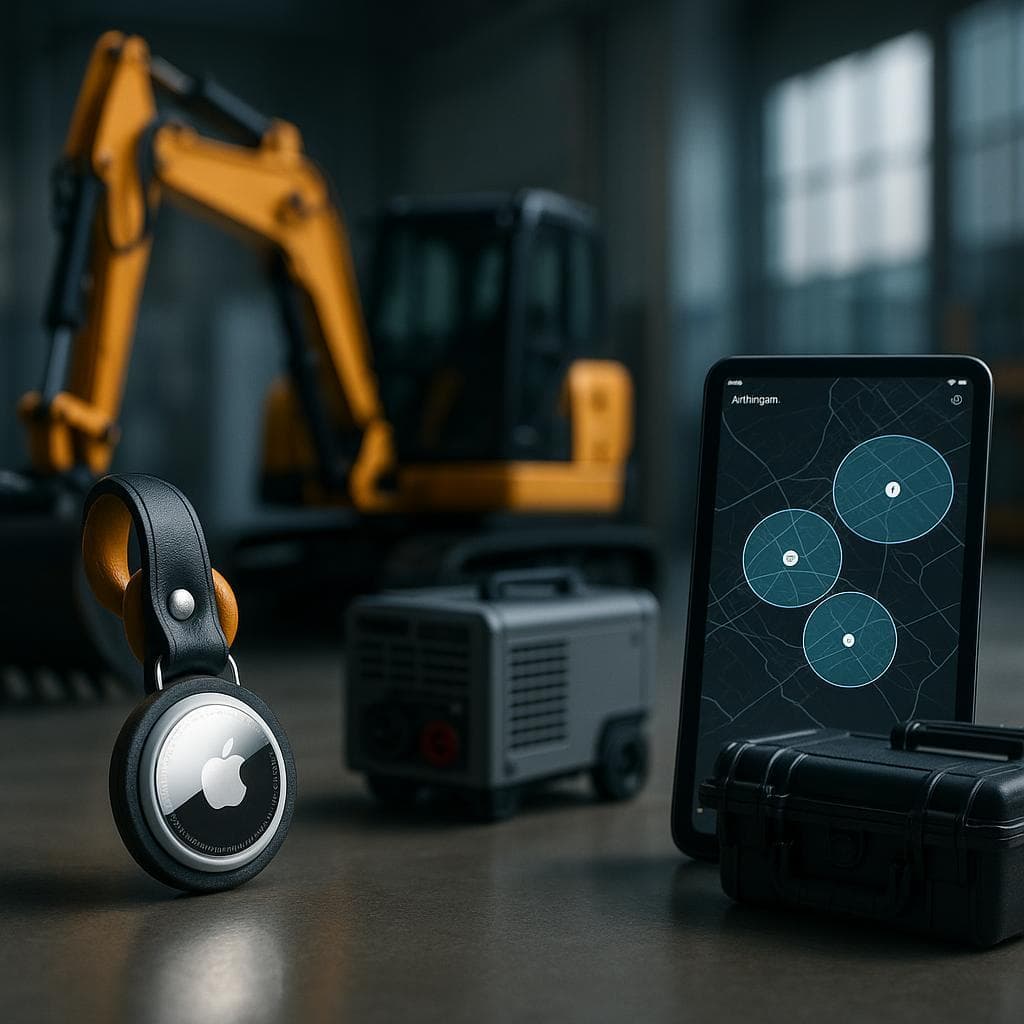
Most fleets do not pick one tracker. They put wired GPS on the handful of powered machines that move and earn revenue daily and need dispatch, a solar cellular unit on anything parked alone off-grid, and AirTags through Airpinpoint on everything else: attachments, generators, compressors, and tools that sit near people. That last bucket is the largest and the cheapest to cover, at $29 per tag and $11.99 per device per month with a yard-exit alert the second gear goes missing.

 Our Solution