Oil & Gas Equipment Tracking: From BOP Stacks to Frac Spreads to Turnaround Tool Cribs
A subsea BOP stack costs $45 million. A complete electric frac spread runs $50 million. A single ILI smart pig can cost $5 million. A turnaround contractor's portable instrument fleet is worth $250K-1M+.
All of it moves. Between well pads, between basins, between refineries, between pipe yards. Tracked by SAP work orders that show where equipment should be, spreadsheets that are three days stale, and the memory of whoever loaded the truck at 4 AM.
The oil and gas industry loses $1 billion annually to equipment theft alone (AESC), with recovery rates around 7%. That's before counting misplaced rental equipment accruing standby charges, contractor tools left behind during turnaround demobilization, and frac spread components that arrive at the wrong pad.
This page covers equipment tracking across all three sectors: upstream drilling and completions, midstream pipeline operations, and downstream refining and petrochemical. The equipment is different. The tracking problem is the same.
Upstream: Drilling and Completions Equipment
Blowout Preventers (BOPs)
BOPs are the most critical well control equipment on any drilling operation. They're also some of the most expensive, most heavily regulated, and most frequently moved assets in the industry.
What a BOP stack looks like in practice:
| Component | Function | Typical Value |
|---|---|---|
| Annular preventer | Rubber element seals around any pipe size or open hole | $50,000-200,000 |
| Pipe rams | Close around specific pipe diameter | Part of stack assembly |
| Blind rams | Seal open hole (no pipe) | Part of stack assembly |
| Blind shear rams (BSR) | Cut drill pipe and seal well — last line of defense | Part of stack assembly |
| Complete surface BOP stack (land) | Full assembly for onshore drilling | $100,000-500,000+ |
| Subsea BOP stack (deepwater) | 400-ton assembly for offshore drilling | Up to $45,000,000 |
| Acoustic backup control system | Emergency subsea BOP activation | ~$500,000 add-on |
Regulatory testing requirements make location tracking critical:
BSEE (Bureau of Safety and Environmental Enforcement) mandates pressure testing every 14 days under 30 CFR 250.737. API 53 recommends 21-day intervals. Function tests are required every 7 days for annular and pipe rams, every 14 days for shear rams. Each test requires a low-pressure hold (250-350 psi) followed by high-pressure, held for 5 minutes.
Miss a test window because you can't locate the BOP or its test equipment, and you're looking at a BSEE enforcement action. A failure investigation must begin within 120 days.
How BOPs move:
Between wells, a BOP requires 10-14 days of transit and servicing, with 4-8 days just for stack maintenance. Operators running dual BOPs cut transition time to 5-6 days, saving roughly $30 million per year in spread costs across 4 wells. That math only works if you know exactly where both stacks are and which one is ready for the next well.
Coiled tubing BOPs, snubbing BOPs, and workover BOPs are smaller, cheaper, and move faster between locations. A coiled tubing BOP might serve 3-4 wells per week, riding in a service truck between pads. At $20K-80K each, these are the BOPs most likely to end up at the wrong location or left on a completed well.
Where AirPinpoint fits:
Tag BOP transport skids, tool baskets, and the service trucks that carry auxiliary BOP equipment (test manifolds, accumulator bottles, BOP handling tools). For land operations, the AirTag on the BOP's transport skid shows which well pad or yard it's sitting in. During rig moves, geofence alerts confirm when the BOP arrives at the next location, without calling the trucking company.
Frac Spread Components
A complete frac spread is a $40-50 million mobile industrial plant that moves between well pads every few days to few weeks. A conventional diesel spread runs about $40M. Electric frac (e-frac) spreads push $50M+ including pad-side power generation.
What makes up a frac spread:
| Component | Description | Typical Count per Spread |
|---|---|---|
| Frac pumps | Quintuplex or triplex, 2,500-3,000 HP each | 12-20 units |
| Blender | Mixes proppant (sand) and chemicals with frac fluid | 1-2 units |
| Hydration unit | Prepares gel-based frac fluids before blending | 1 unit |
| Chemical additive unit | Meters friction reducers, biocides, scale inhibitors | 1 unit |
| Sand storage (Sand King) | 5-bin storage trailer, receives sand from missile trailers | 1-2 units |
| Missile trailers | Pneumatic sand hauling trailers that blow sand into Sand King | 4-8 trailers |
| Data van | Monitors treating pressure, rate, density in real time | 1 unit |
| Manifold trailer | Routes high-pressure fluid from pumps to wellhead | 1 unit |
| Wireline unit | Deploys frac plugs and perforating guns between stages | 1-2 units |
| Frac tree / frac stack | Temporary wellhead assembly rated for 10,000-15,000 psi during pumping | 1-2 per well |
| Treating iron / flow iron | High-pressure piping (1502 hammer unions, rated to 15,000 psi) | Dozens of joints |
The mobilization tracking problem:
When a frac spread mobilizes from one pad to the next, these components travel separately. Pump trucks drive in convoy. Missile trailers make round trips to the sand transload. The blender and data van move on their own schedules. Wireline shows up when the first stage is ready.
On a zipper frac or simul-frac operation (alternating or simultaneously pumping 2+ wells on the same pad), equipment from multiple spreads may overlap on one location. Whose pump is whose? Which wireline unit belongs to which crew?
Stage transition time between wireline and pumping operations is 20-45 minutes on a good day. If a component is missing or at the wrong pad, that transition stretches to hours while the rest of a $40M spread sits idle.
Treating iron deserves special attention:
Flow iron (the high-pressure piping connecting pumps to the wellhead) is subject to severe erosion from proppant flow. It requires recertification per API RP 100-1 and is tracked by serial number. Iron rated to 15,000 psi in 2-inch and 3-inch configurations gets moved, inspected, recertified, and redeployed continuously. Losing track of a joint means potentially running iron that's past its inspection window — or eating the cost of replacing iron you can't find.
Where AirPinpoint fits:
Tag high-value components (data van, wireline unit, blender) and transport vehicles. During pad-to-pad mobilization, the dashboard shows which components have arrived and which are still in transit. Geofence the new pad location and the old one. When the last piece of equipment leaves the old pad, you know demob is complete without driving out to check.
Wellhead Assemblies and Christmas Trees
Key distinctions an operator knows:
| Equipment | Purpose | Pressure Rating | Typical Value | Movement Pattern |
|---|---|---|---|---|
| Wellhead (casing head + tubing head) | Provides casing suspension, pressure seals, mounting point | Varies by casing program | $15,000-50,000 | Installed once, stays on well |
| Frac tree / frac stack | Temporary high-pressure assembly during completions | 10,000-15,000 psi (API 6A) | $50,000-150,000+ | Moves between wells |
| Production tree (Xmas tree) | Controls production flow after completion | 3,000-10,000 psi | $15,000-100,000+ | Installed semi-permanently |
| Subsea tree | Ocean floor production control assembly | 10,000-15,000 psi | $500,000-5,000,000+ | Installed for field life |
Frac trees are the tracking opportunity. They move from well to well as completions progress across a multi-well pad or between pads. A completion crew running 4-6 wells in sequence needs to know which frac tree is available, where it is, and whether it's been inspected since last use.
Major manufacturers (Cameron/SLB, Cactus Wellhead, Oil States, Dril-Quip, TechnipFMC) produce frac trees to API 6A specifications. Each tree has serialized components subject to pressure testing and dimensional inspection between deployments. Losing track of a frac tree means either delaying completions while you find it, or renting one at premium day rates.
Where AirPinpoint fits:
Tag frac trees during the completion campaign. As each well completes, the frac tree moves to the next. Geofence each well pad. The dashboard shows which tree is on which well, which is in transit, and which is back at the yard awaiting inspection.
Other Upstream Equipment Worth Tracking
| Equipment | Value Range | Why It Moves | Tracking Value |
|---|---|---|---|
| Wireline trucks and tools | $200,000-1M+ per unit | Between wells, between pads, to/from shop | High — $200-800/day rental if yours is lost |
| Coiled tubing units | $500,000-2M+ | Between wells for cleanout, milling, fishing | High — rig waiting on CT costs $15K-100K/day |
| Torque wrenches (hydraulic) | $5,000-25,000 | Between rigs, shops, well sites | Medium — specialized for casing/BOP bolting |
| Artificial lift equipment (rod pumps, ESP components) | $20,000-200,000+ per well | From warehouse to well, between wells | High — long lead times on ESPs |
| Separator packages | $30,000-150,000 | Between well pads during production testing | Medium — often left on completed wells |
| Hot oil trucks / stimulation equipment | $150,000-500,000 | Between wells for remedial work | High — seasonal demand creates shortages |
Midstream: Pipeline and Processing Equipment
Pipeline Intelligent Pigging (ILI)
In-line inspection is one of the highest-stakes equipment operations in the midstream sector. A single ILI smart pig tool can cost $5 million or more. If it gets stuck in a pipeline, the recovery cost is enormous and production revenue is lost for every hour the line is down.
ILI tool types:
| Tool Type | What It Detects | Approximate Tool Cost |
|---|---|---|
| MFL (Magnetic Flux Leakage) | Corrosion, metal loss, pitting | $1M-5M+ |
| UT (Ultrasonic Testing) | Cracks, stress corrosion cracking, wall thickness | $2M-5M+ |
| Caliper / geometry tool | Dents, deformations, ovality, buckles | $500K-2M |
| Combo tools (MFL + caliper) | Multiple inspection in one run | $3M-5M+ |
| Cleaning pigs (foam, cup, brush) | Debris, wax, scale, liquids | $500-5,000 each |
ILI run costs:
A typical ILI campaign costs approximately $33,000-35,000 per pipeline mile including chemical cleaning, tool run, and data analysis. A 15-mile pipeline segment costs $335,000-380,000 total ($210K-250K for cleaning, $25K-30K for disposal, $100K+ for the ILI run itself).
PHMSA requirements drive the schedule:
Under 49 CFR Part 192 (gas) and Part 195 (hazardous liquids), pipeline operators must perform ILI reassessments on integrity-managed segments typically every 5-7 years. Cleaning pig runs may happen annually. PHMSA's "Mega Rule" (2019) expanded these requirements to additional pipeline segments.
All records must be traceable, verifiable, and complete for MAOP (Maximum Allowable Operating Pressure) validation. That includes knowing where your ILI tools and their calibration equipment are.
Pig Launchers and Receivers (Pig Traps)
Pig launchers and receivers are pressure-containing vessels installed at pipeline endpoints to send and receive pigs. They're sized to pipeline diameter (6" to 42"+), available as bare barrels, skid-mounted assemblies with valves and blowdowns, or fully automated systems.
Components include the barrel, quick-opening closure, bypass tees, kicker valves, drain valves, pressure gauges, drip pan, and handling equipment (davit cranes, pig signalers).
These assemblies can be permanent installations or portable units that move between pipeline segments. Portable pig trap sets, particularly for cleaning campaigns across multiple pipeline segments, are the tracking opportunity. A cleaning contractor might deploy pig trap sets to 3-5 pipeline locations in a month.
Compressor Station and Processing Equipment
| Equipment | Value Range | Movement Pattern |
|---|---|---|
| Portable compressor packages | $200,000-2M+ | Between stations, temporary boost service |
| Dehydration units (glycol/TEG) | $100,000-500,000 | Between gas processing locations |
| Portable metering skids | $50,000-300,000 | Custody transfer, allocation metering |
| Emergency pipeline repair equipment | $50,000-200,000 per kit | Pre-positioned, moves to incidents |
| Hot tap machines | $30,000-150,000 | Between pipeline maintenance sites |
| Pipeline inspection instruments (UT thickness gauges, holiday detectors, CP survey equipment) | $5,000-60,000 each | Between pipeline crews and locations |
Where AirPinpoint fits for midstream:
Tag portable pig trap sets, ILI tool transport cases, inspection instrument cases, and temporary compression/dehydration equipment. Geofence compressor stations, pig launcher/receiver sites, and pipe yards. The integrity management team can see which inspection equipment is where without calling every crew supervisor in the field.
Downstream: Refinery and Petrochemical Turnaround Equipment
Turnaround Economics
A refinery turnaround (TAR) is the single largest maintenance expenditure a plant makes. Direct and indirect costs reach $100-200+ million per major turnaround. Delays cost $1 million or more per day in lost production. Planning cycles run 1-2 years. The turnaround itself lasts 30-60 days per unit.
Common turnaround types:
| Unit | Typical Cycle | Duration | Key Work |
|---|---|---|---|
| FCC (Fluid Catalytic Cracker) | 3-5 years | 30-45 days | Catalyst changeout, cyclone replacement, slide valve rebuild |
| Hydrocracker | 3-6 years | 35-50 days | Catalyst changeout, reactor internals inspection |
| CDU (Crude Distillation) | 4-6 years | 30-40 days | Tray replacement, heat exchanger bundle pulls |
| Coker | 3-5 years | 25-40 days | Drum decoking, structure inspection, switch valve work |
| Alkylation unit | 4-6 years | 20-35 days | Acid system work, exchanger repair |
During a turnaround, 1,500-2,000+ extra contractor workers flood the site. Budgets allocate millions for catalyst procurement alone. "Breaking iron" (loosening thousands of flanged bolted connections) starts the work. Corroded or seized bolts that break during removal are a major schedule risk and a standing order for more tooling.
Turnaround Contractor Equipment
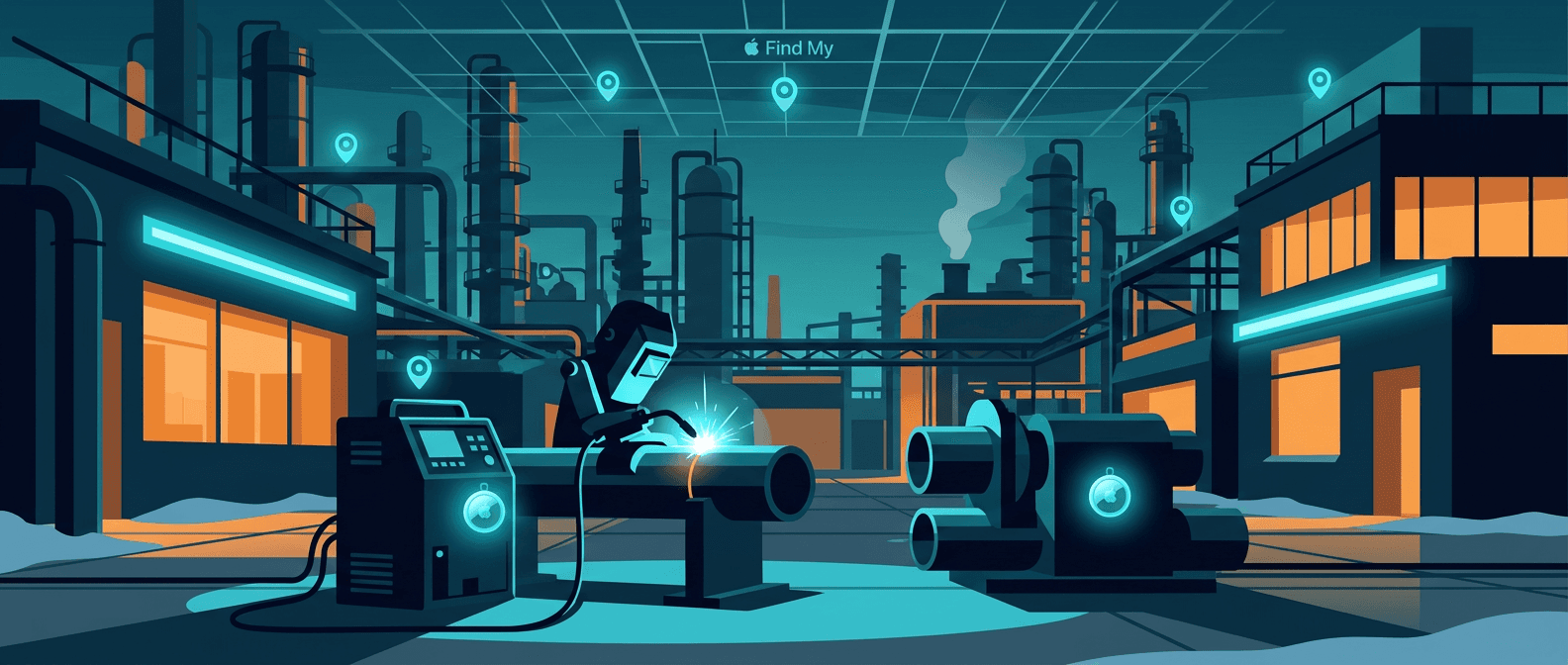
Specialty contractors serving Gulf Coast refineries deploy high-value portable instruments across multiple sites simultaneously. This is where most equipment tracking failures happen.
What turnaround contractors track (based on real operator data):
| Equipment Category | Examples | Typical Value per Unit |
|---|---|---|
| Pipe joining tools | Lokring hydraulic units, electro-fusion welders, orbital welders | $8,000-25,000 |
| Alignment systems | Fluke Rotalign, Easy-Laser XT770, SKF TKSA series | $15,000-40,000 |
| Calibration instruments | Ammonia sensor cal kits, gas detector calibration stations | $2,000-15,000 |
| Safety/detection | Freon detectors, 4-gas monitors, thermal cameras | $1,500-8,000 |
| NDT instruments | UT thickness gauges, borescopes, PMI/XRF analyzers | $3,000-60,000 |
| Heat treatment | Induction heaters, post-weld heat treatment (PWHT) controllers | $5,000-30,000 |
| Bolting equipment | Hydraulic torque wrenches, tensioners, pneumatic impact wrenches | $2,000-20,000 |
| Machining | Portable flange facing machines, pipe bevelers, bore welding equipment | $10,000-50,000 |
A typical specialty contractor with 50-100 pieces of portable equipment manages a fleet worth $250,000-1,000,000+, constantly in motion across a region.
What Actually Happens During a Turnaround
Understanding turnaround logistics explains why equipment tracking fails at every phase.
Mobilization (Week 1-2): The contractor mobilizes equipment from their main shop, other active job sites, and rental companies. Tools arrive at the plant over several days. Some go through the main gate with documentation. Some get dropped at the contractor laydown yard. Some ride in a technician's personal truck. Nobody has a complete picture of what's on site.
Execution (Weeks 2-8): Equipment spreads across the facility. A laser aligner might be in Unit 4 in the morning and Unit 12 by afternoon. Calibration kits get passed between shifts. A welder breaks down and gets sent for repair while a rental replacement arrives. The spreadsheet, if anyone is updating it, is three days behind reality.
Demobilization (Final Week): This is where equipment disappears. Crews are exhausted. The turnaround is running over schedule and over budget. Everyone wants to finish and leave. Equipment gets thrown into trucks without inventory. Some tools end up in the wrong truck, headed to the wrong site. Some get left in the plant and nobody realizes it until the next project needs them.
Contractors report that 60-70% of annual equipment losses occur during turnaround demobilization.
The Hazardous Area Reality
AirTags are NOT intrinsically safe. They do not carry ATEX, IECEx, or NEC Class I Division 1/2 certifications. They cannot be used in hazardous classified areas per NFPA 70 or IEC 60079.
Where AirTags work at a refinery or petrochemical plant:
- Contractor laydown yards and staging areas
- Tool cribs and equipment storage buildings
- Maintenance shops and fabrication areas
- Administrative offices and control rooms (most are non-classified)
- Parking lots and vehicle staging areas
- Equipment during transport between sites
- Warehouses and off-site storage
The contractor tracking use case fits because the core problem is knowing which SITE a piece of equipment is at, not its exact position within a process unit. Is the laser aligner at Dow Plaquemine or Westlake Lake Charles? Is the calibration kit still at Valero Memphis or did it come back to the shop?
Practical approach for equipment that enters classified areas:
- Tag the transport case, not the instrument. Most high-value instruments travel in Pelican cases. The case stays in the non-classified staging area while the instrument is in use.
- Tag the gang box. Contractor crews stage tools in gang boxes at the edge of the work area. The gang box lives in a non-classified laydown area.
- Track site-level location. For contractors managing equipment across multiple plants, knowing "this instrument is at the Dow St. Charles plant" is 90% of the value.
If you need tracking inside hazardous classified areas, look at Abeeway (ATEX/IECEx certified LoRaWAN trackers) or Teltonika (ATEX EYE beacons). These cost $200-500+ per device plus gateway infrastructure, and solve a different problem than multi-site equipment location.
Why SAP PM and Maximo Don't Solve This
SAP PM (Plant Maintenance) and IBM Maximo dominate maintenance management in oil and gas. They're excellent at what they do: work orders, PM schedules, parts inventory, equipment hierarchies, cost tracking.
They do not track real-time physical location.
The gap:
| What SAP/Maximo Knows | What SAP/Maximo Does NOT Know |
|---|---|
| Equipment master data and serial numbers | Which well pad or yard the equipment is on right now |
| Maintenance schedule and history | Whether it arrived at the new location after a rig move |
| Functional location (where it SHOULD be) | Actual GPS location (where it IS) |
| Cost center allocation | Whether rental equipment has been returned |
| Inspection/certification status | Whether it left the plant during turnaround demob |
The "Location" field in SAP is a static functional location hierarchy (Plant > Area > Unit > Position). It reflects where equipment is assigned, not where it physically sits. When a portable BOP test manifold gets borrowed from Compressor Station 4 and ends up at Well Pad 17, SAP still says "Compressor Station 4" until someone manually updates it. They won't.
Data fragmentation is the deeper problem. Maintenance data is scattered across SAP, SCADA, field inspection systems, contractor management platforms, and manual logs. A 2025 industry survey found that oil and gas operators consistently cite disconnected systems and delayed field reporting as top operational challenges. Data enters the system days after the event. By then, the equipment has moved again.
AirPinpoint doesn't replace SAP or Maximo. It adds the location layer they lack. When SAP says a BOP is due for its 14-day pressure test per BSEE 30 CFR 250.737, AirPinpoint shows you which pad it's on so you can dispatch the test crew.
Cost Analysis by Sector
Upstream: 40-Asset Drilling/Completions Fleet
Tracking frac trees, coiled tubing BOPs, wireline tools, torque wrenches, and calibration equipment across 5-10 active well pads.
| Approach | Year 1 Cost | Annual Ongoing | 3-Year Total |
|---|---|---|---|
| No tracking (status quo) | $30K-60K losses + $20K-50K standby charges | Same | $150K-330K |
| Cellular GPS trackers | $4K-8K hardware + $9.6K-24K/yr subs | $9.6K-24K + charging labor | $33K-80K |
| AirPinpoint | $1,160 AirTags + $5,756/yr subscription | $5,756/yr | $18,428 |
One day of rig standby waiting for a misplaced BOP component costs $15,000-100,000 depending on the rig. AirPinpoint pays for itself the first time it prevents a single standby event.
Midstream: 25-Asset Pipeline Contractor Fleet
Tracking ILI tool transport cases, portable pig traps, inspection instruments, hot tap machines, and CP survey equipment across pipeline maintenance sites.
| Approach | Year 1 Cost | Annual Ongoing | 3-Year Total |
|---|---|---|---|
| No tracking (status quo) | $15K-30K losses + $10K-20K in mileage/time searching | Same | $75K-150K |
| Cellular GPS trackers | $2.5K-5K hardware + $6K-15K/yr subs | $6K-15K + charging labor | $20K-50K |
| AirPinpoint | $725 AirTags + $3,598/yr subscription | $3,598/yr | $11,519 |
Downstream: 60-Asset Turnaround Contractor Fleet
Tracking electro-fusion welders, laser alignment systems, NDT instruments, calibration kits, and specialty hand tools across 5-10 refinery/petrochemical sites.
| Approach | Year 1 Cost | Annual Ongoing | 3-Year Total |
|---|---|---|---|
| No tracking (status quo) | $18K-27K losses + $5K-15K rentals | Same | $69K-126K |
| RFID at each plant | $15K-30K per site install + readers | $3K-5K maintenance | $100K-200K+ (6 sites) |
| Cellular GPS trackers | $6K-12K hardware + $14.4K-36K/yr subs | $14.4K-36K + charging labor | $35K-84K |
| AirPinpoint | $1,740 AirTags + $8,633/yr subscription | $8,633/yr | $25,899 |
The Charging Problem
This deserves emphasis because it's the operational killer for GPS trackers in oil and gas.
Cellular GPS trackers need recharging every 2-4 weeks. For a 60-device fleet, that's 15-30 charging sessions per week. During a turnaround, when crews are working 12-hour days, nobody has time to collect trackers, charge them, and reattach them. During frac operations running 24/7 pad-to-pad, the same problem applies.
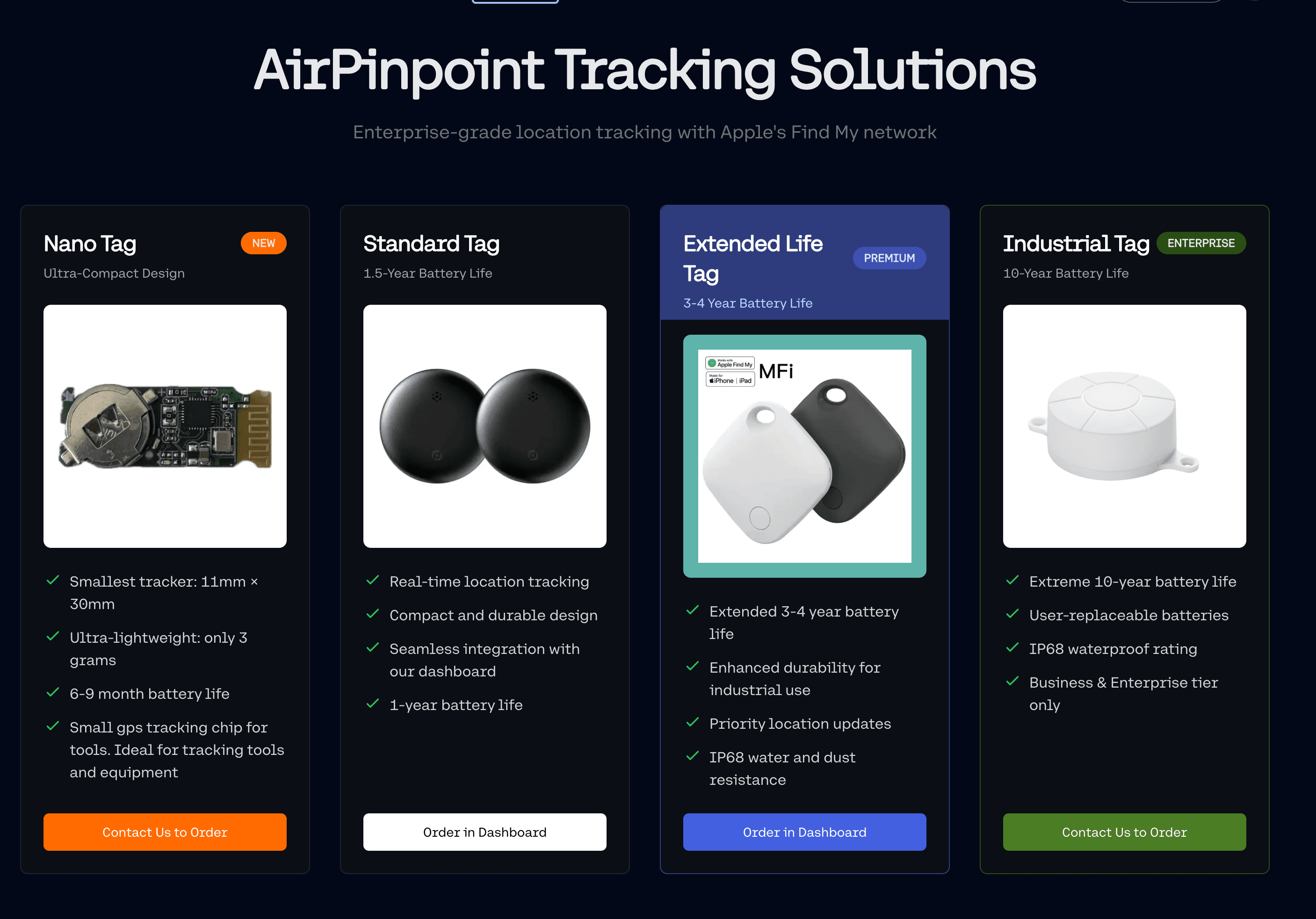
GPS trackers in oilfield environments die within weeks because nobody maintains them. AirTags run 12+ months on a CR2032 battery. Swap them during annual equipment calibration or PM cycles. Done.
Rental Equipment Tracking
The global oilfield equipment rental market is $25 billion (2023), projected to reach $40 billion by 2032. Halliburton, SLB, Baker Hughes, Weatherford, and dozens of regional companies rent everything from frac pumps to wireline tools.
Rental tracking pain points:
- Unbilled equipment: Industry audits consistently find rental equipment sitting at customer sites for months without appearing on any account. One documented case: a $5,000+ bulk tank at a customer site for 2.5 years, untracked.
- Demurrage / standby charges: Equipment held beyond the agreed rental period accrues daily charges. If you can't confirm when equipment returned, you pay until someone finds the paperwork.
- Mob/demob confusion: One-time mobilization charges get disputed when equipment moves between locations. Did it go to the rental yard and then back out, triggering a new mob charge? Or did it go directly between customer sites?
How AirPinpoint helps:
Tag rental equipment at arrival. Set a geofence for the rental company's yard. When the rental returns, the geofence trigger confirms it with a timestamp. If it hasn't returned three days after the job ends, the coordinator investigates before another $2,400+ in daily charges accumulates.
For rental companies themselves, AirPinpoint provides utilization visibility. Which assets are deployed? Which are sitting in the yard? Which have been at a customer site past the contracted period?
Regulatory and Compliance Context
Oil and gas equipment tracking intersects several regulatory frameworks. AirPinpoint isn't a compliance tool, but location data supports compliance workflows.
| Regulation | Relevance to Equipment Tracking |
|---|---|
| BSEE 30 CFR 250 Subpart G | BOP testing schedules require knowing where BOPs and test equipment are located |
| PHMSA 49 CFR 192/195 | Pipeline integrity management requires traceable, verifiable records of inspection equipment deployment |
| API 53 | BOP system testing intervals — equipment must be accessible on schedule |
| API 6A | Wellhead and frac tree equipment — serialized components tracked between deployments |
| API RP 100-1 | Treating iron (flow iron) inspection and recertification — track iron by serial number |
| DOT 49 CFR 172 | Frac chemical transport (HCl is UN1789, Class 8 Corrosive) — know where HAZMAT transport vehicles are |
| OSHA 29 CFR 1910/1926 | Safety equipment deployment and accountability — gas monitors, PPE inventories |
Location data from AirPinpoint provides supporting documentation. When BSEE asks about BOP test compliance, you can show where the BOP was on the test date. When PHMSA audits pipeline integrity records, you can document when ILI support equipment arrived and departed each pipeline segment.
Getting Started: 30-Day Rollout
Week 1: Tag High-Value Assets
Start with equipment worth $5,000+. For a typical operator or contractor, that's 20-40 instruments and assemblies. Attach AirTags to carrying cases, Pelican cases, gang boxes, tool cases, and transport skids. Total: $580-1,160 in AirTags.
Week 2: Set Up Geofences
Create geofences for every location your equipment travels to:
- Upstream: Active well pads, pipe yards, rig yards, service company yards
- Midstream: Compressor stations, pig launcher/receiver sites, meter stations, pipe yards
- Downstream: Each refinery and petrochemical plant, contractor laydown areas, fabrication shops
Name them with names your crews use. "Dow Plaquemine" not "Site 3." "Permian Pad 17" not "Location A." This takes 30 minutes in the AirPinpoint dashboard.
Week 3: Deploy During Active Operations
Use the next rig move, frac mobilization, or turnaround as a real-world test. Watch equipment flow on the dashboard. Note which assets arrive late, which get left behind, and which end up at the wrong location. This data alone justifies the investment.
Week 4: Expand and Integrate
Tag remaining equipment. Set up team access for project managers, dispatchers, and crew leads. Establish a check rhythm: coordinators review the dashboard at shift change. Export location reports to supplement SAP/Maximo records.
What AirPinpoint Does Not Solve
- No tracking inside hazardous classified areas. AirTags are not IS (intrinsically safe) certified.
- No process safety integration. No connection to DCS, SCADA, SIS, or process safety management systems.
- No worker tracking. Equipment only, not personnel mustering or man-down detection.
- Remote locations with no human traffic. Unmanned wellheads, remote pipeline ROWs, and offshore platforms without regular personnel will have limited Find My network coverage. Coverage improves with any iPhone-carrying human traffic.
- Real-time precision inside large facilities. AirPinpoint provides site-level accuracy (which plant, which yard, which pad) rather than unit-level accuracy within a facility.
The Bottom Line
Oil and gas equipment is expensive, heavily regulated, constantly moving, and tracked by systems that were never designed for physical location.
SAP knows your BOP needs a pressure test. It doesn't know which pad it's on. Your pipeline integrity plan requires ILI on a 5-year cycle. But the ILI support equipment is somewhere between three pipeline spreads. The frac spread mobilized to the new pad, except two missile trailers and the wireline unit are still at the old location. The turnaround contractor's $25,000 laser aligner is sitting in a laydown yard at a plant that finished its TAR two weeks ago.
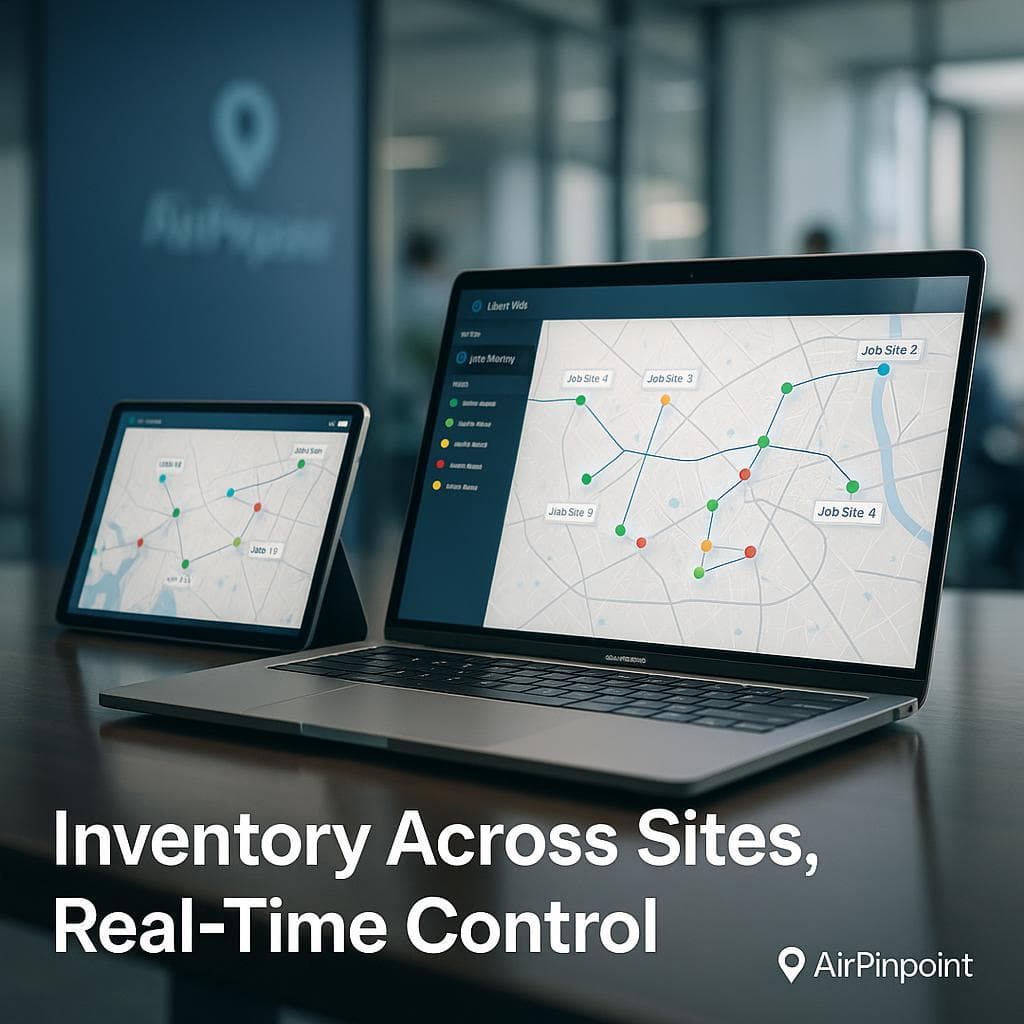
For less than the cost of one day of rig standby, AirPinpoint gives you a live map of every tagged asset across every well pad, pipeline spread, compressor station, and refinery site you operate. Geofence alerts catch equipment that doesn't arrive or doesn't leave. Location history provides the accountability paper trail that spreadsheets and phone calls never could.
No charging. No infrastructure. No worker participation required. CR2032 batteries and the Apple Find My network that's already on the iPhones your crews carry every shift.
Start tracking your oilfield equipment across every well pad, pipeline, and plant site.
 Our Solution