Hunting & Outdoor Gear Tracking: How Outdoor Brands Manage High-Value Inventory
The US hunting equipment market is worth $16.8 billion. Premium optics run $1,000-$9,000. Thermal scopes cost $3,000-$9,000. Technical packs sit at $300-$600. A single SKU of high-end binoculars can represent $50,000+ in warehouse inventory.
Outdoor brands ship this gear constantly. To wholesale partners, retail accounts, trade shows, demo programs, influencers, field testers, and guide outfitters. Every shipment is a tracking problem. And the industry's current solution is mostly spreadsheets, honor systems, and hoping things come back.
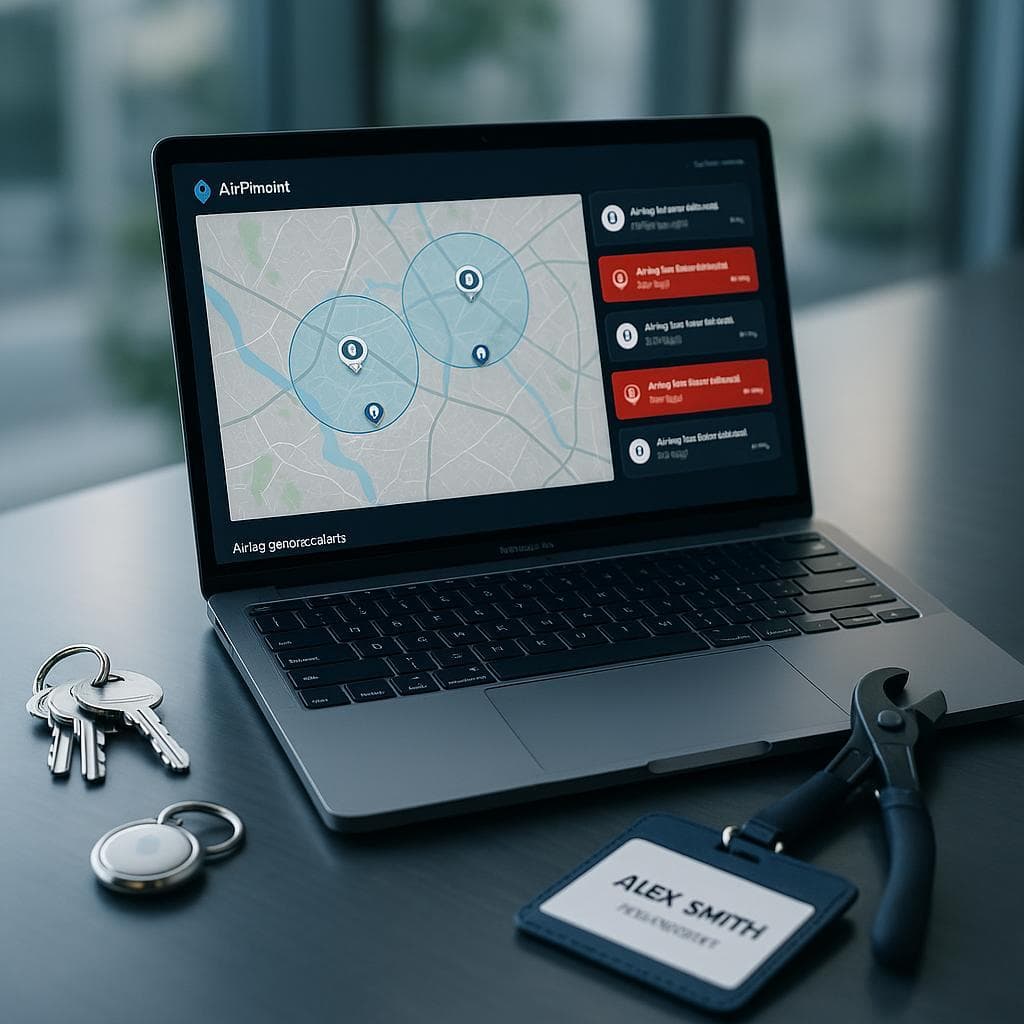
This page covers how AirTag-based tracking solves inventory visibility for hunting and outdoor gear companies across warehouses, demo programs, trade shows, and wholesale distribution.
The Outdoor Gear Inventory Problem
What Gets Lost
Outdoor gear companies lose inventory in predictable ways. The categories vary, but the pattern is consistent.
| Loss Channel | What Happens | Typical Annual Cost |
|---|---|---|
| Demo/loaner programs | Units sent to field testers, guides, and influencers returned late or never | 10-20% of demo inventory value |
| Trade shows | Display units, samples, and demos lost during setup/teardown at SHOT Show, Outdoor Retailer | 2-5% of shipped show inventory |
| Wholesale shipments | Disputed deliveries, cases that arrive short | Per-incident claims of $1,000-$10,000+ |
| Warehouse shrinkage | Internal theft, miscounts, misplaced inventory | 1-3% of warehouse value (industry average) |
| Field tester rotation | Multi-stop demo programs where units skip a stop or disappear mid-rotation | Lost tracking visibility after first handoff |
For a brand shipping $500,000 in demo and trade show inventory per year, even a 10% loss rate is $50,000. That's product cost alone, not including the sales opportunities missed when a demo unit isn't available.
Why Outdoor Gear Is Hard to Track
High value per unit, low unit count. A thermal scope manufacturer doesn't ship 10,000 units to a trade show. They ship 30-50 demo units, each worth $3,000-$9,000. Traditional warehouse management systems are built for high-volume SKUs, not for tracking 50 individual serial-numbered units across 15 different locations.
Gear travels through many hands. A single demo binocular might go from the warehouse to a trade show in Las Vegas, then to a field tester in Montana, then to an influencer in Colorado, then back to the warehouse. Each handoff is a point where tracking breaks down.
Remote and distributed locations. Outdoor industry partners are spread across the country. Guide outfitters in Alaska, hunting lodges in Texas, retail shops in small towns. Shipments go to places where staff may not prioritize returning loaner gear on schedule.
Seasonal demand spikes. Hunting season, trade show season (SHOT Show in January, Outdoor Retailer in June), and holiday wholesale orders all hit at once. Inventory visibility matters most when volume is highest and staff is busiest.
High-Value Gear Categories Worth Tracking
Not every item in your catalog needs an AirTag. Focus tracking on gear where a single lost unit costs more than a year of tracking service.
Optics ($500-$9,000+)
| Product Type | Price Range | Why Track |
|---|---|---|
| Binoculars (premium) | $500-$3,500 | Top demo/loaner request, frequently unreturned |
| Rifle scopes (high-end) | $800-$3,000 | Serial-numbered, high resale value |
| Thermal scopes | $3,000-$9,000 | Most expensive category, small and portable |
| Thermal monoculars | $1,500-$4,000 | Easy to misplace, high demand |
| Rangefinders (premium) | $400-$800 | Small size makes them easy to lose in transit |
| Spotting scopes | $1,000-$3,500 | Bulky but high value, trade show staple |
Optics are the highest-priority tracking category. They're expensive, small enough to disappear, and constantly circulating through demo programs. A single lost thermal scope at $5,000 pays for 34 months of tracking on that unit.
Technical Packs and Bags ($200-$600)
Hunting packs are the second most common demo category. Brands send packs to guides, hunting media, and field testers for multi-week evaluations. These packs travel to remote locations and get returned (or not) months later.
Placement: AirTag in an internal zippered pocket. The tester doesn't need to know it's there, and it won't affect the product evaluation.
Trail Cameras and Electronics ($150-$1,000)
Trail cameras are among the most stolen items in hunting. They sit unattended in the field for weeks or months. For brands managing demo fleets of trail cameras, tracking provides accountability throughout the loaner cycle.
Treestands and Blinds ($200-$2,000)
Climbing stands, hang-on stands, and ground blinds are bulky, seasonal, and frequently shipped to shows and retailers. They're not high-theft items, but they get left behind at trade shows and demo events.
Apparel Systems ($300-$1,500 per system)
Premium hunting clothing systems (base layer through outer shell) from brands like Sitka, First Lite, and Kuiu run $300-$1,500 for a full kit. Wholesale shipments of apparel represent significant inventory value in compact, easy-to-lose cartons.
Demo Program Tracking
The Demo Program Problem
Every outdoor brand runs some version of a demo or field-testing program. The workflow looks like this:
- Select 20-50 units of a new product for field evaluation
- Ship to 20-50 field testers, guides, influencers, and media contacts
- Wait 4-12 weeks for testing
- Request return of demo units
- Chase non-returns via email, phone, and eventually write-offs
Step 5 is where most brands spend disproportionate time. A product manager sending follow-up emails to 15 testers who haven't returned gear is not a good use of a $100K+ salary.
How Tracking Changes the Workflow
With AirTags on every demo unit:
Ship with visibility. Tag each unit before it leaves the warehouse. Name it descriptively: "Thermal Bino Demo - Sarah Chen - Ship 3/15." You know exactly when it arrives at the tester's location.
Monitor the demo period. Check the dashboard weekly. Units that haven't moved in 6+ weeks after the demo period ended are candidates for a return reminder. You can see this at a glance instead of cross-referencing a spreadsheet.
Verify returns. When a tester says "I shipped it back yesterday," you can confirm whether the unit is actually in transit or still at their house. This eliminates the "he said, she said" of demo returns.
Multi-stop rotations. Some brands run rotation programs where one demo unit goes to Tester A for 4 weeks, then Tester B, then Tester C. Tracking confirms each handoff. If the unit stalls at Tester B for 8 weeks instead of 4, you see it immediately.
Demo Program ROI
| Metric | Without Tracking | With Tracking |
|---|---|---|
| Demo units shipped/year | 200 | 200 |
| Average unit value | $1,200 | $1,200 |
| Return rate | ~80% | ~95% |
| Units lost/year | 40 | 10 |
| Annual loss | $48,000 | $12,000 |
| Tracking cost (200 units) | $0 | $34,576 |
| Net savings | - | $1,424 (Year 1) |
Year 1 is roughly break-even because of hardware costs. Year 2 and beyond save $36,000+ net annually because AirTags are already deployed and the only cost is the monthly subscription plus $3/year battery replacements.
Trade Show Equipment Tracking
The SHOT Show Problem
SHOT Show is the largest trade event in the hunting and outdoor industry. 55,000+ attendees at the Venetian Expo in Las Vegas. Brands ship pallets of product samples, display units, functional demos, and booth equipment. A mid-size optics brand might ship $100,000-$200,000 in product to a single show.
The logistics chain is long: warehouse to freight carrier to convention center to booth to teardown to freight carrier to warehouse. Every handoff is a loss opportunity. Display units walk off during the show. Samples get left behind during teardown. Freight comes back short.
Tracking Through the Show Lifecycle
Pre-show (2-4 weeks out). Tag every display unit and sample before packing. Create an inventory list in Airpinpoint with clear naming: "SHOT 2026 - Thermal Scope Display #1," "SHOT 2026 - Bino Sample Kit A."
Freight in transit. Track cases from your warehouse to Las Vegas. Verify arrival at the convention center. If a case gets rerouted or delayed, you see it before setup day.
During the show. Set a geofence around the Venetian Expo complex. Any tagged item that leaves the building triggers an alert. Display units that "walk away" during show hours get flagged within the hour, on a show floor packed with phones.
Teardown and return. This is where most losses happen. The show ends, booth crews tear down fast, and boxes get mixed up between exhibitors. Tracking confirms every unit is packed and shipped. When freight arrives back at your warehouse, you verify the full inventory returned.
Other Key Shows
| Show | When | Typical Booth Inventory Value |
|---|---|---|
| SHOT Show | January, Las Vegas | $50,000-$200,000+ |
| Outdoor Retailer | June, Salt Lake City | $30,000-$150,000 |
| ATA Show (archery) | January, Indianapolis | $20,000-$100,000 |
| DSC Convention | January, Dallas | $30,000-$100,000 |
| ICAST (fishing) | July, Orlando | $20,000-$80,000 |
Brands attending 3-5 shows per year ship the same demo inventory repeatedly. Tracking the same units across multiple shows gives you a complete chain of custody for your most valuable samples.
Warehouse and Distribution Tracking
Warehouse Inventory Visibility
For brands managing inventory in their own warehouse or through a 3PL, AirTags provide a supplementary tracking layer on high-value items. This isn't a replacement for your WMS. It's an independent check.
Tag individual units of your highest-value SKUs. A warehouse with 100 thermal scopes in stock ($300,000-$900,000 in value) benefits from knowing those specific units haven't left the building unauthorized.
Geofence the warehouse. Any tagged item that crosses the boundary outside of shipping hours triggers an alert. This catches internal theft, the largest source of retail shrinkage at 28.5% of total losses according to the National Retail Federation.
Wholesale Shipment Verification
When you ship a $25,000 order of optics to a retail partner, disputes about short shipments cost time and money. An AirTag in the case provides independent verification that the shipment arrived at the destination.
This is especially valuable for:
- New retail accounts where you don't have an established trust relationship
- International shipments with longer transit times and more handoff points
- High-value single-case shipments where one case contains $10,000-$50,000 in product
- Consignment inventory sitting at a retailer's location that you still own
Guide Outfitter and Rental Programs
Hunting outfitters and guide services operate in a different model. They own gear that clients use, often in remote locations. A guide outfitter in Montana might manage:
- 20-30 high-end packs ($300-$600 each)
- 10-15 spotting scopes and binoculars ($1,000-$3,500 each)
- Satellite communicators, GPS units, trail cameras
- Treestand and blind inventory across multiple hunting areas
- Camp equipment distributed across 3-5 remote camp locations
Where AirTags Work for Outfitters
AirTags update when an iPhone passes within Bluetooth range. For guide outfitters, this means:
Works well: Lodge and base camp (staff iPhones), trailheads (hiker and hunter traffic), towns and supply stops, vehicle travel between sites.
Works intermittently: Hunting camps with cell service where guides carry iPhones. Updates come when guides are in camp, not when gear is cached at a glassing point on a ridge.
Doesn't work: Deep backcountry with zero foot traffic. A treestand 5 miles from the nearest trail won't update until someone with an iPhone passes within 200 feet.
For outfitters, the value is tracking gear between seasons and between camp locations, not real-time tracking during a hunt. When you break down camp in November and move 30 packs and 15 optics to winter storage, tracking confirms everything arrived. When you set up for spring bear season and distribute gear across three camps, you know which camp has what.
Cost Analysis
Tracking a 150-Unit Outdoor Gear Fleet
A mid-size hunting gear brand tracking demo inventory, trade show equipment, and high-value warehouse stock:
| Item | Cost |
|---|---|
| AirTags (150 x $29) | $4,350 |
| Monthly service (150 x $11.99) | $1,798.50/mo |
| Battery replacement (150 x $3/year) | $450/yr |
| Annual cost | $21,582 |
| Monthly cost | $1,799 |
What $21,582 Prevents
| Loss Type | Units Prevented | Value Saved |
|---|---|---|
| Demo non-returns (15 units @ $1,500 avg) | 15 | $22,500 |
| Trade show shrinkage (5 units @ $2,000 avg) | 5 | $10,000 |
| Warehouse theft deterrence | Varies | $5,000-$15,000 |
| Total prevented loss | $37,500-$47,500 |
The tracking system pays for itself 1.7-2.2x in the first year. The math gets better in subsequent years when you're only paying the monthly subscription and battery costs ($22,032/year) against the same prevented losses.
Coverage Limitations: An Honest Assessment
AirTags use the Apple Find My network. They update when an iPhone passes within Bluetooth range (~200 feet). This works differently depending on where your gear is.
| Location Type | Update Frequency | Coverage Quality |
|---|---|---|
| Warehouse/office | Every few minutes | Excellent |
| Urban retail locations | Every 5-30 minutes | Excellent |
| Trade show venues (55,000+ attendees) | Near-continuous | Excellent |
| Trailheads and popular campgrounds | Every 1-4 hours | Good |
| Hunting lodges and base camps | Every 1-6 hours | Good |
| Small towns and rural areas | Every 2-12 hours | Moderate |
| Remote hunting camps (cell service) | When staff with iPhones are present | Intermittent |
| Deep backcountry, no trails | Rarely or never | Poor |
For outdoor brands, this coverage profile is fine. Your gear spends the vast majority of its lifecycle in warehouses, shipping networks, trade show floors, retail locations, and testers' homes. All of those locations have dense iPhone coverage. The backcountry gap matters for individual hunters tracking their own gear, but not for a brand managing inventory flow.
Implementation for Outdoor Gear Companies
Phase 1: Demo and Loaner Inventory (Week 1)
Start with the gear that leaves your building and may not come back.
- Tag every unit in your demo program (optics, packs, electronics)
- Name each unit with product name and current assignee
- Geofence your warehouse
- Create a dashboard view filtered to demo inventory
This immediately gives you visibility into your highest-risk, highest-value circulating inventory.
Phase 2: Trade Show Inventory (Before Your Next Show)
Tag every display unit, sample, and demo product that ships to shows. Set up a geofence at the venue. Track freight both directions.
Phase 3: Warehouse High-Value SKUs (Week 3-4)
Tag individual units of your most expensive SKUs in warehouse stock. Focus on items over $1,000 per unit where a single theft justifies the tracking cost.
Phase 4: Wholesale Shipment Verification (Ongoing)
Include AirTags in high-value shipments to retail partners and wholesale accounts. Use as an independent verification layer alongside standard shipping tracking.
Why Outdoor Brands Choose Airpinpoint
The gear is already expensive. A $11.99/month tracking cost on a $3,000 thermal scope is 0.4% of the product value per month. The alternative is hoping it comes back from the field tester.
Demo programs are the core use case. Outdoor brands live and die by field testing and influencer programs. Tracking demo inventory isn't optional when you're shipping $200,000+ in loaner gear per year.
Trade shows are predictable loss events. Every brand that exhibits at SHOT Show or Outdoor Retailer has a "trade show shrinkage" number. Tracking reduces that number to near zero.
No charging, no hardwiring. GPS trackers need power. AirTags run for a year on a coin battery. For gear that sits in a warehouse for months, then ships to a trade show, then goes to a field tester, then comes back, a device that requires zero maintenance is the only practical option.
Scale without complexity. Whether you're tracking 50 demo optics or 500 units across demo, trade show, wholesale, and warehouse programs, the dashboard works the same way. Filter by category, location, or assignee. Set geofences. Get alerts.
Outdoor gear companies that rely on "send it out and hope it comes back" know the real cost: lost demo units, trade show shrinkage, disputed shipments, and write-offs that add up to 5-15% of circulating inventory value per year. Airpinpoint replaces hope with data.
 Our Solution