
Event Company Equipment Tracking: The Complete Guide for Rentals & Production
The global event industry reached $1,477 billion in 2024, with the U.S. market valued at $407 billion. Behind every wedding, corporate conference, and concert is a logistics operation moving thousands of dollars in equipment between venues, often on tight timelines with minimal security.
The American Rental Association estimates that over $1 billion worth of equipment is stolen from rental companies annually. With recovery rates below 7% without tracking, event companies face a constant battle against shrinkage, theft, and the chaos of multi-venue operations.
This guide covers everything event professionals need to know about tracking equipment, from AV gear to tent structures.
The Event Equipment Tracking Challenge
Market Scale and Equipment Values
The event rental industry represents a massive equipment investment:
| Segment | Market Value |
|---|---|
| U.S. event industry total | $407 billion |
| Event rental market | $20-23 billion |
| Corporate events (% of market) | 35% |
| Outdoor equipment (tents, staging) | 41% of rentals |
| Furniture rentals | 28% of rentals |
Equipment Values at Risk
A single event can deploy tens of thousands in equipment:
AV Equipment:
| Equipment Type | Daily Rental | Purchase Value |
|---|---|---|
| DJ equipment | $50-500 | $5,000-50,000+ |
| Professional lighting rig | $200-1,500 | $10,000-100,000+ |
| Sound system | $100-300 | $5,000-25,000+ |
| LED video wall (per panel) | $500-2,000 | $3,000-15,000+ |
| Projectors (high-lumen) | $200-800 | $5,000-50,000+ |
Event Infrastructure:
| Equipment Type | Rental Range | Replacement Value |
|---|---|---|
| Staging (per event) | $300-10,000+ | $10,000-100,000+ |
| Tent packages | $500-5,000+ | $5,000-50,000+ |
| Dance floors | $200-1,000 | $3,000-15,000+ |
| Generators | $150-500/day | $2,000-20,000+ |
| Tables/chairs (bulk) | $5-15 each | $50-200 each |
A large corporate event or wedding can have $50,000-$200,000+ in rental equipment on-site.
The Theft Crisis
The American Rental Association has labeled equipment theft a "crisis" for the industry:
| Statistic | Value |
|---|---|
| Annual equipment theft (industry-wide) | $1 billion+ |
| ARA member theft losses | $100 million+ |
| Recovery rate without tracking | <7% |
| Average shrinkage rate | 1.6% of inventory |
| Acceptable shrinkage target | 1-2% |
Where Equipment Disappears
Event equipment loss happens through multiple channels:
- Venue confusion - Left at wrong venue, loaded on wrong truck
- Client non-returns - Equipment kept after event, claimed "never received"
- Theft during events - Opportunistic theft from unsecured areas
- Subcontractor issues - Equipment borrowed and not returned
- Load-out chaos - Items missed during breakdown
- Warehouse shrinkage - Internal theft or misplacement
The Multi-Venue Challenge
Unlike other industries, event companies face unique tracking challenges:
- Equipment moves between dozens of venues weekly
- Multiple events on the same day with shared inventory
- Subcontractors and crews handling equipment
- Overnight storage at venues between setup and event
- Equipment co-mingled with venue or client items
- Rapid turnaround times leaving little room for inventory checks
Event Industry Tracking Solutions
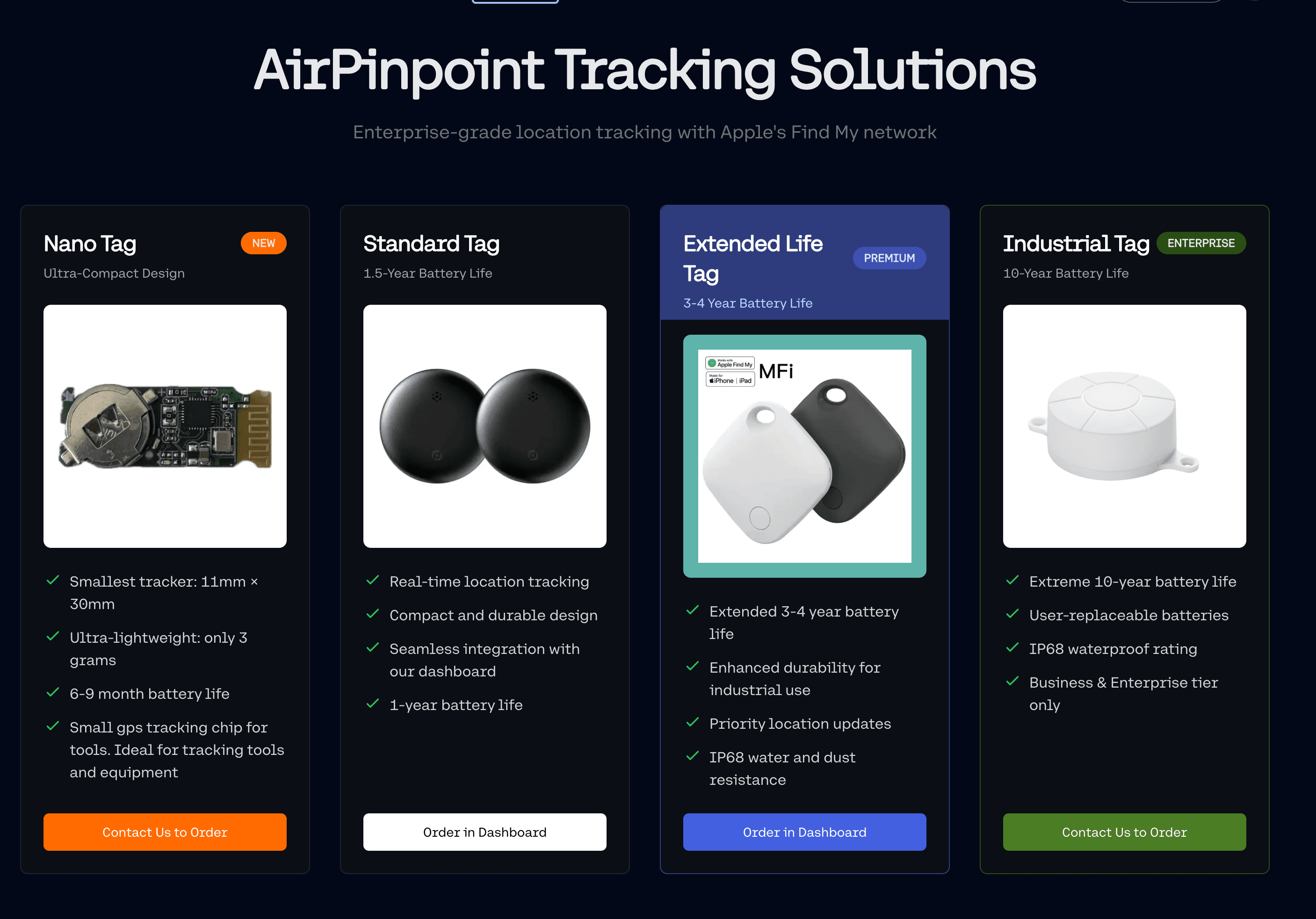
Apple AirTags for Event Equipment
AirTags provide affordable tracking for event operations:
Advantages:
- $29 per tag, no Apple subscription; Airpinpoint adds a monthly subscription for business features
- Works in crowds (events = iPhone density)
- 1+ year battery life
- Precision Finding for locating cases in warehouses
- Team sharing through Airpinpoint
Best Placement Locations:
- Inside speaker cabinets
- Hidden in lighting case foam
- Attached to tent poles (internal)
- Inside staging frame tubes
- Under furniture cushions
- In generator compartments
- Inside AV rack cases
Considerations:
- Anti-stalking alerts on iPhones (hide tags well)
- Limited in remote venues with few Apple devices
- Not real-time GPS: location updates near Apple devices
GPS Trackers for High-Value Assets
For generators, trailers, and staging:
| Device Type | Monthly Cost | Best For |
|---|---|---|
| Teltonika TAT240 | $15-40 | Generators, trailers |
| LandAirSea Overdrive | $20-30 | Vehicles, large equipment |
| Optimus 2.0 | $25-35 | Long-term deployments |
| Bouncie | $8-15 | Fleet vehicles |
GPS Advantages:
- Real-time tracking
- Geofencing alerts
- Works in remote areas (cellular coverage)
- Tamper detection available
GPS Disadvantages:
- Monthly subscription costs
- Battery life (days to weeks)
- Larger form factor
- Higher per-unit cost
Event Rental Management Software
For a fuller comparison of these platforms, including AV rental software, see event rental management software compared.
Major Platforms:
| Platform | Best For | Key Features |
|---|---|---|
| Goodshuffle Pro | Event rental companies | Inventory, quotes, contracts |
| EZRentOut | Equipment checkout | Barcoding, QR scanning |
| Rentman | European/global | Crew + equipment scheduling |
| Point of Rental | Large operations | Enterprise-level, integrations |
| Flex (by Point of Rental) | Smaller operations | Simplified workflow |
| Booqable | Online rentals | E-commerce focus |
| RentalWorks | AV specialists | Production-focused |
Essential Features:
- Barcode/QR scanning for check-out
- Photo documentation at delivery/pickup
- Conflict detection (double-booking)
- Maintenance scheduling
- Customer history and credit holds
- Integration with accounting software
Barcode and QR Systems
For inventory management:
Implementation Approach:
- Label all equipment with unique barcodes/QR codes
- Scan at warehouse departure
- Scan at venue arrival (delivery confirmation)
- Scan at event completion
- Scan at warehouse return
Benefits:
- Clear chain of custody
- Proof of delivery/pickup
- Instant inventory counts
- Maintenance trigger tracking
Building Your Event Tracking System
Tier 1: Small Event Companies ($500-$2,000)
For operations under $100,000 in equipment:
- AirTags in all high-value cases ($29 each)
- Airpinpoint subscription for team tracking
- Smartphone-based barcode scanning (free apps)
- Google Sheets or Airtable for inventory
- Photo documentation workflow
- Basic equipment rental software (Booqable, etc.)
Investment: $500-2,000 What this actually buys you: location on the cases that hurt most to lose, and a timestamped photo trail for disputes. It does nothing for consumables or for anything you chose not to tag, which at this tier is most of your inventory by item count.
Tier 2: Mid-Size Operations ($2,000-$10,000)
For $100,000-$500,000 in equipment:
- AirTags in all cases and high-value items
- GPS trackers on generators and trailers
- Event rental software (Goodshuffle Pro, EZRentOut)
- Barcode/QR labeling system
- Tablet-based check-in/check-out stations
- Equipment condition documentation
- Insurance with inland marine coverage
Investment: $2,000-10,000 + software subscriptions What this actually buys you: tag coverage across cases, plus GPS on the assets that spend nights in unlit lots where a Find My tag can go quiet for days, plus a scan log that answers who had what. The scan log is what wins disputes; the tags are what find things.
Tier 3: Large Rental Operations ($10,000+)
For $500,000+ in equipment:
- Comprehensive AirTag deployment
- GPS fleet tracking for all vehicles
- Enterprise rental management software
- RFID gates at warehouse
- Real-time inventory dashboard
- Dedicated inventory manager
- Subcontractor tracking requirements
- Automated maintenance scheduling
Investment: $10,000-50,000+ initial + ongoing What this actually buys you: an inventory position you can audit rather than estimate. At this scale the win is less about any single recovery and more about knowing, on a Tuesday, what you own and where it is, which is the prerequisite for ever holding a subcontractor or a venue accountable.
Department-Specific Tracking
AV and Lighting Equipment
High-Risk Items:
- Wireless microphones and IEMs
- Moving head lights
- LED panels and processors
- Audio consoles
- Projectors and lenses
Tracking Approach:
- AirTags in every road case
- Serial number photography
- Firmware/password protection on digital equipment
- Color-coded cases by category
- Numbered seal system on cases
Tent and Staging
Tracking Challenges:
- Components spread across large areas
- Multiple crews handling setup
- Weather exposure
- Extended installation periods
Tracking Approach:
- GPS tracker on each trailer
- AirTags on pole bags and accessory cases
- Inventory counts before leaving site
- Photo documentation of complete setup
- Component counting (stakes, poles, etc.)
Furniture and Décor
High-Loss Categories:
- Chairs (small, portable, stackable)
- Linens (often left behind or damaged)
- Centerpieces and décor items
- Lounge furniture cushions
Tracking Approach:
- Count verification at delivery and pickup
- Numbered/labeled chairs
- Linen bags with counts
- Photo inventory of décor placement
- Client sign-off on delivery counts
Catering and Kitchen Equipment
Equipment Types:
- Chafing dishes and serving equipment
- Commercial cooking equipment
- Refrigeration units
- Smallwares (utensils, serving pieces)
Tracking Approach:
- Case counts rather than individual items
- Sealed, numbered equipment kits
- Pre/post event inventory photos
- Color-coded by event
Operational Best Practices
Pre-Event Checklist
- Pull inventory and verify all items present
- Scan/photograph each case leaving warehouse
- Document equipment condition before loading
- Verify delivery address and contact info
- Share tracking links with team leads
- Confirm venue access timing
On-Site Protocol
- Scan items as they're unloaded
- Photo document placement and setup
- Secure high-value items in locked cases when not in use
- Designate staging area for equipment
- Maintain visual control during event
- Check AirTag locations periodically
Post-Event/Load-Out
- Walk the venue systematically before departing
- Count all cases against delivery manifest
- Photo document load-out completion
- Scan items as loaded on truck
- Get client signature on condition report
- Check AirTag locations before leaving
Warehouse Return
- Scan all items returning
- Inspect for damage immediately
- Flag items needing maintenance
- Update inventory in real-time
- Clean and prep for next event
- Investigate discrepancies same day
Insurance Considerations
Coverage Types for Event Companies
| Insurance Type | Typical Cost | Coverage |
|---|---|---|
| General liability | $500-1,100/year | Injury, property damage |
| Equipment/Inland marine | 1-3% of value/year | Theft, damage, loss |
| Commercial auto | $1,200-2,400/year | Vehicle, contents in transit |
| Per-event coverage | $66+ per event | Single-event protection |
Insurance Best Practices
- Document equipment values with receipts and appraisals
- Photograph inventory annually for records
- Maintain serial number database for claims
- Require client COI for large events
- Review coverage as inventory grows
- Consider umbrella policy for high-value deployments
Claim Process Tips
When equipment is stolen or damaged:
- File police report immediately (required for theft claims)
- Document with photos and written description
- Pull tracking data for timeline
- Gather witness statements if applicable
- Submit claim with all documentation
- Track replacement quotes for valuation
The Airpinpoint Advantage for Event Companies
For event operations using AirTags across equipment:
Multi-Venue Visibility
- Track all equipment from one dashboard
- See which assets are at which venues
- Movement alerts when equipment leaves expected locations
- Location history for dispute resolution
Team Coordination
- Share tracking with entire crew (beyond Apple's 5-person limit)
- Real-time visibility for production managers
- Delivery confirmation without phone calls
- Warehouse staff can verify equipment location
Shrinkage Reduction
- Deter theft with known tracking
- Quickly locate "missing" items
- Prove delivery/pickup for disputes
- Reduce insurance claims with faster recovery
Cost Comparison
| Solution | Cost | Coverage |
|---|---|---|
| AirTags + Airpinpoint | $29/tag + subscription | Unlimited equipment |
| GPS per device | $200-500 + $20-40/month | Per-device |
| RFID system | $5,000-25,000+ | Fixed locations only |
| No tracking | 1.6%+ shrinkage | None |
For a $500,000 inventory, 1.6% shrinkage = $8,000/year in losses. Tagging 50 road cases costs $1,450 in hardware, once. Whether that returns more than it costs depends on how much of your $8,000 is theft or misplacement you could have traced to an address, versus items genuinely destroyed, consumed, or worn out. Pull last year's write-off list and sort it into those two piles before you buy a single tag.
Case Studies
We have no published customer case studies in this industry and we are not going to manufacture any. What follows instead is three deployment patterns, each built around a failure mode event companies actually have, with the configuration that addresses it and the number you should measure to find out whether it worked for you.
Wedding Rental Company
Failure mode: Chiavari chairs, linens and décor go out in a truck and come back short. The client says the count was right at pickup. Your crew says it was not. Nobody has anything in writing, so you eat it, because arguing with a venue you want repeat business from is a bad trade.
Configuration:
- One tag per case or per bundle, not per item. A tag on a single chair is uneconomical. A tag on a rack of twelve is not.
- Timestamped photo of the loaded truck and of the delivered stack, before the crew leaves the venue.
- Client signs the delivery count on site.
What tracking adds: an exportable location history. When a case surfaces three weeks later in a venue storage room, the trail shows it never left that address after Saturday teardown. That turns a "you lost it" dispute into a scheduled pickup.
Measure: the dollar value of items you wrote off as disputed last year against the same figure this year. That is your number, and it is the only one worth trusting.
AV Production Company
Failure mode: Two events load out of the same warehouse on the same Friday and road cases get swapped. The Monday morning keynote opens a case holding the lighting package for someone's wedding.
Configuration:
- A tag in every road case, including the cheap ones. A cheap case in the wrong truck ruins the same morning as a costly one.
- A geofence per venue. Entry and exit fire a webhook and a Slack message, so the production manager sees that case 14 reached the right building without calling a driver at 6am.
- The dashboard open in the warehouse during load-out, so the swap is visible before the door closes.
What tracking adds: the mistake surfaces at the venue gate rather than at the ballroom door. You still drive the case across town, but you drive it at 7am instead of finding out at 8:55.
Measure: wrong-venue incidents per quarter, and what you paid in emergency couriers to fix them.
Limit: the geofence alert is not instant. Airpinpoint requires consecutive readings outside a boundary before it treats a crossing as real, so expect 15 to 40 minutes. It will catch a truck headed to the wrong city. It will not catch a case being carried across a loading dock.
Tent and Event Structure Company
Failure mode: Stakes, ratchets, pole bags and sidewall are consumables in practice, because nobody counts hardware at 11pm in a dark field. Trailers are the other half of the problem, and a trailer is a five-figure asset that spends its nights in an unlit lot.
Configuration:
- Tags in pole bags and accessory cases, which is where components actually live between events.
- GPS on trailers, not Find My tags. A trailer parked in a rural lot can sit for days without an Apple device passing near it, and that is precisely when trailers get taken. Use the right tool for the asset.
- Post-event component count run against the dashboard list rather than against memory.
What tracking adds: teardown gets a checklist that distinguishes the bags already loaded from the ones still lying in the grass, at the hour when nobody is inclined to walk the field twice.
Measure: your annual spend replacing "consumable" hardware. Most tent companies have never split that out from general supplies. Splitting it out costs nothing and is usually unpleasant reading.
Key Metrics to Track
Shrinkage Metrics
| Metric | Target |
|---|---|
| Annual shrinkage rate | <1.5% of inventory value |
| Equipment recovery rate | >50% of missing items |
| Average days to locate lost item | <3 days |
| Disputes resolved with tracking data | >80% |
Operational Metrics
| Metric | Target |
|---|---|
| Check-out accuracy | 99%+ |
| On-time delivery confirmation | 100% |
| Post-event inventory match | 98%+ |
| Maintenance compliance | 95%+ |
Conclusion
Event companies operate in controlled chaos: equipment moving between venues, crews changing daily, and tight timelines leaving little room for error. The $1 billion annual theft problem and 1.6% average shrinkage represent real losses that tracking can prevent.
Start with the basics: AirTags ($29 each) in every equipment case, connected through Airpinpoint for team-wide visibility. Add GPS trackers to generators and trailers. Implement strict check-in/check-out procedures with photo documentation.
Do the math yourself rather than taking it from a vendor. A $500,000 inventory losing 1.6% annually means $8,000 in shrinkage. Fifty tags cost $1,450 once, plus $599.50 a month at list. Against that, pull two figures from last year: write-offs you could plausibly have traced to an address, and hours your crew burned hunting for items that were never lost, only misplaced. If those two together clear the subscription, tracking pays for itself. If they do not, tag fewer things and tag the expensive ones.
Don't wait for your next missing lighting rig or vanished speaker case. The equipment you track today is the equipment you'll have tomorrow.
Ready to protect your event equipment? Get started with Airpinpoint and track all your AirTag-equipped gear from one unified dashboard.
 Our Solution


