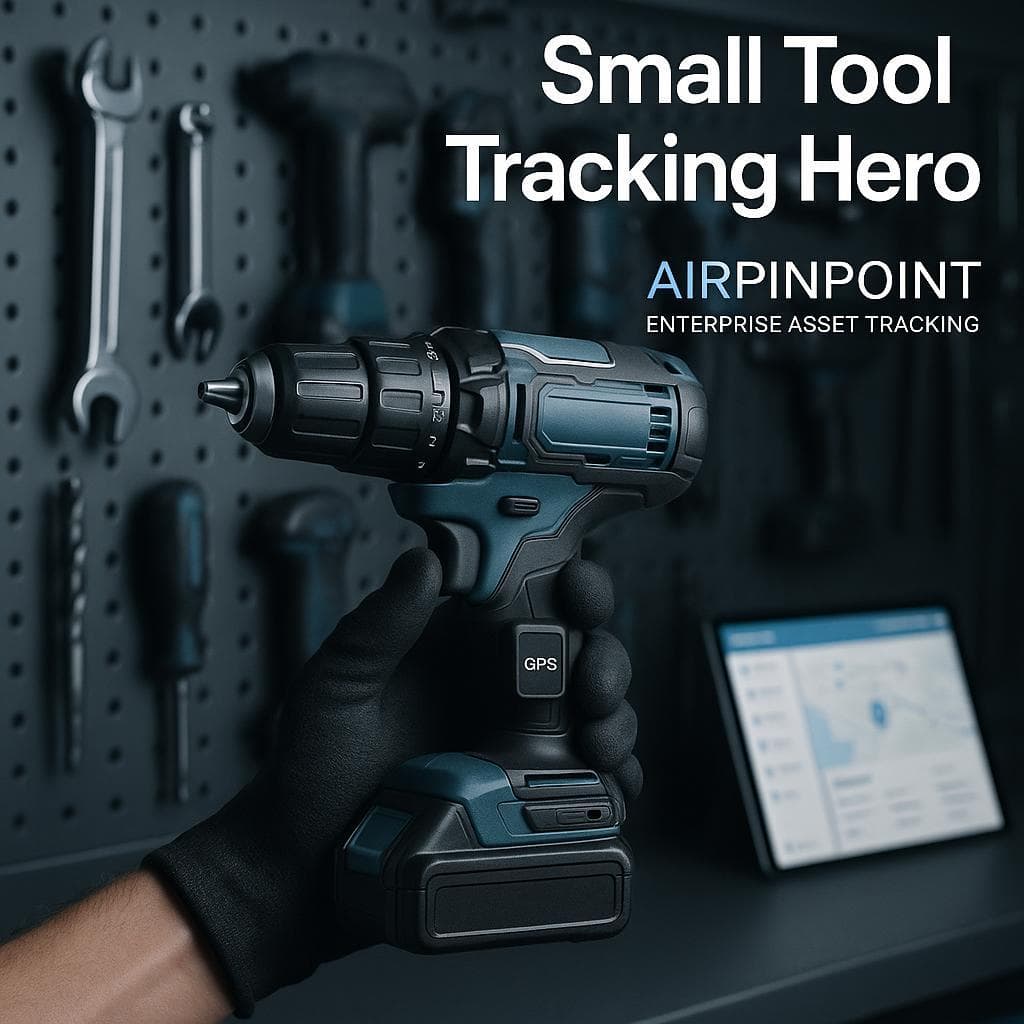
Small GPS Tracking Chip for Tools: Complete 2026 Guide
Construction tool theft costs the industry $300 million to $1 billion annually, with only 21% of stolen equipment ever recovered. The average theft incident costs $30,000. If you're searching for a small GPS tracking chip for tools, here's what actually exists, what works, and what doesn't.
The Hard Truth About "GPS Chips" for Tools
There is no truly tiny GPS chip you can hide inside a drill. Real GPS tracking requires:
- Antenna to receive satellite signals
- Cellular modem to transmit location data
- Battery large enough to power both
- Enclosure tough enough for job sites
The smallest dedicated GPS trackers are roughly the size of a deck of cards. Anything smaller is using Bluetooth, not GPS.
The battery requirement is the real constraint. Each GPS update means the radio holds on for a satellite fix (up to 30 seconds of continuous draw) plus a cellular transmit burst, pulling hundreds of milliamps. GPS trackers advertising 10-year battery life get there by updating roughly once per day. That is about 3,600 total location reports for the entire battery. At real-time update rates (every 1-5 minutes), those same batteries die in 2-3 days. Tracki publishes this honestly: 2-3 days in real-time mode, 30-75 days at 1-3 updates per day.
An AirTag broadcasts a tiny Bluetooth packet at microamp-level current. Nearby iPhones do the GPS fix and cellular upload on their own batteries. An AirTag delivers roughly 100,000 location updates per CR2032 coin cell, running 12+ months at full update frequency. That is why it can be the size of a quarter and last a year. The coin-cell AirTag at full update rate is the only tracking device that physically fits on a power tool while also providing frequent updates without constant recharging.
Technology Options Compared
True GPS Trackers
These use cellular networks (LTE-M, NB-IoT) to report locations anywhere with cell coverage.
| Device | Dimensions | Battery Life | Fine-print update rate | Monthly Cost | Best For |
|---|---|---|---|---|---|
| Digital Matter Yabby3 | 85 x 63 x 24mm | Up to 10 years | ~1/day for full life | $15-25 | High-value equipment |
| Digital Matter Oyster3 | Larger form factor | 10+ years | ~1/day for full life | $15-25 | Harsh environments |
| Linxup Asset Tracker | 89 x 64 x 25mm | 3+ years | ~1/day for full life | $15-30 | Fleet integration |
| GPS & Track | ~85 x 60 x 25mm | 2-3 years | ~1/day for full life | $15-25 | Budget fleets |
Pros:
- Works anywhere with cellular coverage
- Real-time tracking (updates every few minutes)
- Geofencing and movement alerts
- History and reporting
Cons:
- Monthly cellular fees ($15-30/device)
- Won't work indoors or in metal enclosures
- Too large for hand tools
- Requires line-of-sight to satellites
Bluetooth Trackers (AirTags, Tile, Milwaukee TICK)
These don't have GPS—they rely on nearby smartphones to relay location.
| Device | Size | Battery Life | Update frequency | Cost | Network |
|---|---|---|---|---|---|
| Apple AirTag | 31.9mm diameter, 8mm thick | 12+ months at full rate | Every 1-5 min in populated areas | $29 one-time | Find My (2.5B+ devices) |
| Milwaukee TICK | Small puck | ~1 year | When ONE-KEY users pass by | $25 one-time | ONE-KEY app users |
| Milwaukee ONE-KEY Tag | Similar to TICK | ~3 years | When ONE-KEY users pass by | ~$30 one-time | ONE-KEY app (300ft range) |
| Tile Pro | 42 x 42 x 7.5mm | ~1 year (replaceable) | When Tile network passes by | $35 one-time | Tile network (much smaller) |
Pros:
- Small enough for power tools (quarter-sized for AirTag vs. deck-of-cards for GPS)
- 12+ months battery at full update rate for AirTag, versus GPS trackers that achieve multi-year claims at ~1 update/day
- Works through walls and metal (just needs nearby phone, not a satellite)
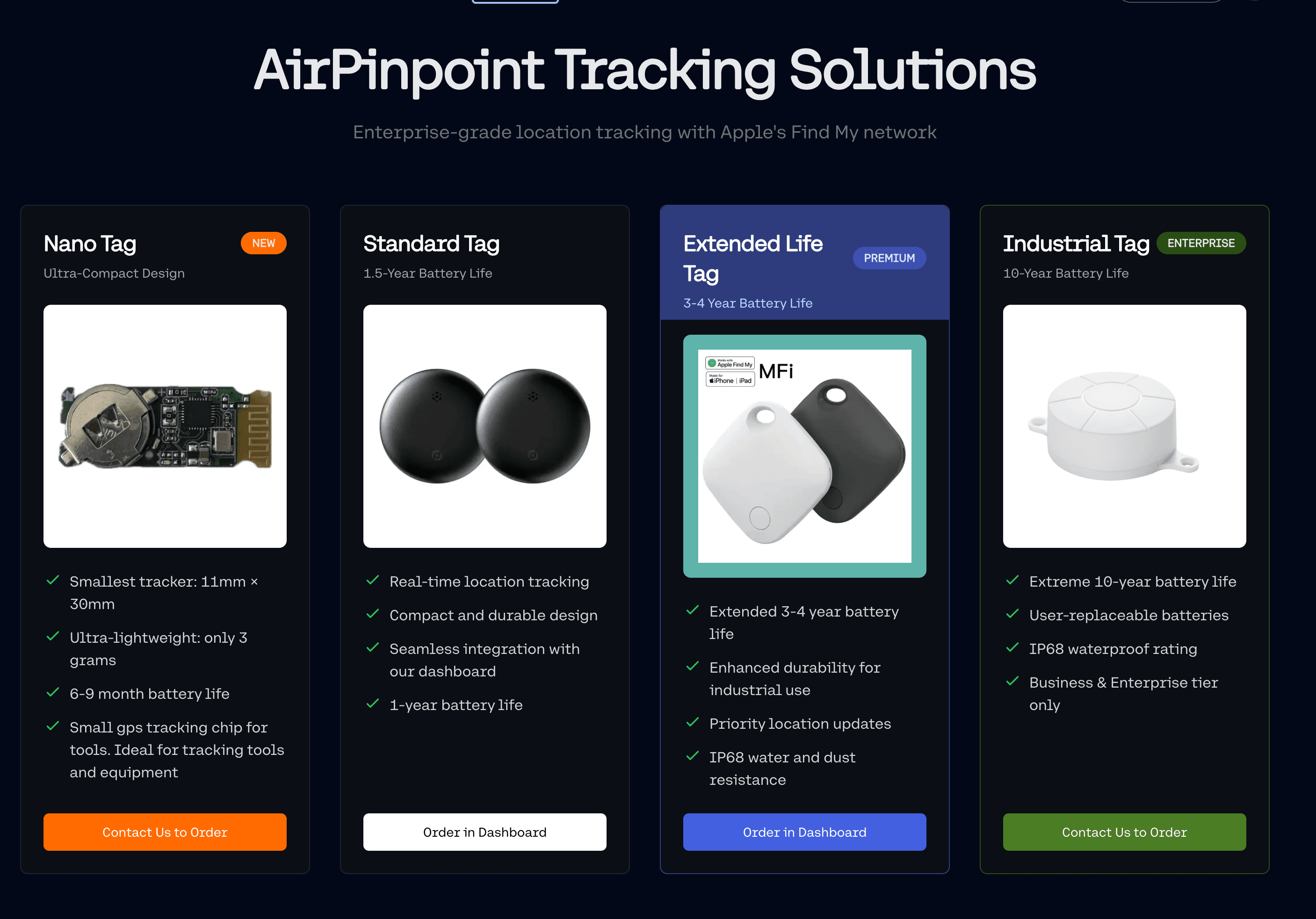
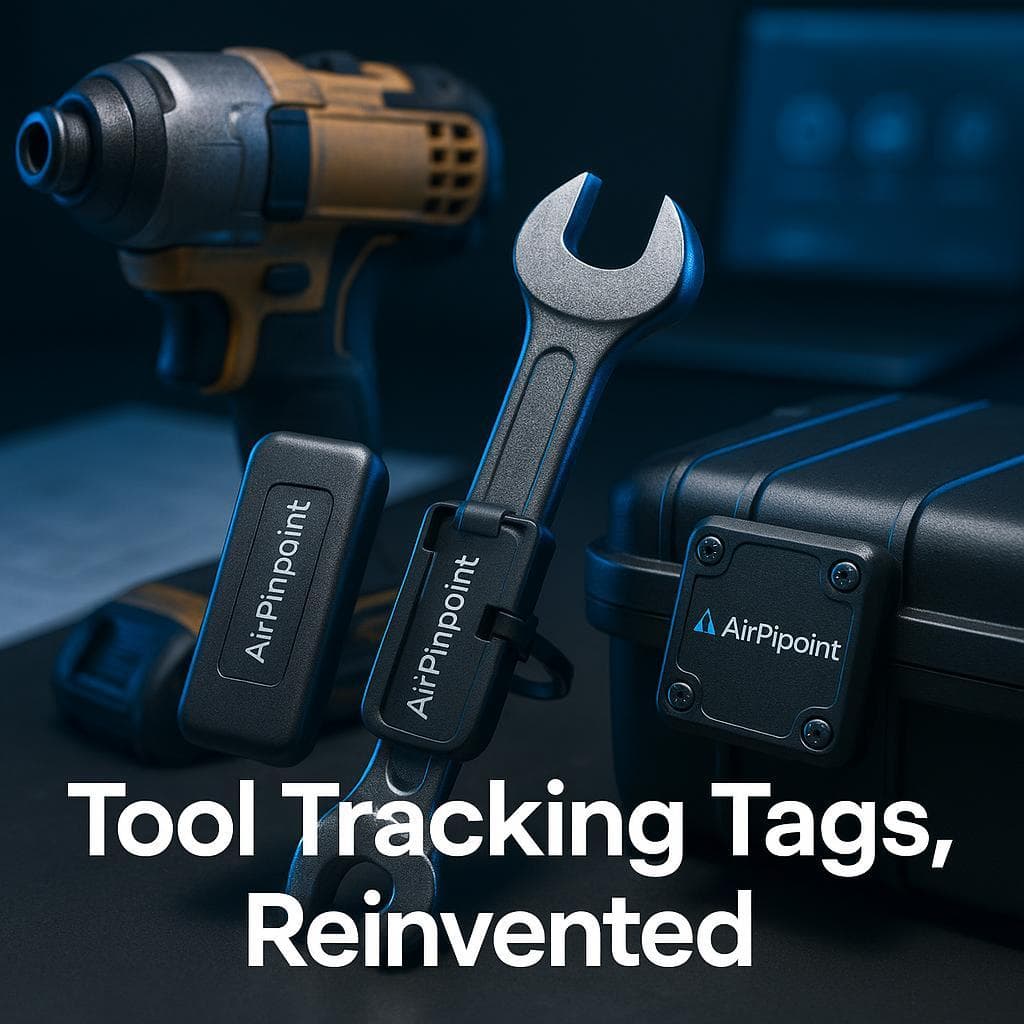
- AirTag leverages 2.5 billion Apple devices. Airpinpoint adds dashboard, history, geofences, and team access at $11.99/device/mo.
Cons:
- Not real-time in the GPS sense: updates when a compatible phone passes by
- AirTags optimized for Apple users (Android limited)
- Milwaukee TICK only updates near ONE-KEY users. Its network is a fraction of Find My, making AirTags better outside construction-dense job sites.
- Tile network much smaller than Find My
Manufacturer Tool Tracking Systems
The major power tool brands have built-in tracking ecosystems:
Milwaukee ONE-KEY:
- Bluetooth tracking on compatible tools + TICK tags for anything else
- Free app, no subscription
- Mark tools "missing" to lock them out when detected
- 5+ million daily location updates from user network
- Integrates with BIM 360 for enterprise
DeWalt Tool Connect:
- Bluetooth CHIP (DCE042) adds tracking to compatible tools
- MOBILELOCK ($$$) for true GPS on job boxes/trailers
- Can disable batteries remotely if stolen
- Tool inventory and usage tracking
Bosch BlueHound:
- Subscription-based ($$/month)
- Bluetooth tags with professional dashboard
- Tool assignment and last-user tracking
Real-World Tracking Scenarios
Scenario 1: Tools Stolen from Truck
GPS tracker: If outside or near windows, may report location. If truck is in garage or parking structure, likely no signal.
AirTag: If thief drives through residential areas, any iPhone within 30+ feet will update location. Often provides multiple pings during transit. Works even in parking garages.
Milwaukee TICK: Only updates if thief is near another contractor using ONE-KEY. Less likely in residential areas.
Winner: AirTag (largest network)
Scenario 2: Tools Missing on Job Site
GPS tracker: Probably won't work inside building under construction.
AirTag: May update if workers have iPhones nearby. Can trigger "Play Sound" to locate.
Milwaukee TICK: Good chance of updates—job sites have many ONE-KEY users. 300ft range on newer tags helps.
Winner: Milwaukee ONE-KEY Tag (construction-focused network)
Scenario 3: Equipment in Locked Job Box
GPS tracker: Signal blocked by metal. Won't report.
AirTag: Bluetooth can often escape gaps in job box. Updates when workers walk past.
Milwaukee TICK: Same as AirTag—works through metal better than GPS.
Winner: Either Bluetooth option
What to Track and How
High-Value Power Tools ($500+)
Recommendation: AirTag or dedicated GPS
These justify individual tracking. AirTags offer the best network coverage; GPS provides real-time if cellular works in your areas.
Attachment: Hide in battery compartment, tape inside housing, or use adhesive mount under handle.
Mid-Value Power Tools ($200-500)
Recommendation: AirTag or Milwaukee TICK
Good ROI for tracking. If your crew uses Milwaukee tools, TICK integrates nicely. Otherwise, AirTags have the larger network.
Hand Tools (Under $200)
Recommendation: Track the container, not individual tools
Putting a $29 tracker on a $50 tool doesn't pencil. Instead:
- Track tool bags with a single AirTag
- Track job boxes with GPS (if leaving on site) or AirTag
- Use tool check-out software for accountability
Job Boxes and Trailers
Recommendation: Dedicated GPS + AirTag backup
Worth the monthly fee for real-time tracking of $10K+ in tools. Add an AirTag as backup in case GPS is disabled.
Products:
- DeWalt MOBILELOCK (GPS + cellular + sensors)
- Linxup Asset Tracker (GPS + geofencing)
- AirTag hidden separately (backup if GPS removed)
Cost Analysis: 20-Tool Fleet
Option A: All GPS Trackers
- Hardware: 20 × $100 = $2,000
- Monthly service: 20 × $20 = $400/month = $4,800/year
- Year 1 total: $6,800
- Ongoing: $4,800/year
Option B: All AirTags
- Hardware: 20 × $29 = $580
- Monthly service: $0
- Year 1 total: $580
- Ongoing: ~$60/year (batteries)
Option C: Hybrid (Recommended)
- GPS on 2 job boxes/trailers: 2 × $100 + 2 × $20 × 12 = $680/year
- AirTags on 18 high-value tools: 18 × $29 = $522 one-time
- Year 1 total: $1,202
- Ongoing: ~$720/year
Option D: Milwaukee ONE-KEY Ecosystem
- Milwaukee tools with built-in tracking: $0 additional
- TICK tags for other items: 20 × $25 = $500
- Total: $500 one-time
- Ongoing: ~$50/year (batteries)
Best if you're already a Milwaukee shop.
Implementation Guide
Phase 1: Inventory Assessment
- List all tools worth $200+
- Identify chronic "missing" items
- Calculate annual loss/replacement cost
- Determine which technology fits your crew (iPhone users? Milwaukee shop?)
Phase 2: Pilot Program
Start with 5-10 high-value tools:
- Attach trackers in hidden, protected locations
- Test tracking in actual work conditions
- Verify battery life claims
- Train crew on check-out/location features
Phase 3: Full Deployment
- Tag remaining priority tools
- Set up geofences for job sites and shop
- Configure movement alerts
- Establish check-out procedures
- Document tracker locations for replacement
Phase 4: Ongoing Management
- Replace batteries on schedule
- Update tool inventory as items are added/retired
- Review location data monthly for patterns
- Adjust strategy based on actual losses
Why Airpinpoint for Tool Tracking?
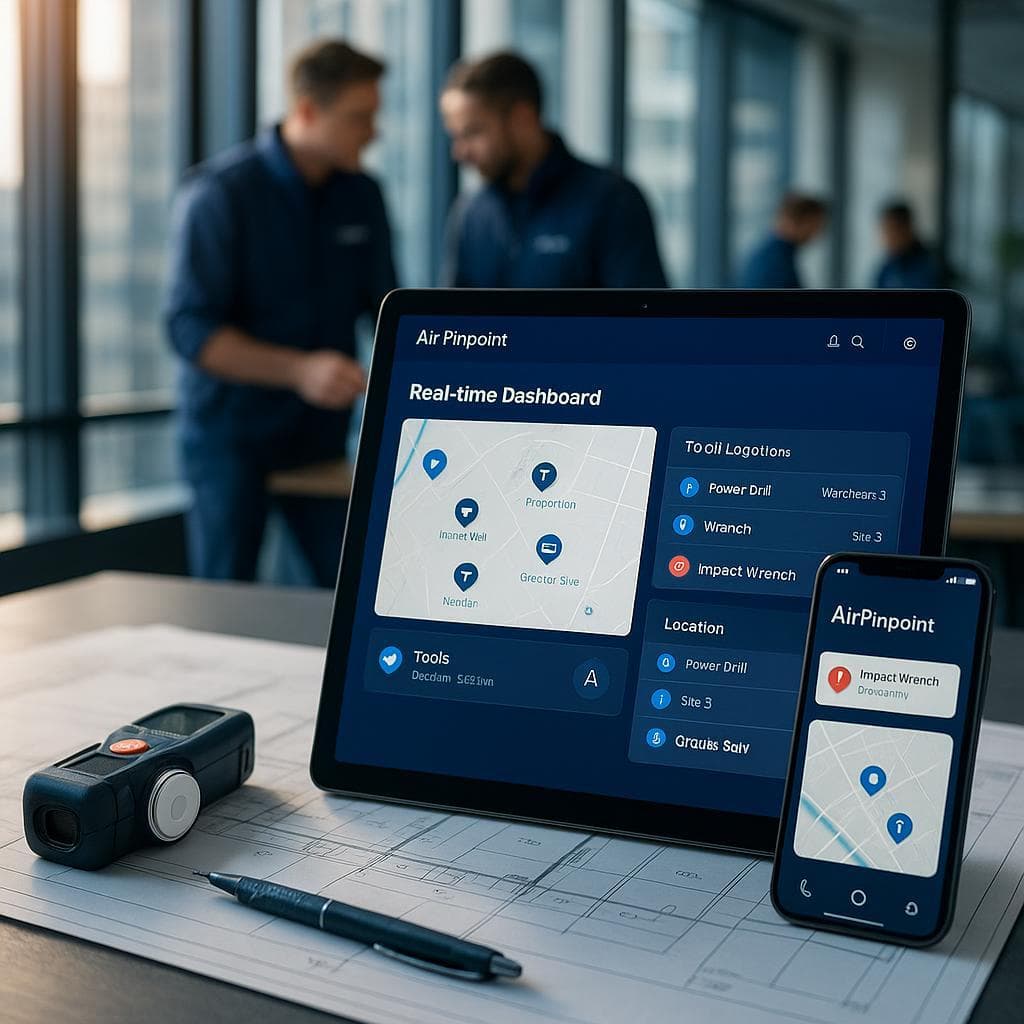
Traditional trackers work for one device. Airpinpoint's dashboard lets you:
- Manage all AirTags across your fleet in one view
- Set geofences for job sites, shop, and unauthorized areas
- Get movement alerts when tools leave expected zones
- Track location history for recovery and accountability
- Share access with foremen without sharing Apple IDs
If you're using AirTags for tool tracking, Airpinpoint turns a consumer product into an enterprise solution.
The Bottom Line
There's no magic "GPS chip" small enough to hide in a drill. Your real options:
- AirTags ($29): Best network coverage, smallest size, no Apple subscription. Airpinpoint adds a monthly subscription for business features.
- Milwaukee ONE-KEY ($25-30): Best for Milwaukee shops and job sites
- Dedicated GPS ($100 + $20/mo): Best for job boxes, trailers, high-value equipment
- Hybrid approach: GPS on containers, Bluetooth on tools
For most contractors, AirTags + Airpinpoint dashboard provides the best balance of coverage, cost, and capability. You get Apple's billion-device network without an Apple subscription, and Airpinpoint plans start at $11.99 per tag per month for the business dashboard, team access, location history, and geofencing.

 Our Solution