Updated
EV Fleet Management in 2026: What Actually Changed
64% of fleet operators now run at least some electric vehicles. 87% plan to add EVs within five years. Fleet electrification is no longer a pilot program. It is a procurement decision.
But managing an EV fleet is not the same as swapping gas trucks for electric ones and calling it done. Charging logistics, range planning, and battery degradation introduce operational complexity that ICE fleets never had. This guide covers what matters and what to ignore.
The Numbers Driving Fleet Electrification
| Metric | 2024 | 2026 | 2030 Target |
|---|---|---|---|
| Fleets operating EVs | 54% | 64% | 80%+ |
| Fleets planning EV adoption | 72% | 87% | N/A |
| Average EV range | 270 mi | 300 mi | 350+ mi |
| EV fuel cost per km | $0.035 | $0.03 | $0.025 |
| ICE fuel cost per km | $0.13 | $0.12 | $0.12 |
The cost gap at the pump (or charger) is 4x. A delivery van driving 30,000 miles per year saves roughly $2,400 in fuel costs alone on electric. Multiply by fleet size.
Amazon has 100,000 Rivian electric vans on order. FedEx targets 50% electric PUD purchases by 2025, 100% by 2030. USPS committed $9.6 billion to fleet modernization with 66,000 electric vehicles by 2028. The supply chain is following.
What Makes EV Fleet Management Different
1. Charging Replaces Fueling (And It Is Slower)
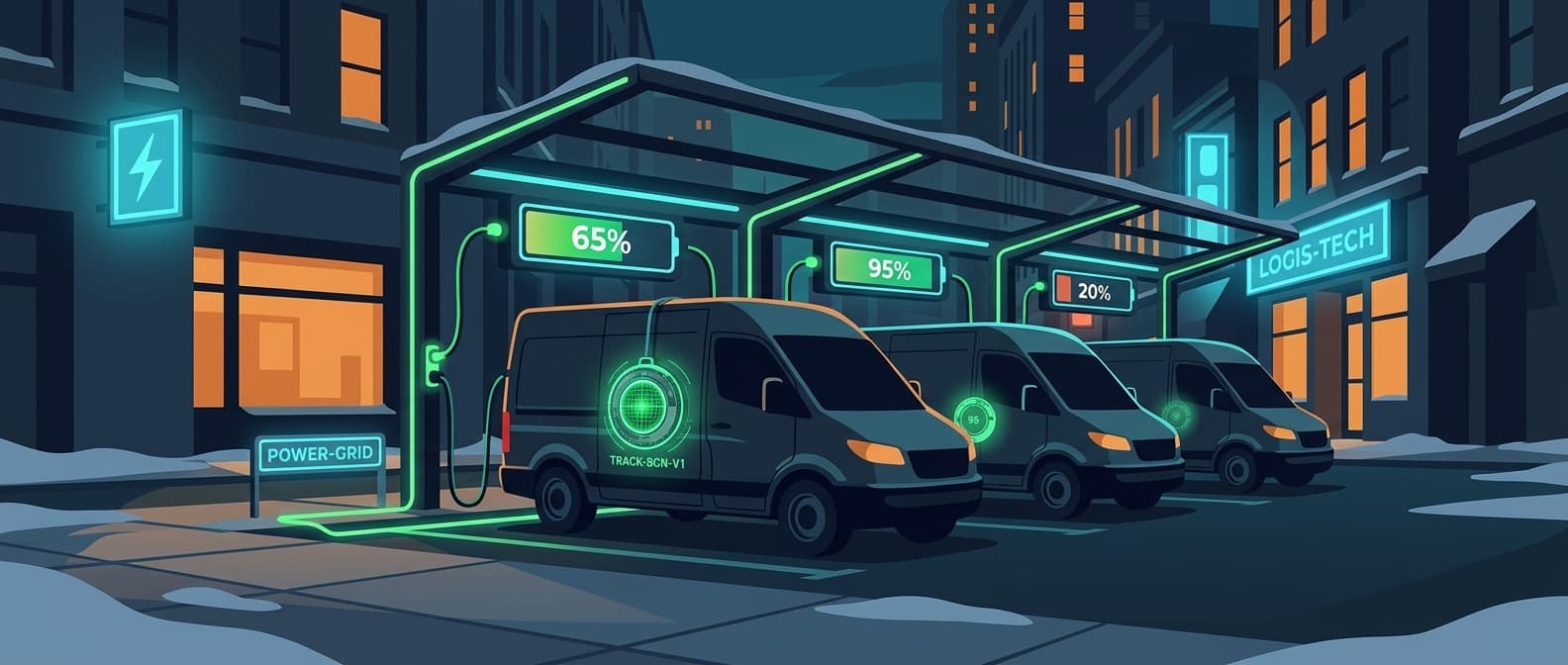
A gas fill takes 5 minutes. A DC fast charge takes 20-45 minutes. A Level 2 charge takes 4-8 hours.
This changes fleet scheduling fundamentally. You can't treat charging like a gas stop. Vehicles need to charge overnight at depots, during driver breaks at DC fast chargers, or at destination chargers during service calls. Planning around charger availability is now a core fleet operations task.
23% of fleet managers cite charging infrastructure as their top barrier to EV adoption.
2. Range Planning Is a Data Problem
Modern EVs average 300 miles of range. That covers most fleet routes. The problem is not total range. It is knowing which vehicle has enough charge for the next assignment.
Factors that eat range: cold weather (10-30% reduction), highway speed, cargo weight, HVAC usage, elevation changes. A van rated for 300 miles might get 210 in a Minnesota winter hauling a full load.
Fleet managers need two things: where each vehicle is, and whether it can reach its next stop. Location tracking solves the first half. Battery telemetry solves the second.
3. Maintenance Shifts, Not Disappears
| Maintenance Item | ICE Fleet | EV Fleet |
|---|---|---|
| Oil changes | Every 5,000 mi | None |
| Transmission service | Every 30,000 mi | None |
| Brake pads | Every 40,000 mi | Every 80,000+ mi (regen braking) |
| Tire replacement | Every 40,000 mi | Every 25,000-30,000 mi |
| Battery health check | N/A | Annual recommended |
| Coolant system | Every 30,000 mi | Every 50,000 mi |
EVs eliminate engine maintenance but increase tire wear due to higher torque. Battery degradation becomes the new engine-health metric. Most fleet EV batteries retain 80%+ capacity after 200,000 miles, but monitoring matters.
EV Fleet TCO: The Real Comparison
The upfront cost difference is shrinking. The operational savings are compounding.
| Cost Category | ICE Van (3-Year) | EV Van (3-Year) | Difference |
|---|---|---|---|
| Purchase price | $38,000 | $52,000 | +$14,000 |
| Fuel/energy (30k mi/yr) | $10,800 | $2,700 | -$8,100 |
| Maintenance | $5,400 | $2,700 | -$2,700 |
| Insurance | $4,500 | $5,100 | +$600 |
| Federal tax credit | $0 | -$7,500 | -$7,500 |
| 3-Year TCO | $58,700 | $55,000 | -$3,700 |
These numbers assume the $7,500 federal commercial EV tax credit remains available. Without it, TCO roughly breaks even at 3 years and EVs pull ahead by year 4-5.
For a 20-vehicle fleet, that $3,700 per vehicle savings is $74,000 over three years.
The EV Fleet Management Software Landscape
Enterprise Telematics (Full Vehicle Integration)
| Platform | EV Features | Monthly Cost | Hardware |
|---|---|---|---|
| Geotab | Battery health, charge assurance, range prediction | $25-40/vehicle | OBD dongle, installed |
| Samsara | EV charging reports, fuel vs energy comparison | $30-50/vehicle | OBD dongle, installed |
| Fleet Complete | EV monitoring, charging analytics | $25-35/vehicle | OBD dongle, installed |
| Wheels | TCO modeling, charging optimization | Custom pricing | Integrated |
These platforms plug into the vehicle's OBD port and read battery state, charging status, and energy consumption directly. They require professional installation on each vehicle and 3-year contracts.
Location Tracking (No Vehicle Integration Required)
| Platform | EV Features | Monthly Cost | Hardware |
|---|---|---|---|
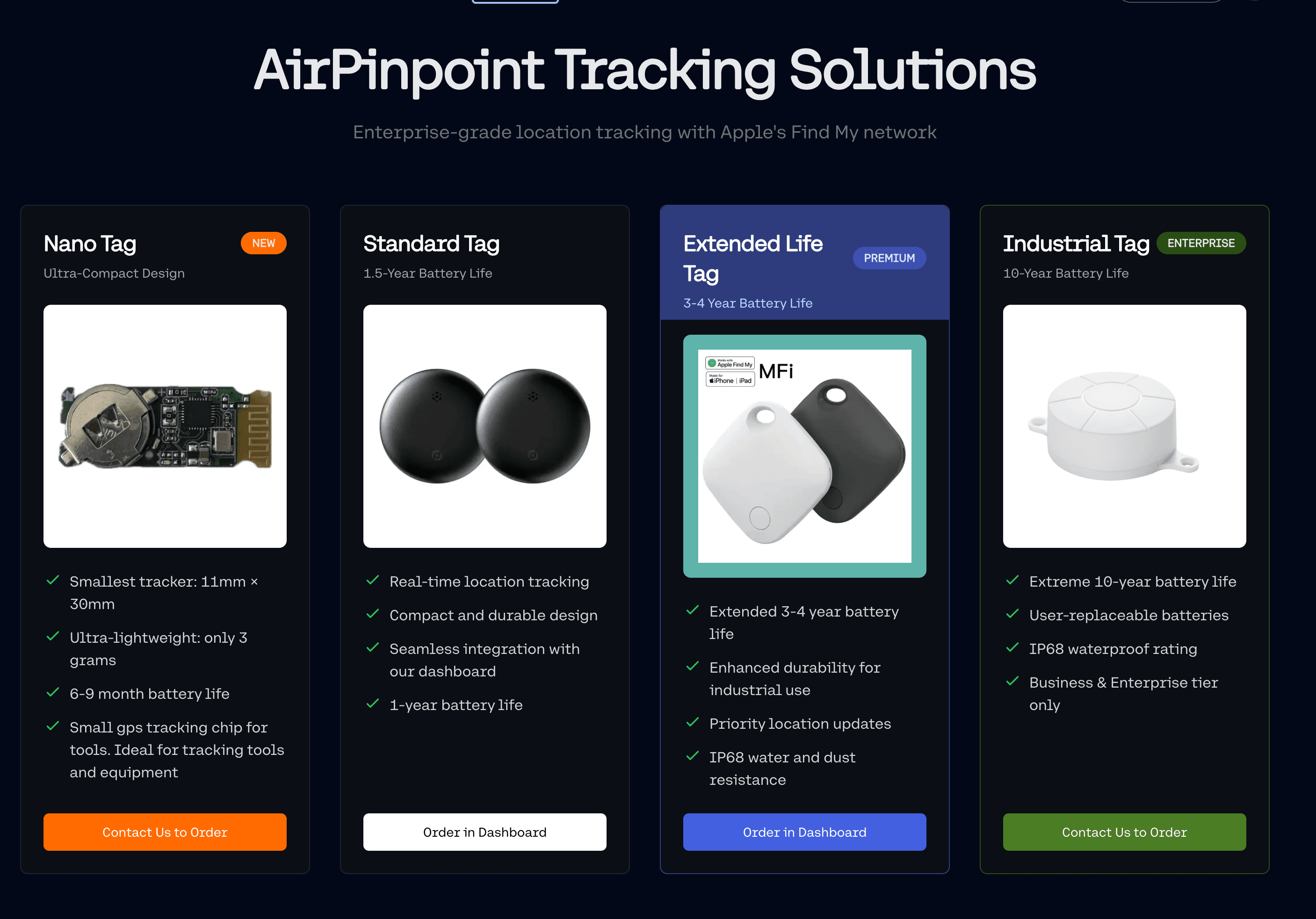
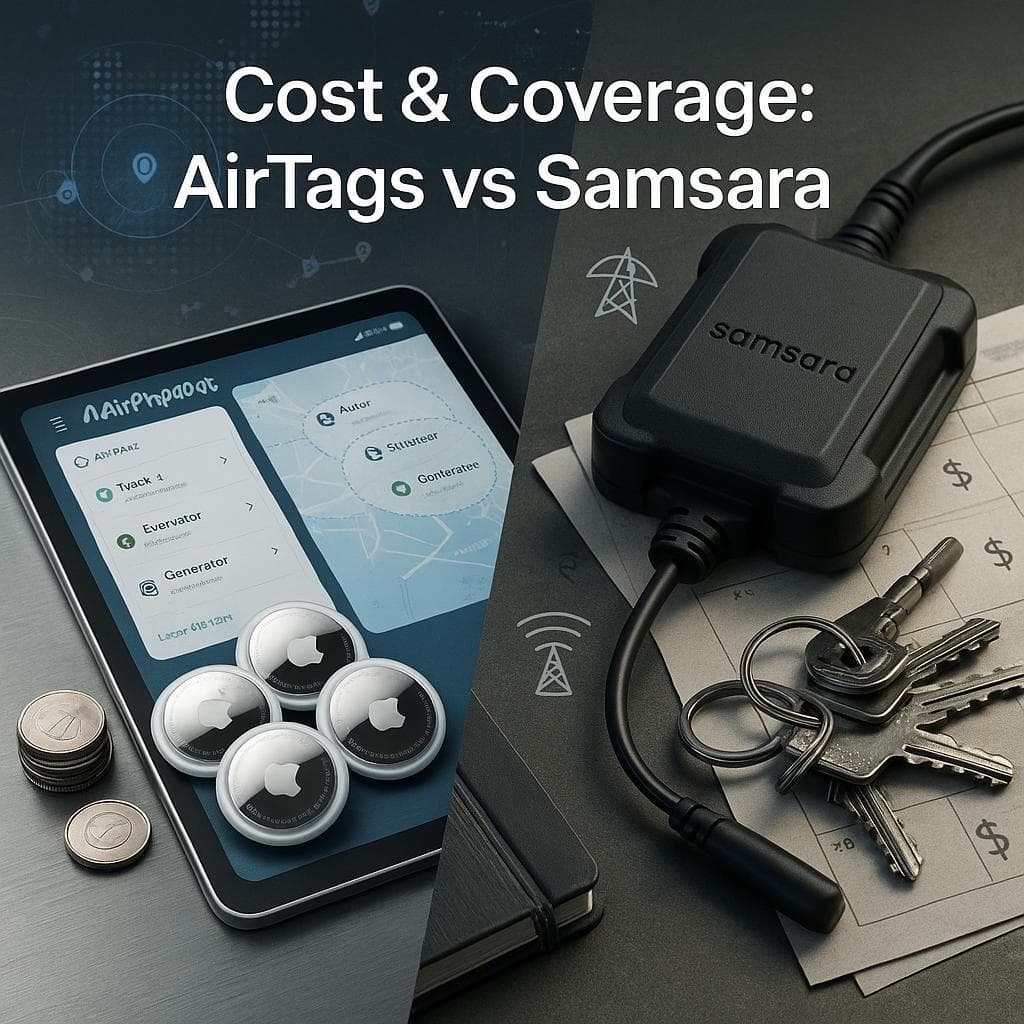
| Airpinpoint | Location history, geofencing, movement alerts | $11.99/vehicle | $29 AirTag, self-install |
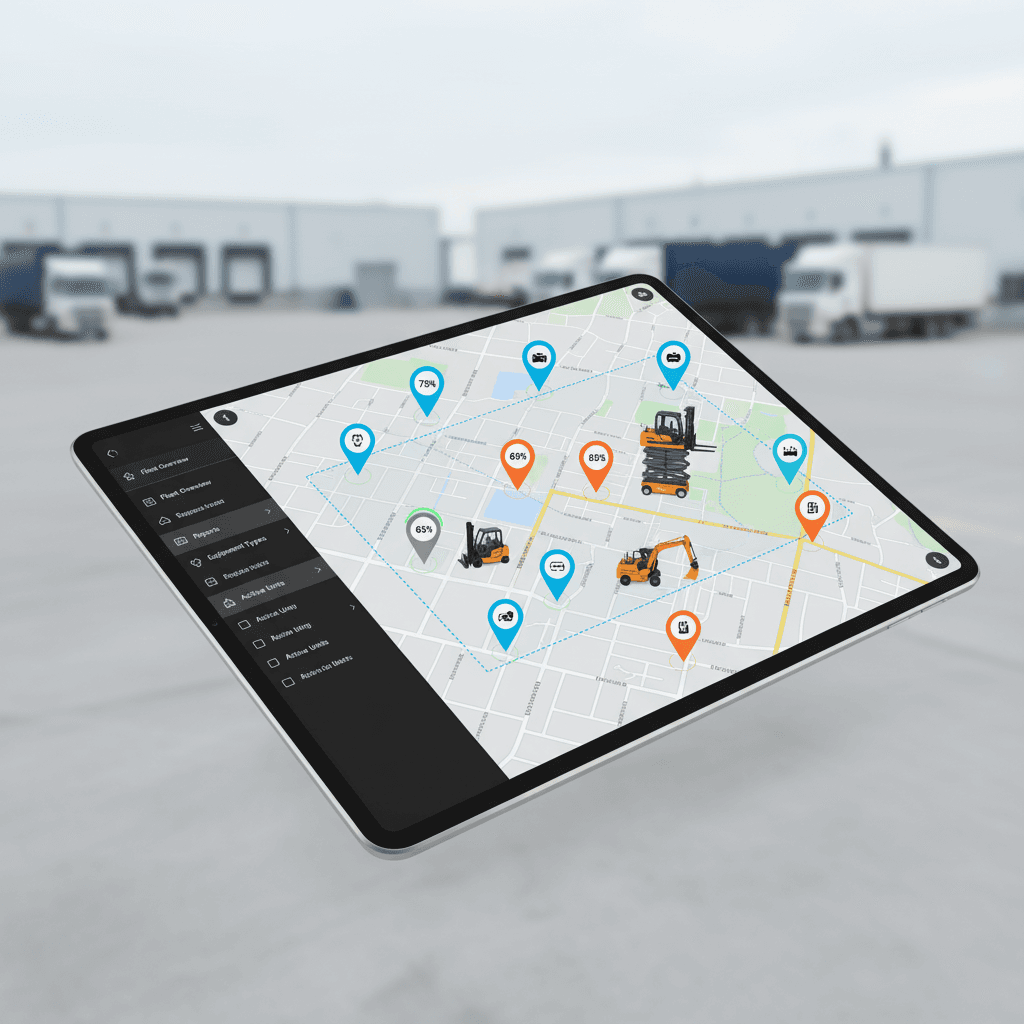
Airpinpoint does not read vehicle telemetry. It tracks location via Apple's Find My network. You know where every vehicle is, when it moved, and whether it left a geofenced area. You do not get battery state or charging status.
For many fleets, that is enough. You pair it with a charging management platform for the EV-specific layer.
Where Location Tracking Fits in EV Fleet Ops
EV fleet managers face a specific problem: they need to know which vehicles are near charging infrastructure. This is a location question first, a telemetry question second.
Dispatch optimization. When a job comes in, you need the closest vehicle with enough range. Location tracking tells you the first part instantly. If the vehicle is parked at a charger, you know it is likely topped up.
Charging station proximity. Geofence your charging depot. Get alerts when vehicles arrive and leave. Track dwell time to estimate charge completion without OBD integration.
Overnight security. EVs are high-value targets. A loaded Rivian delivery van lists at $79,900. Movement alerts at 2 AM catch theft attempts before the vehicle leaves your lot.
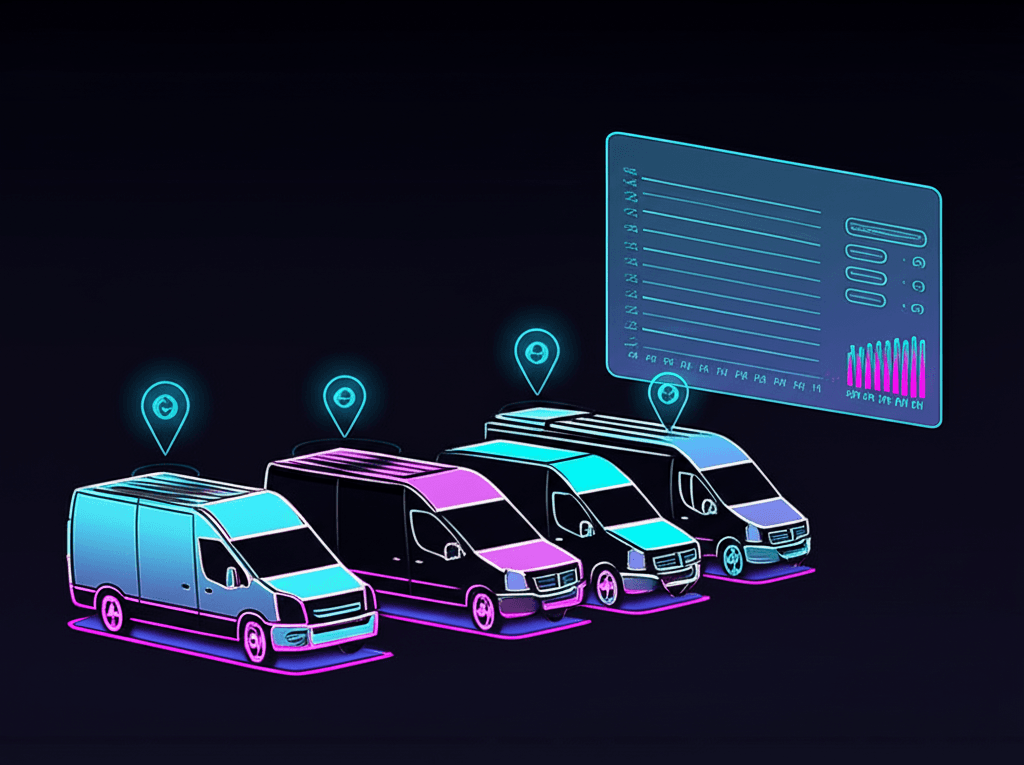
Mixed fleet visibility. Most fleets transitioning to EV run mixed ICE/EV for years. Airpinpoint tracks both on the same dashboard, same price, same setup. No different hardware for different vehicle types.
Non-vehicle assets. Chargers, generators, portable battery packs, tools. An AirTag on a $3,000 portable DC fast charger costs $11.99/month to track. A GPS tracker costs $30+/month and needs cellular service.
Government Mandates and Incentives (2026 Status)
The regulatory landscape shifted in late 2025. California's Advanced Clean Fleets rule, which would have required private fleets to transition to zero-emission vehicles by 2042, was partially repealed after failing to secure an EPA waiver.
What still applies:
- California state and local government fleets: 50% zero-emission purchases (2024), 100% by 2027
- Federal tax credit: up to $7,500 per commercial EV (check current status, subject to legislative changes)
- Several EU member states have fleet electrification targets through 2030
- State-level incentives vary: New York, Colorado, Oregon, and others offer additional fleet rebates
What changed:
- Private fleet mandates in California no longer enforceable
- EPA waiver situation remains in flux
- Corporate ESG commitments are now the primary driver, not regulation
The trend is clear even without mandates. 87% of fleets plan to electrify because the economics work, not because a regulation says so.
The Practical Playbook: Starting an EV Fleet
Step 1: Audit Your Routes
Map every vehicle's daily mileage. If 80% of your routes are under 200 miles, current EVs handle them with margin. Start by converting those routes first.
Step 2: Plan Charging Infrastructure
Depot charging (Level 2): $2,000-6,000 per station installed. Charges overnight, 4-8 hours. This covers most fleet needs.
DC fast charging (Level 3): $50,000-150,000 per station. 20-45 minute charge. Only needed for vehicles that can't return to depot mid-day.
Most fleets need depot charging for 80% of vehicles and a commercial DC fast charging network account (ChargePoint, EVgo) for the rest.
Step 3: Deploy Tracking From Day One
Do not wait until you have 50 EVs to set up fleet visibility. Put an AirTag on every vehicle the day it arrives.
- $29 per AirTag (one-time)
- $11.99 per vehicle per month on Airpinpoint
- Self-install in 30 seconds (attach to vehicle interior)
- Geofence your depot and charging stations
- Get movement alerts for overnight security
A 10-vehicle EV fleet costs $119.90/month to track. The same fleet on Samsara with EV telematics costs $300-500/month before hardware and installation.
Step 4: Add Telematics If You Need It
After 3-6 months of operations, evaluate whether you need OBD-level vehicle data. You might, if:
- Drivers are running out of charge on routes (range planning failure)
- You need to optimize energy costs across time-of-use electricity rates
- Battery degradation is a concern on high-mileage vehicles
- Insurance requires telematics data
If location tracking plus a charging management app covers your needs, skip the $30-50/vehicle/month telematics bill.
EV Fleet Tracking Cost: Airpinpoint vs Enterprise Telematics
| Fleet Size | Airpinpoint (Annual) | Samsara EV (Annual) | Geotab EV (Annual) | Savings |
|---|---|---|---|---|
| 10 vehicles | $1,489 | $5,160 | $4,200 | $2,711-$3,671 |
| 25 vehicles | $3,598 | $12,900 | $10,500 | $6,902-$9,302 |
| 50 vehicles | $7,194 | $25,800 | $21,000 | $13,806-$18,606 |
Airpinpoint annual cost: ($29 hardware + $11.99/mo x 12) per vehicle. Samsara: $43/vehicle/month average with EV package. Geotab: $35/vehicle/month average. Hardware and installation costs not included for Samsara/Geotab (add $150-300 per vehicle).
What Airpinpoint Does Not Do for EV Fleets
Transparency matters more than a sales pitch.
- No battery state monitoring. You see where the vehicle is, not how much charge it has.
- No charging status. Geofencing a charging station is a proxy, not a direct reading.
- No energy consumption tracking. You will not get kWh/mile metrics.
- No route optimization based on charge. That requires vehicle telemetry integration.
- No OBD diagnostics. No fault codes, no tire pressure, no regen braking data.
Airpinpoint is the location layer. For the full EV telemetry stack, you either add Geotab/Samsara on top, or use your vehicle manufacturer's fleet portal (Rivian FleetOS, Ford Pro, GM BrightDrop).
The question is whether the telemetry layer is worth $20-40/vehicle/month more. For many fleets, location plus a free manufacturer portal covers 90% of daily operations.

 Our Solution