AirTags vs LoJack: Theft Recovery for Your Whole Fleet
LoJack Protects One Vehicle. AirPinpoint Protects Everything.
LoJack has been the gold standard for stolen vehicle recovery since the 1980s. The technology works: a hidden transponder in your vehicle, direct integration with police radio systems, and a claimed 90%+ recovery rate.
The problem is scope and cost. LoJack costs $695-995 per vehicle to install, covers only vehicles (not trailers, equipment, or tools), and does nothing until after a theft occurs. No geofencing. No movement alerts. No location tracking during normal operations.
AirTags with AirPinpoint cost $29 per asset, work on anything you can attach them to, provide continuous location tracking, and alert you the moment an asset leaves a geofenced area. For a 10-vehicle fleet with trailers and equipment, AirPinpoint provides broader protection at a fraction of the cost.
Two Fundamentally Different Approaches
LoJack: Police-Integrated Recovery
LoJack uses a proprietary radio frequency (RF) transponder hidden in your vehicle's electrical system. When you report a vehicle stolen, police activate their LoJack tracking computers (installed in patrol cars) and follow the signal to your vehicle. The system is designed for one thing: finding stolen vehicles with law enforcement help.
How it works:
- Authorized dealer installs a hidden RF unit ($695-995, takes 1-2 hours)
- Vehicle is stolen and you file a police report
- Police activate LoJack's tracking system
- Officers with LoJack-equipped patrol cars track the signal
- Vehicle is (hopefully) recovered
What it doesn't do: LoJack provides no location data to you. No app, no map, no alerts, no geofencing. You report the theft, then wait for police to do the tracking. Between the theft and the police report, there's no notification that your vehicle is moving.
AirTags + AirPinpoint: Continuous Fleet Visibility
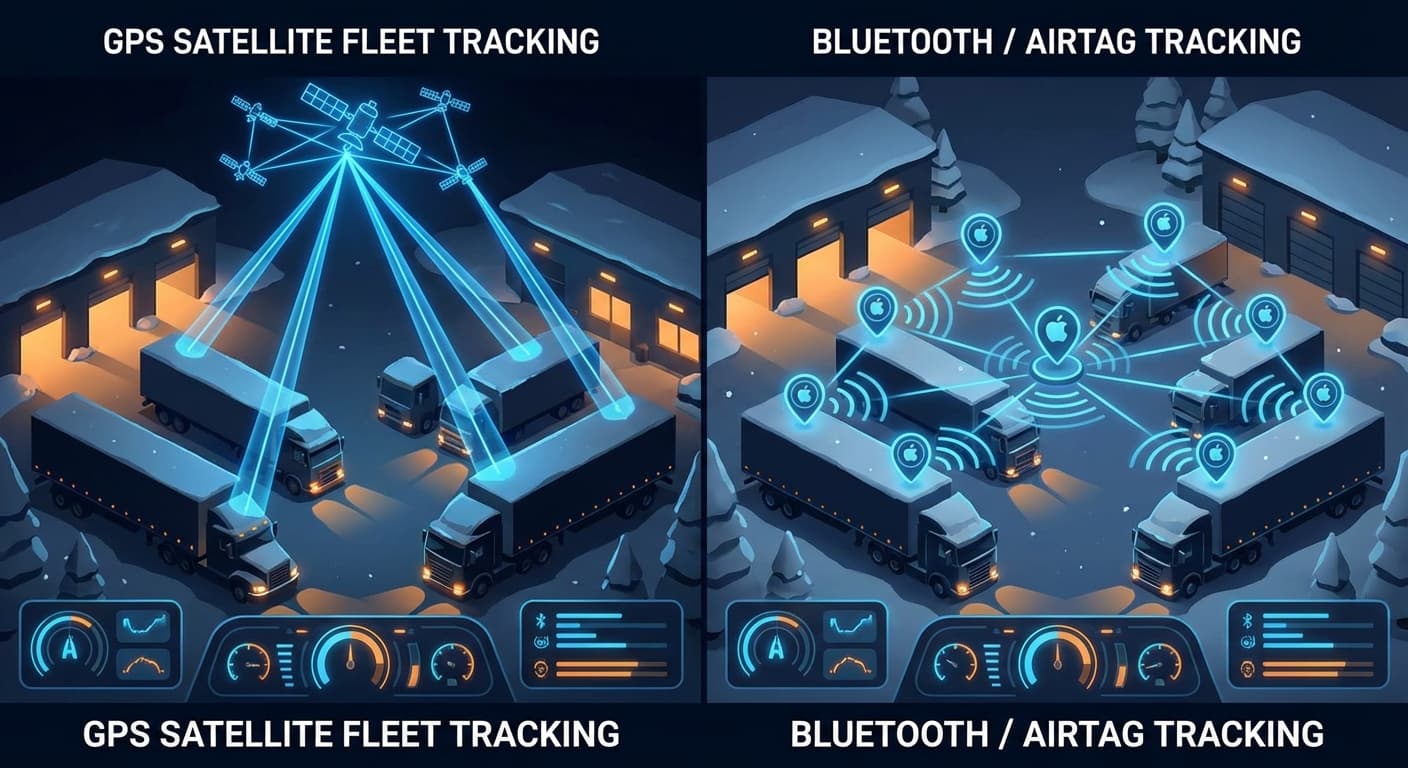
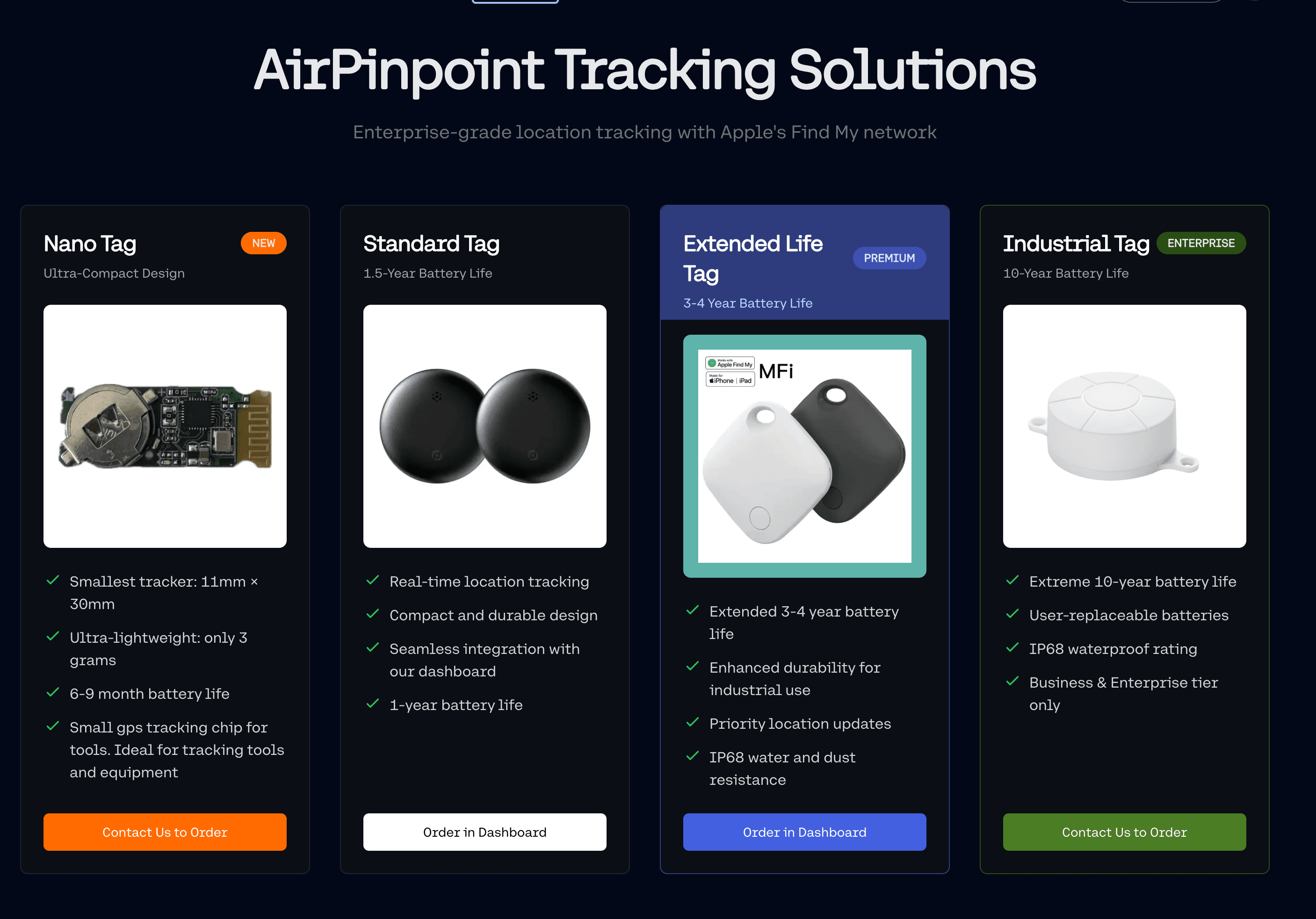
AirTags use Apple's Find My network (2.5B+ devices) for passive, crowd-sourced location detection. AirPinpoint adds a business dashboard with geofencing, location history, and team access.
How it works:
- Attach an AirTag to any asset ($29, takes 30 seconds)
- AirPinpoint shows location on your fleet dashboard continuously
- Set polygon geofences around job sites, yards, and parking areas
- Get instant alerts when an asset leaves a geofenced area
- Track the asset's movement in real time as it's detected by Apple devices
The key difference: AirPinpoint alerts you during the theft, not after. A geofence alert at 2 AM when your excavator leaves the yard gives you a 5-minute head start over discovering it missing at 7 AM.
Cost Comparison
Single Vehicle Over 3 Years
LoJack:
- Installation + hardware: $695-$995
- Annual subscription: $99-$199/year x 3 = $297-$597
- Total: $992-$1,592
AirTag + AirPinpoint:
- AirTag: $29
- AirPinpoint: $11.99/month x 36 = $431.64
- Battery replacements: ~$3
- Total: $463.64
Savings: $528-$1,128 per vehicle (53-71%)
10 Vehicles Over 3 Years
LoJack:
- Installation + hardware: 10 x $845 (midpoint) = $8,450
- Annual subscription: 10 x $149 (midpoint) x 3 = $4,470
- Total: ~$12,920
AirTag + AirPinpoint:
- AirTags: 10 x $29 = $290
- AirPinpoint: 10 x $11.99 x 36 = $4,316.40
- Battery replacements: ~$30
- Total: ~$4,636
Savings: ~$8,284 (64%)
10 Vehicles + 5 Trailers + 10 Equipment Pieces Over 3 Years
This is where the comparison becomes dramatic. LoJack can't track trailers or equipment at all.
LoJack (vehicles only):
- Installation + hardware: 10 x $845 = $8,450
- Annual subscription: 10 x $149 x 3 = $4,470
- Trailers: No coverage
- Equipment: No coverage
- Total: ~$12,920 (vehicles only, 15 assets unprotected)
AirTag + AirPinpoint (everything):
- AirTags: 25 x $29 = $725
- AirPinpoint: 25 x $11.99 x 36 = $10,791
- Battery replacements: ~$75
- Total: ~$11,591 (all 25 assets protected)
AirPinpoint costs $1,329 less than LoJack while protecting 2.5x more assets.
Where LoJack Has a Genuine Advantage
LoJack's strengths are narrow but real.
Direct Police Integration
This is LoJack's defining feature. Police officers with LoJack-equipped patrol cars can track your vehicle's RF signal directly, without relying on cellular networks, GPS satellites, or the internet. In areas with LoJack police coverage, this creates a recovery path that doesn't depend on any commercial network.
AirTags depend on Apple device density for detection. In dense urban areas, this works well. In very rural areas with minimal iPhone traffic, detection gaps can extend for hours. LoJack's RF signal works independently of crowd density.
Hidden, Hardwired Installation
A professional installer hides the LoJack unit inside the vehicle's structure. Thieves can't easily find or disable it. The unit draws power from the vehicle's electrical system, so there's no battery to die.
An AirTag needs to be hidden somewhere a thief won't look: inside seat cushions, behind panels, in spare tire compartments. It's small enough (1.26" diameter) to conceal effectively, but a determined thief who knows to look for it could find it.
Proven Track Record
LoJack has been recovering stolen vehicles since 1986. Law enforcement trusts the system. Insurance companies sometimes offer premium discounts for LoJack-equipped vehicles (typically 10-25% off comprehensive coverage). This discount can offset some of the installation cost.
Where AirTags Win (The Majority of Use Cases)
1. Total Fleet Coverage
LoJack protects vehicles. Period. Your trailers, generators, compressors, toolboxes, scaffolding, and every other unpowered asset are completely unprotected. For most businesses, these non-vehicle assets represent significant value and are often the easiest targets for theft.
AirTags track anything. Attach one to a $50,000 generator, a $15,000 trailer, or a $5,000 tool collection. At $29 per tag, the math always works.
2. Theft Prevention vs. Theft Recovery
LoJack is reactive. It activates after you discover the theft and file a police report. There could be hours between the theft and the activation.
AirPinpoint's geofencing is proactive. Draw a polygon around your yard, job site, or parking area. When any tagged asset crosses that boundary, you get an alert. At 2 AM on a Saturday, that alert is the difference between calling police with a live location and discovering the loss Monday morning.
3. Cost at Scale
At $695-995 per installation plus annual fees, LoJack on 10 vehicles costs $10,000-$16,000 over three years. That same budget puts AirTags and AirPinpoint on 25+ assets with money left over. The question isn't whether LoJack works. It does. The question is whether it's the best use of your theft protection budget.
4. Location Visibility During Normal Operations
LoJack provides zero operational value outside of theft scenarios. No daily location tracking, no fleet dashboard, no visibility into where your assets are during normal business.
AirPinpoint gives you fleet-wide location visibility every day: which vehicles are at which job site, where trailers are parked, which equipment is in the yard vs. deployed. This operational visibility alone is worth the subscription for many fleet operators, and theft alerting is a bonus.
5. No Professional Installation
LoJack requires a dealer visit and 1-2 hours of installation time per vehicle. That means scheduling appointments, taking vehicles out of service, and coordinating across your fleet.
AirTags deploy in seconds. Buy them at any Apple Store or Amazon. Stick them on your assets. Open AirPinpoint. You're tracking within an hour, not weeks.
6. Geographic Coverage
LoJack only works in jurisdictions where police departments have installed LoJack tracking equipment. Coverage has declined as some departments have phased out the technology in favor of GPS-based alternatives. If your vehicle is stolen and driven to an area without LoJack police coverage, the system can't help.
Apple's Find My network works anywhere iPhones exist. In the US, that's effectively everywhere people live and work.
LoJack's Changing Landscape
LoJack has gone through significant ownership changes. CalAmp acquired LoJack, Spireon merged with CalAmp, and Solera acquired the combined company. These corporate transitions have raised questions about product investment and long-term availability.
Some LoJack features now overlap with Spireon's FleetLocate product line. Dealer availability varies by region. The RF-based technology that made LoJack unique in the 1980s competes against GPS trackers, cellular trackers, and crowd-sourced networks that didn't exist when the technology was invented.
For a comparison of AirTags vs Spireon's broader fleet tracking platform, see our AirTags vs Spireon analysis.
When LoJack Still Makes Sense
LoJack remains a reasonable choice in narrow circumstances:
-
Your insurer offers a meaningful discount. If your insurance carrier reduces comprehensive premiums by 15-25% for LoJack-equipped vehicles, the math may work on high-value vehicles. Calculate the actual dollar savings against LoJack's cost.
-
You operate in a LoJack-heavy police jurisdiction. Some metro areas have strong LoJack police coverage with dedicated recovery teams. If your local PD actively uses LoJack, the police integration adds genuine recovery capability.
-
You want a tracker thieves can't remove. A professionally hidden, hardwired unit is harder to defeat than an AirTag tucked behind a panel. For very high-value vehicles in high-theft areas, this matters.
-
You only need to protect 1-2 vehicles. At small scale, the installation cost is manageable and the single-purpose design does its job well.
When to Choose AirTags (Most Businesses)
AirTags with AirPinpoint are the better choice for the majority of fleet theft protection:
-
You have more than vehicles to protect. Trailers, generators, compressors, toolboxes, containers. LoJack can't touch these. AirTags cover everything for $29 each.
-
You want alerts during the theft, not after. Geofence alerts notify you the moment an asset crosses a boundary. LoJack activates after you file a police report, which could be hours or days later.
-
Budget matters. For the cost of LoJack on 3 vehicles, you can put AirTags on 25 assets through AirPinpoint. Broader coverage means fewer blind spots for thieves to exploit.
-
You want daily operational value. Fleet location tracking, location history, team access, and data export provide value every working day. LoJack provides value only on the worst day.
-
You operate in populated areas. Cities, suburbs, industrial parks, commercial districts, highways. Apple's 2.5B+ device network provides dense coverage everywhere people work and live. Your assets will be detected.
The Layered Approach
For high-value vehicles in high-theft operations, consider both:
LoJack on: The 2-3 most expensive vehicles that justify the installation cost, especially if your insurer offers a discount.
AirTags + AirPinpoint on: Everything else. Every vehicle, every trailer, every piece of equipment, every tool worth protecting. The geofence alerts catch theft attempts early. The location tracking provides daily operational value. The cost allows full fleet coverage instead of protecting a handful of vehicles and hoping for the best.
Our Recommendation
For fleet-wide theft protection, AirTags with AirPinpoint is the better investment. You get geofence alerts that catch theft in progress, location tracking that provides daily operational value, and coverage across every asset type, not just vehicles. At 53-71% lower cost per asset and zero installation, you can protect your entire operation instead of a few vehicles.
LoJack solves a single problem well, but it's an expensive, narrow solution. $695-995 per vehicle to recover cars after they're stolen, with no daily tracking value, no geofencing, and no coverage for non-vehicle assets. When $29 AirTags tap into a 2.5-billion-device detection network, the LoJack cost-benefit equation has shifted.
Protect everything, not just vehicles. Start with AirPinpoint and cover your entire fleet from one dashboard.
 Our Solution