Street Sweeper Tracking: Route Verification and Fleet Management for Municipal and Contract Sweeping
A single street sweeper costs $200,000 to $350,000 new. Electric models push past $400,000. A mid-sized municipal fleet of 10-20 units represents $2 million to $7 million in specialized vehicles, and most fleet managers have no real-time visibility into where those vehicles are or whether they're actually sweeping the routes they're supposed to.
The problem isn't just asset value. It's accountability. EPA MS4 stormwater permits require documented sweeping schedules. City contracts demand proof of service. Taxpayers ask why their street hasn't been swept this month. And fleet managers are answering these questions with driver timesheets and paper logs that nobody fully trusts.
GPS tracking solves this. This page covers why street sweeper fleets need tracking, what the compliance requirements actually look like, and how AirPinpoint delivers fleet visibility at a fraction of what traditional telematics systems charge.
Why Street Sweeper Fleets Need Tracking
Street sweepers have a unique operational profile that makes them both expensive to manage and difficult to verify:
High asset value, low visibility. A sweeper leaves the yard at 3 AM and returns at 7 AM. What happened in between? Without GPS, you're trusting the driver's word. For a $250,000 vehicle, that's a lot of trust.
Route-based work. Unlike delivery trucks that stop at discrete addresses, sweepers need to cover continuous routes, sometimes hundreds of lane-miles per shift. Verifying that a sweeper covered its assigned route is nearly impossible without location data.
Compliance obligations. MS4 permits, city contracts, and internal service-level agreements all require documentation of when and where sweeping occurred. Paper logs don't hold up to audit scrutiny.
After-hours operation. Most sweeping happens between 2 AM and 6 AM to minimize traffic conflicts. This makes direct supervision impractical and increases the risk of unauthorized use or route skipping.
Seasonal surges. Spring cleanup, fall leaf season, and post-storm debris sweeping create surge periods where every unit needs to be deployed efficiently. Without fleet visibility, dispatch is guessing.
The MS4 Compliance Problem
Under the EPA's National Pollutant Discharge Elimination System (NPDES), municipalities with Municipal Separate Storm Sewer Systems (MS4) must implement stormwater management programs. Street sweeping is one of the most common Best Management Practices (BMPs) for reducing pollutant loads entering storm drains.
What MS4 Permits Require
MS4 permit requirements vary by state and permit type, but documentation for street sweeping programs typically includes:
- Sweeping frequency per street or zone (weekly, biweekly, monthly)
- Total lane-miles swept per reporting period
- Debris volume collected (in tons or cubic yards)
- Service area coverage confirming all permitted zones were swept on schedule
- Dates and times of sweeping activity
Minnesota's MS4 program, one of the most detailed in the country, specifically requires permittees to track "the length or area of street swept or a measurement of the materials collected." Florida's Phase I MS4 reporting requires frequency of sweeping, total miles swept, and estimated nutrient (TN/TP) loadings removed.
Why Paper Logs Fail Auditors
When a state environmental agency or EPA regional office audits your MS4 compliance, they want objective evidence, not driver self-reports. Common audit findings include:
- Driver logs showing 8 hours of sweeping when GPS would show 5 hours of actual route time and 3 hours parked
- Reported lane-miles that don't match the mathematical possibility given shift duration and sweeper speed
- No way to verify that specific streets or zones were actually covered on the reported dates
- Inconsistent record formats that make year-over-year comparison impossible
GPS tracking data creates an auditable, timestamped record of exactly when each sweeper entered and exited each zone. This is the kind of documentation that survives regulatory scrutiny.
Route Verification for Municipal Contracts
Municipal street sweeping is increasingly outsourced to private contractors. According to industry surveys, outsourcing can reduce sweeping costs by 20-40% compared to in-house programs. But outsourcing creates a verification problem: how does the city know the contractor actually swept the streets?
What Cities Want to See
Modern municipal sweeping contracts increasingly require:
- GPS tracking data showing vehicle routes with timestamps
- Geofence entry/exit logs confirming coverage of each service zone
- Before/after photos of swept streets (sometimes GPS-tagged)
- Monthly compliance reports with route completion percentages
- Real-time fleet visibility so city staff can spot-check progress
Contractors who can provide this documentation have a significant competitive advantage. Cities are willing to pay more for verified service because the alternative, paying for sweeping that may or may not have happened, is worse.
The Competitive Advantage for Contractors
If you're a private sweeping contractor bidding on municipal work, GPS-verified route data is becoming table stakes. Here's why:
Win more contracts. Cities increasingly score bids on technology capability alongside price. A contractor with real-time fleet tracking and automated compliance reporting beats a cheaper bid backed by paper logs.
Justify your rates. When you can show a city exactly how many lane-miles you swept, when you swept them, and prove 98% route completion, price negotiations shift in your favor. You're not selling a promise. You're selling documented performance.
Reduce disputes. "You didn't sweep my street" complaints from residents are a constant headache. With GPS data, you can pull up the exact date and time your sweeper passed through that block. Case closed.
Retain contracts. Contract renewals go to contractors who make the city's job easy. Automated monthly reports with route completion maps, zone coverage percentages, and service frequency data make you the obvious renewal choice.
Common Fleet Management Challenges
Unauthorized Use and Misuse
Street sweepers are heavy commercial vehicles that burn 3-5 gallons of diesel per hour during operation. Unauthorized personal use, extended lunch breaks, or inefficient routing adds up fast.
A fleet manager in a mid-sized city shared this breakdown: with 12 sweepers running 5 days a week, even 30 minutes of unproductive time per shift per vehicle adds up to 1,560 hours per year. At $40/hour fully loaded (fuel, wear, operator), that's $62,400 in wasted operating cost annually, from just half an hour of slack per shift.
GPS tracking doesn't just reveal the problem. It eliminates it. Drivers who know their routes are tracked stay on route.
Maintenance Planning
Street sweepers are maintenance-intensive machines. Brushes, gutter brooms, vacuum systems, conveyor belts, and water spray systems all wear at different rates depending on usage. Without tracking data, maintenance scheduling is based on calendar intervals or odometer readings, neither of which reflects actual sweeping hours.
Location data combined with route history gives fleet managers a proxy for actual usage. A sweeper that runs a dense urban route with frequent stops and turns wears differently than one covering long suburban arterials. Tracking data helps you schedule maintenance based on real operational patterns.
Theft and Recovery
It sounds unlikely, but street sweepers do get stolen. They're parked in municipal yards with minimal security, and a determined thief with a CDL can drive one off the lot. At $200,000-$350,000 per unit, even a single theft is a serious budget hit.
More common than outright theft is parts stripping. Catalytic converters, batteries, copper wiring, and hydraulic components are all targets. Geofence alerts on your yard notify you if any vehicle moves outside scheduled hours.
How AirPinpoint Works for Sweeper Fleets
Setup (Under 30 Minutes for a Full Fleet)
-
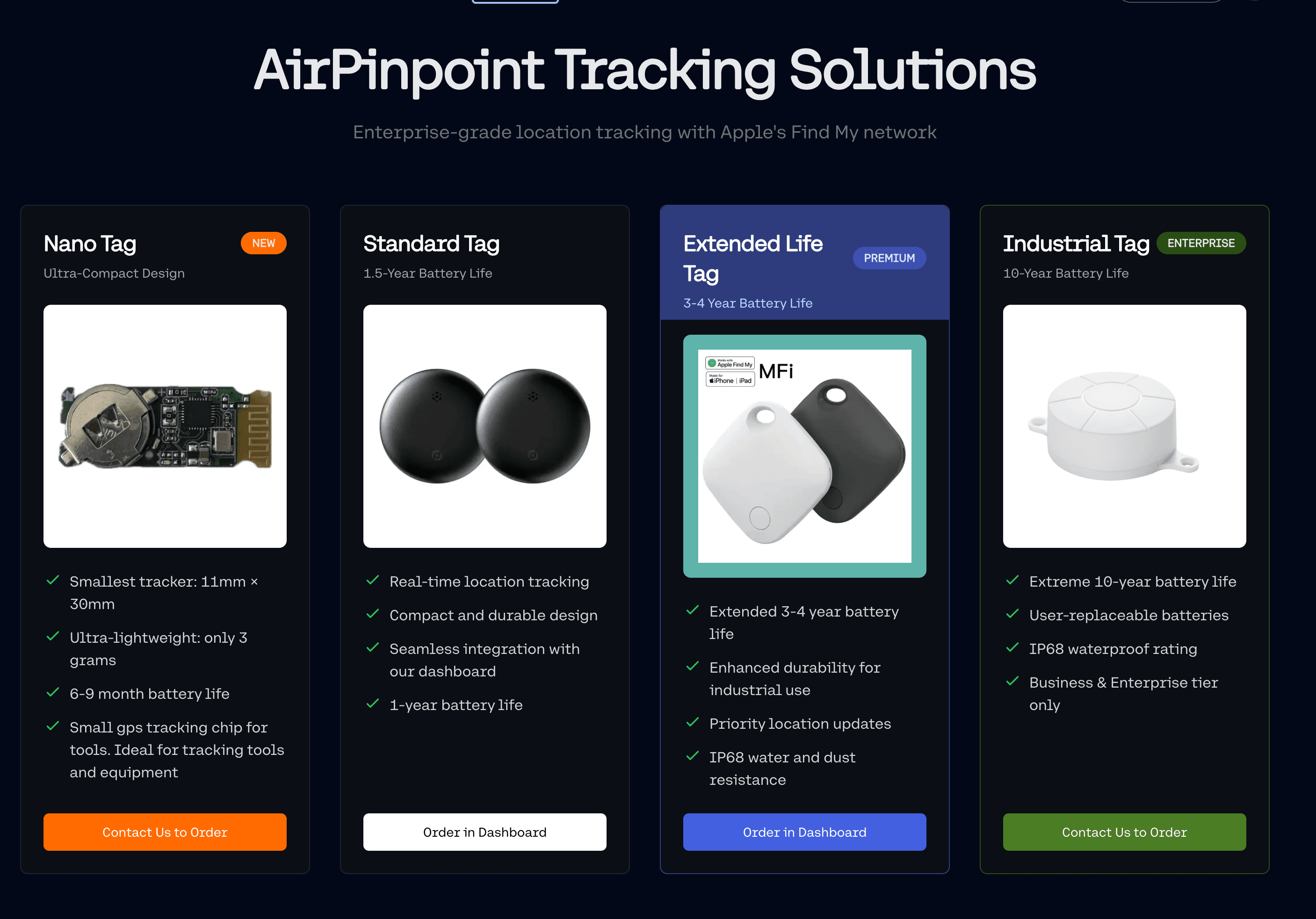
Attach AirTags. Place one AirTag per sweeper. Inside the cab (glove box, under the seat), in the engine compartment, or in a weatherproof mount on the body. No wiring, no tools, no mechanic time.
-
Register in AirPinpoint. Add each sweeper to your dashboard with a name (e.g., "Sweeper 07 - Elgin Pelican"), operator assignment, and any notes (license plate, VIN, service zone).
-
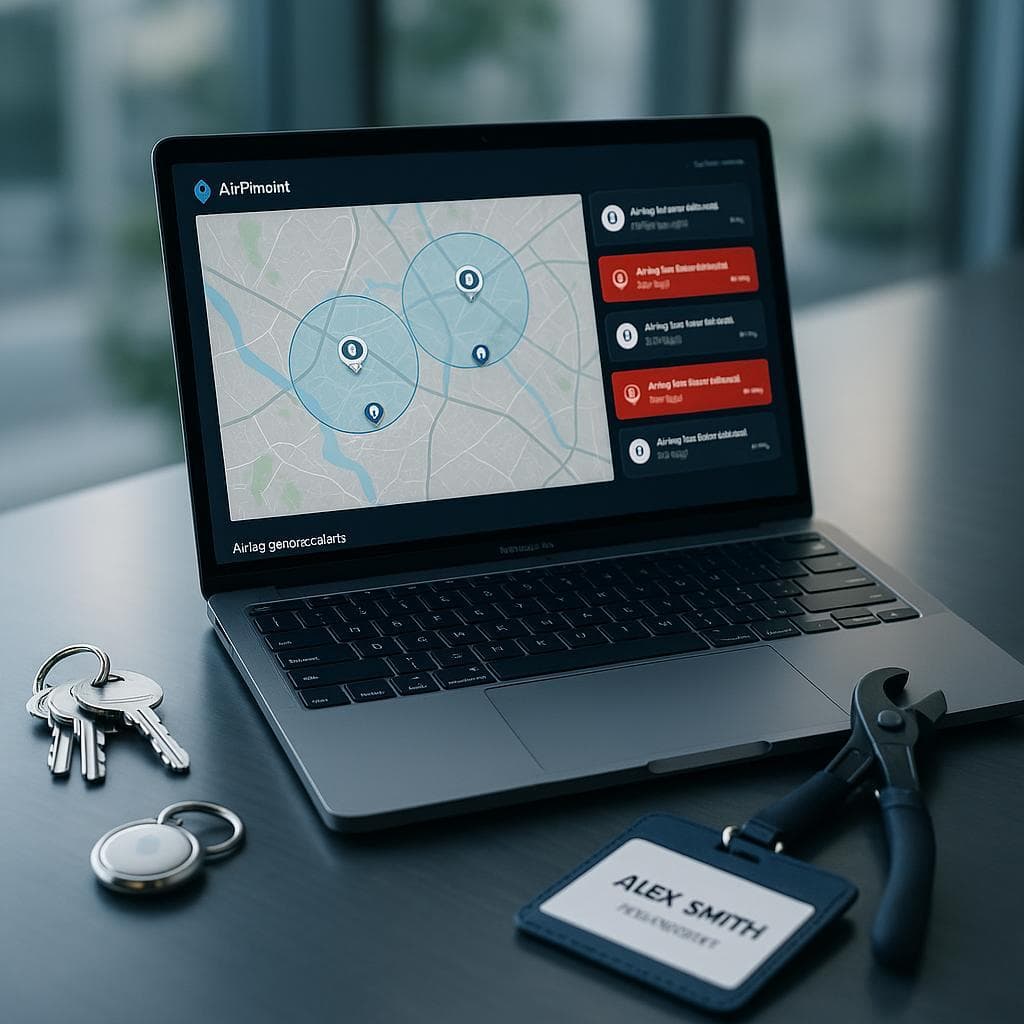
Set up geofences. Draw geofences around your service zones, your yard/depot, and any areas that are off-limits. AirPinpoint alerts you when sweepers enter or exit these zones.
-
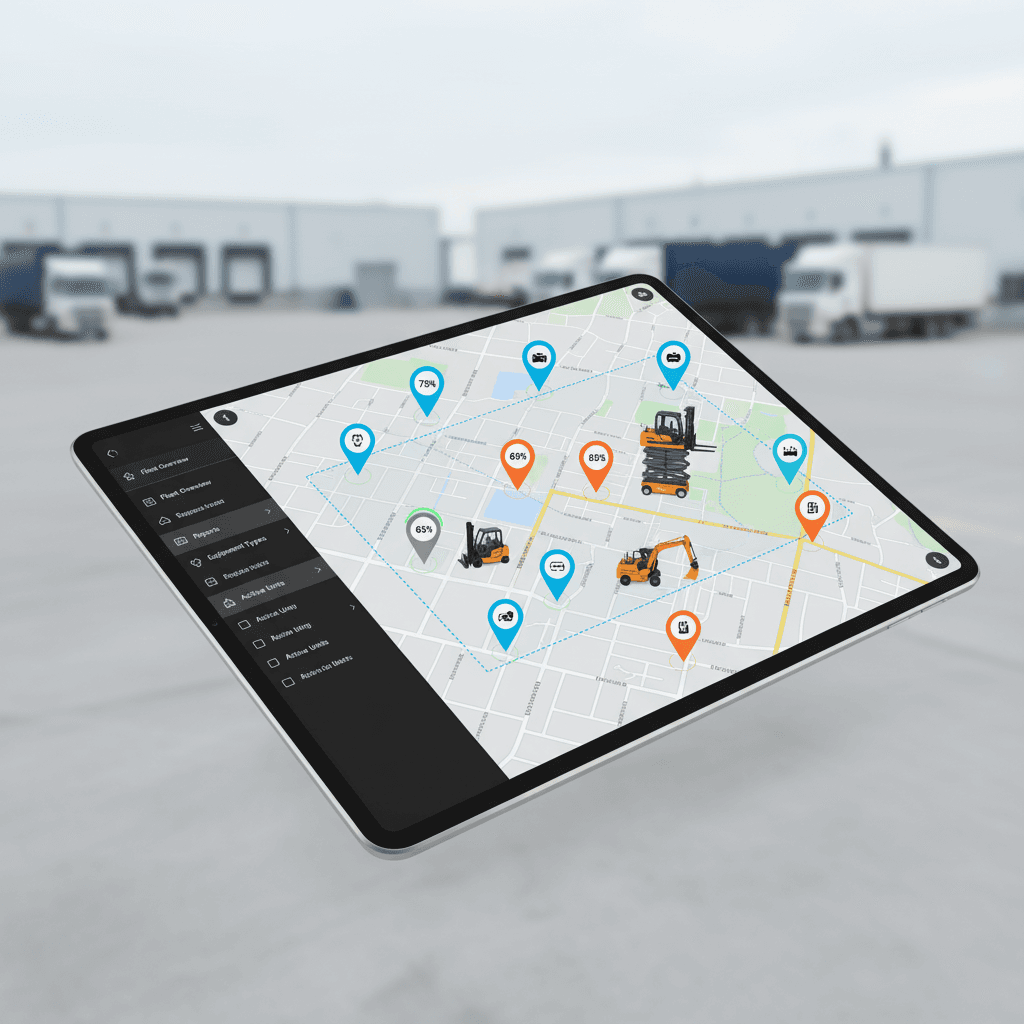
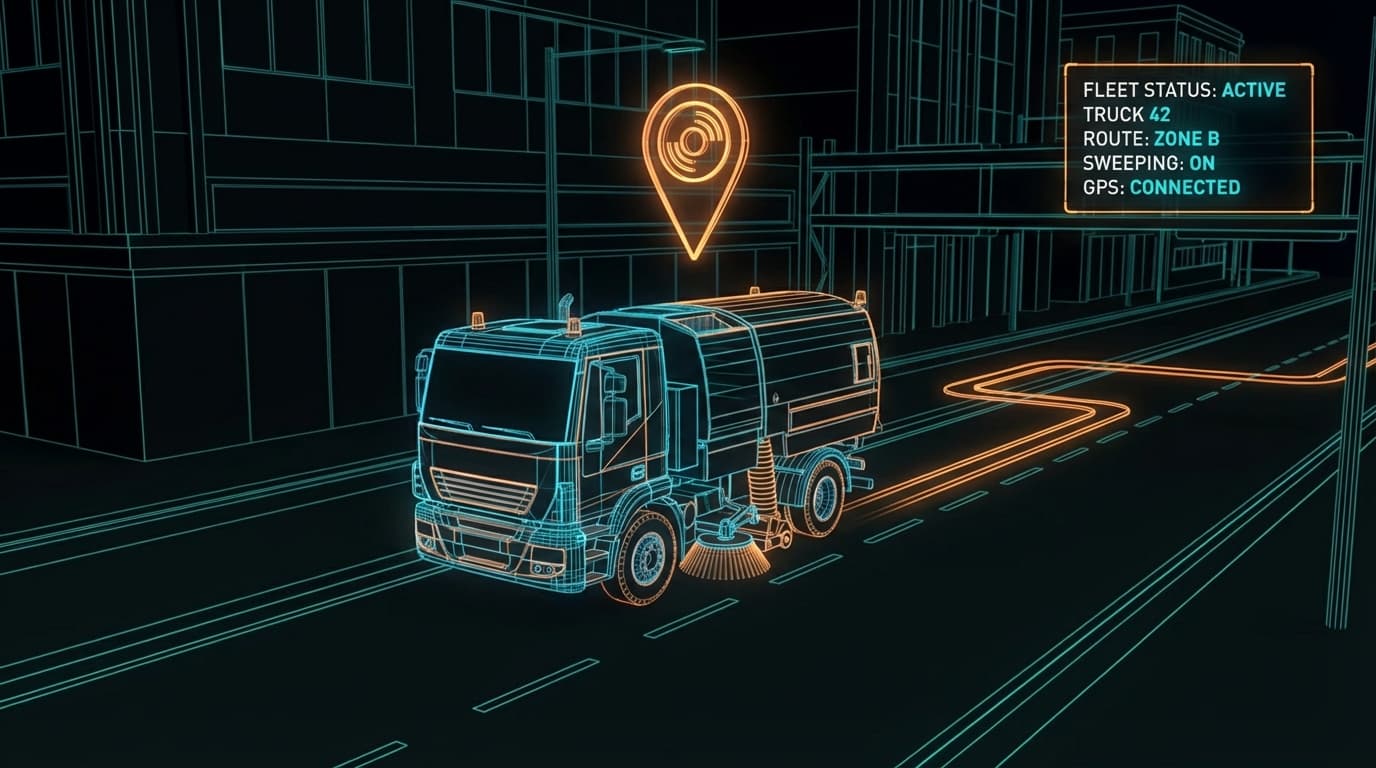
Start tracking. Every sweeper appears on your fleet map. Click any unit to see its current location, location history, and geofence activity.
What You See on the Dashboard
Fleet overview. All sweepers on a single map. Color-coded by status: on route, at yard, or stationary in the field.
Location history. For each sweeper, a timeline of locations showing where it traveled during its shift. This is your route verification data.
Geofence logs. Timestamped records of when each sweeper entered and exited each service zone. Exportable for contract compliance reports.
Alerts. Configurable notifications for after-hours movement, geofence exits, or extended stationary periods (a sweeper parked for 2 hours mid-route may indicate a breakdown or driver issue).
Multi-user access. Fleet managers, dispatch, field supervisors, and contract administrators can all access the dashboard with role-based permissions.
Cost Comparison: AirPinpoint vs. Traditional Fleet Telematics
Traditional fleet GPS systems were built for long-haul trucking and delivery fleets. They're powerful, but they come with pricing and complexity that doesn't match the needs of most sweeper operations.
10-Sweeper Municipal Fleet
| Cost Category | AirPinpoint | Samsara | Geotab |
|---|---|---|---|
| Hardware (one-time) | $290 (AirTags) | $990-$1,480 | $800-$1,200 |
| Monthly per vehicle | $11.99 | $30-$50 | $25-$40 |
| Annual platform cost | $1,439 | $3,600-$6,000 | $3,000-$4,800 |
| Installation labor | $0 | $500-$1,000 | $500-$1,000 |
| Year 1 total | $1,729 | $5,090-$8,480 | $4,300-$7,000 |
| Year 2+ annual | $1,439 | $3,600-$6,000 | $3,000-$4,800 |
| Contract requirement | None | 3-year minimum | Varies by reseller |
25-Sweeper Contract Fleet
| Cost Category | AirPinpoint | Samsara | Geotab |
|---|---|---|---|
| Hardware (one-time) | $725 | $2,475-$3,700 | $2,000-$3,000 |
| Annual platform cost | $3,597 | $9,000-$15,000 | $7,500-$12,000 |
| Year 1 total | $4,322 | $11,475-$18,700 | $9,500-$15,000 |
| 3-year total | $11,516 | $29,475-$48,700 | $24,500-$39,000 |
Over three years, a 25-sweeper fleet saves $13,000 to $37,000 by choosing AirPinpoint over traditional telematics. That's the cost of a used backup sweeper.
What You Give Up
Transparency matters. AirPinpoint is not a full telematics system. Here's what dedicated fleet GPS platforms offer that AirPinpoint does not:
- Engine diagnostics. Samsara and Geotab read OBD/J1939 data for fault codes, fuel consumption, and engine hours.
- Brush/PTO engagement data. Geotab's new street sweeper integration tracks whether the brushes are actually engaged, not just that the vehicle is on the route.
- Hopper fill levels and water usage. Geotab captures sweeper-specific telemetry.
- Driver behavior scoring. Hard braking, speeding, idle time alerts.
- ELD compliance. If your sweeper drivers fall under Hours of Service regulations.
If you need engine-level telemetry or brush engagement verification, Geotab's sweeper integration is the right tool. If your primary needs are route verification, fleet visibility, contract compliance, and theft prevention, AirPinpoint delivers that at 60-70% lower cost.
Use Cases by Operation Type
Municipal In-House Fleets
City and county public works departments running their own sweeper fleets typically have 5-50 units. The challenges:
- Council/citizen accountability. "Why hasn't my street been swept?" GPS data answers this question instantly.
- Union workforce management. Route completion data provides objective performance metrics without adversarial oversight.
- Budget justification. When public works requests funding for additional sweepers, route data showing 100% utilization of existing units is more persuasive than estimates.
- Inter-departmental billing. Some municipalities charge sweeping costs back to individual departments or districts. GPS data documents exactly how much service each area received.
Private Sweeping Contractors
Contract sweeping companies serve multiple municipal clients simultaneously, often with shared fleets. Tracking needs:
- Multi-contract route management. Assign sweepers to specific contracts and verify that each contract's routes are completed.
- Invoice documentation. Attach route completion data to monthly invoices. Some contractors report that GPS-documented invoices get paid 15-20 days faster because there's nothing to dispute.
- Crew scheduling. Location data shows which routes take longer than planned, allowing more accurate shift scheduling.
- Equipment utilization. Identify underused sweepers that could cover additional routes or be redeployed to a different contract.
Airport and Port Authority Fleets
Airports, seaports, and industrial campuses maintain sweeper fleets for runway/taxiway FOD (Foreign Object Debris) sweeping, terminal roadway maintenance, and cargo yard cleaning. These operations have strict schedules tied to flight operations or vessel arrivals. GPS tracking verifies that sweeping was completed before the next scheduled operation.
HOA and Property Management
Large planned communities, shopping centers, and industrial parks contract sweeping services. Property managers want documentation that they're getting what they're paying for. GPS route data in the monthly service report makes that simple.
MS4 Compliance Reporting with GPS Data
For stormwater program managers who need to document sweeping activity for MS4 permit compliance, here's how AirPinpoint data maps to typical reporting requirements:
| MS4 Reporting Requirement | How AirPinpoint Provides It |
|---|---|
| Sweeping frequency per zone | Geofence entry/exit logs with dates |
| Total lane-miles swept | Location history with distance calculation |
| Service area coverage | Map overlay showing all routes covered |
| Dates and times of activity | Timestamped location records per vehicle |
| Year-over-year comparison | Historical data export by reporting period |
Integration with existing reporting: AirPinpoint exports data to CSV, which you can import into your stormwater management system, GIS platform, or annual report template. The data is raw and auditable, not pre-summarized.
Getting Started
For Municipal Fleet Managers
- Inventory your fleet. Count sweepers, support vehicles, and any other units you want to track.
- Define service zones. Map out the zones or routes you need to verify for compliance or public accountability.
- Start with a pilot. Put AirTags on 3-5 sweepers and run AirPinpoint for a month. Compare the GPS data against your existing driver logs. The discrepancies will make the case for full deployment.
- Scale to full fleet. Roll AirTags to every unit. Set up geofences for all service zones, your yard, and any restricted areas.
- Build reporting. Export route data monthly for MS4 compliance, council reports, or contract documentation.
For Private Contractors
- Tag every sweeper. Including backup units and sweepers assigned to subcontractors working under your contracts.
- Geofence each contract area. Create separate geofences for each municipal client's service zones.
- Generate monthly compliance reports. Pull route data before invoicing to document service completion.
- Share access with clients. AirPinpoint's multi-user feature lets you give city staff read-only access to their contract's vehicles, building trust without extra reporting work.
The Bottom Line
Street sweepers are among the most expensive vehicles in any municipal or contractor fleet. They operate during hours when supervision is impractical, they're subject to regulatory documentation requirements that paper logs can't satisfy, and they represent millions of dollars in rolling assets with surprisingly little oversight.
GPS tracking changes this. And it doesn't need to cost $30-50 per vehicle per month. AirPinpoint provides the fleet visibility, route verification, and compliance documentation that sweeper operations need, starting at $11.99 per device per month with no contracts and no installation.
For a 10-sweeper fleet, that's less than $1,500 per year. For the compliance documentation and operational accountability it provides, tracking pays for itself within the first month.
 Our Solution