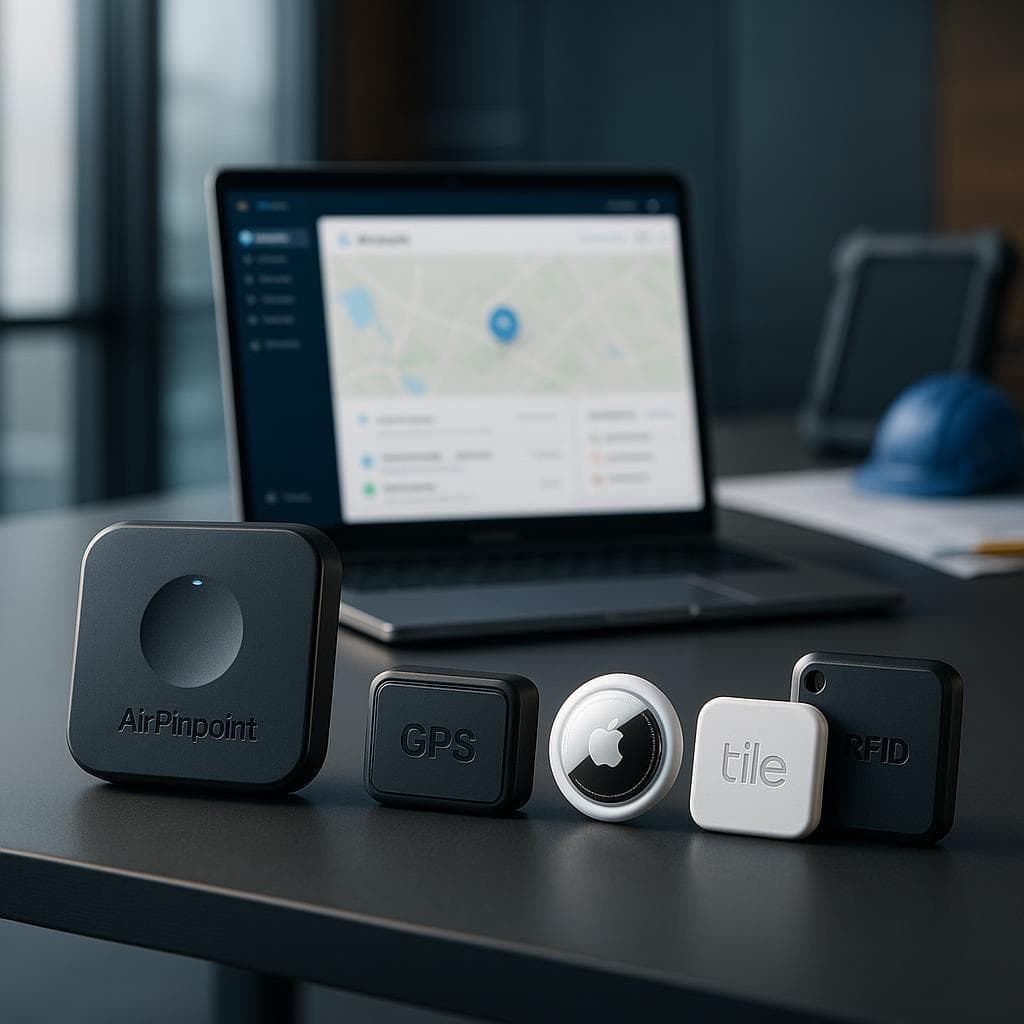
Top Asset Trackers for 2026: GPS, RFID, BLE Compared
Choosing an asset tracker comes down to four questions: where does the asset live, does it have power, how often do you need location updates, and what does the battery actually hold at that update rate?
The Battery Fine Print (Critical for Battery-Powered GPS)
Before comparing options, the number nobody puts on the box: cellular GPS trackers advertising 2-5 year batteries assume roughly one location update per day. At the update rates most people expect (every few minutes), those batteries hold days, not years.
Each cellular GPS update requires the GPS radio to stay on for up to 30 seconds for a satellite fix, then a cellular modem to fire up and transmit. That draws hundreds of milliamps per update. Do it 1,440 times a day (once per minute) and the battery is dead in 2-3 days. Do it once a day and you get years.
Tracki publishes this honestly: 2-3 days real-time, 30-75 days at 1-3 updates per day. An AirTag sidesteps the problem entirely. It never runs a GPS radio or a cellular modem. Nearby iPhones handle those tasks on their own batteries. Result: roughly 100,000 location updates per $3 CR2032 coin cell over 12+ months, updating every 1-5 minutes in populated areas the whole time.
Top Asset Tracker Options
1. AirTag + Airpinpoint (Best for Most Business Assets)
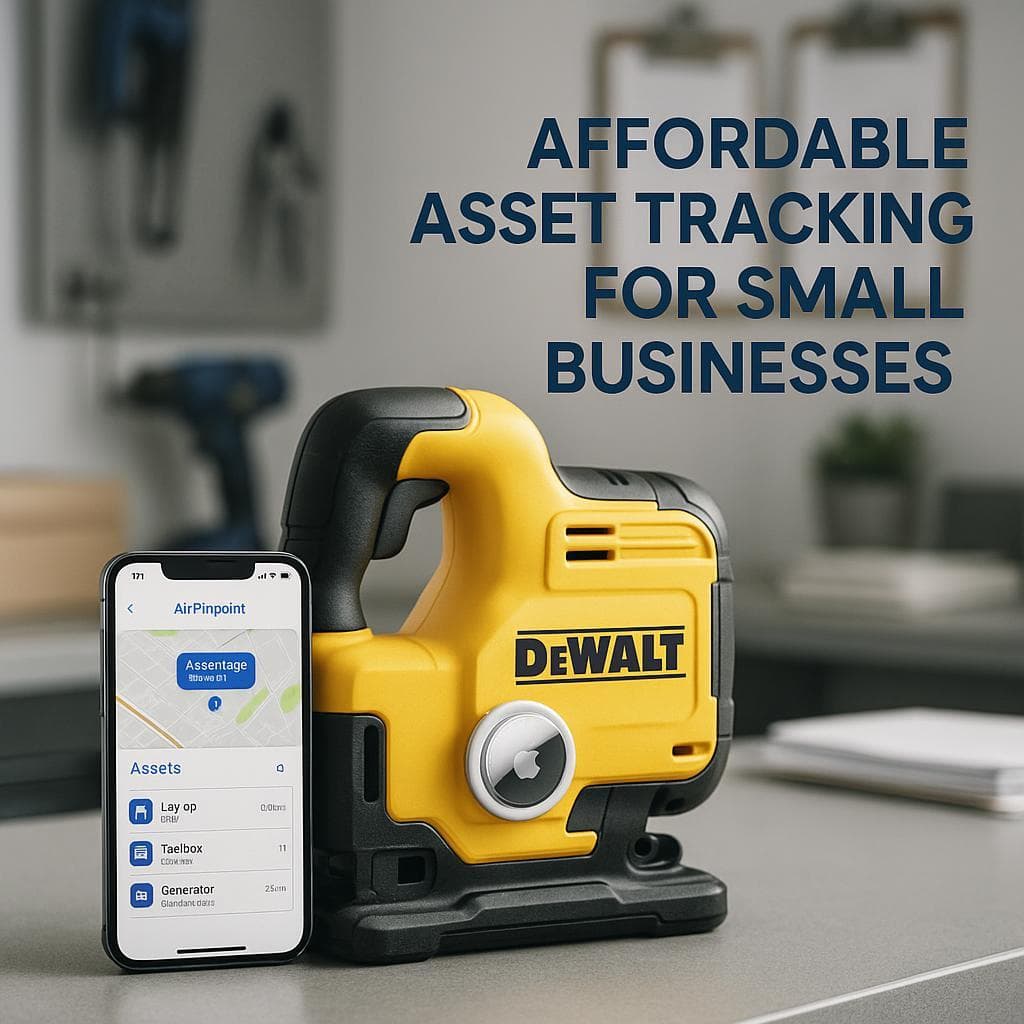
AirTag 2 hardware ($29) paired with Airpinpoint's business dashboard ($11.99/device/month, no contract). Tracks any asset with no wiring, no installation, and no charging routine.
Best for: Trailers, generators, tools, equipment, containers, mixed fleets. Any asset in an area where people carry iPhones.
Update frequency: Every 1-5 minutes in populated areas, via 2.5 billion Apple devices.
Battery: 12+ months per CR2032 coin cell ($0.30-1.00). This is at full update rate, not throttled.
Not for: Remote or wilderness areas with no foot traffic. Assets requiring real-time vehicle diagnostics or ELD compliance.
2. Hardwired Cellular GPS (Best for Powered Vehicles)
Samsara, Geotab GO9+, Verizon Connect. Wired into the vehicle's electrical system. Genuine real-time tracking (every 10-60 seconds), engine hours, OBD diagnostics, ELD compliance for regulated fleets.
Best for: Trucks, heavy equipment with engines, vehicles needing driver behavior monitoring, ELD-regulated commercial vehicles.
Battery note: Runs on vehicle power. No battery concern. This is where the battery fine print does not apply.
Cost: $25-45/device/month, plus $80-200 hardware, plus installation. Multi-year contracts typical.
3. Battery-Powered Cellular GPS (Trak-4, LandAirSea SYNC, Samsara AG46 battery option)
Self-contained units with no wiring. Designed for unpowered assets where hardwired GPS isn't possible.
Best for: Trailers, construction equipment, assets in remote areas with no iPhone traffic.
Battery fine print: Trak-4 "18 months" assumes ~1 update/day (~550 total updates). LandAirSea SYNC "2 months" assumes hourly updates (~1,400 total). At AirTag-equivalent update rates, these units last 2-4 days.
Cost: $7-25/month, plus hardware. Month-to-month or short contracts available.
Honest use case: Remote areas where Find My coverage is thin. If your equipment operates in populated areas, AirTag+Airpinpoint delivers more updates at lower cost.
4. RFID (Best for Controlled-Environment Inventory)
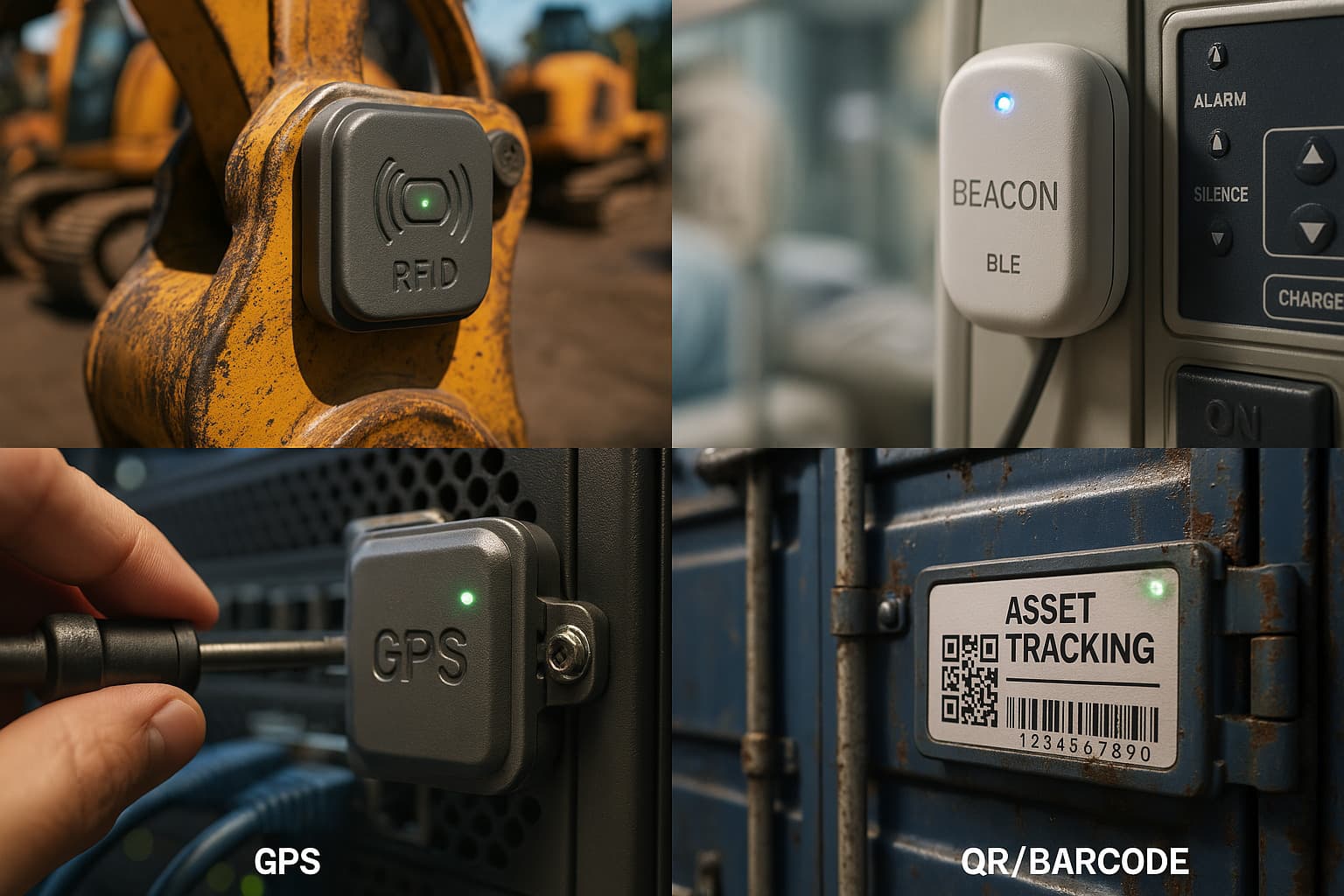
Passive RFID tags (no battery) work at short range (up to ~10 meters) with reader infrastructure. Active RFID extends range but adds battery and infrastructure cost.
Best for: Warehouse inventory, tool cribs, hospital equipment rooms, anywhere you have fixed readers and need precise in-or-out detection.
Not for: Field tracking, theft recovery, or anything that leaves a controlled environment with readers.
Cost: Reader hardware $500-5,000+, tags $0.10-5+ each, infrastructure setup.
5. Tile and Similar Consumer Bluetooth Trackers
Tile, Chipolo, Pebblebee. Coin-cell Bluetooth trackers with crowd-sourced location networks, similar architecture to AirTags.
Best for: Personal item tracking (wallets, bags, keys).
Limitation for business: Tile's network is millions of devices; Apple's Find My is 2.5 billion. For business use, the network density gap means less frequent updates. No business dashboard, no team access, no webhook integrations.
Scorecard
| Tracker | Update frequency | Battery life at that rate | Monthly cost | Best for |
|---|---|---|---|---|
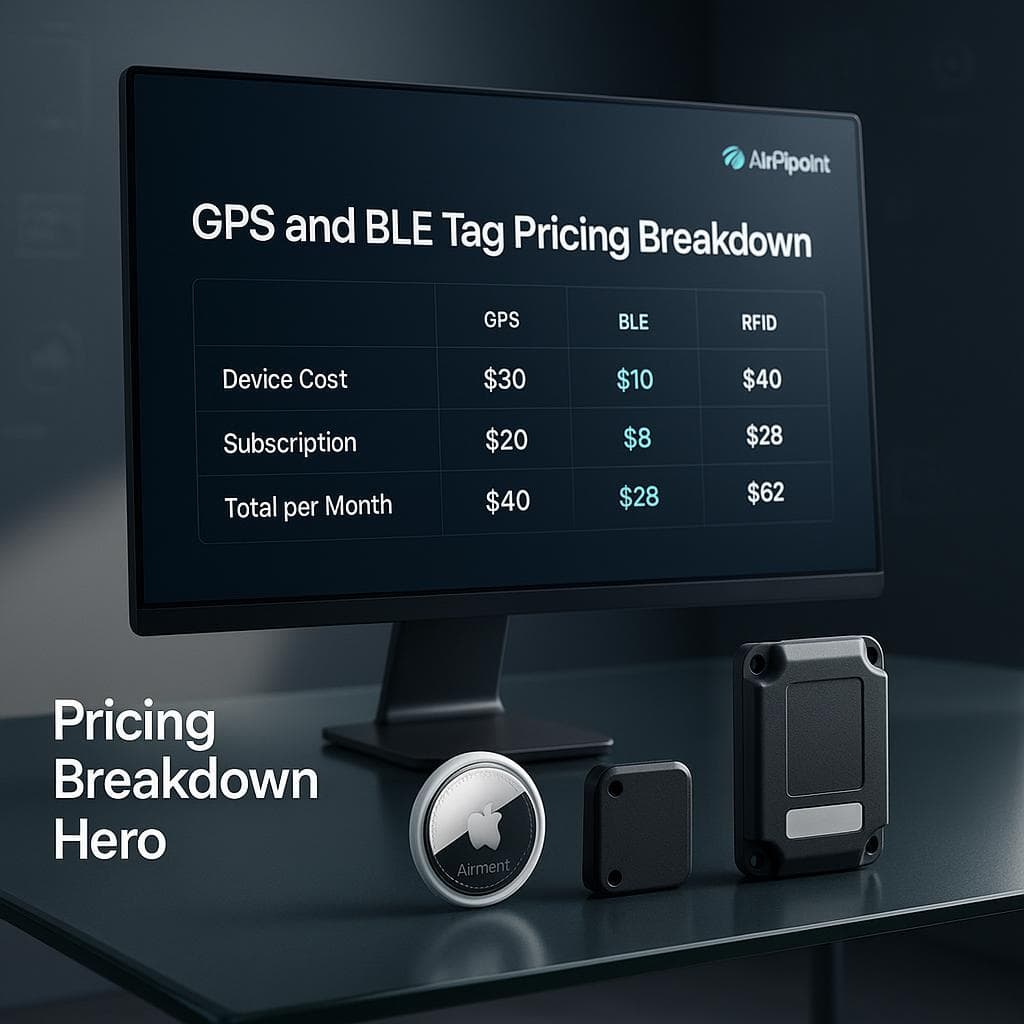
| AirTag + Airpinpoint | Every 1-5 min (populated areas) | 12+ months | $11.99/device | Unpowered assets, mixed fleets |
| Hardwired GPS (Samsara, Geotab) | Every 10-60 sec | Unlimited (vehicle power) | $25-45/device | Powered vehicles, ELD compliance |
| Battery GPS, frequent updates | Every 1-5 min | 2-3 days | $10-25/device | Short-term intensive tracking |
| Battery GPS, throttled (Trak-4) | ~1/day | 18 months | $7-17/device | Remote assets, once-daily check-ins |
| RFID (passive) | On reader scan only | No battery | Low (tags); High (readers) | Controlled-environment inventory |
| Tile | Variable (crowd network) | 12+ months | Free (basic) | Personal items |
Who Should Use What
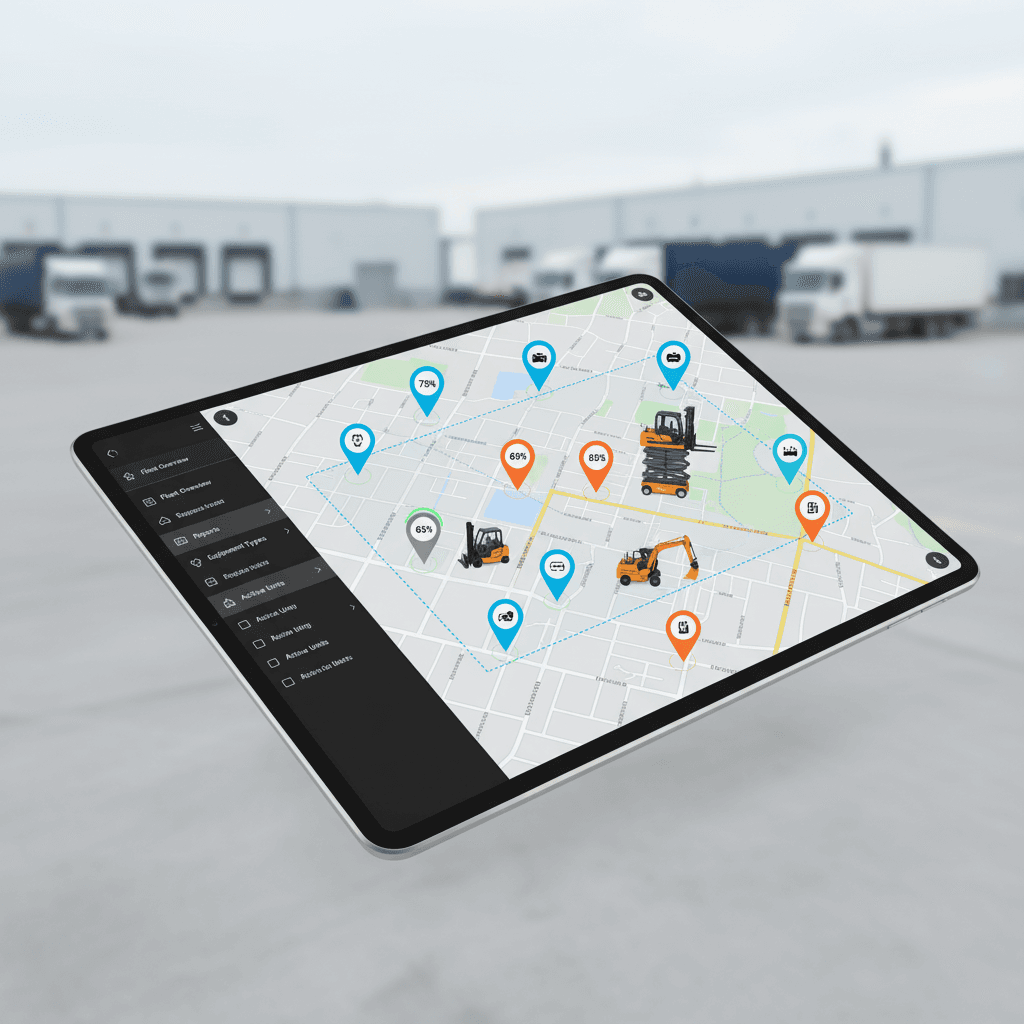
Mixed fleet with vehicles and unpowered assets: Hardwired GPS on the vehicles that need real-time dispatch or ELD. AirTag + Airpinpoint on everything else. The split cuts tracking costs 40-60% while covering more assets.
All unpowered assets (trailers, generators, tools): AirTag + Airpinpoint. Battery-powered GPS forces a daily-update trade-off that makes it expensive insurance: you get a location from 23 hours ago, not a live one.
Remote-only equipment: Battery-powered cellular GPS or satellite. Apple Find My coverage is thin in wilderness. Cellular GPS with store-and-forward handles coverage gaps.
Warehouse or tool crib inventory: RFID for in-or-out detection at fixed checkpoints. AirTag for broader location awareness if assets leave the facility.
Start with Airpinpoint for most equipment tracking scenarios. $29 hardware, $11.99/device/month, no contract, fleet dashboard on day one.
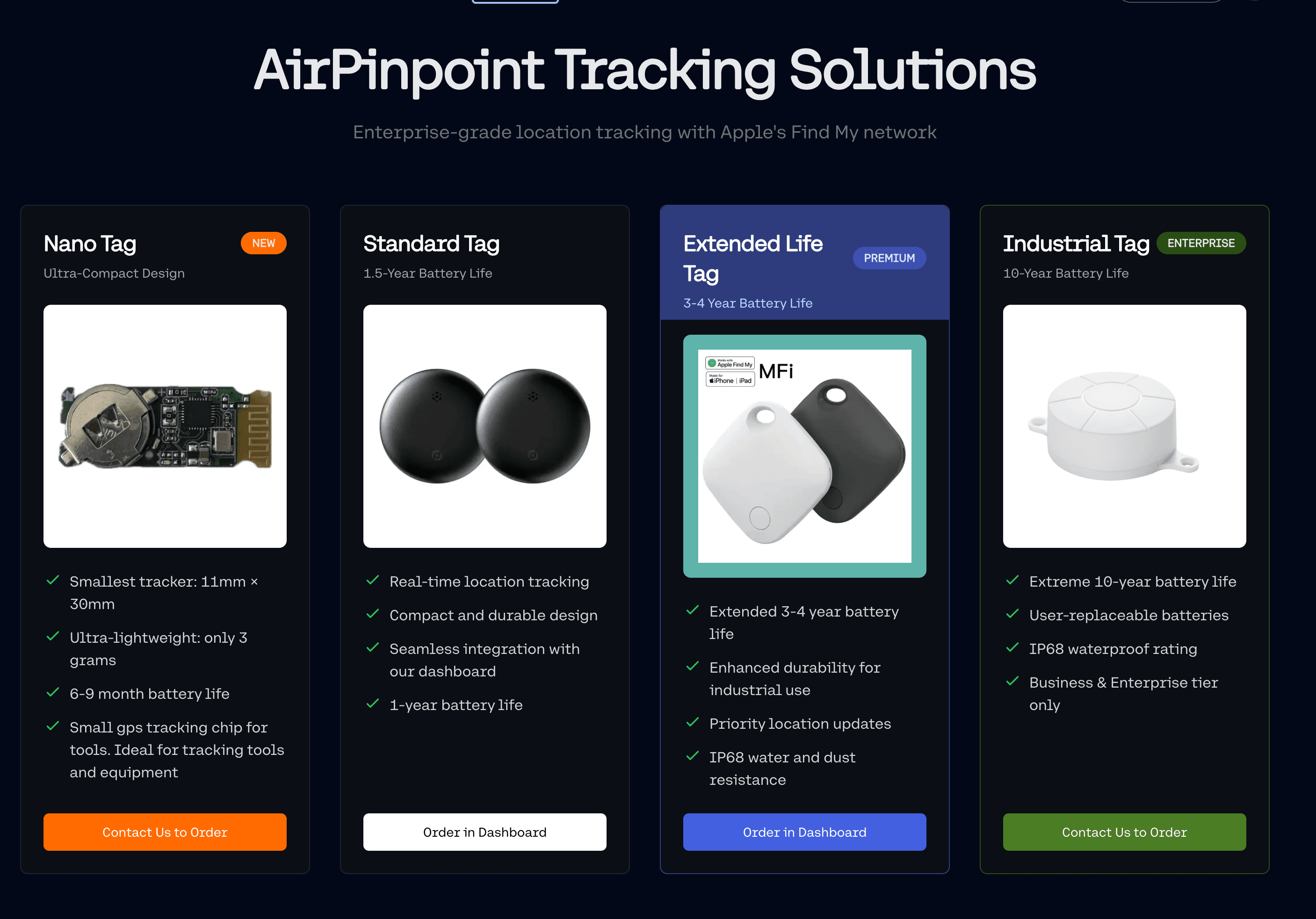
 Our Solution