BLE Tracking for Assets: How It Works, What It Costs, and When GPS Is Overkill
A $29 AirTag tracked a stolen $8,000 generator across three state lines in 2025. The GPS tracker on the same job site had a dead battery.
That's BLE tracking in one sentence: cheap hardware, long battery life, and a network of over a billion phones doing the work that used to require cellular modems and monthly subscriptions.
Bluetooth Low Energy (BLE) tracking uses low-power radio signals to locate assets. A small tag broadcasts its identity. Nearby smartphones, tablets, or fixed receivers pick up the signal and relay the tag's position to a cloud dashboard. No SIM card. No wiring. A CR2032 coin cell lasts 1-2 years.
This guide covers how BLE tracking works, what it costs compared to GPS and RFID, where it falls short, and when it's the right choice for your operation.
What is BLE Tracking?
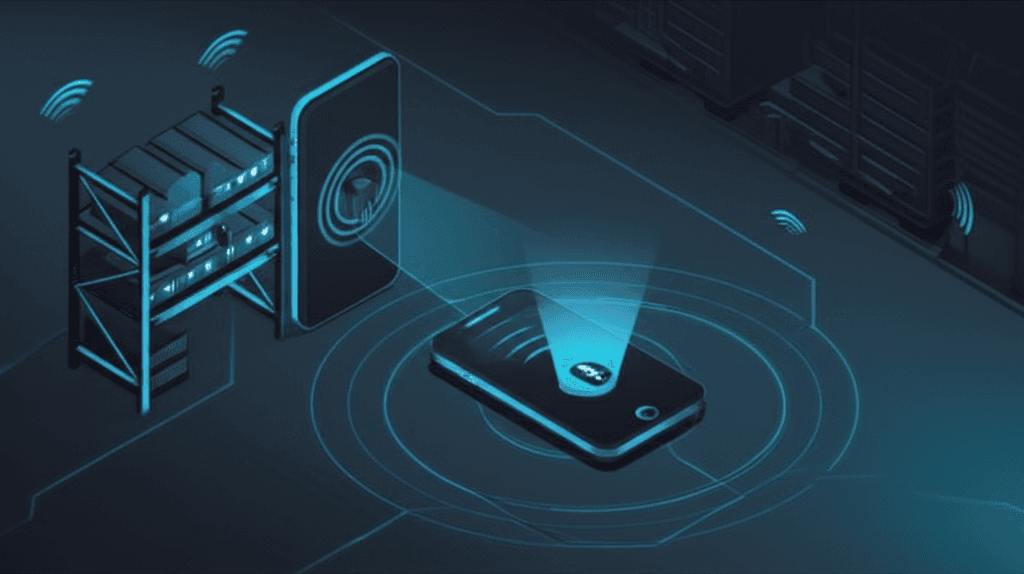
BLE tracking uses Bluetooth Low Energy radios (2.4GHz ISM band) to locate assets within range of compatible devices. Three components make it work:
- BLE Tags: Small devices attached to assets that broadcast an encrypted identifier every 1-2 seconds
- Receivers: Smartphones (1B+ Apple devices, Android Find Hub), or fixed BLE gateways in warehouses
- Cloud Platform: Software that aggregates location reports into a map, history, and alerts
How BLE Tracking Works
BLE vs Classic Bluetooth
BLE operates in the same 2.4GHz band as classic Bluetooth but takes a fundamentally different approach:
| Characteristic | Classic Bluetooth | Bluetooth Low Energy |
|---|---|---|
| Power consumption | High | Very low (μW range) |
| Data transfer | Continuous streaming | Periodic small packets |
| Connection time | Seconds | Milliseconds |
| Range | ~10 meters | 20-100+ meters |
| Battery life | Hours to days | Months to years |
BLE devices sleep most of the time, waking briefly to broadcast small data packets. A GPS tracker's cellular modem draws 50-200mA during transmission, and the GPS radio alone can stay on for up to 30 seconds per fix. A BLE tag draws 5-15mA for a few milliseconds per broadcast. That difference is why BLE tags run on coin cells for years while GPS trackers need recharging every few days at real-time update rates (Tracki's own published spec: 2-3 days in real-time mode). The multi-month GPS battery figures assume one update per day, which is a different product than frequent tracking.
BLE Beacons vs BLE Tags
Two types of BLE devices, different use cases:
BLE Beacons are fixed-position transmitters. Mount them on walls, shelves, or zone boundaries. They broadcast a signal that nearby devices detect. Use case: indoor navigation, zone-based tracking ("this forklift is in Aisle 7").
BLE Tags attach to movable assets. They broadcast their identity so the network can locate them wherever they go. Use case: equipment tracking, tool monitoring, inventory across sites. AirTags and Chipolo are consumer BLE tags. Airpinpoint turns them into business asset trackers.
Why BLE Tracking Is Replacing GPS for Most Assets
Battery Life: Years vs Weeks
BLE's power efficiency is the reason it's taken over asset tracking:
- Standard BLE tags (AirTag, Chipolo): 1-2 years on a CR2032 coin cell
- Industrial BLE tags: 3-7 years with extended batteries
- Solar-assisted BLE: Indefinite operation with adequate light
A GPS tracker's battery dies, and you lose visibility. A BLE tag's battery dies, and you swap a $3 coin cell. Different operational burden entirely.
Every Phone Is a Scanner
BLE is the only tracking technology with built-in smartphone support. Apple's Find My network (1B+ devices) and Google's Find Hub (Android) turn every phone into a passive BLE receiver. No proprietary readers required.
For warehouse tracking, fixed BLE gateways provide continuous coverage. For field assets, the phone network does the work.
Cost Comparison: BLE vs GPS vs RFID vs UWB
| Technology | Device Cost | Infrastructure Cost | Monthly Fee |
|---|---|---|---|
| GPS Cellular | $50-200 | None | $10-30/device |
| Active RFID | $15-50 | High (readers) | Minimal |
| BLE | $10-40 | Moderate (gateways) | $2-10/device |
| UWB | $40-100 | High (anchors) | $5-15/device |
According to Link Labs, "Bluetooth Low Energy tags don't require SIM cards, and they're generally cheaper than a standalone cellular tracking device. That means BLE allows you to track more assets with less power and less cost."
4. Indoor Tracking Capability
Unlike GPS, which struggles or fails indoors, BLE is specifically designed for indoor environments:
- Signals penetrate walls and obstacles effectively
- No line-of-sight requirement to satellites
- Works in warehouses, hospitals, factories, and office buildings
- Can achieve 1-3 meter accuracy with proper infrastructure
5. Additional Sensor Integration
Modern BLE tags often include supplementary sensors:
- Accelerometers: Motion detection, drop alerts, usage patterns
- Temperature sensors: Cold chain monitoring, equipment overheating
- Humidity sensors: Environmental compliance, storage conditions
- Light sensors: Tamper detection, exposure monitoring
BLE Tracking Accuracy and Range
Accuracy Considerations
BLE positioning accuracy depends on several factors:
Standard RSSI-Based Positioning
- Accuracy: 5-10 meters
- Method: Signal strength triangulation
- Best for: Zone-level tracking, presence detection
Angle of Arrival (AoA)
- Accuracy: 1-3 meters
- Method: Multi-antenna signal direction measurement
- Best for: Precise indoor positioning
Bluetooth 6.0 Enhancements (2025)
- Improved ranging capabilities
- Enhanced positioning precision
- Better interference resistance
As AssetInfinity explains, "Bluetooth-based indoor location tracking typically achieves an accuracy of about 5-10 meters. For applications requiring higher precision, ultra-wideband (UWB) technology is recommended, offering positioning accuracy of around 10 centimeters."
Range Capabilities
Standard BLE range varies by implementation:
- Indoor open space: 30-50 meters
- Through walls: 10-20 meters
- High-power industrial tags: Up to 100+ meters
- Mesh network extended: Unlimited (with gateways)
Industry Applications for BLE Tracking
Manufacturing and Industrial
BLE has become essential for factory floor operations:
- Tool tracking: Locating hand tools, jigs, and fixtures
- WIP monitoring: Tracking work-in-progress through production
- Equipment utilization: Understanding machine usage patterns
- Safety compliance: Ensuring workers have required PPE
ElaInnovation reports that "Advanced asset tracking technologies, such as the Internet of Things (IoT) and Bluetooth Low Energy (BLE), are rapidly gaining ground in the manufacturing industry."
Healthcare
Hospitals leverage BLE for critical operations:
- Medical equipment location: Finding infusion pumps, wheelchairs, monitors
- Patient flow tracking: Understanding care journey and wait times
- Staff location: Enabling nurse call routing and safety alerts
- Hand hygiene compliance: Monitoring wash station visits
Retail and Hospitality
BLE enables enhanced customer experiences:
- Asset management: Tracking high-value inventory and fixtures
- Customer engagement: Proximity-based promotions and wayfinding
- Loss prevention: Alerts when assets leave designated areas
- Operational efficiency: Staff location and task management
Logistics and Warehousing
BLE complements existing warehouse systems:
- Pallet tracking: Location within facilities
- Pick path optimization: Worker routing suggestions
- Inventory accuracy: Real-time stock visibility
- Dock door monitoring: Inbound/outbound tracking
According to the Small Business Inventory Management Guide, "Industries such as healthcare, manufacturing, and warehousing have found great benefit from Bluetooth LE for tracking and monitoring their most critical assets."
BLE Tracking Infrastructure Requirements
Gateway Deployment
Effective BLE tracking requires strategically placed receivers:
Coverage Planning
- Open areas: 1 gateway per 400-600 square meters
- Obstructed environments: 1 gateway per 200-300 square meters
- High-precision needs: 4+ gateways per zone for triangulation
Gateway Types
- Wall-mounted indoor units
- Ceiling-mounted options for warehouse environments
- Outdoor-rated units for yards and loading areas
- Mobile gateways on forklifts or carts
Network Requirements
BLE gateways require connectivity to transmit data:
- Ethernet: Most reliable, recommended for fixed installations
- WiFi: Flexible placement, good for retrofit scenarios
- Cellular: For areas without wired infrastructure
- LoRaWAN backhaul: Long-range, low-power option
Software Platform
The tracking platform processes and presents location data:
- Real-time location display on facility maps
- Historical movement and dwell time analytics
- Alert configuration for geofences and conditions
- Integration APIs for enterprise systems
Comparing BLE to Other Tracking Technologies
BLE vs. GPS
| Factor | BLE Tracking | GPS Tracking |
|---|---|---|
| Indoor accuracy | 1-10 meters | Not functional |
| Outdoor accuracy | Requires gateways | 3-5 meters |
| Battery life | 2-7 years (at full update rate) | 1-6 months (at ~1 update/day; days at AirTag rates) |
| Updates per battery | 100,000+ (AirTag) | 550-1,400 (Trak-4 to LandAirSea SYNC) |
| Device cost | $10-40 | $50-200 |
| Monthly fees | $2-10 | $10-30 |
| Best use case | Indoor/campus | Vehicle/outdoor with power source |
The "battery life" row for GPS needs an asterisk. GPS trackers advertising 1-6 months get there by updating once a day, sometimes less. Tracki publishes the honest version of this: 2-3 days in real-time mode (updates every 1-5 min), 30-75 days at 1-3 updates per day. The gap between BLE and GPS battery life is not just an engineering difference. It is a consequence of what each update costs.
A cellular GPS update requires two power-hungry operations: the GPS radio stays on for up to 30 seconds to get a satellite fix, then an LTE modem fires a transmit burst at hundreds of milliamps. A BLE tag broadcasts a small packet at microamp-level current, and the iPhones nearby do the GPS fix and cellular upload on their own batteries. An AirTag on Apple's 2.5-billion-device Find My network delivers over 100,000 location updates per CR2032 coin cell. A Trak-4 delivers about 550 at ~1 update/day before the batteries die.
For unpowered assets (trailers, generators, tool carts, containers), this is the deciding factor. GPS forces a choice between update frequency and battery life. BLE, through a dense relay network, provides both.
BLE vs. RFID
| Factor | BLE Tracking | RFID |
|---|---|---|
| Read range | 20-100 meters | 1-10 meters (passive) |
| Real-time tracking | Yes | Checkpoint-based |
| Battery required | Yes (in tag) | No (passive RFID) |
| Tag cost | $10-40 | $0.10-5 (passive) |
| Infrastructure | Moderate | Reader-intensive |
| Best use case | Real-time location | Inventory counting |
BLE vs. UWB
| Factor | BLE Tracking | UWB Tracking |
|---|---|---|
| Accuracy | 1-10 meters | 10-30 centimeters |
| Battery life | 2-7 years | 1-3 years |
| Device cost | $10-40 | $40-100 |
| Infrastructure cost | Moderate | High |
| Best use case | General tracking | Precision positioning |
Implementing BLE Tracking: Best Practices
1. Start with Clear Objectives
Define what you need to achieve:
- Asset location visibility (zone-level vs. precise)
- Utilization tracking and analytics
- Security and theft prevention
- Compliance and audit requirements
2. Conduct a Site Survey
Before deployment, assess your environment:
- Map all areas requiring coverage
- Identify structural obstacles and interference sources
- Document existing network infrastructure
- Plan gateway power and data connections
3. Choose Appropriate Hardware
Select tags and gateways that match your requirements:
Tag Considerations
- Form factor (button, card, industrial ruggedized)
- Battery life requirements
- Environmental ratings (IP67, temperature range)
- Additional sensors needed
Gateway Considerations
- Coverage range and antenna options
- Connectivity (Ethernet, WiFi, cellular)
- Mounting options (wall, ceiling, magnetic)
- Power requirements
4. Plan for Scale
BLE systems grow with your needs:
- Start with pilot area (10-20% of assets)
- Validate accuracy and coverage
- Expand methodically based on learnings
- Build processes before full deployment
5. Integrate with Existing Systems
Maximize value through integration:
- Warehouse Management Systems (WMS)
- Enterprise Resource Planning (ERP)
- Computerized Maintenance Management Systems (CMMS)
- Security and access control systems
The Future of BLE Tracking
Bluetooth 6.0 and Beyond
The new Bluetooth 6.0 specification launching in 2025 brings significant enhancements:
- Channel sounding: Centimeter-level ranging accuracy
- Decision-based advertising: Smarter power management
- Enhanced coexistence: Better performance in crowded RF environments
- Improved security: Stronger encryption and authentication
AI-Powered Analytics
BLE tracking platforms increasingly incorporate artificial intelligence:
- Predictive asset location based on usage patterns
- Automated anomaly detection for theft prevention
- Optimization recommendations for asset placement
- Natural language queries for asset information
Mesh Networking Evolution
BLE mesh networks enable expanded coverage:
- Tags relay signals to extend range
- Self-healing networks maintain coverage
- Reduced gateway infrastructure needs
- Better outdoor and large facility coverage
Frequently Asked Questions
How accurate is BLE tracking compared to GPS?
BLE tracking achieves 1-10 meter accuracy indoors, where GPS cannot function. Outdoors, GPS provides 3-5 meter accuracy while BLE requires gateway infrastructure. For campus and facility environments, BLE typically outperforms GPS for practical asset location needs.
What's the maximum range for BLE asset tracking?
Standard BLE devices communicate up to 30-50 meters in open indoor spaces. High-power industrial tags can reach 100+ meters. With mesh networking or additional gateways, effective range becomes unlimited within covered areas.
How long do BLE tracking tag batteries last?
Depending on beacon interval and features, BLE tag batteries last 2-7 years. Standard tags with 1-second intervals achieve 2-3 years. Optimized industrial tags with longer intervals can exceed 7 years. This far exceeds GPS tracker battery life of weeks to months.
Can BLE tracking work outdoors?
Yes, with appropriate infrastructure. Outdoor-rated gateways provide coverage in yards, parking areas, and campuses. For truly mobile outdoor tracking (vehicles on roads), cellular GPS remains preferable. Many organizations use hybrid BLE+GPS solutions.
What industries benefit most from BLE tracking?
Healthcare, manufacturing, warehousing, and hospitality see the strongest BLE tracking ROI. Any industry with significant indoor assets (tools, equipment, inventory, or mobile devices) benefits from BLE's indoor capabilities, long battery life, and low cost.
How does BLE tracking integrate with Apple AirTag technology?
AirTag uses Apple's Find My network, which leverages BLE signals and the global network of Apple devices. Enterprise BLE solutions like Airpinpoint can incorporate AirTag-compatible devices alongside industrial BLE tags, providing unified tracking across consumer and enterprise hardware.
Ready to implement BLE tracking for your organization? Contact Airpinpoint to discuss how our Bluetooth-enabled asset tracking solutions can provide indoor visibility, extend battery life, and reduce tracking costs across your facilities.
Apple stops at 32 AirTags per account
Airpinpoint tracks unlimited tags in one dashboard, with location updates about every 5 minutes, geofence alerts, and a REST API, from $11.99 per tag per month.
Free to start. Works with the AirTags you already own. 6,700+ tags under management.
