Updated
AirTags vs Samsung Galaxy SmartTag2: Network, Precision Finding, Price, and Battery
Buy the tag that matches your phone: AirTag on an iPhone, SmartTag2 on a Samsung Galaxy, since neither works with the other's phones. Where both are an option, such as a mixed team tracking luggage or equipment, AirTag gets found more often. Apple says its Find My network spans more than a billion devices, while Samsung's latest SmartThings Find figure is 300 million opted-in Galaxy devices.
Comparing Tile too? The Tile vs AirTag page has a three-way table with SmartTag2.
AirTag vs SmartTag 2 Comparison Table
| Feature | Apple AirTag | Samsung Galaxy SmartTag2 |
|---|---|---|
| List price | $29 ($24.75/tag in a 4-pack) | $29.99 ($25/tag in a 4-pack) |
| Finding network | Find My, 1B+ iPhones, iPads, and Macs | SmartThings Find, 300M opted-in Galaxy devices (May 2023 figure) |
| Google Find Hub support | No (uses Find My) | No (Galaxy only) |
| Setup requires | iPhone or iPad | Samsung Galaxy phone |
| Works with other Android brands | No | Not officially; sideloaded uTag unofficially |
| Precision finding (UWB) | Supported iPhones (not SE, 16e, or 17e) | UWB Galaxy phones (Plus, Ultra, Fold) |
| Battery | CR2032, up to 1 year | CR2032, up to 500 days (700 in power saving mode) |
| Water resistance | IP67 | IP67 |
| Built-in location history | No (current or last location only) | Yes, in SmartThings |
| Accounts per tag | 1 Apple Account | 1 Samsung account |
| Lost mode / speaker / anti-stalking | Yes / Yes / Yes | Yes / Yes / Yes |
| Current model (Sept 2026) | AirTag (2nd gen), January 2026 | SmartTag2, launched October 2023; SmartTag 3 not yet released |
One spec that surprises Galaxy owners: UWB Compass View, the arrow that walks you to the tag, only works on UWB-equipped Galaxy phones. Samsung puts UWB in its Plus, Ultra, and Fold models; base S models through the S25 and the FE models ship without it, so those owners get Bluetooth proximity and a ring only. On the Apple side, every iPhone from the iPhone 11 on has UWB except the SE, 16e, and 17e, and AirTag 2 extends Precision Finding up to 50% farther on an iPhone 15 or later.
Network Size: 1 Billion+ vs 300 Million
A Bluetooth tracker is only as good as the phones that can hear it. The SmartTag2 is heard by exactly one kind of phone: a Samsung Galaxy with SmartThings Find turned on. Samsung reported 300 million opted-in "find nodes" in May 2023 and has not published a newer number. Apple says its Find My network spans more than a billion iPhone, iPad, and Mac devices, which relay nearby tags by default.
The two figures are not like for like: Apple's is a floor, and Samsung's is three years old. Read the roughly 3:1 ratio as a gap on paper, not a measurement. The measured gap is below.
SmartTags also cannot use Google's Find Hub network. Google opened a crowd-finding network across more than a billion Android phones in April 2024, and trackers from Chipolo, Pebblebee, and Motorola joined it. Samsung kept SmartTags on its Galaxy-only network, so a SmartTag is invisible to every iPhone and also to every Pixel, OnePlus, and Motorola phone.
What the NYU Abu Dhabi Study Measured
A 2025 study by researchers at NYU Abu Dhabi and Nokia Bell Labs (A Tale of Three Location Trackers) ran AirTags, SmartTags, and Tiles for a week in a university cafeteria and carried them through 29 countries:
| Metric | AirTag | Samsung SmartTag |
|---|---|---|
| Updates per hour, busy cafeteria | About 50 at the lunch peak | 10-20 |
| Compatible phones nearby | Often over 100 in working hours | Generally under 10 |
| Reports within 10 m, strongest countries | 79.8% (5 high-iPhone-share countries) | 70.8% (3 high-Samsung-share countries) |
The researchers found SmartTag reports more aggressively than the other tags when few companion phones are nearby, so it squeezes more updates out of fewer Galaxy phones. It still logged fewer updates, and the study's conclusion was that results are "primarily determined by the prevalence of compatible location-reporting devices." Firmware tuning does not make up for a smaller network.
Samsung SmartTag2 Price: What Buyers Actually Pay
The SmartTag2's $29.99 list price rarely holds. It has sold well below list through routine deals:
| Date | Deal | Effective price per tag | Source |
|---|---|---|---|
| List price | $29.99 single / $99.99 4-pack | $25.00-$29.99 | Samsung/Amazon listing |
| April 2025 | Amazon single at $15.50 | $15.50 | 9to5Toys |
| October 2025 | Amazon 4-pack at $63.62 | about $16.00 | 9to5Toys |
| November 2025 | Woot 4-pack at $44.99 with code | $11.25 | 9to5Toys |
AirTags are $29 single and $99 for four, or $24.75 a tag. At deal prices the SmartTag2 undercuts AirTag's list price by $9-14 a tag. Neither needs a subscription for basic tracking. The question is whether a tag that updates less often is worth the savings.
Where SmartTag2 Beats AirTag
- Location history. SmartThings Find shows everywhere the tag has been. Apple's Find My app only shows the current or last-known location. AFAR's Denver-to-Tokyo luggage test called this the SmartTag's biggest practical edge. (It is the gap Airpinpoint fills for AirTags: full location history on a web dashboard.)
- Battery life. Up to 500 days, or 700 in power saving mode, versus up to a year for AirTag. Both take a CR2032 coin cell.
- Price. $11-16 per tag in 2025 deals. Tagging 50 low-value items on a Galaxy phone, that adds up.
- Places with many Galaxy phones. In the AFAR test, both tags kept pace through US airports, but on parts of the trip in Japan the AirTag went longer between updates while the SmartTag kept reporting. The NYU study found SmartTags reached 70.8% within-10-m accuracy in countries where Samsung phones are popular.
- A built-in ring hole. SmartTag2 clips straight onto a key ring; AirTag needs a holder.
If you carry a Galaxy flagship, your items stay in a Samsung-heavy area, and you want history without paying for software, the SmartTag2 is a good pick.
What Samsung's Own Forums Report
Recurring complaint patterns from Samsung community threads, paraphrased and linked:
- "Last seen" shows the owner's location, not the tag's. A user who left a SmartTag in a community mailbox and drove off found the app reporting the tag at their own current location. Cat owners report history that mirrors their movements instead of the tag's.
- Tag-limit confusion. Officially a device can manage up to 200 tags, yet buyers in 2025 reported being told by Samsung staff and the app that they could only add two tags, with conflicting answers in Samsung's own support community.
- One account per tag. A SmartTag binds to a single Samsung account. There is no shared team view; a coworker cannot look up a tag registered to your account.
- Update gaps outside dense areas. Suburban and rural users report multi-hour to multi-day silences, consistent with the NYU finding of generally under 10 nearby Samsung phones versus often over 100 Apple devices.
- The escape hatch is unofficial. The only way to use a SmartTag2 without a Samsung phone is uTag, a sideloaded app by developer Kieron Quinn that 9to5Google noted exists "assuming Samsung doesn't shut it down". It is still maintained (version 1.0.17, July 2026), but it is not a foundation for business tracking.
Use Case Breakdown
Personal items, Galaxy owner
SmartTag2. At $11-16 per tag on deal, with free tracking and built-in history, it is the best tracker for a Samsung phone. Buy the 4-pack on a deal week.
Job sites and tool tracking
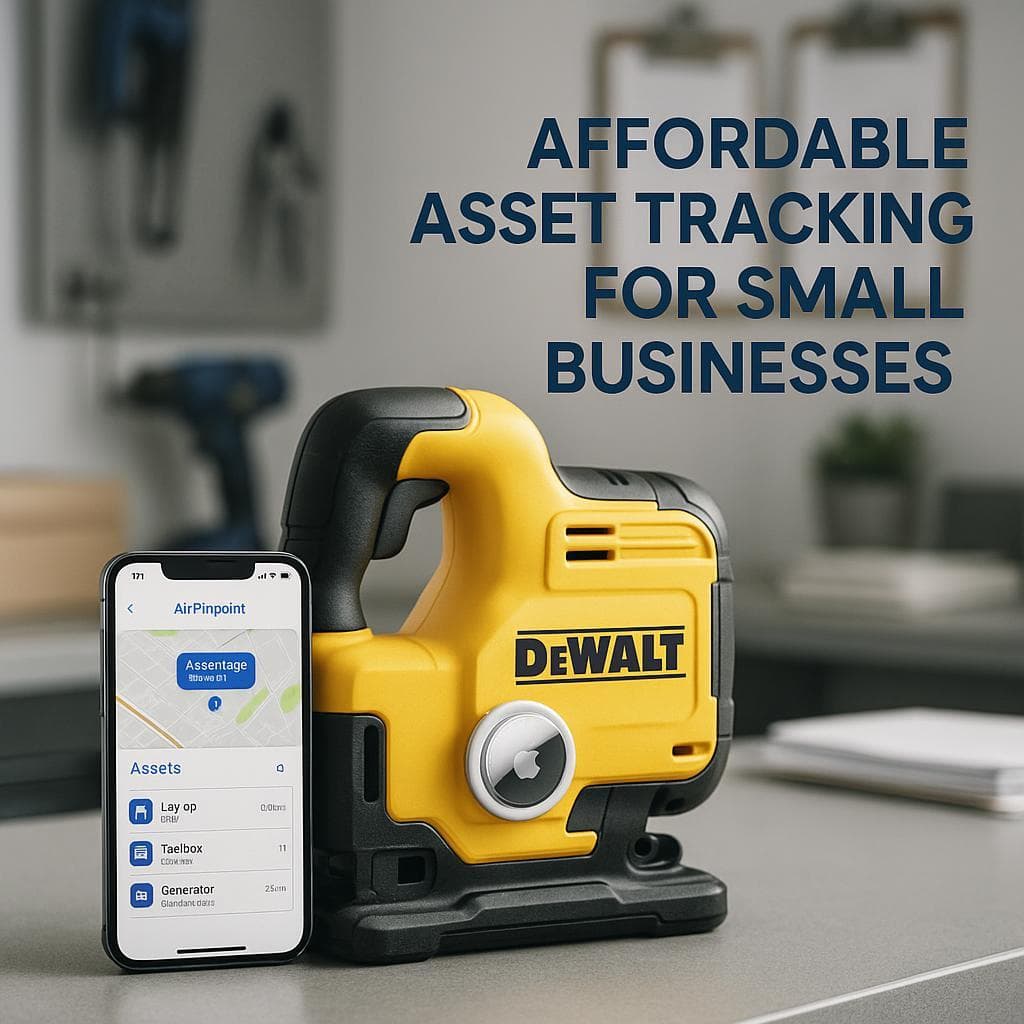
AirTags. Crews carry mixed phones, tools travel between sites, and the NYU data ties update frequency to how many compatible phones are nearby. A tool trailer parked overnight in a suburban lot gets reported by passing iPhones far more often than by opted-in Galaxy phones. Airpinpoint adds the team layer SmartThings lacks: a shared web dashboard, per-asset history, and polygon geofence alerts.
Fleet and equipment that leaves your metro
AirTags. Coverage on rural highways depends on what phones pass by. With more than three times the devices on paper and a measured gap of often 100+ versus under 10 nearby phones, Find My is the network more likely to still report two counties away.
Theft recovery
AirTags. Recovery odds depend on how often the stolen item is detected while it moves. A thief's route passes far more iPhones than opted-in Galaxy phones. SmartTag2's single-account binding also means only one person can watch the tag during a recovery.
Running AirTags Without an iPhone-Only Team
The standard objection from Android-heavy businesses is "we don't have iPhones." The working pattern:
- One iPhone (any model from the 11 onward) enrolls and manages the AirTags.
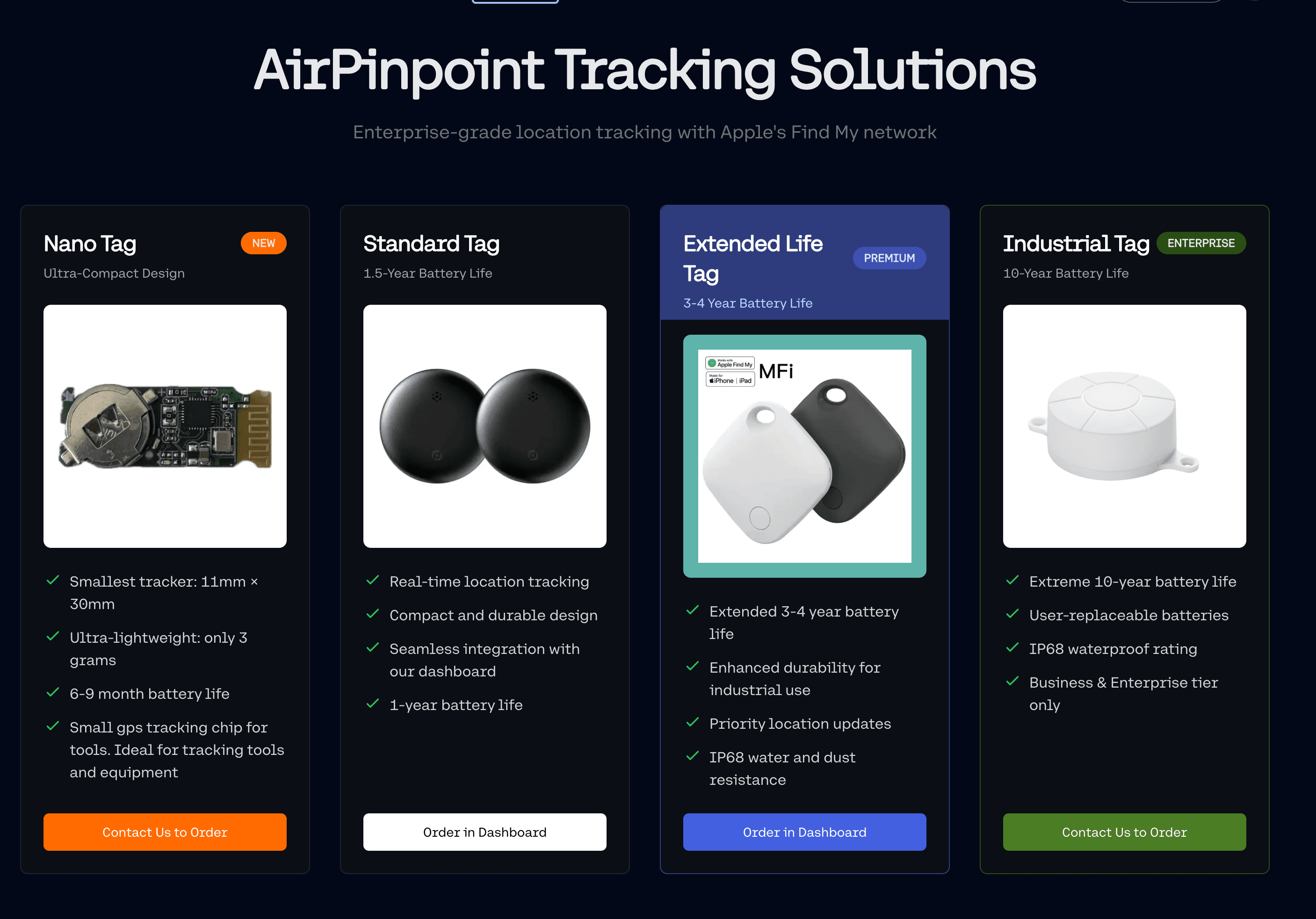
- Airpinpoint gives everyone else access through the web dashboard: live map, location history, geofences, CSV export, webhooks, and a REST API. No Apple device is needed to view.
- Plans run $11.99 per device per month (Business) or $14.99 (Enterprise).
One used iPhone costs less than finding out your SmartTags went dark the day a trailer left the city.
Our Recommendation
Galaxy owner tracking keys, luggage, and a bike: buy the SmartTag2, ideally a 4-pack on deal. It is the best tracker on Samsung's platform, its battery outlasts an AirTag's, and its built-in history beats Apple's consumer app.
Anyone on a non-Samsung phone: the SmartTag2 is not an option, officially. Choose AirTags on iPhone, or a Google Find Hub tracker like Chipolo or Pebblebee on other Android phones. Households that mix iPhone and Android should also look at Tile.
Business asset tracking: AirTags. Three numbers decide it: 300 million opt-in Galaxy nodes (last reported in 2023) versus more than a billion Find My devices, 10-20 measured updates per hour versus about 50 at peak, and one Samsung account per tag versus a shared dashboard.
 Our Solution