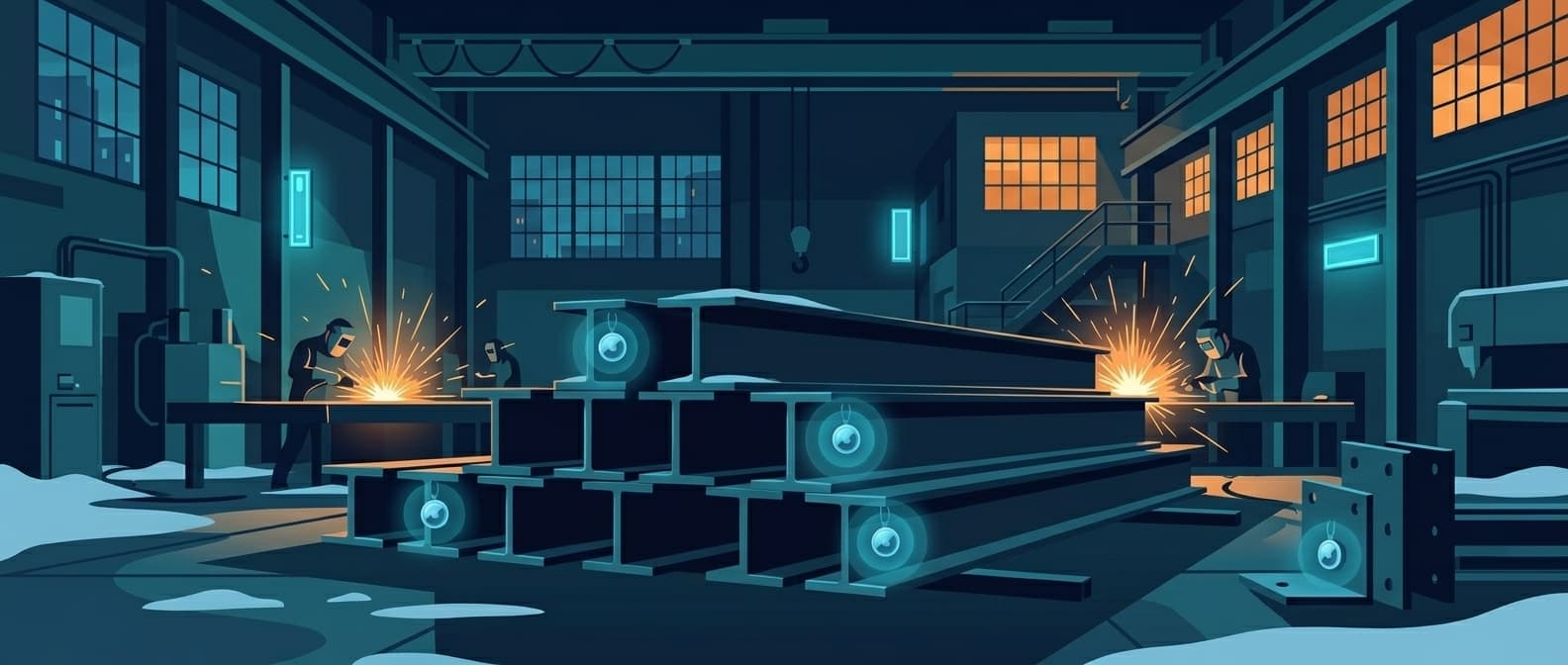
Steel Fabrication Tracking: Managing Equipment and Deliveries from Shop Floor to Job Site
A structural steel fabricator with two shop locations and 8-10 active projects ships hundreds of piece marks per week. Each delivery goes to a different job site on a different truck. Back at the shop, portable welders, generators, plasma cutters, and rigging equipment rotate between the floor and field jobs constantly.
The shop foreman knows what's in the building. Nobody knows what's at job sites. A $6,000 engine-driven welder goes out for field welding on a Thursday and sits on a completed project for two months because no one tracked it leaving.
This page covers how AirTag-based tracking works for structural steel fabricators, from shop equipment to field-deployed assets to delivery confirmation.
The Steel Fabrication Tracking Problem
What a Typical Fab Shop Manages
Steel fabrication operations run two categories of assets that need tracking: the equipment that does the work, and the product that ships to customers.
| Asset Category | Examples | Value Per Unit | Typical Count |
|---|---|---|---|
| Beam processing equipment | CNC drill lines, beam coping machines | $200K-$1M+ | 2-5 |
| Cutting equipment | CNC plasma tables, oxy-fuel stations, band saws | $5K-$200K | 3-10 |
| Welding machines | MIG/flux-core wire feeders, engine-driven welders | $2K-$12K | 10-30 |
| Portable field equipment | Generators, compressors, cutting torches | $1K-$8K | 10-25 |
| Jigs and fixtures | Custom welding jigs, fit-up fixtures, templates | $500-$5K | 15-40 |
| Rigging and lifting | Chain slings, shackles, spreader bars, come-alongs | $200-$5K | 20-50 |
| Trailers | Flatbed, lowboy, material hauling | $5K-$50K | 3-10 |
| Fabricated assemblies | Beams, columns, trusses, connection plates | $500-$50K per piece | 100-500/week |
Total equipment value for a mid-size structural fabricator: $2M-$10M. For a large AISC-certified shop running multiple shifts: $10M-$30M+.
Why Steel Fabrication Is Different
Steel fabricators face tracking problems that most manufacturers don't.
Assets cross the boundary between shop and field. A welding machine that lives on the shop floor Monday might be on a truck to a job site by Wednesday for field connections. It crosses from a controlled, visible environment to an uncontrolled one. The shop has inventory systems. The job site has a pile of equipment and no tracking.
Deliveries go to the wrong place. A fabricator shipping to 8 job sites simultaneously runs a real risk of putting the wrong beams on the wrong truck. A misdelivery costs $5,000-$20,000 in crane standby, re-shipping, and schedule delays. The erection crew is waiting. The crane is on the clock at $200-$400/hour.
Field equipment never comes home. Ironworkers and field crews borrow shop equipment for erection, field welding, and punch list work. When the project wraps, that equipment stays on site. Without a system to flag it, nobody notices until someone back at the shop needs a welder that doesn't exist anymore.
Subcontractor mixing at job sites. Structural steel erection sites have multiple trades working simultaneously. Your welder ends up in another contractor's gang box. Your rigging gets mixed with the crane operator's equipment. Ownership disputes eat project management time.
The Field Equipment Problem
This is the tracking challenge that steel fabricators recognize instantly: equipment that leaves the shop and doesn't come back.
The Math on Lost Field Equipment
A mid-size structural fabricator running 10 active field projects might have 15-20 pieces of portable equipment deployed at any time. Engine-driven welders, wire feeders, generators, cutting kits, rigging.
| Equipment | Replacement Cost | Typical Field Deployment |
|---|---|---|
| Engine-driven welder (Lincoln Ranger, Miller Big Blue) | $3,000-$12,000 | 2-8 weeks per project |
| Wire feeder | $1,500-$4,000 | Duration of field welding |
| Portable generator (5-10kW) | $2,000-$6,000 | Duration of project |
| Oxy-fuel cutting rig | $800-$2,000 | As needed |
| Chain slings and rigging | $500-$3,000 per set | Duration of erection |
Losing one engine-driven welder per year costs more than tracking every portable asset in the shop. Most fabricators lose more than one.
What Tracking Looks Like
The setup that works is to tag every piece of portable equipment that leaves the shop, and to name each one in the dashboard the way the crew already refers to it: "Miller Big Blue #3," "Lincoln Ranger #7." Same for generators and wire feeders.
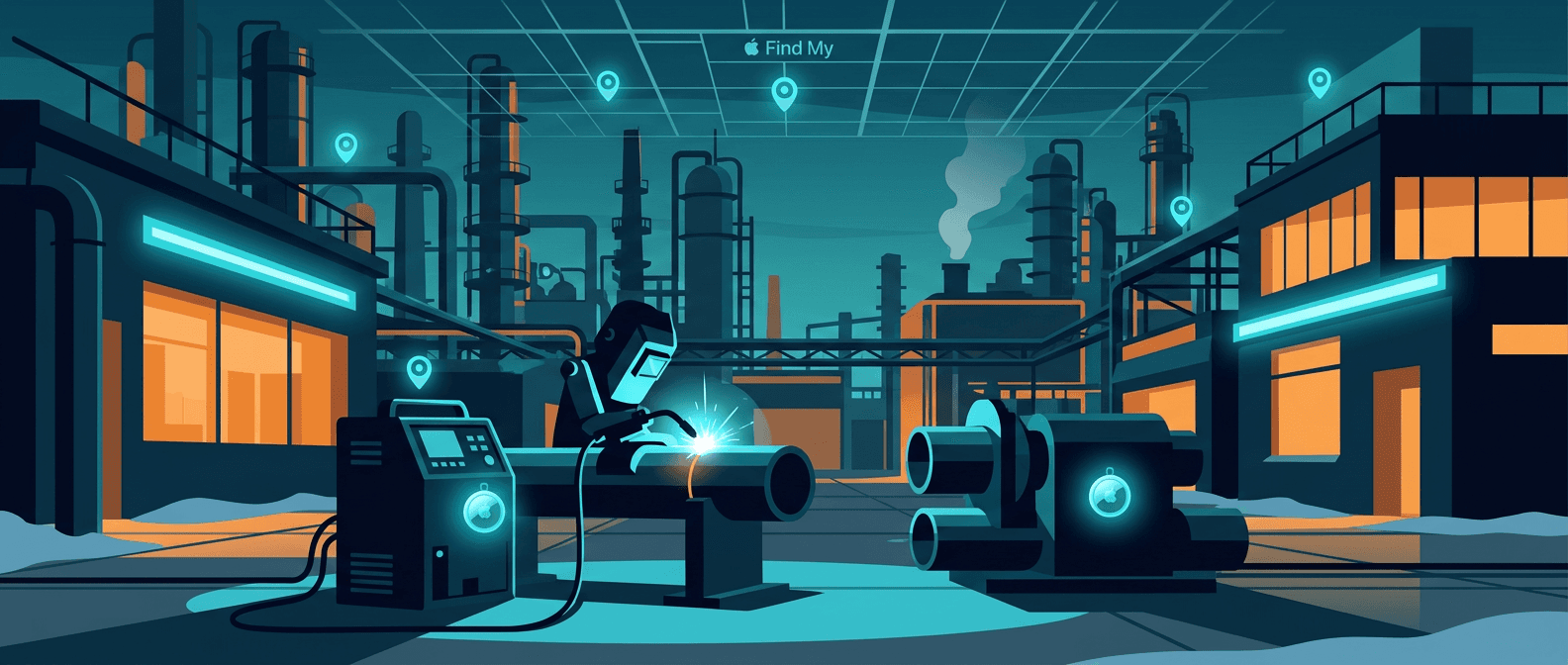
Monday morning, the shop foreman opens the dashboard and sees a map of every field-deployed asset. Two welders at the highway bridge project. A generator still sitting at the hotel job that finished last week. That generator gets picked up before the site closes.
When a project manager calls asking for a welder, the foreman checks the dashboard instead of calling every job site superintendent. A welder sitting idle at one project can move to the next job that afternoon instead of triggering a rental.
Delivery Confirmation for Fabricated Steel
The Misdelivery Problem
Structural steel fabricators ship pieces by the truckload to active job sites. A typical delivery might be 10-20 tons of beams, columns, and connection plates on a flatbed. The erection crew sequences steel based on what they need to bolt up that day, and deliveries need to match the erection sequence.
When steel goes to the wrong site, the problems cascade:
- Erection crew at Site A has no steel to set. Crane is on standby at $200-$400/hour.
- Site B received steel it can't use yet. It clogs the laydown area.
- Re-shipping costs $1,500-$5,000 depending on distance and load size.
- Schedule delay damages can run into five figures.
Using AirTags for Delivery Verification
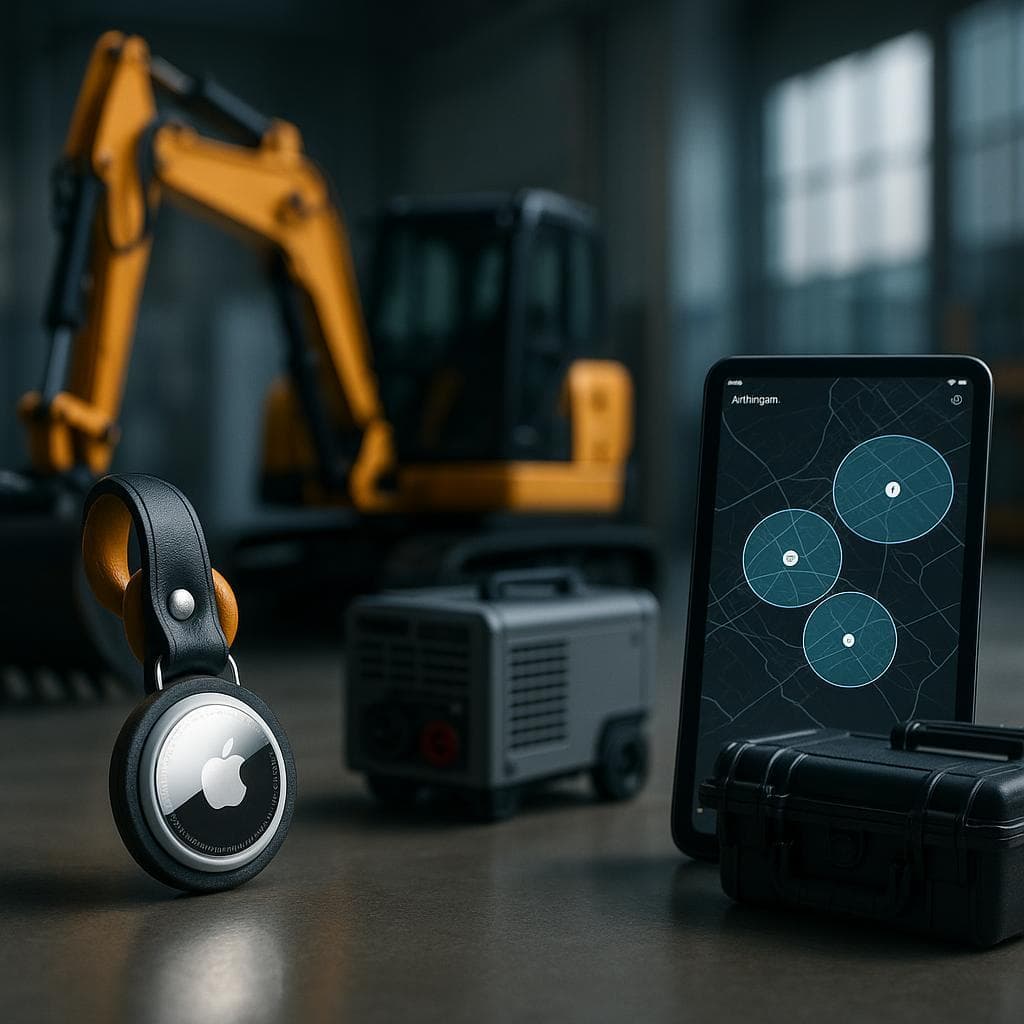
For high-value or schedule-critical deliveries, attach an AirTag to the load or a key bundle. The AirTag travels with the steel. When it arrives at the correct job site geofence, the delivery is confirmed in the dashboard.
This doesn't replace your piece mark tracking system (STRUMIS, STSX, FabSuite). Those systems track every piece through production stations with barcode scanning. Airpinpoint answers a simpler question: did the physical load arrive at the right place?
For fabricators shipping to multiple sites daily, even one avoided misdelivery per quarter pays for the entire tracking setup.
Equipment Categories and Placement
Welding Machines
Engine-driven welders are the most commonly lost equipment in steel fabrication. They're valuable, portable (trailer-mounted or skid-mounted), and constantly moving between shop and field.
Placement: Inside the side access panel on engine-driven units. For skid-mounted welders, inside the control housing or attached to the frame with a protective case. Wire feeders get an AirTag inside the case body, away from the wire spool.
Cutting Equipment
Portable plasma cutters, oxy-fuel rigs, and chop saws move between shop stations and field locations. A Hypertherm plasma cutter costs $2,000-$8,000 and fits easily into someone else's truck.
Placement: Inside the case for portable plasma units. For chop saws, attach to the base frame in a protected area away from the blade and motor heat.
Generators and Compressors
These support field welding and tool operation. They sit on trailers or skids at job sites, often unattended after hours.
Placement: Inside the access panel or control housing. For towable generators, mount in the tongue box or under the frame in a weatherproof case.
Jigs, Fixtures, and Templates
Custom welding jigs are shop-built for specific projects. They cost $500-$5,000 in labor and materials to fabricate, and they get loaned between projects or shops. Tracking jigs prevents the common scenario where a fitter needs a specific jig for a repeat project and nobody can find it.
Placement: Adhesive mount or magnetic case attached to the jig frame.
Trailers
Steel fabricators use flatbeds and lowboys to deliver product and move equipment. Trailers are among the most stolen construction assets (68,000+ stolen per year in the US) because they have no ignition interlock.
Placement: Inside the tongue box, under the frame in a welded enclosure, or inside the frame rail. See our trailer tracking guide for detailed options.
Multi-Site Operations
The Monday Morning Equipment Check
Every fab shop foreman runs the same routine at the start of the week:
- What equipment is on the shop floor?
- What's deployed to job sites?
- What needs to move?
- What's missing?
Without tracking, step 2 requires calling every field superintendent. With 8-10 active projects, that's 8-10 calls before the foreman can plan the week.
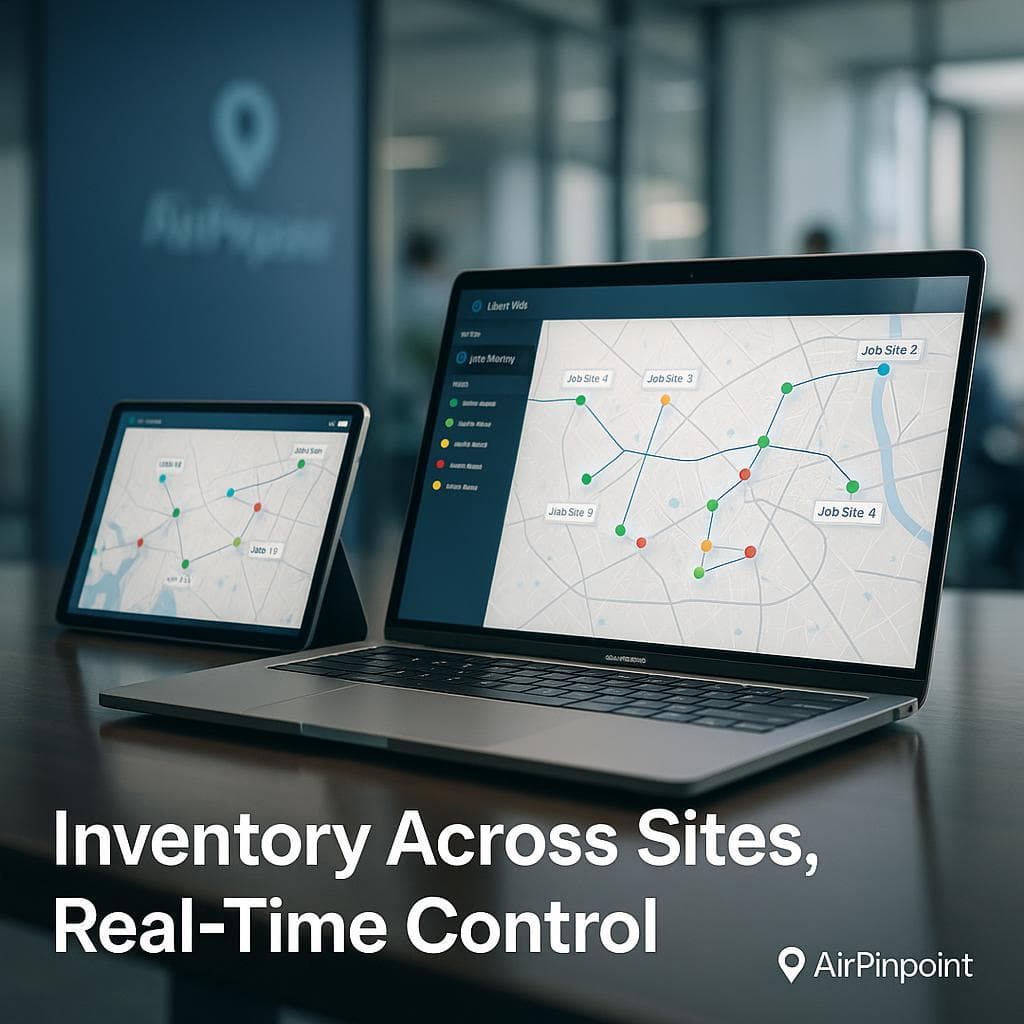
With Airpinpoint, step 2 takes 60 seconds. Open the dashboard, filter by equipment type, and see every asset on a map. The foreman immediately knows that the highway bridge job has two welders but only needs one this week, and the new office tower job is short a generator.
Geofencing the Shop Yard and Job Sites
Set up geofences for your shop, your storage yard, and every active job site. When equipment crosses a boundary, you get an alert.
After-hours theft detection. An alert when a welder leaves your yard at 11pm on Saturday means you can respond that night instead of discovering the loss Monday morning. Construction equipment theft recovery drops to under 20% after 48 hours. An alert that lands 15 to 40 minutes after the crossing, rather than two days later, changes those odds.
Project closeout equipment recovery. When a project finishes, check the dashboard for any of your equipment still inside that job site's geofence. Arrange pickup before the general contractor locks the site.
Delivery confirmation. When a steel delivery truck enters the correct job site geofence, you have confirmation the load arrived at the right place.
Cost Comparison: Tracking a 40-Asset Fabrication Fleet
GPS Trackers
| Item | Cost |
|---|---|
| Hardware (40 devices @ $100 avg) | $4,000 |
| Monthly service (40 x $30/mo avg) | $1,200/mo |
| Annual cost | $18,400 |
| 3-year total | $47,200 |
Plus monthly charging or hardwiring for battery-powered GPS units. With 40 devices, someone is always charging something.
Airpinpoint
| Item | Cost |
|---|---|
| AirTags (40 x $29) | $1,160 |
| Monthly service (40 x $11.99/mo) | $479.60/mo |
| Battery replacement (40 x $3/year) | $120/yr |
| Annual cost | $6,915 |
| 3-year total | $19,585 |
No charging. No hardwiring. Battery swap once a year.
ROI Math
One recovered engine-driven welder: $3,000-$12,000. One avoided steel misdelivery: $5,000-$20,000 in crane time and re-shipping. One month of tracking 40 assets: $480. The system pays for itself on a single incident.
Implementation for Steel Fabricators
Phase 1: Field Equipment (Week 1)
Start with the assets that cause the most pain. For steel fabricators, that's portable equipment that leaves the shop.
- Tag every engine-driven welder, generator, and portable plasma cutter
- Name each asset in Airpinpoint (e.g., "Miller Big Blue #3," "Generator Honda 7kW #2")
- Set up a geofence around your shop yard
- Set up geofences for active job sites
This immediately solves the "where are my welders" problem.
Phase 2: Trailers and Rigging (Week 2)
Add AirTags to all flatbed trailers, lowboys, and high-value rigging sets. Trailers are high-theft targets and frequently sit at job sites for extended periods between uses.
Phase 3: Delivery Tracking (Week 3-4)
For schedule-critical steel deliveries, start tagging loads with reusable AirTags. Confirm deliveries arrived at the correct job site via geofence alerts. Recover and reuse the AirTags after the steel is unloaded.
Phase 4: Jigs and Fixtures (Optional)
If your shop builds custom jigs and fixtures that get shared between projects or locations, tag them. This is lower priority but prevents the frustrating scenario where a repeat project requires a specific jig that nobody can locate.
Honest Limitations
Not a piece mark tracking system. Airpinpoint tracks physical location of assets. It does not replace STRUMIS, STSX, FabSuite, or your ERP system for tracking individual piece marks through shop production stations. Those systems handle the barcode-level detail of which piece is at which fabrication stage. Airpinpoint handles the "where is this thing physically?" question, especially once assets leave the shop.
Location updates are not real-time GPS. AirTags update when detected by the Apple Find My network. In urban areas where most commercial steel erection happens, updates come every few minutes to every hour. At remote industrial sites with limited foot traffic, updates will be less frequent. This is fleet-level "where are my assets" visibility, not second-by-second position tracking.
Metal can attenuate Bluetooth signal. An AirTag buried inside a steel enclosure will have reduced signal range. Mount AirTags on the exterior of steel equipment in a protective case, or inside plastic/fiberglass housings and access panels. Direct line-of-sight through steel plate will reduce detection distance, but will not block it entirely.
Why Steel Fabricators Choose Airpinpoint
-
The field equipment problem is universal. Every fab shop loses track of welders, generators, and rigging at job sites. Airpinpoint makes field-deployed equipment visible on a single dashboard.
-
The price point works for mid-value equipment. GPS trackers at $25-$45/month don't make sense for a $3,000 welder. Airpinpoint at $11.99/month does.
-
No charging or maintenance. Fabrication crews don't have time to charge GPS trackers. AirTag batteries last a year and swap in 30 seconds.
-
Urban construction environment. Structural steel erection happens primarily on commercial projects in populated areas where Apple Find My network density is high.
-
Multi-site visibility. The dashboard shows every asset across your shop, your yard, and all active job sites on one map. When a project closes out, you see what's still on site.
Steel fabricators who've run on spreadsheets, whiteboard lists, or "call the super" approaches know the cost: equipment that vanishes at job sites, deliveries that go to the wrong place, and welders that sit forgotten on completed projects. Airpinpoint replaces all of that with a single map that shows every asset, at every location, updated automatically.
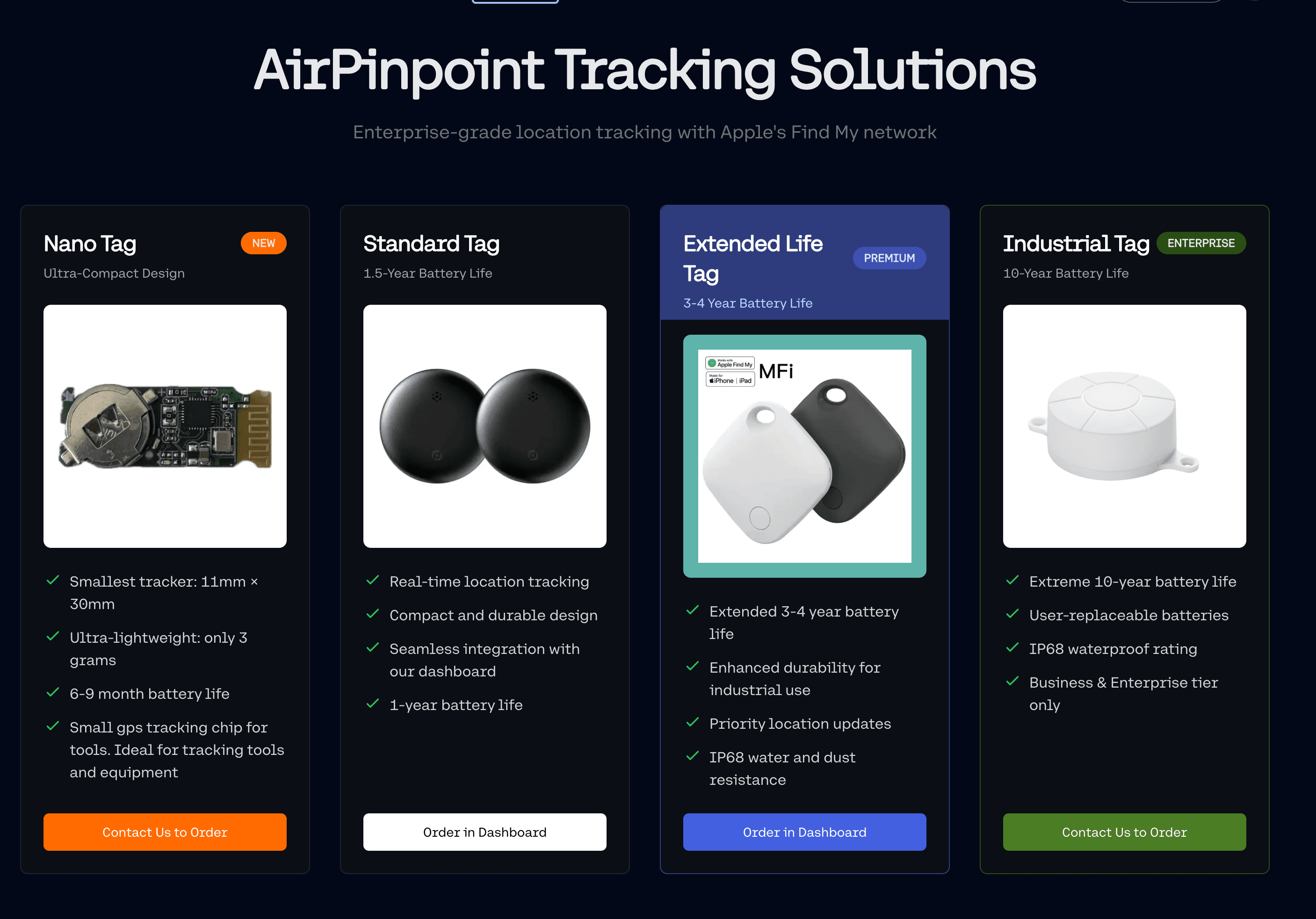
 Our Solution