Scrap Yard Tracking: Container and Fleet Management for Metal Recyclers
The US scrap metal recycling industry processes over $40 billion worth of material annually. Behind that number is a massive fleet of roll-off containers, lugger bins, dump trailers, and hauler trucks spread across customer sites, demolition projects, and industrial facilities.
Most scrap yards know roughly where their containers are. Roughly.
The gap between "roughly" and "exactly" is where containers disappear, dwell time revenue leaks, and customer disputes fester.
Why Scrap Yards Need Container Tracking
The Container Loss Problem
A typical mid-size scrap yard operates 50-200 roll-off containers. Each one costs $4,000-6,500 new (a 20-yard bathtub container runs about $4,400, a 40-yard heavy-duty rectangle about $6,540). The industry average loss rate is 3-8% of the container fleet per year.
For a 100-container operation, that's 3-8 containers lost annually, or $12,000-$52,000 in replacement costs before you count the lost revenue from those containers being out of service.
Where do they go?
| Loss Scenario | How It Happens |
|---|---|
| Dwell time creep | Customer keeps container 6 weeks instead of 2. Nobody notices until a driver asks "where's R-34?" |
| Third-party haulers | Contract hauler delivers to wrong address or swaps with another company's container |
| Container theft | The container itself has scrap value. A 40-yard steel roll-off contains 3-4 tons of steel |
| Demolition damage | Container gets buried under debris, crushed, or moved by excavators. Nobody records the new location |
| Customer disputes | "We never received that container" or "Your driver already picked it up" |
Revenue Leakage from Dwell Time
Container dwell time is the silent profit killer for scrap operations.
Most scrap yards charge delivery fees and per-ton scrap pricing but don't charge container rental. The container is supposed to come back in a few days. In practice, containers sit at customer sites for weeks or months while the yard operates with fewer bins than it paid for.
Without tracking, the only way to find a missing container is to send a driver to look for it, call the customer, or wait until someone notices it's not in the yard. By then, you've lost weeks of potential revenue from that container.
With tracking, you see the exact arrival timestamp and current dwell time for every container on every site. A container that's been sitting for 14 days at a site with a 5-day agreement shows up automatically.
Customer Dispute Resolution
Scrap yard customers frequently dispute pickups, deliveries, and weights. The conversations always go the same way:
"We called for a pickup three days ago." Your records show the call came in yesterday.
"You never delivered a replacement bin." Your driver says he did, but there's no proof.
"That container was full when your truck picked it up, not half." No way to verify after the fact.
Location history with timestamps settles these disputes immediately. You can show exactly when a container was delivered, when it was picked up, and how long it sat on site. This isn't about winning arguments. It's about having a single source of truth that both sides can reference.
What Scrap Yard Tracking Looks Like in Practice
Deployment at Scale: 50-100 Containers
One of Airpinpoint's largest deployments is a scrap metal recycler in Los Angeles running 58 tracked containers. Their setup illustrates how this works at scale:
What they track:
- 58 roll-off containers (10-yard through 40-yard) labeled R1 through R58
- Containers deployed across the greater LA metro area at customer industrial sites
- Pickup and delivery cycles averaging 3-7 days per container
What the dashboard shows:
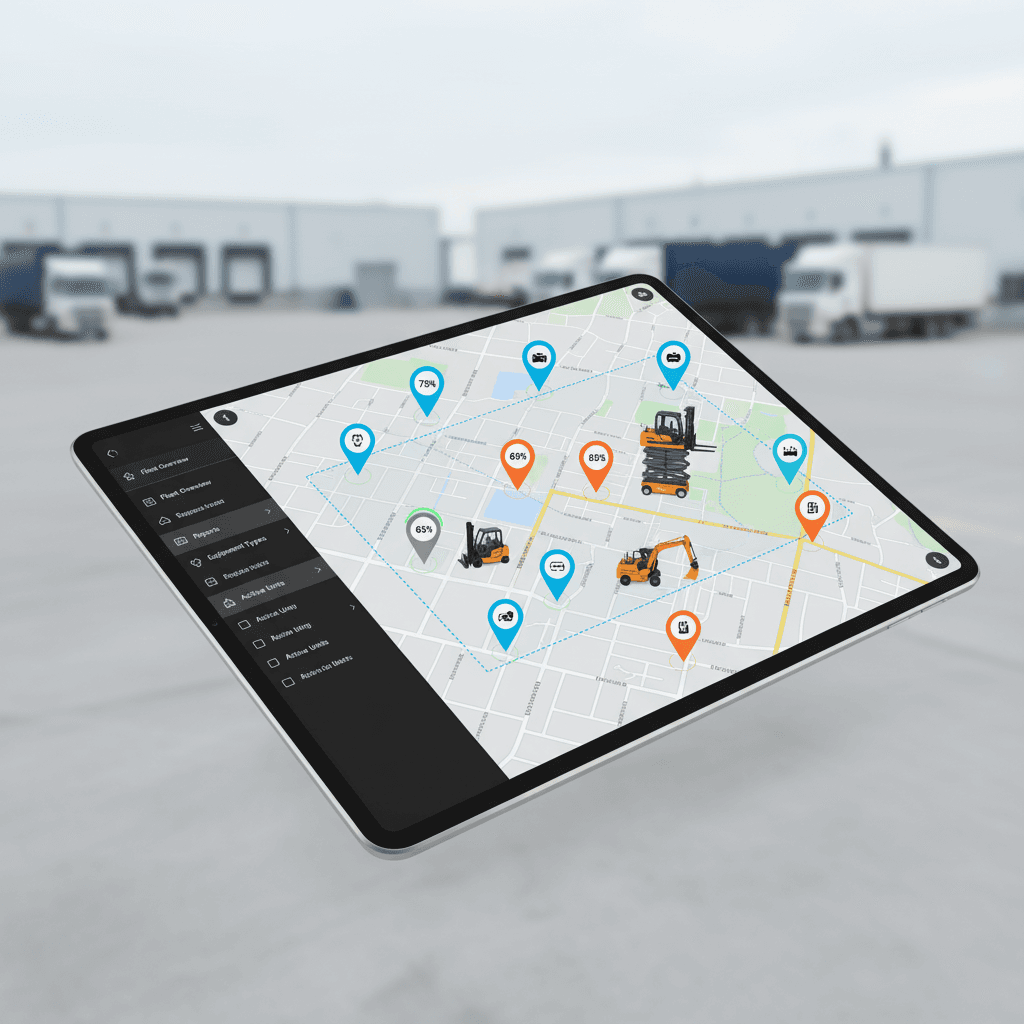
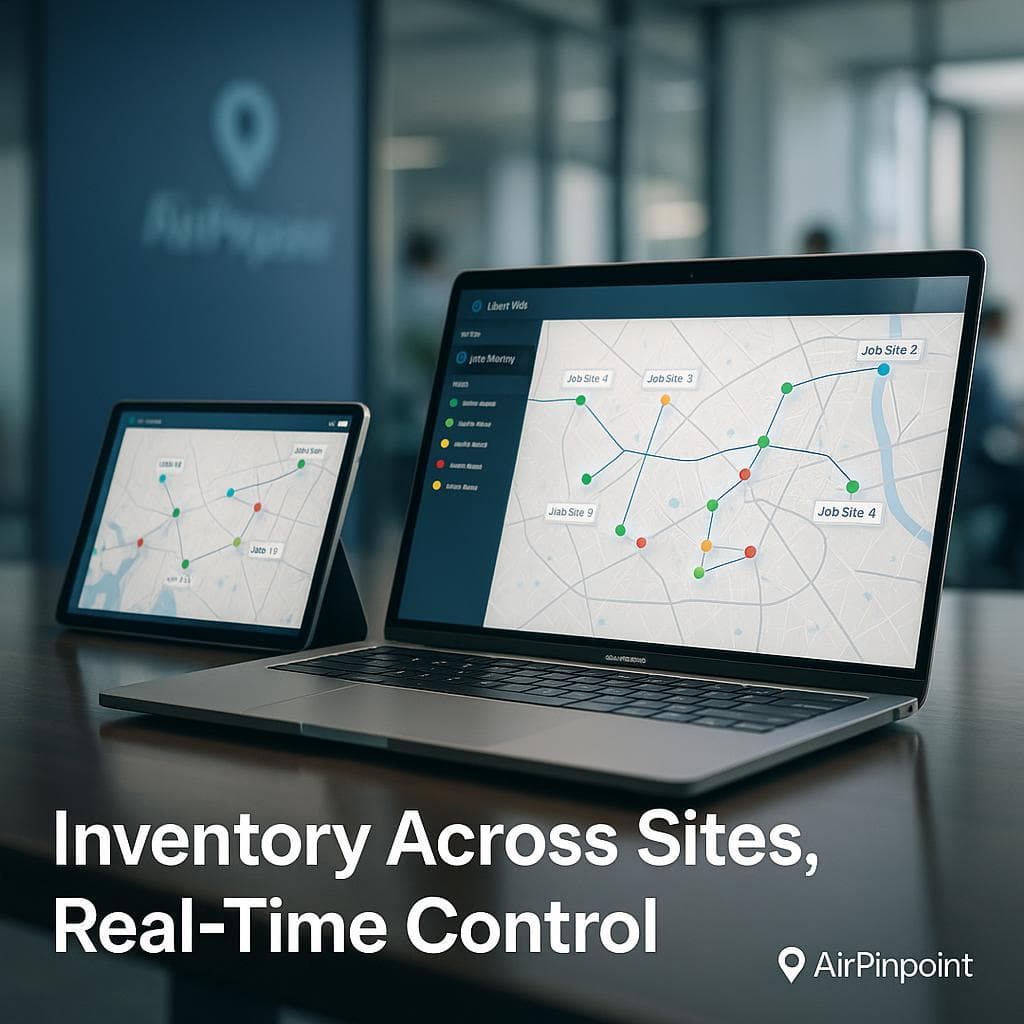
- All 58 containers on a single map view
- Each container's current location, last update time, and time at current location
- Geofence alerts when containers leave authorized zones
- Location history for each container going back months
What changed operationally:
- Eliminated the Friday afternoon "container count" spreadsheet exercise
- Dispatchers can see which containers are closest to a new customer request
- Dwell time visibility means containers get recalled before they become forgotten assets
- Customer disputes resolved in under a minute by pulling up location history
How AirTags Work in Scrap Metal Environments
Scrap yards are rough on equipment. Containers get loaded with jagged metal, dropped by cranes, dragged across gravel. The tracking hardware needs to handle that.
AirTag mounting for containers:
The best placement is inside the container's structural steel channel, the C-channel or box tube that forms the top rail or frame. This protects the AirTag from direct impact with scrap loads while keeping the Bluetooth signal accessible. Some operators weld a small protective plate over the mounting point.
Alternative mounting spots:
- Behind the hooklift attachment point (protected, accessible)
- Inside the container's fork pocket tube
- Under a welded shield plate near the container ID placard
Metal interference considerations:
Steel containers partially block Bluetooth signals, reducing effective range from 100 feet in open air to roughly 30-50 feet through steel walls. In practice, this doesn't matter much for scrap yards. The containers sit at customer sites in urban and suburban industrial areas where iPhone traffic on nearby roads provides regular location updates. The AirTag doesn't need line-of-sight to every iPhone, just one passing within range.
Battery life:
AirTag batteries (CR2032) last about a year under normal use. For a 50-container fleet, that means replacing about one battery per week on average. You can batch replacements when containers rotate through the yard for maintenance.
Container Types and Tracking Considerations
Scrap yards run diverse container inventories. Each type has different tracking considerations:
| Container Type | Typical Size | Purchase Cost | Tracking Notes |
|---|---|---|---|
| Roll-off bathtub | 20-40 yard | $4,400-$5,200 | Most common. Mount in top rail channel |
| Roll-off rectangle | 30-40 yard | $5,500-$6,540 | Heavy-duty. Weld protective plate over AirTag |
| Lugger pan | 6-20 yard | $2,000-$3,500 | Smaller, moves more frequently. Fork pocket mounting |
| Dump trailer | 20-40 yard | $8,000-$15,000 | Higher value justifies tracking. Frame rail mounting |
| Specialty bins (turnings, light iron) | Varies | $3,000-$8,000 | Custom shapes may need creative mounting |
Cost Analysis: Tracking a 50-100 Container Fleet
Airpinpoint Pricing
| Fleet Size | Monthly Cost | Annual Cost | Per-Container Annual |
|---|---|---|---|
| 50 containers | $599.50 | $7,194 | $143.88 |
| 75 containers | $899.25 | $10,791 | $143.88 |
| 100 containers | $1,199 | $14,388 | $143.88 |
Business plan at $11.99/device/month. AirTags cost $29 each (one-time). CR2032 batteries ~$2/year per tag.
What This Prevents
| Loss Type | Without Tracking | With Tracking |
|---|---|---|
| Container losses/year | 3-8% of fleet | Under 1% |
| Revenue leakage (dwell time) | $500-2,000/container/year | Near zero |
| Driver search time | 2-4 hours/week | Minutes |
| Customer disputes | 3-5 unresolved/month | Resolved same-day |
Break-even math for a 50-container fleet:
Annual tracking cost: $7,194 + $1,450 (AirTags) + $100 (batteries) = $8,744 first year, $7,294 ongoing.
Preventing just two lost containers per year saves $8,000-$13,000 in replacement costs alone. Add the dwell time revenue recovery and dispatch efficiency, and the ROI is clear within the first few months.
Comparison to Dedicated GPS Solutions
Enterprise container tracking platforms (Samsara, Verizon Connect, CallPass LANA) offer more features: RFID integration, ELD compliance, real-time cellular GPS, custom reporting. They also cost more:
| Solution | Hardware Cost | Monthly/Device | 50-Container Annual |
|---|---|---|---|
| Airpinpoint + AirTags | $29/tag | $11.99 | $7,194 |
| CallPass LANA | $75-150/tracker | $15-25 | $9,000-$15,000 |
| Samsara Asset Tags | $0 (bundled) | $25-35 | $15,000-$21,000 |
| Verizon Connect | $100-200/tracker | $30-45 | $18,000-$27,000 |
Airpinpoint makes sense for scrap yards that need container location visibility without the cost and complexity of enterprise fleet management platforms. If you also need ELD compliance, driver behavior monitoring, and scale ticket integration, the enterprise platforms justify their higher price.
Operational Workflows
Daily Dispatch with Container Visibility
Morning routine:
- Open Airpinpoint dashboard to see all containers on the map
- Identify containers at sites past their agreed dwell time
- Note which containers are closest to today's delivery requests
- Route drivers to minimize empty miles between pickups and drops
Customer request flow:
- Customer calls requesting a container for their industrial site
- Dispatcher checks dashboard for nearest available container
- Driver picks up the closest empty or full container already in the area
- Delivery confirmed by location data without driver paperwork
Container Dwell Time Management
Set up geofence alerts for each customer site:
- Standard customer sites: Alert at 7 days (typical scrap fill time)
- Demolition projects: Alert at 14 days (longer project cycles)
- Regular accounts: Alert at 3 days (high-turnover customers)
When a container exceeds its dwell threshold, the alert triggers. The dispatcher can call the customer, schedule a pickup, or start charging rental fees, depending on the contract terms.
Theft Response
Container theft happens, especially for the steel value of the container itself. With tracking:
- Geofence alert fires when container leaves the authorized zone
- Dispatcher verifies it's not a scheduled pickup
- Real-time location shared with police for recovery
- Location history documents the theft timeline for insurance claims
Without tracking, you discover the theft days or weeks later when someone asks "where's R-23?" By then, the container may already be cut up for scrap.
Industry Context
The Scrap Metal Recycling Market
The US scrap metal recycling market is valued at approximately $10.8 billion (2025) and growing at 5.5% annually. The broader recycling industry, including services, processing, and logistics, exceeds $40 billion.
The industry operates through roughly 6,000 scrap yards across the country, ranging from small single-location operators with 20-30 containers to multi-site enterprises running thousands.
Why Tracking Adoption Is Accelerating
Several industry trends are pushing scrap yards toward container tracking:
Tighter regulations: State and local governments are increasing reporting requirements for scrap transactions, including chain-of-custody documentation. Container location data supports compliance.
Container costs rising: Steel prices have driven up container replacement costs. A 40-yard container that cost $4,500 three years ago now costs $5,500-$6,500. Losing fewer containers matters more.
Labor costs: Sending a driver to search for a missing container burns 2-4 hours of labor plus fuel. That's $80-$200 per search trip. Multiply by weekly occurrence and the cost adds up.
Customer expectations: Industrial customers increasingly expect real-time visibility into their service providers. Showing a customer exactly where their container is and when pickup is scheduled builds trust and reduces support calls.
Getting Started
Recommended Deployment Approach
Phase 1: Tag your highest-value containers first (Week 1) Start with your 10-20 most expensive or most frequently deployed containers. These are the ones that hurt most when they go missing. Mount AirTags, add them to Airpinpoint, set up the basic geofences.
Phase 2: Expand to full fleet (Weeks 2-4) Once the workflow is established, tag remaining containers during their next yard rotation. Most containers cycle through the yard every 1-3 weeks for unloading, so you can tag them without pulling containers off active service.
Phase 3: Add fleet trucks and trailers (Month 2) Extend tracking to hauler trucks and dump trailers. This gives dispatchers a complete view of both containers and the vehicles that move them.
What You Need
| Item | Cost | Notes |
|---|---|---|
| AirTag per container | $29 | One-time purchase |
| Mounting hardware | $2-5/container | Adhesive mount or welded plate |
| Airpinpoint subscription | $11.99/device/month | Dashboard, geofencing, history, team access |
| Setup time | 5-10 minutes/container | Mount tag, add to dashboard, set geofence |
For a 50-container fleet, total first-month cost is approximately $2,150 ($1,450 in AirTags + $600 subscription). After that, $600/month ongoing.
Limitations to Know
Rural coverage: AirTags rely on nearby iPhones for location updates. If your containers sit at remote rural sites far from roads and population, updates will be infrequent. For urban and suburban scrap operations (most of the industry), coverage is reliable.
Not real-time GPS: AirTags don't provide second-by-second tracking. Updates come when an iPhone passes nearby, typically every 1-15 minutes in populated areas. For container tracking where you need to know "which site is this bin at," that's sufficient. For real-time route tracking of trucks on the road, dedicated GPS is better.
Metal interference: Steel containers reduce Bluetooth range. Proper mounting placement (top rail channel, frame tubes) mitigates this effectively, but expect somewhat less frequent updates compared to tracking assets in open environments.
These limitations are why Airpinpoint costs a fraction of cellular GPS solutions. For most scrap yard container tracking needs, the tradeoff is worth it.
 Our Solution