RFID Tags for Inventory Management: Complete Business Guide
RFID inventory management has moved from enterprise-only technology to an accessible solution for businesses of all sizes. With tag costs dropping below $0.15 and reader prices becoming reasonable, the question isn't whether RFID makes sense. It's whether your inventory challenges justify the infrastructure investment.
How RFID Inventory Management Works
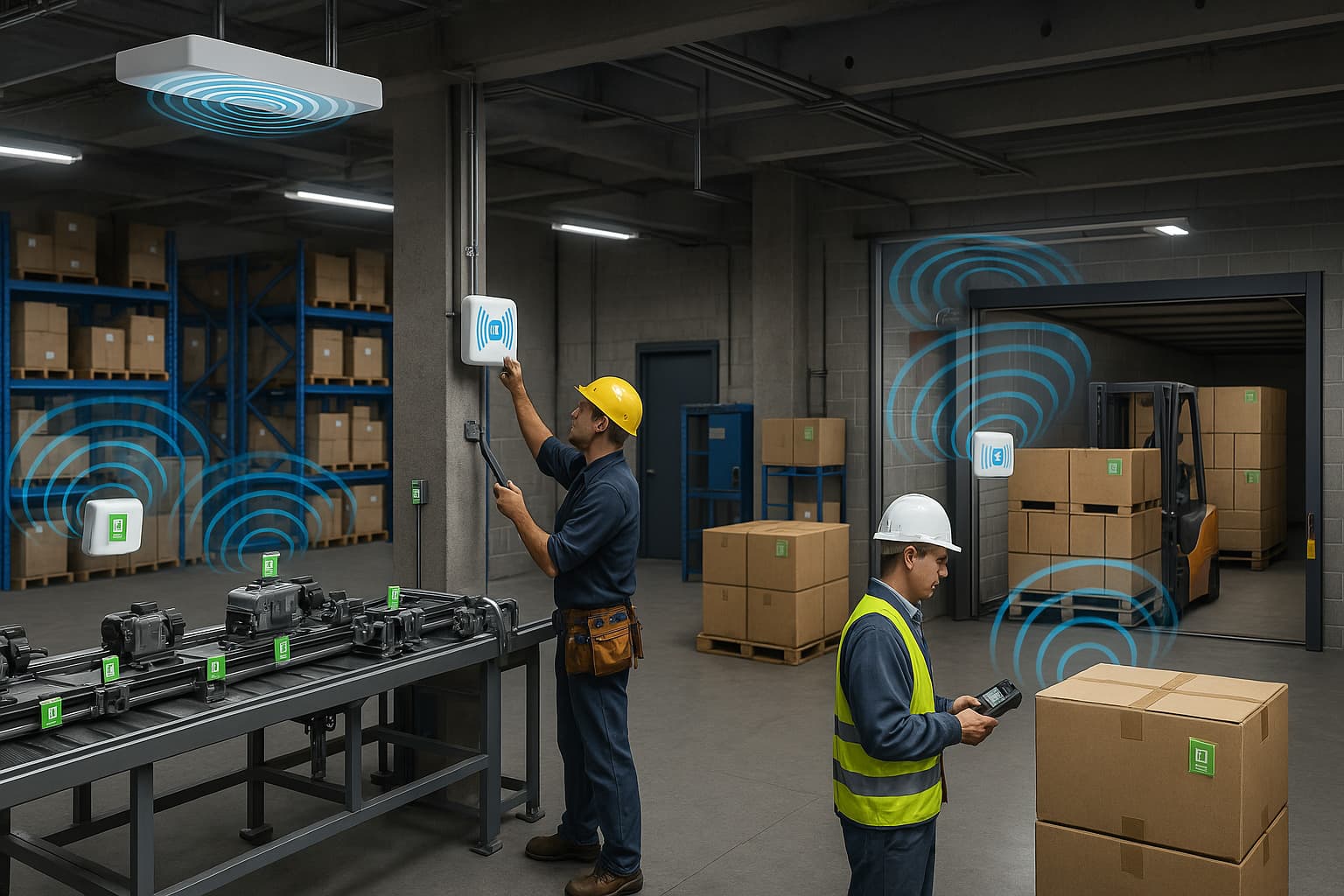
RFID (Radio Frequency Identification) uses electromagnetic fields to automatically identify and track tags attached to objects. Unlike barcodes, RFID doesn't require line-of-sight scanning.
The basic system:
- Tags: Attached to inventory items, containing unique identification data
- Readers: Emit radio waves to power and read tags
- Antennas: Extend reader coverage to desired areas
- Software: Processes tag reads into actionable inventory data
What makes it powerful for inventory:
- Read 100+ tags simultaneously
- No line-of-sight required
- Works through packaging, boxes, and pallets
- Automatic data capture with no manual scanning
The Business Case: RFID vs Manual Counting
| Metric | Manual/Barcode | RFID |
|---|---|---|
| Inventory accuracy | 65% industry average | 99%+ documented |
| Time to count 1,000 items | 2-3 hours | Under 10 minutes |
| Labor for cycle counts | Significant | Minimal |
| Human error rate | 1-3% per scan | Near zero |
| Real-time visibility | Limited | Continuous |
Documented results:
- Retailers using RFID report 13% more accurate stock levels
- Warehouses see 95%+ inventory accuracy vs 70% without
- Cycle count labor reduced by 80-90%
Cost Breakdown: What RFID Actually Costs
RFID Tags
| Tag Type | Cost Per Tag | Read Range | Best For |
|---|---|---|---|
| Passive UHF | $0.10-$0.50 | 10-30 feet | Warehouse inventory, pallets |
| Passive HF | $0.50-$2.00 | 1-3 feet | Retail, libraries, pharmaceuticals |
| On-metal tags | $0.50-$5.00 | Varies | Metal equipment, tools |
| Active tags | $5-$25+ | 100+ meters | High-value assets requiring real-time |
Volume pricing:
- 1,000 tags: ~$0.25-$0.50 each
- 10,000 tags: ~$0.15-$0.30 each
- 100,000+ tags: ~$0.08-$0.15 each
Readers and Infrastructure
| Component | Cost Range | Notes |
|---|---|---|
| Handheld reader | $500-$2,000 | Portable, good for cycle counts |
| Fixed reader | $1,000-$3,000 | Dock doors, conveyor integration |
| Portal/tunnel | $3,000-$10,000 | Automated reads at chokepoints |
| Antennas | $100-$500 each | Extend coverage area |
Software and Integration
| Solution Level | Cost | Features |
|---|---|---|
| Basic | $1,000-$5,000 | Tag reading, simple reports |
| Mid-range | $5,000-$25,000 | WMS integration, analytics |
| Enterprise | $25,000-$200,000+ | Full ERP integration, custom workflows |
Total System Cost Examples
| Business Size | Initial Investment | Annual Operating |
|---|---|---|
| Small warehouse (10,000 SKUs) | $5,000-$15,000 | $1,000-$3,000 |
| Mid-size operation (50,000 SKUs) | $25,000-$75,000 | $5,000-$15,000 |
| Large enterprise (500,000+ SKUs) | $100,000-$500,000+ | $25,000-$100,000+ |
ROI Timeline: When Does RFID Pay Off?
Typical payback period: 12-18 months
Where Savings Come From
| Savings Category | Typical Reduction | Annual Value (Mid-size) |
|---|---|---|
| Labor for counting | 80-90% | $20,000-$50,000 |
| Stockout prevention | 60-80% | $30,000-$100,000 |
| Shrinkage reduction | 50-75% | $10,000-$40,000 |
| Shipping errors | 70-90% | $15,000-$30,000 |
| Overstock reduction | 20-30% | $25,000-$75,000 |
Sample ROI Calculation
Mid-size warehouse (50,000 SKUs):
| Line Item | Year 1 |
|---|---|
| Investment | |
| Hardware and tags | -$50,000 |
| Software | -$15,000 |
| Implementation | -$10,000 |
| Savings | |
| Labor reduction | +$35,000 |
| Stockout prevention | +$45,000 |
| Shrinkage reduction | +$20,000 |
| Error reduction | +$15,000 |
| Net Year 1 | +$40,000 |
RFID vs Barcodes: Making the Right Choice
When Barcodes Work Fine
- Small inventory (under 1,000 SKUs)
- Low transaction volume
- Budget constraints
- Items already have barcodes
- Accuracy isn't critical
When RFID Makes Sense
- High-volume inventory operations
- Need for real-time visibility
- Significant labor spent on counting
- High shrinkage or error rates
- Valuable or regulated items (pharma, aerospace)
Hybrid Approach
Many businesses use both:
- Barcodes: Commodity items, low-value goods
- RFID: High-value items, fast-moving goods, items requiring traceability
RFID vs Find My/AirTag Tracking
| Feature | RFID | AirTags/Find My |
|---|---|---|
| Primary use | Inventory counting, access control | Location tracking over distance |
| Infrastructure needed | Readers, antennas | None (uses iPhone network) |
| Read method | Bulk simultaneous reads | Individual item lookup |
| Location accuracy | Reader proximity only | Crowd-sourced GPS coordinates |
| Cost per item | $0.10-$0.50 (passive) | $29 one-time |
| Ongoing costs | Reader maintenance, software | None |
| Best for | "How many do I have?" | "Where is this specific item?" |
Complementary use cases:
- RFID: Warehouse receiving, cycle counts, shipping verification
- AirTags: Field equipment tracking, vehicle location, theft recovery
Industry Applications
Retail
Use case: Store-level inventory accuracy
- Tags on individual items or boxes
- Daily automated inventory counts
- Omnichannel fulfillment accuracy
Results: Retailers report 2-8% sales lift from improved in-stock rates.
Warehouse/Distribution
Use case: Receiving, putaway, picking, shipping verification
- Portal readers at dock doors
- Handheld readers for cycle counts
- Automated conveyor integration
Results: 40% faster receiving, 99%+ shipping accuracy.
Manufacturing
Use case: WIP tracking, component traceability
- Track parts through production
- Assembly verification
- Quality control checkpoints
Results: 30% reduction in line stoppages from missing parts.
Healthcare
Use case: Medical device tracking, pharmaceutical inventory
- Regulatory compliance (UDI requirements)
- Expiration date management
- High-value equipment tracking
Results: 99.9% accuracy for regulated inventory.
Implementation Guide
Phase 1: Assessment (2-4 weeks)
Inventory analysis:
- Total SKU count
- Annual inventory turns
- Current accuracy levels
- Labor hours spent counting
- Shrinkage and error rates
Infrastructure assessment:
- Facility layout
- Existing systems (WMS, ERP)
- IT infrastructure
- Chokepoints for reader placement
Phase 2: Pilot (4-8 weeks)
Recommended approach:
- Select 500-1,000 representative SKUs
- Deploy 1-2 readers in controlled area
- Tag pilot items
- Run parallel operations (RFID + existing)
- Measure accuracy, speed, and issues
Success criteria:
- 99%+ read accuracy
- Demonstrated time savings
- Integration with existing systems
- User acceptance
Phase 3: Rollout (8-16 weeks)
Deployment sequence:
- High-value/high-velocity items first
- Expand by category or zone
- Train users progressively
- Retire old processes as RFID proves out
Phase 4: Optimization (Ongoing)
Continuous improvement:
- Monitor read rates and exceptions
- Tune reader placement and power
- Expand to new use cases
- Update tag specifications as needed
Common Challenges and Solutions
Challenge: Metal and Liquid Interference
Problem: RF signals struggle with metal and liquids.
Solutions:
- Use on-metal tags (designed to perform on metal surfaces)
- Adjust reader positioning and power levels
- Test tag placement on actual products
- Consider HF tags for challenging environments
Challenge: Tag Readability Variability
Problem: Not all tags read consistently.
Solutions:
- Establish quality standards for tag application
- Use redundant readers at critical points
- Implement exception handling workflows
- Regular tag quality audits
Challenge: Integration Complexity
Problem: RFID data must flow to existing systems.
Solutions:
- Choose software with pre-built integrations
- Plan integration architecture early
- Consider middleware for complex environments
- Budget for integration development
Challenge: Change Management
Problem: Staff resistance to new processes.
Solutions:
- Involve users in pilot selection
- Demonstrate time savings clearly
- Provide thorough training
- Celebrate early wins
Alternatives to Consider
For Smaller Operations
If full RFID infrastructure seems excessive, consider:
- Barcode + mobile scanning: Lower cost, good accuracy
- QR codes + smartphone apps: Zero reader cost
- AirTags for high-value items: No infrastructure, location tracking
- Hybrid approach: RFID for receiving/shipping, barcodes for storage
For Location Tracking (vs Counting)
If your primary need is "where is this item?" rather than "how many do I have?":
- BLE beacons: Room-level accuracy, moderate infrastructure
- AirTags/Find My: No infrastructure, crowd-sourced location
- GPS trackers: Outdoor tracking, cellular cost
The Bottom Line
RFID inventory management delivers transformative results for the right operations:
Best fit:
- High-volume inventory operations
- Significant labor spent on counting
- Accuracy-critical applications
- Operations where visibility drives decisions
Investment reality:
- Initial cost: $5,000-$500,000+ depending on scale
- Typical ROI: 12-18 months
- Ongoing cost: Tags, maintenance, software
Key success factors:
- Clear business case with measurable KPIs
- Pilot before full deployment
- Strong change management
- Integration planning from day one
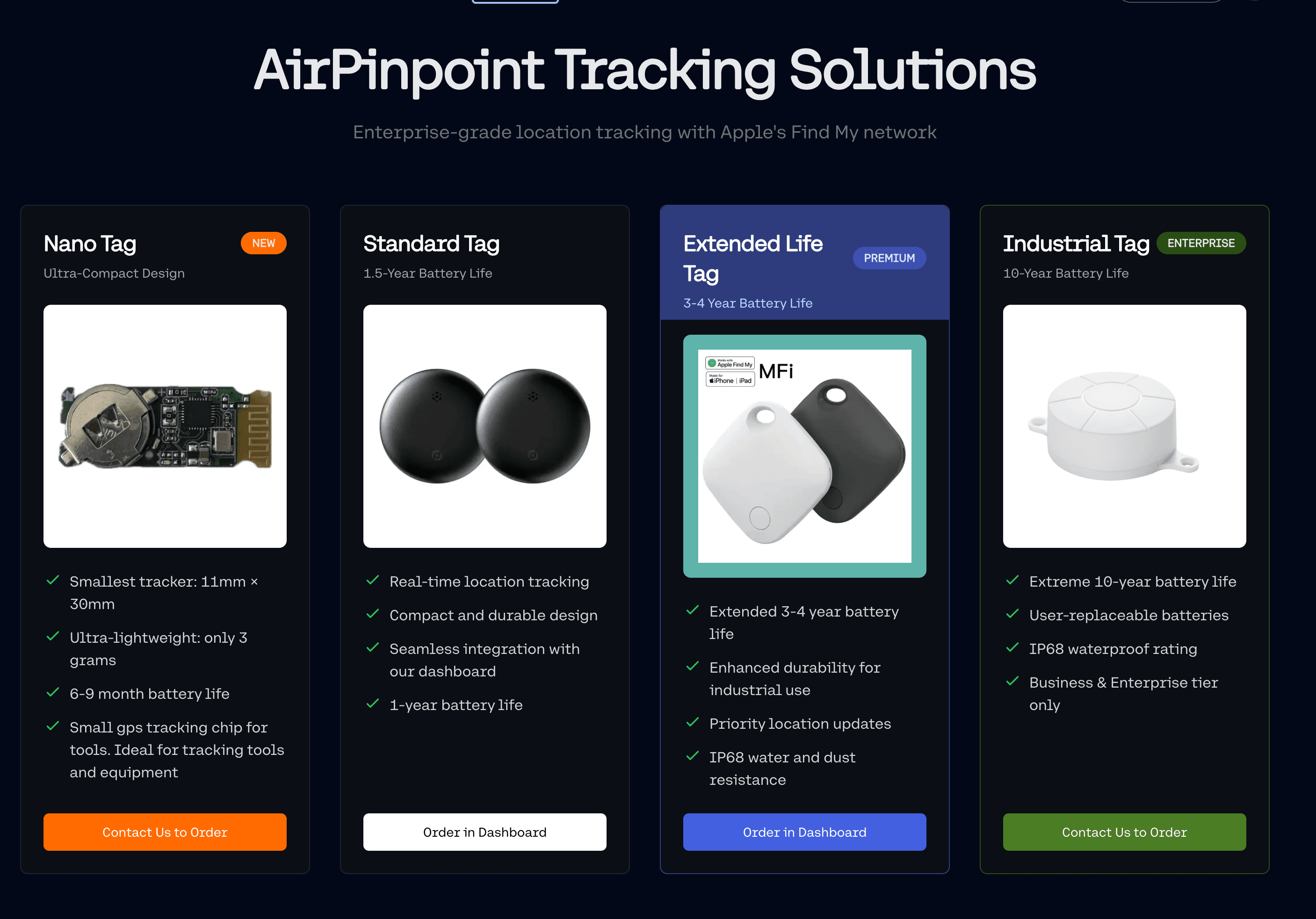
For businesses where RFID infrastructure isn't justified, AirTag-based tracking offers many benefits (real-time location, theft recovery, no infrastructure) at a fraction of the complexity. The right choice depends on whether you need to count inventory or track individual asset locations.
 Our Solution