
Hospital Asset Tracking and Healthcare RTLS: Systems for Medical Equipment
Hospitals are complex environments where critical equipment is constantly moving between departments, floors, and patient rooms. In a Nursing Times survey of about 1,000 nurses run with GS1 UK, more than a third said they spend at least an hour of an average shift finding equipment: time that should be spent on patient care.
Modern hospital asset tracking systems solve this problem, but the technology choices and implementation costs can be overwhelming. This guide breaks down what actually works.
The Problem: Lost Equipment, Wasted Time
The Search Problem
Every hospital faces the same challenge: mobile medical equipment disappears into the building.
What the research actually says:
- In the Nursing Times / GS1 UK survey, more than a third of roughly 1,000 nurses reported at least an hour per shift spent finding equipment
- A GE Healthcare study cited by HIMSS put the average lower, at about 21 minutes per shift, and a Buffalo, New York health system put it at 57 minutes including cleaning time
- The spread between 21 and 60 minutes is the point: nobody knows their own number until they measure it
Work out your own number before anyone quotes you one. Take nursing FTEs on a unit, multiply by shifts per year, multiply by the minutes per shift you actually observe (shadow four nurses for a week, do not guess), and multiply by loaded hourly cost. A 30 person unit running three shifts a day at 20 minutes per shift is roughly 3,650 hours a year on one unit. Whatever that comes to at your loaded rate is the number to hold a vendor against, and it is the only version of this figure you can defend in a capital request.
Equipment that goes missing:
- Infusion pumps (IV pumps)
- Wheelchairs and stretchers
- Patient monitors
- Portable ventilators
- Specialty beds
- Portable imaging equipment
The Hoarding Problem
When staff can't find equipment, they hoard it. Departments stockpile extra wheelchairs "just in case." Nurses hide infusion pumps in closets. This creates artificial shortages even when the hospital owns plenty of equipment.
Why this shows up as a purchasing problem. GE Healthcare's analysis, reported in Healthcare Finance News, puts average utilization of mobile medical devices at about 42 percent. A device that is idle 58 percent of the time is not idle because the hospital has too many of them. It is idle because it is in a closet on 4 West and the nurse on 3 East cannot see it. The purchasing request that follows is technically justified: the unit really was short. It was short of findable pumps, not of pumps. Buy against that and the fleet grows while utilization stays flat, which is the loop tracking is meant to break.
The Loss Problem
Between 10-20% of mobile hospital assets are lost or stolen over their useful life. That range is quoted constantly in this industry and is attributed to the World Health Organization, though the vendors repeating it rarely link the primary source, so treat it as a working estimate rather than a measured fact. Equipment walks out with discharged patients, gets left in ambulances, or simply vanishes.
Price your own exposure instead. Pull last year's biomed write-offs and the replacement purchase orders tagged "lost" or "not found on inventory." That is a real number from your own general ledger, it is defensible in a capital request, and it is almost always different from whatever range a vendor deck quotes you.
How Hospital Asset Tracking Works
Real-Time Location Systems (RTLS)
RTLS is the umbrella term for technologies that track assets in real-time throughout a facility.
Core components:
- Tags/beacons attached to equipment
- Infrastructure (receivers, gateways, access points)
- Software platform for visualization and analytics
- Integration with hospital systems (CMMS, EHR)
Technology Options
| Technology | Accuracy | Cost | Battery Life | Best For |
|---|---|---|---|---|
| BLE (Bluetooth Low Energy) | Room-level (3-5m) | Low | 2-5 years | Most hospital applications |
| UWB (Ultra-Wideband) | Sub-meter (under 30cm) | High | 1-3 years | Surgical suites, high-density areas |
| Passive RFID | Zone-level | Medium | None (passive) | Doorway checkpoints |
| Active RFID | Room-level | Medium-High | 3-7 years | Legacy systems |
| Wi-Fi | Room-level | Low (uses existing) | 1-2 years | Budget deployments |
BLE: The Modern Standard
Most new hospital RTLS deployments use Bluetooth Low Energy (BLE):
- Generally quotes lower than legacy active RFID, because the tags are cheaper and BLE can often ride on Wi-Fi access points the hospital already owns rather than a parallel reader network
- Room-level accuracy sufficient for most use cases
- Long battery life (2-5 years)
- Small, lightweight tags
- Leverages smartphone infrastructure
How it works: BLE beacons attached to equipment broadcast their identity. Receivers throughout the facility triangulate position. Software displays location on facility maps.
UWB: When Precision Matters
Ultra-Wideband (UWB) provides sub-meter accuracy for situations where room-level isn't enough:
- Surgical instrument tracking
- Infant security
- Staff safety in hazardous areas
- High-density equipment storage
Trade-off: Higher infrastructure cost, shorter battery life.
What to Track: Prioritizing Assets
Tier 1: High-Value, High-Movement
Track these first (biggest ROI):
| Asset | Typical Quantity | Unit Value | Why Track |
|---|---|---|---|
| Infusion pumps | 500-2,000 | $3,000-15,000 | Most searched, critical for care |
| Wheelchairs | 200-500 | $500-2,000 | Constantly moving, often lost |
| Patient monitors | 300-800 | $5,000-20,000 | High value, frequently needed |
| Portable ventilators | 50-200 | $15,000-50,000 | Critical, expensive |
Tier 2: Specialty Equipment
Track after Tier 1 success:
- Sequential compression devices (SCDs)
- Feeding pumps
- PCA pumps
- Specialty beds
- Portable X-ray machines
Tier 3: Support Equipment
Lower priority but still valuable:
- Stretchers and gurneys
- IV poles
- Supply carts
- Linen carts
ROI: The Business Case
Documented Results
The results that circulate in this market come from vendor case studies, not from independent trials, and almost always from a single site. Here is where the most-repeated numbers actually come from, so you can weigh them yourself:
| Claim you will hear | Actual source | What it really is |
|---|---|---|
| Utilization 32% to 65% | Cognosos customer case study | One hospital, vendor reported, no control group |
| IV pump fleet cut from 1,200 to 780 | AiRISTA case study, 380-bed regional medical center | One site, vendor reported, savings figure is the vendor's |
| Over $2 million saved system wide | Vizzia Technologies case study, Piedmont Healthcare | 11-hospital system, vendor reported, multi-year |
| Utilization averages about 42% | GE Healthcare, via Healthcare Finance News | The most independent of the four, and the least flattering |
None of these are our customers and none of them are Airpinpoint results. We publish no case studies of our own. When a vendor shows you a number like this, ask three questions: which site, over what period, and what else changed at that site in the same period. A hospital that deploys RTLS usually also runs a par-level project and an equipment amnesty at the same time, and the case study rarely separates the three.
Cost-Benefit Example
500-bed hospital implementing BLE-based RTLS. The investment side is quotable, so get it quoted. The savings side is yours to fill in, because it depends entirely on numbers only you have.
| Investment | What to ask the vendor for |
|---|---|
| Infrastructure | Cost per square foot installed, for your actual square footage, including cabling and mounting labor |
| Tags | Unit price, expected battery life, and replacement cost per year at your asset count |
| Software | Annual renewal, not year one, and whether it is priced per asset or per bed |
| Implementation services | Fixed fee or time and materials, and who pays for RF survey remediation |
| Total five-year cost | Insist on this line. Year-one pricing hides tag replacement and renewal escalators. |
| Savings line | The input you already have | How to get it |
|---|---|---|
| Reduced equipment purchases | Last three years of mobile device capital spend | Finance, by asset category |
| Nursing time | Observed minutes per shift searching | Shadow four nurses for a week. Do not use a survey number |
| Reduced loss | Last year's write-offs coded lost or not found | Biomed inventory reconciliation |
| Rental avoidance | Last year's supplemental equipment rental invoices | Accounts payable |
Multiply each by your own loaded rates, sum it, and divide the five-year cost by the annual total. That quotient is your payback period. We will not quote you one, because a payback period computed on someone else's hospital is not evidence about yours, and the number that matters in a capital committee is the one you can source line by line.
Integration Capabilities
Medical Device Integration
Modern RTLS goes beyond location. It integrates with the devices themselves:
Infusion pump integration (e.g., BD Alaris):
- See if pump is powered on or off
- Know if it's actively infusing
- Track utilization rates by unit
- Automate maintenance scheduling
Patient monitor integration:
- Real-time availability status
- Automatic alerts when moved between zones
- Integration with alarm management
Hospital System Integration
| System | Integration Benefit |
|---|---|
| CMMS | Automated maintenance scheduling, technician dispatch with location |
| EHR | Equipment assignment to patients, documentation |
| Nurse call | "Bring nearest wheelchair to Room 312" |
| Bed management | Discharge workflows, room turnover |
Implementation Guide
Phase 1: Assessment (4-6 weeks)
- Inventory audit: What equipment do you have? Where is it?
- Pain point identification: What do staff search for most?
- Infrastructure assessment: Existing Wi-Fi, power availability
- Stakeholder alignment: Nursing, biomed, IT, supply chain
Phase 2: Pilot (8-12 weeks)
- Select pilot area: One floor or department
- Deploy infrastructure: Install receivers/gateways
- Tag priority assets: Start with 100-200 items
- Train users: Focus on frontline staff
- Measure baseline: Search times, utilization
Phase 3: Expansion (6-12 months)
- Deploy by building/floor: Systematic rollout
- Add asset categories: Expand beyond initial equipment
- Integrate systems: CMMS, EHR connections
- Refine workflows: Optimize based on data
Phase 4: Optimization (Ongoing)
- Utilization analytics: Right-size equipment inventory
- Predictive maintenance: Use location + usage data
- Workflow automation: Triggers based on location events
- Continuous improvement: Regular review of metrics
Healthcare RTLS Buyer's Checklist
Healthcare RTLS is a real-time location system built for hospitals: tags on equipment, staff badges, or patient wristbands, plus fixed readers or beacons that report which room or zone each tag is in. Before comparing vendors, decide which of these requirements your hospital needs, because each one changes the infrastructure and the price.
| Requirement | Why it matters | Question to ask the vendor |
|---|---|---|
| Location accuracy (zone, room, or bed level) | Bed-level needs UWB or IR; zone-level works with BLE | What accuracy do you guarantee in a patient room with the door closed? |
| Infrastructure | Readers in every room add install cost and IT work | How many readers or beacons per floor, and who installs them? |
| Tag battery life and replacement | Thousands of tags with short batteries become a staffing task | What is the rated battery life at our report interval, and can biomed swap batteries? |
| EHR and CMMS integration | Equipment status is only useful where staff already work | Which EHR and CMMS systems do you integrate with today, and how? |
| Infection control | Tags are wiped with hospital disinfectants daily | Which disinfectants are tags rated for, and what is the IP rating? |
| Use cases beyond equipment | Staff duress, patient flow, and hand hygiene need different tags | Can the same network run staff badges and equipment tags? |
If you only need to know which floor or building a pump or wheelchair is on, a full RTLS is more than you need, and a low-infrastructure option such as Bluetooth tags on the Find My network covers that tier. The budget section below compares those.
Vendor Landscape
Enterprise RTLS Providers
| Vendor | Technology | Strengths | Typical Cost |
|---|---|---|---|
| Kontakt.io | BLE | Modern platform, IoT integration | $$ |
| Zebra (formerly Stanley) | BLE/UWB | Healthcare expertise, comprehensive | $$$ |
| Centrak | BLE/IR | Clinical-grade accuracy | $$$ |
| AiRISTA | BLE | Staff safety integration | $$ |
| Versus (Midmark) | IR/Ultrasound | Room-level certainty | $$$ |
Budget-Friendly Alternatives
For smaller facilities or supplemental tracking:
| Solution | Cost | Use Case |
|---|---|---|
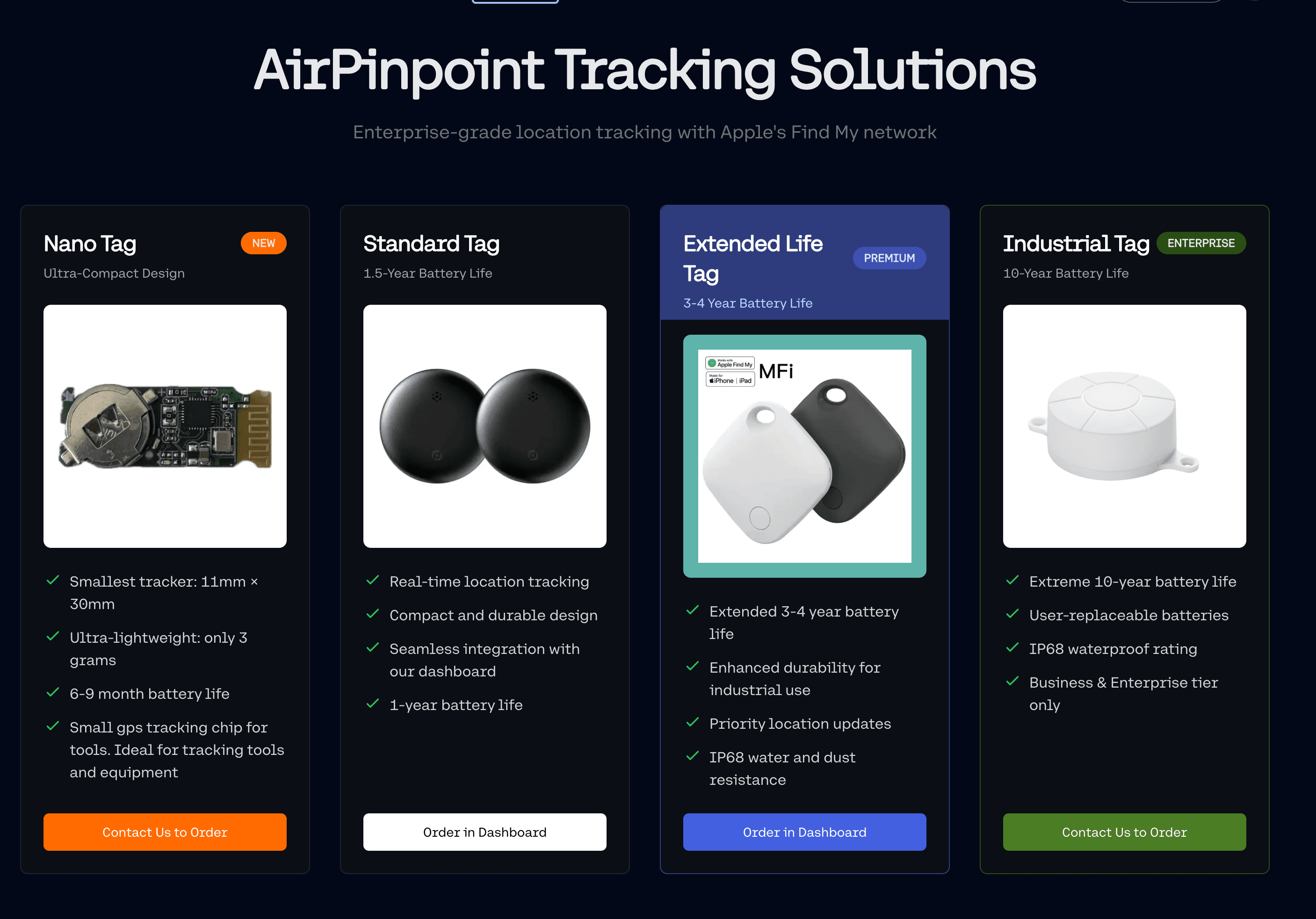
| AirTags | $29/asset, no Apple subscription; Airpinpoint from $11.99 per tag per month | Basic location, theft recovery |
| Tile | $20-35/asset, optional subscription | Simple tracking |
| Asset tracking SaaS | $5-15/asset/month | Cloud-based, lower infrastructure |
AirTag approach for hospitals:
- Works well for wheelchairs, stretchers, portable equipment
- No infrastructure investment
- Limited to "where is it?" (not utilization analytics)
- Good as backup layer for high-value items
Common Challenges
Challenge: Tag Battery Management
Problem: Thousands of tags need battery replacement.
Solutions:
- Choose tags with 3-5 year battery life
- Implement automated low-battery alerts
- Budget for ongoing tag replacement (5-10% annually)
- Consider rechargeable tags for high-movement assets
Challenge: Staff Adoption
Problem: Staff don't use the system.
Solutions:
- Make access simple (mobile app, wall displays)
- Integrate with existing workflows
- Demonstrate time savings early
- Get nursing leadership buy-in
Challenge: Infrastructure Gaps
Problem: Dead zones in older buildings.
Solutions:
- Conduct thorough RF survey before deployment
- Plan for infrastructure density in problem areas
- Consider hybrid approaches (BLE + Wi-Fi)
- Budget for infrastructure additions
Challenge: Tag Attachment
Problem: Tags fall off or get removed.
Solutions:
- Use approved attachment methods per asset type
- Consider embedded tags for new equipment
- Create clear policies on tag removal
- Track "tagless" assets separately
The Bottom Line
Hospital asset tracking has moved from nice-to-have to operational necessity, but a business case built on your own numbers is narrower than the vendor version.
What is well established: mobile device utilization runs low, around 42 percent on GE Healthcare's numbers, and nurses lose real time finding equipment, somewhere between 21 and 60 minutes a shift depending on which study you read. What is not established is a single reliable savings percentage, because every published result is a vendor case study from one site with several changes happening at once.
So build the case on your own ledger: your capital spend by asset category, your write-offs, your rental invoices, and minutes per shift you measured rather than surveyed. If those four numbers do not justify the five-year quote, the project does not pencil, and no amount of case study percentages will change that.
Start with:
- BLE-based system for most applications
- Infusion pumps and wheelchairs as initial assets
- Single floor/department pilot
- Clear success metrics before expansion
For budget-constrained facilities, AirTags provide a low-cost entry point for basic tracking, with the option to upgrade to enterprise RTLS as value is proven. Be clear about what that entry point is and is not. A Find My tag reports roughly where an asset is, updated when an Apple device passes near it, at address-level rather than shelf-level accuracy. It does not report whether a pump is infusing, it does not read a device's service data, and it will not generate a utilization report a biomed director can act on. It answers "where is it," which happens to be the question nurses are actually asking when they walk the floor.
The technology is mature and staff frustration with missing equipment is universal. The open question is not whether tracking helps. It is whether the specific quote in front of you clears the specific losses on your own books, and that is an arithmetic problem you can finish this week with four reports you already have.
 Our Solution


