
IT Asset Disposition Tracking: Chain of Custody from Desk to Data Destruction
A company retires 200 laptops. IT boxes them up, a truck picks them up, and they go to a certified ITAD vendor for data wiping and recycling. Simple.
Except three laptops never make it to the truck. Two pallets sit in a loading dock for a week before anyone notices. One box ends up at the wrong facility. And your ITAD vendor's certificate of destruction lists 195 serial numbers instead of 200.
Where are the other five? Nobody knows. Each one has a hard drive full of customer data, employee records, or financial information. Each one is a breach waiting to happen.
The IT asset disposition market hit $17.5 billion in 2025 and is growing at nearly 9% annually. But the core vulnerability of ITAD has nothing to do with data wiping technology or recycling methods. It is the gap between collection and processing, the window where devices move through hallways, loading docks, trucks, and warehouses without anyone watching.
The ITAD Chain of Custody Problem
Chain of custody is the documented trail that proves who had an asset, where it was, and what happened to it at every step. R2v3 and e-Stewards certifications both require it. HIPAA and SOX audits demand it. Every serious ITAD vendor talks about it.
But most organizations handle chain of custody with paper manifests and spreadsheets. A technician counts boxes at pickup. The ITAD facility counts devices at intake. Everything between those two checkpoints is a black box.
This is where assets disappear.
Gartner estimates that roughly 30% of IT assets can be lost or unaccounted for during their lifecycle. Not all of those are during disposition, but the disposition phase is uniquely risky because assets are in transit, changing hands, and moving between locations.
A growing share of data breach investigations trace back to retired equipment rather than live cyber intrusions. Verizon's 2025 Data Breach Investigations Report found that 30% of breaches involved third-party handling, a category that includes ITAD vendors, logistics companies, and anyone else who touches your equipment between collection and destruction.
What a Single Lost Device Actually Costs
The global average cost of a data breach reached $4.88 million in 2024, a 10% increase over 2023 and the highest figure ever recorded by IBM's annual study.
For regulated industries, the numbers get worse:
- Healthcare (HIPAA): Fines range from $100 to $50,000 per violation, up to $1.5 million per year. One medical center paid $3 million after PHI was found in unsecured disposal.
- Financial services (SOX/GLBA): Sarbanes-Oxley requires documented controls over asset disposal. Failure to maintain audit trails can trigger SEC enforcement actions.
- Government (NIST 800-88): Federal agencies must follow NIST SP 800-88 media sanitization guidelines. Contractors handling government equipment face contract termination for non-compliance.
Against these figures, the cost of knowing where every device is during disposition is negligible.
The ITAD Lifecycle and Where Tracking Fits
ITAD is not a single event. It is a multi-stage workflow, and devices are vulnerable at every transition.
Stage 1: Collection
IT staff collect devices from end users, conference rooms, storage closets, and remote offices. This is the first point where devices go missing: an employee keeps a laptop "temporarily," a device gets left in a desk drawer, or collection boxes sit in hallways for days.
Where tracking helps: Tag devices at collection. You immediately know which collected devices are still in the building and which have moved to staging. Geofence the staging area so you get an alert if a device leaves prematurely.
Stage 2: Staging and Inventory
Collected devices are inventoried, serial numbers logged, and pallets assembled for transport. This is the bottleneck where devices pile up. The longer they sit, the higher the risk.
Where tracking helps: Your dashboard shows every tagged device in the staging area. If a pallet has been sitting for five days, you see it. If three devices from a batch of 50 are not in the staging room, you know before the truck arrives.
Stage 3: Transport
A truck picks up pallets and drives them to the ITAD facility. This is the least visible stage. Paper manifests document what left the building, but not what happens between departure and arrival.
Where tracking helps: Continuous location updates during transport. Set a geofence for the expected destination. If the truck takes a detour or stops at an unauthorized location, you get an alert. When the shipment arrives at the ITAD facility, you have proof of delivery independent of the carrier's documentation.
Stage 4: Processing
The ITAD vendor receives assets, verifies serial numbers, performs data destruction (NIST 800-88 compliant wiping or physical shredding), and routes devices for remarketing or recycling.
Where tracking helps: Verify that your assets actually arrived at the certified facility, not a subcontractor or secondary location. If your ITAD vendor uses multiple processing centers, you can confirm which one received your equipment.
Stage 5: Remarketing or Recycling
Devices with remaining value are refurbished and resold. The rest are broken down for materials recovery. Resale and remarketing account for about 37.6% of the ITAD market.
Where tracking helps: Track high-value refurbished devices through the remarketing pipeline. A batch of 100 Grade A laptops (which sell for 20-40% more than lower cosmetic grades) represents significant value. Knowing where they are prevents shrinkage during the resale process.
Who Needs ITAD Tracking
Enterprise IT Teams
Organizations retiring hundreds or thousands of devices per quarter need auditable chain of custody. If your company is subject to HIPAA, SOX, GLBA, or PCI-DSS, your auditors will ask how you verify that retired equipment reached the certified processor. "We trust the vendor" is not documentation.
ITAD Vendors
Certified ITAD companies need to prove chain of custody to their clients. R2v3 requires tracking of all electronic materials from receipt to final disposition. e-Stewards requires all corporate ITAD facilities to be certified and NAID AAA certified for data destruction. Adding real-time tracking to your service differentiates you from competitors who rely on paper manifests.
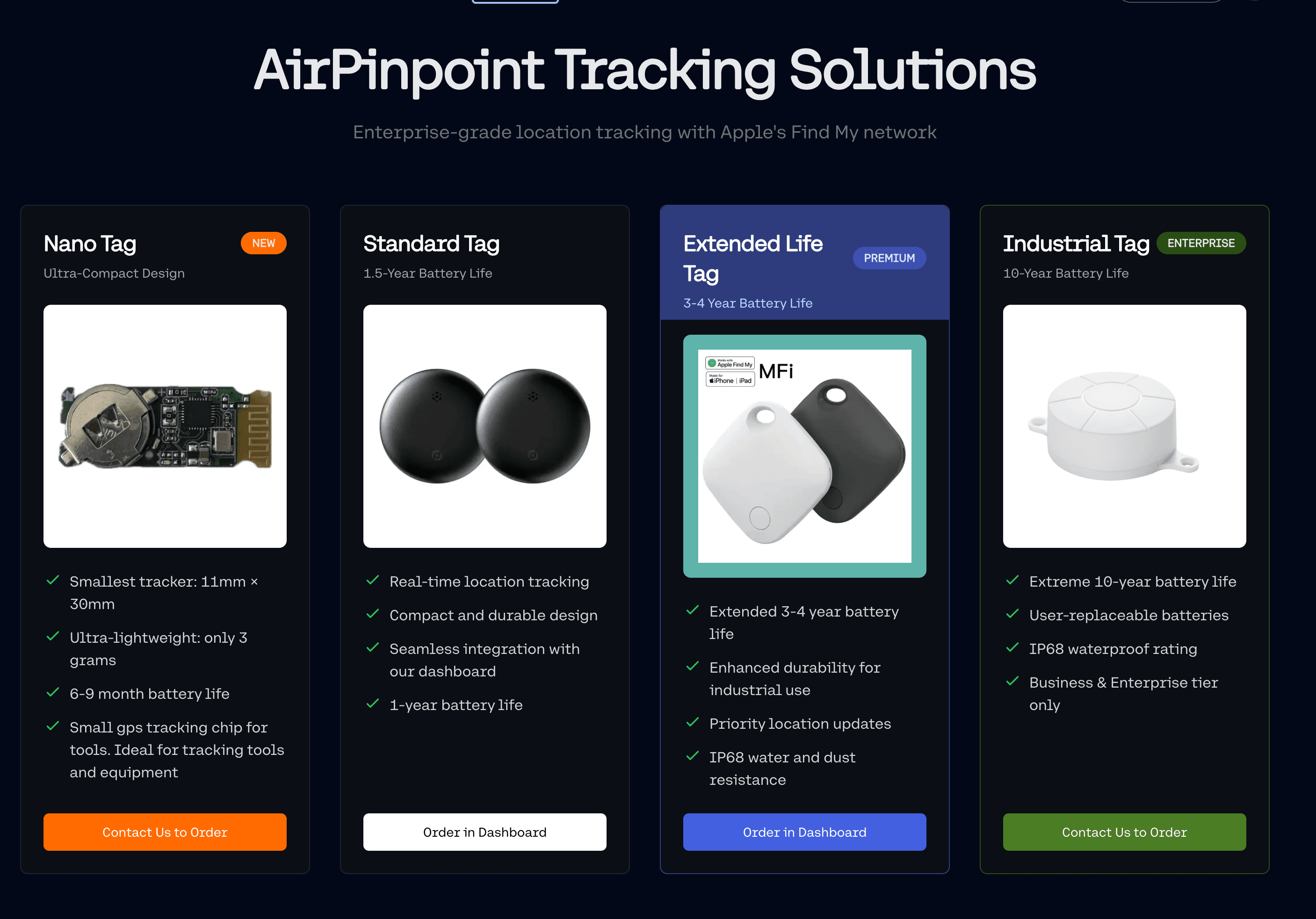
We already see this in practice. PCS Renew, an ITAD company, uses 27 AirPinpoint beacons to track assets through their processing pipeline.
Healthcare Systems
Hospitals cycle through laptops, tablets, mobile workstations, and medical devices constantly. HIPAA requires that ePHI is rendered unreadable, indecipherable, and irretrievable before disposal. But the regulation also requires documented procedures for disposal. Tracking every device from the nursing station to the destruction certificate closes the gap.
Financial Institutions
Banks and insurance companies face overlapping requirements from SOX, GLBA, and PCI-DSS. A laptop that processed credit card data must be tracked through disposition just as carefully as one that held patient records. The compliance bar is the same: prove where it was, prove what happened to it.
Why This Is Harder Than Regular Asset Tracking
ITAD tracking has a different rhythm than ongoing asset management. You are not tracking the same devices month after month. You are tracking waves of equipment moving through a pipeline and exiting permanently.
This creates specific challenges:
Batch-based workflows: You collect 200 devices this quarter, 150 next quarter. Tracking must be easy to spin up and tear down. You do not want long-term contracts on devices you will only track for 2-4 weeks.
Multiple handoffs: A device might go from employee to IT to staging to logistics to ITAD vendor to sub-processor. Every handoff is a potential break in the chain.
Regulatory documentation: You need timestamped, location-verified records that can survive an audit. "It was in the truck" is not as compelling as "our tracking shows it arrived at the R2-certified facility at 2:47 PM on March 3."
AirPinpoint charges per device per month ($11.99 Business, $14.99 Enterprise), which fits batch workflows. Tag devices at collection, track them through processing, remove tags when you get the destruction certificate. You pay for the weeks you actually need.
The Compliance Angle: R2, e-Stewards, and Basel
Two certifications dominate responsible ITAD: R2v3 (administered by SERI) and e-Stewards (created by the Basel Action Network).
Both require documented chain of custody. But they differ in scope:
| Requirement | R2v3 | e-Stewards |
|---|---|---|
| Chain of custody documentation | Required from receipt to final disposition | Required from receipt to final disposition |
| Facility certification | Primary facility | All corporate ITAD facilities |
| Data destruction standard | NIST 800-88 or equivalent | NAID AAA certification required |
| Downstream vendor tracking | Due diligence required | No export to developing countries |
| Environmental management | EMS required | ISO 14001 required |
Real-time location tracking strengthens both certifications. When an auditor asks how you verify that equipment stayed within certified facilities throughout processing, showing a time-stamped location trail is stronger than showing a paper log.
As of January 2025, the Basel Convention's e-waste amendments require Prior Informed Consent for cross-border shipments of electronic waste. Organizations that export retired IT assets, even components or scrap, face new documentation requirements. Tracking shipments through port transfers and international logistics helps maintain compliance.
What About Value Recovery?
Disposition is not all cost. Resale and remarketing represent the fastest-growing segment of ITAD, and average refurbished laptop prices have climbed to $73 per unit as of late 2023, up 16% year over year. Grade A devices command 20-40% premiums.
The math matters. If you retire 500 laptops and recover $73 each through remarketing, that is $36,500 in value. But only if all 500 make it to the remarketing pipeline. Lose 5% during collection and transport and you leave $1,825 on the table, plus the breach risk from five untracked devices with sensitive data.
Organizations see the best returns when retiring laptops between 36-48 months old. After year four, depreciation accelerates and devices slip into low-value categories. Revenue share models typically return 60-70% of resale proceeds. Tracking protects both the compliance side and the financial recovery.
Setting Up ITAD Tracking with AirPinpoint
Step 1: Tag at Collection
When IT collects a device, attach a beacon and register it in the dashboard. Name it with the serial number or asset tag. This takes about 30 seconds per device.
Step 2: Geofence Your Facilities
Create geofences for your staging area, loading dock, and ITAD vendor's facility. Set alerts for devices leaving any of these zones unexpectedly.
Step 3: Monitor Transport
When the shipment departs, watch it move in real time on the map. If your ITAD vendor has multiple facilities, verify the truck heads to the correct one.
Step 4: Verify Arrival
Confirm the shipment arrived at the certified facility. Cross-reference your AirPinpoint data with the ITAD vendor's intake report. Flag discrepancies immediately.
Step 5: Remove Tags After Destruction
Once you receive the certificate of destruction or recycling, remove the beacons from the dashboard. Reuse the physical beacons for your next disposition batch.
Step 6: Export Records
Pull location history for your compliance files. Timestamped records showing device movement from collection through arrival at the certified processor. Your auditor will appreciate having independent verification that does not rely solely on the ITAD vendor's documentation.
Cost Comparison: ITAD Tracking Approaches
| Approach | Cost per Device | Covers Transport? | Real-Time? | Audit Trail? |
|---|---|---|---|---|
| Paper manifests only | $0 | No | No | Weak |
| Barcode scanning at checkpoints | $0.50-2.00 per scan | Pickup/delivery only | No | Moderate |
| GPS tracker per pallet | $15-30/mo per tracker | Yes | Yes | Strong |
| AirPinpoint per device | $11.99-14.99/mo | Yes | Yes | Strong |
For batch tracking (2-4 week disposition cycles), AirPinpoint's per-month pricing means you pay only for the active tracking window. A 200-device batch tracked for one month costs $2,398-$2,998. Compare that to the $4.88 million average breach cost from a single untracked device that ends up in the wrong hands.
The 62 Million Ton Problem
The world generated over 63 million tonnes of e-waste in 2024. Only 22.3% was formally collected and recycled. The rest went to landfills, informal processing, or simply vanished.
This is not just an environmental statistic. Every untracked device in that stream is a potential liability for the organization that disposed of it. Regulatory enforcement is tightening. The Basel Convention amendments add international shipping controls. State-level e-waste laws are expanding. The cost of not knowing where your retired equipment ends up is going up every year.
Tracking will not solve the global e-waste problem. But it solves your liability problem. When you can show exactly where every device went, from the desk where an employee used it to the certified facility where it was destroyed, you have a defensible record that regulators, auditors, and your legal team can rely on.
Getting Started
Most organizations start with their next quarterly disposition batch. Tag the devices at collection, track them through the pipeline, and see how the data compares to your existing paper-based chain of custody.
The gap between what your manifests say and what actually happened is usually larger than anyone expects. Knowing is the first step to fixing it.





 Our Solution