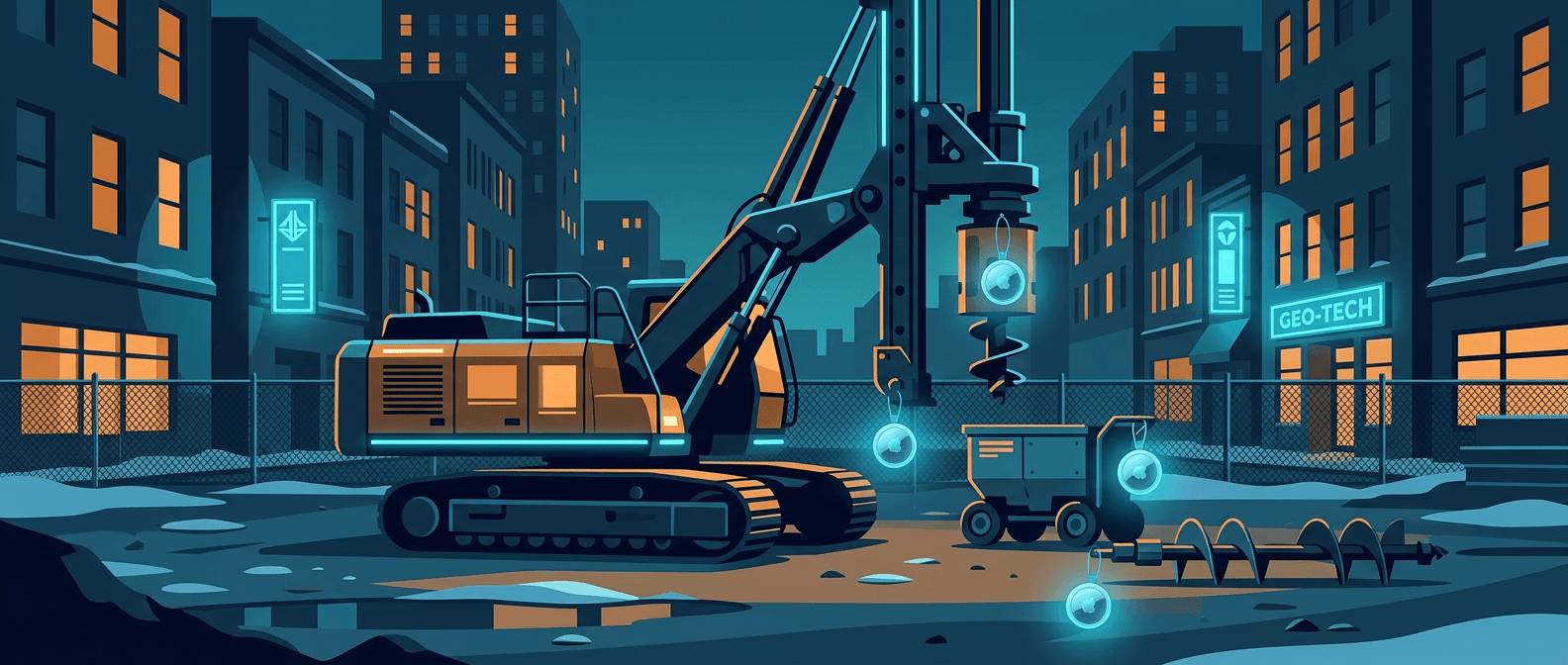
Drilling Equipment Tracking: How Foundation Contractors Manage Fleets Across Job Sites
A mid-size foundation drilling contractor runs 8-12 active projects at once. Each project needs drill rigs, cranes, panel carts, distribution panels, aerial lifts, excavators, and a list of support equipment that changes weekly. That's 50-100+ individual assets scattered across a metro area, constantly being mobilized and demobilized as projects start and finish.
The equipment coordinator is supposed to know where everything is. In practice, they spend Monday mornings on the phone, calling project managers to figure out which site has the spare panel carts and whether the mini excavator came back from the bridge job. A drill rig mobilization to the wrong site costs $5,000-$15,000 in crane time and trucking alone.
This page covers how AirTag-based tracking solves the equipment visibility problem for foundation drilling contractors, deep foundation specialists, and geotechnical construction companies.
The Foundation Drilling Equipment Problem
What a Typical Fleet Looks Like
Foundation drilling contractors operate some of the most expensive and varied equipment in construction. A single company's fleet often includes:
| Equipment Category | Examples | Value Per Unit | Typical Fleet Count |
|---|---|---|---|
| Drill rigs | Top-drive rotary, CFA, micropile rigs | $500K-$2.2M | 5-15 |
| Cranes | 50-ton all-terrain to 330-ton crawler | $200K-$2M+ | 5-10 |
| Panel carts | Portable power distribution carts | $3,000-$8,000 | 20-60+ |
| Distribution panels | Temporary electrical distribution | $2,000-$5,000 | 10-20 |
| Aerial lifts | Scissor lifts, boom lifts | $15,000-$80,000 | 5-15 |
| Excavators | Mini excavators, backhoes, bobcats | $30,000-$150,000 | 5-10 |
| Trailers | Dual-axle, lowboy, flatbed | $5,000-$50,000 | 5-15 |
| Support equipment | Chop saws, welders, generators, pumps | $500-$10,000 | 20-40 |
Total fleet value for a mid-size foundation contractor: $10M-$50M. For a large national contractor, $100M-$400M+.
Why Foundation Drilling Is Different
Foundation drilling has equipment management challenges that other construction trades don't face:
Long project timelines with shifting equipment needs. A deep foundation project runs 3-18 months. Equipment needs change phase by phase. The drill rigs arrive first, then cranes for casing installation, then support equipment for finishing. Assets demobilize at different times, and the coordinator needs to know what's available for the next project.
High-value assets in high-theft environments. Construction sites lose over $1 billion in stolen equipment annually in the US. Foundation drilling sites are particularly vulnerable because they're often in early-stage construction where perimeter security hasn't been established yet. A $15,000 generator or $40,000 scissor lift left on an open site over a weekend is an easy target.
Multi-site coordination is the core challenge. The biggest operational cost isn't theft. It's not knowing where your own equipment is. When a project manager at Site A needs three more panel carts, they shouldn't have to call four other PMs to find out who has extras. And when a drill rig needs to mobilize to a new site, the coordinator needs to know it's actually sitting idle at the old site, not still in use.
Subcontractor equipment mixing. Foundation projects involve multiple subcontractors. Rented equipment, borrowed equipment, and owned equipment sit side by side on the same site. Disputes about who moved whose generator, or whether the rented lift was returned on time, eat up project management hours.
The Panel Cart Problem
This deserves its own section because it's the tracking challenge that most foundation contractors recognize immediately.
57 Panel Carts, 10 Job Sites
Panel carts are portable power distribution units that convert high-voltage site power (480V/600V) into usable lower voltages for tools and equipment. A busy foundation drilling contractor might run 50-60 of them.
Each cart costs $3,000-$8,000. They're not flashy enough to lock down like a drill rig, but they're essential. A drilling crew without power distribution can't run electric tools, lighting, or welding equipment. A site that's short on panel carts burns a day waiting for one to arrive from another project.
The problem is obvious: panel carts look identical. They get loaded onto trucks, moved between sites, and stacked in yards. Without labeling and tracking, nobody knows which site has how many, and arguments about "who took our carts" consume project management time every week.
What real tracking looks like:
One AirPinpoint customer tracks 57 panel carts individually. Panel Cart 001 through Panel Cart 057, each with an AirTag mounted inside the electrical enclosure. Distribution panels numbered #4 through #18 get the same treatment. Monday morning, the equipment coordinator opens the dashboard, filters by "panel cart," and sees every cart's location overlaid on a map of their metro area. No phone calls. No guessing.
When a new project kicks off and needs 8 panel carts, the coordinator checks which sites have excess capacity and arranges transfers. When a project wraps up, they verify that all carts came back to the yard instead of sitting on a finished site for three weeks.
Equipment Categories and Tracking Approaches
Drill Rigs and Cranes
These are high-value assets ($200K-$2M+) that typically have GPS telematics installed by the manufacturer or dealer. So why track them with AirTags too?
Because telematics systems are tied to engine operation. A drill rig sitting idle on a completed project with the engine off doesn't send telematics data. AirTags, on the other hand, transmit passively via Bluetooth regardless of engine state. The Apple Find My network picks up the signal from any passing iPhone.
For foundation drilling, which primarily operates in urban and suburban areas (high-rise foundations, bridge piers, parking structures, transit projects), iPhone density is high enough for consistent updates.
Placement: Mount the AirTag in the operator cab, a toolbox compartment, or a protected cavity on the frame. Avoid locations near hydraulic heat sources or exhaust.
Panel Carts and Distribution Panels
These are the sweet spot for AirTag tracking. Too numerous and too "boring" for expensive GPS trackers, but too valuable and too operationally critical to lose track of.
Placement for panel carts: Inside the electrical enclosure (away from high-voltage connections) or in a weatherproof case bolted to the frame. The metal enclosure doesn't block Bluetooth signals enough to prevent detection.
Placement for distribution panels: Inside the panel housing. Standard NEMA 3R enclosures (designed for outdoor use) don't block Bluetooth signal.
Aerial Lifts and Scissor Lifts
Rental lifts are especially important to track. Most foundation contractors maintain a mix of owned and rented aerial lifts. A rented scissor lift that stays on site two weeks past the project end date costs $500-$1,500 in unnecessary rental charges. Location tracking provides documentation of when equipment was at which site, simplifying rental management and dispute resolution.
Naming convention that works: Real fleet data shows effective labeling like "19ft scissor asset 3384" and "Scissor lift 19ft asset 3855," combining equipment type, size, and internal asset number. This convention makes dashboard searches fast and eliminates confusion between similar units.
Excavators, Bobcats, and Backhoes
Support earthwork equipment moves frequently between foundation projects. A mini excavator might visit three sites in a week. Backhoes and bobcats are high-theft targets because they're relatively easy to load onto a trailer at night.
Placement: Inside the cab or in a secure compartment. Most compact equipment has a toolbox or compartment under the seat that works well.
Trailers
Foundation drilling contractors use trailers to move everything from drill steel to panel carts. Trailers are among the most stolen construction assets (68,000+ stolen annually in the US) because they have no ignition interlock and can be towed by anyone with a hitch.
Placement: Frame rail, inside the tongue box, or mounted inside a protective housing welded to the frame. See our dedicated trailer tracking guide for detailed placement options.
Support Equipment
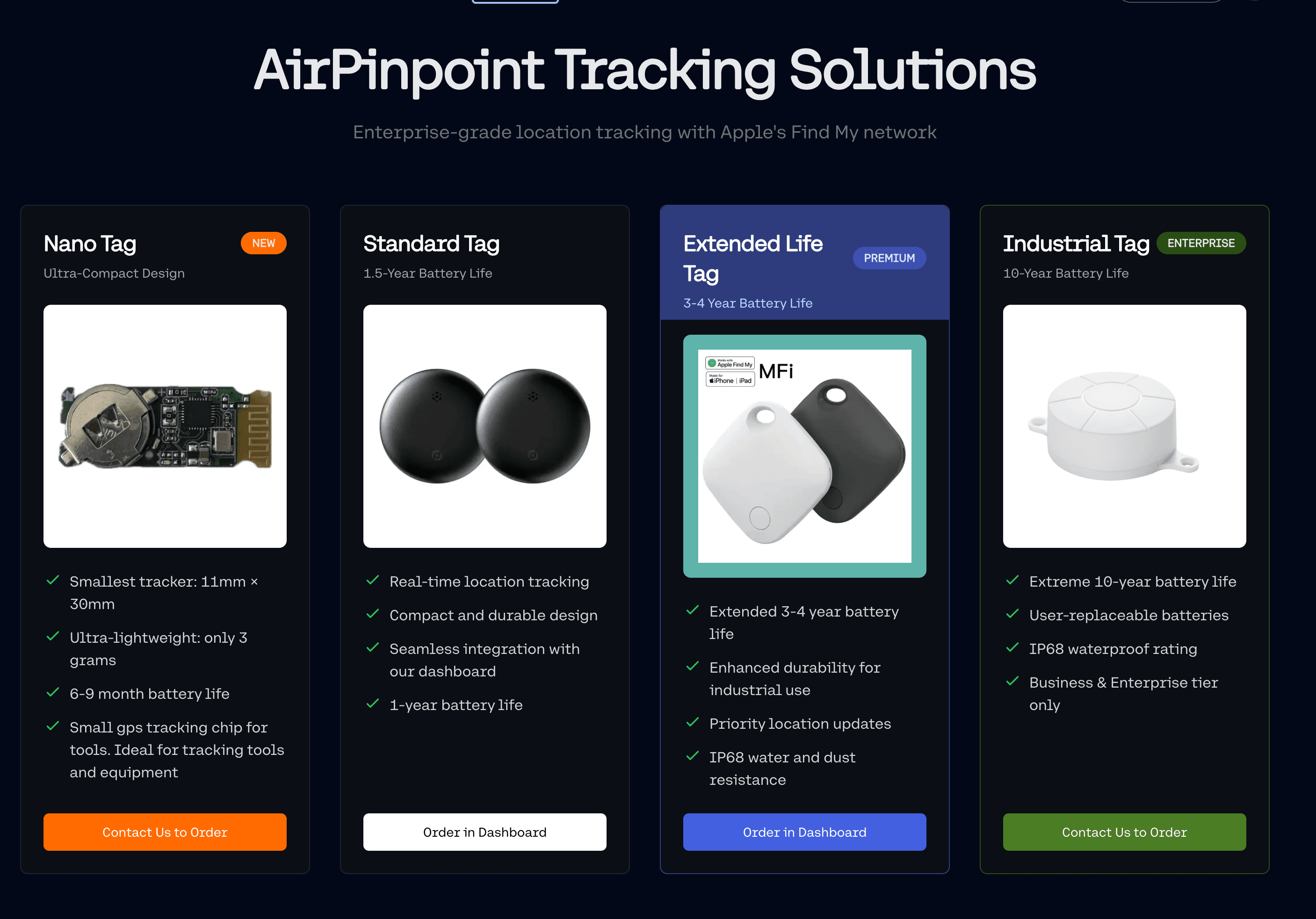
Chop saws, welders, generators, dewatering pumps, air compressors. These items range from $500 to $10,000 each, and foundation drilling operations accumulate dozens of them. Individually they're not expensive enough to justify a $25-$45/month GPS tracker. At $11.99/month with AirPinpoint, the math changes.
A chop saw with stand ($1,500-$3,000) pays for a year of tracking by preventing a single loss. Four numbered chop saws ("Chop Saw w/ Stand 01" through "04") are easy to track in a dashboard when each has its own AirTag and name.
Multi-Site Tracking Operations
The Monday Morning Problem
Every foundation drilling equipment coordinator faces the same Monday morning routine:
- Which sites are active this week?
- What equipment is at each site?
- What equipment needs to move?
- What's missing?
Without tracking, step 2 requires calling every project manager. With 10 active sites, that's 10 calls before the coordinator can even start planning mobilizations for the week.
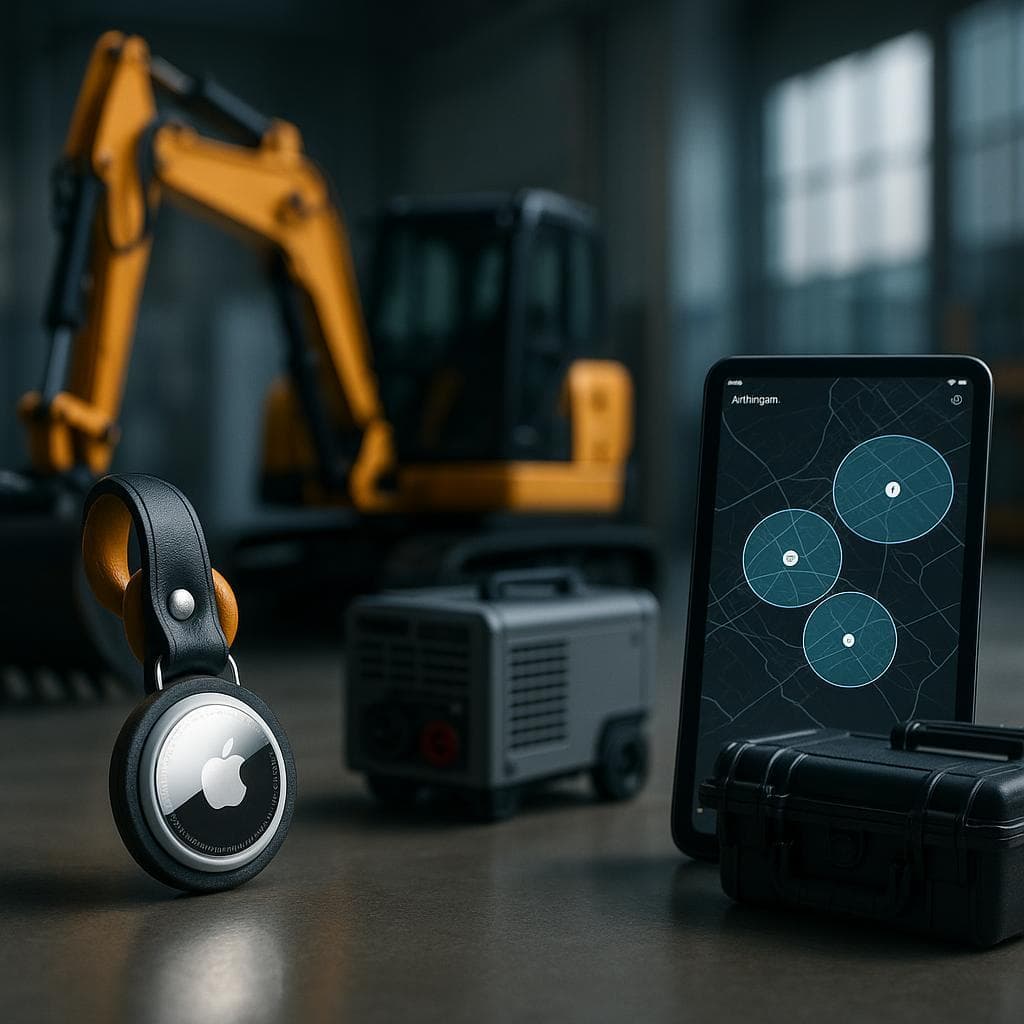
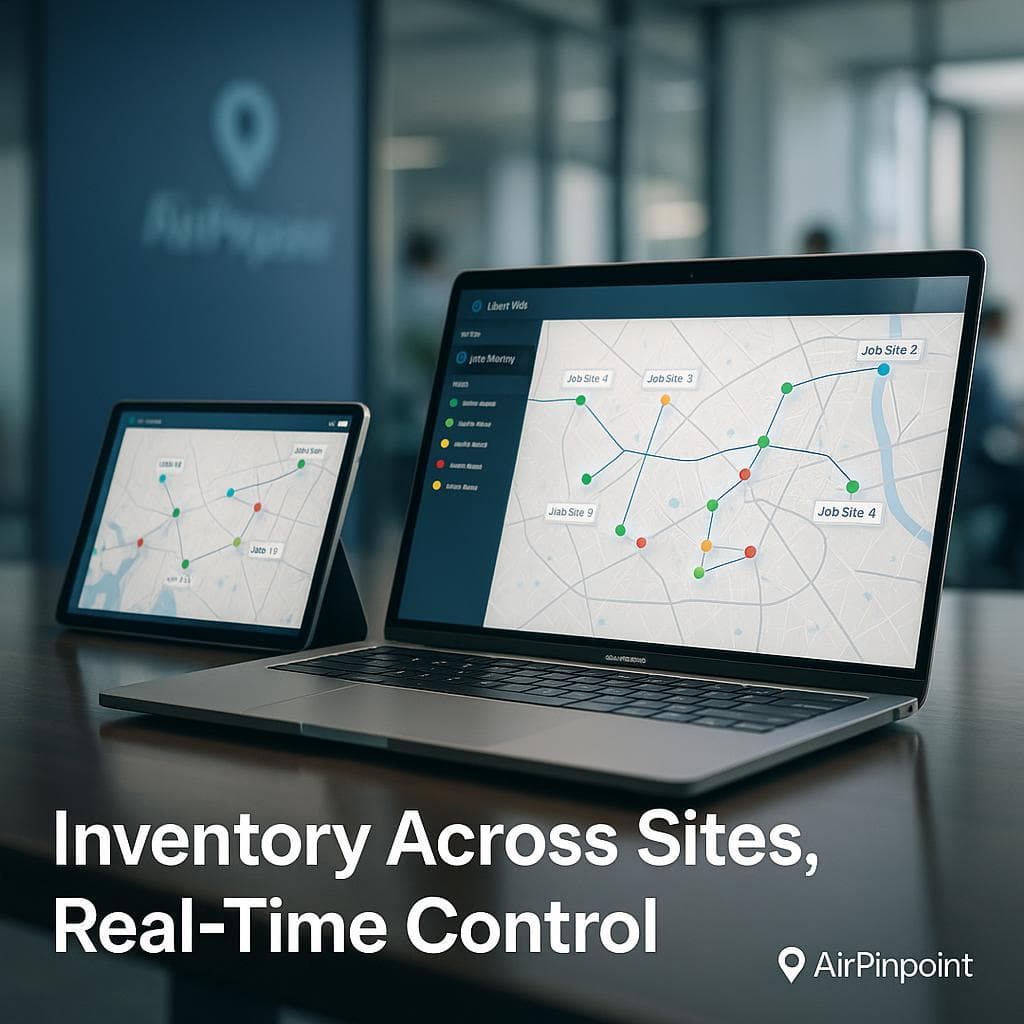
With AirPinpoint, step 2 takes about 90 seconds. Open the dashboard, view all assets on the map, filter by site or equipment type. The coordinator immediately sees that Site B has 12 panel carts but only needs 8 this week, Site D is short on aerial lifts, and the mini excavator that was supposed to return to the yard on Friday is still sitting at Site C.
Geofencing Active Job Sites
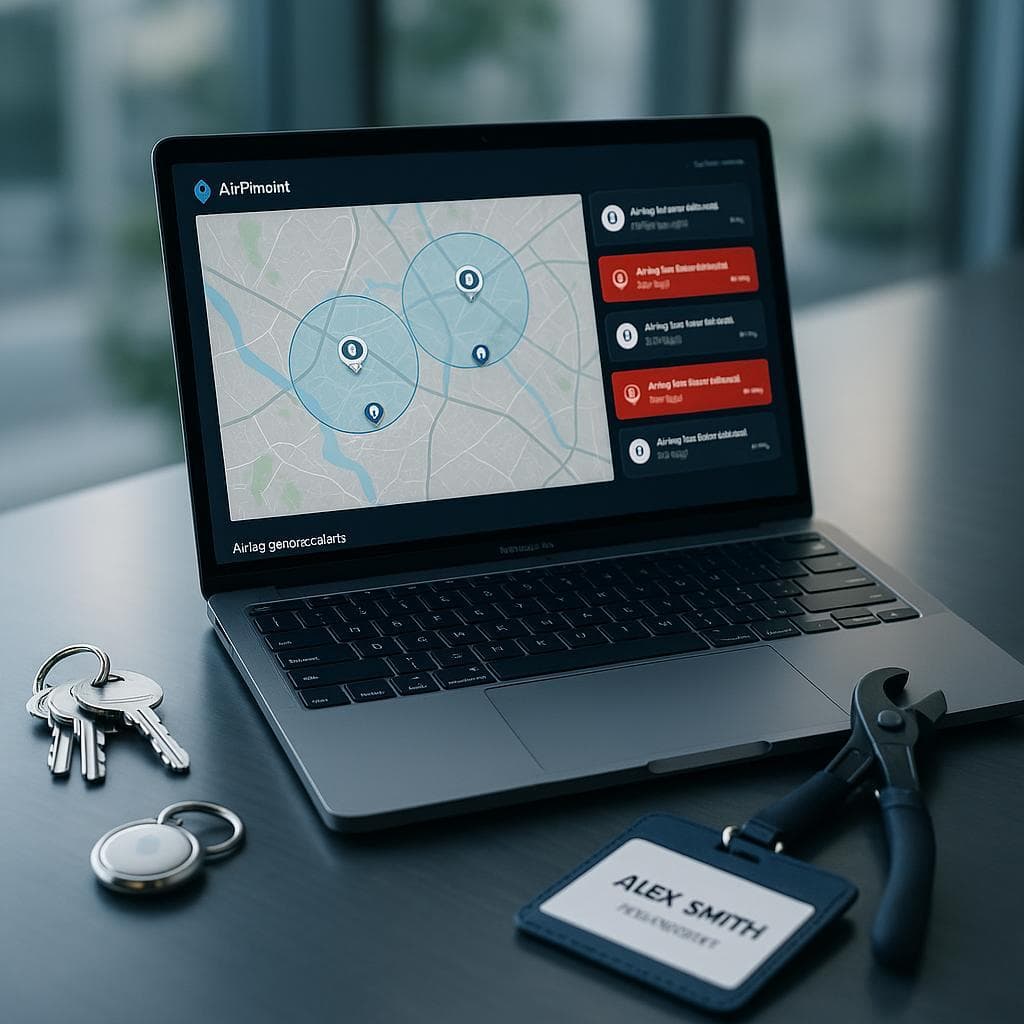
Set up a geofence for each active project. When equipment crosses a geofence boundary, you get an alert. This serves multiple purposes:
Theft deterrence: An alert when a generator leaves Site A at 2am on Saturday means you can respond immediately instead of discovering the loss on Monday.
Demobilization tracking: When a project wraps up, you know exactly which assets are still on site. Equipment left behind on completed projects is one of the largest hidden costs in construction. A panel cart sitting on a finished site for a month is a panel cart your next project doesn't have.
Mobilization confirmation: When you arrange for equipment to move from Site B to Site D, you get confirmation when it arrives. No need to call the trucking company or the receiving PM.
Equipment Utilization Visibility
Foundation drilling equipment that sits idle costs money. A $1.5M drill rig that's parked for two weeks between projects represents significant capital not generating revenue. Tracking data reveals utilization patterns over time:
- Which equipment types are consistently in demand vs. sitting in the yard?
- Are you renting lifts while owning lifts that are idle at another site?
- Do certain project types consume more panel carts than estimated?
This data feeds better purchasing and rental decisions. If tracking shows you consistently rent 10 additional panel carts during peak season, buying them may be cheaper than recurring rental costs.
Cost Comparison: Tracking a 75-Asset Foundation Fleet
Foundation contractors run mixed fleets. Some assets justify individual GPS trackers (drill rigs, cranes). Most don't. Here's how the economics break down:
GPS Trackers for Everything
| Item | Cost |
|---|---|
| Hardware (75 devices @ $100 avg) | $7,500 |
| Monthly service (75 x $30/mo avg) | $2,250/mo |
| Annual cost | $34,500 |
| 3-year total | $88,500 |
Plus: monthly charging or hardwiring for battery-powered GPS units. At 75 devices, that's a part-time job.
AirPinpoint for Everything
| Item | Cost |
|---|---|
| AirTags (75 x $29) | $2,175 |
| Monthly service (75 x $11.99/mo) | $899.25/mo |
| Battery replacement (75 x $3/year) | $225/yr |
| Annual cost | $11,016 |
| 3-year total | $33,873 |
No charging. No hardwiring. Battery swap once a year during routine maintenance.
Hybrid Approach (Recommended for Large Fleets)
For contractors with high-value drill rigs and cranes that already have OEM telematics:
| Asset Type | Count | Tracking Method | Annual Cost |
|---|---|---|---|
| Drill rigs & cranes (with OEM telematics) | 15 | Existing telematics + AirTag backup | $2,159 (AirTags only) |
| Panel carts & distribution panels | 60 | AirPinpoint | $8,633 |
| Total | 75 | Hybrid | $10,792 |
The hybrid approach uses existing telematics for engine data on major equipment while AirPinpoint covers the long tail of smaller assets that would never justify a GPS subscription.
Implementation for Foundation Drilling Contractors
Phase 1: Panel Carts and Support Equipment (Week 1-2)
Start with the assets that cause the most day-to-day headaches. For most foundation contractors, that's panel carts, distribution panels, and frequently moved support equipment.
- Purchase AirTags for your panel cart and distribution panel fleet
- Establish a naming convention (Panel Cart 001-057, Distribution Panel 04-18)
- Mount AirTags inside enclosures
- Register all assets in AirPinpoint
- Set up geofences for active job sites
This immediately solves the "which site has which carts" problem that eats hours of coordinator time weekly.
Phase 2: Aerial Lifts, Excavators, Trailers (Week 3-4)
Add AirTags to all remaining mobile assets: scissor lifts, boom lifts, excavators, bobcats, trailers, and any other equipment that moves between sites.
Phase 3: Drill Rigs and Cranes (Optional)
If your drill rigs and cranes already have OEM telematics, adding AirTags provides a backup tracking layer that works even when the engine is off. If they don't have telematics, AirTags provide basic location visibility at a fraction of the cost of installing aftermarket telematics.
Phase 4: Process Integration
Once tracking data is flowing, integrate it into your operations:
- Equipment coordinator uses the dashboard for weekly mobilization planning
- Project managers check the dashboard before requesting equipment transfers
- Geofence alerts route to the coordinator and security for after-hours monitoring
- Monthly utilization reviews inform purchasing and rental decisions
Honest Limitations
Not a replacement for OEM telematics on drill rigs. AirTag tracking provides location data, not engine hours, fuel consumption, or diagnostic codes. For million-dollar drill rigs, OEM telematics data is valuable for maintenance scheduling and warranty compliance. AirPinpoint complements telematics, it doesn't replace it.
Location update frequency varies. In dense urban areas (where most foundation work happens), updates come every few minutes to every hour. At remote bridge or dam sites with limited foot traffic, updates will be less frequent. Crew members' iPhones within Bluetooth range will trigger updates, but if nobody is near the equipment, there's a gap until someone approaches.
Not real-time GPS. AirTags update when detected by the Find My network. For applications requiring second-by-second position data (like tracking a drill rig during active drilling operations), you need a dedicated GPS device. AirPinpoint is for fleet-level "where are my assets" visibility, not real-time operational tracking.
Why Foundation Drilling Contractors Choose AirPinpoint
The foundation drilling use case fits AirPinpoint perfectly because:
-
Mixed asset types. You need to track $2M drill rigs and $3,000 panel carts on the same platform. GPS tracker pricing makes no sense for panel carts. AirPinpoint's flat $11.99/device/month works for both.
-
Urban operating environment. Foundation drilling primarily happens in populated areas where the Apple Find My network is dense. This is where AirTag tracking performs best.
-
Multi-site operations. The dashboard's map view with geofencing was built for companies managing assets across 10+ simultaneous locations.
-
Minimal maintenance. Foundation drilling crews don't have time to charge GPS trackers. AirTag batteries last a year and take 30 seconds to replace.
-
Scale. Tracking 70+ assets individually with GPS would cost $25,000-$40,000 per year. AirPinpoint costs about $10,000. That savings is meaningful even for companies managing $100M+ equipment fleets.
Foundation contractors who've tried clipboard-based tracking, spreadsheets, or "just call the PM" approaches know the hidden cost: mobilization mistakes, lost rental equipment, panel cart shortages, and theft that goes unnoticed until the next inventory count. AirPinpoint replaces all of that with a single dashboard that shows every asset, at every site, updated automatically.

 Our Solution