AirTags vs Optimus GPS Tracker: Which Makes Sense for Your Fleet?
Two Trackers, Two Philosophies
Optimus and AirTags both market themselves as affordable tracking solutions. They solve the same core problem: where is my stuff? But they take fundamentally different approaches, and the differences compound as you scale.
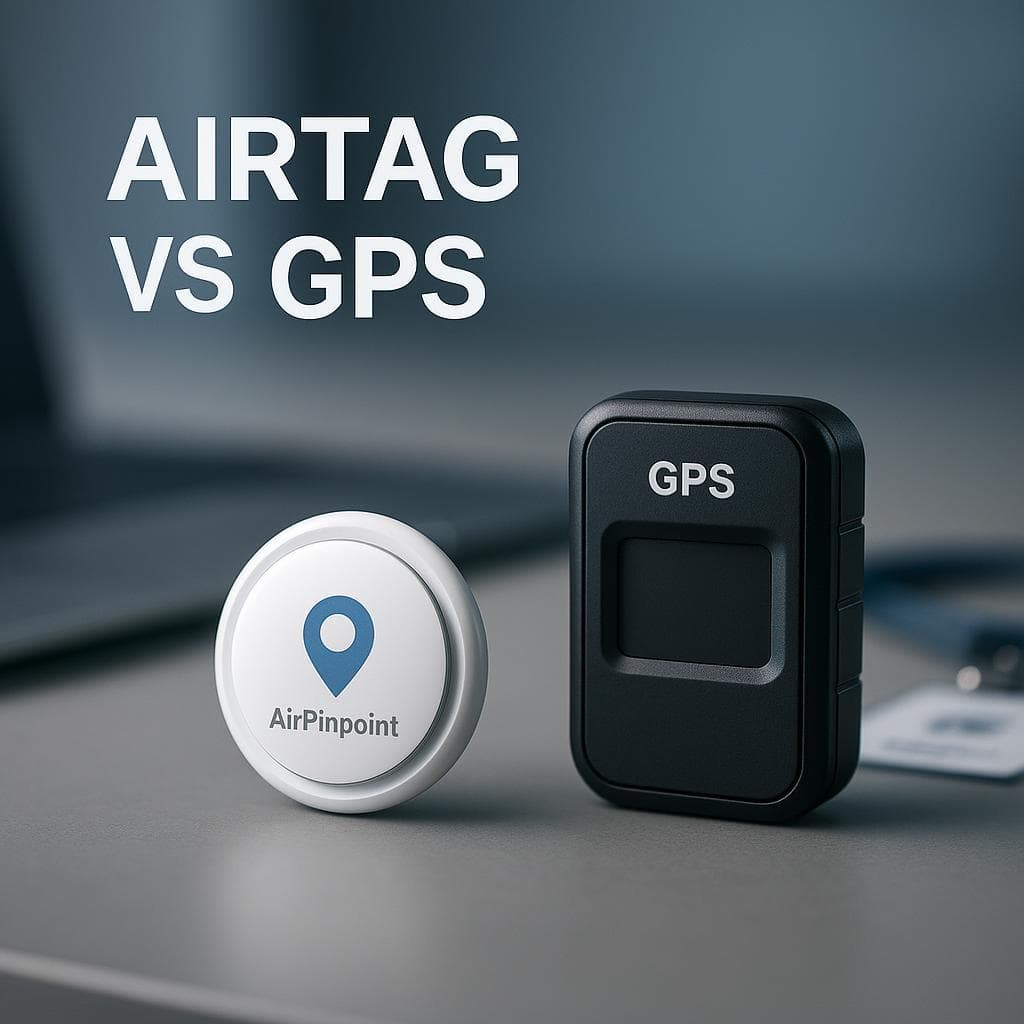
Optimus GPS Tracker is a battery-powered GPS device with a magnetic case. Pop it on a vehicle, and you get real-time location, speed data, geofencing, and an SOS button. It uses cellular networks to transmit GPS coordinates. Hardware costs $38-50, and the monthly plan is $19.95 with no contract.
AirTags are Bluetooth trackers that use Apple's Find My network of 2+ billion devices. They cost $29 each, run for a year on a coin battery, and report location whenever an Apple device passes nearby. AirPinpoint adds a fleet dashboard with history, geofences, multi-user access, and API integrations at $11.99/device/month.
On paper, Optimus gives you more data. In practice, the battery charging overhead changes the equation as soon as you're tracking more than a handful of assets.
Optimus GPS Pricing Breakdown
What You Actually Pay
| Cost Component | Amount |
|---|---|
| Hardware (Optimus 2.0) | $38-50 per device |
| Monthly plan | $19.95/device (month-to-month) |
| Annual plan | ~$16-17/device/month (prepaid) |
| Contract | None required |
| SIM card | Included |
| Magnetic case | Included |
Optimus keeps pricing simple. Buy the hardware, pay monthly, cancel whenever. No activation fees, no security deposits. The annual prepay option saves roughly 15-20% if you commit upfront.
Hardware Options
Optimus 2.0: The flagship. Battery-powered with a strong magnetic case. Waterproof (IP65/IP67). Features include real-time tracking, geofencing, speed alerts, SOS button, tamper detection, and trip history. Battery lasts 1-2 weeks on continuous mode, up to 2 months on power-save. This is what most people buy.
Optimus 3.0: The updated model with improved GPS accuracy and a slightly smaller form factor. Same feature set, same price range, marginally better battery optimization. Still requires regular charging.
Both models use 4G LTE cellular connectivity. SIM and data are bundled into the monthly fee.
What Optimus Does Well
Optimus earns its 4.3/5 Amazon rating (15,000+ reviews) for genuine reasons:
- Magnetic mount: Slap it under a vehicle in seconds. No wiring, no tools.
- Real-time tracking: GPS updates every 10-60 seconds in continuous mode. You see where it is right now, not where it was an hour ago.
- Speed alerts: Set a threshold, get notified when the tracker exceeds it.
- SOS button: One-press emergency alert with location coordinates.
- Tamper detection: Get notified if someone removes the tracker.
- Geofencing: Draw boundaries on a map, get entry/exit alerts.
- Trip history: Full route playback with timestamps and stops.
- No contract: Cancel anytime. This is a real advantage over Samsara, Verizon Connect, and most enterprise GPS providers.
For a single vehicle or a handful of assets, Optimus is a solid budget GPS tracker. The problems start when you scale.
The Battery Problem at Scale
This is the comparison point that matters most, and it's the one that marketing pages gloss over.
The Math on Charging
Optimus battery life in continuous tracking mode: 1-2 weeks. Let's be generous and call it 2 weeks.
Each device needs charging every 14 days. A full charge takes 2-3 hours. Someone has to physically retrieve the tracker, plug it in, and reattach it.
Here's how that scales:
| Fleet Size | Charges Per Month | Charges Per Day | Time Per Month (15 min each) |
|---|---|---|---|
| 1 device | 2 | 0.07 | 30 minutes |
| 5 devices | 10 | 0.3 | 2.5 hours |
| 10 devices | 20 | 0.7 | 5 hours |
| 25 devices | 50 | 1.7 | 12.5 hours |
| 50 devices | 100 | 3.3 | 25 hours |
At 25 devices, you are charging roughly 2 trackers every single day. That includes retrieving it from the vehicle, waiting for it to charge, and reattaching it. At 50 devices, it's a dedicated part-time role.
If you use power-save mode (updates every 1-4 hours instead of every minute), battery life extends to 1-2 months. But then you're not getting real-time tracking anymore, which is the whole reason to buy a GPS tracker over an AirTag.
AirTag Battery Comparison
AirTags use a CR2032 coin battery that lasts approximately 1 year. Replacement takes 10 seconds and costs less than $1.
| Fleet Size | Battery Swaps Per Year | Time Per Year (1 min each) |
|---|---|---|
| 1 device | 1 | 1 minute |
| 5 devices | 5 | 5 minutes |
| 10 devices | 10 | 10 minutes |
| 25 devices | 25 | 25 minutes |
| 50 devices | 50 | 50 minutes |
The maintenance gap is not subtle. Over 3 years with 25 devices, Optimus requires approximately 1,800 charging sessions totaling 450+ hours of handling time. AirTags require 75 battery swaps totaling about 75 minutes.
True Cost Comparison
Let's compare total cost of ownership including hardware, subscriptions, and battery/charging costs.
1 Device Over 3 Years
Optimus GPS:
- Hardware: $45
- Monthly subscription: $19.95 x 36 = $718.20
- Total: ~$763
AirTag + AirPinpoint:
- AirTag: $29
- AirPinpoint subscription: $11.99 x 36 = $431.64
- Battery replacements (3 batteries): ~$3
- Total: ~$464
Savings with AirTag: ~$299 (39%)
At a single device, Optimus has a clear value proposition if you need real-time GPS. The $299 premium buys you live tracking, speed alerts, and an SOS button. Worth it for many use cases.
10 Devices Over 3 Years
Optimus GPS:
- Hardware: 10 x $45 = $450
- Monthly subscription: 10 x $19.95 x 36 = $7,182
- Total: ~$7,632
AirTags + AirPinpoint:
- AirTags: 10 x $29 = $290
- AirPinpoint subscription: 10 x $11.99 x 36 = $4,316
- Battery replacements: ~$30
- Total: ~$4,636
Savings with AirTags: ~$2,996 (39%)
At 10 devices, you also save approximately 180 hours of charging labor over 3 years. At $25/hour, that's $4,500 in labor costs not reflected in the table above.
25 Devices Over 3 Years
Optimus GPS:
- Hardware: 25 x $45 = $1,125
- Monthly subscription: 25 x $19.95 x 36 = $17,955
- Charging labor estimate (450+ hours at $25/hr): Not included in sticker price
- Total (sticker): ~$19,080
AirTags + AirPinpoint:
- AirTags: 25 x $29 = $725
- AirPinpoint subscription: 25 x $11.99 x 36 = $10,791
- Battery replacements: ~$75
- Total: ~$11,591
Savings with AirTags: ~$7,489 (39%) before labor costs
At 25 devices, the Optimus subscription alone is $498.75/month. AirPinpoint is $299.75/month. The gap is $199/month, and that's before accounting for the 12+ hours of monthly charging labor.
Volume discounts for 100+ tags are available. Contact us for a quote.
What Optimus Does That AirTags Cannot
Optimus is a real GPS tracker with capabilities AirTags fundamentally lack. Be honest with yourself about whether you need these:
Real-Time GPS Tracking
Optimus updates every 10-60 seconds. You see where a vehicle is right now. AirTag locations update when Apple devices pass nearby, which could be every few minutes in a city or hours in a rural area. If your dispatcher needs live positions for routing or ETAs, AirTags won't work.
Speed Monitoring
Optimus tracks speed continuously and sends alerts when thresholds are exceeded. Speed history appears in trip reports. AirTags report position only, with no velocity data.
SOS Button
Press the button on an Optimus tracker and it sends your GPS coordinates to preset contacts. Useful for lone workers, delivery drivers, or anyone in a safety-sensitive role. AirTags have no user-input capability.
Tamper Alerts
Optimus notifies you if the tracker is moved or removed from a vehicle. AirTags have no accelerometer-based tamper detection in the business context.
Trip Replay
Optimus records full routes with timestamps, stops, and duration. You can replay exactly where a vehicle went and when. AirPinpoint shows location history based on detection events, which provides a general movement pattern but not a continuous breadcrumb trail.
Works Anywhere With Cell Coverage
Optimus transmits via 4G LTE to cell towers. It works in any area with cellular service, including rural highways and remote job sites. AirTags require nearby Apple devices to relay location, which means coverage depends on population density. Open farmland or remote forest? Optimus wins.
Where AirTags Win Over Optimus
1. Battery Life Eliminates Charging Logistics
This is the single biggest advantage. An AirTag runs for a year on a CR2032 battery that costs less than a dollar. No charging cables, no docking stations, no rotation schedules. For fleet operations, this means the difference between a system that runs itself and a system that demands constant attention.
2. Lower Total Cost at Every Scale
AirPinpoint at $11.99/device/month vs. Optimus at $19.95/device/month. That's 40% less per device, compounding across your fleet and across time. The AirTag hardware is also cheaper: $29 vs. $38-50.
3. Indoor Location Detection
AirTags work inside buildings. If a vehicle or piece of equipment is in a parking garage, warehouse, or loading dock, AirTags can still provide location updates via nearby iPhones. Optimus GPS loses satellite lock indoors and shows the last outdoor position.
4. Coverage in Populated Areas
Apple's Find My network includes over 2 billion active devices. In any city, suburb, or moderately populated area, AirTags get frequent location updates without paying for cellular data. Optimus pays for a SIM card and data plan bundled into the monthly fee, whether coverage is good or not.
5. Size and Concealment
An AirTag is a 31.9mm coin, smaller than a quarter. It disappears inside a toolbox, under a vehicle seat, in an equipment compartment, or strapped to a trailer frame. Optimus trackers, even with the magnetic case, are significantly larger and more conspicuous. For anti-theft purposes, smaller is better.
6. Track Everything, Not Just Vehicles
Optimus makes sense on vehicles. But your fleet includes more than vehicles. Trailers, generators, compressors, tool chests, dumpsters, scaffolding, portable offices. Putting a $45 GPS tracker with a $19.95/month subscription and a bi-weekly charging requirement on a dumpster is hard to justify. An AirTag costs $29, lasts a year, and you forget about it.
Optimus vs. Other GPS Trackers
Where does Optimus fit in the broader market?
| Tracker | Hardware Cost | Monthly Fee | Contract | Battery Life | Key Strength |
|---|---|---|---|---|---|
| Optimus 2.0 | $38-50 | $19.95 | None | 1-2 weeks | Budget real-time GPS, magnetic mount |
| SpyTec GL300 | $30-40 | $24.95 | None | 2-3 weeks | Compact, wide retail availability |
| Tracki | $19-30 | $19.95 | None | 2-5 days | Smallest GPS tracker, cheapest hardware |
| LandAirSea Overdrive | $30 | $19.95-29.95 | None | 1-2 weeks | Waterproof, fleet platform available |
| One Step GPS | Free (leased) | $13.95 | None | Hardwired (infinite) | Cheapest fleet GPS, OBD integration |
| AirTags + AirPinpoint | $29 | $11.99 | None | 1 year | Lowest total cost, zero maintenance |
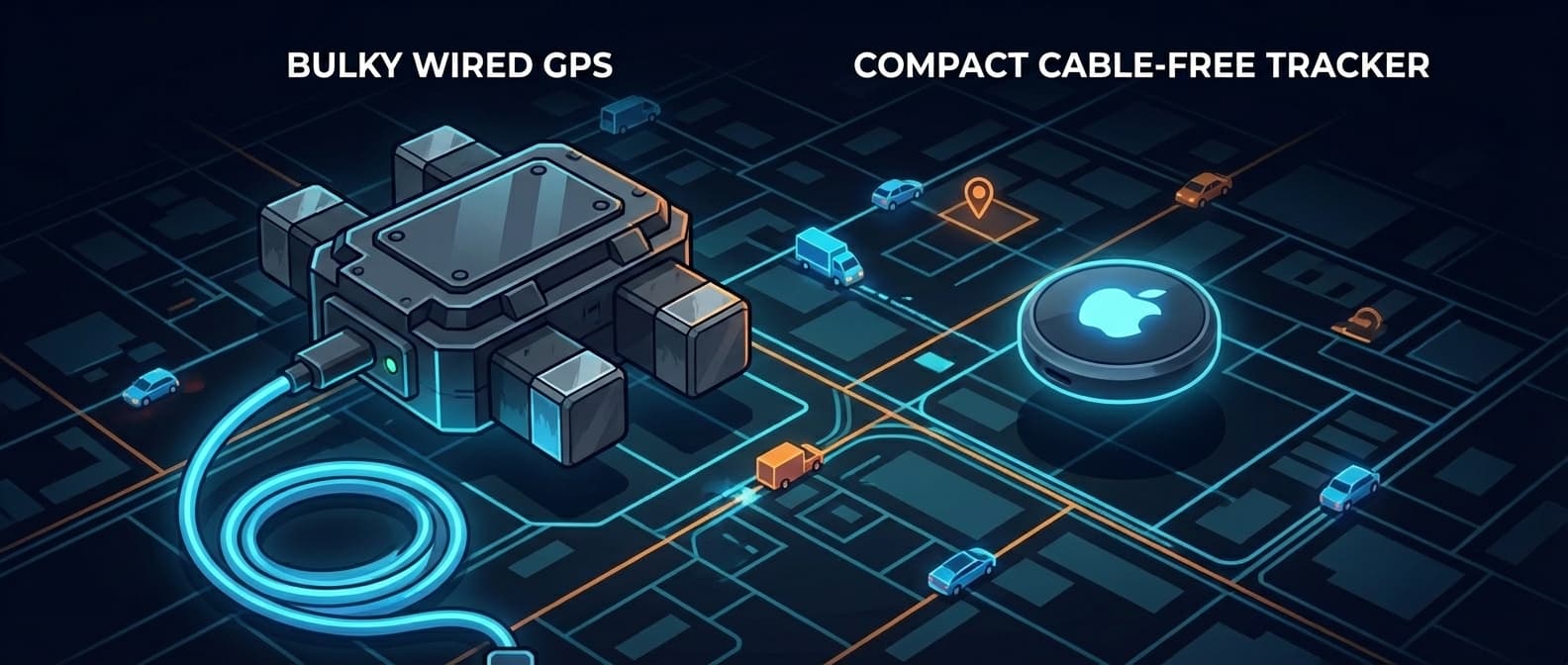
Optimus, SpyTec, Tracki, and LandAirSea all share the same fundamental limitation: battery-powered GPS trackers need constant recharging. They're fine for personal use (tracking a single car) but create operational overhead at fleet scale.
One Step GPS avoids the battery problem by using hardwired or OBD-powered hardware, but costs $13.95/vehicle/month and requires physical installation.
AirTags avoid both problems: no charging and no installation.
When to Choose Optimus
Optimus is the right pick when:
-
You're tracking 1-5 assets and need real-time GPS. The charging burden is manageable at this scale. Real-time location justifies the premium.
-
Speed monitoring matters. If you need to enforce speed limits, track driving behavior, or generate trip reports with velocity data, Optimus provides this and AirTags do not.
-
You need an SOS button. For lone worker safety, delivery drivers in risky areas, or any situation where one-press emergency alerts add genuine value.
-
Coverage is rural. If your assets operate in areas with low population density (farms, forests, remote job sites), cellular GPS will outperform Apple's Find My network.
-
You need instant movement alerts. Optimus sends tamper and movement notifications in real time. AirPinpoint geofencing works but with detection delays.
When to Choose AirTags
AirTags with AirPinpoint make more sense when:
-
You're tracking more than 10 assets. The battery maintenance burden of Optimus becomes a real operational cost at this scale. Someone on your team will spend hours every week on charging rotations.
-
Your assets include unpowered equipment. Trailers, containers, generators, tools, and anything else that sits in a yard or on a job site. Optimus needs charging regardless of whether the asset moved.
-
Location awareness is enough. You need to know where things are, not how fast they're moving or exactly what route they took. "The generator is at the Main Street job site" solves most problems.
-
Budget matters at scale. At 25 devices, AirPinpoint saves roughly $7,500 over 3 years compared to Optimus, before factoring in labor costs from charging.
-
You operate in populated areas. Cities, suburbs, commercial districts, construction sites near highways. Apple's Find My network provides frequent updates in these environments.
-
You want to deploy today, not next week. Buy AirTags at any Apple Store or Amazon. Stick them on your assets. Sign up for AirPinpoint. Your fleet is tracked before lunch.
The Hybrid Strategy
The best fleet tracking setup usually isn't all-or-nothing. Consider layering:
Use Optimus For:
- 2-3 high-value vehicles where real-time GPS and speed monitoring justify $19.95/month each
- Vehicles operating in truly remote areas with no nearby population
- Assets where SOS or tamper alerts provide genuine safety value
Use AirTags For:
- Everything else: trailers, equipment, tools, containers, backup trackers on GPS-equipped vehicles
- The 80% of your fleet that just needs "where is it?" answered
- New assets you're testing before committing to expensive GPS plans
A company with 5 service trucks and 20 trailers might put Optimus on the 2 trucks that run long-haul routes in rural areas ($39.90/month) and AirTags on everything else ($29 each, one-time, plus $11.99/device/month for the dashboard). Total monthly cost: roughly $315/month instead of $498.75/month for Optimus on everything, with dramatically less maintenance overhead.
Our Recommendation
Optimus is a decent budget GPS tracker. The 4.3/5 Amazon rating across 15,000+ reviews is earned. For personal use or small-scale vehicle tracking, it delivers real-time GPS at a reasonable price with no contract. The magnetic mount makes installation genuinely easy.
But battery-powered GPS trackers don't scale. This isn't unique to Optimus. SpyTec, Tracki, and LandAirSea all share the same problem. Any fleet tracker that needs recharging every 1-2 weeks creates an operational burden that grows linearly with your fleet size. At 10 devices, it's annoying. At 25, it's a dedicated job function.
Start with AirTags and AirPinpoint. Deploy AirTags across your entire fleet and equipment inventory for less than the cost of two months of Optimus on 25 devices. The dashboard gives you location history, geofencing, and team access without the charging treadmill. If specific assets genuinely need real-time GPS after you've lived with the system for a month, add Optimus to those few assets only.
The goal is fleet-wide visibility with the least operational overhead. AirTags deliver that at a lower cost than any GPS tracker on the market, Optimus included.
 Our Solution