AirTags vs BrickHouse Security: Which Tracker Fits Your Operation?
Two Very Different Products for Two Very Different Buyers
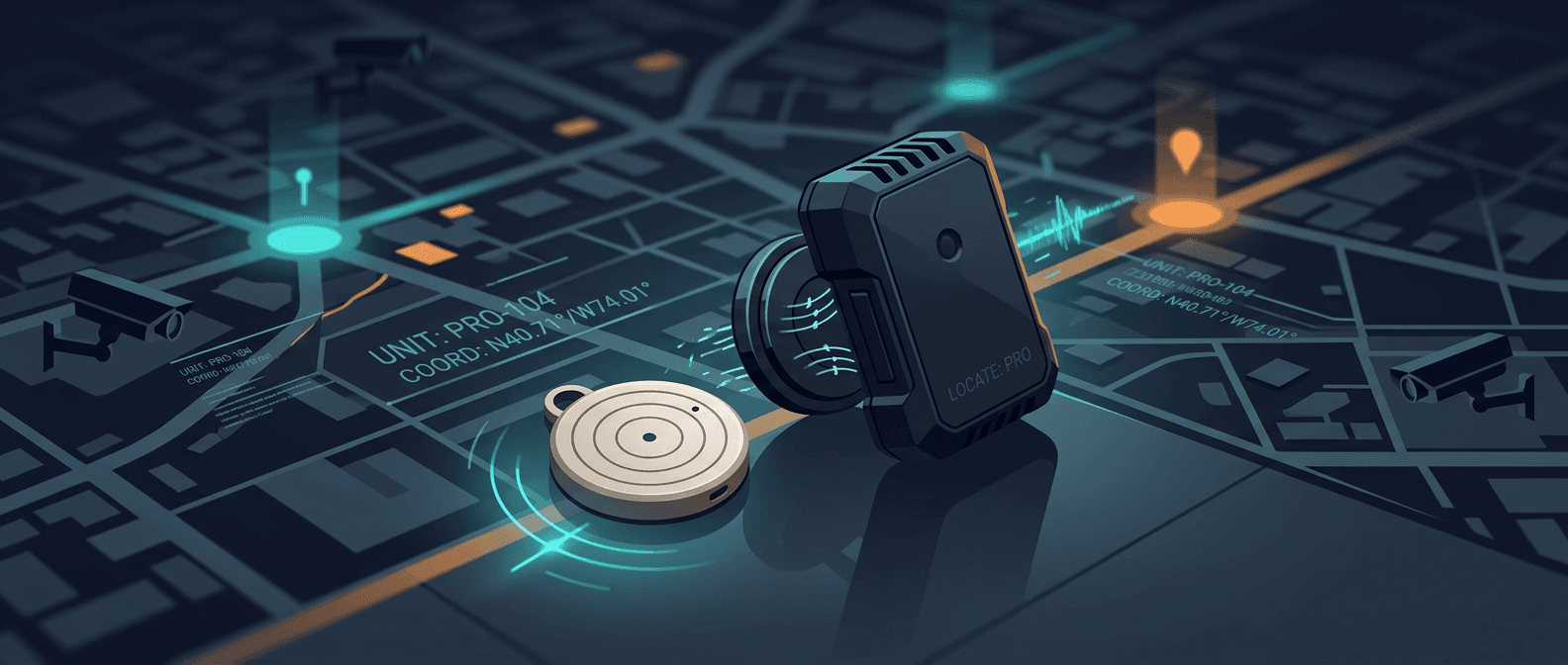
BrickHouse Security and AirTags serve overlapping markets but come from completely different worlds.
BrickHouse Security sells the Spark Nano 7, a cellular GPS tracker designed for surveillance, investigation, and personal tracking. The device costs $9.95 bare, but most buyers add the waterproof magnetic case and extended battery ($49-70). Monthly plans run from $17.99 to $49.99 depending on update frequency and features. The company has been in the security products business for years, and their marketing leans heavily on PI work, covert vehicle tracking, and personal safety.
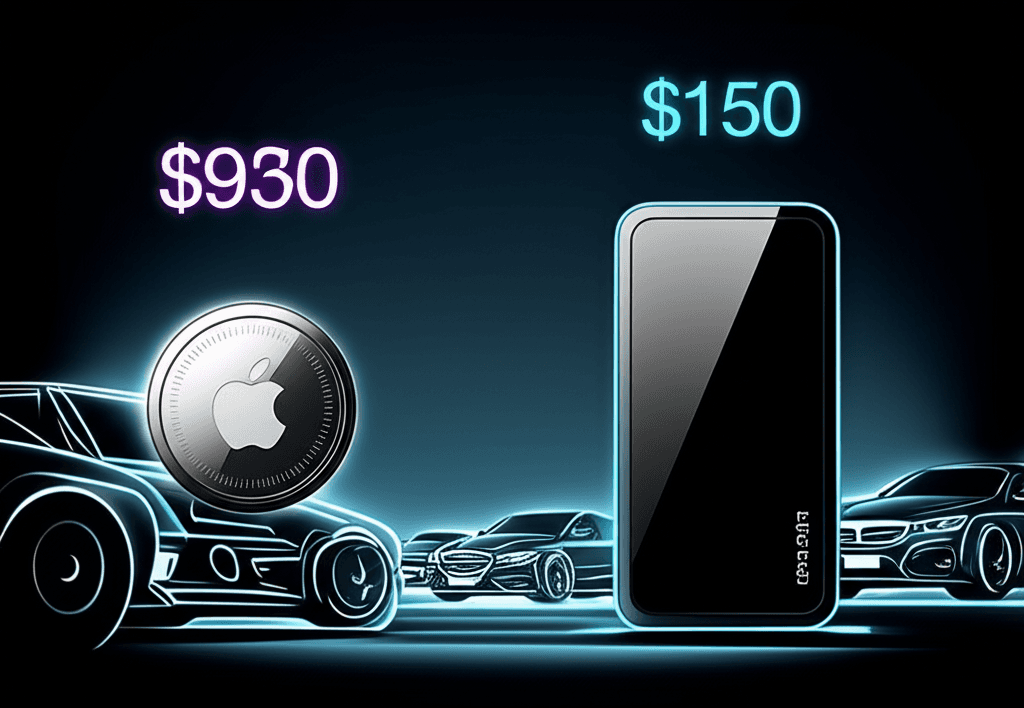
AirTags are Apple's Bluetooth trackers using the Find My network. A single AirTag costs $29 (or $24.17 each in a 4-pack). The battery lasts a full year. Location updates passively when any of the 2+ billion active Apple devices passes nearby. AirPinpoint adds a business dashboard with location history, geofencing, team access, and webhook integrations starting at $11.99/device/month.
The core difference: BrickHouse gives you real-time cellular GPS for surveillance use cases. AirTags give you passive Bluetooth tracking with far less maintenance for fleet and asset management.
BrickHouse Security Pricing Breakdown
Three Plan Tiers
| Feature | Basic | Plus | Premium |
|---|---|---|---|
| Monthly price | $29.99 | $39.99 | $49.99 |
| Annual price | $17.99/mo | $27.99/mo | $34.99/mo |
| Update interval | 60 seconds | 30 seconds | 5 seconds |
| Geofences | 5 | 60 | Unlimited |
| Location history | 30 days | 90 days | 400 days |
| International tracking | No | No | Yes |
| SOS alerts | Yes | Yes | Yes |
| Speed alerts | Yes | Yes | Yes |
| Contract required | No | No | No |
Most buyers land on the Basic plan for cost reasons or the Premium plan for the 5-second updates and unlimited geofences. The Plus plan sits in an awkward middle.
Hardware Costs
| Component | Price |
|---|---|
| Spark Nano 7 (bare device) | $9.95 |
| Waterproof magnetic case | ~$20-30 |
| Extended battery pack + case | $49-70 |
| Typical total hardware cost | $49-70 |
The $9.95 headline price is misleading. The bare device has a 7-day battery. Nobody running a serious tracking operation uses it without the extended battery and magnetic case, which brings the real hardware cost to $49-70 per unit.
What the Annual Discount Actually Saves
BrickHouse advertises a 30% annual discount. Here's what that looks like in practice:
| Plan | Monthly Billing (12 mo) | Annual Billing (12 mo) | Savings |
|---|---|---|---|
| Basic | $359.88 | $215.88 | $144.00 |
| Plus | $479.88 | $335.88 | $144.00 |
| Premium | $599.88 | $419.88 | $180.00 |
The annual discount is real money. But even at the discounted rate, Basic costs $215.88/year per device on top of hardware.
The Battery Life Problem
This is the single biggest difference between these two products, and it matters more than anything else for operational tracking.
BrickHouse Battery Reality
The Spark Nano 7's standard battery lasts 7 days active, 14 days standby. That means if you're tracking a fleet of vehicles with real-time updates, you're charging devices every week.
The extended battery pack stretches this to roughly 140 days. That sounds reasonable until you multiply it across a fleet:
- 10 devices: 10 charging sessions every 4-5 months. You need to retrieve each device, charge it (4-6 hours), and reinstall it.
- 25 devices: 25 charging sessions every 4-5 months. That's a full day of work, 2-3 times per year, just maintaining trackers.
- Missed charges = gaps in tracking: If a device dies in the field, you get no data until someone physically retrieves and recharges it.
AirTag Battery Reality
An AirTag runs on a CR2032 coin cell. Battery life: approximately 1 year. Replacement takes 10 seconds and costs under $1.
- 10 devices: 10 battery swaps per year. Total time: ~2 minutes. Total cost: ~$5.
- 25 devices: 25 battery swaps per year. Total time: ~5 minutes. Total cost: ~$12.
- No charging infrastructure: No cables, no charging stations, no scheduling.
For businesses tracking 10+ assets, the maintenance difference is not marginal. It fundamentally changes how much attention the tracking system demands.
3-Year Total Cost of Ownership
The numbers below use BrickHouse Basic with annual billing (the cheapest BrickHouse option) and AirPinpoint Business ($11.99/device/month). All calculations include hardware, subscriptions, and battery/charging costs.
1 Device Over 3 Years
BrickHouse Security (Basic Annual):
- Hardware (device + extended battery + case): $70
- Subscription: $17.99/mo x 36 = $647.64
- Total: ~$718
AirTag + AirPinpoint:
- AirTag: $29
- AirPinpoint subscription: $11.99/mo x 36 = $431.64
- Battery replacements (3 batteries): ~$3
- Total: ~$464
Savings with AirTags: ~$254 (35%)
10 Devices Over 3 Years
BrickHouse Security (Basic Annual):
- Hardware: 10 x $70 = $700
- Subscription: 10 x $17.99 x 36 = $6,476
- Replacement batteries/wear: ~$50
- Total: ~$7,226
AirTag + AirPinpoint:
- AirTags: 10 x $29 = $290
- AirPinpoint subscription: 10 x $11.99 x 36 = $4,316
- Battery replacements: ~$30
- Total: ~$4,636
Savings with AirTags: ~$2,590 (36%)
25 Devices Over 3 Years
BrickHouse Security (Basic Annual):
- Hardware: 25 x $70 = $1,750
- Subscription: 25 x $17.99 x 36 = $16,191
- Replacement batteries/wear: ~$125
- Total: ~$18,066
AirTag + AirPinpoint:
- AirTags: 25 x $29 = $725
- AirPinpoint subscription: 25 x $11.99 x 36 = $10,791
- Battery replacements: ~$75
- Total: ~$11,591
Savings with AirTags: ~$6,475 (36%)
At 25 devices, you save over $6,400 across three years. And that's comparing against BrickHouse's cheapest annual plan. On monthly billing, the gap widens to over $9,000.
For enterprise pricing on 100+ devices, contact us.
Feature Comparison
| Feature | BrickHouse Spark Nano 7 | AirTag + AirPinpoint |
|---|---|---|
| Hardware cost | $9.95-70 | $29 |
| Monthly cost | $17.99-49.99 | $11.99-14.99 |
| Contract | None | None |
| Tracking method | Cellular GPS | Apple Find My network |
| Update frequency | 5-60 seconds (plan-dependent) | Minutes in urban areas, hours in rural |
| Battery life | 7-14 days (standard), ~140 days (extended) | ~1 year |
| Battery replacement | Rechargeable (4-6 hr charge cycle) | $1 CR2032 coin cell, 10-second swap |
| Size | 3.15" x 1.57" x 0.72" (with case, larger with extended battery) | 1.26" diameter, 0.31" thick |
| Waterproof | Yes (with case) | IP67 rated |
| Geofencing | 5-unlimited (plan-dependent) | Yes, polygon geofences |
| Speed alerts | Yes | No |
| Location history | 30-400 days (plan-dependent) | Unlimited |
| Team/multi-user access | Limited | Yes, role-based |
| International tracking | Premium plan only ($34.99-49.99/mo) | Anywhere Apple devices exist |
| Webhook integrations | No | Yes |
| Anti-stalking detection | None | Apple alerts for unknown AirTags |
| Setup time | Activation + plan purchase + charge | Peel, stick, open dashboard |
What BrickHouse Does Better
BrickHouse earns its price in specific scenarios. Being honest about where cellular GPS wins:
Real-Time Location Updates
The Spark Nano 7 on the Premium plan updates every 5 seconds. That's near-continuous tracking. You can watch a vehicle move on a map in real time. AirTag locations update only when nearby Apple devices relay their position, meaning minutes to hours depending on the environment.
For time-sensitive operations like active surveillance, delivery dispatch, or emergency response, real-time GPS is not optional. BrickHouse delivers this; AirTags do not.
Speed and Movement Alerts
BrickHouse sends instant notifications when a tracked device exceeds a speed threshold or moves outside a geofence. The alerts are fast because the device itself has a cellular connection and GPS chip. AirTag geofence alerts through AirPinpoint work but depend on how frequently the tag's location refreshes.
Covert Surveillance
BrickHouse was built for this market. The magnetic waterproof case attaches under a vehicle in seconds. No Apple anti-stalking alerts trigger for nearby phones. For private investigators, law enforcement, or other legitimate surveillance applications, BrickHouse is purpose-designed.
AirTags trigger alerts on nearby iPhones when they detect an unknown AirTag traveling with them. Apple designed this as an anti-stalking feature. It makes AirTags unsuitable for covert tracking scenarios, but it's a non-issue for businesses tracking their own assets where employees know about the trackers.
Standalone GPS (No Network Dependency)
BrickHouse uses GPS satellites directly and transmits over cellular networks. It works anywhere with cell coverage, regardless of nearby smartphones. AirTags depend on the density of Apple devices in the area. In extremely remote locations with no foot or vehicle traffic, an AirTag may not update for extended periods.
What BrickHouse Reviews Actually Say
BrickHouse reviews are polarized. The company carries a 4.6/5 on Trustpilot but drops to 3.4/5 on Sitejabber and roughly 3.7/5 on Amazon.
Common Praise
- Device form factor: The Spark Nano 7 is compact for a cellular GPS tracker
- Customer service: Live agents respond reasonably fast
- Magnetic case quality: Holds securely, genuinely waterproof
- Cancel-anytime flexibility: No contract pressure
Common Complaints
Battery life is the dominant complaint. Users consistently report the standard battery lasting less than the advertised 7 days, especially with frequent updates enabled. Even the extended battery underperforms stated specs under real-world conditions.
Activation frustration. Several reviewers describe a confusing activation process involving phone calls, website steps, and device registration that doesn't always work on the first attempt.
Location accuracy. Some users report location jumping, where the device shows positions hundreds of feet from actual location. This happens more frequently indoors or in areas with poor cell signal.
Cellular dead zones. BrickHouse relies on cellular networks. Users in rural areas, mountain regions, or areas with weak T-Mobile/AT&T coverage report significant tracking gaps. The device stores some data for later upload, but real-time tracking breaks down.
Plan tier frustration. The 5-geofence limit on the Basic plan forces upgrades for users who need more zones. Going from $17.99/month to $27.99/month annual (or $29.99 to $39.99 monthly) just for more geofences feels like nickel-and-diming.
When to Choose BrickHouse Security
BrickHouse is the right fit when:
-
You need real-time GPS tracking with second-by-second updates. Active surveillance, private investigation, and time-critical monitoring where delays are unacceptable.
-
You're tracking one or two high-value assets. At small scale, the monthly cost is manageable and the GPS precision is worth paying for.
-
Covert placement without detection alerts is required. BrickHouse trackers don't trigger anti-stalking notifications on nearby phones, unlike AirTags.
-
You operate in very rural areas with minimal foot/vehicle traffic. Cellular GPS works anywhere there's cell signal. AirTags depend on nearby Apple devices.
-
Speed monitoring matters. If you need to know how fast something is moving, not just where it is, BrickHouse provides this and AirTags do not.
When to Choose AirTags with AirPinpoint
AirTags with AirPinpoint make more sense when:
-
You're tracking a fleet of 5+ assets. The cost savings compound fast. At 10 devices, you save $2,590 over three years compared to BrickHouse Basic. At 25, it's $6,475.
-
Battery maintenance is a dealbreaker. Charging 10+ GPS trackers every week (standard battery) or every few months (extended battery) is real operational overhead. AirTags need a $1 battery swap once a year.
-
You're tracking unpowered assets. Trailers, containers, scaffolding, generators, toolboxes. Drop an AirTag inside. No wiring, no charging, no solar panels.
-
You need a business dashboard, not a consumer app. AirPinpoint provides team access with role-based permissions, location history, polygon geofences, webhook integrations for automation, and data export. BrickHouse's platform is designed for individual users tracking a few devices.
-
International tracking without a premium surcharge. AirTags work in any country where Apple devices exist. BrickHouse charges $34.99-49.99/month for international tracking on the Premium plan only.
-
You want the smallest possible form factor. An AirTag is a 1.26-inch coin. The Spark Nano 7 with its extended battery and magnetic case is substantially larger. For tracking small tools, cases, or assets with limited hiding spots, AirTags fit where BrickHouse cannot.
The Market Context: Consumer Surveillance vs. Business Operations
BrickHouse Security and AirPinpoint are building for fundamentally different customers.
BrickHouse's marketing, pricing, and product design revolve around individual consumers and investigators tracking one to three targets. Their website features use cases like "catch a cheating spouse," "monitor teen drivers," and "protect elderly parents." The plans are priced for individual buyers willing to pay $18-50/month for one device.
AirPinpoint is built for businesses managing fleets and inventories. The dashboard supports teams with multiple users, role-based access, org-level management, and integrations. Pricing makes sense at scale because the per-device cost stays low while the platform handles hundreds of assets simultaneously.
This difference matters because it shapes everything from feature priorities to support experience. BrickHouse will add better surveillance features. AirPinpoint will add better fleet management features. Choose the platform that's investing in your use case.
Side-by-Side: Same Budget, Different Outcomes
Say you have $500/month for tracking. Here's what each platform gives you:
BrickHouse Security ($500/month):
- Basic annual plan: $17.99/device/month
- Budget covers: 27 devices
- Each device needs charging every 1-5 months depending on battery choice
- Basic plan limits you to 5 geofences per device
- No team dashboard, no webhook integrations
AirPinpoint ($500/month):
- Business plan: $11.99/device/month
- Budget covers: 41 devices
- Each device needs a $1 battery swap once per year
- Polygon geofencing with alerts
- Team dashboard, multi-user access, webhooks, unlimited history
Same monthly spend. 52% more devices tracked. Virtually zero maintenance.
Our Recommendation
BrickHouse Security makes a solid personal GPS tracker. For individuals who need real-time location data on one or two devices, the Spark Nano 7 delivers. The cancel-anytime model is fair, and the covert magnetic case is well-designed for its intended use. If you're a PI, a concerned parent, or tracking a single high-value asset where second-by-second updates matter, BrickHouse works.
It falls apart at scale. The per-device subscription model, combined with battery life that demands constant attention, makes BrickHouse impractical for business fleets. Charging 10 devices weekly is a part-time job. Charging 25 devices is untenable. And you're paying $4,300-$15,000/year in subscriptions for the privilege.
For business tracking, start with AirTags and AirPinpoint. Deploy trackers on every vehicle, trailer, and piece of equipment for a fraction of BrickHouse's cost. Get a proper business dashboard with team access and geofence alerting. Replace a $1 battery once a year instead of managing a charging rotation. If specific assets genuinely require real-time GPS, add a cellular tracker to those assets only.
The best tracking system is the one that actually stays charged. With AirTags, that's never a question.
 Our Solution