Gas Cylinder Tracking: How Distributors Stop Losing Thousands of Cylinders Per Year
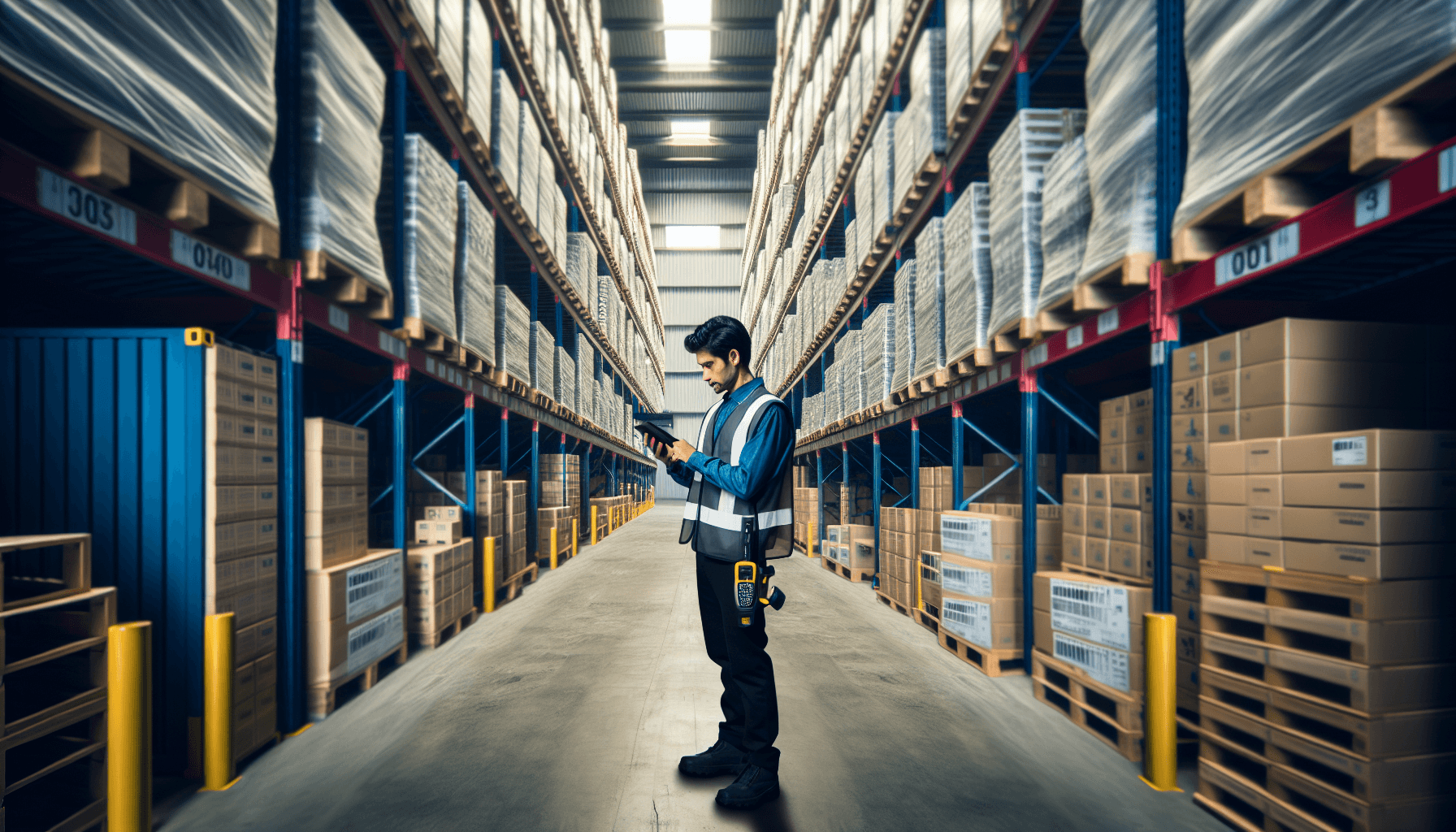
Industrial gas cylinders are some of the most widely circulated, least visible assets in any supply chain. A mid-size distributor manages 5,000 to 50,000 cylinders containing oxygen, nitrogen, argon, acetylene, CO2, helium, and specialty gas mixtures. Each cylinder costs $150 to $500 or more. And at any given moment, 30-50% of those cylinders are somewhere outside the distributor's direct control: on a delivery truck, at a customer site, at a third-party fill plant, or sitting forgotten in the back of a welding shop that closed six months ago.
The industry loses 2-5% of its cylinder fleet every year. Not primarily to theft, but to the circulation black hole: cylinders that enter the delivery-use-return-refill cycle and never come back. For a distributor running 10,000 cylinders, that's 200-500 units disappearing annually, representing $30,000 to $250,000 in hard asset losses before you count the uncollected demurrage and the compliance headaches.
This page covers why cylinder tracking is so difficult, what existing solutions get right and wrong, and how to deploy cost-effective continuous tracking on the cylinders that matter most.
The Circulation Problem
Gas cylinders follow a deceptively simple loop:
Fill plant → Warehouse → Delivery truck → Customer site → Return → Refill → Repeat
At each handoff, tracking breaks down:
Fill to warehouse. Cylinders get filled, palletized, and staged. Barcodes face inward. Counts are approximate.
Warehouse to truck. A driver loads 40 cylinders for a route. The manifest says 40. Did 40 actually get loaded? Did the right 40 get loaded?
Truck to customer. The driver drops 6 cylinders at a fabrication shop. The customer signs a delivery ticket. That paper goes into a folder in the truck cab and eventually gets entered into the system, maybe that day, maybe next week.
Customer to return. This is where most cylinders get lost. The customer calls for a pickup. The driver collects empties. But the customer has cylinders from three different suppliers mixed together. Your cylinders end up on a competitor's truck. Or the customer holds empties for months because nobody tracks how long they've had them.
Return to refill. Cylinders arrive back at the fill plant. Some have readable barcodes. Some don't (labels get scratched, painted over, or torn off). They get refilled and the cycle starts again, minus the ones that never came back.
Each step relies on manual scanning, paper records, or trust. None of these are reliable at scale.
What Cylinder Losses Actually Cost
The per-cylinder replacement cost ($150-$500) understates the true financial impact.
Direct Losses
| Cylinder Type | Typical Cost | Annual Loss Rate | 10,000-Cylinder Fleet Annual Loss |
|---|---|---|---|
| Standard oxygen (K-size) | $200-$350 | 2-3% | $40,000-$105,000 |
| Acetylene | $200-$400 | 3-5% | $60,000-$200,000 |
| Argon (large) | $300-$500 | 2-4% | $60,000-$200,000 |
| Helium | $300-$500 | 3-5% | $90,000-$250,000 |
| Specialty gas mixtures | $500-$2,000+ | 1-3% | $50,000-$600,000 |
Acetylene and helium cylinders have above-average loss rates because they're in high demand, handled by many different customer types, and expensive enough to be worth "borrowing" indefinitely.
Uncollected Demurrage
Demurrage is the daily rental charge for cylinders held beyond the agreed return window. Industry rates range from $0.40 to $0.75 per cylinder per day. Some specialty gas suppliers charge up to $2.00/day.
A cylinder sitting at a customer site for 6 months past its return date accumulates $72 to $135 in demurrage at $0.40-$0.75/day. Multiply that by the hundreds of overdue cylinders in a typical fleet and you get a revenue leak of $50,000 to $200,000 per year that most distributors simply write off because they can't prove who has which cylinder.
The problem isn't the demurrage rate. It's the lack of proof. When a customer disputes a demurrage charge ("we returned those months ago"), the distributor has no way to verify. Without location data, the argument becomes he-said-she-said, and most distributors eat the charge to keep the customer relationship.
Compliance Costs
DOT and PHMSA require gas cylinders to be recertified periodically:
| Requalification Method | Initial Period | Subsequent Period |
|---|---|---|
| Hydrostatic (volumetric expansion) | 12 years | 12 years |
| Proof pressure | 12 years | 10 years |
| External visual inspection | 5 years | 5 years |
A cylinder that's due for recertification but can't be located creates a compliance gap. You know the cylinder exists (it's in your asset register). You know it needs to come back for testing. But you don't know where it is.
For acetylene cylinders specifically, this isn't just a paperwork problem. Acetylene is chemically unstable above 15 PSI. Improperly stored or damaged acetylene cylinders are genuine explosion hazards. The cylinder must never be stored on its side, must stay below 125F, and requires periodic inspection of the porous filler material. A "lost" acetylene cylinder at an abandoned customer site, sitting in direct sun, is a safety liability with your company's name on it.
Why Existing Tracking Methods Fall Short
Barcode Scanning
This is the industry standard, used by TrackAbout, TIMS, CTMS, and most cylinder management software. Barcodes cost about $0.15 per label. The infrastructure is cheap.
The problem is coverage. Barcodes only capture data at scan points: your loading dock, your truck, and the customer's signature on delivery. Between those checkpoints, you're blind. And the system only works when someone actually scans the barcode, which doesn't happen 100% of the time. Barcodes also degrade in industrial environments. They get scratched by forklifts, obscured by paint, and torn off by rough handling.
What barcodes do well: Transaction logging at controlled checkpoints. Fill history. Ownership chain.
What barcodes can't do: Tell you where a cylinder is right now, at a location where nobody is scanning it.
RFID
RFID solves the "forgot to scan" problem with automated reads at gates and docks. But it requires significant infrastructure:
- Fixed RFID readers at every entry/exit point: $5,000-$15,000 per reader
- RFID tags rated for metal surfaces: $5-$25 per cylinder
- Software integration: $20,000-$100,000+
- A mid-size distributor's full RFID deployment: $100,000-$300,000
And RFID still only works at your own facilities. Once the cylinder leaves your loading dock, RFID goes dark until the cylinder comes back. At customer sites, you have zero visibility.
Paper and Spreadsheets
Many smaller distributors (under 5,000 cylinders) still run on paper delivery tickets and Excel spreadsheets. The loss rates in these operations are the highest in the industry, often 5-8%, because there's no systematic way to reconcile inventory against records.
How Continuous Tracking Changes the Economics
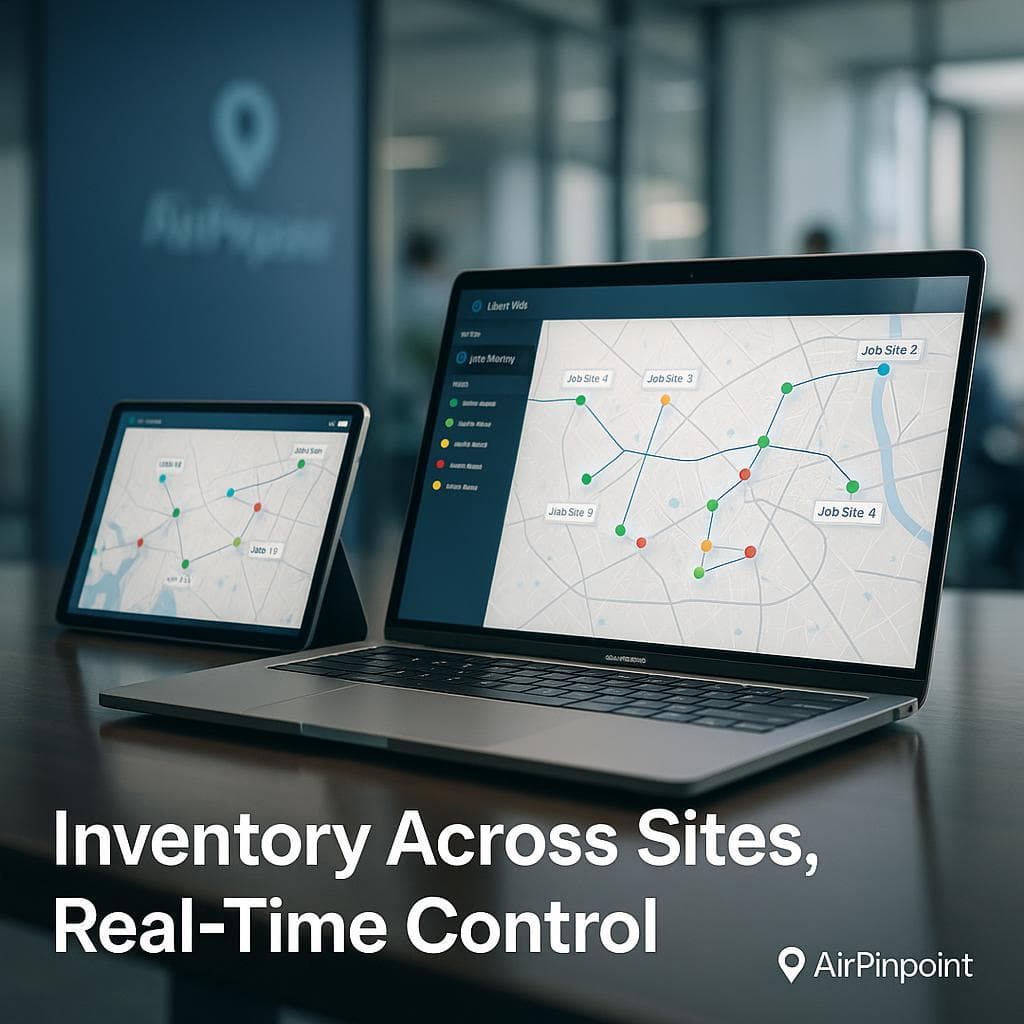
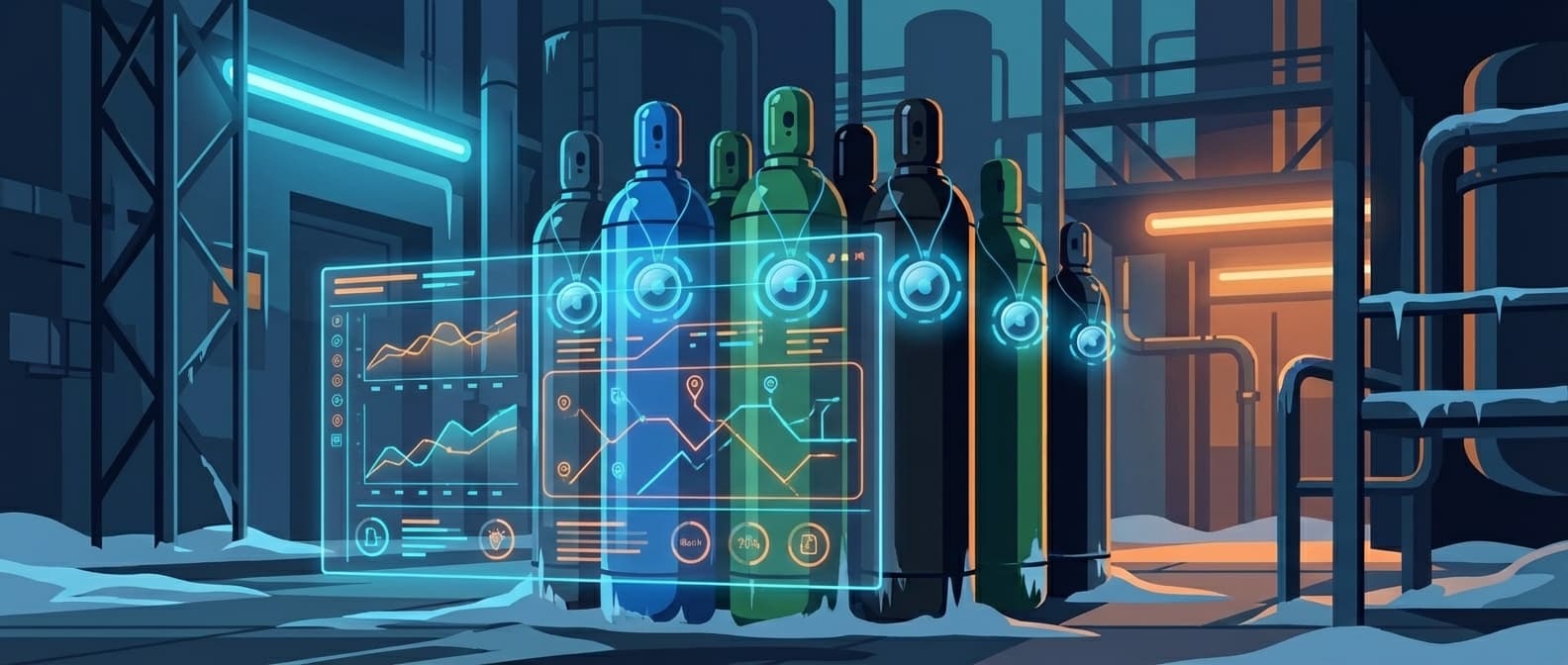
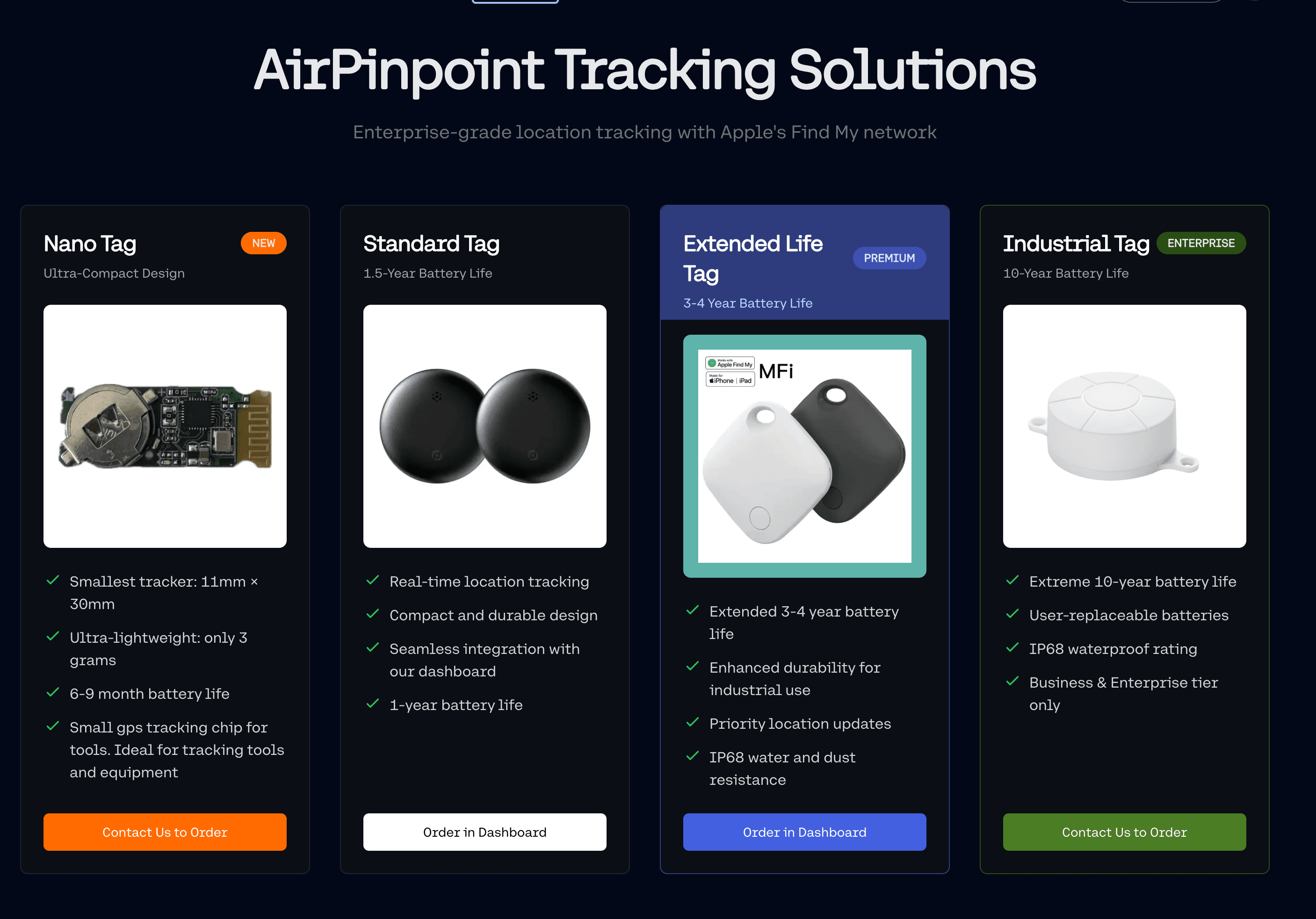
AirPinpoint uses Apple's Find My network to provide location data on tagged cylinders everywhere they go, not just at your facilities. The network consists of over 2 billion Apple devices that passively detect nearby AirTags and relay their location, working at customer sites, on delivery trucks, in competitor warehouses, and anywhere else that iPhones exist.
What You See in the Dashboard
Real-time cylinder map. Every tagged cylinder's last known location, updated whenever an iPhone passes within Bluetooth range (typically every few minutes to a few hours depending on foot traffic density).
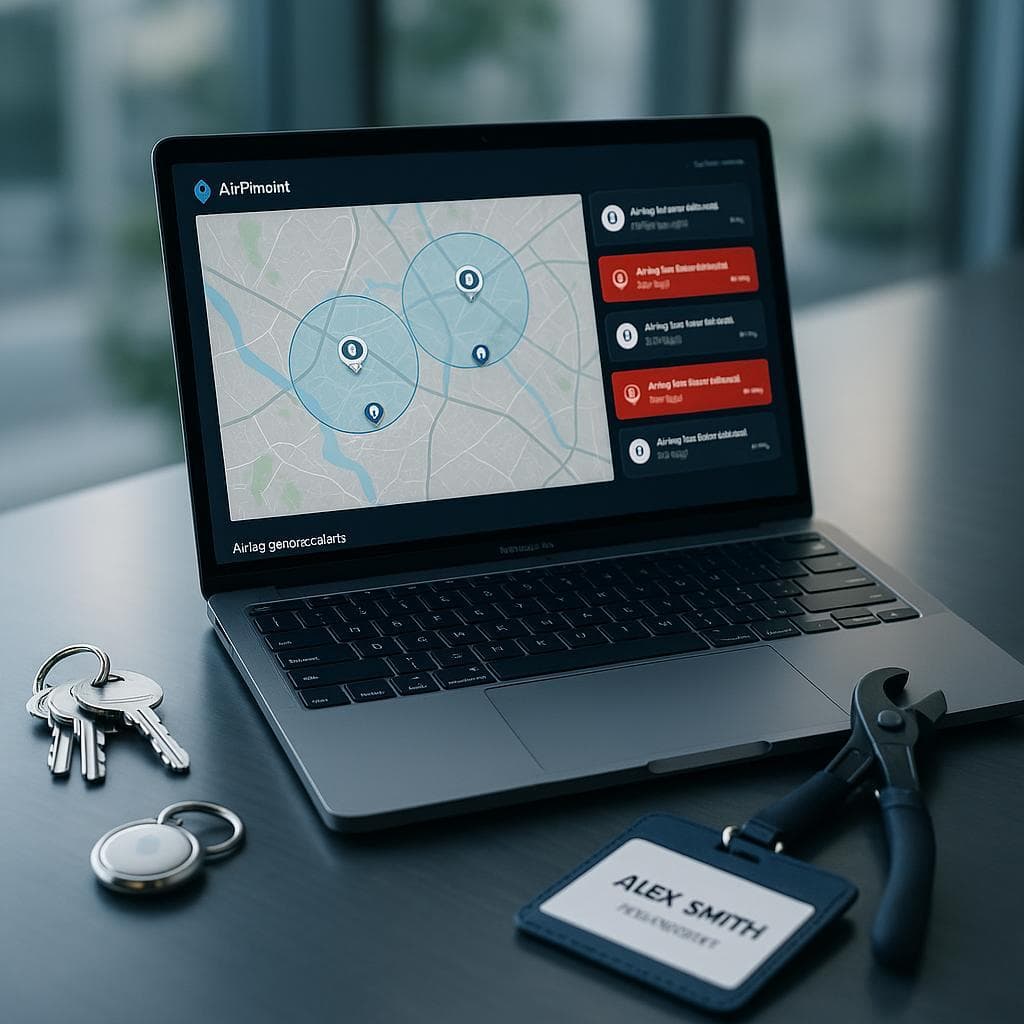
Geofence alerts. Draw zones around your warehouses, fill plants, and major customer sites. Get notified when cylinders enter or leave. This automates the "which customer has which cylinder" question that drives most demurrage disputes.
Dwell time tracking. See how long each cylinder has been at its current location. Sort by dwell time to find cylinders that have been at a customer site for 60, 90, or 180+ days. These are your demurrage collection opportunities and your most likely "about to become lost" assets.
Recertification visibility. When a cylinder's recertification date approaches, you know its current location. Plan a pickup route instead of sending letters to an address the customer may have left years ago.
Which Cylinders to Track
Tracking every cylinder in your fleet doesn't make financial sense. A $30 CO2 cylinder that cycles through your facility every 2 weeks isn't worth a $29 tag and $11.99/month in subscription. But an $400 acetylene cylinder that visits 8 different customer sites per year and disappears at a 4% annual rate absolutely is.
Priority 1: High-value cylinders. Acetylene, large argon, helium, specialty gas mixtures. Anything over $200 replacement cost.
Priority 2: High-loss cylinders. Whatever cylinder types have the worst return rates in your fleet. Pull your write-off data from the last 3 years and identify the problem categories.
Priority 3: Compliance-critical cylinders. Cylinders approaching recertification deadlines, especially acetylene (safety risk) and any DOT-regulated specialty gases.
Priority 4: Customer dispute magnets. Cylinder types that generate the most demurrage disputes. If you're writing off $50,000/year in disputed demurrage, tagging those specific cylinder types solves the dispute with location data.
A practical starting point: tag the top 20% of your fleet by value. For a 10,000-cylinder operation, that's 2,000 cylinders. This covers most of your financial risk at a manageable deployment scale.
Cost Analysis: Tracking vs. Losing
Scenario: 10,000-Cylinder Distributor, Tag 2,000 High-Value Units
| Cost Category | Without Tracking | With AirPinpoint (2,000 units) |
|---|---|---|
| AirTags (one-time) | $0 | $58,000 |
| AirPinpoint subscription (annual) | $0 | $287,760 |
| CR2032 batteries (annual) | $0 | $2,000 |
| Cylinder losses (annual) | $60,000-$250,000 | $12,000-$50,000 (80% reduction) |
| Uncollected demurrage (annual) | $50,000-$200,000 | $10,000-$40,000 (80% recovery) |
| Recertification search labor (annual) | $15,000-$30,000 | $3,000-$6,000 |
| Total Year 1 Cost | $125,000-$480,000 | $372,760-$443,760 |
| Total Year 2+ Cost | $125,000-$480,000 | $314,760-$385,760 |
For distributors at the higher end of the loss spectrum (specialty gases, poor existing tracking, many customer sites), AirPinpoint pays for itself in year one. For distributors with moderate losses, the payback comes in year two when the one-time tag cost is absorbed.
The demurrage recovery alone can justify the deployment. If you're currently writing off $100,000+/year in disputed or uncollectable demurrage, recovering even 50% of that covers a significant portion of the tracking cost.
Enterprise pricing note: AirPinpoint offers custom pricing for fleets over 200 devices. Contact sales for volume rates that reduce the per-device cost significantly below the standard $11.99/month.
Deployment: How to Tag 2,000 Cylinders Without Disrupting Operations
The most practical approach: tag cylinders during the fill cycle, when they're already at your facility.
Step 1: Identify Target Cylinders (Week 1)
Pull your asset register. Filter for:
- Replacement cost over $150
- Loss rate above average for your fleet
- Recertification due within 24 months
- Cylinder types with the most customer disputes
This gives you your tagging list.
Step 2: Set Up AirPinpoint (Week 1)
Create your account. Add team members (dispatch, warehouse, operations manager). Set up geofences around your warehouses, fill plant, and top 20 customer sites by cylinder volume.
Step 3: Tag During Fill Cycle (Weeks 2-8)
As cylinders come through your facility for refilling, attach AirTags before they go back out:
- Valve cap mount: Place the AirTag inside the protective valve cap. Most caps have enough room. Secure with industrial adhesive or a small retaining clip.
- Collar mount: Attach to the cylinder collar with a weatherproof AirTag holder and a metal band clamp.
- Body mount: For large cylinders, use a ruggedized AirTag mount secured to the cylinder body with industrial adhesive rated for metal surfaces.
A worker can tag 40-60 cylinders per hour during the regular fill workflow.
Step 4: Monitor and Adjust (Ongoing)
After 30 days, review the dashboard. You'll immediately see:
- Which customers are holding cylinders longest
- Which delivery routes have the most cylinders sitting idle
- Whether any "lost" cylinders are actually at locations you know about
Adjust your tagging priorities based on what the data shows.
Industry-Specific Applications
Welding Supply Distributors
Welding shops consume the most diverse mix of cylinder types: oxygen, acetylene, argon, CO2, nitrogen, and mixed shielding gases. They also tend to hold cylinders the longest because welders use them intermittently. A fabrication shop might keep an argon cylinder for 3 months between uses. That's $36-$68 in demurrage you're probably not collecting.
Tag all acetylene cylinders (highest value, highest safety risk) and large argon cylinders (highest dollar-per-unit loss) at minimum.
Medical Gas Distributors
Medical oxygen cylinders cycle between hospital, patient home delivery, and refill. HIPAA doesn't apply to cylinder location data (you're tracking the cylinder, not the patient), but cylinder availability is critical. Running out of oxygen cylinders because half your fleet is sitting untracked at patient homes that no longer need them is a patient care problem.
Specialty Gas Suppliers
Specialty gas mixtures ($500-$2,000+ per cylinder) have the strongest unit economics for tracking. A single recovered specialty gas cylinder pays for the AirTag and 12+ months of tracking subscription. If you supply calibration gases, research-grade mixtures, or semiconductor process gases, every cylinder should be tracked.
Beverage CO2 Distribution
CO2 cylinders for restaurants, bars, and breweries cycle frequently but in high volume. The per-unit value ($100-$200) is lower, but the fleet sizes are large and the return compliance is poor. Restaurants that close or change ownership leave CO2 cylinders behind regularly. Tag cylinders serving independent restaurants and bars (higher churn, higher loss rate). Chain accounts with stable locations are lower priority.
Safety and Compliance Benefits
Beyond the financial case, cylinder tracking addresses two regulatory requirements that keep operations managers up at night.
DOT Recertification Recall
When a cylinder's requalification date arrives and you can't find it, you have three bad options: write it off (expensive), send letters to the last known address (unreliable), or send drivers to search for it (labor-intensive). AirPinpoint gives you option four: check the dashboard, see where the cylinder is, and dispatch a driver directly.
For fleets with thousands of cylinders approaching various recertification windows, this transforms recall from a quarterly scramble into a routine logistics task.
Acetylene Safety Tracking
MSHA and OSHA both flag acetylene as a special hazard. Acetylene's flammable range is 2.5% to 81% in air, one of the widest of any industrial gas. Its decomposition can be triggered by temperatures above 125F, pressures above 15 PSI (without a regulator), or mechanical shock to a damaged cylinder.
A "lost" acetylene cylinder sitting in an unventilated shed at a defunct customer site, exposed to summer heat, is a genuine explosion risk. Knowing where every acetylene cylinder in your fleet is located isn't just good asset management. It's a safety obligation.
Getting Started
-
Audit your loss data. Pull write-offs, demurrage disputes, and recertification compliance gaps from the last 2-3 years. Quantify the problem before you solve it.
-
Identify your high-value, high-loss cylinders. Rank by replacement cost times loss rate. The top 20% of this list is your initial tracking deployment.
-
Contact AirPinpoint for volume pricing. Standard pricing is $29/tag (one-time) + $11.99/device/month. Enterprise rates for 200+ cylinders bring the per-device cost down. Request a quote.
-
Deploy during normal fill cycles. No special equipment needed. No infrastructure to install. Tags go on cylinders as they pass through your facility.
-
Set geofences and start recovering assets. Most distributors find "lost" cylinders within the first 30 days of deployment, often at locations that are already in their customer database.
 Our Solution