Fire Extinguisher Inspection Tracking: How Facility Managers Stay NFPA 10 Compliant Across Multiple Buildings
A 50,000 square foot commercial building has roughly 17 fire extinguishers. A property management company with 10 buildings has 150 to 200. Each one needs monthly visual inspections, annual professional maintenance, 6-year internal examinations, and hydrostatic testing on a 5-to-12-year cycle.
Miss one inspection, and you have a compliance gap. Miss several, and you are looking at OSHA fines starting at $16,131 per violation, failed fire marshal inspections, and serious liability exposure if a fire breaks out and an extinguisher fails because nobody checked it.
The inspection schedule itself is not complicated. The hard part is tracking WHERE all those extinguishers are, confirming they have not been moved or stolen, and making sure every single one gets inspected on time. That is the problem most facility managers are still solving with spreadsheets, paper tags, and hope.
The Real Problem: You Cannot Inspect What You Cannot Find
NFPA 10 (Standard for Portable Fire Extinguishers) lays out clear requirements:
| Inspection Type | Frequency | Who Can Do It | What Is Checked |
|---|---|---|---|
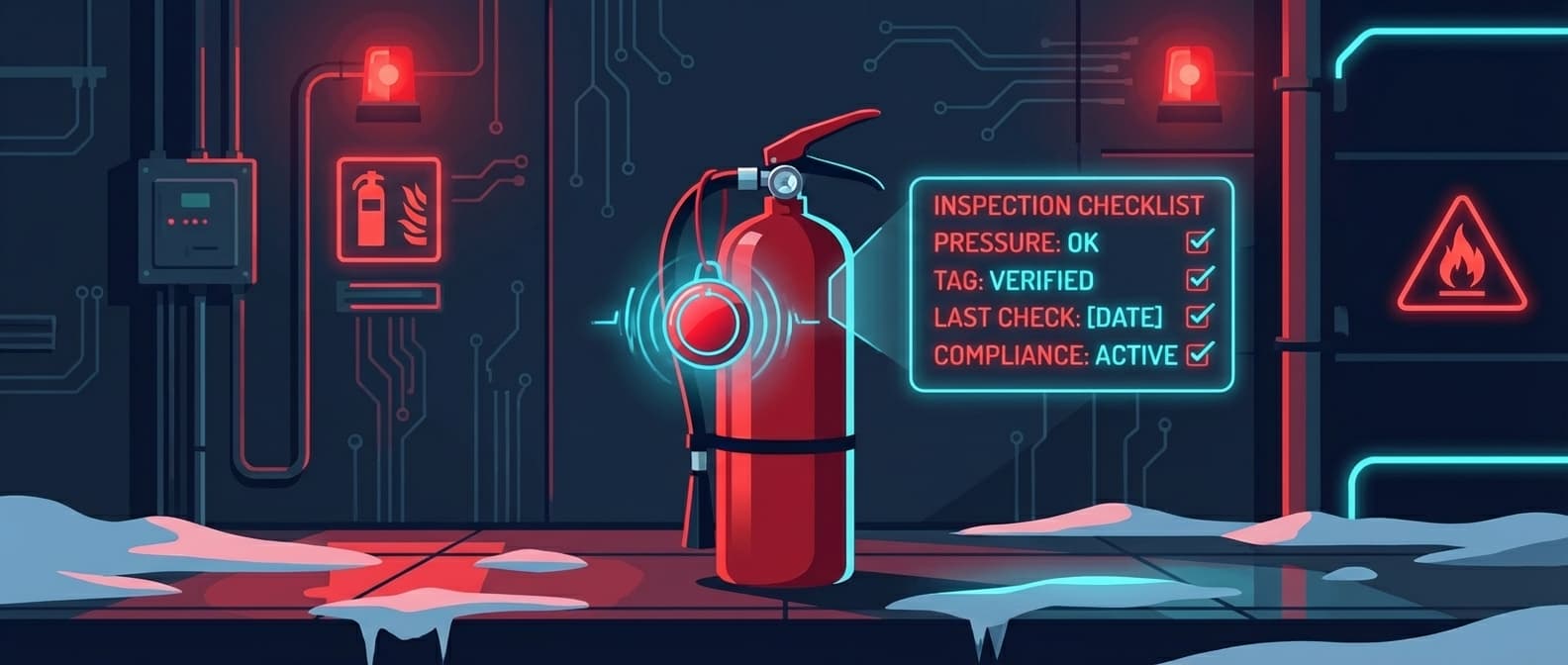
| Visual inspection | Monthly (minimum 30-day intervals) | Trained facility staff | Location, accessibility, pressure gauge, physical condition |
| Professional maintenance | Annually | Certified fire protection technician | Seals, hoses, operating mechanisms, pressure, weight |
| Internal examination | Every 6 years | Certified technician | Empty unit, inspect interior for corrosion, recharge |
| Hydrostatic testing | Every 5 or 12 years (by type) | Certified testing facility | Pressure test cylinder integrity |
OSHA reinforces these requirements under 29 CFR 1910.157 and adds placement rules: no employee can be more than 75 feet from an extinguisher (50 feet for Class B hazard areas). One extinguisher is required per 3,000 square feet of floor space at minimum.
The compliance burden is not one inspection. It is hundreds of inspections per year across dozens of extinguishers in multiple locations, each on overlapping schedules.
What Actually Goes Wrong
Facility managers and fire safety companies deal with the same recurring problems:
Extinguishers get moved. Maintenance crews relocate them during renovations. Tenants move them to make room for furniture. Cleaning staff take them off wall brackets and do not put them back. When the fire inspector arrives and finds an empty bracket, that is a violation.
Extinguishers get stolen. Apartment building stairwells, construction sites, parking garages, and public corridors are common theft points. The extinguisher costs $50-$200 to replace. The compliance gap costs far more.
Paper inspection tags are unreliable. The standard practice is a hang tag on each extinguisher with a signature and date. Tags fall off, get unreadable, or get signed without an actual inspection. Fire marshals increasingly treat paper tags with skepticism.
Spreadsheets do not scale. A single building's extinguisher inventory fits in a spreadsheet. Ten buildings across three cities with 200 extinguishers on different inspection cycles does not. The spreadsheet gets stale, the formulas break, and someone misses a 6-year maintenance deadline on a batch of extinguishers that were all installed at the same time.
Nobody owns the problem until an inspection fails. The monthly visual check takes 5 minutes per extinguisher but requires someone to physically walk every floor, stairwell, and mechanical room. In multi-tenant buildings, access to some areas requires coordination with tenants. The check gets skipped. Then it gets skipped again. Then the fire marshal shows up.
The Compliance Stakes Are Real
Fire extinguisher compliance is not optional. The penalties come from multiple directions:
OSHA Fines (29 CFR 1910.157)
OSHA's penalty structure for fire extinguisher violations:
| Violation Type | Fine Per Violation |
|---|---|
| Serious violation | $16,131 |
| Willful violation | Up to $161,323 |
| Repeated violation | Up to $161,323 |
| Failure to abate | $16,131 per day |
These fines are assessed per extinguisher. An inspector who finds 10 extinguishers with missed annual maintenance can issue 10 separate violations. A property with 50 extinguishers and systemic compliance failures faces exposure in the hundreds of thousands.
Fire Marshal Inspections
Local fire marshals conduct inspections independently of OSHA. Violations result in:
- Fines (varies by jurisdiction, typically $100-$1,000 per violation)
- Required re-inspection fees ($200-$500 per visit)
- Occupancy restrictions or building closure orders in severe cases
- Public records that affect insurance rates and property values
Liability Exposure
If a fire occurs in a building where extinguishers were missing, expired, or improperly maintained, the property owner faces negligence claims. Plaintiff attorneys routinely request inspection records. Missing documentation or lapsed inspections become evidence of negligence. A single wrongful death lawsuit dwarfs any inspection cost.
How Most Organizations Track Extinguishers Today
The fire extinguisher tracking market breaks into three tiers:
Tier 1: Paper and Spreadsheets (Free)
Most small and mid-size facilities still use paper hang tags and Excel. The monthly inspector walks the building with a clipboard, checks each extinguisher, and signs the tag. Inspection data lives in a binder in the maintenance office.
Why it breaks down: No alerts when inspections are due. No way to verify inspections actually happened. No visibility into missing or moved units between inspections. When the person who "owns" the binder leaves, institutional knowledge goes with them.
Tier 2: QR/Barcode Scanning Apps ($20-$100/month)
Apps like GoAudits, Orca Scan, and generic inspection platforms let inspectors scan a QR code on each extinguisher and log the inspection on a phone. Data syncs to a cloud dashboard.
What they get right: Digital records, timestamped inspections, due date reminders.
What they miss: QR systems only know an extinguisher exists when someone scans it. Between scans, you have zero visibility. If an extinguisher is stolen on Tuesday and the next scan is not until the end of the month, you have a 3-week compliance gap with no alert.
Tier 3: Enterprise Fire Inspection Platforms ($500-$2,000+/month)
Platforms like Inspect Point, ServiceTrade, BuildOps, Uptick, and Essential are purpose-built for fire protection contractors. They handle NFPA compliance templates, deficiency reporting, technician scheduling, and Authority Having Jurisdiction (AHJ) submissions.
What they get right: Comprehensive compliance workflow, pre-built NFPA templates, deficiency tracking.
What they miss: These platforms manage the inspection process, but they do not track the physical location of extinguishers between inspections. They tell you when maintenance is due. They do not tell you that the stairwell extinguisher on the 4th floor was removed three days ago.
The gap all three tiers share: None of them provide continuous physical location tracking. They manage inspection schedules. They do not track whether extinguishers are actually WHERE they should be right now.
How AirPinpoint Fills the Gap
AirPinpoint is not fire inspection software. It is physical asset tracking that solves the problem inspection software cannot: knowing where every extinguisher is, right now, across every building in your portfolio.
Setup
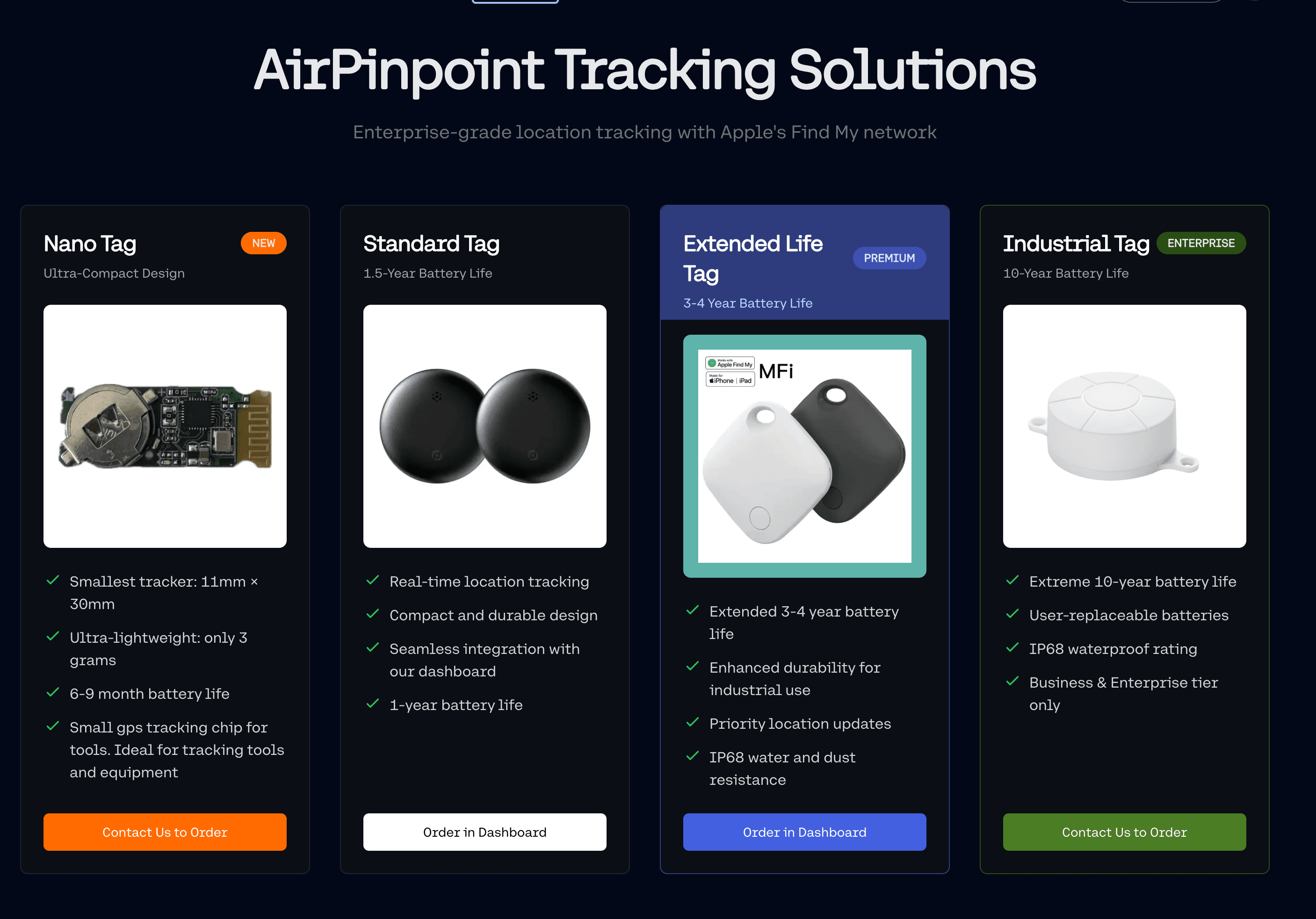
- Tag each extinguisher. Attach an AirTag ($29 each) to the extinguisher body, inside the wall bracket, or on the handle. The AirTag is small enough to sit inside the bracket without interfering with access.
- Register in AirPinpoint. Name each extinguisher by building, floor, and location (e.g., "Building A - Floor 3 - East Stairwell"). The dashboard organizes your entire portfolio.
- Set geofences. Draw a geofence around each building. If an extinguisher leaves the building, you get an alert. For high-theft areas (stairwells, parking garages), you can set tighter geofences around specific zones.
- Verify before inspections. Before a scheduled fire marshal visit or annual maintenance appointment, pull up the dashboard and confirm every extinguisher is in its designated location. No more walking every floor with a clipboard just to verify things are where they should be.
What You Get
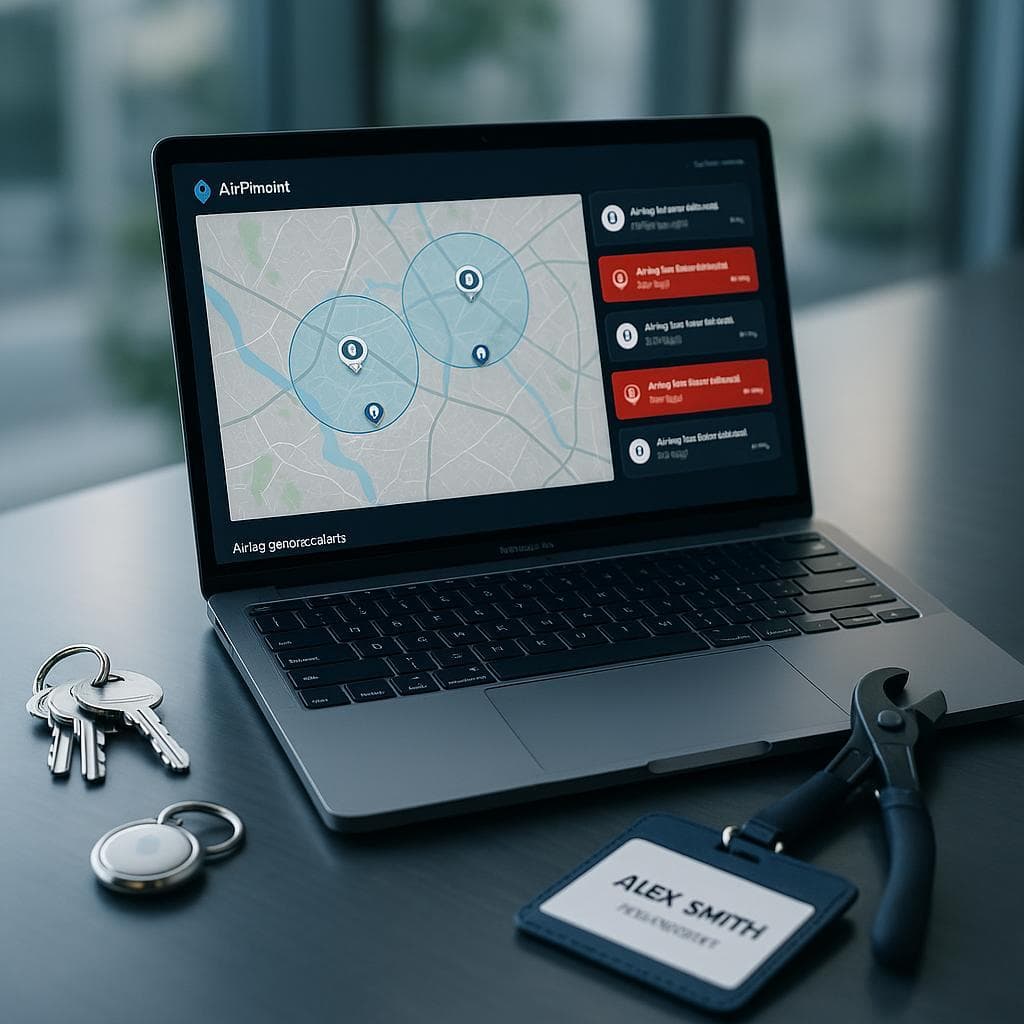
Real-time location visibility. Every extinguisher appears on a map organized by building and floor. Filter by building, zone, or status. See at a glance if anything is out of place.
Movement alerts. Geofence alerts notify you when an extinguisher leaves its designated area. A stolen stairwell extinguisher triggers an alert within minutes, not weeks. You can replace it the same day and maintain compliance.
Multi-site management. Property managers with buildings across multiple cities see everything on one dashboard. No calling site managers to ask if the extinguishers are still there. No driving between buildings to do visual checks.
Inspection preparation. Before any scheduled inspection (fire marshal, insurance auditor, internal audit), verify that all extinguishers are present and in their correct locations. Walk into the inspection knowing you are compliant, not hoping.
Theft deterrence. In apartment buildings and public areas, the knowledge that extinguishers are tracked reduces theft. You can add small labels ("This extinguisher is GPS tracked") to each unit.
What AirPinpoint Does Not Do
AirPinpoint does not replace fire inspection software. It does not generate NFPA compliance reports, schedule technician visits, or submit deficiency reports to your AHJ. If you need those features, pair AirPinpoint with a platform like Inspect Point or ServiceTrade. AirPinpoint handles the physical tracking that those platforms cannot.
Cost Analysis: Who Should Use AirPinpoint for Extinguisher Tracking
Small Portfolio (1-3 Buildings, 20-50 Extinguishers)
| Item | Cost |
|---|---|
| AirTags (50 units) | $1,450 one-time |
| AirPinpoint Business Plan | $599.50/month ($7,194/year) |
| Year 1 total | $8,644 |
| Year 2+ total | $7,194/year |
Compare to the cost of non-compliance:
- 5 missing extinguishers found during fire marshal inspection: $80,655 in OSHA fines (5 x $16,131)
- Emergency re-inspection fee: $200-$500
- Replacement extinguishers: $250-$1,000
- Insurance rate increase after failed inspection: varies, often 5-15%
The tracking system pays for itself if it prevents a single failed inspection.
Mid-Size Portfolio (5-15 Buildings, 100-200 Extinguishers)
| Item | Cost |
|---|---|
| AirTags (200 units) | $5,800 one-time |
| AirPinpoint Business Plan | $2,398/month ($28,776/year) |
| Year 1 total | $34,576 |
| Year 2+ total | $28,776/year |
At this scale, the alternative is hiring a part-time compliance coordinator ($25,000-$40,000/year) or paying a fire safety contractor for monthly walk-through inspections ($500-$2,000/month per building). AirPinpoint does not eliminate the need for inspections, but it reduces the time each inspection takes and eliminates surprise failures.
Large Portfolio (20+ Buildings, 500+ Extinguishers)
AirPinpoint offers custom Enterprise pricing for portfolios over 200 devices. Contact sales for volume rates that bring per-device costs down significantly from the standard $11.99/month.
Fire Extinguisher Theft: A Bigger Problem Than Most Managers Realize
Fire extinguisher theft is underreported because individual units are low-value ($50-$200 each) and most property managers do not file police reports. But the aggregate cost is significant:
Where extinguishers get stolen from:
- Apartment stairwells. The most common location. Extinguishers in common areas are accessible to residents and visitors. Some get taken for personal use. Others are stolen and discharged as vandalism.
- Construction sites. OSHA requires extinguishers at construction sites (29 CFR 1926.150). They sit on open floors, in trailers, and near equipment. When sites shut down for the weekend, they walk off.
- Parking garages. Low foot traffic, poor visibility, easy access.
- Hotel corridors and public buildings. Less common but not rare. Extinguishers are discharged and the mess triggers evacuation and cleanup costs far exceeding the unit value.
The hidden cost of theft: In Florida, stealing a fire extinguisher from a building is a third-degree felony. But prosecutions are rare. The real cost to property managers is not the $150 replacement. It is the compliance gap. An empty extinguisher bracket is an NFPA violation from the moment the unit is removed until it is replaced. If a fire marshal inspects during that window, it is a fine. If a fire occurs during that window, it is a lawsuit.
AirPinpoint's geofence alerts close this gap. When a stairwell extinguisher leaves its zone, you know within minutes. Replacement happens the same day. The compliance gap shrinks from weeks (next monthly check) to hours.
Industry-Specific Applications
Property Management Companies
The typical challenge: 5-30 buildings, each with 10-50 extinguishers, different inspection schedules, different local jurisdictions with different requirements, and building access that requires tenant coordination.
AirPinpoint provides a single dashboard for the entire portfolio. Before a scheduled fire marshal visit at Building 7, the property manager verifies all extinguishers are in place from their office. No need to send someone to walk every floor the day before.
Fire Safety Contractors
Companies that inspect and service fire extinguishers for clients. Before a scheduled service visit, they can verify how many extinguishers are at the site and whether any have been moved since the last visit. This eliminates the common problem of arriving for a 20-extinguisher maintenance job and finding only 17 because three were moved during a renovation.
Construction Companies
OSHA requires portable fire extinguishers at construction sites, with specific requirements for placement near hot work, welding, and cutting operations. On active job sites where equipment moves daily, tracking which extinguisher is where becomes a daily task. AirPinpoint provides continuous visibility without manual tracking.
Healthcare Facilities
Hospitals and medical facilities have strict fire safety requirements with inspections from The Joint Commission and state health departments. Extinguishers in patient areas, surgical suites, and labs must be precisely where they are supposed to be. The consequences of a failed Joint Commission survey go beyond fines to potentially losing accreditation.
Schools and Universities
Campus buildings spread across large areas, each with fire code requirements. Extinguisher vandalism and theft is more common in educational settings. The facilities team responsible for compliance is often understaffed relative to the number of buildings and extinguishers they manage.
AirPinpoint vs. QR Scanning Systems
| Feature | QR/Barcode Systems | AirPinpoint |
|---|---|---|
| Location tracking between inspections | No | Yes, continuous |
| Theft/movement alerts | No | Yes, real-time geofencing |
| Multi-site dashboard | Some | Yes |
| Requires manual scanning | Yes, at each extinguisher | No, automatic location updates |
| Works if extinguisher is missing | No (nothing to scan) | Yes (last known location shown) |
| Monthly inspection support | Yes (scan confirms presence) | Yes (dashboard confirms presence remotely) |
| Cost (200 units) | $20-$100/month + scanning labor | $2,398/month, no scanning labor |
| NFPA compliance reports | Some | No (pair with inspection software) |
The key difference: QR systems require someone to physically walk to each extinguisher and scan it. Between scans, they provide zero data. AirPinpoint provides continuous location data. You know whether extinguishers are in place without sending someone to check.
The tradeoff: QR systems are cheaper for small deployments and some include inspection checklists. AirPinpoint costs more but provides the continuous tracking and alerts that QR systems cannot.
Getting Started
Step 1: Inventory your extinguishers. Walk each building once and record every extinguisher by location (building, floor, area). Note the extinguisher type, size, serial number, and last inspection date. Most property managers discover extinguishers they did not know about during this initial audit.
Step 2: Purchase AirTags. Buy AirTags in bulk. Apple sells them in 4-packs for $99. For 50+ units, check wholesale suppliers for better pricing.
Step 3: Tag and register. Attach an AirTag to each extinguisher and register it in AirPinpoint with the location name. This takes about 2-3 minutes per extinguisher.
Step 4: Set geofences. Create a geofence for each building. For buildings with known theft problems, add tighter geofences around specific areas (stairwells, parking garages, common areas).
Step 5: Establish a monitoring routine. Check the dashboard weekly. Before any scheduled inspection (fire marshal, insurance audit, or annual maintenance visit), verify all extinguishers are present and in place.
Step 6: Respond to alerts. When a geofence alert fires, investigate and replace the extinguisher immediately. Document the alert and response for your compliance records.
Your extinguishers are either where they should be, or they are not. Paper tags and spreadsheets tell you what happened last month. AirPinpoint tells you what is happening right now.
 Our Solution