Bullion Dealer Tracking: Why Precious Metals Businesses Need More Than Cameras and Locked Cases
The numismatic crime wave is not theoretical. In January 2025, 40 PCGS-slabbed coins were stolen from a FedEx shipment en route to Michigan. The same month, a dealer attending the FUN show in Orlando had his vehicle broken into and a Pelican case full of slabbed coins taken. A Canadian currency dealer was followed from a Montreal show and robbed at a rest stop on his way home to Toronto. In England, two men were convicted of burgling a coin dealer's home and stealing $650,000 worth of inventory after discovering his address through social engineering.
Record gold and silver prices have made every coin shop, bullion dealer, and pawn shop a more attractive target. The Numismatic Crime Information Center (NCIC) issued an industry-wide alert in 2025, warning that organized criminal groups now use Wi-Fi jammers, surveillance equipment, and tracking devices of their own to target dealers at shows and follow them home.
Most dealers respond with better cameras, upgraded safes, and more careful show protocols. These are necessary. But they do not solve the fundamental problem: when something leaves your control, you lose visibility. Cameras record what happened. They do not tell you where your stolen inventory is right now.
What Precious Metals Dealers Actually Need to Track
A bullion dealer's operation involves three distinct tracking challenges, each with different risk profiles.
Store Equipment
This is the overlooked category. A coin shop or bullion dealer's daily operations depend on equipment that is both expensive and portable: iPads for point-of-sale and inventory lookup, Sigma Metalytics testers ($500+), XRF analyzers ($5,000-$30,000 for handheld models), precision scales, and display case trays.
One AirPinpoint customer, Swan Bullion, tracks 16 devices across their operation, including multiple iPads used for customer interactions and transactions. In a high-traffic showroom where customers handle products and staff move between stations, knowing exactly where each piece of equipment is at any moment eliminates the daily "where did the Sigma go?" problem and catches unauthorized removal immediately.
Shipments in Transit
Precious metals dealers ship high-value packages constantly. The standard protocol is USPS Registered Mail, which uses a chain-of-custody process with locked containers and signed handoffs at every step. For higher values, dealers use specialized carriers like Parcel Pro or armored couriers.
The problem is that carrier tracking only updates at scan points. Between those checkpoints, you have no visibility. A package that sits in a sorting facility for 48 hours looks the same in the carrier's system whether it is sitting safely on a shelf or has been diverted by an insider.
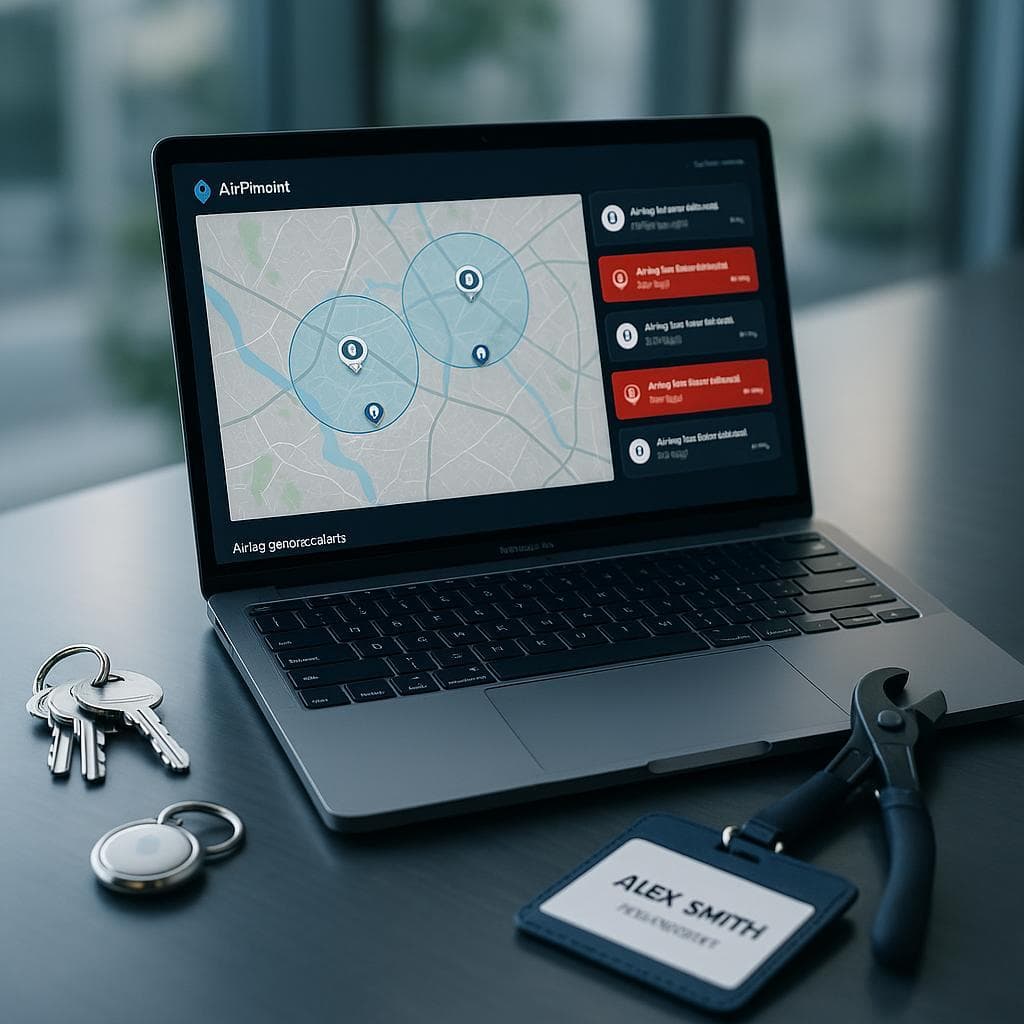
An AirTag inside the package provides independent, continuous location data. If the package goes off-route or stalls somewhere unexpected, you see it in the AirPinpoint dashboard without waiting for the next carrier scan. For insurance claims on lost or stolen shipments, this objective location data is far more useful than carrier scan records that only show where the package was supposed to be.
Vault and Safe Inventory
Precious metals dealers store significant value in Class II and Class III rated vaults. The typical approach is physical inventory: count everything when you open the vault, count again when you close it. For dealers with $500,000+ in vault inventory, this is both time-consuming and error-prone.
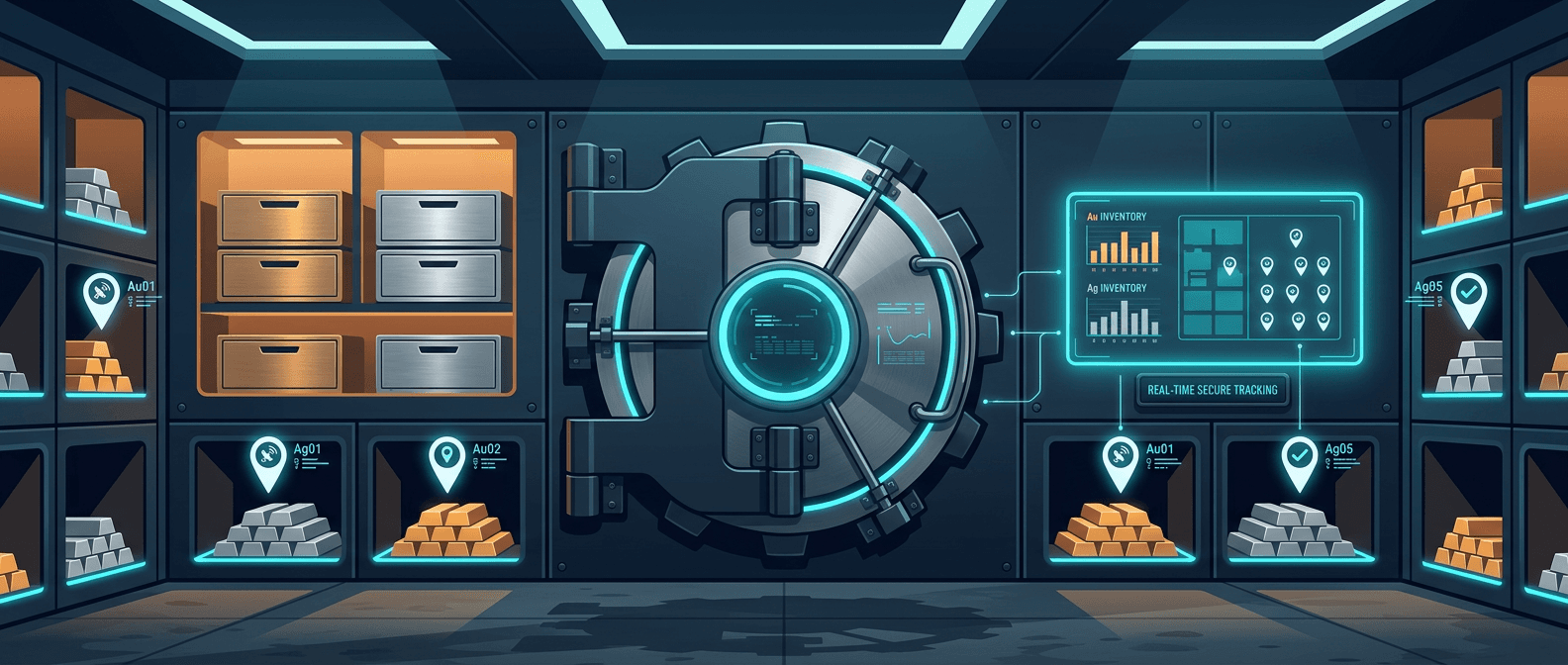
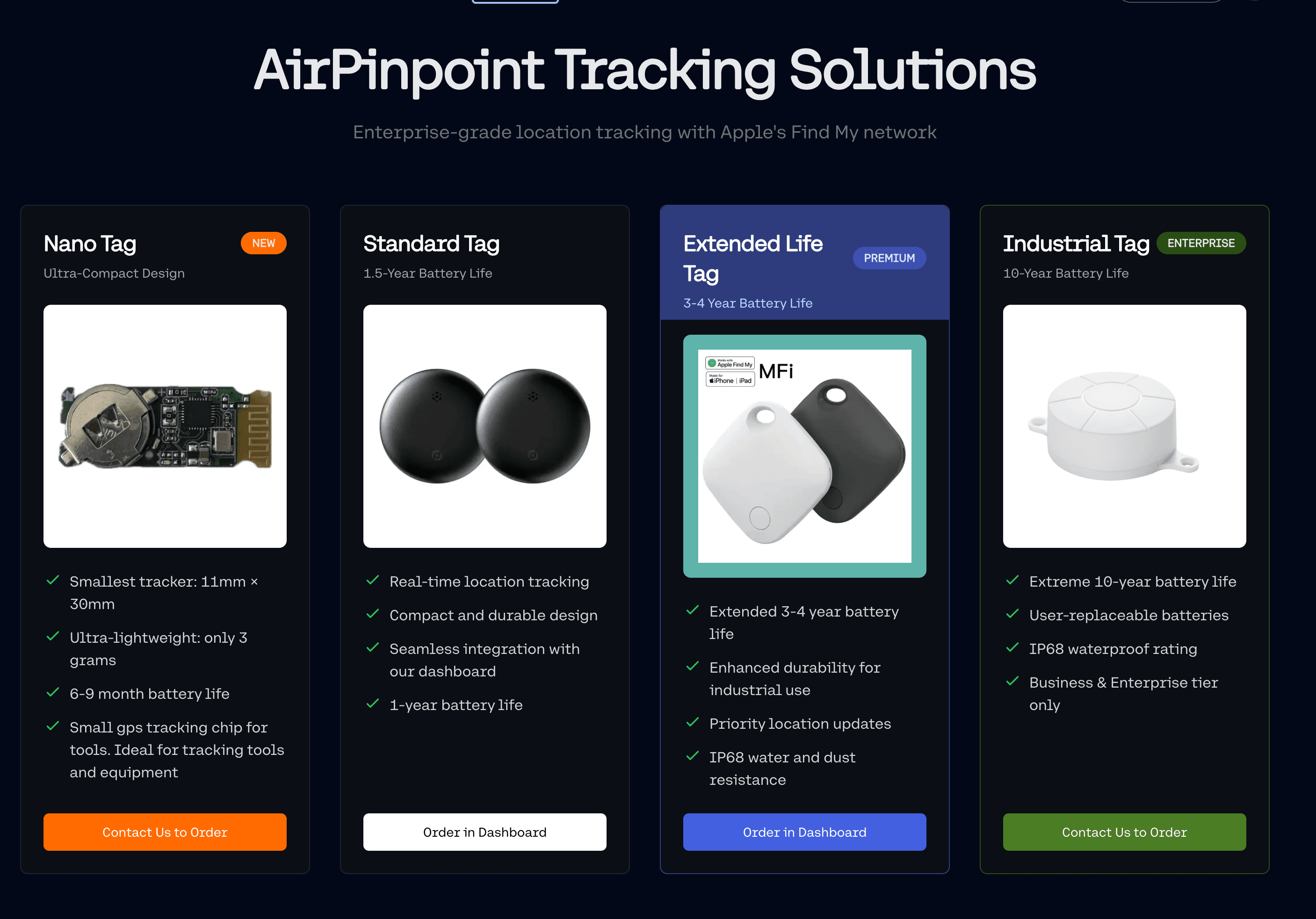
AirTags placed in vault trays, display case inserts, or portable lockboxes track at the container level. You are not tagging individual coins or bars. You are tagging the trays and cases that hold them. When the vault opens in the morning, AirPinpoint confirms that every tagged container is present. Set a geofence around the vault area with after-hours alerts, and you know within minutes if anything moves when it should not.
The limitation is real: AirTags inside a closed steel vault will not transmit until the vault door opens and a nearby Apple device picks up the signal. For most dealers, this is acceptable. The vault door opens during business hours, the tags update, and the dashboard confirms inventory is intact.
The Coin Show Problem
Coin shows are where dealers are most exposed. You are transporting hundreds of thousands of dollars in portable inventory to a public venue, setting it up in an open booth, and then packing it back into your vehicle for the drive home.
The NCIC has documented a pattern: organized groups attend shows to identify which dealers carry the highest-value inventory, then follow them to their vehicles, hotels, or homes. A dealer at a Michigan state show stopped for dinner after the show and had his car robbed. The pattern repeats across the country at major shows in Baltimore, Long Beach, Orlando, and regional events.
AirPinpoint addresses this at multiple points:
At the show: Set a geofence around the venue. If a display case or equipment bag leaves the building during show hours, you get an alert on your phone. In a crowded show floor where grab-and-run thefts happen, immediate notification means you can respond in minutes instead of discovering the loss when you recount at the end of the day.
Loading out: After the show, check the AirPinpoint dashboard before you drive away. Verify that every tagged case and bag shows its location inside your vehicle. This takes 30 seconds and catches the scenario where a case gets left behind, picked up by the wrong person, or moved to a different vehicle.
In transit: On the drive home, the AirTags in your cases continue updating. If you stop for gas or dinner and someone breaks into your vehicle, you will see the cases moving away from your location in real time. Share the location data with law enforcement immediately instead of filing a report with no leads.
Post-show recovery: If inventory is stolen, AirPinpoint's location history gives law enforcement a starting point. Unlike security camera footage from the show venue (which shows the theft but not where the thief went), location tracking follows the stolen items.
Insurance and Compliance
Precious metals dealers carry specialized insurance: specie policies (a class of inland marine insurance) that cover coins, bullion, and precious metals whether stored on premises, in bank vaults, or in transit. These policies from underwriters like Lloyd's of London cover theft, damage, fire, and natural disasters.
Insurance underwriters evaluate a dealer's security measures when setting premiums and coverage limits. Surveillance cameras, alarm systems, and vault ratings are standard. Independent tracking of shipments and portable inventory is an emerging factor that some underwriters now consider.
For claims, the value of tracking data is straightforward. An insurance adjuster investigating a lost shipment can see objective location data showing exactly when and where the package deviated from its expected route. This is more compelling than a carrier scan record that simply shows the package was last scanned at facility X.
For in-store losses, geofence logs show exactly when a tracked item left the premises. This establishes a timeline that helps distinguish between internal theft, customer theft, and misplacement.
Multi-Location Operations
Larger precious metals businesses operate across multiple locations: retail showrooms, secure storage vaults, off-site safes, and temporary setups at shows. Pawn shop chains with precious metals departments face the same challenge across 5-50+ locations.
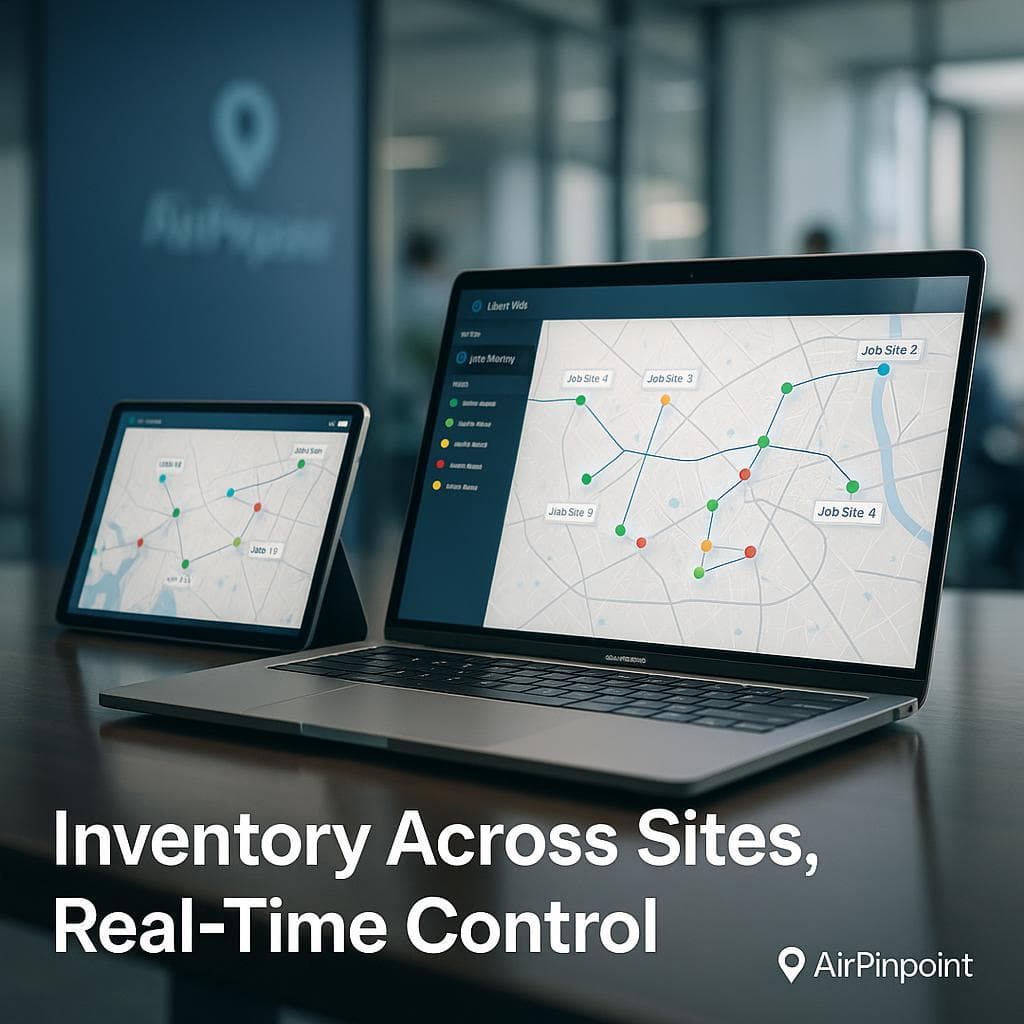
AirPinpoint provides a single dashboard view across all locations. Every tracked iPad, scale, testing device, and display case appears on one map regardless of which store or vault it is in. When equipment needs to move between locations (a Sigma tester going from the main store to a satellite location for a week), you can verify it arrived and set alerts for when it should return.
For multi-location pawn shop chains, where equipment "borrowing" between stores is common and often untracked, this visibility eliminates the quarterly inventory surprise where three stores are each missing a piece of testing equipment that nobody remembers lending out.
What AirPinpoint Does Not Replace
AirPinpoint is not a replacement for physical security. A bullion dealer still needs:
- Class II or Class III rated vaults with appropriate UL burglary-resistant ratings
- 24/7 camera systems with professional monitoring (not just notifications)
- Alarm systems that detect entry, not just motion
- Show protocols: one item out at a time, cases locked at all times, never hand over multiple high-value pieces simultaneously
- Shipping protocols: discreet packaging, no external markings indicating contents, signature required delivery, appropriate insurance
What AirPinpoint adds is the layer of visibility that these measures cannot provide. Cameras and alarms protect your premises. Shipping protocols protect packages in transit. AirPinpoint tells you where your assets are when they leave those controlled environments.
Getting Started
A typical deployment for a small to mid-size bullion dealer:
| Category | Items | Tags Needed | Monthly Cost |
|---|---|---|---|
| Store equipment | iPads, scales, Sigma tester, display cases | 8-12 | $96-$144 |
| Show travel cases | Pelican cases, portable safes, equipment bags | 4-6 | $48-$72 |
| Shipment tracking | Reusable tags for outbound packages | 3-5 | $36-$60 |
| Vault containers | Trays, lockboxes, display inserts | 5-10 | $60-$120 |
| Total | 20-33 | $240-$396/mo |
First-year cost for a 25-device deployment: $725 in AirTags plus $3,597 in annual subscription, totaling $4,322. That is less than the replacement cost of a single stolen XRF analyzer and a fraction of what a coin show theft typically costs a dealer.
For larger operations, multi-location pawn shop chains, or dealers managing 50+ tracked assets, Enterprise pricing at $14.99/device/month includes priority support and advanced webhook integrations for connecting AirPinpoint to existing inventory management systems.
The numismatic crime problem is getting worse, not better. Gold prices keep climbing, organized crime groups keep adapting, and the window between a theft and losing the trail keeps getting shorter. The dealers who survive this environment will be the ones who can answer "where is my inventory right now?" at any moment, not just when they open the vault in the morning.
 Our Solution