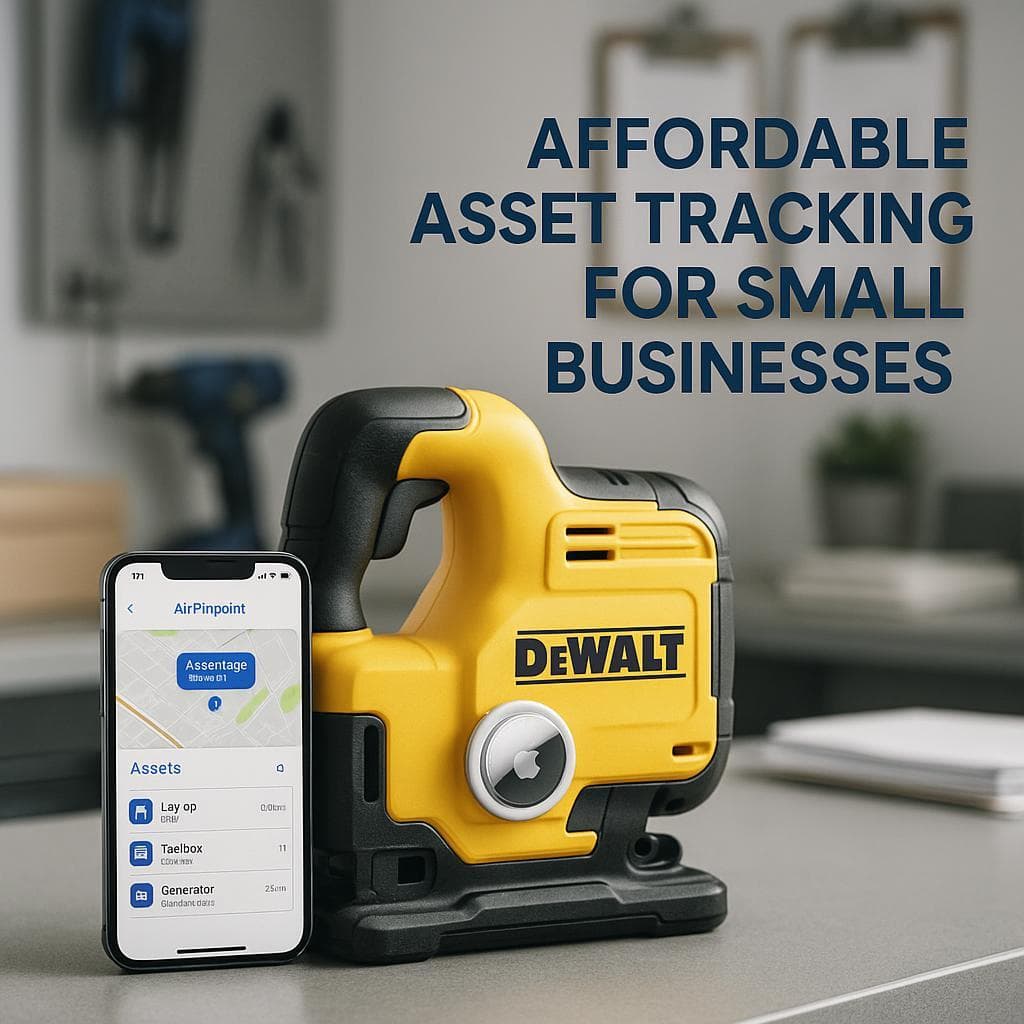
Find My Network vs Cellular IoT: Complete Technology Comparison 2025
Understanding the Technologies
This comparison examines two fundamentally different approaches to asset tracking:
Apple's Find My Network is a crowd-sourced location system leveraging over 1 billion Apple devices worldwide. When an AirTag or Find My-compatible device is offline, nearby iPhones, iPads, and Macs detect its Bluetooth signal and anonymously relay the location. The entire process is end-to-end encrypted: neither Apple nor the finder devices know whose item they're locating.
Cellular IoT encompasses technologies like LTE-M (Cat-M1) and NB-IoT designed specifically for machine-to-machine communication. These devices contain cellular modems that connect directly to carrier networks, transmitting location data to cloud servers. This approach requires monthly subscriptions and carrier coverage.
These technologies serve different use cases. Understanding their trade-offs is essential for choosing the right tracking solution.
How Each Technology Works
Apple Find My Network
- Bluetooth broadcast: Device continuously broadcasts an encrypted, rotating identifier
- Crowd-sourced detection: Nearby Apple devices (1B+ globally) detect the broadcast
- Anonymous relay: Detecting device sends encrypted location to Apple's servers
- Owner receives location: Only the owner's linked device can decrypt and view location
Update frequency: Opportunistic, depends on Apple device density nearby
Privacy design: End-to-end encrypted, anonymous, no authentication data retained
Cellular IoT (LTE-M/NB-IoT)
- GPS positioning: Device determines location via satellite
- Cellular transmission: Modem connects to carrier network
- Data transmission: Location sent to cloud server via LTE-M or NB-IoT
- Dashboard display: View real-time location in web portal or app
Update frequency: Configurable, from every 15 seconds to once daily
Infrastructure required: Carrier network coverage, active subscription
Cost Comparison
Find My-Based Tracking
| Component | Cost |
|---|---|
| AirTags | $29 each (one-time) |
| Monthly subscription | $0 (Find My is free) |
| Fleet management platform | ~$100-200/month total |
| Per-asset monthly equivalent | ~$2-4/asset |
| Battery replacement | ~$5/year (CR2032 coin cell) |
Cellular IoT Tracking
| Component | Cost Range |
|---|---|
| Hardware | $30-150+ per device |
| Monthly subscription (optimized MVNO) | $0.37-2/device |
| Monthly subscription (standard carrier) | $5-10+/device |
| Enterprise fleet solutions | $25-45/vehicle/month |
| Data plans (T-Mobile NB-IoT) | 12 months or 12 MB per activation |
Key cost drivers for cellular IoT:
- Data usage (more frequent updates = higher costs)
- Carrier vs MVNO plans (10x cost difference possible)
- Volume discounts (1,000+ devices significantly lower per-device cost)
- Regional pricing (EU often cheaper than US)
100-Asset 3-Year Comparison
Find My (AirTags + Airpinpoint):
- Hardware: 100 × $29 = $2,900
- Platform: $150 × 36 = $5,400
- Batteries: 100 × $5 × 3 = $1,500
- Total: ~$9,800
Cellular IoT (Enterprise):
- Hardware: 100 × $100 = $10,000
- Monthly: 100 × $30 × 36 = $108,000
- Total: ~$118,000
Cellular IoT (Consumer-grade):
- Hardware: 100 × $40 = $4,000
- Monthly: 100 × $10 × 36 = $36,000
- Total: ~$40,000
Cellular IoT (Optimized MVNO):
- Hardware: 100 × $50 = $5,000
- Monthly: 100 × $2 × 36 = $7,200
- Total: ~$12,200
Battery Life Comparison
Find My Devices
| Device Type | Battery Life | Battery Type |
|---|---|---|
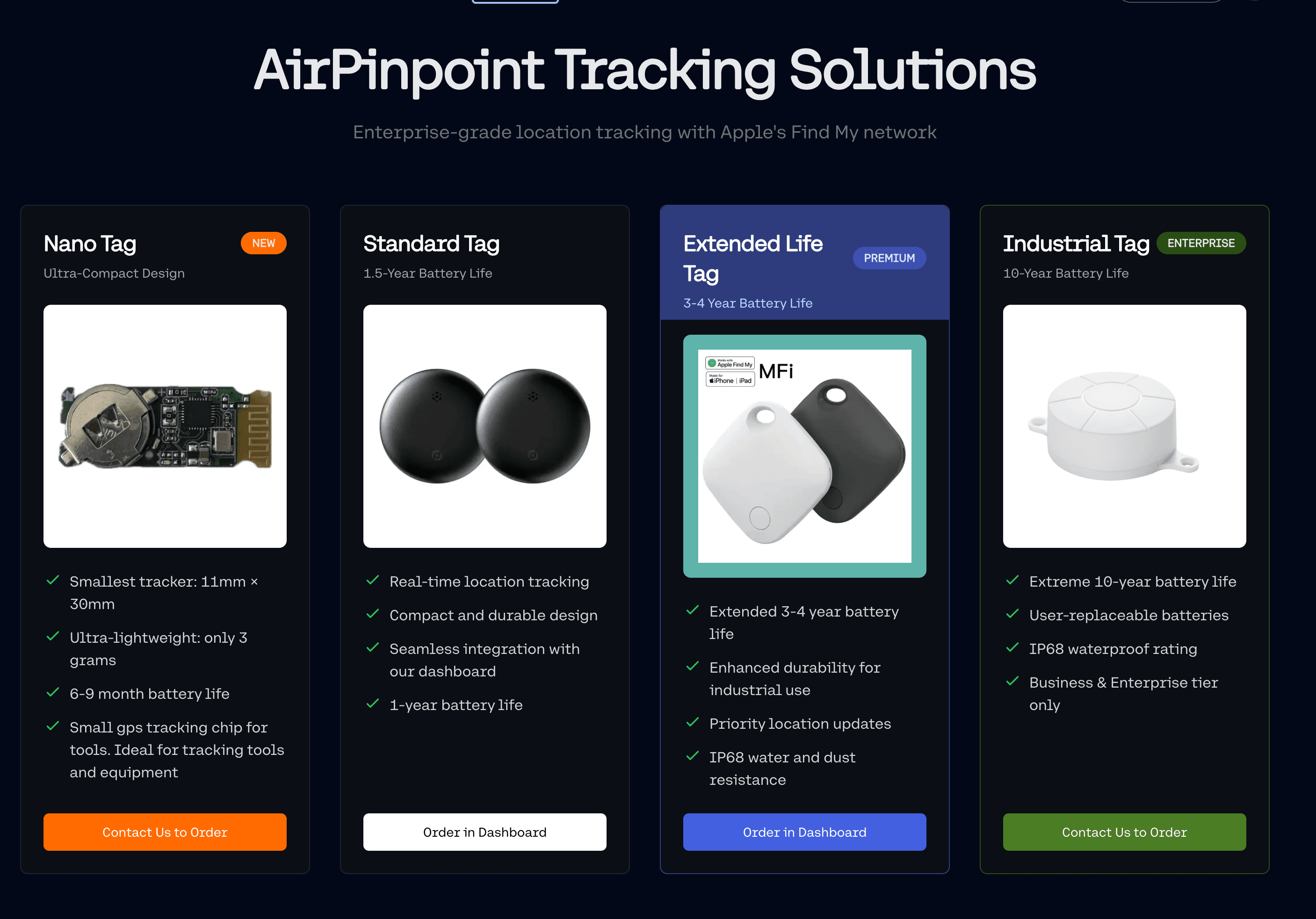
| Apple AirTag | ~1 year | CR2032 coin cell |
| Third-party Find My tags | 6-24 months | Varies (coin cell) |
| Chipolo ONE Spot | ~1 year | Replaceable |
Key advantage: Consistent performance regardless of location. Bluetooth Low Energy is highly efficient.
Cellular IoT Devices
| Configuration | Battery Life |
|---|---|
| PSM mode, daily transmission | Up to 10+ years (claimed) |
| eDRX mode, hourly updates | 2-5 years |
| Active tracking (every 5 min) | 1-3 years |
| Real-time tracking (every 15 sec) | Days to weeks |
| OBD-II/hardwired | Unlimited (vehicle power) |
Key factors affecting cellular battery:
- Transmission frequency (more updates = faster drain)
- Cellular signal strength (poor coverage drains battery faster)
- Power Saving Mode (PSM) vs Extended DRX (eDRX) configuration
- Temperature extremes
The trade-off: Cellular IoT can achieve multi-year battery life, but only with infrequent updates. Real-time tracking dramatically reduces battery life.
Coverage and Reliability
Find My Network Coverage
Strengths:
- Works anywhere Apple devices exist
- Over 1 billion devices globally
- Excellent in urban/suburban areas
- Works indoors (Bluetooth penetrates walls)
- No cellular infrastructure required
Limitations:
- Requires nearby Apple device users
- Rural/remote areas may have gaps
- Updates are opportunistic, not scheduled
- Performance depends on regional Apple market share
Coverage reality: In cities with high iPhone density, updates can be near-continuous. In a remote forest with no hikers, updates may not occur until the asset encounters Apple users.
Cellular IoT Coverage
Strengths:
- Works anywhere with carrier coverage
- Scheduled updates regardless of nearby people
- LTE-M provides 99.9% outdoor coverage where deployed
- NB-IoT reaches ~95% of deep indoor locations
Limitations:
- 85% of Earth's surface lacks terrestrial cellular coverage
- Rural areas often have dead zones
- Battery drains faster in poor signal areas
- Trackers may log but not transmit until reaching coverage
Coverage reality: In urban areas with good cellular, tracking is reliable. In remote rural areas, national parks, or mountains, coverage gaps can mean hours or days between updates.
Technology Deep Dive
LTE-M (Cat-M1) vs NB-IoT
| Feature | LTE-M (Cat-M1) | NB-IoT |
|---|---|---|
| Download speed | 375 Kbps | 127 Kbps |
| Latency | 10-15 ms | 1.5-10 seconds |
| Handoffs | Yes (supports mobility) | Limited (stationary preferred) |
| Building penetration | Good | Excellent |
| Best for | Mobile assets (vehicles, shipping) | Fixed assets (meters, sensors) |
| US availability | Widespread | AT&T phasing out in 2025 |
LTE-M advantages for tracking:
- Seamless cell tower handoffs for moving assets
- Lower latency for real-time applications
- Voice support (for panic buttons, alerts)
NB-IoT advantages:
- Better deep indoor coverage
- Slightly lower power consumption
- Lower module cost
LPWAN Alternatives
Beyond cellular IoT, other low-power options exist:
| Technology | Range | Battery Life | Network |
|---|---|---|---|
| LoRaWAN | 2-15 km | 5-10 years | Private or public gateways |
| Sigfox | Up to 40 km | Excellent | Sigfox network only |
| Find My | Global (crowd) | 6-24 months | Apple devices |
| LTE-M | Carrier coverage | 1-10 years | Cellular carriers |
LoRaWAN market position: $7.39 billion in 2024, growing 35% annually. Outside China, LoRaWAN holds 41% of LPWAN market share vs NB-IoT's 20%.
Feature Comparison
| Feature | Find My Network | Cellular IoT |
|---|---|---|
| Monthly fees | $0 (personal) / $11.99-14.99 (business) | $0.37-$45/device |
| Real-time tracking | No (crowd-sourced) | Yes (configurable) |
| Battery life | 6-24 months | Days to years (varies) |
| Location accuracy | 3-15 meters | 3-5 meters (GPS) |
| Precision Finding | Yes (UWB on iPhone 11+) | No |
| Works without people | No | Yes (with cellular) |
| Remote area coverage | Limited | Limited (different reason) |
| Indoor tracking | Yes (Bluetooth) | Limited (GPS struggles) |
| Privacy/encryption | End-to-end encrypted | Varies by provider |
| Setup complexity | Minimal | Medium (SIM, configuration) |
| Global roaming | Where Apple devices exist | Requires roaming plans |
When to Choose Each Technology
Choose Find My Network When:
- Cost is the priority: Can't justify $25-45/asset/month
- Assets operate in populated areas: Urban/suburban environments
- Simple tracking needs: "Where is it?" without real-time updates
- Indoor tracking matters: Warehouses, offices, buildings
- Privacy is critical: End-to-end encryption, anonymous network
- Quick deployment needed: No SIM cards or carrier contracts
- Battery simplicity: Predictable yearly replacement, not charging
Choose Cellular IoT When:
- Real-time updates are essential: Fleet dispatch, delivery ETAs
- Assets travel through remote areas: Highways, rural routes
- Scheduled updates required: Need guaranteed update frequency
- No Apple device dependency: Can't rely on crowd-sourced network
- Integration with fleet systems: ELD compliance, driver monitoring
- Geofencing response time matters: Need instant alerts
- Assets cross international borders: With appropriate roaming plans
The Hybrid Approach
Many organizations optimize by using both:
Use Find My for:
- Equipment and tools (populated areas)
- Trailers and containers (urban routes)
- Assets inside buildings
- Cost-sensitive tracking needs
- Backup tracking on critical assets
Use Cellular IoT for:
- Long-haul vehicles (remote highways)
- Assets requiring real-time dispatch
- Compliance-driven tracking (ELD)
- Critical assets where guaranteed updates matter
- International tracking with roaming
Security and Privacy
Find My Network Security
Apple designed Find My with privacy as a core principle:
- End-to-end encryption: Location data encrypted with owner's keys
- Anonymous relay: Finder devices don't know whose item they found
- No authentication headers: Apple can't correlate finder and owner
- Rotating identifiers: Bluetooth ID changes regularly to prevent tracking
- No location retention: Apple doesn't log which devices found which items
Result: Even Apple cannot see the location of your devices.
Cellular IoT Security
Security varies by provider and implementation:
- Data transmission: Usually encrypted (TLS/DTLS)
- Device authentication: SIM-based identity
- Platform security: Depends on cloud provider
- Data retention: Varies by provider terms
Considerations: Your location data resides on provider servers. Review privacy policies and data retention terms.
Emerging Technologies
Satellite IoT (Non-Terrestrial Networks)
The 3GPP Release 17 standard enables NB-IoT and LTE-M over satellite, addressing the 85% coverage gap:
- Global coverage: No terrestrial infrastructure needed
- Higher cost: $50-100+/month for satellite connectivity
- Hybrid solutions: Cellular when available, satellite fallback
Early satellite IoT providers (Skylo, Globalstar) target high-value assets where coverage gaps are unacceptable.
Find My Network Expansion
Apple continues expanding Find My capabilities:
- Share Item Location (November 2024): Share location with airlines, third parties
- Third-party accessories: Growing ecosystem of Find My-compatible devices
- UWB precision: Sub-meter accuracy with Ultra Wideband
Our Recommendation
For most business tracking in populated areas: Find My provides remarkable value. With no Apple subscription and 1 billion+ device network coverage, it's difficult to justify $30+/month cellular subscriptions for assets that primarily operate in urban/suburban environments. Airpinpoint adds a monthly subscription for business features, and the trade-off of opportunistic vs scheduled updates is acceptable for many use cases.
For remote operations and real-time requirements: Cellular IoT remains necessary. If your assets travel through rural areas with minimal Apple device traffic, or if guaranteed update frequency is essential for dispatch operations, cellular provides reliability Find My cannot match.
For cost-conscious fleet managers: Consider where each technology makes sense. High-value vehicles needing real-time dispatch? Cellular. Tools, trailers, and urban assets? Find My. This hybrid approach provides comprehensive visibility while avoiding unnecessary monthly fees.
The key questions:
- Do your assets operate primarily in populated areas?
- Can you accept opportunistic updates, or need guaranteed schedules?
- Is $25-45/month per asset justified for your use case?
- Do you need real-time alerts or is "recent location" sufficient?
For many businesses discovering Find My can replace cellular IoT, the monthly savings are substantial, often thousands of dollars annually with equivalent or better location visibility in their actual operating environments.
 Our Solution