Winery Inventory Management: $1.7 Million in Barrels, Tracked with Chalk Marks
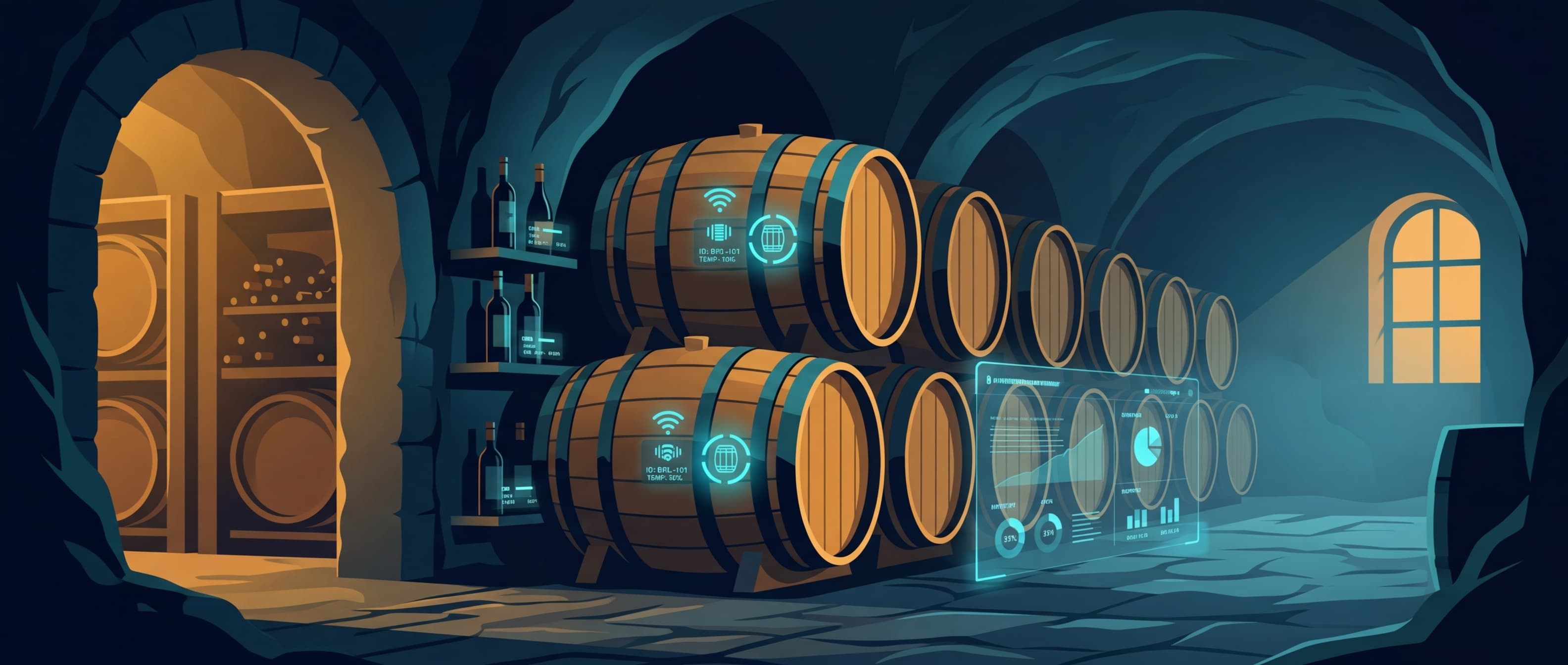
A new French oak barrel costs $850 to $3,600. A mid-size winery producing 50,000 cases per year needs roughly 2,000 barrels. That puts $1.7 million to $7.2 million worth of cooperage in cave rooms and aging facilities, often across multiple locations. The standard tracking method for most of this inventory: a chalk mark on the barrel head and a row in a spreadsheet.
Wine evaporates during barrel aging at 2-5% per year, a loss known as the angel's share. Over a three-year aging cycle, a barrel can lose 14% of its contents. Distinguishing between normal evaporative loss and actual shrinkage (theft, mislabeling, miscounts) requires knowing exactly where every barrel is and when it last moved. Most wineries cannot answer that question without sending someone with a clipboard to physically walk every room.
64% of wineries manage over 5,000 inventory units annually. The TTB requires accounting for all wine in bond, including losses exceeding allowable limits. Yet many wineries still rely on handwritten chalk marks, printed notecards, and manual spreadsheets to track millions of dollars in aging inventory.
The Three Inventory Problems Wineries Actually Face
1. Barrels in the Wrong Place
Barrels move. They move during racking, during blending trials, during topping, during bottling prep. A barrel that was in Cave Room B last month might be in the annex now because someone needed the space. Multiply this by hundreds or thousands of barrels across two, three, or four locations, and the spreadsheet stops matching reality within weeks.
The cost is not just the labor of finding a barrel. A mislabeled or misplaced barrel lot of premium Cabernet Sauvignon can be worth $5,000 to $25,000 in finished wine. If you blend the wrong lot because someone moved barrels and did not update the records, you have a compliance problem and a product quality problem.
2. Equipment That Disappears
A working winery has expensive portable equipment moving constantly between the crush pad, barrel room, lab, and bottling line. Barrel washers, pumps, hoses, refractometers, dissolved oxygen meters, forklifts. During harvest, when temps are running 12-hour shifts and everything is moving fast, equipment ends up wherever the last person left it.
A barrel washer costs $3,000-$8,000. A dissolved oxygen meter costs $1,500-$4,000. A forklift costs $15,000-$40,000. When one goes missing during the chaos of crush, nobody searches for it until they need it, and by then nobody remembers who had it last.
3. Case Goods and Pallet Tracking
Finished wine in case goods represents the winery's most liquid asset. Cases staged for distributor pickup, library wines in long-term storage, and pallets being transferred between warehouse locations all need tracking. A pallet of premium wine holds 56 cases. At $20-$50 per bottle wholesale, a single pallet is worth $13,440 to $33,600.
Wine theft from warehouses and during transit is a real problem. Asset misappropriation is the most common type of insider fraud in wineries, and given the high dollar value of many bottles, inventory theft is the primary scheme.
How Wineries Track Inventory Today
Chalk and Clipboard (Still Common)
Winemakers chalk the barrel head with lot number, vintage, variety, and fill date. Someone walks the caves periodically with a clipboard to verify. This method fails when barrels move, when chalk fades, and when multiple people make updates without communicating. It is free, and you get what you pay for.
Barcode and QR Labels
A step up from chalk. Each barrel gets a printed label with a scannable code. Workers scan with a handheld device or phone during inventory counts. The limitation: barcodes require line-of-sight scanning. In a cave room with barrels stacked three high in tight rows, physically scanning each barrel means pulling out barrels or climbing to reach high stacks. A full inventory count of 2,000 barrels takes two people a full day.
RFID Tags
RFID does not require line-of-sight and can read multiple tags simultaneously. A worker with a handheld reader can walk down a row and capture every barrel's tag in seconds. But RFID infrastructure is expensive. Passive RFID tags cost $1-$5 each. Handheld readers cost $1,500-$5,000. Fixed readers for doorways and chokepoints cost $2,000-$10,000 each. A full RFID deployment for a mid-size winery runs $20,000-$80,000 for initial setup, plus ongoing maintenance.
RFID also has a key limitation for wineries: it tells you when a barrel passes a reader, not where it is right now. If a barrel moves between reads, you do not know until someone scans that area again.
Winery ERP Software
Enterprise solutions like Crafted ERP, VinNow, and vintrace handle production tracking, compliance reporting, and barrel management in software. Pricing starts at $500+/month for mid-size wineries and goes up significantly for larger operations. These systems are excellent for production workflow and TTB compliance. But they track what the software knows, which depends on humans entering data correctly. If someone moves a barrel and does not update the system, the software is wrong.
Where Physical Tracking Fills the Gap
Software tracks what you tell it. Physical tracking tracks where things actually are. The two are complementary.
A winery ERP tells you that Barrel Lot 2024-CAB-07 should be in Cave Room B, Position 3, Row 12. An AirTag on that barrel rack tells you it is actually in the annex because someone moved it during last week's racking and forgot to log it. The physical layer catches the gap between what should be true and what is true.
This is where Airpinpoint fits. Not as a replacement for winery management software, but as the physical verification layer that makes your existing data trustworthy.
Airpinpoint for Wineries: How It Works
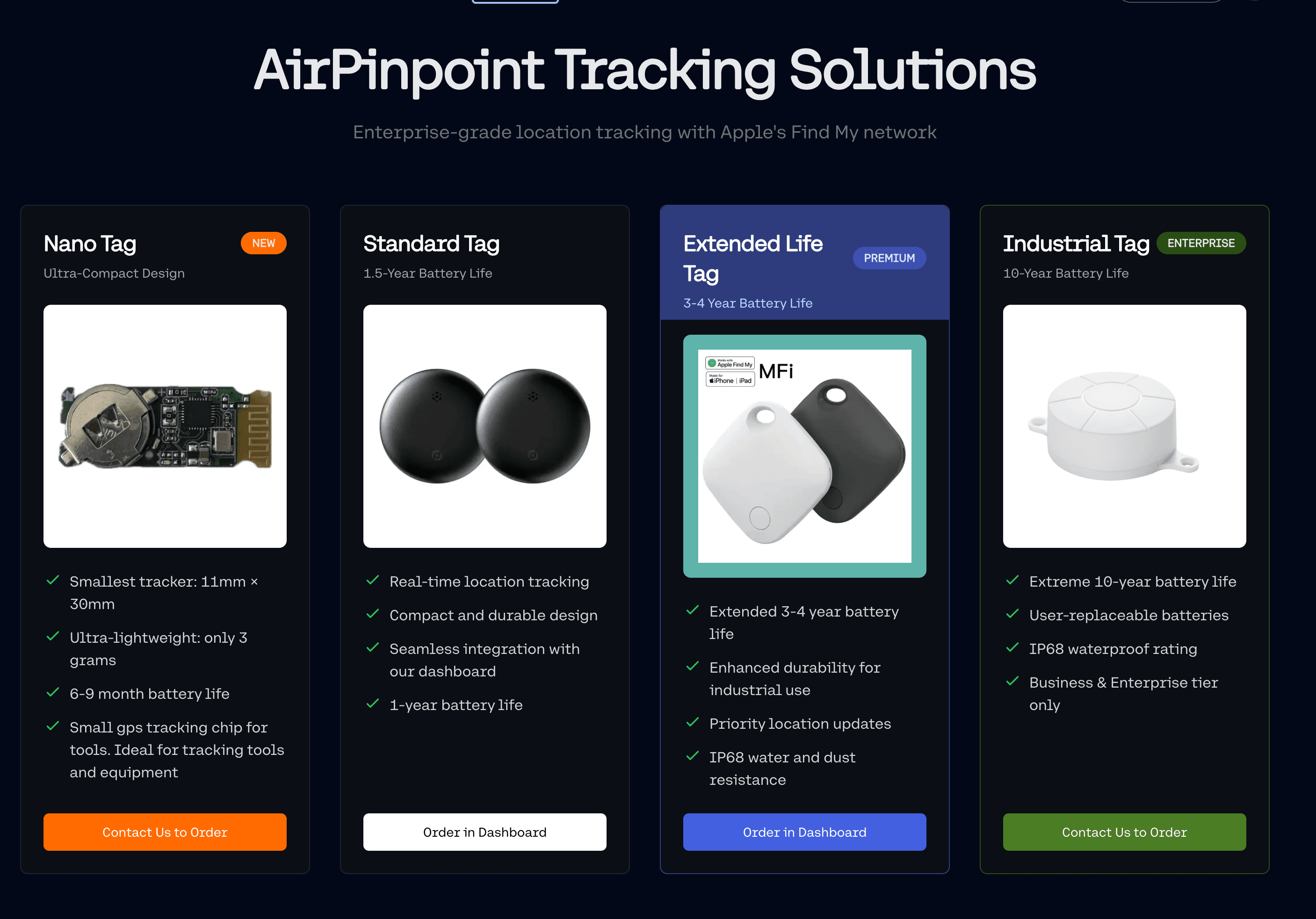
Each AirTag ($29) attaches to a barrel, barrel rack, equipment item, or pallet. The tag broadcasts a Bluetooth signal that any nearby Apple device (iPhone, iPad, Mac) picks up and relays through Apple's Find My network of over a billion devices. No Wi-Fi, cellular infrastructure, or installed readers required.
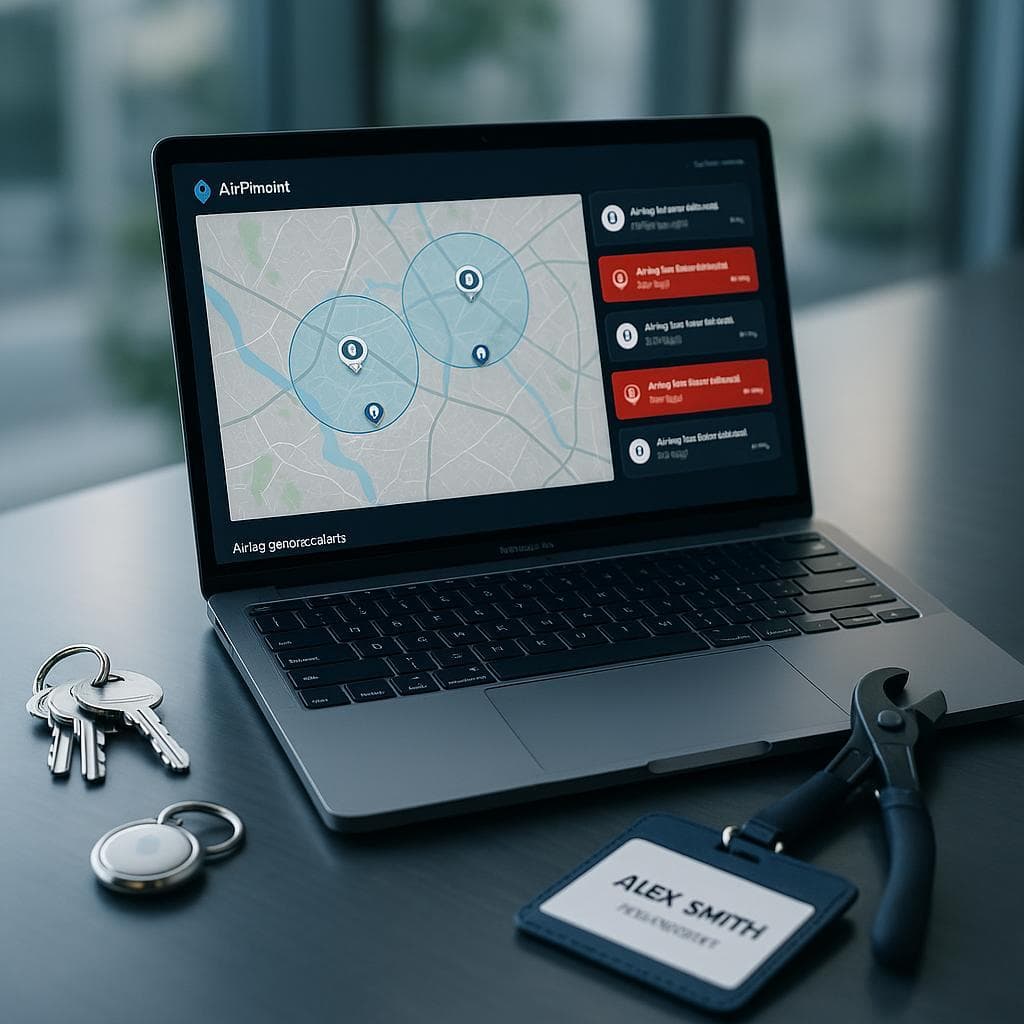
In a winery where cellar workers carry iPhones, tags update their location throughout the workday. The Airpinpoint dashboard shows every tracked asset on a map with location history, movement alerts, and geofence boundaries.
What to Tag
You do not need to tag every barrel individually. For a winery with 500+ barrels, tag at the lot or rack level:
| Asset | Typical Count | Why Track |
|---|---|---|
| Barrel racks (by lot) | 20-50 | Catch unauthorized barrel movement, verify lot locations |
| Individual premium barrels | 10-30 | New French oak ($850-$3,600 each), library reserve lots |
| Forklifts and pallet jacks | 2-5 | $15K-$40K each, move between buildings daily |
| Pumps and barrel washers | 3-8 | $3K-$8K each, shared across crush/barrel/bottling |
| Lab equipment | 5-10 | DO meters, refractometers, pH meters |
| Case goods pallets | 10-30 | $13K-$34K per pallet of premium wine |
| Bottling line components | 3-5 | Mobile bottling setups, labeling machines |
Geofence Setup
Set geofences around each building or zone: crush pad, barrel room, cave rooms, warehouse, bottling facility. When a tracked barrel rack leaves Cave Room A, you get an alert. When a forklift leaves the property after hours, you get an alert. When a pallet of case goods departs the warehouse, the movement is logged with a timestamp.
For wineries with offsite storage, the geofence system verifies that barrels arriving at the secondary location actually get there. No more calling the other facility to confirm a delivery.
Multi-Location Visibility
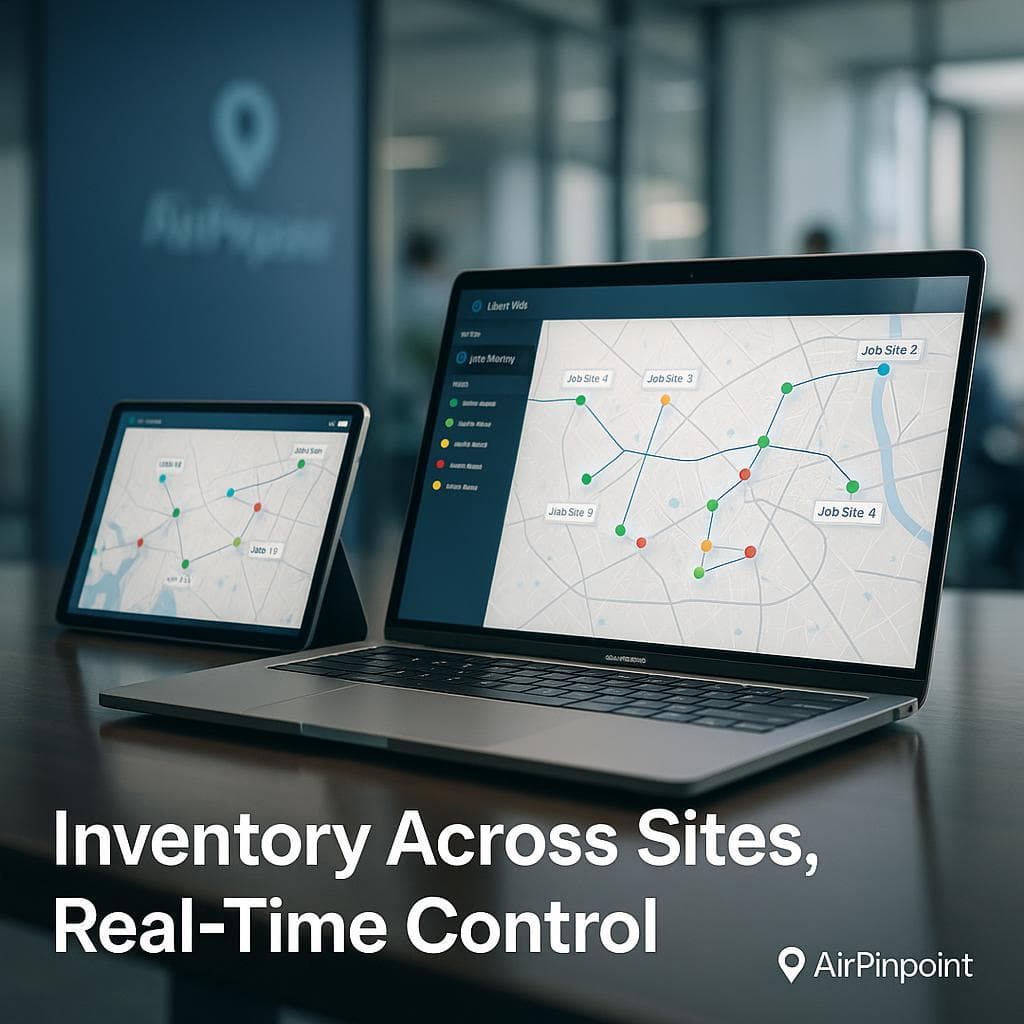
Wineries with barrels aging at multiple sites see everything on one dashboard. Your primary estate, the off-site cave, the custom crush partner's facility, and the distribution warehouse all appear on the same map. Filter by location, by asset type, or by the tag that has not updated in 48 hours (which might mean a dead battery, or might mean a missing barrel).
Implementation: Getting Started
A phased approach works best for wineries.
Phase 1 (Week 1): High-value equipment. Tag forklifts, lab equipment, and portable pumps. These are the assets that go missing during harvest and cost the most to replace. Immediate ROI: you stop buying duplicate equipment because nobody can find the first one.
Phase 2 (Week 2-3): Barrel lots and premium cooperage. Tag barrel racks by lot and individual new French oak barrels. Set geofences around each cave room and aging area. This catches the "barrels in the wrong place" problem and gives you movement history for compliance records.
Phase 3 (Month 2): Case goods and pallets. Tag pallets in the warehouse and staging areas. Set geofences around loading docks. This catches shrinkage and documents chain-of-custody for shipments.
Cost for a Typical Deployment
| Phase | Assets | AirTags | Monthly Cost |
|---|---|---|---|
| Equipment | Forklifts, pumps, lab gear | 15 | $180 |
| Barrel lots | Rack-level tracking, premium barrels | 40 | $480 |
| Case goods | Pallets, library storage | 20 | $240 |
| Total | 75 | $900/mo |
First-year cost: $2,175 in AirTags + $10,800 in subscription = $12,975. That is less than the value of one misplaced pallet of premium wine, and less than one month of a winery ERP system for a mid-size operation.
What Airpinpoint Does Not Replace
Airpinpoint is not winery management software. It does not handle production workflows, TTB reporting, blending recipes, or cost accounting. You still need your ERP or production tracking system for those functions.
What it provides is the physical layer that those systems lack: where are my barrels and equipment right now, did anything move that should not have, and can I prove it?
For wineries already using Crafted ERP, vintrace, VinNow, or similar systems, Airpinpoint fills the gap between what the software says and what is actually happening on the cellar floor.
 Our Solution