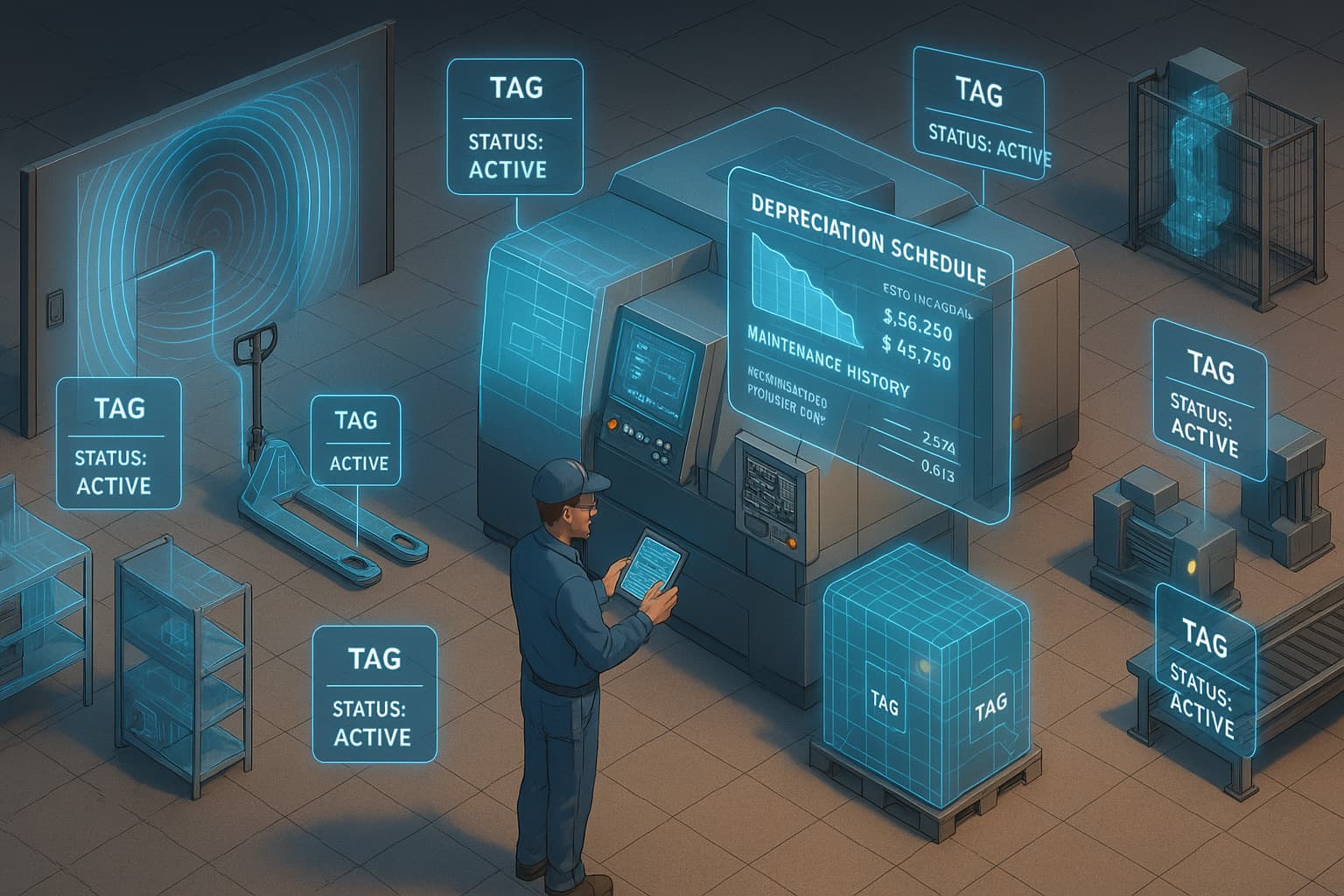
Manufacturing Die & Mold Tracking: RFID for Tooling Inventory Management
Manufacturing operations depend on thousands of dies, molds, and specialized tooling worth millions of dollars. Yet many facilities still track these critical assets with spreadsheets and memory, resulting in hours wasted searching for tools, missed maintenance, and unexpected breakdowns.
RFID tracking transforms tooling management from operational chaos to automated precision.
The Tooling Tracking Challenge
The Search Problem
Before implementing RFID tracking, manufacturers report staggering search times:
| Scenario | Time Before RFID | Time After RFID |
|---|---|---|
| Finding a specific die | Up to 2 hours | 15 minutes |
| Locating die for repair | 30-60 minutes | 5 minutes |
| Production changeover search | 45 minutes | 10 minutes |
| Full inventory audit | 2-3 days | 4-6 hours |
Impact: A single 2-hour search costs $100-200 in direct labor, plus production delays that can cost thousands per hour.
Tooling Values
| Tooling Type | Cost Range | Typical Lifecycle |
|---|---|---|
| 3D printed injection molds | $100-1,000 | 100-1,000 shots |
| Aluminum prototype molds | $2,000-10,000 | 5,000-10,000 shots |
| Production steel molds | $10,000-100,000 | 500,000+ shots |
| Multi-cavity steel molds | $50,000-500,000 | 1,000,000+ shots |
| Automotive stamping dies | $100,000-1,000,000+ | 10-20 years |
| Tire molds | $50,000-200,000 | 30+ years |
The global asset tracking market is expected to grow from $16.9 billion (2021) to $36.51 billion by 2027, a 13.7% annual growth rate, driven largely by manufacturing needs.
Maintenance Complexity
Tooling requires significant ongoing maintenance investment:
| Mold Type | Maintenance Cost Over Lifetime |
|---|---|
| High-volume, complex mechanisms | 30-40% of original tooling cost |
| Low-volume, simple parting lines | 5-10% of original cost |
Without tracking:
- Maintenance schedules based on memory or rough estimates
- Overdue maintenance causes quality issues or breakdowns
- No documentation for warranty claims or quality audits
How RFID Tooling Tracking Works
Technology Components
| Component | Function | Typical Cost |
|---|---|---|
| On-metal RFID tags | Identify tools, withstand metal interference | $5-25 each |
| Fixed readers | Track movement at doorways and zones | $1,000-3,000 each |
| Rack-mounted readers | Track storage locations | $500-1,500 each |
| Handheld readers | Locate specific tools | $1,000-3,000 |
| Software platform | Manage data, alerts, reports | $5,000-50,000/year |
On-Metal Tag Requirements
Standard RFID tags fail on metal surfaces. Manufacturing tooling requires specialized tags that:
- Perform reliably on metal - Designed with spacers or shielding
- Withstand extreme temperatures - Some tags rated to 400°F+
- Resist chemicals - Survive oils, coolants, cleaning agents
- Handle physical impact - Shock, vibration, drops
- Attach securely - Adhesive, bolt-on, or embedded options
Tracking Workflow
- Tag attachment - RFID tag permanently attached to die/mold
- Check-out logging - Tag scanned when tool leaves storage
- Production tracking - Readers at machines log usage
- Check-in logging - Tag scanned when returned to storage
- Maintenance alerts - System triggers when service due
- Search capability - Handheld reader locates missing tools
Key Benefits
Reduced Search Time
| Metric | Before RFID | After RFID | Improvement |
|---|---|---|---|
| Average search time | 45 minutes | 5 minutes | 89% reduction |
| Searches per day | 10 | 10 | Same volume |
| Daily time saved | N/A | 6.7 hours | $400-800/day |
Automated Maintenance Tracking
Shot counting:
- RFID readers at presses count cycles automatically
- System alerts when preventive maintenance due
- No manual log sheets required
Service history:
- Complete maintenance record attached to tool
- Scan tag to view full history
- Warranty and repair documentation
Chain of Custody
RFID creates accountability:
- Who checked out the tool
- When it left storage
- Where it's been used
- What maintenance was performed
- Why (work order linkage)
Inventory Accuracy
| Challenge | RFID Solution |
|---|---|
| "We can't find it" | Real-time location tracking |
| "Is it here or at the other plant?" | Multi-facility visibility |
| "Did we already buy one of these?" | Instant inventory lookup |
| "When did this leave for repair?" | Automated movement logging |
Industry Applications
Tire Manufacturing
Tire production involves dozens of molds per product:
- Mold lifecycles can exceed 30 years
- Tracking required throughout manufacturing workflow
- Maintenance critical for tire quality
- RFID enables true traceability
Metal Foundries
Foundry applications require tracking:
- Mold location and availability
- Maintenance during lifecycle
- Chain of custody for quality
- High-temperature tag requirements
Injection Molding
Plastic injection operations benefit from:
- Shot counting for maintenance scheduling
- Quick mold changes with location visibility
- Quality documentation per mold
- Automated depreciation tracking
Stamping Operations
Automotive and metal stamping need:
- Die location across multiple lines
- Sharpening and repair tracking
- Usage documentation for cost allocation
- Multi-plant visibility
Solution Providers
RFID Platform Vendors
| Vendor | Focus | Key Strengths |
|---|---|---|
| Grey Trunk RFID (Metalcraft) | Die/mold specialty | Manufacturing expertise, on-metal tags |
| Xerafy | Industrial RFID | High-temperature tags, MRO focus |
| RFID4U/TagMatiks | General manufacturing | Flexible platform, integrations |
| AssetPulse | Lab and manufacturing | Calibration management |
| Xemelgo | Real-time visibility | Modern interface, analytics |
On-Metal Tag Specialists
| Vendor | Specialty |
|---|---|
| Metalcraft | Custom industrial tags |
| Xerafy | Extreme environment tags |
| Confidex | High-performance UHF |
| Omni-ID | Rugged industrial |
Integration Requirements
Manufacturing RFID should integrate with:
- MES (Manufacturing Execution Systems)
- ERP systems (SAP, Oracle, etc.)
- CMMS (Maintenance management)
- Quality management systems
- Production scheduling
Implementation Guide
Phase 1: Assessment (4-6 weeks)
-
Inventory tooling
- Complete list of dies, molds, fixtures
- Current values and depreciation
- Storage locations and movement patterns
-
Document pain points
- Search time measurements
- Maintenance compliance gaps
- Lost/misplaced tool incidents
- Quality issues from tooling problems
-
Define requirements
- Tracking granularity needed
- Integration requirements
- Multi-facility considerations
- Budget constraints
Phase 2: Pilot (8-12 weeks)
-
Select pilot area
- 100-200 tools
- One production area or product line
- Engaged supervisor/champion
-
Deploy infrastructure
- 4-6 fixed readers at key points
- Handheld readers for searching
- Tag 100-200 tools
-
Measure baseline
- Search time before and after
- Inventory accuracy
- Maintenance compliance
- User adoption
Phase 3: Expansion (6-12 months)
-
Roll out systematically
- Tag all tooling
- Add readers as needed
- Integrate with ERP/MES
-
Establish processes
- Standard tagging procedures
- Check-out/check-in workflows
- Maintenance scheduling
- Reporting cadence
-
Continuous improvement
- Refine based on data
- Add features as needed
- Expand to related assets
ROI Analysis
Mid-Size Manufacturer (500 Dies/Molds)
Investment:
| Item | Cost |
|---|---|
| On-metal RFID tags (500 × $15) | $7,500 |
| Fixed readers (8 × $2,000) | $16,000 |
| Handheld readers (3 × $2,000) | $6,000 |
| Software platform (Year 1) | $15,000 |
| Implementation services | $10,000 |
| Total Year 1 | $54,500 |
Annual Savings:
| Category | Calculation | Savings |
|---|---|---|
| Search time | 2 operators × 1 hr/day × 250 days × $40/hr | $20,000 |
| Production delays | 30 min/day × 250 days × $200/hr | $25,000 |
| Avoided duplicate purchases | 2% of tooling budget | $30,000 |
| Maintenance efficiency | Reduced breakdowns | $15,000 |
| Inventory accuracy | Audit time reduction | $5,000 |
| Total Annual Savings | $95,000 |
Payback period: 7 months
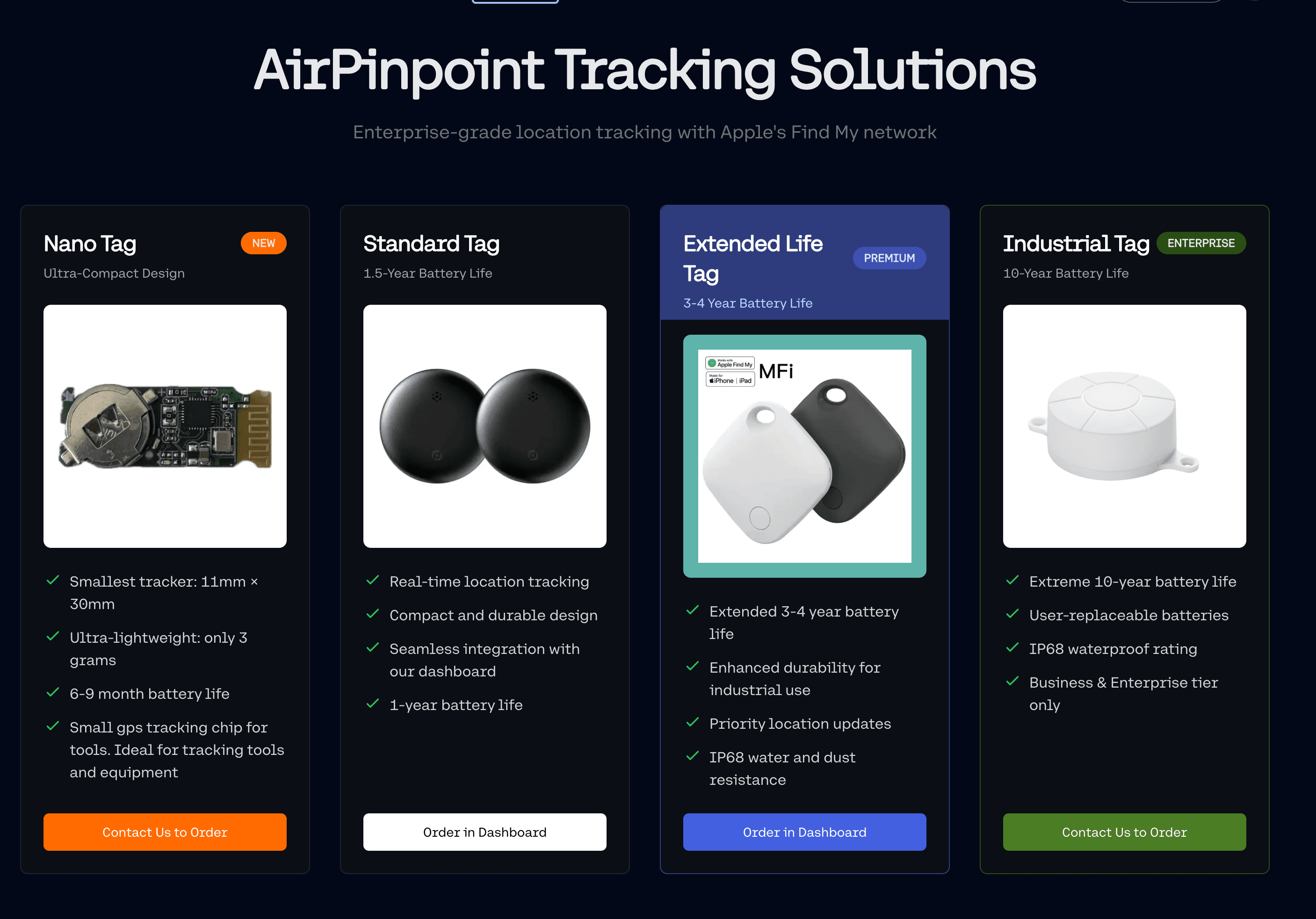
AirTags with Airpinpoint for Tooling Tracking
While RFID is the industry standard for high-volume manufacturing, AirTags with Airpinpoint offer a compelling alternative for many operations:
When Airpinpoint Works Best
- Smaller tooling inventories (under 200 tools)
- Multi-facility operations needing cross-site visibility
- External mounting on die/mold exterior avoids metal interference
- Quick deployment without infrastructure investment
- Supplemental tracking alongside existing RFID systems
Why Airpinpoint for Manufacturing
- Professional dashboard - See all tooling across facilities on one screen
- Geofence alerts - Know when dies or molds leave designated areas
- Location history - Track movement for accountability and audits
- Team access - Multiple departments can track shared tooling
- Simple pricing - $29 AirTag hardware + subscriptions from $11.99/month per tag
Mounting Considerations
External placement is key: Mount AirTags on the exterior of dies and molds using:
- Industrial adhesive mounting brackets
- Bolt-on protective enclosures
- Recessed pockets machined into non-critical surfaces
Avoid: Internal placement where metal enclosure blocks Bluetooth signal
Airpinpoint vs RFID Comparison
| Factor | Airpinpoint | RFID |
|---|---|---|
| Upfront cost | $29/tool | $5-25/tag + readers ($10,000+) |
| Monthly cost | From $11.99/tag | Software license ($5,000-50,000/year) |
| Deployment time | Hours | Weeks to months |
| Infrastructure | None required | Fixed readers, network |
| Best for | Smaller operations, multi-site | High-volume, MES integration |
The Bottom Line
Manufacturing die and mold tracking delivers clear value:
- 87% reduction in search time
- 7-month payback typical
- Chain of custody for quality and accountability
- Automated maintenance scheduling
Start with:
- High-value tooling (highest search frequency)
- AirTags + Airpinpoint for quick wins: external mounting, no infrastructure needed
- On-metal RFID tags for high-volume operations requiring MES integration
- Fixed readers at storage and production areas for comprehensive RFID coverage
For smaller operations or multi-site visibility, Airpinpoint's dashboard provides enterprise-grade tracking without RFID infrastructure costs. Mount AirTags on tooling exteriors and see all your dies and molds on one screen within hours.
The manufacturers who track their tooling effectively spend more time producing and less time searching.
 Our Solution