Asset Tracking IoT
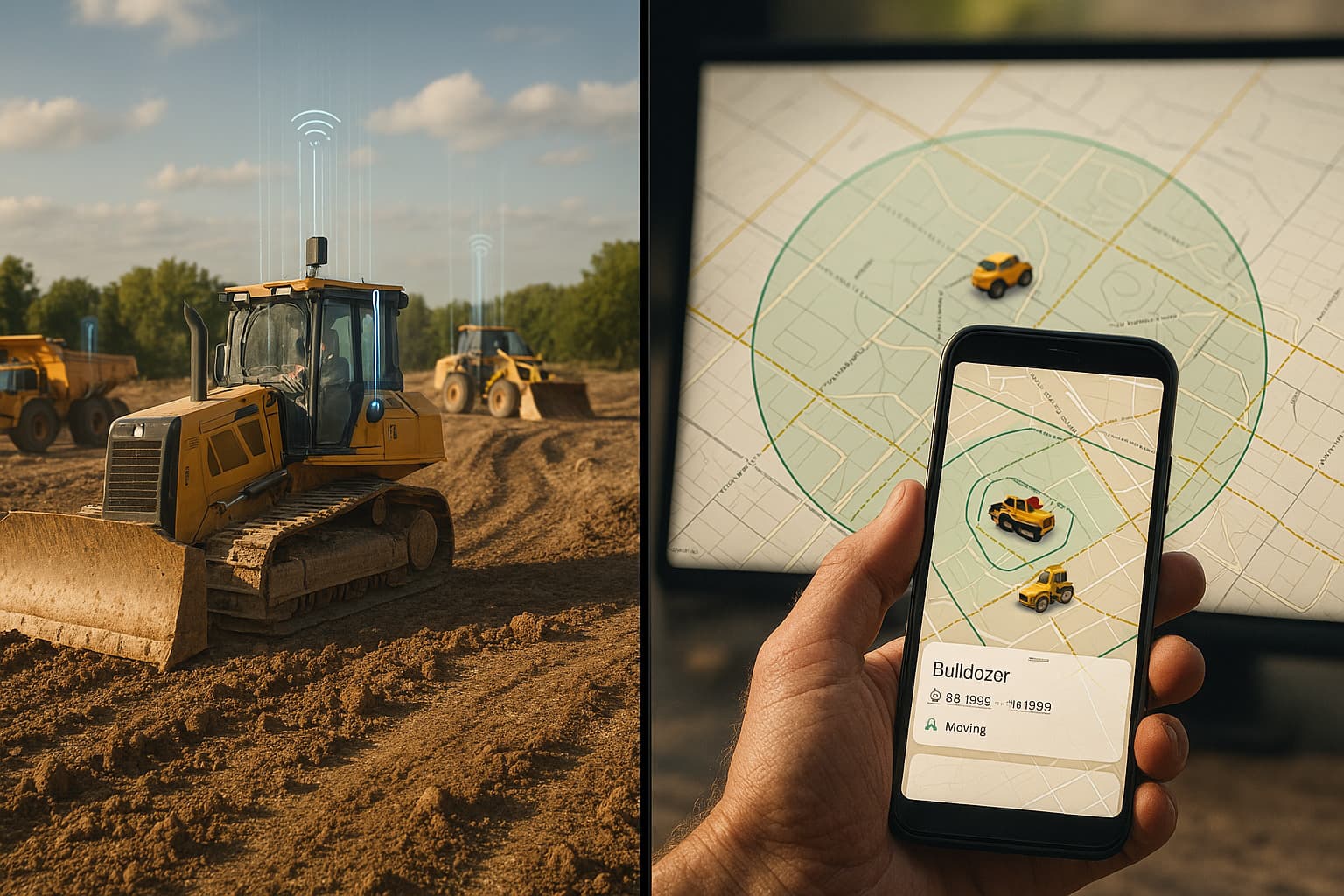
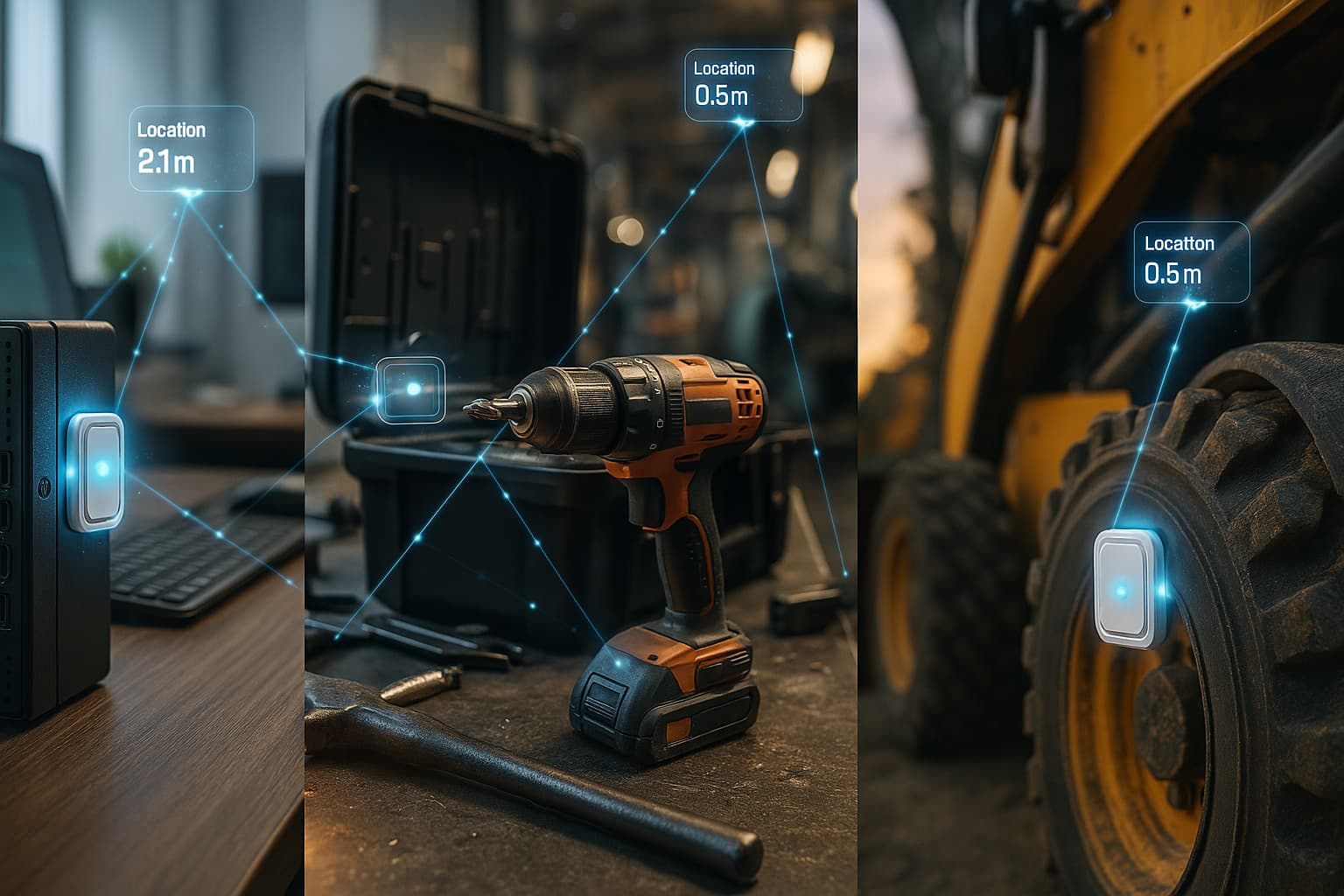
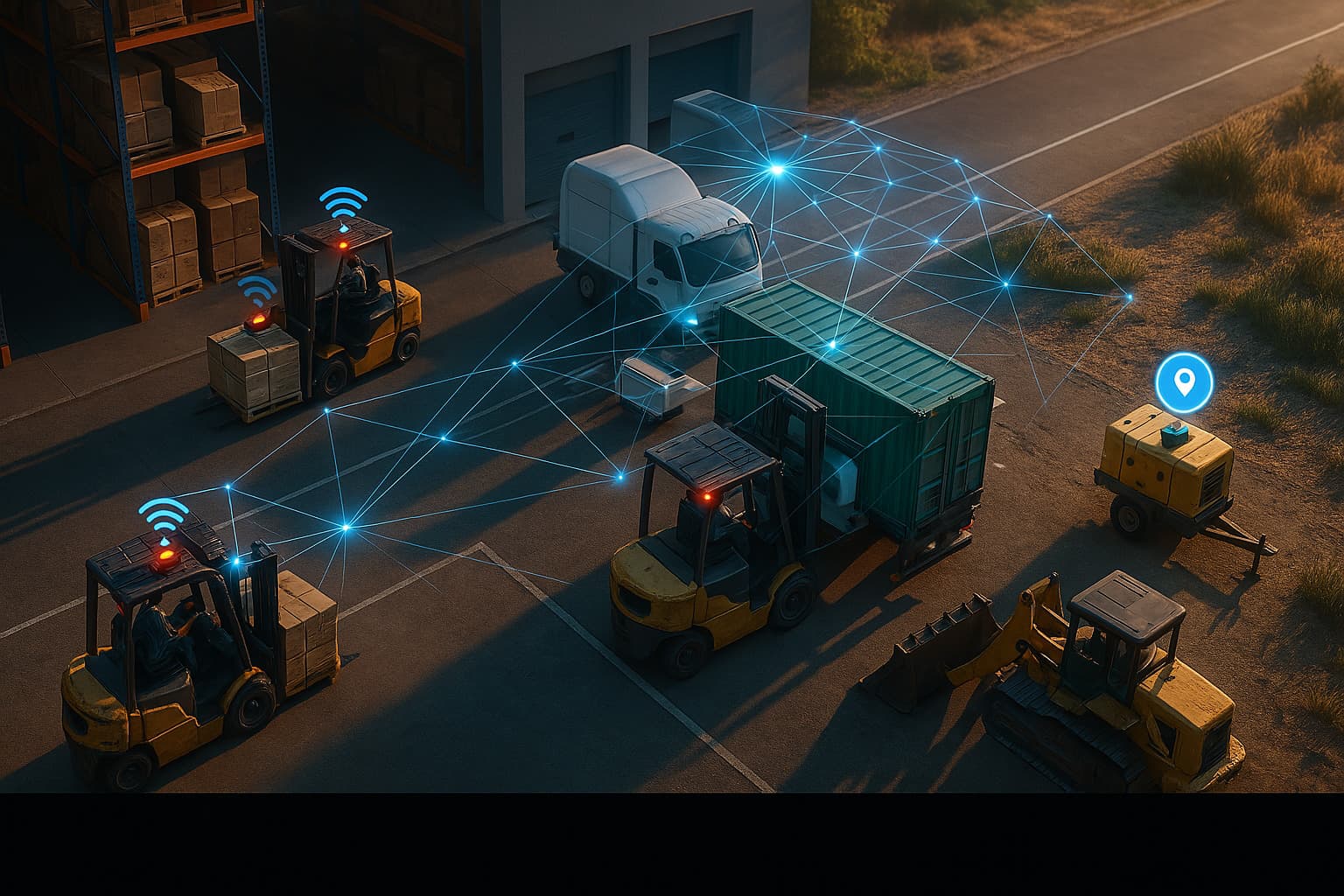
IoT asset tracking connects physical assets to cloud platforms through sensors and wireless connectivity. It's not just about location. It's about complete asset intelligence: where things are, how they're being used, and when they need attention.
What Makes Tracking "IoT"
Traditional tracking tells you where something is. IoT tracking tells you everything:
| Capability | Traditional GPS | IoT Asset Tracking |
|---|---|---|
| Location | ✓ | ✓ |
| Movement history | ✓ | ✓ |
| Temperature | ✓ | |
| Shock/impact | ✓ | |
| Humidity | ✓ | |
| Door open/close | ✓ | |
| Utilization | ✓ | |
| Predictive alerts | ✓ | |
| Cloud analytics | ✓ |
IoT Connectivity Options
Different connectivity technologies suit different use cases:
Cellular (4G/5G/LTE-M)
Best for: Wide-area tracking, high update frequency
| Pros | Cons |
|---|---|
| Works anywhere with cell coverage | Monthly data costs |
| Real-time updates | Higher power consumption |
| High bandwidth | Overkill for simple location |
| Mature technology |
Use cases: Fleet vehicles, heavy equipment, high-value shipments
LoRaWAN
Best for: Long range, low power, simple data
| Pros | Cons |
|---|---|
| Years of battery life | Limited bandwidth |
| Low ongoing costs | Requires gateway infrastructure |
| Long range (miles) | Not real-time |
| Good building penetration |
Use cases: Campus tracking, agricultural assets, utilities
BLE (Bluetooth Low Energy)
Best for: Indoor tracking, proximity detection
IoT Gotchas to Design Around
- Low-power modes trade latency for battery: LTE-M/NB-IoT save energy using sleep modes (PSM/eDRX), which can delay updates if you expect instant pings.
- Duty-cycle limits: LoRaWAN uplinks are subject to regional duty-cycle limits, so aggressive reporting schedules can violate network constraints or drain batteries.
- Coverage reality: Cellular and LPWAN coverage varies by site, and metal-heavy environments can attenuate signals. Plan for site surveys and redundancy.
| Pros | Cons |
|---|---|
| Very low power | Short range (30-100 ft) |
| Low device cost | Requires beacons/gateways |
| Low device cost | Indoor only (typically) |
| Precise indoor location |
Use cases: Warehouse tracking, tool tracking, indoor assets
WiFi
Best for: Indoor environments with existing WiFi
| Pros | Cons |
|---|---|
| Uses existing infrastructure | Limited to WiFi coverage |
| High bandwidth | Higher power than BLE |
| Indoor positioning | Battery drain |
| Easy deployment |
Use cases: Office equipment, healthcare assets, retail
Apple Find My Network
Best for: Broad coverage without cellular fees
| Pros | Cons |
|---|---|
| 1 billion+ devices | Relies on iPhone density |
| No cellular data plan needed | Not real-time (minutes) |
| AirTag compatible | Privacy-focused (limitations) |
| Excellent battery life |
Use cases: Airpinpoint leverages this for business tracking
Sensor Capabilities
IoT devices can monitor conditions beyond location:
Temperature Monitoring
Track cold chain compliance:
- Food transportation
- Pharmaceutical logistics
- Medical samples
- Chemical storage
Alert example: "Container temp exceeded 40°F for 2 hours"
Shock/Impact Detection
Monitor handling:
- Fragile equipment
- Sensitive electronics
- Art and antiques
- Medical devices
Alert example: "Asset experienced 5G impact at 2:34 PM"
Humidity Sensing
Protect moisture-sensitive items:
- Electronics
- Documents
- Artwork
- Pharmaceuticals
Alert example: "Humidity exceeded 70% in storage unit"
Door/Tamper Detection
Security monitoring:
- Container security
- Equipment access
- Unauthorized entry
- Seal verification
Alert example: "Container door opened at unauthorized location"
Motion/Utilization
Track actual usage:
- Equipment runtime
- Idle detection
- Movement patterns
- Usage verification
Alert example: "Equipment idle for 72+ hours, check availability"
IoT Asset Tracking Platforms
Link Labs
Best for: Enterprise deployments
- Multi-technology support (GPS, BLE, LoRa)
- Industrial-grade hardware
- Advanced analytics
- API integration
Pricing: Enterprise (contact for quote)
Samsara
Best for: Fleet and equipment tracking
- Cellular-based tracking
- Telematics integration
- Driver safety features
- Compliance management
Pricing: $30-50/device/month
CalAmp
Best for: Supply chain and logistics
- Global coverage
- Container tracking
- Cold chain monitoring
- OEM partnerships
Pricing: Enterprise (contact for quote)
Airpinpoint
Best for: Cost-effective business tracking
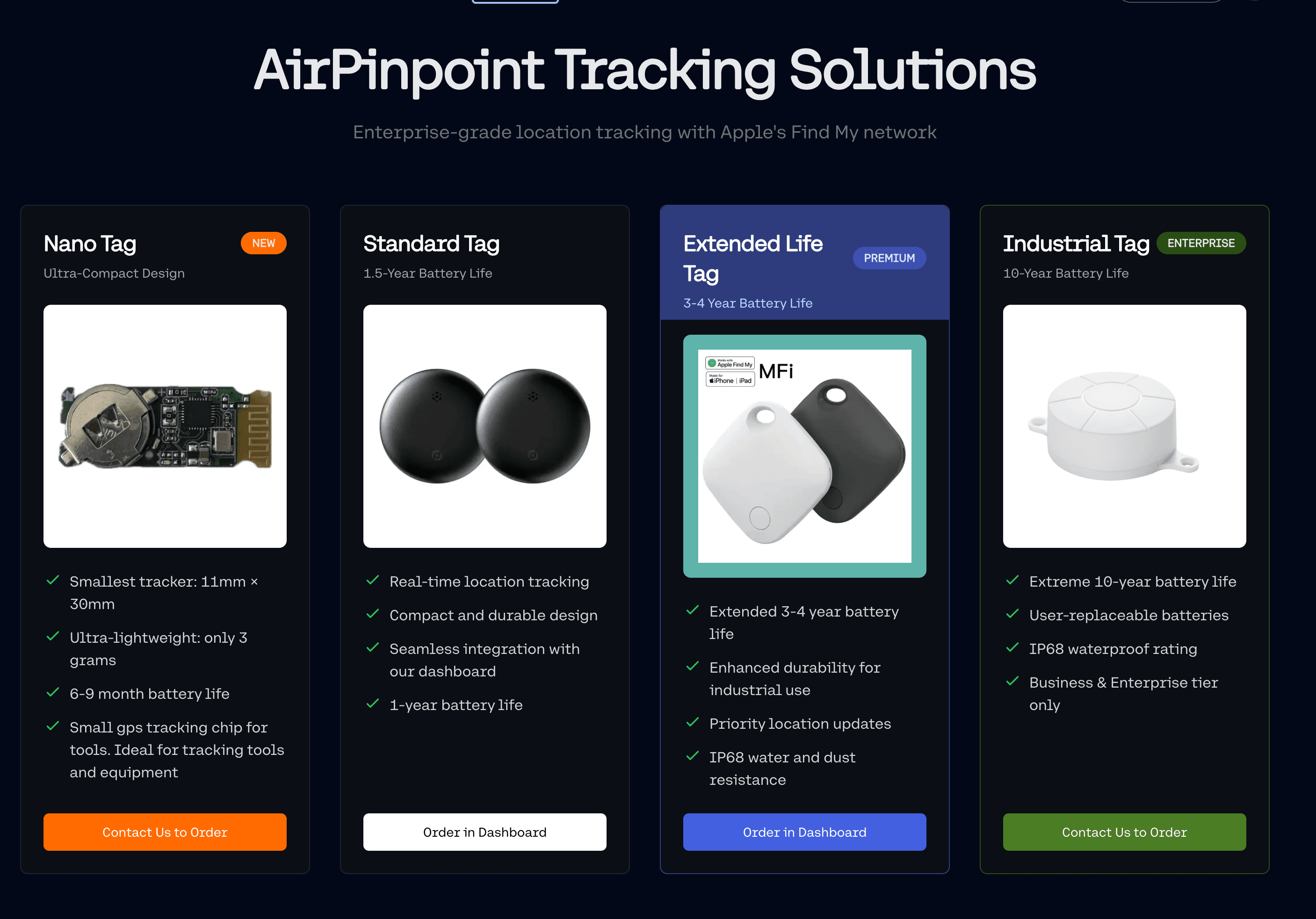
- Apple Find My network
- No cellular data plans or SIM cards needed
- Simple deployment
- Business features (geofencing, alerts)
Pricing: Starting at $11.99/device/month
Particle
Best for: Custom IoT development
- IoT platform (build your own)
- Hardware and connectivity
- Developer-focused
- Flexible deployment
Pricing: $0.99-29/device/month
Implementation Approach
Phase 1: Define Requirements
What do you need to track and why?
| Question | Options |
|---|---|
| Asset types | Vehicles, equipment, containers, inventory |
| Location needs | Outdoor, indoor, both |
| Update frequency | Real-time, hourly, daily |
| Condition monitoring | Temperature, shock, humidity |
| Integration needs | ERP, WMS, TMS, custom |
| Scale | 10 assets, 100, 1,000, 10,000+ |
Phase 2: Select Technology
Match technology to requirements:
| Requirement | Best Technology |
|---|---|
| Wide area, real-time | Cellular |
| Wide area, low power | LoRa or Find My |
| Indoor only | BLE |
| Cold chain | Cellular + temp sensor |
| High-value shipments | Cellular + multi-sensor |
| General fleet | GPS + cellular |
| Tool tracking | AirTag + Airpinpoint |
Phase 3: Pilot Deployment
Start small, prove value:
- Select 10-20 representative assets
- Deploy tracking devices
- Configure alerts and reports
- Run for 30-60 days
- Measure results against goals
- Document lessons learned
Phase 4: Scale Deployment
Roll out based on pilot success:
- Order devices for full deployment
- Plan installation logistics
- Train all users
- Phase deployment by location/type
- Monitor adoption and issues
- Optimize based on feedback
ROI Justification
Theft Prevention
| Fleet Size | Annual Theft Loss | With IoT (90% reduction) | Savings |
|---|---|---|---|
| 50 assets | $50,000 | $5,000 | $45,000 |
| 200 assets | $200,000 | $20,000 | $180,000 |
| 500 assets | $500,000 | $50,000 | $450,000 |
Utilization Improvement
| Fleet Size | Current Utilization | Improved (+15%) | Value |
|---|---|---|---|
| 50 assets | 60% | 75% | $75,000 |
| 200 assets | 60% | 75% | $300,000 |
| 500 assets | 60% | 75% | $750,000 |
Operational Efficiency
| Improvement | Annual Value |
|---|---|
| Reduced search time | $10,000-50,000 |
| Automated reporting | $5,000-20,000 |
| Preventive maintenance | $10,000-100,000 |
| Customer disputes eliminated | $5,000-25,000 |
Challenges and Solutions
Battery Management
Challenge: Devices need power Solutions:
- Solar-powered options
- Long-life batteries (5+ years)
- Hardwired installations
- Low-power modes
Connectivity Gaps
Challenge: Not everywhere has coverage Solutions:
- Multi-technology devices
- Store-and-forward capability
- Mesh networking
- Last-known location fallback
Data Management
Challenge: IoT generates lots of data Solutions:
- Cloud platforms with auto-scaling
- Intelligent alerting (not raw data)
- Configurable data retention
- Integration with existing systems
Security Concerns
Challenge: Connected devices are attack surfaces Solutions:
- End-to-end encryption
- Secure boot
- Regular firmware updates
- Access control
Getting Started
- Identify tracking needs: What assets, what information
- Choose connectivity: Match technology to requirements
- Select platform: Turnkey vs custom
- Run pilot: Prove value before scale
- Measure ROI: Document savings and improvements
- Scale gradually: Phase deployment for success
IoT asset tracking transforms asset management from reactive to proactive. The technology is mature, the ROI is clear, and implementation has never been easier.
Why Airpinpoint Is Different
Airpinpoint is built for non-powered assets and mixed fleets. We combine the Apple Find My network with asset workflows so you get wide coverage, long battery life, and recovery visibility at a fraction of the cost of cellular GPS tracking.
Our 12-Month Minimum (Because We Know It Works)
We require a 12-month minimum. The product is purpose-built, the rollout is fast, and the outcomes are clear. If you want short-term trials, most teams start with a small pilot scope inside the 12-month plan.
 Our Solution