Electric Utility Asset Tracking: Fleet, Equipment, and Service Center Visibility
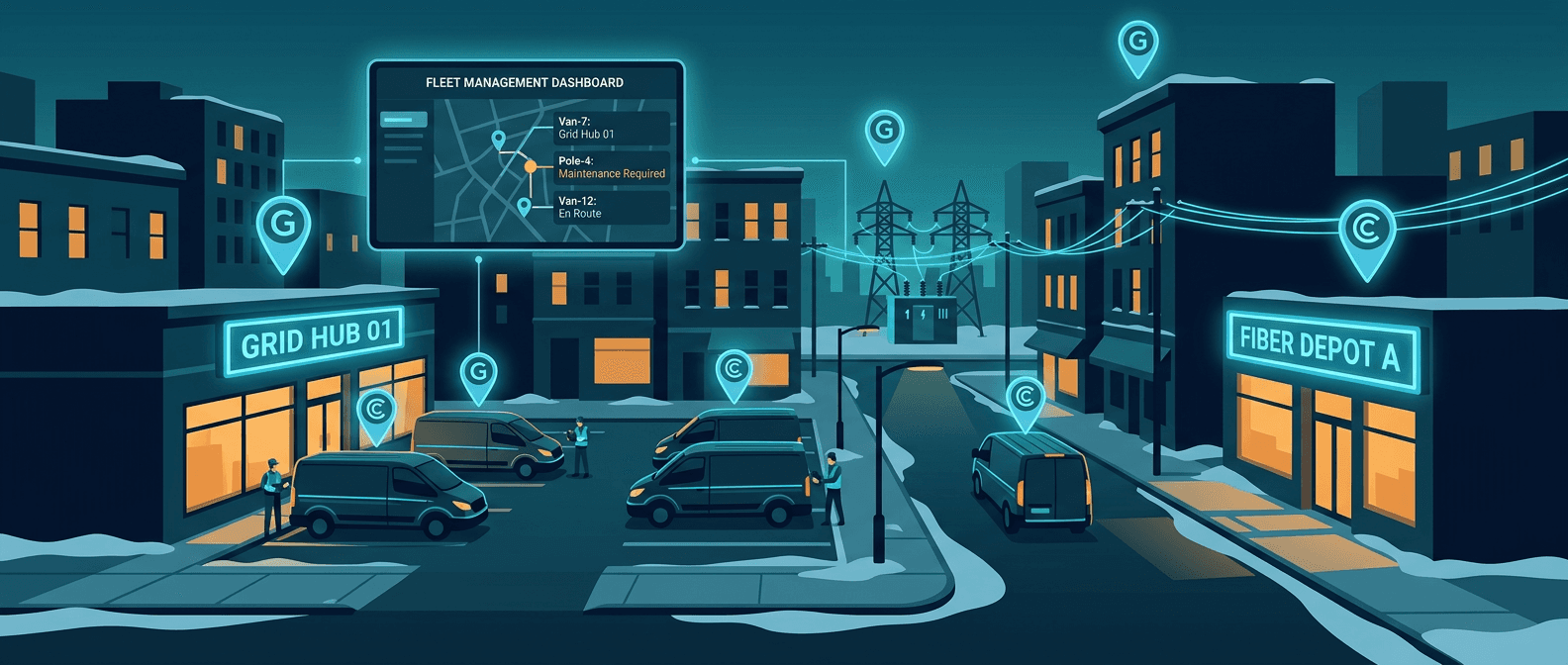
An electric utility with 200 vehicles across 35 service centers has a fleet management problem that doesn't look like a typical trucking or delivery operation. The fleet is a mix of bucket trucks, service vans, crew cabs, and specialty vehicles. The equipment pool includes calibration instruments, distribution panels, portable generators, and safety gear that moves between sites daily. And the service territory can span an entire state, with assets scattered from downtown substations to rural transmission corridors.
Most utilities know where their generation plants are. They know where their substations are. What they don't know, at any given moment, is where VAN-CVS-037 is parked, which service center has the calibration thermometer, or whether that distribution panel made it from Hot Springs to the Independence plant.
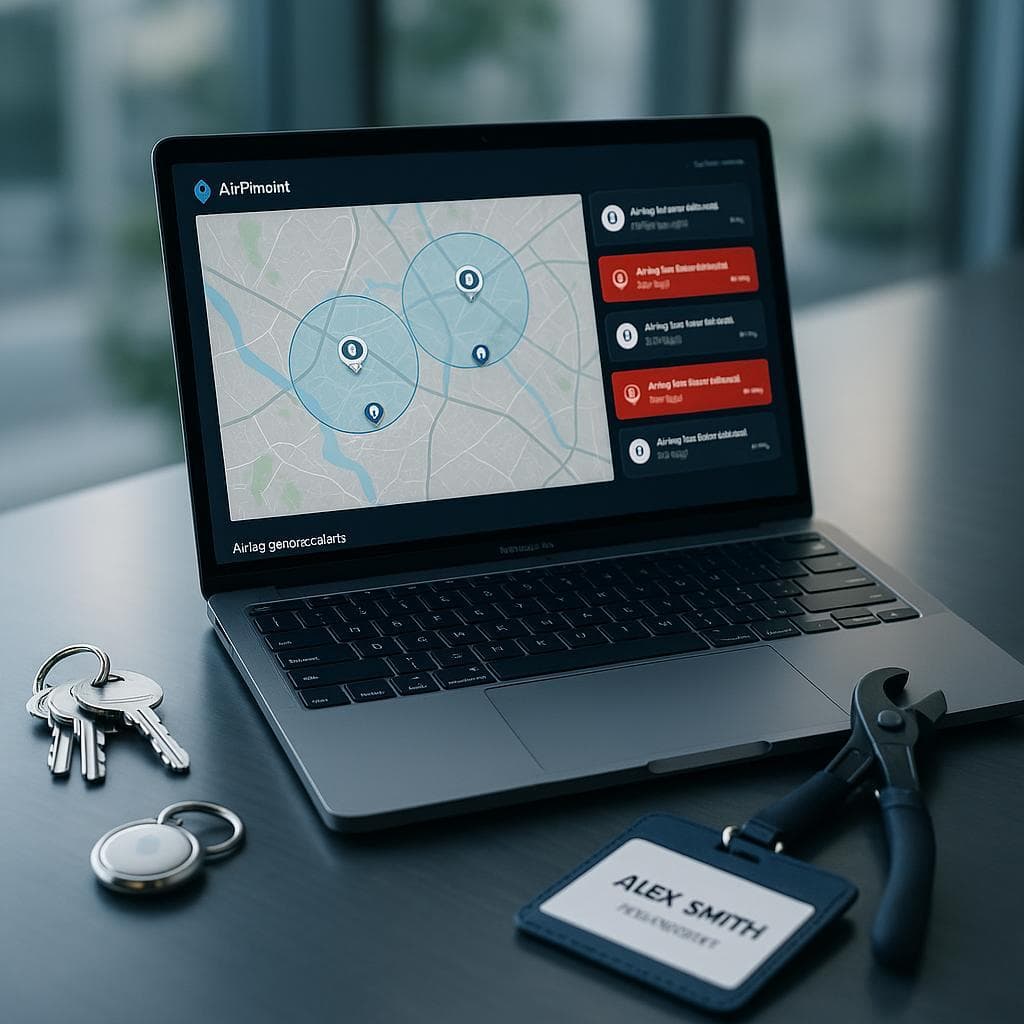
This page covers why electric utilities need asset tracking beyond traditional telematics, what the real cost differences look like, and how Airpinpoint delivers fleet and equipment visibility at a fraction of what enterprise GPS systems charge.
The Electric Utility Fleet Problem
Electric utilities operate under conditions that make standard fleet tracking solutions both essential and frustrating.
Vehicle diversity. A single utility might run 100+ service vans alongside 50 bucket trucks, 20 crew cabs, 15 digger derricks, and assorted specialty vehicles. Each vehicle type has different maintenance schedules, operating profiles, and replacement costs. A bucket truck costs $150,000-$300,000. A service van runs $40,000-$60,000. Tracking all of them under one system matters.
Distributed service territory. Utilities cover hundreds or thousands of square miles. Entergy serves portions of Arkansas, Louisiana, Mississippi, and Texas. Duke Energy operates across six states. Even smaller municipal utilities may have 20-40 service centers spread across a county or region. Assets move between these locations constantly, and knowing which center has which equipment is a daily challenge.
Equipment that walks. Calibration thermometers, ammonia sensors, metering devices, specialized test equipment. These items cost hundreds to thousands of dollars each and they're shared across crews and service centers. Without tracking, the standard process for finding a calibration instrument is calling three service centers until someone says "yeah, I think it's here somewhere."
Copper and equipment theft. The DOE documented copper theft from electric utilities exceeding $1 billion annually. In one Oklahoma incident, thieves stole $100 worth of copper wire from a substation and caused $1 million in damage, destroying regulators, switches, and a $600,000 transformer. Beyond copper, tools and equipment left at job sites or in unsecured vehicles are regular targets.
After-hours fleet use. Utility vehicles assigned to on-call crews go home with employees. Without tracking, there's no way to verify that a $200,000 bucket truck is parked at the lineman's house and not being used for weekend side work. This is a real problem that fleet managers deal with constantly.
What a Utility Fleet Actually Looks Like
Based on patterns from utilities that track hundreds of assets, here's what the typical vehicle and equipment inventory includes:
Vehicle Fleet
| Vehicle Type | Typical Count (Mid-Size Utility) | Unit Cost | Annual Fleet Value |
|---|---|---|---|
| Service Vans (CVS, DVS, FFA, MAINT) | 100-150 | $40,000-$60,000 | $4M-$9M |
| Bucket Trucks | 30-60 | $150,000-$300,000 | $4.5M-$18M |
| Crew Cab Trucks | 20-40 | $45,000-$65,000 | $900K-$2.6M |
| Digger Derricks | 10-20 | $200,000-$400,000 | $2M-$8M |
| Specialty Vehicles | 10-30 | Varies | $1M-$5M |
| Total Fleet | 170-300 | $12.4M-$42.6M |
Service vans are often organized by department code. A fleet might have CVS (customer service), DVS (distribution), FFA (field force automation), STRTP (startup), ORR (outage response), and MAINT (maintenance) designations. Each department has its own dispatch priorities and service center assignments.
Tracked Equipment
Beyond vehicles, utilities track high-value equipment that moves between sites:
- Calibration instruments: Thermometers, ammonia sensors, metering equipment. $500-$5,000 per unit, shared across service centers.
- Distribution panels: Electrical panels staged at service centers for field deployment. $1,000-$10,000 per unit.
- Portable generators: Backup power for job sites and emergency response. $3,000-$25,000 per unit.
- Safety equipment: Hot sticks, grounding sets, rescue equipment. $200-$2,000 per item, subject to strict inspection and certification schedules.
- Test equipment: Power quality analyzers, cable fault locators, transformer test sets. $5,000-$50,000 per unit.
Service Center Network
A mid-size utility operates 20-40 service centers distributed across its territory. Each center is a staging point for crews, vehicles, and equipment. Major facilities include:
- Generation plants: Nuclear, gas, coal, hydro facilities with dedicated maintenance crews and equipment pools
- Regional service centers: Primary dispatch points for distribution crews (Batesville, Camden, Conway, El Dorado, Fordyce, Hot Springs, and so on across the territory)
- Substations: Automated facilities with occasional maintenance visits but critical equipment storage
- Construction staging areas: Temporary sites for major capital projects
Knowing which assets are at which location, in real time, is the core operational challenge.
Why Traditional GPS Fleet Tracking Falls Short
Enterprise GPS solutions from Samsara, Geotab, and Verizon Connect are designed for over-the-road trucking and delivery fleets. They're good at what they do. But they create specific problems for electric utilities.
Cost at Scale
A utility with 200 vehicles and 100 pieces of tracked equipment needs 300 tracked assets. At enterprise GPS pricing:
| Solution | Per-Device Monthly | 300 Devices Annual | Contract Term | Hardware |
|---|---|---|---|---|
| Samsara | $30-$50 | $108,000-$180,000 | 3-5 years | $99-$148/device |
| Geotab | $25-$40 | $90,000-$144,000 | 3 years | $80-$120/device |
| Verizon Connect | $30-$45 | $108,000-$162,000 | 3-5 years | Varies |
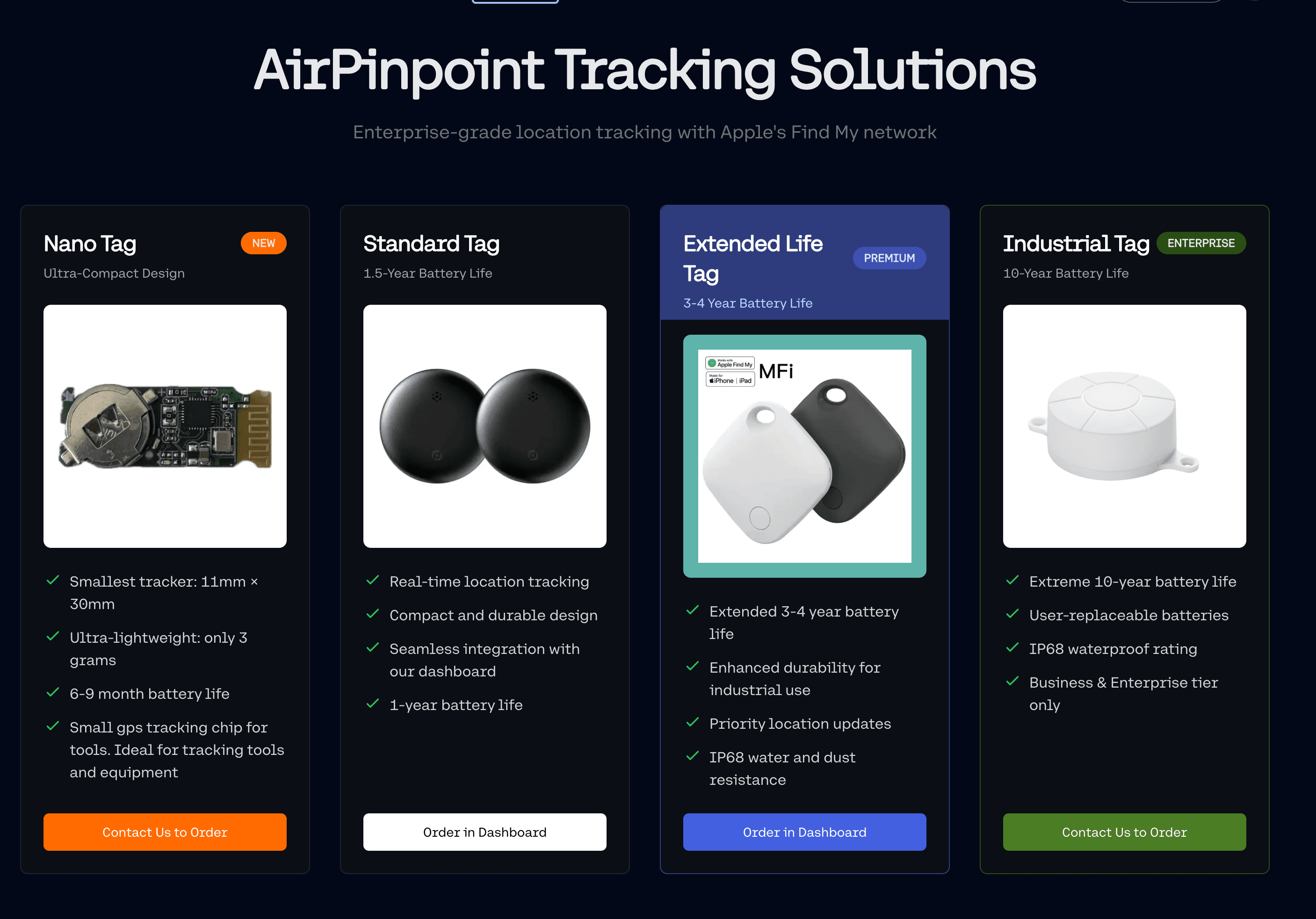
| Airpinpoint | $11.99 | $43,164 | Month-to-month | $29/AirTag |
Airpinpoint saves $47,000-$137,000 per year compared to enterprise GPS for the same 300 tracked assets. Over a 3-year contract period, that's $141,000-$411,000.
Installation Burden
Hardwired GPS units require professional installation on each vehicle. For a bucket truck, this means scheduling downtime, routing cables, and connecting to the vehicle's electrical system. At 300 units, installation alone takes weeks and costs $50-$150 per vehicle ($15,000-$45,000 total).
AirTags need no installation. Place one in the glove box, behind a seat panel, or in the equipment compartment. Done in 30 seconds.
Non-Vehicle Assets
This is where enterprise GPS completely breaks down for utilities. A calibration thermometer doesn't have an OBD-II port. A distribution panel doesn't have a 12V electrical system to power a GPS tracker. Portable generators move between service centers in the back of crew trucks.
Dedicated GPS trackers for these items cost $15-$30 per month each and need regular battery charging (every 1-4 weeks depending on update frequency). For 100 pieces of tracked equipment, that's $18,000-$36,000 per year in subscriptions plus the operational burden of keeping batteries charged.
AirTags cost $29 each (one-time) with a CR2032 battery that lasts about a year. No charging. No cellular plan. No maintenance beyond an annual battery swap.
How Airpinpoint Works for Utilities
Fleet Dashboard
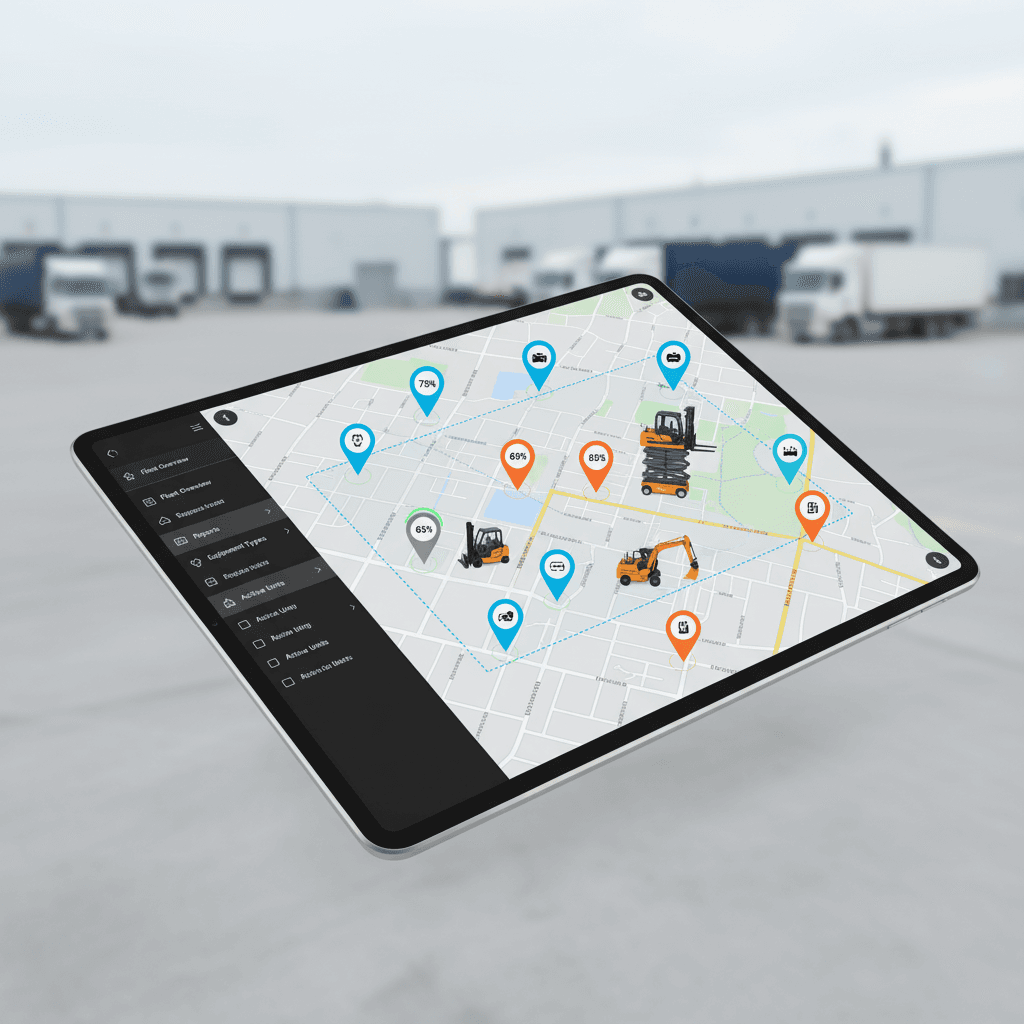
Every tracked asset appears on a single map view. Color-code by department (CVS vans in blue, bucket trucks in orange, equipment in green) and see your entire fleet at a glance. Click any asset for location history, last update time, and geofence status.
Service Center Geofencing
Draw a geofence around each service center, generation plant, and substation. The system logs every entry and exit, creating a permanent record of asset movement between locations.
Real use case: a utility with 40+ geofences covering service centers across an entire state. When a piece of calibration equipment leaves the Conway service center, the fleet manager sees it. When it arrives at the El Dorado center, that's logged too. If it shows up somewhere unexpected, an alert fires.
This solves the "where's the calibration thermometer" problem. Instead of calling four service centers, the fleet manager opens the dashboard and sees it's currently at the Batesville facility.
Equipment Movement Tracking
For high-value equipment that moves between job sites, Airpinpoint provides a movement trail that shows:
- Which service center it left from and when
- Where it traveled (via Apple's Find My network pings)
- Where it currently is
- How long it's been at the current location
This is particularly valuable for items on calibration schedules. If an ammonia sensor needs monthly calibration and it's been sitting at a remote service center for six weeks, you know before the compliance deadline.
After-Hours Alerts
Set quiet hours geofences that trigger alerts if vehicles leave service centers or assigned locations outside of work hours. For take-home vehicles assigned to on-call crews, set a geofence around the employee's home area so you know the truck is where it should be overnight.
Theft Response
Copper theft incidents often involve criminals driving utility-style trucks to substations. If your actual utility vehicles are all tracked, you can quickly verify whether any of your fleet was at the affected location. For equipment theft from job sites or service centers, Airpinpoint's location history shows exactly when the item left and the direction it traveled, giving law enforcement actionable recovery data.
Implementation for a Utility Fleet
Phase 1: Service Vans (Month 1)
Start with the highest-count vehicle type. Tag all service vans and set up department-based grouping in Airpinpoint.
- Tag 100-150 service vans: $2,900-$4,350 in AirTags (one-time)
- Monthly tracking: $1,199-$1,799
- Set up geofences for all service centers
- Establish department-code naming convention (VAN-CVS-001, VAN-DVS-001, etc.)
Phase 2: High-Value Vehicles (Month 2)
Add bucket trucks, digger derricks, and specialty vehicles. These are the highest-value assets and benefit most from theft protection and after-hours monitoring.
- Tag 50-80 additional vehicles: $1,450-$2,320 in AirTags
- Monthly tracking: $599-$959 additional
- Set up after-hours alerts for take-home vehicles
Phase 3: Equipment Pool (Month 3)
Tag calibration instruments, distribution panels, generators, and high-value test equipment.
- Tag 50-100 pieces of equipment: $1,450-$2,900 in AirTags
- Monthly tracking: $599-$1,199 additional
- Configure equipment-specific geofences for calibration labs and storage areas
Phase 4: Full Deployment Optimization (Month 4+)
With all assets tracked, optimize geofences, set up webhook integrations with your work order system, and establish reporting routines.
Total fully-loaded fleet (300 assets):
- One-time AirTag cost: $8,700
- Annual tracking: $43,164
- Total first year: $51,864
Compare that to a Samsara deployment: $29,700-$44,400 in hardware plus $108,000-$180,000 in annual tracking, with a 3-year contract commitment totaling $354,000-$584,000.
3-Year Total Cost of Ownership
| Fleet Size | Airpinpoint (3-Year) | Samsara (3-Year) | Geotab (3-Year) | Airpinpoint Savings |
|---|---|---|---|---|
| 100 assets | $44,772 | $118,000-$194,000 | $98,000-$152,000 | 54-77% |
| 200 assets | $89,244 | $236,000-$388,000 | $196,000-$304,000 | 62-77% |
| 300 assets | $138,192 | $354,000-$584,000 | $294,000-$456,000 | 61-76% |
Airpinpoint: $29/AirTag + $11.99/device/mo. Samsara: $99-148/device hardware + $30-50/device/mo. Geotab: $80-120/device hardware + $25-40/device/mo. AirTag battery replacement ($3/yr/device) included in Airpinpoint totals.
What Airpinpoint Won't Do (And What You Need Instead)
Honesty about limitations matters more than a sale:
No real-time second-by-second GPS. Airpinpoint updates when an Apple device passes near the AirTag. In populated areas, this can be every few minutes. In rural areas, updates may be less frequent. For emergency dispatch that needs sub-minute position updates, you need dedicated GPS.
No engine diagnostics or OBD data. Airpinpoint doesn't read engine codes, fuel levels, or vehicle health metrics. If your maintenance program depends on telematics-driven preventive maintenance triggers, you need Geotab or Samsara on those vehicles.
No ELD compliance. If your fleet includes commercial vehicles subject to Hours of Service regulations, you need an ELD-certified solution. Airpinpoint is not an ELD.
No driver behavior scoring. Hard braking, speeding, idling time, and seat belt compliance require telematics hardware with accelerometers and OBD connections.
Best approach for large utilities: Use dedicated GPS telematics on vehicles where you need diagnostics and compliance features (bucket trucks, large commercial vehicles). Use Airpinpoint for everything else: service vans, non-vehicle equipment, calibration tools, distribution panels, generators, trailers, and specialty items that don't justify a $30-$50/month cellular tracker.
A hybrid approach, 50 vehicles on Geotab and 250 assets on Airpinpoint, costs roughly $63,000 per year versus $108,000+ for Geotab across all 300 assets.
Utility-Specific Use Cases
Storm Response Fleet Coordination
When a major storm hits, utilities activate mutual aid crews from neighboring companies. Dozens of additional bucket trucks and service vehicles arrive in the territory. Tracking your own fleet becomes critical so dispatch can distinguish company assets from mutual aid vehicles and coordinate restoration efficiently.
Airpinpoint's geofences show which company vehicles are staged at which service centers. When a distribution feeder goes down, dispatch sees the nearest available crew on the map instead of cycling through radio calls.
Substation Equipment Monitoring
Place AirTags on high-value portable equipment at substations: transformer test sets, insulation resistance testers, protective relay test equipment. Set geofences around each substation. If equipment leaves without a corresponding work order, the alert fires once a run of consecutive reports confirms the move, which at a staffed substation is 15 to 40 minutes.
This is particularly important at unmanned substations in rural areas, where equipment can sit unmonitored for days between maintenance visits.
Calibration Compliance
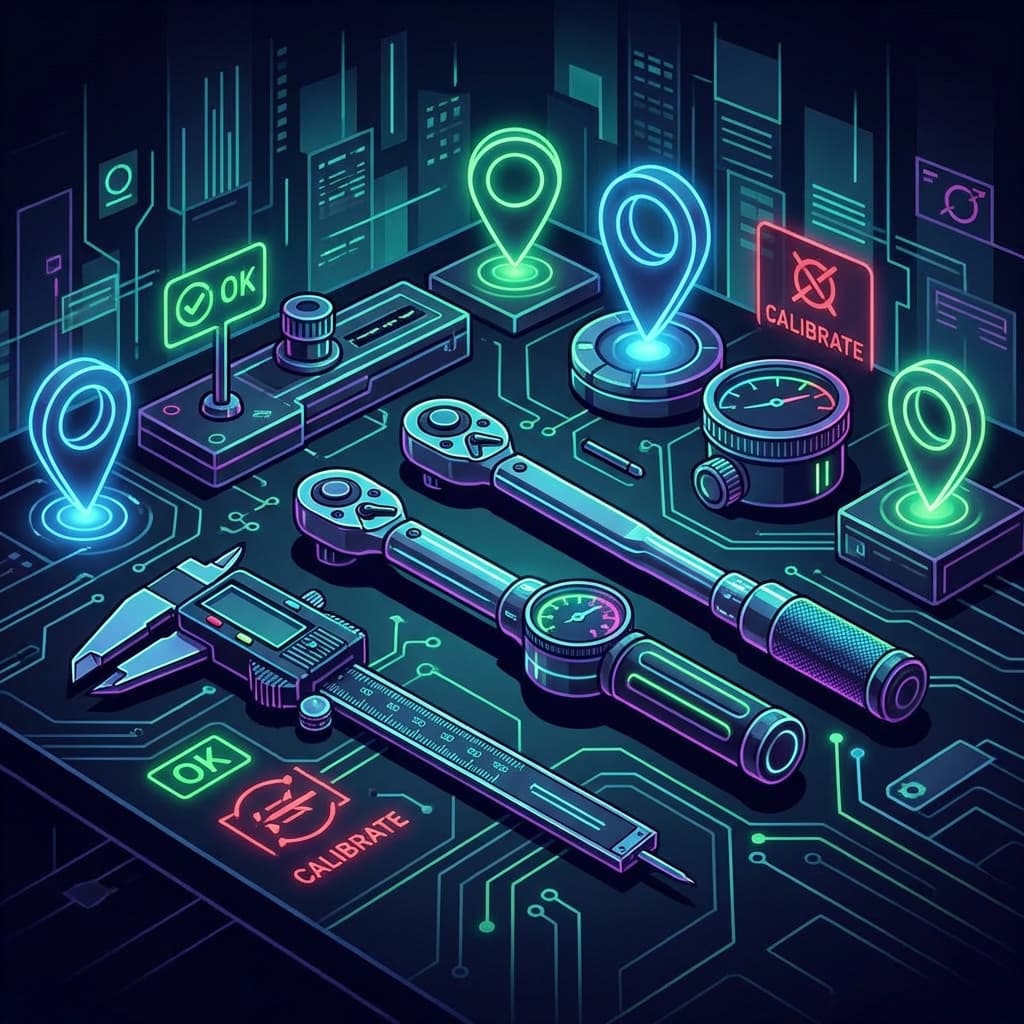
Utility safety programs require regular calibration of test instruments. When a calibration thermometer is due for recalibration, the first question is "where is it?" With Airpinpoint, you know it's at the Lake Catherine service center. You can route it to the calibration lab with the next crew rotation instead of losing a week trying to locate it.
Take-Home Vehicle Management
Many utility workers take company vehicles home for on-call readiness. A geofence around the employee's home area confirms the truck is parked where expected overnight. If the geofence exit alert fires at 11 PM on a Saturday and there's no active storm or outage call, fleet management has an early signal of potential vehicle misuse.
Generation Facility Equipment
Nuclear plants, gas turbine facilities, and hydroelectric stations have their own equipment pools that rarely leave the plant boundary. Geofence each generation facility and track equipment that should stay on-site. When a specialized tool leaves Arkansas Nuclear One without authorization, you know about it within 15 to 40 minutes instead of discovering it missing at the next inventory audit.
Getting Started
-
Audit your fleet inventory. List all vehicles by type and department code. Identify high-value non-vehicle equipment that moves between sites.
-
Map your service centers. Each center becomes a geofence. Include generation facilities, substations, construction staging areas, and equipment storage locations.
-
Start with one department. A 50-van customer service fleet is a clean starting point. Tag every van, set up geofences, and run it for 30 days.
-
Expand based on results. After 30 days, you'll have data on vehicle movement patterns, equipment location accuracy, and geofence alert usefulness. Use that to justify expanding to the full fleet.
-
Integrate with work order systems. Airpinpoint's webhook API sends location and geofence events to your existing systems. Connect asset movements to work orders for automated record-keeping.
Airpinpoint's Business plan starts at $11.99 per device per month with no contracts and no installation. For a 50-vehicle pilot, that's $1,450 in AirTags and $599 per month. Try it for 30 days on your service van fleet and see what visibility actually looks like across your territory.
 Our Solution