Demolition Equipment Tracking: How Teardown Contractors Manage Fleets Across Job Sites
A demolition contractor running 10-15 active projects has excavators, attachments, skid steers, loaders, trailers, and support equipment scattered across a metro area. Every site is temporary. Equipment moves as buildings come down and new contracts start. The fleet coordinator's job is knowing where everything is.
In practice, that means phone calls. Monday mornings start with calling every foreman to locate the grapple bucket, figure out which site has the spare hydraulic breaker, and confirm whether the dust suppression trailer came back from the hospital teardown. A wrong mobilization costs $3,000-$8,000 in trucking. A lost attachment costs $25,000-$75,000.
This page covers how AirTag-based tracking solves equipment visibility for demolition contractors, teardown specialists, and environmental abatement companies.
The Demolition Equipment Problem
What a Typical Fleet Looks Like
Demolition contractors operate heavy iron alongside a long tail of attachments and support gear. A mid-size demo company's fleet:
| Equipment Category | Examples | Value Per Unit | Typical Fleet Count |
|---|---|---|---|
| High-reach excavators | 60-100 ton machines with extended booms | $400K-$1.5M | 2-5 |
| Standard excavators | 20-50 ton for structural demo | $150K-$500K | 5-12 |
| Demolition attachments | Shears, pulverizers, processors, grapples | $25K-$75K | 8-20 |
| Hydraulic breakers | Hammers for concrete and rock | $15K-$50K | 5-10 |
| Skid steers & loaders | Compact machines for debris handling | $30K-$80K | 5-10 |
| Dust suppression | Water cannons, misting trailers | $10K-$40K | 3-6 |
| Trailers | Lowboys, flatbeds, equipment haulers | $15K-$60K | 5-10 |
| Support equipment | Generators, compressors, light towers, pumps | $2K-$15K | 10-25 |
Total fleet value for a mid-size demolition contractor: $5M-$20M. For a large regional operator, $30M-$80M+.
Why Demolition Is Different
Demolition has equipment management problems that other construction trades don't deal with.
Every job site is temporary. General contractors build structures that stay. Demolition contractors tear them down and leave. A teardown takes 2-8 weeks on a commercial building, sometimes just days for smaller structures. Equipment deploys, does its work, and needs to move to the next project. The churn is constant.
Attachments are the expensive, invisible problem. A concrete pulverizer costs $25K-$75K. A hydraulic shear runs $25K-$60K. These attachments sit on the ground when not mounted to an excavator. They're not tracked by OEM telematics because they don't have engines. They look like scrap metal to anyone walking by an unoccupied site. And they move between excavators and between sites constantly.
Sites become less secure as demolition progresses. A building being torn down loses its walls, fences come down, and perimeter security degrades as the project advances. The most valuable equipment is on site during the phase when security is worst. Over 11,000 construction equipment thefts are reported in the US each year, and recovery rates sit around 21%.
Dust and debris regulations add equipment. EPA and OSHA require dust suppression on demolition sites. Water cannons, misting systems, and suppression trailers move between projects based on inspection schedules and project phases. Losing track of a dust suppression trailer can mean a regulatory violation and project shutdown.
The Attachment Tracking Problem
This is the pain point most demolition contractors recognize immediately.
$50K Sitting on the Ground at a Finished Job
Demolition attachments are among the most expensive items in the fleet that have zero built-in tracking. A CAT 340 with a processor attachment might have OEM telematics on the excavator, but when the processor gets swapped off and left at a site, it disappears from every system.
One common scenario: a concrete pulverizer gets detached at Site A so the excavator can run a different attachment. The pulverizer sits on the ground. The project wraps up a week later. Everyone demobilizes. The pulverizer stays. Two weeks pass before anyone notices it's missing from inventory. That's a $60K asset sitting on a cleared lot, unmonitored.
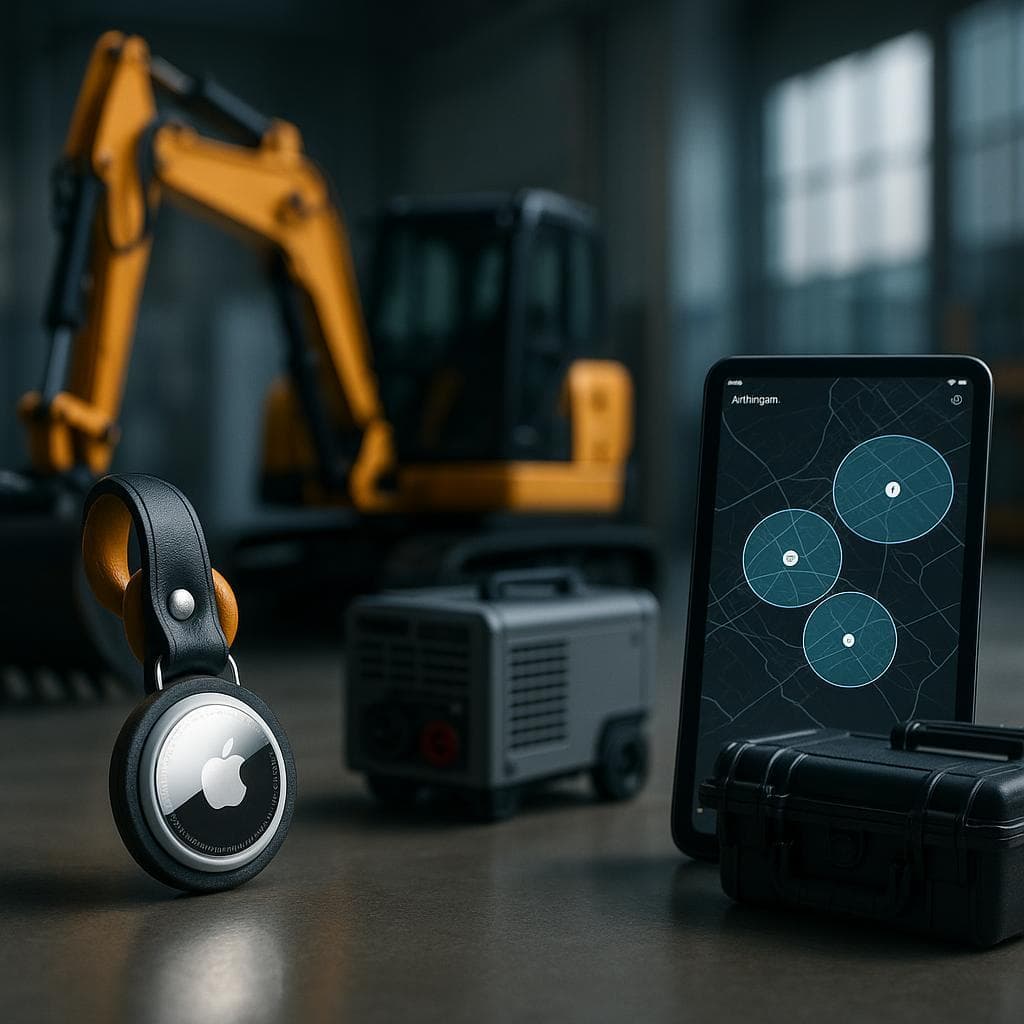
With an AirTag mounted inside the attachment housing, the pulverizer shows up on the Airpinpoint dashboard regardless of whether it's mounted to an excavator or sitting on the dirt. The fleet coordinator sees it hasn't moved in two weeks and sends a truck.
Attachment Inventory Across Sites
A demolition contractor with 15-20 attachments needs to know which attachments are at which sites, which are in the yard, and which are in transit. Shears, grapples, pulverizers, and breakers are not interchangeable. Sending the wrong attachment to a site wastes a full day.
| Attachment Type | Use Case | Typical Cost | Why It Goes Missing |
|---|---|---|---|
| Hydraulic shears | Steel cutting, structural demo | $25K-$60K | Swapped between excavators, left at site |
| Concrete pulverizers | Crushing concrete for recycling | $25K-$75K | Detached during attachment changes |
| Processors | Combined crushing and cutting | $30K-$70K | Moved to "staging area" and forgotten |
| Grapple buckets | Debris sorting and loading | $8K-$25K | Shared between sites, ownership disputes |
| Hydraulic breakers | Concrete and rock breaking | $15K-$50K | Rented units returned late or to wrong site |
Tracking each attachment individually eliminates the "where's the shear?" phone calls and prevents assets from sitting idle at completed projects.
Equipment Categories and Tracking Approaches
Excavators (Standard and High-Reach)
High-reach excavators ($400K-$1.5M) are the backbone of structural demolition. Standard excavators ($150K-$500K) handle the bulk of teardown work. Most have OEM telematics, but telematics only report when the engine is running.
An excavator parked on a finished site with the engine off sends no telematics data. AirTags transmit passively via Bluetooth regardless of engine state. This fills the gap between active operation and idle periods.
Placement: Operator cab, toolbox compartment, or a protected cavity on the frame. Avoid locations near exhaust or hydraulic heat.
Demolition Attachments
The tracking sweet spot. Too expensive to lose, too numerous for GPS trackers at $25-45/device/month, and completely invisible to telematics systems.
Placement: Inside the pin-on bracket housing, in a cavity on the attachment body, or in a weatherproof case bolted to the frame. Hydraulic shears and pulverizers have enough internal space for an AirTag without interfering with operation. Keep the AirTag away from hydraulic lines that generate heat.
Skid Steers and Compact Loaders
These machines move between sites frequently, sometimes visiting 2-3 jobs in a week. They're also high-theft targets because they're easy to load onto a trailer.
Placement: Under-seat compartment, inside the cab, or in the engine bay access panel. Skid steers have limited hiding spots, but the compact frame doesn't block Bluetooth signal.
Dust Suppression Equipment
Water cannons, misting trailers, and suppression systems are specialized equipment that demolition contractors share across projects. They're not expensive enough for dedicated GPS tracking, but losing one means a project can't pass environmental inspection.
Placement: Inside the trailer tongue box, in the pump housing, or in a weatherproof case mounted to the frame.
Trailers
Demolition contractors rely on lowboys and flatbeds to move everything. Trailers are among the most stolen construction assets in the US (68,000+ stolen annually) because they have no ignition interlock.
Placement: Frame rail, tongue box, or inside a protective housing. See our trailer tracking guide for detailed options.
Support Equipment
Generators, air compressors, light towers, dewatering pumps. Individually worth $2K-$15K. A demo contractor accumulates 10-25 of these items. At $11.99/month per device, tracking a $5,000 generator pays for itself by preventing a single loss.
Multi-Site Tracking Operations
The Monday Morning Problem
Every demolition fleet coordinator faces the same weekly routine:
- Which projects are active?
- What equipment is at each site?
- What needs to move this week?
- What's sitting idle?
Without tracking, step 2 requires calling every foreman. With 12 active sites, that's an hour of phone calls before planning can start.
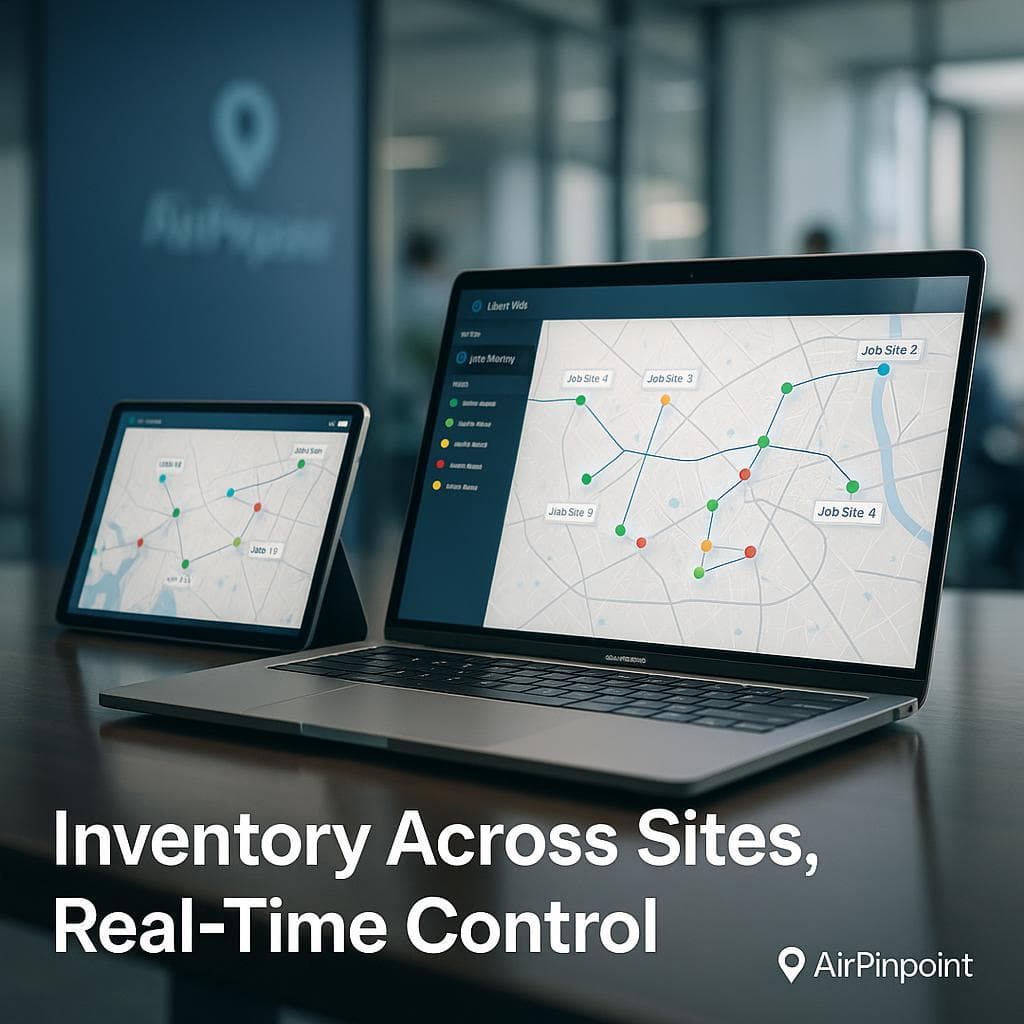
With Airpinpoint, step 2 takes two minutes. Open the dashboard, view all assets on a map, filter by equipment type. The coordinator sees that Site C has two breakers but only needs one, Site F is missing a grapple bucket, and the dust suppression trailer that was supposed to return to the yard is still at a project that wrapped up last Friday.
Geofencing Temporary Job Sites
Demolition sites are temporary by definition. Airpinpoint's geofencing adapts to that reality.
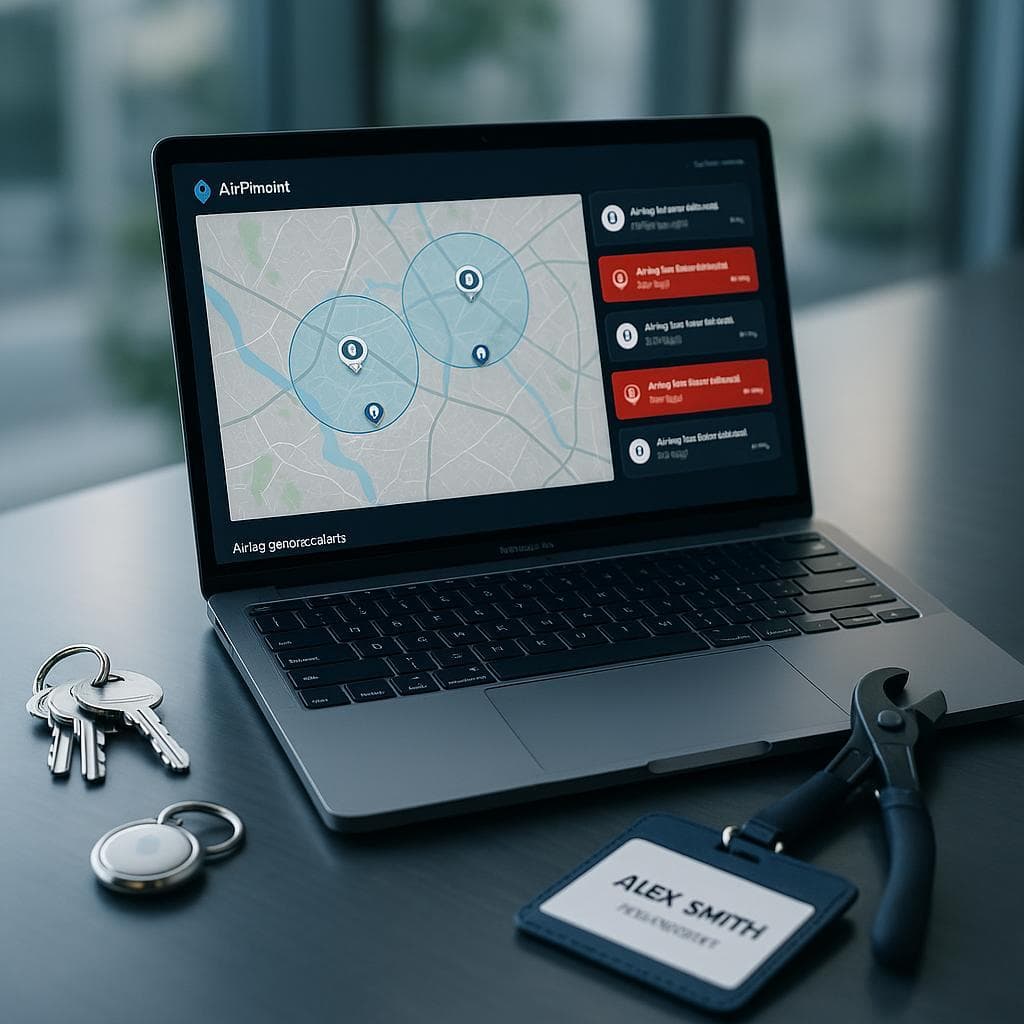
Create a geofence when a project starts. Draw a boundary around the site. Every asset inside that boundary is tracked. When equipment leaves, you get an alert.
Overnight theft detection. Demolition sites are especially vulnerable at night because perimeter security degrades as buildings come down. A geofence alert at 2am on a Saturday tells you something left the site that shouldn't have.
Delete the geofence when the project ends. Check the dashboard to confirm all equipment has been demobilized first. Any assets still inside the boundary need a pickup scheduled.
Demobilization tracking. Equipment left behind on completed demolition projects is a consistent source of lost revenue. A geofence alert when a project is marked complete flags every asset still on site.
Project-to-Project Equipment Flow
Demolition projects overlap. While one site is in the heavy teardown phase, another is in debris cleanup, and a third is just starting selective interior demo. Each phase needs different equipment.
Tracking data shows equipment flow patterns over time:
- Which attachment types are bottlenecks (always in demand, never available)?
- Are you renting breakers while owning breakers that are idle at another site?
- How long do assets typically sit idle between projects?
This data drives better purchasing and rental decisions. If tracking shows your grapple buckets are deployed 95% of the time but your breakers sit idle 40% of the time, you know where to invest and where to rent.
Cost Comparison: Tracking a 50-Asset Demolition Fleet
GPS Trackers for Everything
| Item | Cost |
|---|---|
| Hardware (50 devices @ $100 avg) | $5,000 |
| Monthly service (50 x $30/mo avg) | $1,500/mo |
| Annual cost | $23,000 |
| 3-year total | $59,000 |
Plus: monthly charging or hardwiring for battery-powered GPS units. On demolition equipment that moves between sites constantly, keeping GPS devices charged is a logistics problem of its own.
Airpinpoint for Everything
| Item | Cost |
|---|---|
| AirTags (50 x $29) | $1,450 |
| Monthly service (50 x $11.99/mo) | $599.50/mo |
| Battery replacement (50 x $3/year) | $150/yr |
| Annual cost | $8,644 |
| 3-year total | $23,232 |
No charging. No hardwiring. No cellular plans. Battery swap once a year during scheduled maintenance.
The Math on Prevented Losses
One recovered hydraulic shear ($25K-$60K) pays for 3-7 years of tracking the entire fleet. One avoided wrong-site mobilization ($3K-$8K) covers several months. One attachment recovered from a finished job site before it's stolen or damaged pays for itself immediately.
Implementation for Demolition Contractors
Phase 1: Attachments and High-Value Loose Assets (Week 1)
Start with the assets that cause the most pain: demolition attachments, breakers, and any equipment that moves between excavators or sites frequently.
- Purchase AirTags for all attachments and breakers
- Establish a naming convention (e.g., "Shear LaBounty MSD 2500 #1", "Pulverizer NPK R-7X #3")
- Mount AirTags in protected locations on each attachment
- Register all assets in Airpinpoint
- Set up geofences for active job sites
Phase 2: Excavators, Skid Steers, Support Equipment (Week 2)
Add AirTags to all remaining mobile assets. For excavators with existing telematics, AirTags provide backup tracking when engines are off.
Phase 3: Process Integration (Week 3+)
Build tracking into daily operations:
- Fleet coordinator checks the dashboard before planning weekly mobilizations
- Foremen verify equipment arrivals after scheduled moves
- Geofence alerts route to the coordinator and after-hours security
- Project closeout includes a dashboard check for remaining assets on site
Honest Limitations
Not a replacement for OEM telematics on excavators. AirTag tracking provides location data, not engine hours, fuel consumption, or diagnostic codes. For high-value excavators, telematics data matters for maintenance scheduling and resale value documentation.
Location update frequency depends on iPhone density. Urban and suburban demolition sites (commercial buildings, hospitals, industrial facilities) get updates every few minutes to every hour. Rural demolition (barns, agricultural structures, remote industrial sites) may see longer gaps between updates.
Not real-time GPS. AirTags update when detected by the Find My network. For second-by-second tracking during active operations, you need a dedicated GPS device. Airpinpoint answers "where are my assets right now" for fleet management, not "where is this excavator's bucket at this moment."
Why Demolition Contractors Choose Airpinpoint
-
Attachments finally get tracked. GPS tracker pricing makes no sense for a $40K pulverizer that needs a $30/month subscription. At $11.99/month, every attachment in the fleet gets its own tracker.
-
Temporary sites, flexible geofencing. Create and remove geofences as projects start and finish. No long-term contracts tied to fixed locations.
-
Zero maintenance burden. Demolition crews don't have time to charge GPS devices. AirTag batteries last a year. Swap them during routine maintenance and forget about them.
-
Urban operating environment. Most commercial and industrial demolition happens in populated areas where the Apple Find My network provides consistent coverage.
-
Scale economics. Tracking 50 assets with GPS runs $23K/year. Airpinpoint runs $8,644. That $14K annual savings compounds across a multi-year equipment lifecycle.
Demolition is inherently chaotic. Sites change daily as structures come down. Equipment moves constantly. Projects start and end on compressed timelines. The contractors who track their fleet spend less time on the phone, lose fewer attachments, and catch idle equipment before it sits for weeks on a cleared lot. Airpinpoint makes that visibility possible at a price point that works for every asset in the fleet, not just the million-dollar excavators.
 Our Solution